
Wildfire Smoke: Long-Term Health Risks & How MERV 13 Filters Can Help
May 5, 2026

Wildfire smoke is no longer an issue confined to distant forests or rural locales. Its reach is global, with smoke traveling hundreds or even thousands of miles, turning once-clear skies into a hazy, polluted threat. This growing problem poses not only immediate concerns but also significant long-term health hazards. Luckily, effective tools like MERV 13 filters can mitigate many of these risks and ensure cleaner indoor air during smoke events.
This comprehensive guide will explore how wildfire smoke impacts our health in the short and long term, why maintaining indoor air quality (IAQ) is crucial, and how upgrading to MERV 13 filters can protect you and your loved ones.
Key Takeaways
Wildfire smoke contains harmful pollutants that can pose serious long-term health risks, including respiratory and cardiovascular issues.
Prolonged exposure to wildfire smoke can worsen existing conditions like asthma, COPD, and heart disease.
Using MERV 13 filters in your HVAC system is an effective way to reduce indoor exposure to wildfire smoke particles.
Filterbuy offers high-quality MERV 13 filters designed to improve indoor air quality and protect your health during wildfire season and beyond.
Understanding Wildfire Smoke and Its Composition
Wildfire smoke is a complex cocktail of gas and fine particulate matter (PM). The most concerning of these is PM2.5, particles less than 2.5 microns in diameter. To put that into perspective, these particles are roughly 30 times smaller than the width of a human hair. Their small size enables them to penetrate deep into the lungs and even enter the bloodstream, causing a variety of health problems.
Alongside PM2.5, wildfire smoke also contains toxic substances like:
Carbon monoxide
Benzene
Formaldehyde
These harmful components can linger in the air long after the flames have been extinguished, affecting communities far removed from the actual wildfires.
Short-Term Health Effects of Wildfire Smoke Exposure
Immediate exposure to wildfire smoke can affect anyone, regardless of health status. Common symptoms include:
Coughing and throat irritation
Shortness of breath and wheezing
Headaches, dizziness, and fatigue
Eye irritation and watery eyes
Healthy individuals may bounce back quickly, but these symptoms can take a toll, especially during extended or severe smoke events.
Long-Term Health Risks Associated with Chronic Exposure
While short-term effects are often reversible, long-term exposure to wildfire smoke can have lasting consequences. Prolonged exposure to PM2.5 and other toxic pollutants increases the risk of:
Respiratory Diseases
Chronic exposure can exacerbate asthma, trigger bronchitis, and even contribute to the development of chronic obstructive pulmonary disease (COPD).
Cardiovascular Issues
Fine particles in wildfire smoke can enter the bloodstream and elevate the risk of heart attacks, arrhythmias, and other cardiovascular diseases.
Cancer Risks
Carcinogenic compounds like benzene in the smoke may contribute to the development of lung cancer.
Neurological Effects
Emerging research suggests potential links between long-term smoke exposure and cognitive decline, including an increased risk of developing dementia.
Populations most vulnerable to these effects include children, senior citizens, and individuals with pre-existing health conditions.
The Importance of Indoor Air Quality During Smoke Events
When outdoor air becomes hazardous, the inside of your home or office can become equally compromised. Smoke seeps through cracks, vents, and improperly sealed windows, causing indoor air pollution levels to spike.
Without effective air filtration, you and your family may continue to inhale harmful particles, even while staying indoors. This is why maintaining indoor air quality (IAQ) should be a priority during wildfire events.
EPA's Recommendation: MERV 13 Filters for Wildfire Smoke
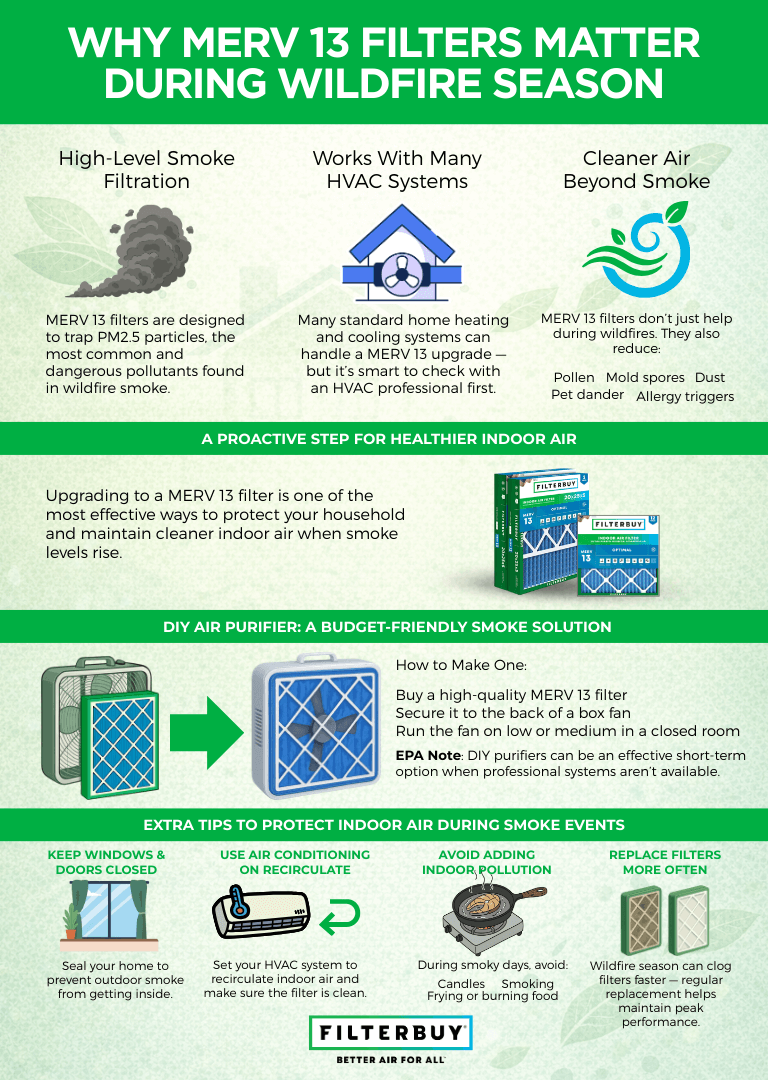
MERV, or Minimum Efficiency Reporting Value, helps determine a filter's capacity to trap airborne particles. For wildfire smoke, the EPA recommends MERV 13 filters due to their ability to capture up to 95% of fine particles as small as 0.3 microns.
Key Benefits of MERV 13 Filters:
High-Level Filtration
MERV 13 filters excel at trapping PM2.5 and other particles abundant in wildfire smoke.
Compatibility with Existing Systems
Many basic HVAC systems can accommodate MERV 13 filters, though it’s best to consult a professional to confirm.
Dual Benefits
Besides combating wildfire smoke, MERV 13 filters effectively remove pollen, mold, and other allergens from the air.
Upgrading your HVAC system with these filters is a proactive step to protect your health and ensure cleaner indoor air during wildfire events.
DIY Air Purifiers as a Cost-Effective Solution
For those without central air systems or in need of temporary measures, DIY air purifiers offer an affordable solution. Here’s how to create your own:
Purchase a high-quality MERV 13 filter.
Attach the filter securely to the back of a box fan.
Run the fan on low to medium speed in a closed room.
This simple setup can significantly reduce indoor smoke particles. According to the EPA, DIY air purifiers are an effective stopgap measure when professionally installed systems are unavailable.
Additional Measures to Protect Indoor Air Quality
While MERV 13 filters are crucial, combining them with other protective habits can enhance indoor air safety during smoke events:
Keep Windows and Doors Closed
Limit outdoor air infiltration by sealing windows and doors.
Use Air Conditioning
Set your AC system to recirculate indoor air and ensure it has a clean filter.
Avoid Indoor Pollutants
Refrain from burning candles, smoking, or frying food during smoke events.
Replace Filters Regularly
Filters in HVAC systems and air purifiers should be replaced more often during wildfire season to maintain efficiency.
Prepare Proactively for Wildfire Seasons
Wildfire smoke is becoming a part of life for many regions, but taking proactive steps can safeguard your health and well-being. By investing in MERV 13 filters, creating DIY air purifiers, and following EPA recommendations, you can improve indoor air quality and reduce exposure to harmful pollutants.
Want to stay ready? Visit trusted resources like the U.S. Environmental Protection Agency (EPA) or Centers for Disease Control and Prevention (CDC) for further guidance on wildfire preparedness.
Staying informed and equipped can make all the difference when the next wildfire season arrives.

Frequently Asked Questions
What are the immediate health effects of wildfire smoke exposure?
Wildfire smoke can have several immediate effects on your health. Common symptoms include coughing, throat irritation, wheezing, shortness of breath, and headaches. The fine particulate matter in the smoke can also cause eye irritation and a runny nose. These symptoms can affect both individuals with respiratory conditions and those without, particularly when smoke concentrations are high. If you experience these symptoms, it’s important to stay indoors and minimize exposure to the polluted air.
Can long-term exposure to wildfire smoke lead to chronic health conditions?
Yes, long-term exposure to wildfire smoke can increase the risk of chronic health problems, especially for those with pre-existing conditions. The fine particles and toxic chemicals in the smoke can exacerbate asthma, bronchitis, and other respiratory conditions. Prolonged exposure has also been linked to an increased risk of cardiovascular diseases, lung cancer, and potential neurological effects such as cognitive decline. Individuals who are more vulnerable, such as children, the elderly, and those with weakened immune systems, are at an even higher risk.
How does wildfire smoke affect indoor air quality?
When wildfires occur, indoor air quality can sometimes be worse than outdoor air quality. Smoke can infiltrate homes even if windows and doors are closed, especially in areas with poor ventilation. This makes it crucial to use high-quality air filtration systems to reduce the levels of harmful particles indoors. Without proper filtration, particulate matter from wildfire smoke can linger, leading to respiratory problems and other health risks.
What type of air filter is best for wildfire smoke?
According to the Environmental Protection Agency (EPA), MERV 13 filters are highly effective at capturing fine particles commonly found in wildfire smoke. These filters can remove up to 95% of particles between 0.3 and 1.0 microns, which are the primary components of wildfire smoke. If you're looking for reliable, high-quality filters to protect your home during wildfire season, Filterbuy offers MERV 13 filters designed to fit various HVAC systems, ensuring cleaner air indoors.
What is the MERV rating, and why is MERV 13 recommended for wildfire smoke?
MERV (Minimum Efficiency Reporting Value) is a rating system used to evaluate the efficiency of air filters. The higher the MERV rating, the better the filter is at trapping small particles. MERV 13 filters are specifically recommended by the EPA for wildfire smoke because they can capture particles as small as 0.3 microns, which are present in the smoke. Filterbuy offers MERV 13 filters designed to efficiently remove these harmful particles from your indoor air, helping you maintain a safer environment during wildfire season.
Can I make a DIY air purifier to protect against wildfire smoke?
Yes, creating a DIY air purifier is a cost-effective way to reduce indoor smoke levels. One of the most common methods is to use a box fan and a MERV 13 filter. The filter can be taped to the back of the fan, allowing the fan to draw in smoky air and filter out harmful particles before releasing the cleaned air back into the room. The EPA has endorsed this method as a practical solution for improving indoor air quality during wildfire events. Filterbuy provides MERV 13 filters suitable for DIY air purifiers, ensuring effective filtration for your home.
What other measures can I take to improve indoor air quality during wildfire season?
Aside from using MERV 13 filters, there are several steps you can take to improve indoor air quality during wildfire season. Keep windows and doors closed to prevent smoke from entering your home, and use air conditioning on recirculate mode to filter the air inside. It’s also important to avoid smoking or burning candles indoors, as these can further degrade air quality. Regularly replace filters in your HVAC systems and air purifiers to ensure they continue to capture harmful particles effectively.
Is it safe to use an air purifier during wildfire season?
Yes, using an air purifier is a recommended measure to reduce indoor smoke levels. High-quality air purifiers equipped with MERV 13 filters are especially effective at capturing the fine particles from wildfire smoke. These purifiers can significantly improve indoor air quality, especially when combined with sealing off doors and windows. If you’re looking for a reliable air purifier to protect your home, Filterbuy offers a range of high-efficiency filters to keep your indoor air clean and safe.
How can wildfire smoke affect children and the elderly?
Children and the elderly are particularly vulnerable to the harmful effects of wildfire smoke. The smaller airways in children make it easier for smoke particles to penetrate deep into their lungs, exacerbating respiratory conditions like asthma. Older adults, especially those with pre-existing heart or lung conditions, may experience more severe symptoms from smoke exposure. It's important for families with children and elderly members to take extra precautions, including using MERV 13 filters and staying indoors during high smoke events.
What are the most common symptoms of smoke inhalation from wildfires?
Common symptoms of smoke inhalation include coughing, sore throat, wheezing, shortness of breath, and headaches. Prolonged exposure to smoke can also lead to dizziness, eye irritation, and an increased risk of respiratory infections. Individuals with asthma or other respiratory conditions may experience worsening symptoms. It is important to seek medical attention if symptoms persist or worsen.
How can I protect my home during wildfire season?
To protect your home during wildfire season, it’s essential to ensure your indoor air remains clean. The best way to achieve this is by using a MERV 13 air filter in your HVAC system or air purifier. You should also keep windows and doors sealed to prevent smoke from entering, use air conditioning on recirculate mode, and avoid using tobacco or burning candles indoors. Regularly replacing filters and ensuring your air purification systems are functioning properly will help maintain a healthier indoor environment.
Why should I choose Filterbuy filters for my home during wildfire season?
Filterbuy provides high-quality MERV 13 filters designed to effectively capture fine particles found in wildfire smoke. With a range of sizes and filter types available, Filterbuy offers a convenient solution to improve your indoor air quality during wildfire season. Their filters are designed to fit most HVAC systems, ensuring a hassle-free installation and long-lasting protection for your home. By using Filterbuy filters, you can create a safer, healthier living environment during wildfire season.