Shop by

When dealing with allergies, wildfire smoke, or concerns about airborne viruses, choosing the right air filter becomes crucial for your family's health and comfort. Many homeowners assume HEPA filters are always the best choice, but the reality is more nuanced.
While HEPA filters offer exceptional filtration, they're rarely compatible with standard residential HVAC systems. MERV 13 filters often provide the sweet spot—delivering excellent performance when your system can handle the increased airflow resistance.
Understanding these differences helps you make an informed decision that balances air quality improvement with system compatibility and cost-effectiveness.
HEPA Filters provide superior air filtration, but are typically not compatible with most residential HVAC systems.
MERV 13 Filters offer an ideal blend of high filtration efficiency and compatibility with many residential systems, provided your system can manage the airflow resistance.
Choosing the right filter involves weighing air quality improvement, system compatibility, and cost-effectiveness.
Understanding filter ratings and system requirements ensures you make an informed and practical decision for your home's air quality.
Here's how HEPA and MERV 13 filters stack up across key factors:
| Factor | HEPA | MERV 13 |
|---|---|---|
| What it is | True HEPA captures ≥99.97% of 0.3 μm particles | ASHRAE 52.2 standard filter with high efficiency |
| Standard | US EPA and international standards | ASHRAE 52.2-2017 rating system |
| Particle capture | ≥99.97% @ 0.3 μm (most penetrating particle size) | E1 (0.3–1.0 μm) ≥50%, E2 (1–3 μm) ≥85%, E3 (3–10 μm) ≥90% |
| Home HVAC compatibility | Usually not feasible; requires specialty ducted systems or bypass configurations | Compatible with many residential systems if blower and filter slot accommodate increased pressure drop |
| Best for | Standalone air purifiers, medical facilities, cleanrooms | Most homes seeking high filtration without major system modifications |
| Cost & maintenance | Higher upfront cost for whole-home systems; frequent replacement for portables | Moderate cost; replace every 60–90 days depending on conditions |
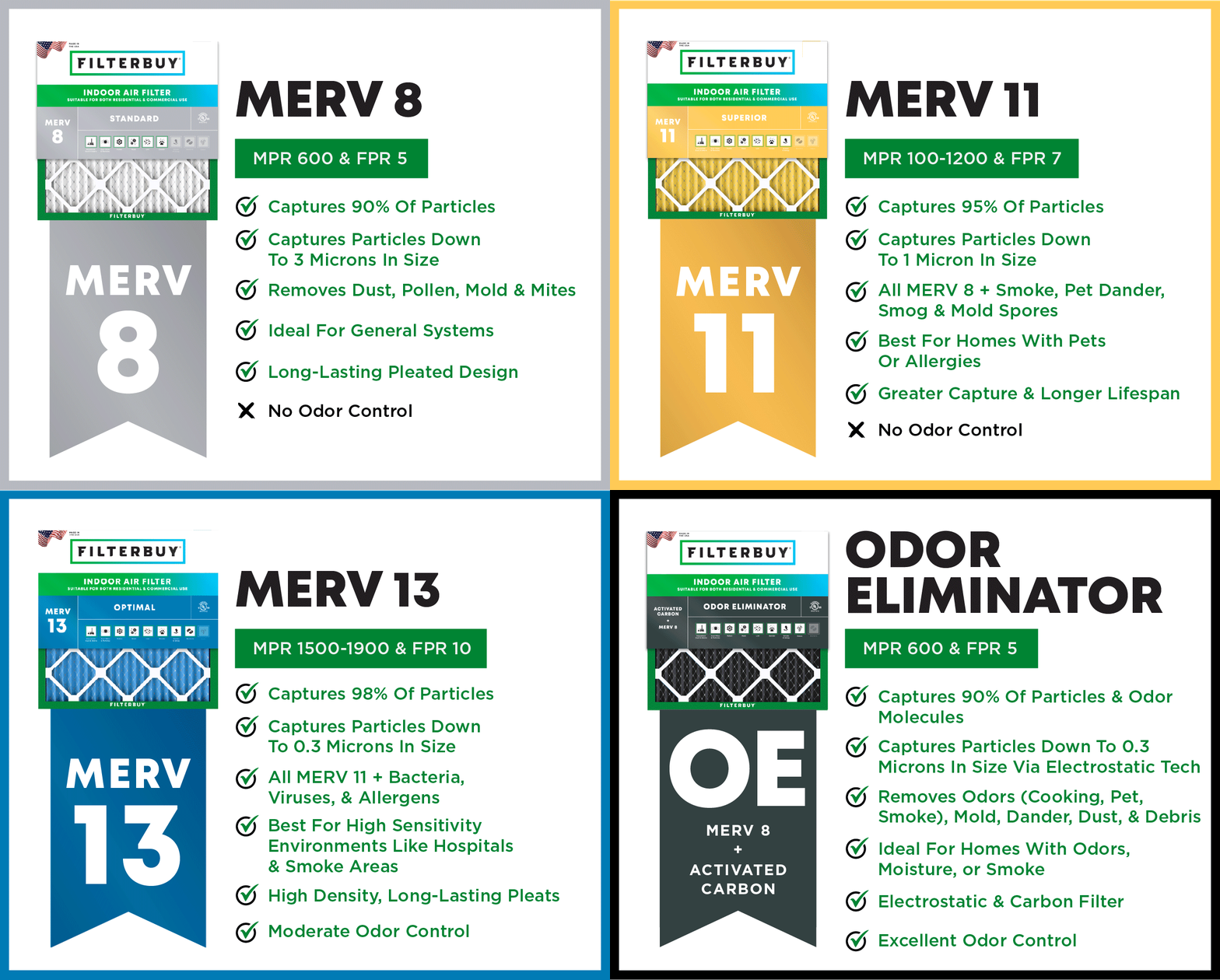
The MERV (Minimum Efficiency Reporting Value) system, established by ASHRAE 52.2-2017, tests filters using three particle size ranges: E1 (0.3–1.0 µm), E2 (1–3 µm), and E3 (3–10 µm). The "minimum efficiency" designation means filters must meet or exceed these percentages across all tested particles in each range.
MERV 13 filters capture at least 50% of particles in the smallest range (E1), which includes many bacteria and some viruses. For the larger ranges, they remove 85% of E2 particles (like pollen and mold spores) and 90% of E3 particles (dust and larger allergens).
HEPA filters operate under different standards set by the US EPA and international organizations. True HEPA filters must capture at least 99.97% of particles at 0.3 micrometers—the Most Penetrating Particle Size (MPPS). This 0.3-micron size represents the most challenging particles to filter due to their aerodynamic properties, making HEPA's performance at this size particularly impressive.
The key difference lies in testing methodology and particle size focus. MERV ratings evaluate performance across broader size ranges, while HEPA certification zeroes in on the most difficult particles to capture.
Most homes: Aim for MERV 13 if your blower motor and filter compartment can accommodate the increased airflow restriction. The CDC and NIOSH recommend MERV 13 or higher when system compatibility allows, as these filters effectively capture respiratory droplets, fine particulate matter, and common allergens.
Wildfire smoke and PM2.5 concerns: MERV 13 filters help significantly with smoke particles, which typically range from 0.1 to 1 micrometers. For areas with frequent wildfire exposure or severe air quality issues, supplement your HVAC system with portable HEPA air cleaners in bedrooms and main living areas.
Medical needs or special circumstances: Households with severely immunocompromised individuals, severe asthma, or other respiratory conditions may benefit from room-based HEPA purifiers. Whole-home HEPA systems exist but require professional engineering to ensure proper airflow, sealing, and system integration—often involving significant ductwork modifications.
The practical approach for most homeowners involves maximizing your HVAC system's filtration capability with MERV 13, then adding targeted HEPA purifiers where needed most.
Compatibility & Airflow (Read This Before Upgrading)
Higher efficiency filters create higher pressure drop across your system, potentially reducing airflow and straining your equipment. The relationship between indoor air quality improvement and system performance requires careful balance.
MERV 13 filters typically create 2-4 times more pressure drop than basic MERV 8 filters. Modern HVAC systems often handle this increase well, especially when using deeper pleated filters (4-inch vs 1-inch) that provide more surface area for air to pass through.
Warning signs your system can't handle higher-efficiency filtration include increased noise from the blower, reduced cooling or heating performance, static pressure alarms (on equipped systems), or ice formation on indoor coils during cooling season.
Before upgrading, check your equipment specifications for maximum filter pressure drop ratings. Consider deeper filters when possible—a 4-inch MERV 13 filter often provides better airflow than a 1-inch MERV 13 while delivering similar particle capture.
When in doubt, consult an HVAC professional who can measure your system's actual airflow and pressure drop with different filter options. This ensures you maximize air quality improvement without compromising system performance or longevity.
Start by measuring your current filter's exact dimensions—width, height, and thickness. Even small measurement errors can result in poor fit and air bypassing around the filter edges.
Choose MERV 13 pleated filters for optimal performance in most residential applications. Consider upgrading to deeper filters (4-inch or 5-inch) if your system accommodates them, as they provide longer service life and better airflow characteristics.
Filter thickness affects both performance and replacement frequency. Thicker filters contain more media, allowing them to capture more particles before requiring replacement. Expect to replace 1-inch filters every 30-60 days in average conditions, while 4-inch filters may last 60-90 days.
Filterbuy's American-made filters feature guaranteed sizing, fast shipping, and auto-delivery options so you never forget a replacement. Our custom sizing service handles non-standard dimensions, ensuring proper fit regardless of your system's requirements.
For most homeowners, MERV 13 filters represent the optimal balance of filtration performance, system compatibility, and cost-effectiveness. These filters capture the vast majority of common allergens, smoke particles, and respiratory droplets while working within the limitations of standard residential HVAC systems.
Add portable HEPA air cleaners in bedrooms or living rooms when your air quality needs exceed what whole-home filtration can provide. This layered approach gives you the benefits of both technologies without the complexity and cost of whole-home HEPA systems.
Ready to upgrade your home's air quality? Filterbuy's MERV 13 filters deliver professional-grade performance with guaranteed fit and fast, free shipping.
Most residential HVAC systems cannot accommodate true HEPA filters due to their high pressure drop requirements. HEPA filters work best in dedicated air purifiers or specially designed whole-home systems with modified ductwork and enhanced blowers.
MERV 13 filters capture many smoke particles effectively, but extremely heavy smoke conditions may require additional protection. Consider supplementing with portable HEPA air cleaners in bedrooms and main living areas during severe wildfire events.
Replace MERV 13 filters every 60-90 days under normal conditions. Homes with pets, smokers, or ongoing construction may need more frequent changes—every 30-45 days. Check filters monthly and replace when visibly dirty or if airflow seems reduced.
When properly sized and compatible with your system, MERV 13 filters shouldn't cause damage. However, forcing incompatible high-efficiency filters can strain blower motors and reduce system lifespan. Always verify compatibility or consult a professional.
MERV 16 filters capture smaller particles more effectively but create significantly more airflow resistance. Most residential systems cannot handle MERV 16 filters, making MERV 13 the practical upper limit for home use.
Standard filter replacement requires no professional help—just ensure proper sizing and directional airflow arrows. However, if considering system modifications for whole-home HEPA or experiencing performance issues, consult an HVAC professional.
Use the same MERV rating across all filters in your system to maintain balanced airflow. Mixing ratings can create uneven pressure drops and reduce overall system efficiency.
Price doesn't always indicate performance. Focus on MERV ratings, proper sizing, and system compatibility rather than cost alone. A well-fitted MERV 13 filter often outperforms a poorly fitted higher-rated filter.

