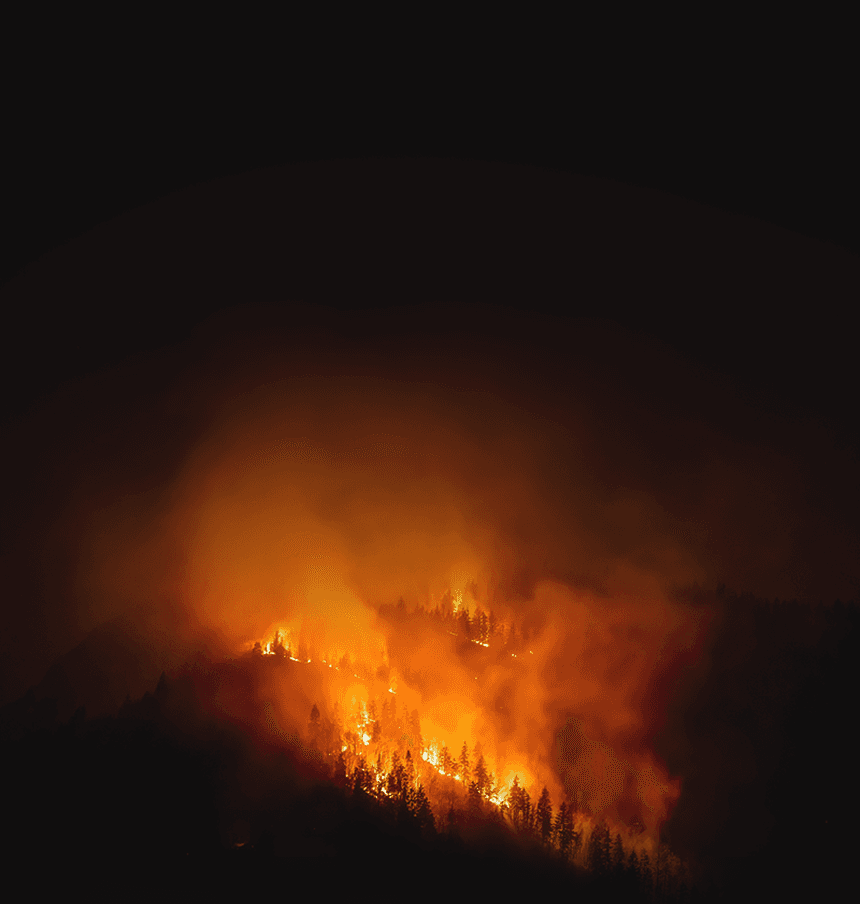
The moment a wildfire starts near you, you'll get an instant alert and simple tips to reduce your smoke exposure.
30xSmaller than a human hair
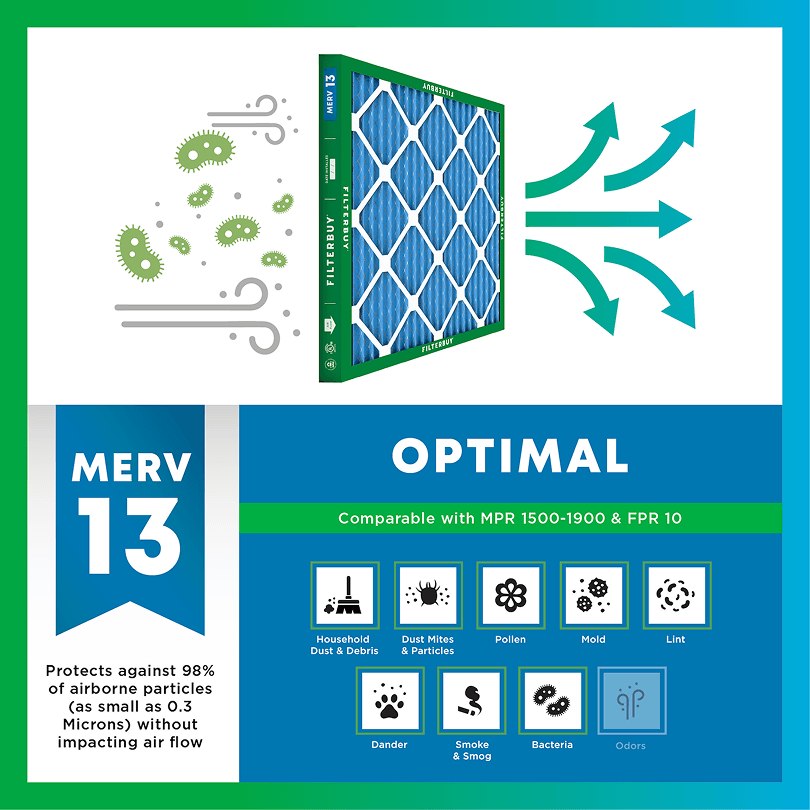
Fine enough to reach deep into the lungs. A MERV 13 is built to capture it.
It Doesn't Stay Local
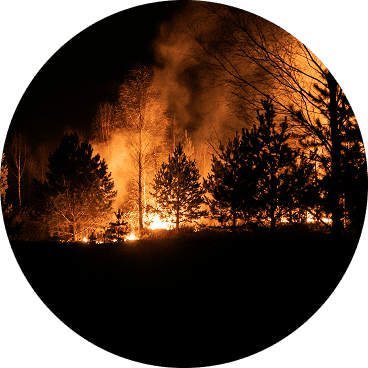
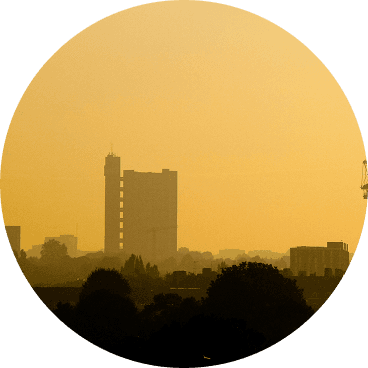
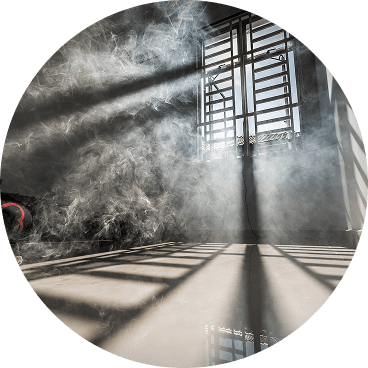
Smoke rides the wind far downwind — you can get smoky air with no fire nearby.
Simple steps to reduce indoor exposure.
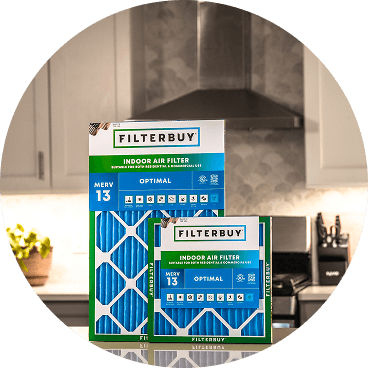
During smoke events, the EPA recommends upgrading to a MERV 13 filter — or the highest-rated filter your system can handle — to help reduce the fine particles smoke brings indoors. MERV 13 is the level most home HVAC systems can run while still capturing PM2.5, the fine particulate that makes up the bulk of wildfire smoke.
Over 70,000 wildfires burn in the U.S. every year.
Wildfire smoke can travel 1,000+ miles, affecting states that aren't even near the blaze.
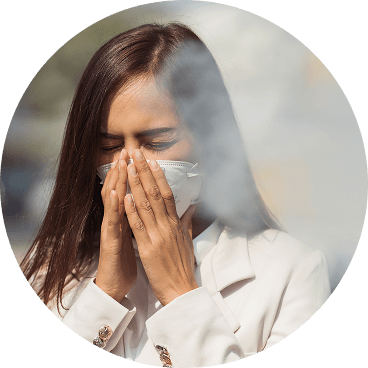
Exposure to wildfire smoke can worsen asthma, trigger heart issues, and lead to ER visits.
Indoor air can hold more fine particles during wildfire events unless it's properly filtered.
The EPA advises using MERV 13 filters or portable HEPA air cleaners during wildfire smoke events.
Use the live wildfire smoke tracker and upgrade your air filters today to protect your lungs and your home.
Shop Filters For Smoke Protection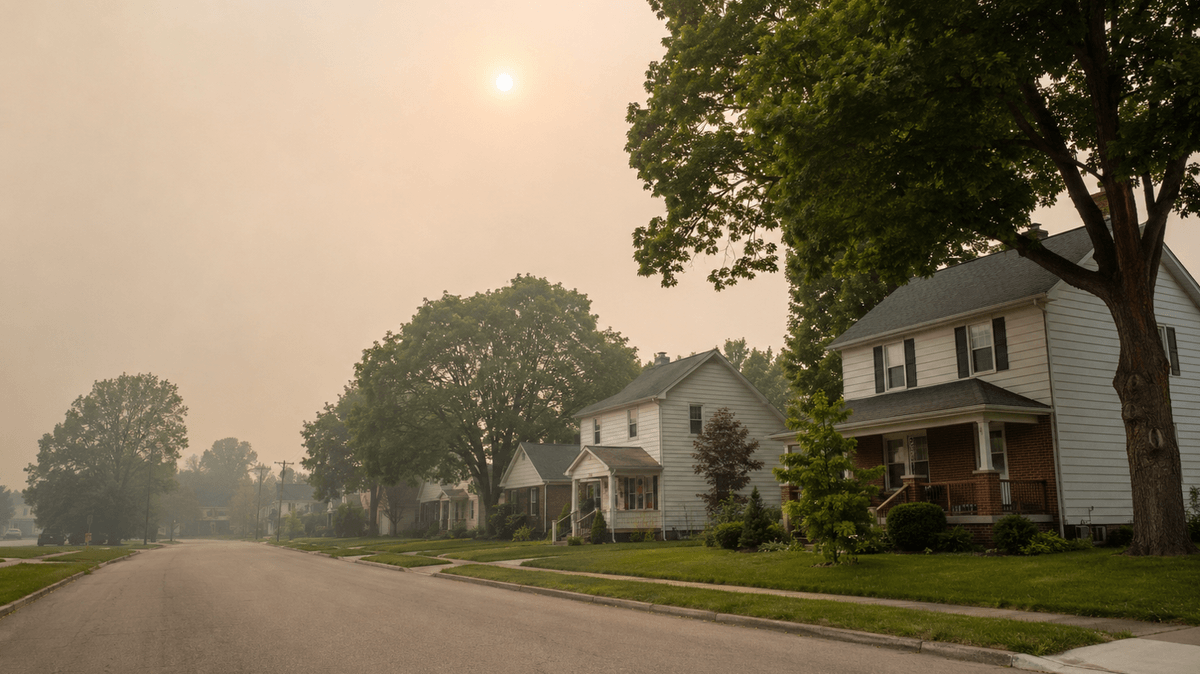
By Michelle Wan, Brand Manager & Air Quality Writer
Reviewed By: David Clark, Licensed HVAC Technician
Published: August 9, 2026 | Updated: August 9, 2026
Toledo, Ohio, sits in one of the least fire-prone corners of the state, and it still recorded the worst air quality in its history in July 2026. Filterbuy has built air filters in the USA since 2013 and served more than two million households, and the pattern we see in Great Lakes cities is not the one most smoke advice is written for. Out west, you watch the fire. Here the fire map stays empty, and the smoke arrives anyway.
Toledo rarely has wildfires of its own, so the fire layer on the map above is usually empty. What Toledo gets is smoke that traveled here, typically from Canadian wildfires hundreds of miles away, which can drop local air quality from good to hazardous in under a day. When smoke arrives, the fix is indoors, and it is what Filterbuy builds for: a MERV 13 filter, the fan set to "On," and the fresh-air intake closed.
The fire map and the smoke map answer different questions. In Toledo, the fire map is almost always empty; the smoke map is the one that matters.
On July 16, 2026, Toledo recorded hazardous air quality at levels never before measured locally, with sensor readings past 600 and a Toledo-Lucas County Health Department advisory.
The U.S. EPA recommends a MERV 13 or higher filter during smoky periods, with the system set to recirculate and the fan running continuously.
A high AQI in a Toledo summer is not always smoke. Ozone peaks in the same months, and a filter upgrade does nothing for it.
The State of Ohio Enhanced Hazard Mitigation Plan classifies ODNR Region 1, which includes Lucas County, as predominantly agricultural and unforested, with lower wildfire risk than the forested southeast. Ohio does still burn: the ODNR Division of Forestry tracks fires in Lucas, Henry, and Fulton counties, which contain parts of Maumee State Forest, and debris burning is restricted in unincorporated areas from 6 a.m. to 6 p.m. in March through May and October through November.
If the fire layer is clear but the sky is hazy, the smoke came from somewhere else.
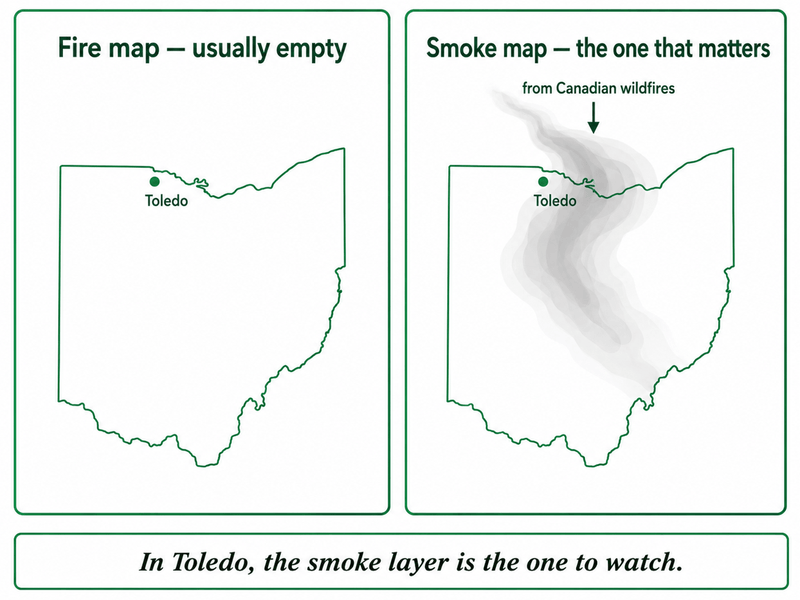
Almost always from far away. Smoke lofts high into the atmosphere near a fire, travels hundreds of miles on upper-level winds, then mixes back to the surface. That is how Toledo turns smoky with nothing burning in the state.
Canadian wildfire smoke is the dominant source for Toledo. Prescribed burns in the Oak Openings region and state forests are announced in advance by ODNR or Metroparks Toledo.
This is the mistake we watch Toledo homeowners make: check a wildfire map, see nothing burning in Ohio, conclude the air is fine. Filterbuy calls this the two-map problem. Fire maps answer "is something burning near me," smoke maps answer "is there smoke over me," and in northwest Ohio those rarely match. Our guide to reading a wildfire smoke map covers which marker to trust.
The reading above shows Toledo's current Air Quality Index, the U.S. EPA's 0–500 scale for outdoor air pollution. During smoke events, the driving pollutant is PM2.5.
Follow the Toledo-Lucas County Health Department and Ohio EPA for official advisories. This page is a tracking and preparation tool, not an emergency alert system.
Follow the Toledo-Lucas County Health Department and Ohio EPA for official advisories; this page is a tracking tool, not an emergency alert system. Compare conditions on the Ohio wildfire and smoke map, the live Toledo AQI map, or the USA air quality map. Lake Erie West Regional Council runs neighborhood sensors in Lucas and Wood counties.
Not always, and in Toledo the difference decides what you do. Toledo's smoke season runs May through September, which is also ozone season, and the City of Toledo issues a twice-weekly ozone forecast all summer. An AQI of 130 from ozone and 130 from smoke are the same number and two different problems.
A MERV 13 filter (ours included) captures particles, not gases. It works against the PM2.5 in smoke and does nothing against ozone. If the smoke layer above is empty but AQI climbs on a hot, still afternoon, you are most likely looking at ozone: close the windows, run the AC, move the run to morning. Check the smoke layer before you spend anything.
Toledo does not need a nearby fire to have dangerous air. On July 16, 2026, dense Canadian wildfire smoke settled over northwest Ohio and produced the worst air quality on local record, with sensor readings past 600 and a hazardous-category advisory from the Toledo-Lucas County Health Department.
The warning window is short. Forecasters flagged elevated AQI a day ahead, but the jump from unhealthy to hazardous took hours.
The exposure happened indoors. Residents were told to stay inside, which only helps if the indoor air is being cleaned. A thin fiberglass pad does close to nothing against PM2.5, and that is what most Toledo homes had.
EPA guidance comes down to five moves: install a MERV 13 or the highest rating your system takes, switch the fan to "On" with the fresh-air intake closed, seal windows and doors, set up one clean room with a portable air cleaner, and stop adding smoke indoors. Do the first before smoke season. The rest take minutes.
Install a MERV 13, or the highest rating your system accepts. The EPA recommends MERV 13 or higher during smoky periods and notes most systems handle it if the filter is replaced often.
Set the fan to "On," not "Auto." On "Auto," air only passes through the filter during heating or cooling cycles.
Seal the envelope. Older Toledo housing stock leaks more than newer construction, so weatherstripping earns its keep.
Build one clean room. Pick the room you use most and add an ozone-free portable air cleaner whose smoke (tobacco) CADR is at least two-thirds of the room's square footage.
Stop adding smoke of your own. No candles, wood fires, or frying, and skip vacuuming. See our 7 steps to keep wildfire smoke out of your house.
One caution, because Toledo's smoke days are hot. Sealing the house assumes you can keep it cool. With no air conditioning, closing up in a heat wave carries its own risk, and the EPA says so plainly. Go somewhere cooled, or check whether Lucas County has opened cooling centers.
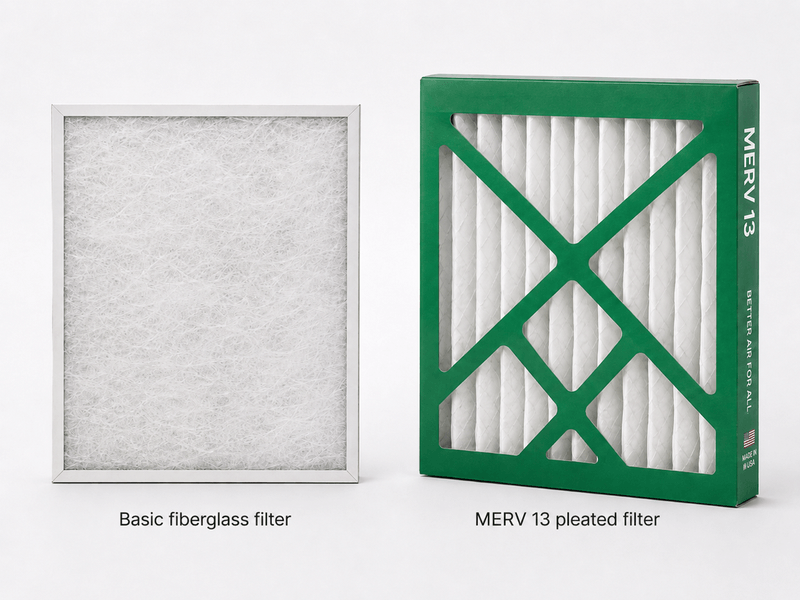
Wildfire smoke is mostly PM2.5, and that fine fraction is what basic filters miss. After a decade of building filters at Filterbuy, the setup we see most is a one-inch fiberglass pad doing a job it was never built for: it catches lint and large dust, and smoke passes straight through.
HEPA is used in portable air cleaners, not standard furnace slots. Use the highest MERV rating your system accepts; an HVAC professional can confirm the ceiling.
I pull AQI readings for U.S. cities every morning, and Toledo is the one that still surprises people. There is no fire anywhere near them. The number climbs anyway. The filter you needed was the one you bought in June.
Michelle Wan, Brand Manager and Air Quality Writer, Filterbuy
AirNow's guide to the Fire and Smoke Map: how to read the live EPA and U.S. Forest Service map.
NOAA's Hazard Mapping System: the satellite analysis behind the plume outlines.
EPA guidance on reducing smoke exposure: the federal recommendations this page follows.
CDC guidance on wildfires and your safety: who is at higher risk, and how to protect them.
Toledo-Lucas County Health Department advisories: the agency that issues Toledo's advisories.
600+ air quality sensor readings in Toledo on July 16, 2026, during a Canadian smoke event.
Source: WTOL 11 coverage of Toledo's historic air quality readings
First on record. Toledo had never previously measured hazardous air quality at that level.
Source: The Blade's report on Toledo's record-setting air quality day
~800 wildfires a year in Ohio, burning 4,000–5,000 acres, per the Ohio Emergency Management Agency.
Source: Spectrum News 1 on ODNR's Ohio wildfire season guidance
Check the fire layer above. Local wildfires are uncommon in Lucas County, so haze over Toledo is usually transported smoke rather than a nearby fire.
If the smoke layer is empty and AQI still climbs on a hot, calm afternoon, it is probably ground-level ozone. A filter upgrade will not help, though closing up and running the AC will.
Only with a PM2.5-capable filter and the system on recirculate. A central system with a MERV 13 and the fan on "On" filters smoke; a window unit with a basic screen does very little. More detail: do air conditioners filter wildfire smoke?
Every one to two weeks while AQI stays elevated, and sooner once the air looks dark. Smoke loads a filter in weeks, not months.
Children are at higher risk. Above AQI 100, keep outdoor play short; above 150, move it indoors. Talk to your pediatrician if your child has asthma.
If smoke is over Toledo now: close the windows, switch to recirculate, set the fan to "On," and stay in.
If the air is clear today: this is the window people skip. Orders spike after the advisory, not before. Put a Filterbuy MERV 13 in now.
See MERV 13 vs HEPA for wildfire smoke for the full comparison, or order a custom size if your slot is odd. Set up auto-delivery now!
Michelle Wan is Filterbuy's Brand Manager and Air Quality Writer. She earned a B.A. in Sociology from the University of California, Santa Cruz in 2021, and covers AQI trends, wildfire smoke, and indoor air quality across Filterbuy's resource library and city pages.
Reviewed by. David Clark, CEO of Filterbuy HVAC Solutions and Licensed HVAC Technician
AQI (Air Quality Index): the U.S. EPA's 0–500 scale for outdoor air pollution, in six categories from Good to Hazardous.
PM2.5: fine particulate matter 2.5 micrometers or smaller, the main pollutant in wildfire smoke.
MERV: Minimum Efficiency Reporting Value, the ASHRAE 1–16 scale for how well a filter captures particles.
HEPA: High-Efficiency Particulate Air filter, capturing 99.97% of particles at 0.3 microns.
Filterbuy: an American air filter manufacturer, founded in 2013, producing HVAC filters in 600+ sizes, sold factory-direct.
Subscribe to wildfire smoke alerts for Toledo, OH, to get a heads-up before the next event reaches your area.