
Boston, MA Live Wildfire Smoke Map
Get Alerts For Wildfires In Your Area
The moment a wildfire starts near you, you'll get an instant alert and simple tips to reduce your smoke exposure.
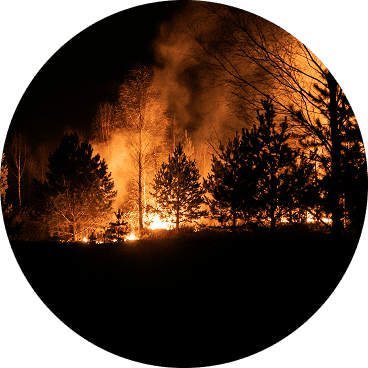
What's In The Smoke
30xSmaller than a human hair
Fine enough to reach deep into the lungs. A MERV 13 is built to capture it.
How Far It Travels


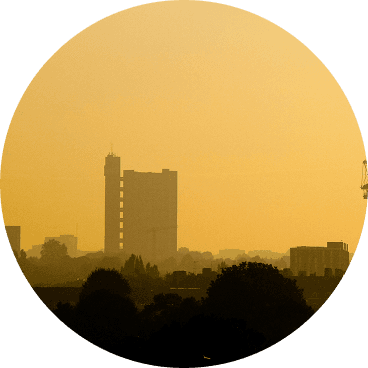
It Doesn't Stay Local
Smoke rides the wind far downwind — you can get smoky air with no fire nearby.
What To Do During A Smoke Event
Simple steps to reduce indoor exposure.
- Stay In, Close UpShut windows and doors to keep smoke out.
- Set Fan To "On"Keeps air cycling through your filter, not just when heating or cooling.
- Recirculate AirSwitch off fresh-air intake so you're not pulling smoke in.
- Run A MERV 13Built to capture the fine PM2.5 in smoke.
- Add A PurifierExtra filtration for the room you use most.
- Wear an N95 if OutsideFits snug to block fine particles — a cloth mask won't.


The Best Air Filter For Wildfire Smoke
During smoke events, the EPA recommends upgrading to a MERV 13 filter — or the highest-rated filter your system can handle — to help reduce the fine particles smoke brings indoors. MERV 13 is the level most home HVAC systems can run while still capturing PM2.5, the fine particulate that makes up the bulk of wildfire smoke.
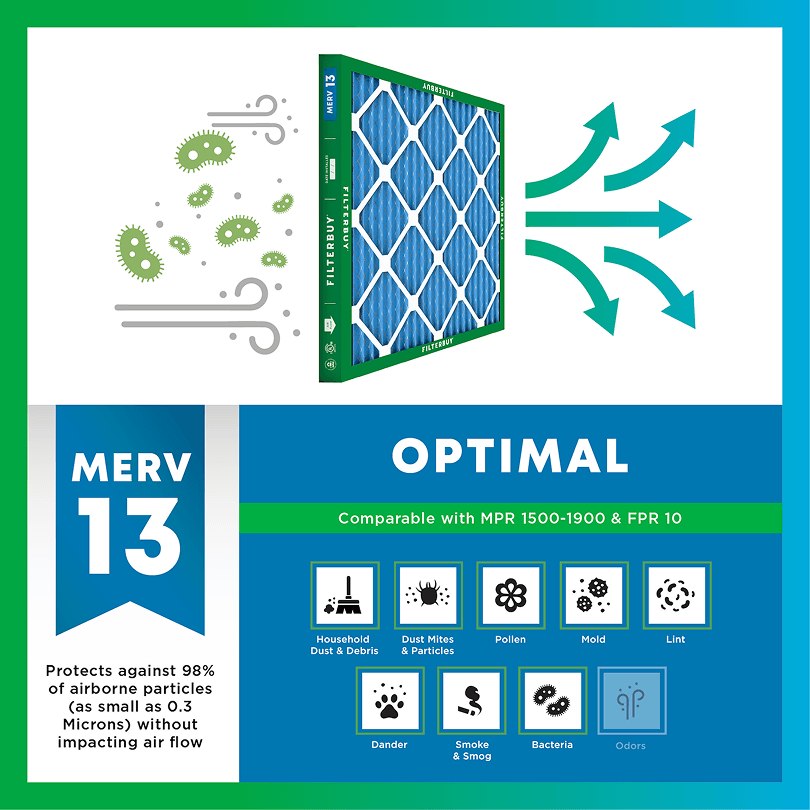
- Captures PM2.5 particles
- Blocks ash, soot, and smoke odor
- Keeps your indoor air safe—even when the outdoor air is dangerous
- Meets the EPA's recommended rating for filtering fine wildfire smoke particles.

Wildfire Smoke FAQs
Facts About Wildfires
Over 70,000 wildfires burn in the U.S. every year.
Wildfire smoke can travel 1,000+ miles, affecting states that aren't even near the blaze.
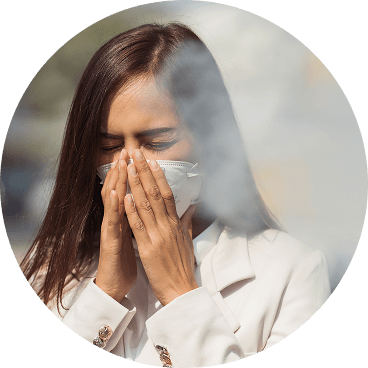
Exposure to wildfire smoke can worsen asthma, trigger heart issues, and lead to ER visits.
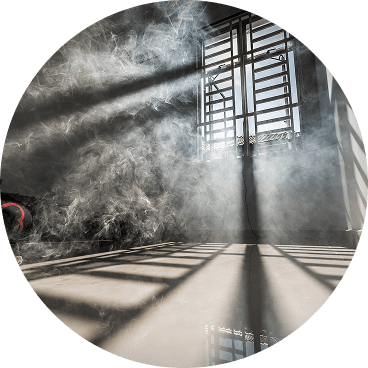
Indoor air can hold more fine particles during wildfire events unless it's properly filtered.
The EPA advises using MERV 13 filters or portable HEPA air cleaners during wildfire smoke events.
Don't Wait Until The Smoke's Inside.
Use the live wildfire smoke tracker and upgrade your air filters today to protect your lungs and your home.
Shop Filters For Smoke Protection
Is Wildfire Smoke Reaching You? Current Live Forest Wildfire and Smoke Map Today in Boston, MA | Air Quality Alerts
Author: Michelle Wan, Brand Manager and Air Quality Writer | Reviewer: David Clark, Licensed HVAC Technician | Updated: August 26, 2026
TL;DR
Boston’s wildfire smoke almost never comes from a fire near Boston. It rides the wind down from Quebec, Ontario, or the Prairie provinces, arriving 12 to 36 hours after release, and Filterbuy’s live Boston smoke map above shows the plume alongside your nearest monitor’s AQI. At AQI 100 we tell customers to run the full routine: MERV 13 in the HVAC, thermostat fan to On, a portable HEPA cleaner in each occupied room, and the house closed up. MERV is the industry scale for what a filter captures, and MERV 13 is the tier the EPA recommends during smoke events.
Key Takeaways
Boston sits downwind of North America’s busiest smoke corridor. Quebec, Ontario, and Prairie-province fires drive most of the heavy smoke days here.
Our action line is AQI 100. That’s a Filterbuy threshold rather than an EPA category change, and we set it early on purpose: by the time you smell smoke it’s been in your ducts for hours.
MERV 13 is the tier for smoke. The EPA recommends MERV 13 or higher in a central system during smoke events. Fit matters as much as the number, so measure your slot before you order.
Your fan setting matters as much as your filter. On Auto the blower only runs while the system’s heating or cooling, so on a mild day the filter barely sees any air.
A quiet map can still be a bad air day. Boston’s worst readings came from fires more than 1,000 miles away.
Half of Northeast homes have no central air. With no whole-home layer available, portable HEPA cleaners become the primary defense.
Boston Air Quality Today: How Wildfire Smoke Moves the AQI
Boston’s Air Quality Index during a smoke event is driven almost entirely by PM2.5, meaning fine particles 2.5 micrometers and smaller. The Filterbuy map above plots EPA monitors and sensors across Greater Boston, the North Shore, Worcester County, and the Berkshires.
Read your nearest monitor first, then the trend arrow. A climbing trend during an active plume means conditions will get worse before they get better. What makes that worth acting on is where the particles end up. PM2.5 slips past the upper airway into deep lung tissue and the bloodstream, which is why asthmatics feel a smoke day within minutes when everyone else just notices a smell.
For ozone, PM10, and nitrogen dioxide, see the Boston live AQI map.
Boston Smoke Forecast: The Next 24 to 48 Hours
Boston’s smoke forecast depends on upper-level wind out of Canada. When the jet stream aligns northwest-to-southeast across Ontario and Quebec, plumes reach Greater Boston within 12 to 36 hours. NOAA’s HRRR-Smoke model forecasts near-surface smoke 48 hours out; MassDEP issues a next-day Boston forecast each afternoon.
Two things decide what a plume does to you. Altitude settles whether you breathe it at all: smoke that stays aloft gives Boston milky skies without moving ground readings, while smoke that mixes to the surface is what triggers alerts. Surface wind settles where it lands. An onshore easterly off the Atlantic dilutes the airmass and pushes the worst of it west, which is why alerts often cover Worcester and the Berkshires on days eastern Massachusetts gets dropped.
Three sources carry the forecast:
NOAA HRRR-Smoke: hourly smoke forecasts, 48 hours out.
MassDEP MassAir Online: next-day AQI forecast for the Boston metro.
National Weather Service Boston: issues the Air Quality Alerts.
Recheck every two to three hours while an event’s running. A temperature inversion, meaning a lid of warm air that traps cooler air and smoke near the ground, can move Boston from Moderate to Unhealthy for Sensitive Groups faster than a daily forecast will catch.
Forest Fires Near Boston Today: Reading the Live Fire Map
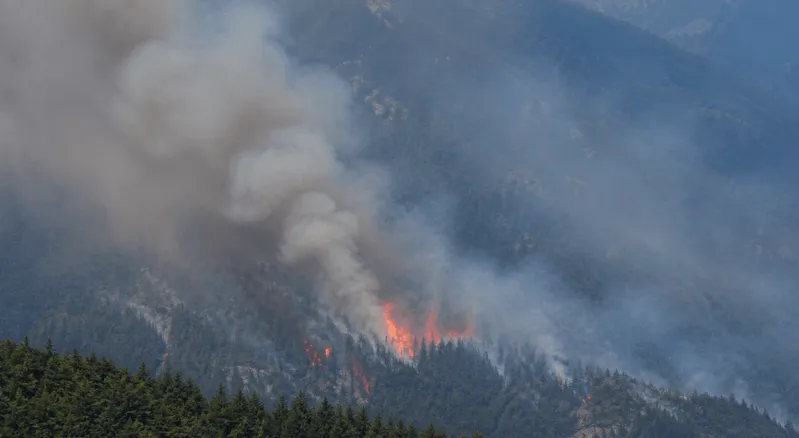
Active wildfires within 200 miles of Boston are uncommon outside the spring and fall dry windows, and local fires cluster in Essex County, Middlesex County, and around the Quabbin. The map above plots them from NASA FIRMS satellite detections.
An empty map near Boston doesn’t mean clean air. The heaviest smoke days here all began 500 to 1,500 miles away, and a dry October weekend can fill the North Shore with smoke from fires an hour up Route 1.
The Massachusetts wildfire smoke map tracks the same feeds statewide, the national wildfire smoke map zooms out further, and our guide covers how to read a wildfire smoke map.
What Each AQI Level Means for a Boston Household
The Air Quality Index runs 0 to 500 across six bands, and each step up changes both how bad the air is and who needs to do something about it. The categories and ranges below are the EPA’s. The action line at 100 is ours.
AQI 0 to 50, Good. Normal coastal baseline for Boston. Open the windows, and use the clear stretch to swap a loaded filter.
AQI 51 to 100, Moderate. Usually a distant plume starting to mix down. Get the filter in and keep a spare on hand. At 100, start the full routine.
AQI 101 to 150, Unhealthy for Sensitive Groups. The peak of a typical Canadian transport day here. MERV 13 in the HVAC, thermostat fan on On, a HEPA cleaner in each occupied room, house closed up.
AQI 151 to 200, Unhealthy. Reached in June 2023 and July 2026. Same routine, held in place. Check the filter more often than usual and keep replacements handy.
AQI 201 to 300, Very Unhealthy. Rare in Boston. Follow AirNow and MassDEP guidance first, set up one clean room, and treat filtration as one layer underneath that guidance.
AQI 301 and above, Hazardous. Not recorded in Boston. Local authorities and AirNow lead. Follow their instructions before anything else.
Massachusetts Wildfire Smoke Conditions: The Last Three Years
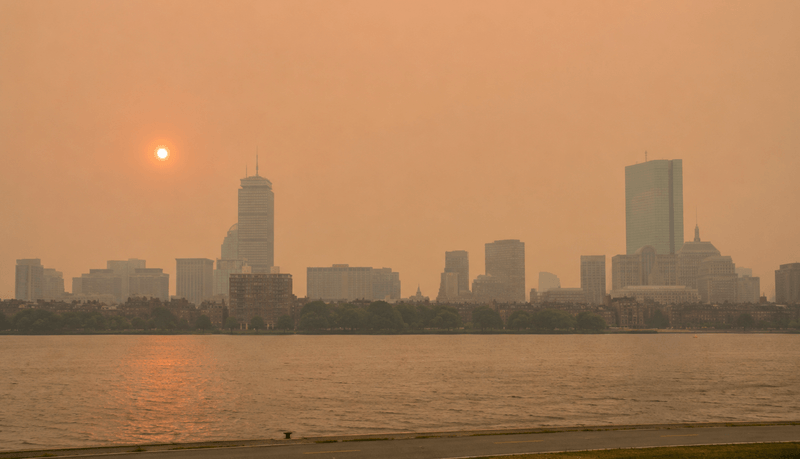
The largest recent event ran July 15 to 16, 2026, when Ontario and Minnesota fires drove a plume into New England and MassDEP issued a statewide air quality alert. Fall 2024 was the local version, a drought that turned October and November into an unprecedented brush-fire season across Essex and Middlesex counties. June 2023 still sets the benchmark.
What to Do When Boston’s AQI Passes 100
AQI 100 is where Filterbuy tells customers to move. That threshold belongs to us. What the EPA recommends is a high-efficiency filter rated MERV 13 or higher in a central system during smoke events, without attaching an AQI number to it (EPA). We put the line at 100 so you’re set up before conditions get worse. Four steps, in this order.
Put a MERV 13 filter in the HVAC. If your system’s running MERV 8 or MERV 11, switch. The central system moves far more air than any portable unit, so this is your whole-home layer. Most furnaces and HVAC systems accommodate MERV 13 without equipment problems as long as the filter gets replaced often, and your HVAC manual will confirm the rating yours takes, the same quick check you’d do on size.
Set the thermostat fan to On. On Auto the blower only runs while the system’s heating or cooling. On On it runs continuously, so air keeps moving through the filter.
Run a portable HEPA air cleaner in each occupied room, bedrooms first. The EPA clean-room rule is a unit whose smoke CADR of at least two-thirds of the room’s square footage, so a 300-square-foot bedroom wants a smoke CADR of about 200. Skip anything that makes ozone. The EPA advises against ozone-producing cleaners.
Close the house up. Windows and doors shut, and don’t add to what’s already inside: no candles, no frying, no vacuuming unless the vacuum is sealed, no smoking.
Check the filter while smoke is around instead of waiting on the usual interval. Replace it when it looks dirty, dark brown or black, which can come well before the date on the box. Keep a spare on hand so a swap doesn’t turn into a wait for delivery.
Two layers, two jobs. The MERV 13 sits in your system and treats the whole house. The portable cleaner sits in one room and treats that room harder than the central system can. Run both.
One thing filtration doesn’t do: it captures particles, and wildfire smoke is particles plus gases. It reduces what’s in your air. When the AQI climbs into the red or purple bands, AirNow and MassDEP guidance come first, and filtration is one layer underneath that guidance.
If Your Boston Home Has No Central Air
Most wildfire smoke advice assumes a ducted central HVAC system, which in New England is a shakier assumption than it sounds. Half of Northeast households run window units, wall units, mini-splits, or portable ACs as their main cooling equipment instead of central air (U.S. Energy Information Administration, 2020 Residential Energy Consumption Survey). In a steam-heated Boston triple-decker there’s no fan setting to switch and no filter slot to check, so the two HVAC steps above have nothing to act on.
If that’s your building, portable HEPA cleaners carry the whole load. Protect the rooms you actually use:
Close the outdoor damper or vent on a window AC. Plenty of them pull outside air in by default.
A mini-split’s washable mesh filter is there to protect the coil. It carries no PM2.5 rating, so don’t count it as filtration.
Start with the rooms you sleep in. Shut the door and size the cleaner by smoke CADR, which the EPA puts at two-thirds of the room’s square footage: about 200 for a 300-square-foot bedroom.
A box fan paired with a MERV 13 filter is a reasonable stopgap, though not a replacement for a certified air cleaner. EPA research found the design cuts smoke concentrations. Use a certified fan from 2012 or newer, and don’t leave it running unattended.
If you rent, you can’t change the building’s system, so this is your whole strategy.
Why Filter Fit Matters More Than MERV Rating
A disclosure first: Filterbuy makes the MERV 13 filters this section talks about, so read it with that in mind. The MERV 13 recommendation isn’t ours. It comes from EPA guidance on wildfire smoke and indoor air quality, and it holds whether you buy from us or not.
What building filters teaches you is that fit matters as much as rating. A filter that’s loose in the track lets smoky air slip around the edges, whatever number is printed on the frame. Boston’s older housing is full of returns cut to whatever was on hand at the time.
Finding your size is the easy part. Measure the old filter, or the slot if there isn’t one in there. Most homes land on a stocked size, and anything unusual we cut to the eighth of an inch. We cut, pleat, and frame every one in our own US plants, including custom air filter sizes.
On the ladder, MERV 11 is the usual pick for allergies, pets, and pollen. MERV 13 is the tier for smoke, and which MERV rating to use on high-AQI days has the longer version.
Supporting Statistics
Three findings Filterbuy compiled from federal and national sources.
17% more asthma ER visits on smoke days. CDC found asthma-associated emergency department visits ran 17% above expected nationally across the 19 wildfire smoke days of April–August 2023, with the largest jumps among people aged 5 to 17 and 18 to 64. CDC counted a smoke day as AQI 101 or higher. Filterbuy sets its action line just below that, at 100, so you’re set up before the air reaches the range in the study. Source: CDC, Morbidity and Mortality Weekly Report, 2023.
Essex County holds the state’s only failing grade for daily soot. In the American Lung Association’s State of the Air 2026, Essex County, which covers Salem, Lynn, Lawrence, and Gloucester, averaged 3.3 unhealthy particle-pollution days a year, the only F in the state. That one county dropped the Boston metro from 114th to 53rd worst nationally. Source: American Lung Association, 2026.
Massachusetts wildfire activity rose roughly 1,200% in fall 2024. DCR’s Bureau of Forest Fire Control reported wildfire occurrence up about 1,200% across October and November 2024, with more than 660 fires burning 4,000 acres. The National Weather Service issued 14 red flag warnings that November, an all-time record. Source: Massachusetts DCR, 2025.
Frequently Asked Questions About Boston Wildfire Smoke
Glossary
AQI (Air Quality Index): The EPA’s 0-to-500 scale for daily air quality, in six bands.
PM2.5: Fine particulate matter 2.5 micrometers or smaller, the main pollutant in wildfire smoke.
MERV: Minimum Efficiency Reporting Value, the industry scale for what a filter captures. Higher numbers catch smaller particles.
MERV 13: The rating the EPA recommends for wildfire smoke.
HEPA: High Efficiency Particulate Air, the filtration standard used in portable room air cleaners.
MassDEP: The Massachusetts Department of Environmental Protection, which runs state air monitoring.
CADR: Clean Air Delivery Rate, the measure of how fast a portable air cleaner filters a room.