
Massachusetts Live Wildfire Smoke Map
Get Alerts For Wildfires In Your Area
The moment a wildfire starts near you, you'll get an instant alert and simple tips to reduce your smoke exposure.
What's In The Smoke
30xSmaller than a human hair
Fine enough to reach deep into the lungs. A MERV 13 is built to capture it.
How Far It Travels


It Doesn't Stay Local
Smoke rides the wind far downwind — you can get smoky air with no fire nearby.
What To Do During A Smoke Event
Simple steps to reduce indoor exposure.
- Stay In, Close UpShut windows and doors to keep smoke out.
- Set Fan To "On"Keeps air cycling through your filter, not just when heating or cooling.
- Recirculate AirSwitch off fresh-air intake so you're not pulling smoke in.
- Run A MERV 13Built to capture the fine PM2.5 in smoke.
- Add A PurifierExtra filtration for the room you use most.
- Wear an N95 if OutsideFits snug to block fine particles — a cloth mask won't.


The Best Air Filter For Wildfire Smoke
During smoke events, the EPA recommends upgrading to a MERV 13 filter — or the highest-rated filter your system can handle — to help reduce the fine particles smoke brings indoors. MERV 13 is the level most home HVAC systems can run while still capturing PM2.5, the fine particulate that makes up the bulk of wildfire smoke.
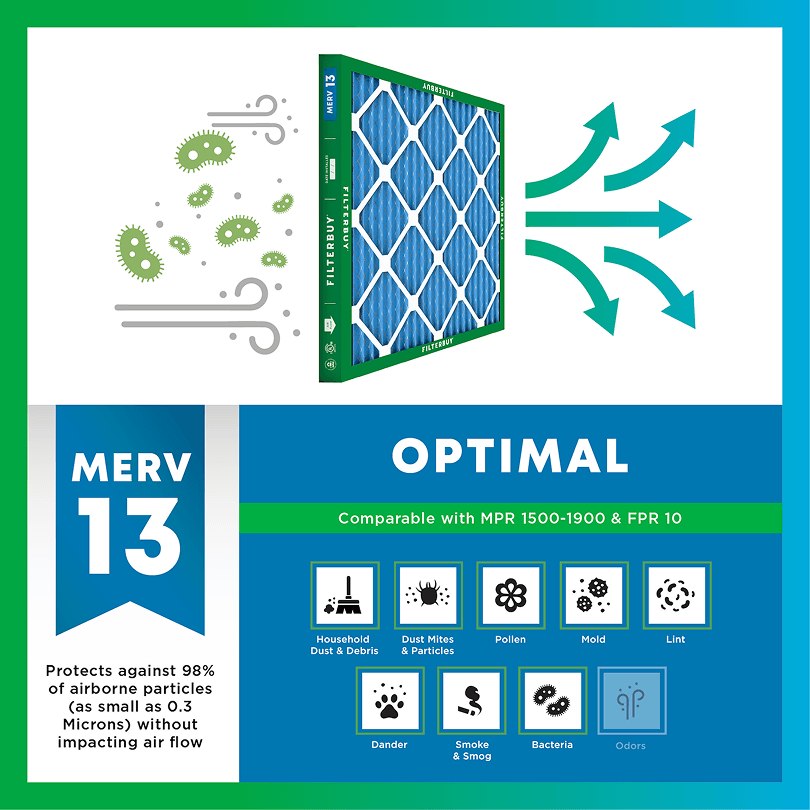
- Captures PM2.5 particles
- Blocks ash, soot, and smoke odor
- Keeps your indoor air safe—even when the outdoor air is dangerous
- Meets the EPA's recommended rating for filtering fine wildfire smoke particles.

Wildfire Smoke FAQs
Facts About Wildfires
Over 70,000 wildfires burn in the U.S. every year.
Wildfire smoke can travel 1,000+ miles, affecting states that aren't even near the blaze.
Exposure to wildfire smoke can worsen asthma, trigger heart issues, and lead to ER visits.
Indoor air can hold more fine particles during wildfire events unless it's properly filtered.
The EPA advises using MERV 13 filters or portable HEPA air cleaners during wildfire smoke events.
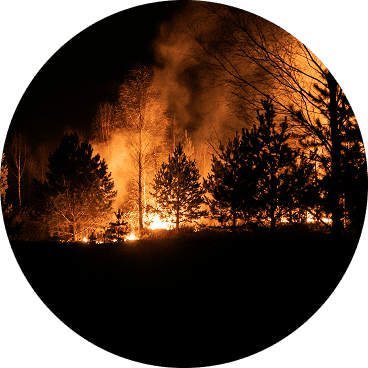
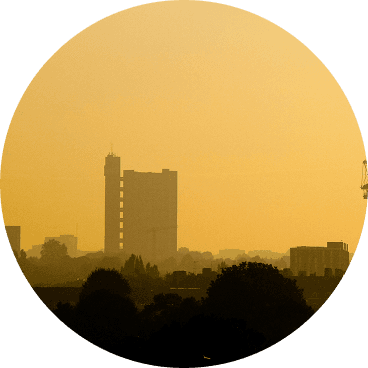
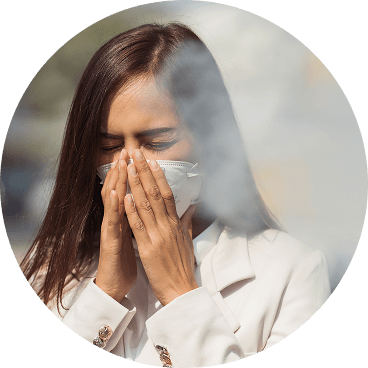
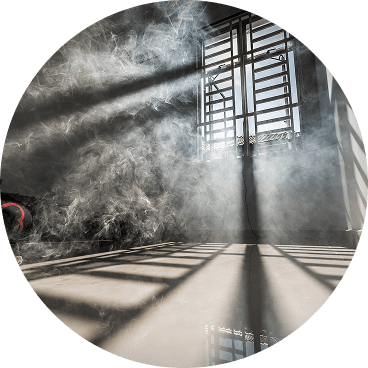
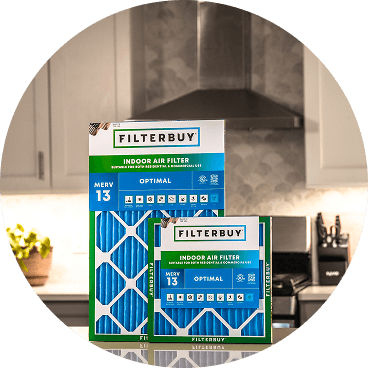
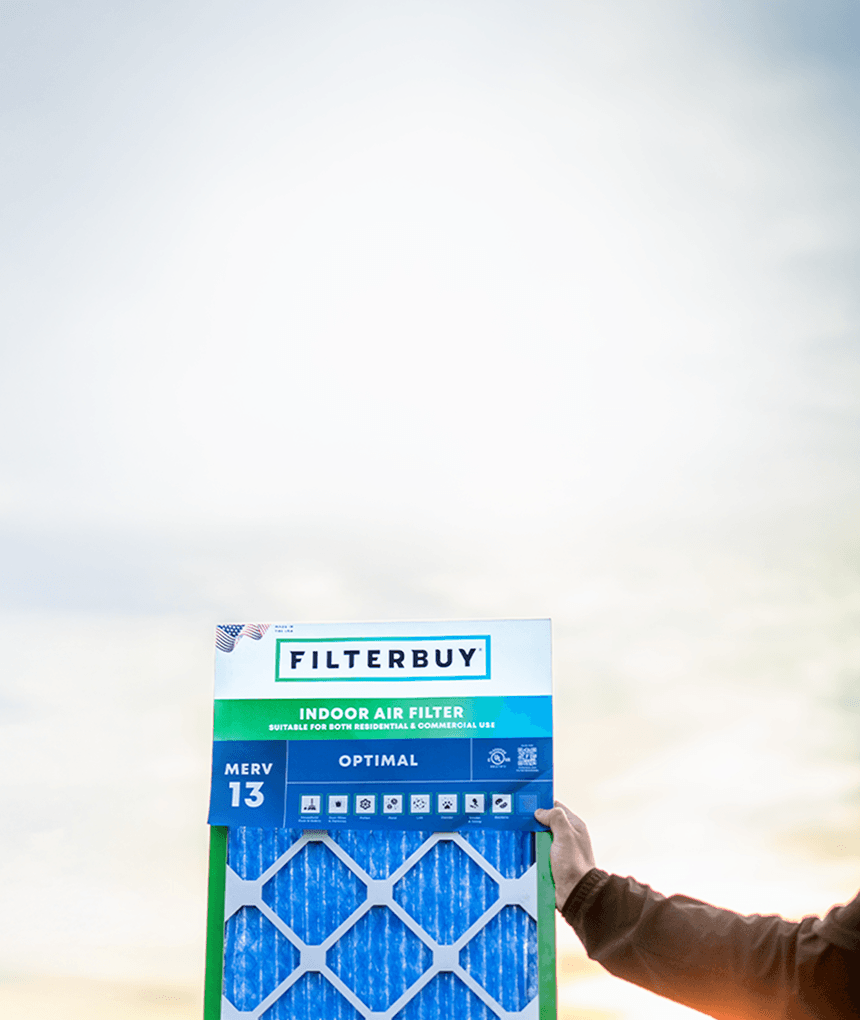
Don't Wait Until The Smoke's Inside.
Use the live wildfire smoke tracker and upgrade your air filters today to protect your lungs and your home.
Shop Filters For Smoke Protection
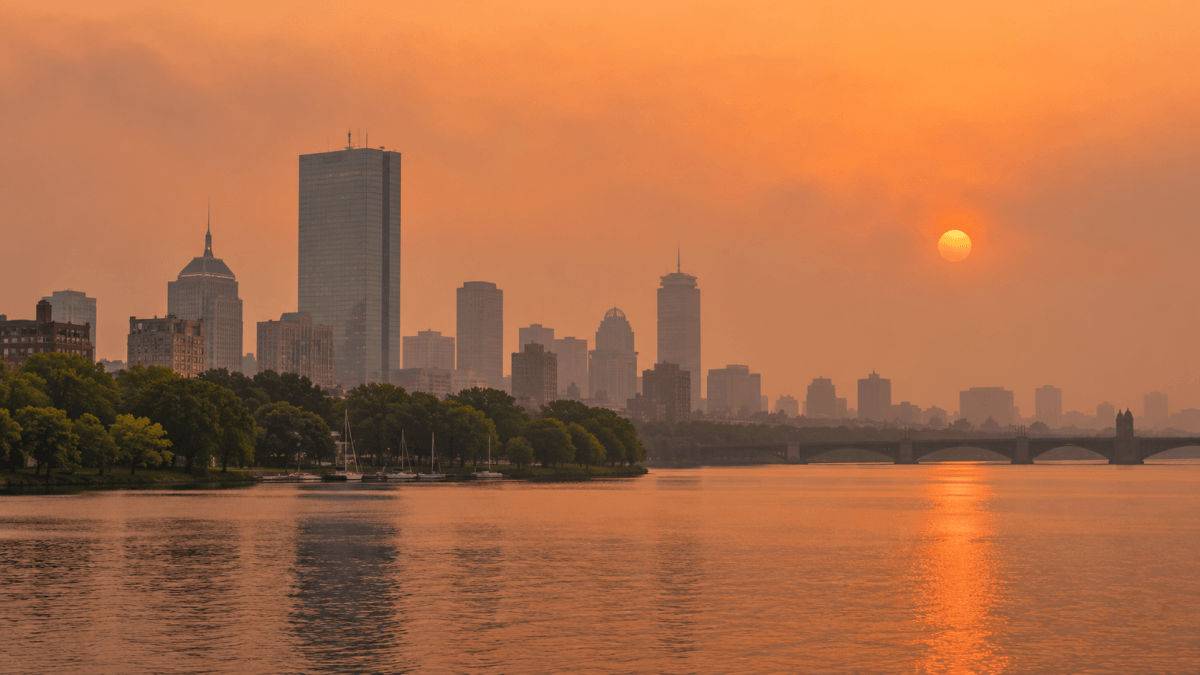
Is Smoke Near You? Current Live Forest Wildfire Map Today
Massachusetts Fire Zones & Evacuation Routes
TL;DR
Massachusetts gets wildfire smoke from two directions at once. Transported smoke arrives on upper-level winds from Canadian and northern U.S. fires, while in-state brush fires burn close to the ground and spike air quality locally. The live map below layers NOAA plumes and fire locations over real-time EPA readings for every county. Find your AQI in the Current Conditions table, then filter your indoor air with a MERV 13 if you have ducts or a portable HEPA if you do not. Filterbuy comes at this from an unusual angle: we make the filters, customers ship the used ones back, and Massachusetts returns look different during a smoke event.
Current Conditions in Massachusetts
Massachusetts air is clean most of the year, but wildfire smoke changes that fast. In August 2025, Canadian smoke triggered a statewide air quality advisory that lingered for three days over Pittsfield and Springfield, where fine-particle levels climbed above federal health limits. In July 2026, smoke returned statewide, pushing Boston's AQI to 130 and settling thickest along the Mass Pike through Worcester and Springfield. Add summer ozone alerts from Boston to the Pioneer Valley, and Bay State homeowners now face several bad-air days each year. Most of them arrive with little warning. When they do, closing the windows is only half the job. A high-efficiency HVAC filter (MERV 11 or higher) is what keeps those fine smoke particles from circulating through your home.
Key Takeaways
Check the map first, then your county's AQI. The live wildfire map above shows fire locations and smoke coverage; the Current Conditions table gives you the number for your city.
Western Massachusetts sees advisories first, for Berkshire, Franklin, Hampshire, Hampden and Worcester counties.
The North Shore has the state's worst daily particle pollution. Essex County took Massachusetts's only F in the 2026 State of the Air report.
MERV 13 is the floor, if you have a filter slot at all. EPA recommends MERV 13 or higher during smoky periods. Massachusetts has a lot of ductless housing; see below for what to do instead.
Where our perspective comes from
Most smoke coverage stops at the outdoor AQI reading. But for most of us, the question that matters is what's happening inside our homes.
That's where we come in.
Filterbuy has been making air filters in the U.S. since 2013, and we ship to homes across Massachusetts. When smoke rolls in, we see it in our orders: which towns start buying filters first, which filter ratings people choose, and how long they waited after their last change.
Throughout this page, you'll find those observations. Everything else comes from MassDEP, the EPA, and local reporting, with links so you can check it yourself.
Is the air quality bad in Massachusetts today?
Air quality varies by county and can change hourly during an event, which is why the table above breaks the readings out city by city. Above 100, sensitive groups (children, older adults, anyone with asthma, COPD or heart disease) should limit outdoor activity. Above 150, everyone cuts back.
Those are real readings rather than estimates: MassDEP operates 22 monitoring stations across 17 cities and towns, backed by roughly 200 smaller sensors. Check it even when nothing is burning nearby, because smoke travels hundreds to thousands of miles and haze over Boston or Worcester often has no local source. For hourly readings statewide, see the live Massachusetts AQI map.
Air Quality Index (AQI) Guide
| AQI | Category (color) | What it means here |
|---|---|---|
| 0–50 | Good (green) | Normal activity. |
| 51–100 | Moderate (yellow) | Keep asthma medication handy. |
| 101–150 | Unhealthy for Sensitive Groups (orange) | MassDEP typically alerts at this level. |
| 151–200 | Unhealthy (red) | Everyone cuts back on outdoor exertion. |
| 201–300 | Very Unhealthy (purple) | Stay indoors and check filters daily. |
| 301–500 | Hazardous (maroon) | Emergency conditions. |
Where is the smoke over Massachusetts coming from?
Canadian smoke reaches Massachusetts when upper-level winds carry plumes south and east into New England, usually 24 to 48 hours after they leave the fire. The source region shifts from year to year, and any plume that reaches Massachusetts has usually crossed the rest of New England first.
Notable Wildfire Smoke Events in Massachusetts
| Event | Source | Massachusetts impact |
|---|---|---|
| June 2023 | Quebec, then Nova Scotia | Statewide alerts June 5–7; orange sun over Boston Harbor. |
| July 2023 | Western Canada | Advisory for the four western counties and Worcester; AQI 105 downtown. |
| Oct 2024 | In-state brush fires, North Shore | Salem schools dismissed; ~172 acres burned near Spring Pond. |
| Aug 2025 | Saskatchewan and Alberta | Statewide advisory, Aug 4. |
| July 2026 | Ontario, northern Minnesota | Statewide alert July 15 ; Boston AQI hit 130 . |
Which parts of Massachusetts get hit hardest?
Smoke does not settle evenly across the state, and the reason it concentrates where it does changes by region.
Western Massachusetts: Berkshire, Franklin, Hampshire, Hampden
Western Massachusetts sees advisories first. During Canadian events MassDEP has repeatedly alerted the four western counties ahead of the rest of the state, citing surface smoke concentrated in the west and center.
What we see: the Berkshires are where our Massachusetts reorder wave usually starts.
Worcester County and Central Massachusetts
Worcester County turns up in nearly every statewide MassDEP advisory. During the July 2023 western-Canada event, the Summer Street monitor downtown hit an AQI of 105.
Greater Boston and the North Shore
In-state brush fires drive most of the local spikes in eastern Massachusetts. Essex County (Salem, Gloucester, Lawrence, Lynn) took the state's only F for daily particle pollution in the 2026 State of the Air report, and it is the same coastline where the October 2024 fires closed Salem schools. For neighborhood detail, see wildfire smoke in Boston today.
What we see: North Shore households run on a different calendar than the rest of the state. Their heavy filter months are autumn, when the local brush fires burn, while everyone else loads up in summer under Canadian plumes. Two problems, six months apart.
Southeastern Massachusetts, Plymouth County and Cape Cod
The pine barrens of Plymouth County and Cape Cod are the most fire-prone terrain in Massachusetts. Sandy soil, pitch pine and scrub oak carry fire readily, and spring is the peak window. On transported smoke the region fares better, since onshore breezes dilute the plumes before they settle.
Are there brush fires burning in Massachusetts today?
Active in-state fires appear on the Massachusetts brush fire map above. The DCR Bureau of Forest Fire Control has covered 3.2 million acres of forest since 1911, and often logs an incident before national platforms catch it.
Those fires tend to be small, though they are far from rare. DCR has cut the average burn size from more than 34 acres to 1.17 acres since 1911, and in 2025 the state recorded 1,161 wildfires burning 925 acres, down from 1,300 fires and 4,623 acres the year before. Nearly 89 percent were human-caused. Small is not the same as harmless, since a 7-acre fire upwind will spike your local AQI faster than a plume from Ontario. The state runs two seasons, spring through June and again from October into November.
What Massachusetts filters tell us about indoor smoke
Outdoor monitors record what was in the air over your town. They cannot tell you what made it inside, which is the half we happen to see.
Supporting statistics: what the research shows
Three findings from federal and state sources explain why filtration matters so much here.
1. Massachusetts has one of the nation's highest asthma rates
11.9% of Massachusetts adults had asthma in 2023, vs. a 10.2% U.S. median.
17.4% reported asthma at some point in life, vs. 15.7% nationally.
Source: Massachusetts DPH Why it matters: when MassDEP alerts sensitive groups, that group is unusually large here.
2. Smoke days push asthma emergency visits up
Asthma ED visits ran 17% above expected across 19 smoke days, April–August 2023.
CDC defined a smoke day as AQI 101+, the threshold MassDEP alerts on.
Source: CDC, MMWR Vol. 72 No. 34 In the interest of accuracy: a Massachusetts DPH study of the June 6–8, 2023 event found no large ED increase among Massachusetts residents. The national signal is real; that single Massachusetts event's was not.
3. A high-efficiency filter with the fan on cuts indoor PM2.5 roughly in half
~50% lower indoor PM2.5 with a high-efficiency filter and the fan running continuously.
55–60% of outdoor levels without filtration, windows closed. In leakier homes it reaches 100%.
Source: U.S. EPA Why it matters: closing the windows is not, by itself, the fix.
What to do when a Massachusetts air quality alert posts
If you do have ducted heat or central air, six actions will cut your indoor exposure once an alert posts. They follow Massachusetts DPH guidance, arranged by what we most often see people skip.
Check the filter. Hold it to a light. If light does not pass through cleanly, replace it.
Set the HVAC fan to "on," not "auto." Continuous circulation is the condition EPA's 50% figure depends on.
Switch to recirculate. Close the fresh-air intake so the system stops pulling smoke in.
Seal the leaks. Towel under exterior doors, damper closed, gapping windows shut.
Upgrade to MERV 13 if you are below it. See how MERV ratings compare.
Limit outdoor exertion for sensitive groups, and consider a purifier where you sleep.
What MERV rating do I need for wildfire smoke?
MERV 13, assuming your system can take one. EPA guidance for smoky periods recommends MERV 13 or higher and notes that most systems can run one as long as it gets replaced frequently. MERV 8 and MERV 11 let a meaningful share of PM2.5 pass straight through. Weighing the alternative? See MERV 13 vs HEPA.
The 90-day rule printed on the packaging assumes ordinary outdoor air, which is not what a Massachusetts home gets during an alert. EPA says what we say: replace the filter when it looks dirty, dark brown or black, sooner than the schedule if that is what it takes.
“EPA recommends MERV 13 or higher during wildfire smoke events, as long as your system can handle it. Most home systems can, but check your filter slot first and plan on changing the filter more often while the smoke lasts.”
Find your MERV 13 filter size →
What if your home has no HVAC system?
Nearly every wildfire smoke guide, the EPA's included, assumes a central forced-air system with a filter sitting in it. Massachusetts is where that assumption breaks most often. The state has the second-oldest owner-occupied housing stock in the country at a median 59 years, which in practice means steam radiators, no ductwork, and window units for cooling. In a Dorchester triple-decker or a Worcester two-family there is simply no filter slot to upgrade.
What works instead:
Pick one room and make it the clean room. Usually the bedroom. This is the whole strategy, not a supplement.
Size a portable HEPA cleaner to that room. EPA points to a unit whose smoke CADR is at least two-thirds of the room's square footage.
Shut the fresh-air vent on your window AC. Most units have a small damper pulling outside air in. It is usually open by default, and almost nobody knows it is there.
Build a box-fan filter if purifiers are sold out. EPA testing found DIY units with MERV 13 filters reduce smoke effectively. Use a newer fan; never leave it unattended.
Avoid anything that generates ozone. Some devices sold as air purifiers produce ozone, a lung irritant. That trades one problem for another.
Glossary
AQI. The EPA's 0-to-500 Air Quality Index, sorting pollutant levels into six color-coded categories.
Brush fire. A wildland fire in grass, scrub and low vegetation rather than forest canopy. Massachusetts's dominant wildfire type.
CADR. Clean Air Delivery Rate, the measure used to match a portable air cleaner to a room's size.
MERV. Minimum Efficiency Reporting Value, the 1-to-16 scale for how well a filter captures airborne particles.
PM2.5. Fine particulate 2.5 micrometers or smaller, roughly 30 times thinner than a human hair, and the main hazard in smoke.
Frequently asked questions
Is Wildfire Smoke Dangerous If The Fire Is A Thousand Miles Away?
Yes. PM2.5 stays airborne over long distances and the health effects do not depend on proximity to flames.
Does Local Brush Fire Smoke Look Different From Canadian Smoke On A Filter?
Yes. Transported smoke loads a filter evenly and slowly. A nearby brush fire leaves coarser, patchier deposits and an odor still detectable when the filter reaches Filterbuy's Alabama facility.
Which Massachusetts Counties Get Hit Hardest?
Berkshire, Franklin, Hampshire, Hampden and Worcester usually receive MassDEP advisories first during Canadian events. Essex County and the North Shore see the sharpest spikes from in-state brush fires.
How Often Should I Replace My Filter During A Smoke Event?
Check it weekly and replace it when it is visibly loaded rather than waiting on the printed schedule. Filters returned from Massachusetts homes after the June 2023 event showed two weeks of loading that would normally take a full 90-day cycle.
Get Ahead Of The Next Smoke Day
The next Canadian plume will not announce itself, and neither will the next brush fire in Middleton or Lynn Woods. Check the map, check your filter, and know your size before the haze rolls in. Filterbuy makes American filters in 600+ sizes, MERV 13 included.