
Hialeah, FL Live Wildfire Smoke Map
Get Alerts For Wildfires In Your Area
The moment a wildfire starts near you, you'll get an instant alert and simple tips to reduce your smoke exposure.
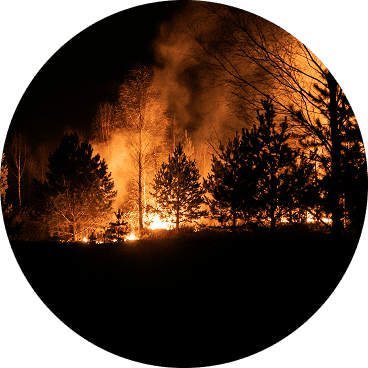
What's In The Smoke
30xSmaller than a human hair
Fine enough to reach deep into the lungs. A MERV 13 is built to capture it.
How Far It Travels


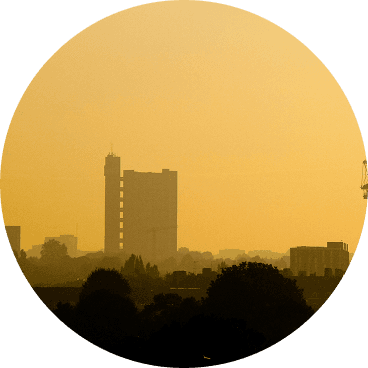
It Doesn't Stay Local
Smoke rides the wind far downwind — you can get smoky air with no fire nearby.
What To Do During A Smoke Event
Simple steps to reduce indoor exposure.
- Stay In, Close UpShut windows and doors to keep smoke out.
- Set Fan To "On"Keeps air cycling through your filter, not just when heating or cooling.
- Recirculate AirSwitch off fresh-air intake so you're not pulling smoke in.
- Run A MERV 13Built to capture the fine PM2.5 in smoke.
- Add A PurifierExtra filtration for the room you use most.
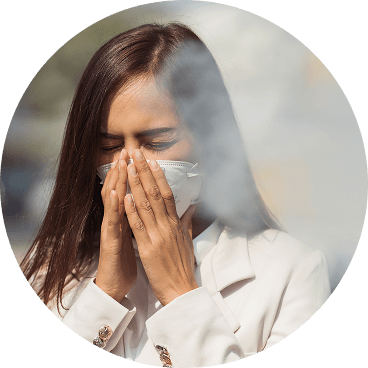
- Wear an N95 if OutsideFits snug to block fine particles — a cloth mask won't.


The Best Air Filter For Wildfire Smoke
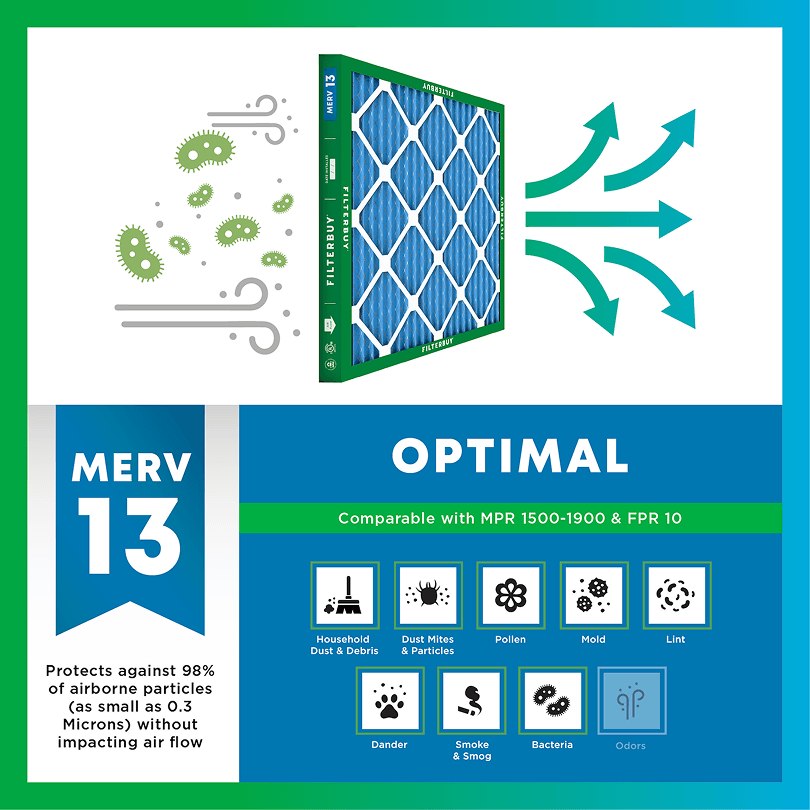
During smoke events, the EPA recommends upgrading to a MERV 13 filter — or the highest-rated filter your system can handle — to help reduce the fine particles smoke brings indoors. MERV 13 is the level most home HVAC systems can run while still capturing PM2.5, the fine particulate that makes up the bulk of wildfire smoke.
- Captures PM2.5 particles
- Blocks ash, soot, and smoke odor
- Keeps your indoor air safe—even when the outdoor air is dangerous
- Meets the EPA's recommended rating for filtering fine wildfire smoke particles.

Wildfire Smoke FAQs
Facts About Wildfires
Over 70,000 wildfires burn in the U.S. every year.
Wildfire smoke can travel 1,000+ miles, affecting states that aren't even near the blaze.
Exposure to wildfire smoke can worsen asthma, trigger heart issues, and lead to ER visits.
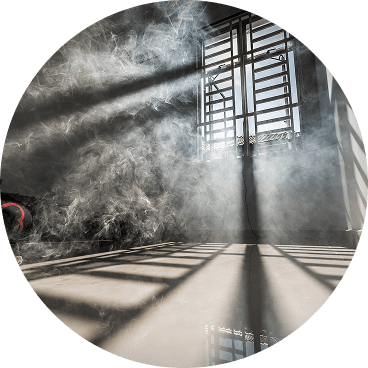
Indoor air can hold more fine particles during wildfire events unless it's properly filtered.
The EPA advises using MERV 13 filters or portable HEPA air cleaners during wildfire smoke events.
Don't Wait Until The Smoke's Inside.
Use the live wildfire smoke tracker and upgrade your air filters today to protect your lungs and your home.
Shop Filters For Smoke Protection
Live Hialeah, FL Forest Wildfire & Smoke Map Today: Local Air Quality Tracking & Indoor Protection Solutions From Filterbuy.com's Air Obsessed Experts
By Michelle Wan, Brand Manager and Air Quality Writer
Reviewed by David Clark, Licensed HVAC Technician
Published August 16, 2026 • Updated August 16, 2026
TL;DR: Hialeah Smoke Conditions at a Glance
Hialeah has no forest and does not burn itself, but Everglades sawgrass and brush fires a few miles west send real smoke over it. Risk peaks November through May and runs later whenever water levels stay low. No regulatory PM2.5 monitor sits inside city limits, so the AQI shown for Hialeah is estimated from miles away. When the map turns orange or worse, close up, recirculate, and run a MERV 13 filter.
Key Takeaways
Marsh and brush fires, not forest fires. Sawgrass, palmetto, and drained muck smolder rather than race, producing more smoke for longer.
No EPA-grade PM2.5 monitor sits inside Hialeah. The nearest state site, Pennsuco, tracks sulfur dioxide and nitrogen dioxide, not fine particles.
The 2026 season put fire within ten miles of the city. The Quarry 2 fire west of Doral burned roughly 19,000 acres and triggered a Miami-Dade air quality alert.
Over half of Hialeah homes are rentals and one in five residents is 65 or older. A filter upgrade and a portable cleaner beat new equipment for most households.
Are There Wildfires Near Hialeah, FL Right Now?
Hialeah itself does not burn, but wildfires break out regularly in the Everglades and inland brush immediately west of the city, and its western edge along Okeechobee Road faces that terrain head-on. Smoke reaches it well before coastal Miami-Dade.
In June 2026, the Quarry 2 fire ignited west of Doral near NW 137th Avenue and NW 41st Street, less than ten miles out, burned roughly 19,000 acres, and prompted a Miami-Dade air quality alert. Broward's Mile Marker 39 and Sawgrass fires the previous August burned a similar acreage. Both months fall outside the classic November-to-May dry season, which is the point: the dry season is when risk peaks, not when it ends.
This is a marsh-and-muck risk rather than a forest one. When Everglades water levels drop, exposed peat and sawgrass smolder for days and throw off far more smoke per acre than open flame, so a mostly contained fire can haze a street here for a week. It also means the usual advice to wait for a wind shift travels badly. For current incidents statewide, the Florida Forest Service's Active Wildfire Points viewer is the authority.
Three Kinds of Haze Over Hialeah
A hazy sky with an empty fire map usually means one of three things here, and each belongs to a different part of the year.
Seasonal windows for Saharan dust follow the National Weather Service Miami office.
Saharan dust catches people out. Trade winds carry it 4,000 miles from West Africa, and most of the layer rides 5,000 to 15,000 feet up, so a dust day turns the sky milky while street-level readings stay moderate. A muck fire is the reverse: a thin haze you barely notice, sitting at ground level for days.
Why Hialeah's AQI May Not Match Your Block
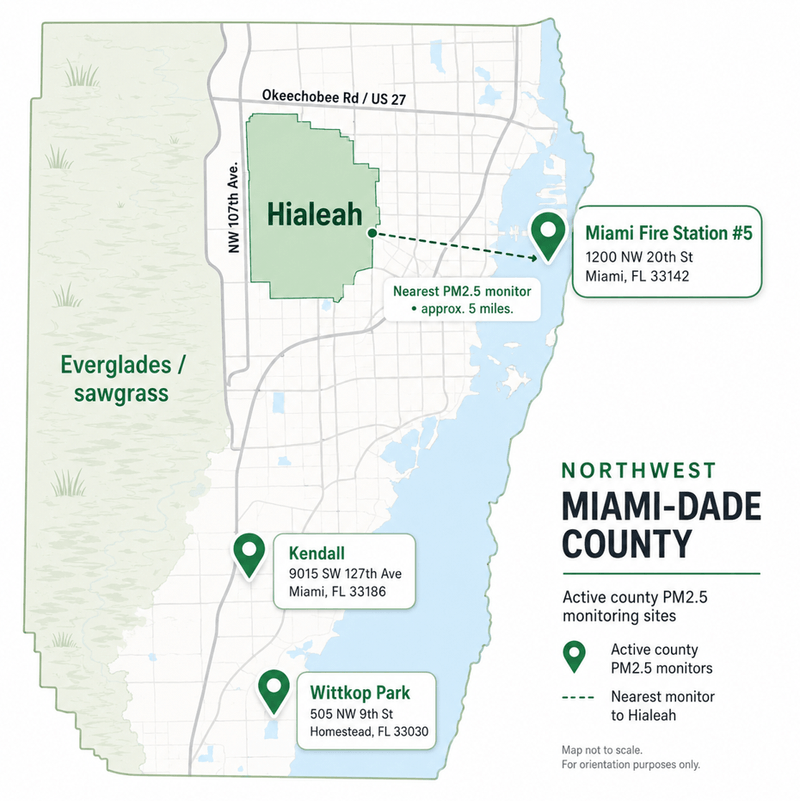
Hialeah has no PM2.5 monitor of its own, so any AQI shown for the city is interpolated from miles away. The state's Miami-Dade monitoring roster lists three active fine-particle sites countywide, at Kendall, Miami Fire Station #5, and Witkop Park, none of them inside city limits, and the closer Pennsuco site measures sulfur dioxide and nitrogen dioxide instead.
That matters because smoke is patchy: a monitor several miles east can read Moderate while a block under a westerly plume is meaningfully worse. On the AirNow Fire and Smoke Map, run jointly by the EPA and U.S. Forest Service, zoom to your own street and turn on the Air Sensors layer.
What the AQI Colors Mean in Hialeah
Sensitive groups should act at orange (101 and above), and everyone should act at red (151 and above).
AQI ranges follow the EPA scale. The actions are our guidance for South Florida homes.
Protecting Your Air, by System Type
The right move depends on your system, not on generic advice. Most smoke guidance assumes ducted central HVAC with a filter slot, but Hialeah's housing stock is older, denser, and more heavily rented than Miami-Dade as a whole, so window units and mini-splits are common.
Guidance reflects current EPA recommendations for reducing wildfire smoke indoors. Ask a licensed HVAC technician before raising your filter rating.
Fit matters as much as rating, so check your filter fit. Renters who cannot touch the equipment can build a Corsi-Rosenthal box from a box fan and four filters.
During smoke events, the EPA recommends MERV 13, or the highest rating your system safely handles, and its guide to air cleaners in the home stresses a snug fit with no gaps. MERV 13 is the practical ceiling for most residential blowers and is not HEPA, which captures 99.97% of 0.3-micron particles but adds more airflow resistance than home HVAC can push against (full comparison). We cut every filter we sell, in 600-plus sizes plus custom air filters, so a 1962 return grille is not a problem.
The mistake I see in older Hialeah homes is treating a filter upgrade like a like-for-like swap. A lot of these systems run original ductwork with an undersized return, and dropping a high-efficiency filter into an already-restricted return costs you airflow across the coil, which costs you cooling and can freeze the coil in August. Check the return and the blower first, then upgrade.
David Clark, Licensed HVAC Technician
3 Statistics Behind Hialeah's Smoke Risk
Florida averages 21 fire weather days a year, nearly triple the eastern U.S. average of eight, and only Rhode Island records more. The figure comes from Climate Central's analysis of five decades of fire weather data, which defines fire weather as heat, low humidity, and wind at once.
The Miami metro ranks 110th worst of 224 U.S. metro areas for short-term particle pollution and earns a C grade. That ranking is from the American Lung Association's "State of the Air" 2026 findings for Florida cities, and short-term spikes are exactly what a smoke event produces.
Wildfire smoke is roughly ten times harder on children's lungs than ordinary particle pollution. A seven-year study of San Diego County children in Pediatrics linked a 10-unit rise in wildfire PM2.5 to a 30.0% increase in pediatric respiratory visits, against 3.7% from other sources, with the sharpest effect under age five.
Frequently Asked Questions
Protect Your Hialeah Home's Air
Smoke season here does not announce itself; it arrives on a west wind before you can see it. We make MERV 13 air filters in 600-plus sizes in the USA, shipped factory-direct, so your home is ready before the map turns orange.
Shop MERV 13 Filters Sized for Your Hialeah Home →
Glossary
PM2.5: Fine particle pollution 2.5 microns or smaller, the main hazard in wildfire smoke and small enough to reach the bloodstream.
AQI: The EPA's 0–500 scale for outdoor air pollution. NowCast AQI is the near real-time version on the Fire and Smoke Map, weighted toward recent hours.
MERV: Minimum Efficiency Reporting Value, a 1-to-16 scale for how well an HVAC filter captures particles.
Muck fire: A fire in dried peat soil, common in the Everglades when water levels drop. Muck fires smolder for long periods and produce heavy smoke.
Saharan Air Layer: The dry, dusty air mass carried from West Africa each summer, reaching South Florida roughly from late June to mid-August.
Subscribe to wildfire smoke alerts for Hialeah, FL, to get a heads-up before the next event reaches your area.