The moment a wildfire starts near you, you'll get an instant alert and simple tips to reduce your smoke exposure.
30xSmaller than a human hair
Fine enough to reach deep into the lungs. A MERV 13 is built to capture it.
It Doesn't Stay Local
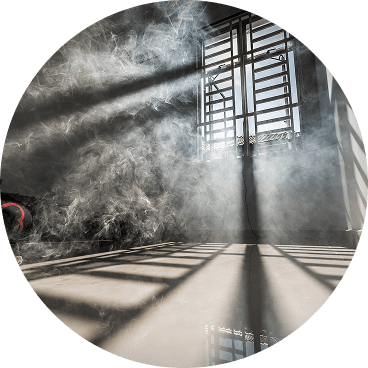
Smoke rides the wind far downwind — you can get smoky air with no fire nearby.
Simple steps to reduce indoor exposure.
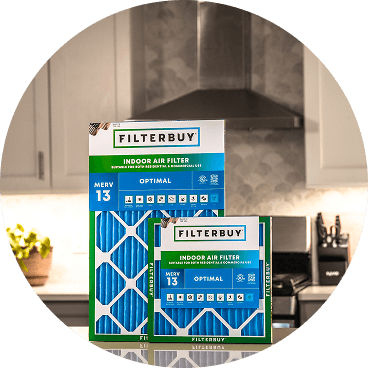
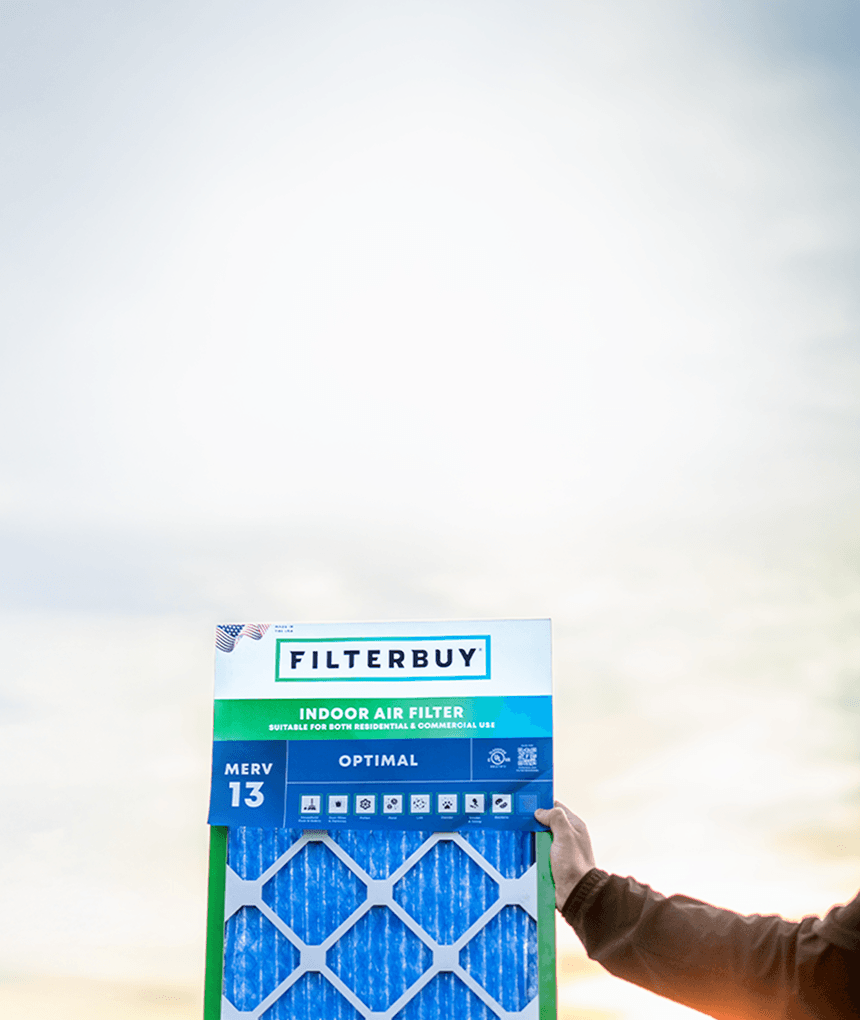
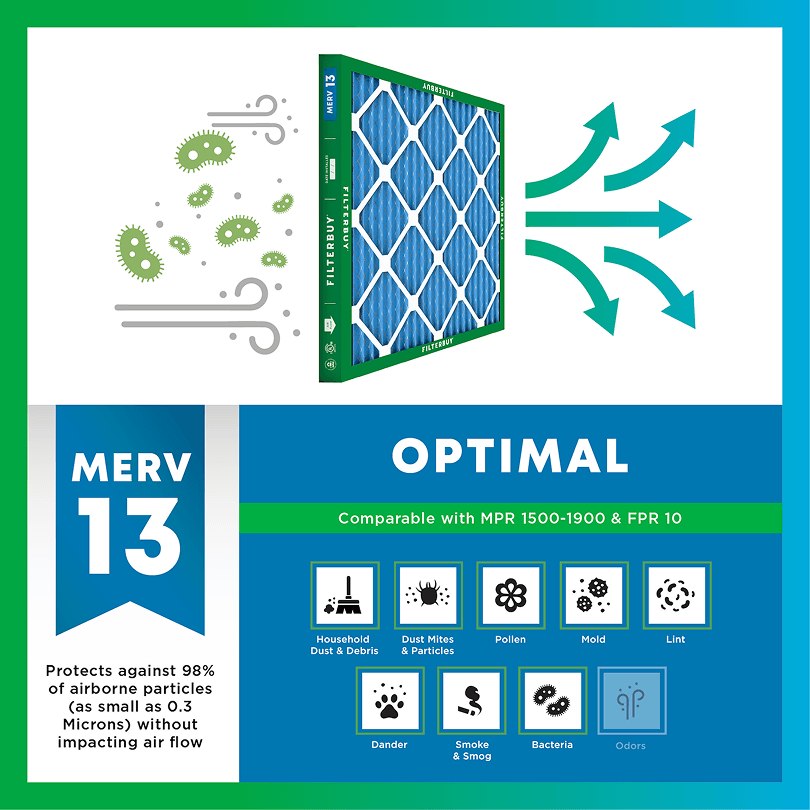
During smoke events, the EPA recommends upgrading to a MERV 13 filter — or the highest-rated filter your system can handle — to help reduce the fine particles smoke brings indoors. MERV 13 is the level most home HVAC systems can run while still capturing PM2.5, the fine particulate that makes up the bulk of wildfire smoke.
Over 70,000 wildfires burn in the U.S. every year.
Wildfire smoke can travel 1,000+ miles, affecting states that aren't even near the blaze.
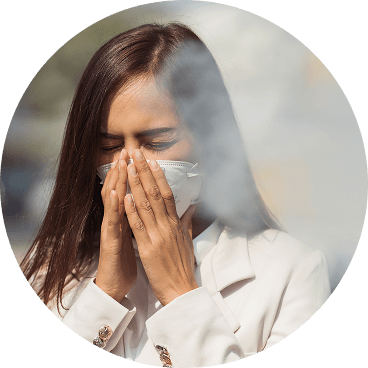
Exposure to wildfire smoke can worsen asthma, trigger heart issues, and lead to ER visits.
Indoor air can hold more fine particles during wildfire events unless it's properly filtered.
The EPA advises using MERV 13 filters or portable HEPA air cleaners during wildfire smoke events.
Use the live wildfire smoke tracker and upgrade your air filters today to protect your lungs and your home.
Shop Filters For Smoke Protection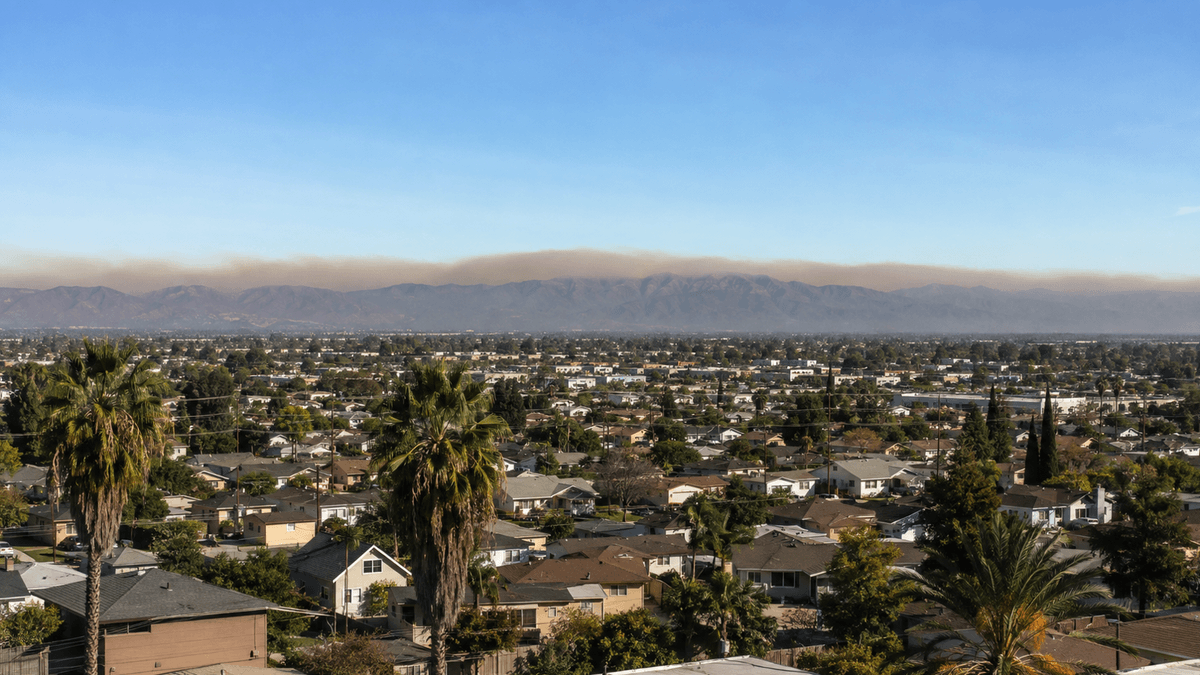
Author: Michelle Wan, Brand Manager and Air Quality Writer
Technical Reviewer: David Clark, Licensed HVAC Technician
Publish Date: August 1, 2026
Updated Date: August 1, 2026
the nearest wildland. That one fact decides how wildfire reaches this city. Flames rarely arrive. Smoke does, carried from fires in the Santa Ana Mountains, the canyons above Anaheim and Irvine, and sometimes Los Angeles County forty miles north.
Filterbuy, an American air filter manufacturer, built this page to turn that reading into a decision about the air inside your house. Tap the monitor nearest your ZIP code. The number shifts hourly, so recheck before opening windows.
Santa Ana, California is a downwind city, not a burn-zone city. The wildfires that spoil its air ignite ten to twenty-five miles inland, in the Santa Ana Mountains or the canyons of eastern Orange County. Smoke arrives fastest during Santa Ana wind events, when dry offshore winds push it across the coastal plain. Use the live map for outdoor conditions and a MERV 13 filter for the air inside.
Santa Ana has almost no wildland at its city limits. The Census Bureau records 27.34 square miles and an estimated 316,184 residents.
The fires that smoke out Santa Ana burn in the hills. Canyon Fire 2 in 2017, the Bond Fire in 2020, and the Airport Fire in 2024 all fit that pattern.
Santa Ana wind events reverse the normal onshore airflow, placing the city downwind on the same days fires are most likely to start.
South Coast AQMD warns that windblown ash can be too coarse for monitors to register, so the AQI can read green while ash settles on your car.
The EPA recommends MERV 13 or higher filters during smoke, with the fan set to On rather than Auto.
Most wildfire maps treat every California city as a burn zone. Filterbuy reads Santa Ana differently. This is a fully built coastal-plain city with no wildland along its edges, and the fires that spoil its air ignite ten to twenty-five miles inland. Santa Ana households manage smoke and ash, not evacuation, which is why this page is about indoor air.
Density explains it. The city holds an estimated 316,184 people across 27.34 square miles of streets and rooftops. No chaparral hillside presses against the neighborhoods, which is what fire agencies call the wildland-urban interface. Silverado Canyon has one. So do Anaheim Hills and Rancho Santa Margarita. Santa Ana does not. Its fires burn on Trabuco Ranger District land in the Santa Ana Mountains.
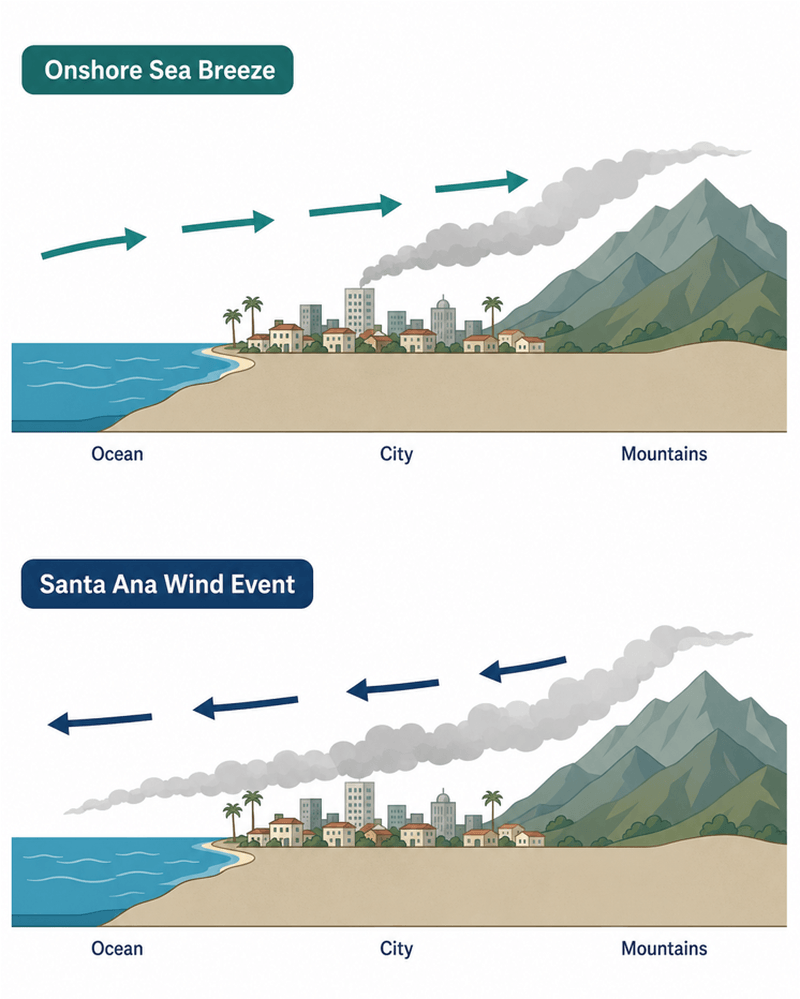
Orange County breathes onshore most of the year. Marine air moves inland from the Pacific, pushing mountain smoke away from Santa Ana toward Riverside County. Santa Ana wind events reverse that flow. Dry offshore winds descend from the interior, drive fire growth, and carry the smoke across the city.
Scripps Institution of Oceanography researchers studying Southern California respiratory admissions defined smoke exposure using Santa Ana wind events with a fire upwind, and placed that season from September through May.
California’s largest fires burn in summer. Santa Ana’s worst air arrives outside it. Federal records for 2025 show Southern California’s biggest fires by acreage ignited in July and August, far inland, while the structure losses and the ash reaching Orange County came from the January wind events.
That gap is why September through May is filter season here. Summer headlines describe fires a hundred miles away. The wind events put grit on your windshield, after the statewide story moves on.
The phrase Santa Ana names five different things in Southern California fire coverage, and confusing them sends people to the wrong map.
South Coast AQMD states that windblown ash particles can be too large for instruments to detect, so they never reach the Air Quality Index. The agency is blunt. The AQI can show green while hazardous ash is in the air.
Much of what reaches Santa Ana is old ash, not fresh smoke. Burn scars in the Anaheim Hills shed dust for months, and Santa Ana winds lift it. Drivers on the 241 once reported smoke that was burn-scar dust.
Use the number, then use your senses. If you smell smoke or see grit outdoors, treat the air as unhealthy, whatever the map shows. Of everything here, this is the point Filterbuy would most want a reader to keep.
Air Quality Index bands follow the U.S. EPA scale. The final row reflects South Coast AQMD guidance that windblown ash may not appear in the AQI.
Filtration cleans the air already inside. Ventilation brings in outdoor air, the last thing you want while smoke sits overhead.
David Clark, the licensed HVAC technician who reviewed this page, adds one caution. A MERV 13 filter dropped into a system with undersized return ducts will starve airflow, so confirm compatibility before smoke season, not during it.
Close windows and doors, then set your system to recirculate so it stops drawing outdoor air.
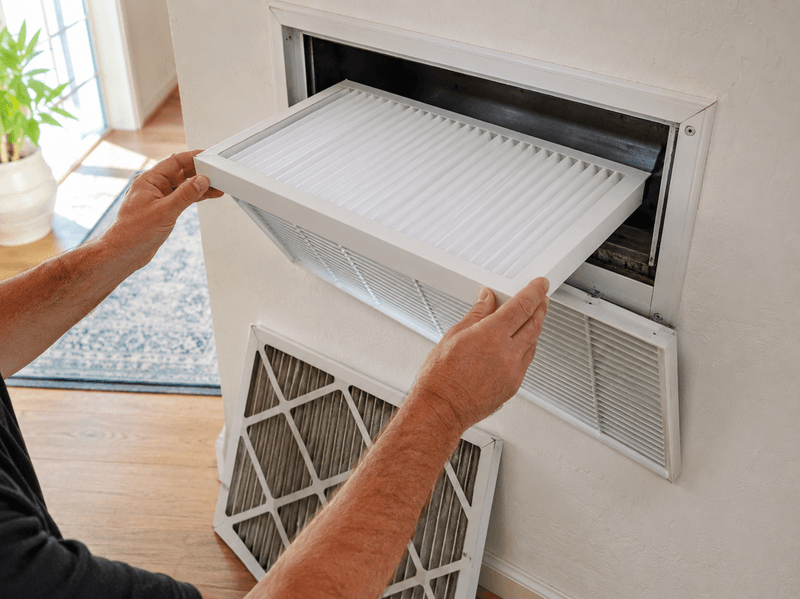
Install a MERV 13 or higher filter if your system supports one.
Set the fan to On instead of Auto, because a filter only works while air moves through it.
Set up one clean room. Pick a bedroom with few windows and run a properly sized air cleaner.
Replace the filter sooner than the label says. A ninety-day filter can load in weeks during heavy smoke.
Consider the following to protect your family from the adverse effects of wildfire smoke:
California wildfire and smoke map for statewide conditions.
Orange, CA wildfire and smoke map for the neighboring city.
Los Angeles wildfire and smoke map for the county upwind of most January ash events.
Anaheim air quality index map for daily county readings.
The national wildfire and smoke map when smoke crosses state lines.
Order American-made MERV 13 air filters before wind season begins.
Non-standard return? Filterbuy builds custom-size air filters to fit.
After manufacturing filters for over a decade and serving more than two million households, we have learned that the families who come through a smoke event best are the ones who upgraded before the smoke arrived. In Orange County, that means stocking a spare before Santa Ana wind season.
David Heacock, Founder and CEO, Filterbuy
AirNow Fire and Smoke Map Information Page. Fire locations, plumes, and sensor data.
South Coast AQMD Air Quality Advisories. Live county advisories for wildfire smoke and windblown ash.
CAL FIRE Current Incidents. Active incidents with acreage and containment status.
EPA Clean Room Guidance. Clean-room setup, with filter and fan settings.
CDC Wildfire Smoke Safety Guidelines. Guidance for children and at-risk adults.
Orange County Fire Authority Ready, Set, Go. Preparedness from the agency fighting county wildland fires.
American Lung Association Orange County Report Card. Annual ozone and particle grades.
The National Interagency Coordination Center reported 77,850 wildfires nationwide in 2025, burning 5,131,474 acres and destroying 18,385 structures. Southern California accounted for 16,324 of them, the highest total of any geographic area.
Source: National Interagency Coordination Center 2025 annual report
Researchers analyzing Southern California hospital records found that a 10 microgram per cubic meter rise in wildfire-specific fine particles raised respiratory admissions by 1.3 to 10 percent, against 0.67 to 1.3 percent for particles from other sources.
Source: Aguilera et al., Nature Communications (2021), NIH PMC
The U.S. Census Bureau estimates Santa Ana’s population at 316,184 as of July 1, 2024, across 27.34 square miles of land recorded in 2020. That density leaves no wildland buffer, making indoor filtration the main lever residents have.
Check the live map above. Fires affecting Santa Ana air burn in the Santa Ana Mountains or the canyons of eastern Orange County.
Smoke travels far. A fire twenty miles inland, or forty miles north in Los Angeles County, can reach the city on offshore winds.
September through May, the opposite of the statewide summer fire season. Santa Ana wind events drive the smoke and ash reaching Orange County, and those arrive in autumn and winter.
MERV 13 or higher for central systems, fan set to On. Confirm your system tolerates it first, because older equipment can lose airflow.
Yes. South Coast AQMD notes windblown ash is often too large for instruments to register, so it never appears in the index.
Smoke season does not announce itself. It is better to have a reliable system to protect your family against its risks. Measure your filter slot today.
AQI: Air Quality Index. The EPA scale from 0 to 500. Above 100 is unhealthy for sensitive groups.
PM2.5: Airborne particles 2.5 microns or smaller, the main component of smoke.
MERV: Minimum Efficiency Reporting Value. MERV 13 catches fine smoke particles. It is not HEPA.
Santa Ana winds: Dry offshore winds descending from the interior toward the coast, September through May.
Clean room: One room kept at low particle levels, doors closed, cleaner running.
Wildland-urban interface: Where houses meet undeveloped vegetation. Santa Ana has none.
South Coast AQMD: The air district covering Orange, Los Angeles, Riverside, and San Bernardino counties.
Subscribe to wildfire smoke alerts for Santa Ana, CA, to get a heads-up before the next event reaches your area.