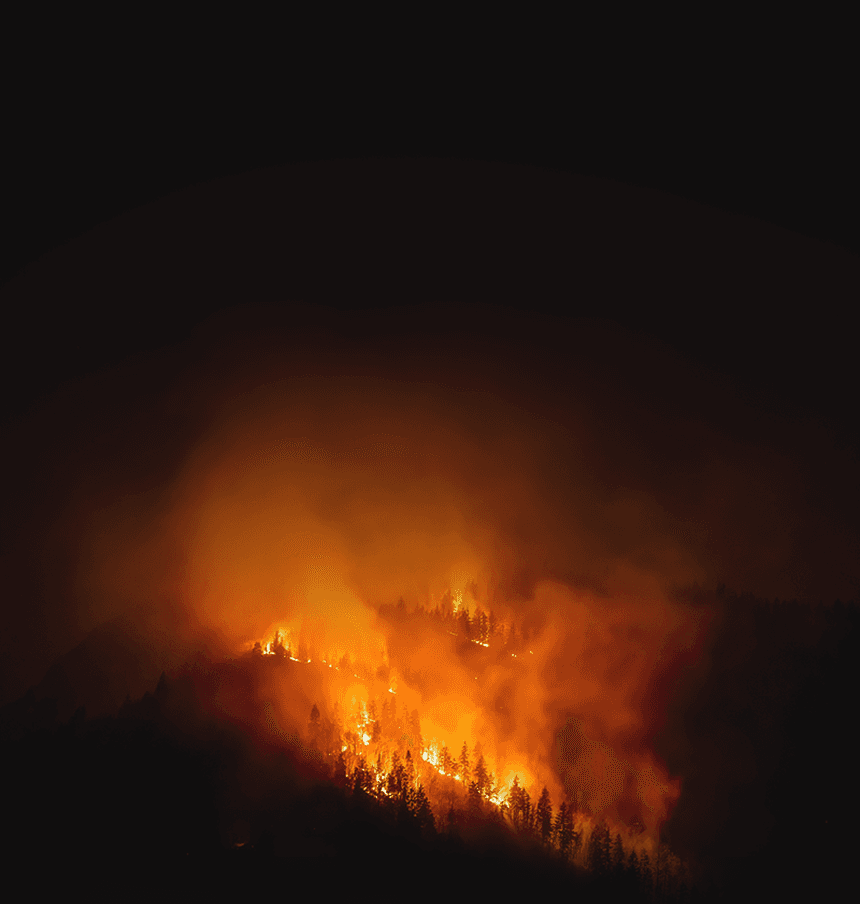
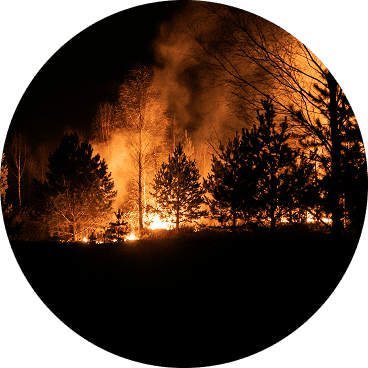
The moment a wildfire starts near you, you'll get an instant alert and simple tips to reduce your smoke exposure.
30xSmaller than a human hair
Fine enough to reach deep into the lungs. A MERV 13 is built to capture it.
It Doesn't Stay Local
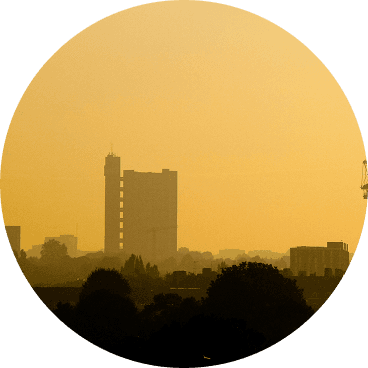
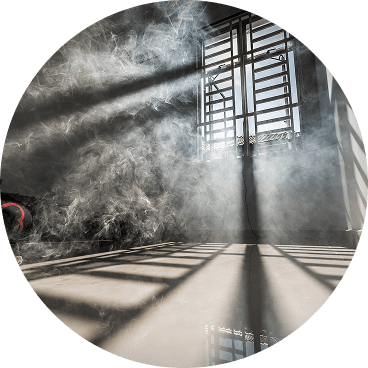
Smoke rides the wind far downwind — you can get smoky air with no fire nearby.
Simple steps to reduce indoor exposure.
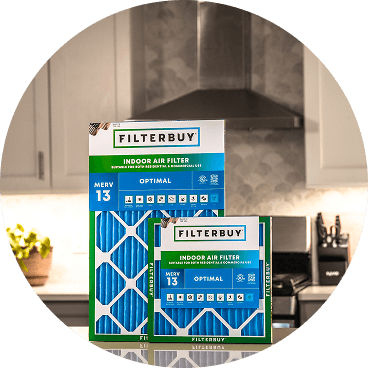
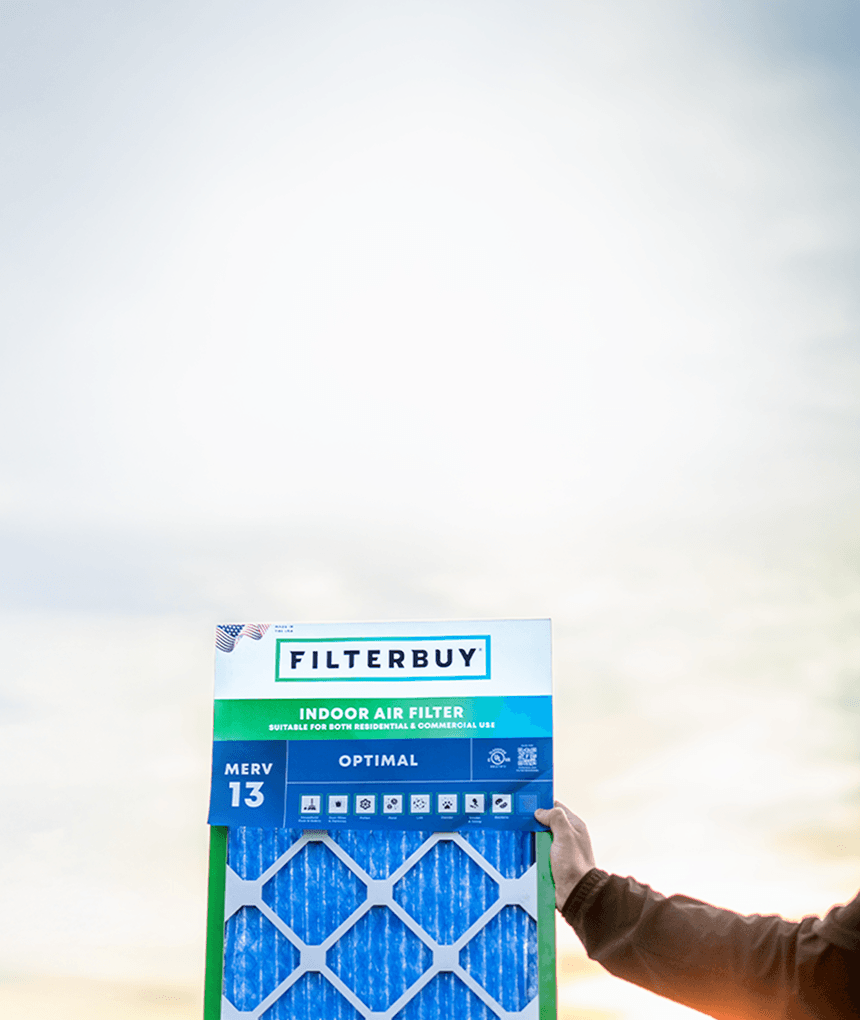
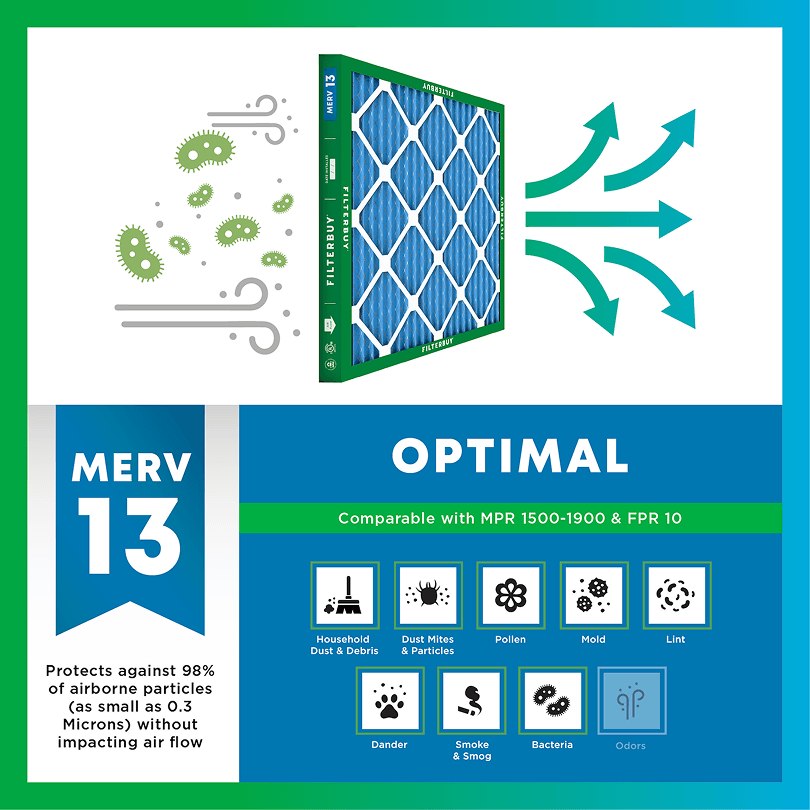
During smoke events, the EPA recommends upgrading to a MERV 13 filter — or the highest-rated filter your system can handle — to help reduce the fine particles smoke brings indoors. MERV 13 is the level most home HVAC systems can run while still capturing PM2.5, the fine particulate that makes up the bulk of wildfire smoke.

Over 70,000 wildfires burn in the U.S. every year.
Wildfire smoke can travel 1,000+ miles, affecting states that aren't even near the blaze.
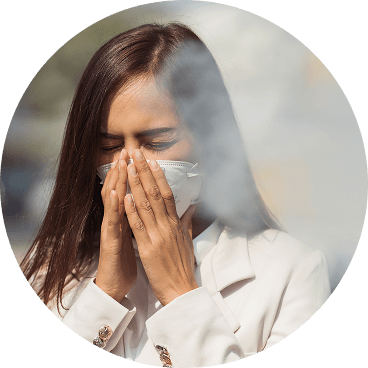
Exposure to wildfire smoke can worsen asthma, trigger heart issues, and lead to ER visits.
Indoor air can hold more fine particles during wildfire events unless it's properly filtered.
The EPA advises using MERV 13 filters or portable HEPA air cleaners during wildfire smoke events.
Use the live wildfire smoke tracker and upgrade your air filters today to protect your lungs and your home.
Shop Filters For Smoke Protection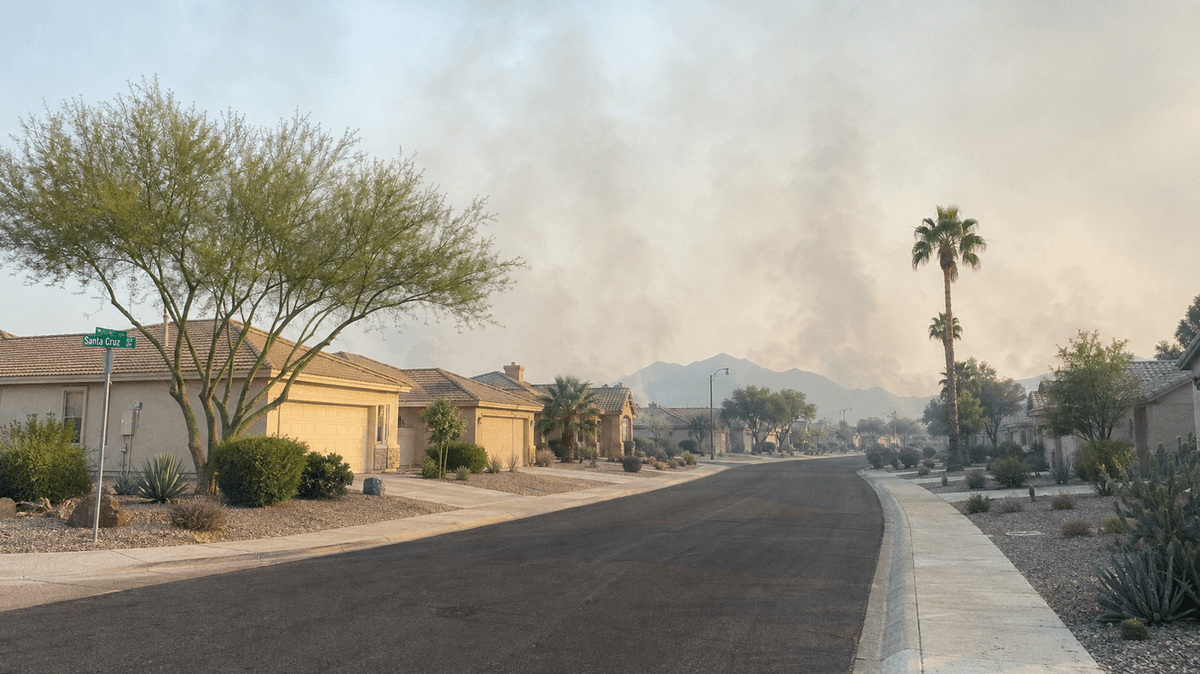
Author: Michelle Wan, Brand Manager & Air Quality Writer, Filterbuy | Reviewer: David Clark, Licensed HVAC Technician | Published: August 9, 2026 | Updated: August 9, 2026
Chandler has no forest inside its city limits, so smoke here almost always arrives from fires 40 to 90 miles away in the Tonto National Forest or along the Mogollon Rim. Read the map by finding the colored dot nearest your ZIP, then checking for gray plume shading upwind. The dot is a measured reading; the plume is smoke that has not landed yet. When they disagree, plan for the plume.
Filterbuy is an American air-filtration manufacturer that has been building HVAC filters in Talladega, Alabama since 2013. The question we hear most from Chandler is not about flames. It is people smelling smoke, finding no nearby fire, and assuming it is in their heads. It usually is not.
Is there a fire in Chandler? Almost certainly not. Check the map for fires burning outside the city.
Where is Chandler’s smoke from? Usually the Tonto National Forest, the Mogollon Rim, or nearby desert brush fires.
Which monitor is mine? West Chandler, at Ellis Street and Frye Road.
What do I do about it? Close up, set the HVAC to recirculate, run a MERV 13 filter, fan on ON, not AUTO.
Read the map by finding the colored dot nearest your ZIP code, then looking for gray plume shading upwind of it. The dot is a measured reading. The plume is smoke that may not have landed yet. When the two disagree, plan for the plume. That is the habit we push hardest with Chandler customers, because smoke here arrives on a delay you can actually use. Our full guide to how to read a wildfire smoke map walks through the icons in detail.
Chandler’s smoke is transported smoke, carried in from fires 40 to 90 miles away.
The West Chandler monitor (Ellis St & Frye Rd, AQS 04-013-4004) is the regulatory monitor inside the city.
The AQI lags fast-moving events. During a rapid dust or smoke spike, it can read green for hours, then stay red after the air clears.
Not all Chandler haze is smoke. The Phoenix area has been a serious PM10 nonattainment area since 1996.
MERV 13 is the EPA’s recommendation for indoor smoke particles, or the highest efficiency your system safely handles.
Four Maricopa County monitors cover Chandler and do different jobs. One sits inside the city, two flank it, and one is an upwind early-warning post toward the Tonto National Forest. Watching all four gives you a head start over a single citywide number.
Source: Maricopa County Air Monitoring Site Locations, reviewed March 27, 2026.
The official AQI is a 24-hour index and Chandler’s air changes in minutes, which produces three failure modes here. These are the misreadings Filterbuy sees Chandler customers make most often.
The number lags the air. Maricopa County states that when a dust storm pushes PM10 up fast, the AQI will most likely still show green for that hour, and can stay red long after the spike passes. That is why the county publishes a separate NowCast value. On a fast day, the AQI tab tells you where you have been.
The number may not be about smoke. The NowCast shown for a site is the highest value reported there for either ozone or particulates. A hot, still July afternoon can push Chandler into orange on ozone alone, with no fire anywhere.
Your area may lack a fine-particle monitor. EPA notes that if the dial does not match what you are experiencing during a fire, your reporting area may be tied to an ozone or coarse-particle monitor rather than PM2.5.
Sources: Maricopa County Air Quality Status and Monitoring; AirNow.
Wildfire smoke is dominated by PM2.5; a haboob by coarser PM10. Both turn the sky brown and call for different responses.
One warning from experience: a filthy-looking filter is not proof you had a smoke day. Desert dust loads a filter fast and visibly, while a filter working hard against fine smoke particles can look far less dramatic. Judge your air by the monitor, not by the filter you pull out.
Chandler’s air follows a predictable annual rhythm, and the move that helps most changes with it. This is the calendar Filterbuy works from.
May and June are the only weeks when peak fire smoke, the start of ozone season, and the first monsoon dust can all land together. If you prepare once a year, prepare in April.
Sealing helps, but what your filter captures decides the air you breathe. These steps follow EPA guidance.
Close windows, exterior doors, and the fireplace damper. Block gaps under doors.
Set the system to recirculate and the fan to ON, not AUTO. On AUTO, the filter only works while the system cools.
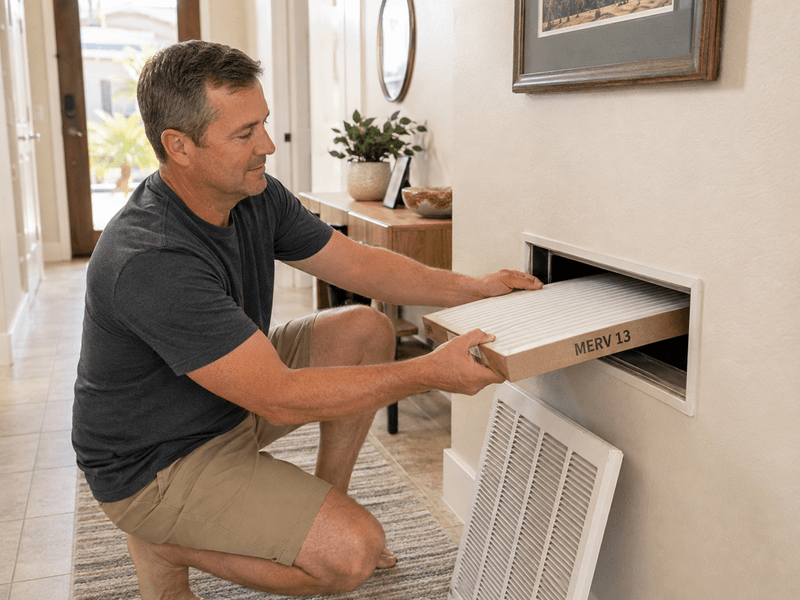
Install a MERV 13 filter, or the highest efficiency your filter slot takes without restricting airflow. MERV 1 through 8 protect equipment, not your lungs.
Cover an evaporative cooler’s outside intakes with 4-inch MERV 13 media, or use it sparingly. This is the most common way smoke enters an East Valley home, and national guides omit it because most of the country has no swamp coolers.
Build a clean room with a portable HEPA cleaner sized so its smoke CADR is at least two-thirds of the room’s square footage.
Skip candles, frying, and vacuuming while smoke is heavy. Inspect your filter every one to two weeks during a sustained event; smoke loads one in weeks, not months.
Filterbuy sells filters, so it matters that we are straight about their limits. A MERV 13 captures particles, not gases.
Ozone, Chandler’s signature summer pollutant, is a gas. No MERV rating removes it. On high-ozone afternoons, change your timing outdoors rather than your filter.
Carbon monoxide is also a gas, and no substitute for a working detector.
Odors and VOCs need activated carbon, a different product.
Air that leaks in around doors, windows, and cooler intakes never reaches your filter.
In a Chandler home, the ceiling on indoor air quality is set by how well the house is sealed, not by how high the MERV number goes.
Chandler homeowners often ask which filter stops wildfire smoke, when the real question is whether the house is closed to it. We have talked to people running a new MERV 13 with a swamp cooler pulling raw outdoor air in over the top of it. In a desert city, sealing comes first and filtration second, and most smoke guidance written for California gets that order backwards for us.
Michelle Wan, Brand Manager & Air Quality Writer, Filterbuy
Most Chandler systems handle MERV 13 without trouble. The failures I see are not the filter rating. They’re a filter installed with gaps around the frame, or an evaporative cooler bypassing the filter entirely. I would rather see a sealed MERV 11 than a MERV 13 with a half-inch gap.
David Clark, Licensed HVAC Technician
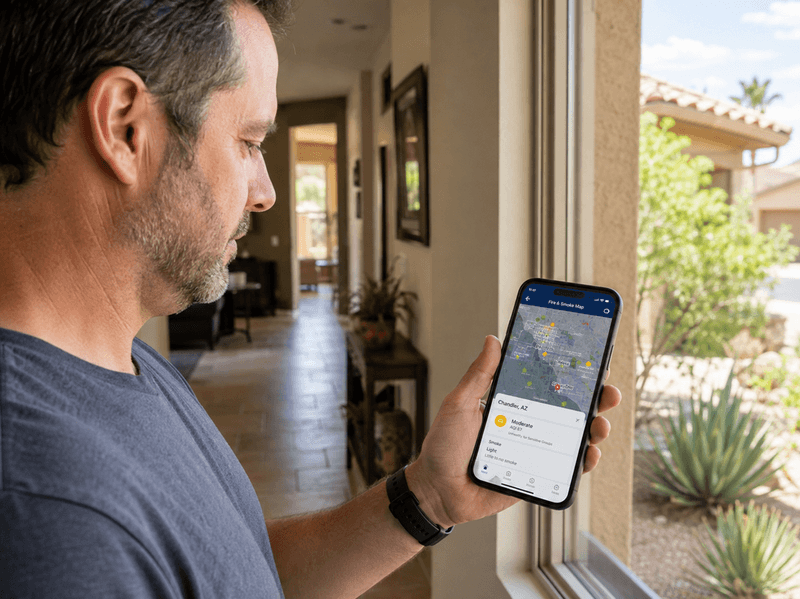
AirNow Fire and Smoke Map: EPA and U.S. Forest Service fires, plumes, and PM2.5, refreshed hourly.
Maricopa County Air Quality: local AQI, High Pollution Advisories, no-burn declarations.
City of Chandler Air Quality: city guidance, ozone season dates, dust reporting.
EPA: Create a Clean Room: setup steps, including evaporative coolers.
Tonto National Forest: fire restrictions and active incidents.
A high-efficiency HVAC filter with the fan running continuously may cut indoor PM2.5 by about 50%. A low-efficiency filter run continuously reduces particles by about 24%.
Source: U.S. EPA
Chandler has sat inside a serious PM10 nonattainment area since June 10, 1996, a federal designation covering Phoenix, Mesa, Tempe, and Chandler.
Source: Arizona DEQ
Roughly 80% of the Phoenix region’s ozone originates from natural sources or outside Arizona, and local emissions have fallen 50% since 2000.
Almost certainly not within the city. Chandler has no forest inside its limits, so smoke here is nearly always from a fire burning outside it, most often in the Tonto National Forest or on surrounding desert land.
Smoke travels hundreds of miles. Dust and ground-level ozone also cut visibility; the Phoenix-Mesa area remains in moderate ozone nonattainment, and Arizona’s ozone alert season runs May 1 through September 30.
Only with the right filter and setting. A central system on recirculate with a MERV 13 and the fan on ON filters continuously. A window or portable AC with an outside intake can pull smoke in.
MERV 13. It captures the fine particles that matter and is the highest rating most residential systems run safely. Filterbuy manufactures MERV 13 in standard and custom sizes.
Every one to two weeks instead of monthly. Replace it when the media looks dark, airflow weakens, or the house still smells smoky with filtration running.
Chandler’s smoke season peaks in May and June. Stock filters before the haze arrives, not during it.
Shop Filterbuy MERV 13 filters: American-made, 600+ sizes
Set up auto-delivery so a smoke event never finds you with a three-month-old filter.
Michelle Wan is Filterbuy’s Brand Manager and Air Quality Writer, translating pollutant science and EPA guidance into steps homeowners can act on. David Clark, a Licensed HVAC Technician, reviewed this page for airflow and system compatibility. Published by Filterbuy, manufacturing HVAC filters in the U.S. since 2013.
NowCast: EPA algorithm converting recent hourly readings into a current AQI, weighting recent hours more heavily when conditions shift fast.
Haboob: A fast-moving desert dust storm common in the Phoenix metro during monsoon season.
MERV: The 1-to-16 scale rating how well an HVAC filter captures particles.
Subscribe to wildfire smoke alerts for Chandler, AZ, to get a heads-up before the next event reaches your area.