
Tip: Ensure you buy the exact air filter size for your system. Certain brands have precise dimensions that only fit their specific models. See related filters
Actual Size: 15 3/4" x 19 3/4" x 4 3/8"
 Free Delivery
  Factory-Direct Low Prices, Made in the USA
 Hassle-Free Returns & Free Exchanges
RESIDENTIAL AND/OR COMMERCIAL USE
Change Every 3 Months
Tip: Ensure you buy the exact air filter size for your system. Certain brands have precise dimensions that only fit their specific models. See related filters
Actual Size: 15 3/4" x 19 3/4" x 4 3/8"
Free Delivery Factory-Direct Low Prices, Made in the USAHassle-Free Returns & Free ExchangesRESIDENTIAL AND/OR COMMERCIAL USE
Change Every 3 Months
Tip: Ensure you buy the exact air filter size for your system. Certain brands have precise dimensions that only fit their specific models. See related filters
Actual Size: 15 3/4" x 19 3/4" x 4 3/8"
Free Delivery Factory-Direct Low Prices, Made in the USAHassle-Free Returns & Free ExchangesRESIDENTIAL AND/OR COMMERCIAL USE
Change Every 3 Months
At Filterbuy, we don't cut corners—we craft high-quality air filters right here in the USA and ship them to your doorstep for free. No delays, no gimmicks—just clean air, made easy. With thousands of five-star reviews and filters built for real life & every HVAC system, it's no wonder why over 4 million families trust Filterbuy.

Proudly Made In The USA

Fast, Free Shipping on Every Order

Premium Materials That Go The Distance

85,000+ 5-Star Reviews From Happy Customers

Save Up to 70% Per Filter with Packs


Measure length × width × depth with a tape measure to find the actual size.

Round up each dimension to the nearest whole number to get the nominal size. Example: 15 3/4" x 19 3/4" x 4 3/8" in → 16X20X5 nominal.

Search by nominal size on our site for the best fit.


5″ filters give you maximum filtration with minimal maintenance — lasting up to 12 months while handling higher MERV ratings without restricting airflow.
Sizing note:

If the filter you buy doesn't fit, we'll send you a better size.
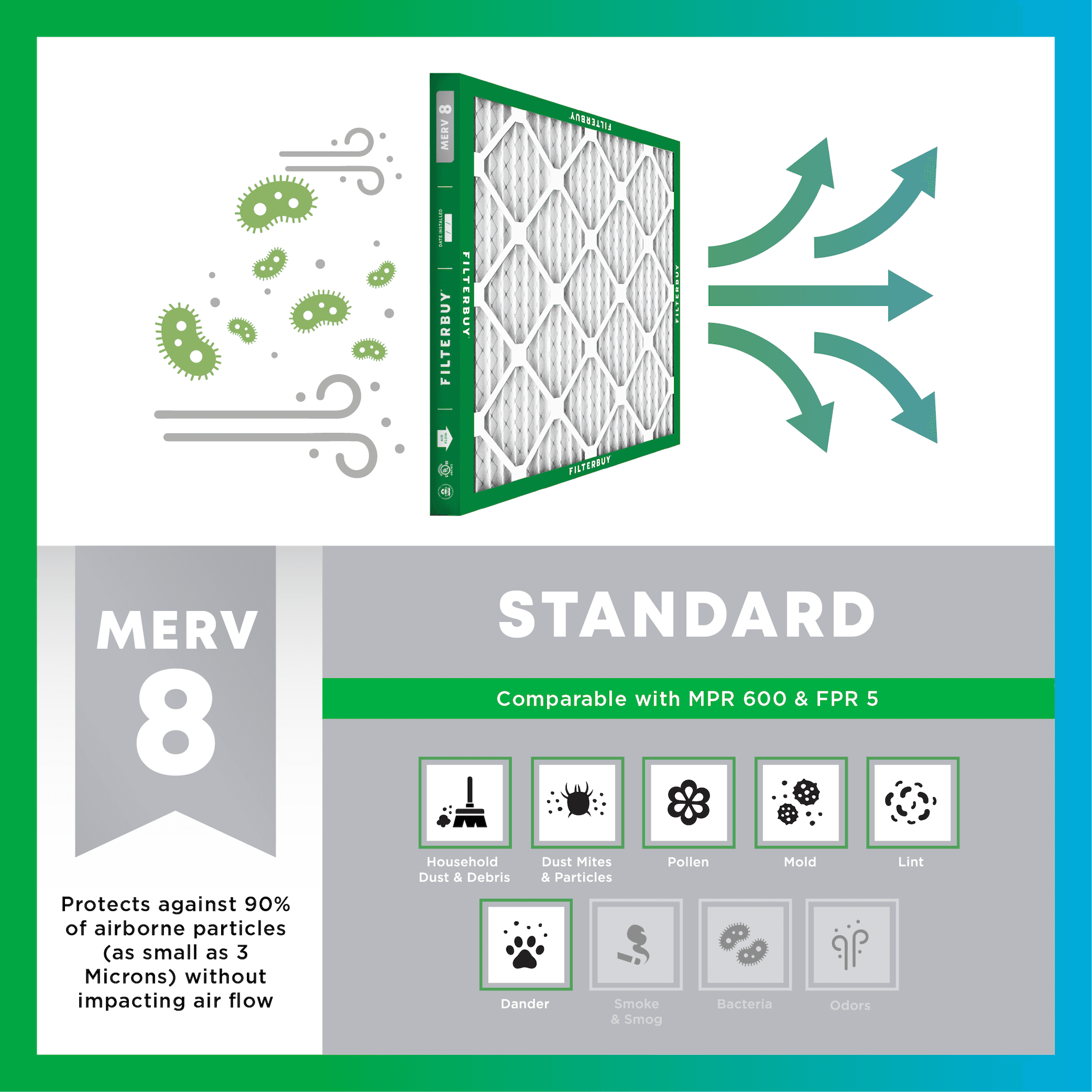
MERV stands for Minimum Efficiency Reporting Value—but don't let the technical name fool you. It's just a way to rate how well an air filter traps stuff like dust, pollen, pet dander, and smoke. The higher the MERV number, the more particles it catches—and the cleaner your air will be.

Comparable to:FPR: 4-7
MPR: 600-1000
 Dust & Debris
 Dust Mites & Particles
 Pollen
 Mold
Mold Lint
Lint Dander
Comparable to:FPR: 6-9
MPR: 1200-1550
Dust & DebrisDust Mites & ParticlesPollenMoldLintDander Smoke & Smog
Comparable to:FPR: 10
MPR: 1900-2800
Dust & DebrisDust Mites & ParticlesPollenMoldLintDanderSmoke & Smog Bacteria


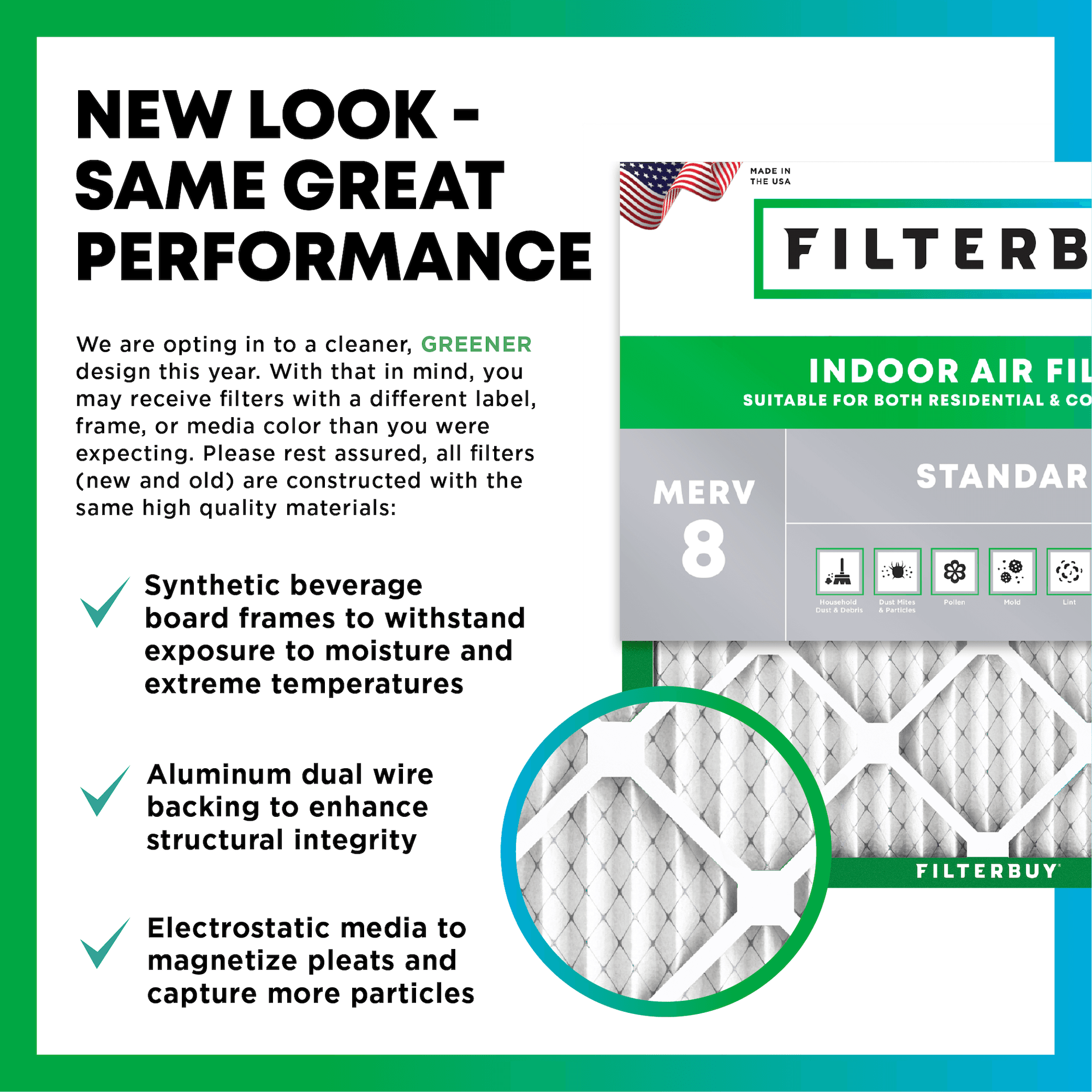
We build every Filterbuy filter to deliver reliable 90-day performance—thanks to smart design and premium materials that do the heavy lifting. Here's what makes the difference:
More pleats = more surface area to capture dust and debris, keeping your air cleaner longer.
Pleats are magnetized to attract and trap microscopic particles—like pet dander, pollen, and smoke.
Engineered to resist warping in extreme temperatures and high humidity.

A layer of metal reinforcement keeps pleats evenly spaced and structurally sound—no sagging, even at high airflow.
Assembled with care. Built to perform. Ships fast, free, and reliably from our U.S. facilities.

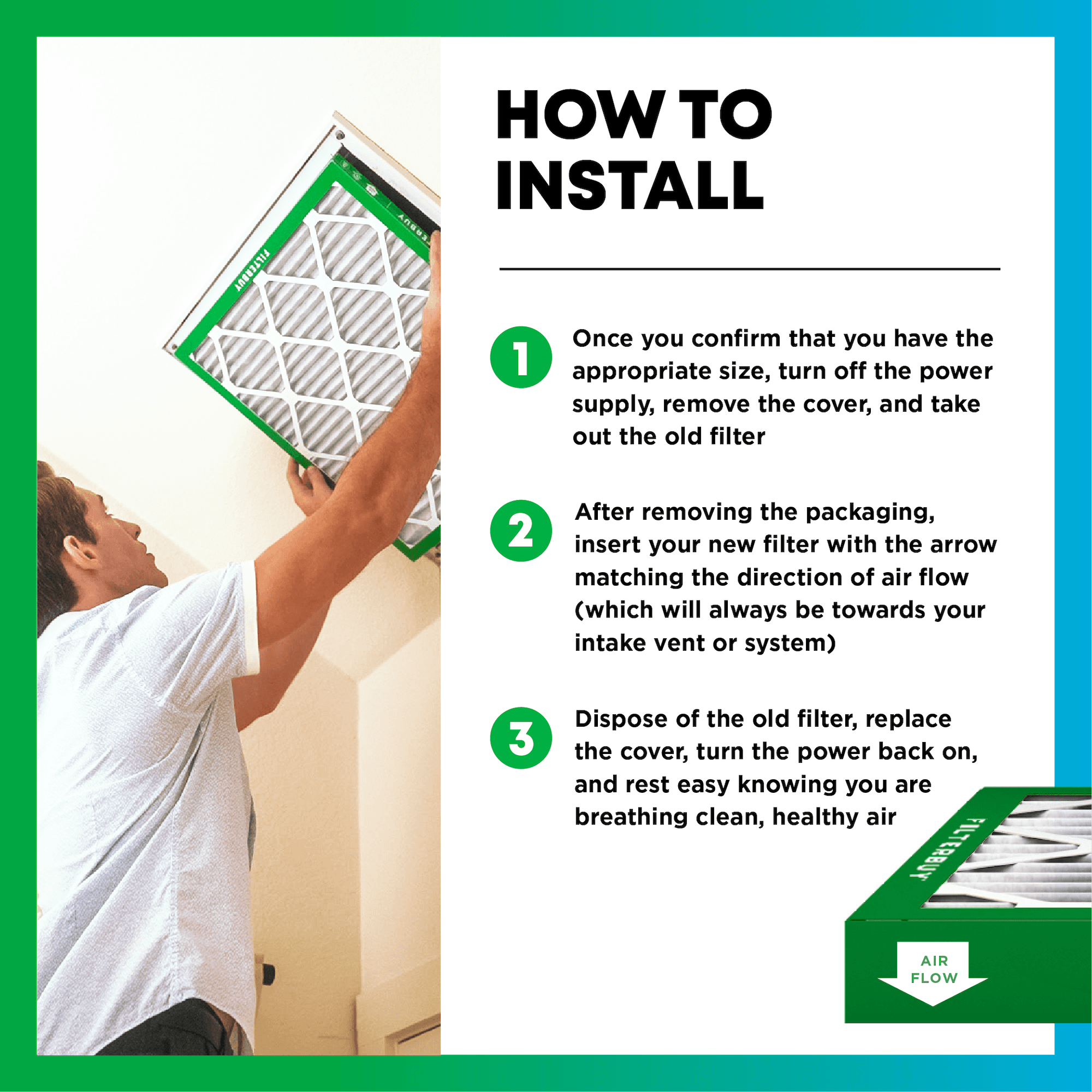
Turn Off Your HVAC SystemSafety first.

Remove The Old FilterLook for the airflow arrow and make note of the direction.

Slide In Your New FilterArrow should point toward the system (same direction as before).

Turn Your System Back OnAnd enjoy the fresh, clean air.

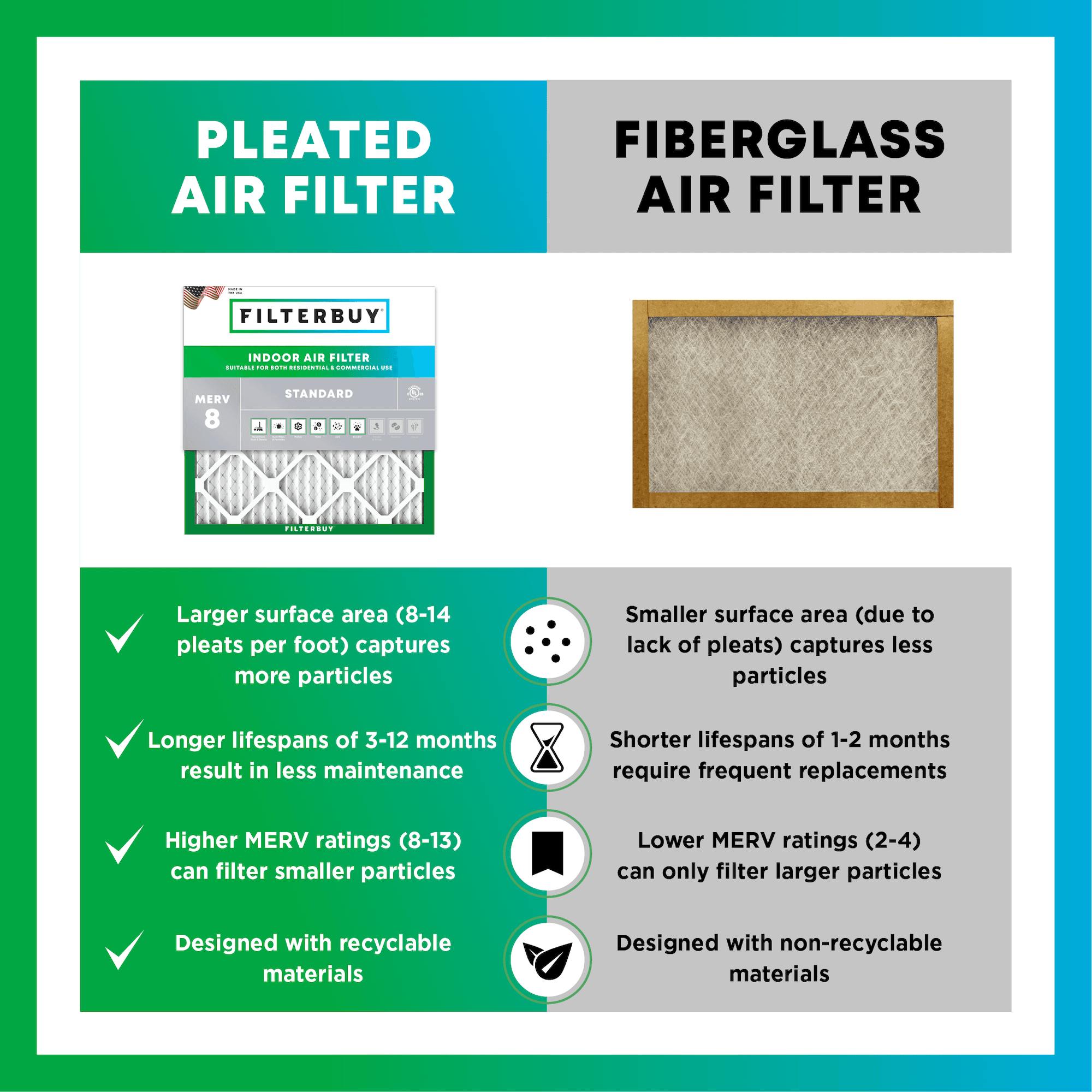
Not all air filters are created equal. Pleated filters don't just last longer—they actually clean your air better. Here's how they stack up:

Efficiency:
High (MERV 8–13) – Traps more particles
Lifespan:
90 days – Long-lasting performance
Air Quality:
Excellent – Cleaner, healthier air
Materials:
Recyclable and durable

Efficiency:
Low (MERV 4 or less) – Misses small stuff
Lifespan:
30 days or less – Replace often
Air Quality:
Minimal – Basic protection only
Materials:
Thin, flimsy, and not recyclable
Pleated filters are a no-brainer—more protection, less hassle, and better air for your home.
Changing your filter on time keeps your HVAC system running efficiently—and helps protect your lungs from dust, allergens, and airborne irritants. Here's how often to swap it out based on your needs:

For most homes without pets or special air quality concerns. Great for general upkeep and energy efficiency.

Shedding fur, dander, and allergy triggers can build up fast. Changing your filter every two months helps keep the air fresher and symptoms at bay.

For households affected by smoke, pollution, or respiratory conditions, monthly changes ensure maximum protection.

| Nominal Size | 16X20X5 |
| Actual Size | 15 3/4" x 19 3/4" x 4 3/8" inches |
| Filter Type | Pleated |
| Media | Electrostatically Charged |
| Frame | Beverage Board |
| MERV Ratings Available | 8, 11, 13 |
| Lifespan | Up to 12 Months |
| Origin | Made in USA |
If your MERV 8 16x20x5 Honeywell filter seems to clog faster every summer, it’s not just a seasonal coincidence—we see it every year in our manufacturing and testing data at Filterbuy. Higher humidity, heavier pollen loads, and longer AC run times cause particles to cling to filter media more aggressively, accelerating buildup well beyond winter conditions. Based on what we’ve observed after producing and evaluating millions of filters, this guide explains what’s actually happening inside your system during summer—and how to prevent airflow loss and efficiency drop before it affects your home’s comfort and air quality.
A MERV 8 16x20x5 Honeywell-compatible filter is designed to capture common airborne particles like dust and pollen without restricting airflow, making it a reliable choice for most residential HVAC systems. From our experience manufacturing and testing filters year-round, this size and rating offer a smart balance of protection, efficiency, and system longevity—especially when checked regularly during high-use seasons like summer.
Faster summer filter buildup is normal. Heat, humidity, and longer AC runtimes naturally load MERV 8 filters more quickly.
Humidity makes particles stick. Moist air causes pollen and dust to cling to filter media, creating denser buildup.
A dirty filter means it’s working. Faster discoloration isn’t failure—it’s active filtration during peak demand.
Check filters more often in summer. Monthly inspections help protect airflow, efficiency, and system health.
Replace based on condition, not the calendar. Visual loading matters more than fixed timelines during hot months.
During summer, your HVAC system runs longer, pulls in more outdoor air contaminants, and processes warmer, more humid air—all of which accelerate filter buildup. Based on what we see at Filterbuy after manufacturing and evaluating filters across seasons, extended AC runtimes dramatically increase how much air—and debris—passes through a MERV 8 16x20x5 filter each day. More air movement means more pollen, dust, and outdoor particles captured in a shorter time frame.
Humidity adds another layer to the problem. Moist air causes particles to cling more tightly to filter fibers, creating denser loading that restricts airflow sooner than dry-season debris. Even though a 5-inch Honeywell-compatible filter is designed for longer service life, summer’s combination of heavy pollen, lawn debris, and construction dust can still shorten replacement intervals.
The key takeaway: a filter that gets dirty faster in summer isn’t underperforming—it’s responding to peak environmental conditions. Monitoring buildup more closely during hot months helps protect airflow, system efficiency, and indoor air quality when your home relies on cooling the most.
“After manufacturing and evaluating millions of air filters across every season, we consistently see summer humidity and extended AC runtimes cause faster, denser particle loading—not because the filter is failing, but because it’s working hardest when air quality challenges peak.”
When it comes to protecting airflow and indoor air quality, the right filter choice starts with the right information. These trusted resources help you understand fit, filtration performance, efficiency, and real-world use—so you can make a confident, informed decision for your home.
The EPA explains how HVAC filters influence dust, allergens, and overall indoor air quality, helping homeowners separate proven benefits from marketing noise.
URL: https://www.epa.gov/indoor-air-quality-iaq/guide-air-cleaners-home
ENERGY STAR outlines how proper filter selection and replacement timing protect airflow, reduce energy waste, and help your HVAC system cool more efficiently.
URL: https://www.energystar.gov/saveathome/heating-cooling
An unbiased look at how different filters perform, helping homeowners weigh filtration strength, airflow impact, and long-term value.
URL: https://www.consumerreports.org/appliances/air-filters/
Most filtered air is indoor air.
Americans spend ~90% of their time indoors.
Indoor pollutant levels can be 2–5× higher than outdoor air.
In our filter testing, this indoor concentration—especially during summer—directly explains faster filter loading.
Source: U.S. EPA
Summer HVAC runtimes speed up filter buildup.
ENERGY STAR recommends checking filters monthly during heavy-use seasons.
Continuous AC operation means more air—and more particles—moving through the filter every day.
From our experience, this is when even 5-inch filters reach resistance sooner.
Source: ENERGY STAR
Pollen surges create heavier, stickier filter loading.
Pollen-related impacts cost the U.S. billions annually, according to the CDC.
High-pollen months align with denser, darker filter buildup in real homes we evaluate.
Humidity helps allergens cling to filter media instead of passing through.
Source: CD
Chttps://www.cdc.gov/climate-health/php/effects/allergens-and-pollen.html
After manufacturing and evaluating millions of filters across every season, one pattern stands out: summer reveals how hard your HVAC system—and your filter—really works. Faster buildup in a MERV 8 16x20x5 Honeywell-compatible filter isn’t a defect; it’s a response to peak air-quality stress.
From our experience, summer creates the perfect storm:
Longer AC runtimes
Higher humidity that makes particles stick
Heavier pollen and outdoor debris
Our perspective is simple:
A filter that looks dirty faster is doing its job, not failing.
Summer is the most honest season for evaluating filtration performance.
Replacement timing should follow filter conditions, not just the calendar.
The takeaway: Monitoring your filter more closely during summer protects airflow, system efficiency, and comfort when demand is highest. Faster buildup is a sign of active protection—and understanding that difference leads to better air and smarter HVAC maintenance decisions.
Take these simple actions to protect airflow and indoor air quality during summer:
Check your filter monthly Summer AC runtimes load filters faster. Inspect visually, not by date.
Replace based on condition Dark, dense, or restrictive filters should be changed immediately.
Confirm proper fit Verify your filter is a true 16x20x5 to prevent air bypass.
Watch for airflow changes Weak cooling or reduced airflow often points to a loaded filter.
Keep a spare on hand Peak season is not the time to wait for replacements.
Prioritize airflow balance MERV 8 offers reliable filtration without unnecessary system strain.
A:
Often rated for several months
In real homes, summer use shortens lifespan
Visual inspection is more reliable than fixed timelines
A:
Higher humidity makes particles stick
Pollen and dust loads increase
Longer AC runtimes push more air through the filter
A:
Commonly recommended for residential systems
Balances filtration and airflow
Performs well during peak cooling demand
A:
Greater depth extends usable life
Summer conditions still accelerate loading
Replacement depends on usage, not thickness alone
A:
Not automatically
Higher MERV can restrict airflow
MERV 8 with timely replacement is often the safer choice

