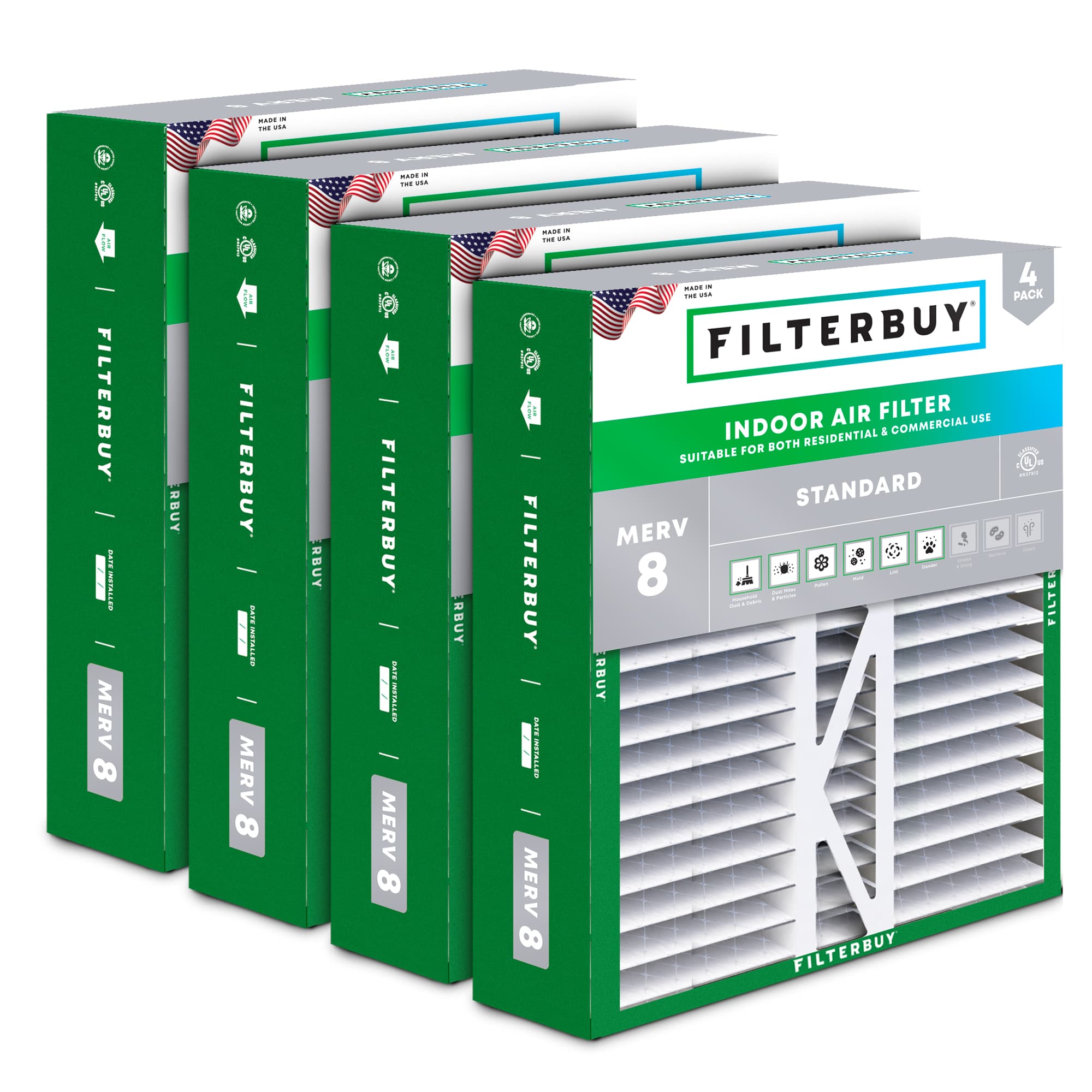
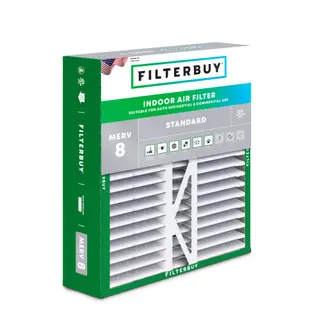
Tip: Ensure you buy the exact air filter size for your system. Certain brands have precise dimensions that only fit their specific models. See related filters
Actual Size: 15.13x21.88x5.25"
 Free Delivery
  Factory-Direct Low Prices, Made in the USA
 Hassle-Free Returns & Free Exchanges
RESIDENTIAL AND/OR COMMERCIAL USE
Change Every 3 Months
Tip: Ensure you buy the exact air filter size for your system. Certain brands have precise dimensions that only fit their specific models. See related filters
Actual Size: 15.13x21.88x5.25"
Free Delivery Factory-Direct Low Prices, Made in the USAHassle-Free Returns & Free ExchangesRESIDENTIAL AND/OR COMMERCIAL USE
Change Every 3 Months
Tip: Ensure you buy the exact air filter size for your system. Certain brands have precise dimensions that only fit their specific models. See related filters
Actual Size: 15.13x21.88x5.25"
Free Delivery Factory-Direct Low Prices, Made in the USAHassle-Free Returns & Free ExchangesRESIDENTIAL AND/OR COMMERCIAL USE
Change Every 3 Months
At Filterbuy, we don't cut corners—we craft high-quality air filters right here in the USA and ship them to your doorstep for free. No delays, no gimmicks—just clean air, made easy. With thousands of five-star reviews and filters built for real life & every HVAC system, it's no wonder why over 4 million families trust Filterbuy.

Proudly Made In The USA

Fast, Free Shipping on Every Order

Premium Materials That Go The Distance

85,000+ 5-Star Reviews From Happy Customers

Save Up to 70% Per Filter with Packs


Measure length × width × depth with a tape measure to find the actual size.

Round up each dimension to the nearest whole number to get the nominal size. Example: 15.13x21.88x5.25" in → 16X22X5 nominal.

Search by nominal size on our site for the best fit.


5″ filters give you maximum filtration with minimal maintenance — lasting up to 12 months while handling higher MERV ratings without restricting airflow.
Sizing note:

If the filter you buy doesn't fit, we'll send you a better size.
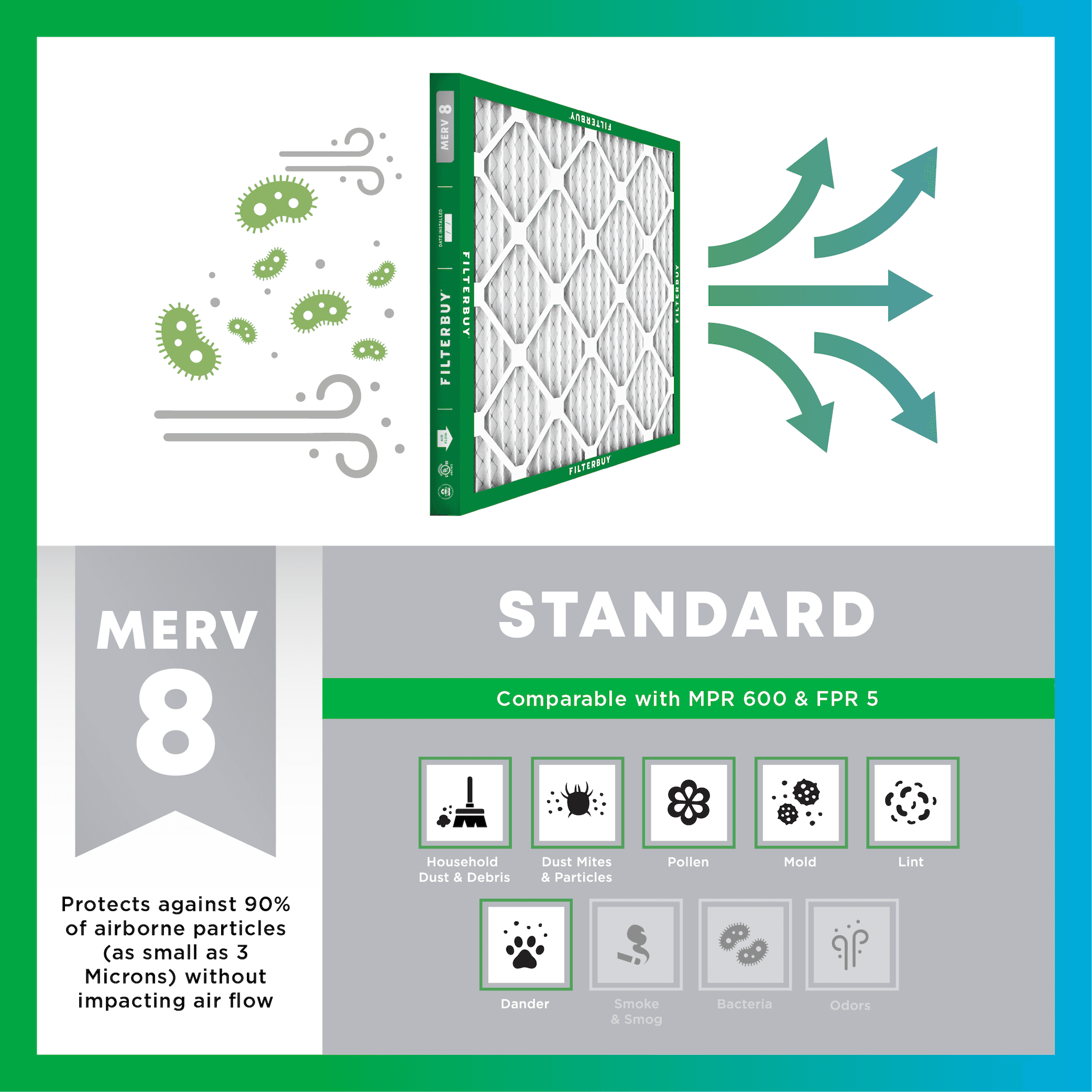
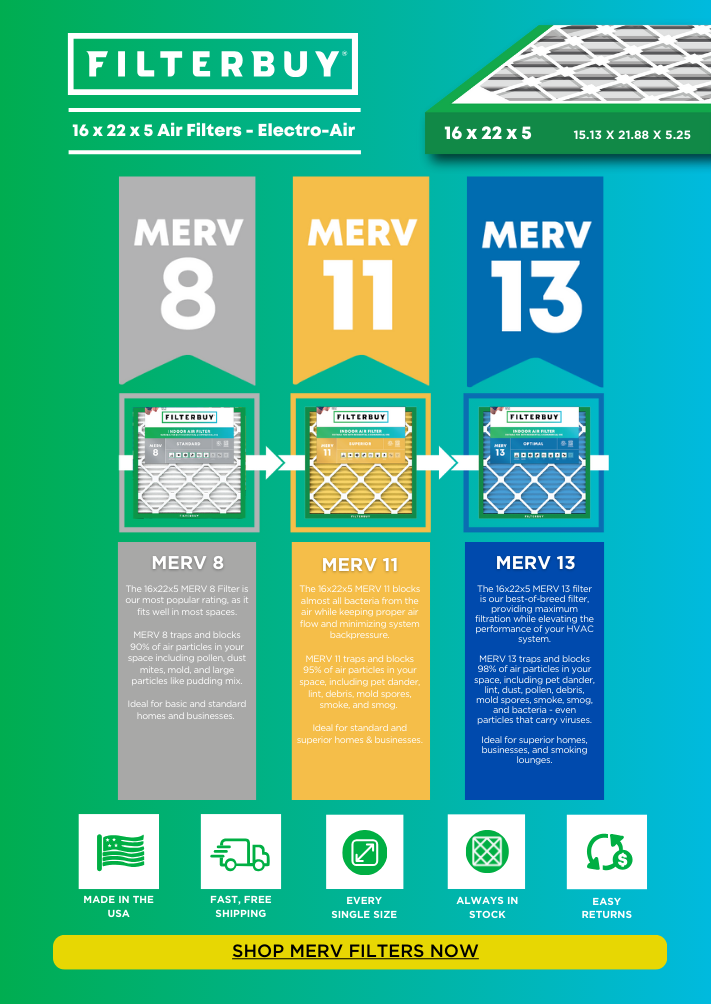
MERV stands for Minimum Efficiency Reporting Value—but don't let the technical name fool you. It's just a way to rate how well an air filter traps stuff like dust, pollen, pet dander, and smoke. The higher the MERV number, the more particles it catches—and the cleaner your air will be.

Comparable to:FPR: 4-7
MPR: 600-1000
 Dust & Debris
 Dust Mites & Particles
 Pollen
 Mold
Mold Lint
Lint Dander
Comparable to:FPR: 6-9
MPR: 1200-1550
Dust & DebrisDust Mites & ParticlesPollenMoldLintDander Smoke & Smog
Comparable to:FPR: 10
MPR: 1900-2800
Dust & DebrisDust Mites & ParticlesPollenMoldLintDanderSmoke & Smog Bacteria


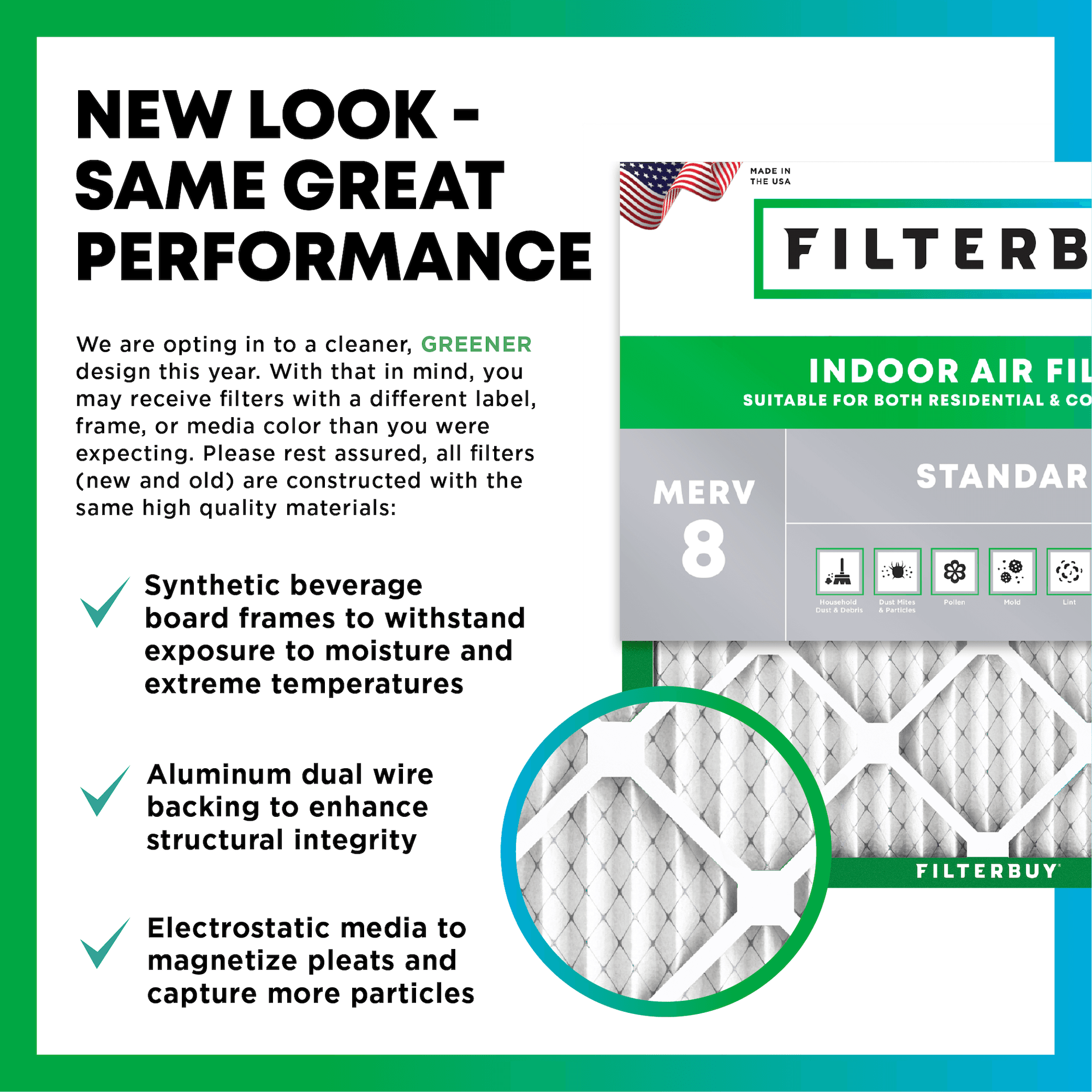
We build every Filterbuy filter to deliver reliable 90-day performance—thanks to smart design and premium materials that do the heavy lifting. Here's what makes the difference:
More pleats = more surface area to capture dust and debris, keeping your air cleaner longer.
Pleats are magnetized to attract and trap microscopic particles—like pet dander, pollen, and smoke.
Engineered to resist warping in extreme temperatures and high humidity.

A layer of metal reinforcement keeps pleats evenly spaced and structurally sound—no sagging, even at high airflow.
Assembled with care. Built to perform. Ships fast, free, and reliably from our U.S. facilities.

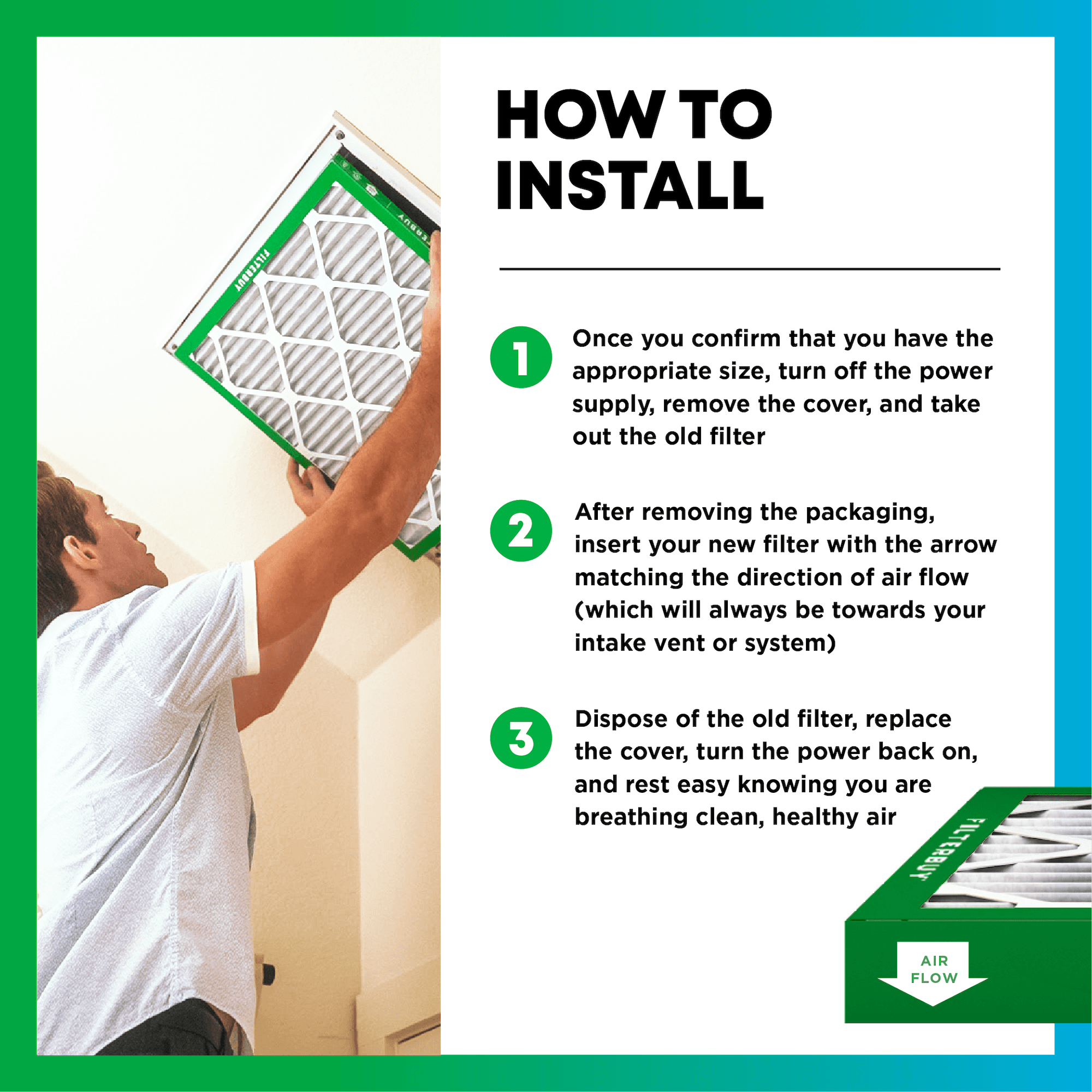
Turn Off Your HVAC SystemSafety first.

Remove The Old FilterLook for the airflow arrow and make note of the direction.

Slide In Your New FilterArrow should point toward the system (same direction as before).

Turn Your System Back OnAnd enjoy the fresh, clean air.

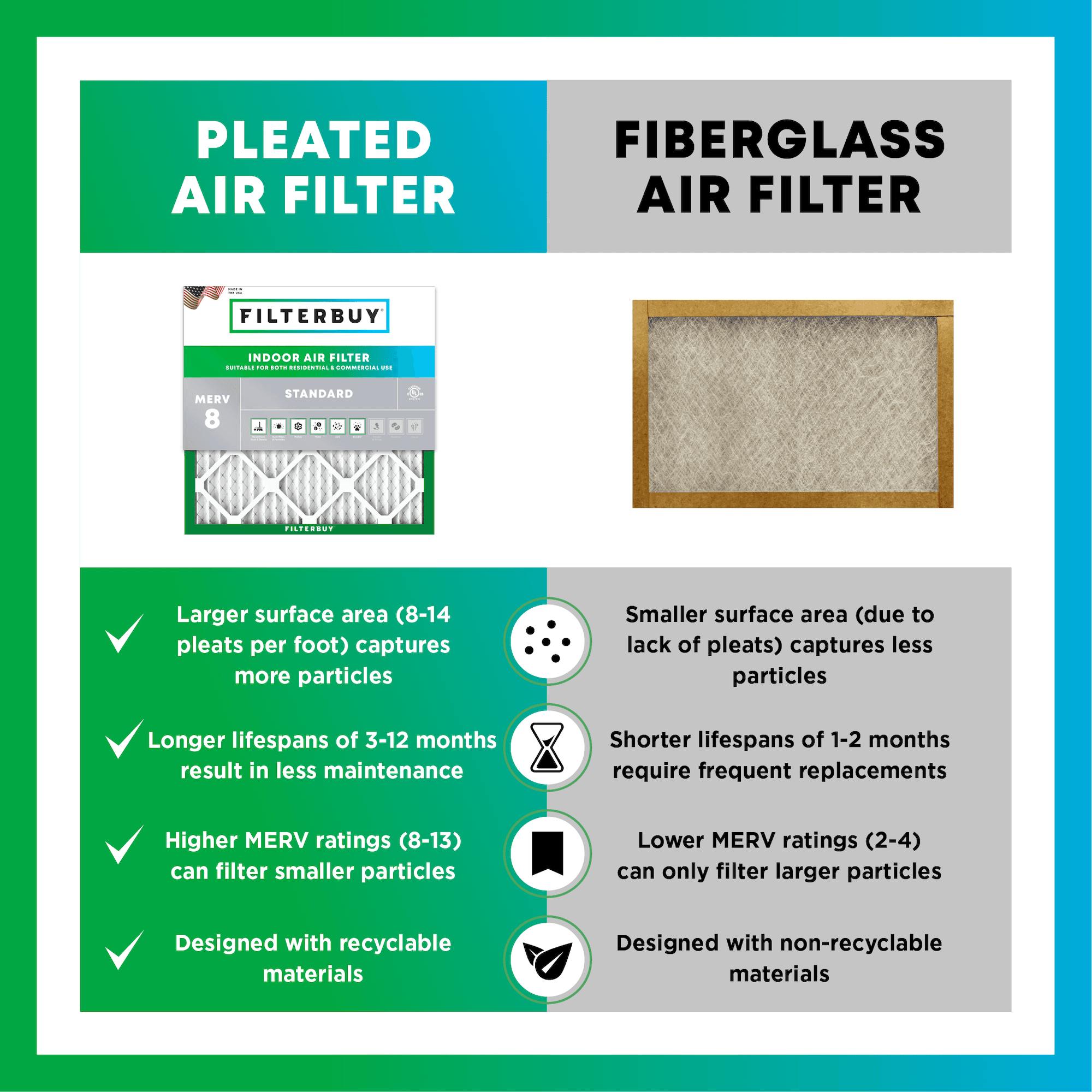
Not all air filters are created equal. Pleated filters don't just last longer—they actually clean your air better. Here's how they stack up:

Efficiency:
High (MERV 8–13) – Traps more particles
Lifespan:
90 days – Long-lasting performance
Air Quality:
Excellent – Cleaner, healthier air
Materials:
Recyclable and durable

Efficiency:
Low (MERV 4 or less) – Misses small stuff
Lifespan:
30 days or less – Replace often
Air Quality:
Minimal – Basic protection only
Materials:
Thin, flimsy, and not recyclable
Pleated filters are a no-brainer—more protection, less hassle, and better air for your home.
Changing your filter on time keeps your HVAC system running efficiently—and helps protect your lungs from dust, allergens, and airborne irritants. Here's how often to swap it out based on your needs:

For most homes without pets or special air quality concerns. Great for general upkeep and energy efficiency.

Shedding fur, dander, and allergy triggers can build up fast. Changing your filter every two months helps keep the air fresher and symptoms at bay.

For households affected by smoke, pollution, or respiratory conditions, monthly changes ensure maximum protection.

| Nominal Size | 16X22X5 |
| Actual Size | 15.13 x 21.88 x 5.25" inches |
| Filter Type | Pleated |
| Media | Electrostatically Charged |
| Frame | Beverage Board |
| MERV Ratings Available | 8, 11, 13 |
| Lifespan | Up to 12 Months |
| Origin | Made in USA |
Check the filter in your Electro-Air cabinet. Look at the media face in good light and note whether the grey is uniform from one frame edge to the other. If you can’t remember the last time you checked, the filter is almost certainly overdue. The 16x22x5 MERV 8 earns its longer replacement schedule through five inches of filtration depth — roughly four to five times the media surface area of a standard 1-inch panel at the same MERV rating. That depth is what makes 6-to-12-month intervals possible. And it’s what makes it easy to lose track of the filter far longer than your HVAC system can absorb.
The MERV 8 16x22x5 is a thick media replacement filter built for Electro-Air whole-home filtration cabinets. Five inches of filtration depth gives it a longer service life than standard 1-inch panel filters at the same MERV rating — and a larger particle capture capacity before airflow is affected.
• Filter size: 16x22x5 nominal (actual dimensions approximately 15.5 x 21.5 x 4.375 inches)
• MERV rating: 8 — captures dust, pollen, mold spores, lint, and pet dander (particles 3–10 microns)
• Compatible systems: Electro-Air EAC whole-home media filter cabinets
• Filter type: Thick media; 5-inch depth; lower pressure drop and longer service life than 1-inch panels at equivalent MERV
• Replacement schedule: Every 6–12 months standard; every 3–6 months in homes with pets, allergies, or elevated dust
• Replacement signal: Uniform grey discoloration across the entire media face, edge to edge
• Designed for whole-home systems. The 16x22x5 MERV 8 is a thick media filter built for Electro-Air whole-home filtration cabinets, not a standard 1-inch return air grille slot.
• Replace on a household-specific schedule. Every 6–12 months under normal conditions. Every 3–6 months in homes with pets, allergies, or elevated dust.
• MERV 8 targets the most common household particles. Dust, pollen, mold spores, lint, carpet fibers, and pet dander — particles in the 3–10 micron range.
• 5-inch depth means a longer service life. The increased media surface area delivers lower pressure drop and a significantly extended service interval compared to thin panel filters at the same MERV rating.
• Watch for these replacement signals. Uniform grey across the filter face, increased surface dust, higher energy bills, longer HVAC run cycles, or stale air indoors.
• Filterbuy manufactures compatible replacements. Precision-cut to fit Electro-Air EAC media cabinets. Buying in multi-packs means a replacement is always ready when inspection time arrives.
Not every air filter is built the same way. The 16x22x5 MERV 8 is a thick media filter, five inches deep, designed for whole-home Electro-Air filtration cabinets, not the standard return air grille where most 1-inch panel filters live. That depth matters considerably. A 5-inch filter holds roughly four to five times the media surface area of a comparably rated 1-inch filter, which means more particle capture capacity and a substantially longer period before the filter restricts airflow.
MERV 8 targets particles in the 3–10 micron range. That covers household dust, lint, carpet fibers, pollen, mold spores, and pet dander — the contaminants that accumulate in any occupied home. Fine particulate matter (PM2.5) requires MERV 11 or higher to capture effectively. For most households without active respiratory concerns, MERV 8 hits the right balance between filtration performance and system airflow.
Electro-Air systems were built for thick media filters, with the cabinet providing the housing and the filter delivering the filtration. Nominal dimensions (16x22x5) refer to the housing slot. Actual filter dimensions run slightly undersized, typically a quarter inch or less on each side, to allow proper seating without letting unfiltered air bypass the frame.
The standard replacement interval for a 16x22x5 MERV 8 filter is every 6–12 months, though that range accounts for real variation in how households actually operate. Serving more than two million households, we’ve found that the single biggest variable is occupancy: how many people live in the home, whether pets are present, and how hard the system runs.
A useful framework by household type:
• Standard household (2–4 occupants, no pets, no allergy concerns): Replace every 9–12 months.
• Pets present, or light allergy concerns: Replace every 6–9 months.
• Multiple pets, severe allergies, or high-dust environments: Replace every 3–6 months.
The thick media format works in your favor. Because the filter holds considerably more particulate before the media face saturates, it outlasts thin panel filters on a per-replacement basis. A 1-inch MERV 8 panel might need changing every 1–3 months. Its 5-inch counterpart handles the same load for months longer. That extended interval is the advantage, and it’s also why loading can sneak up on you if you’re not looking. A quarterly visual check matters more than any fixed calendar date.
Because the 16x22x5 filter loads slowly, the signal can arrive before you’re expecting it. Pull the filter from the cabinet and inspect the media face directly. These conditions call for immediate replacement:
• Uniform grey across the entire media face. Partial greying near the center is normal loading. When grey runs from frame edge to frame edge, the filter has reached capacity.
• More dust settling on surfaces you normally keep clean. When a saturated filter loses capture efficiency, finer particles recirculate through the system. Surfaces that were previously clean start showing deposits faster.
• Your HVAC runs noticeably longer cycles. A clogged filter restricts airflow and forces the system to work harder to hit the thermostat set point. Check your last two utility bills for an unexplained increase.
• Stale or mildly musty air indoors. A filter loaded with organic particles (mold spores, pet dander) can start contributing to odor when it’s been sitting too long.
• Worsening seasonal allergy symptoms indoors. A compromised filter lets pollen and allergens recirculate more freely. If your symptoms are worse at home than outdoors during allergy season, check the filter first. Our resource on how air filters help get rid of seasonal allergies covers that connection in detail.
For most Electro-Air whole-home systems, MERV 8 is the right starting point under standard household conditions. Whole-home media cabinets handle pressure drop from higher MERV ratings better than single-speed HVAC systems paired with thin panel filters, which means there’s more room to upgrade if your household needs it. Here’s how to think through the decision:
• MERV 8: Best for standard households managing pollen, dust, pet dander, and mold spores. Solid whole-home protection with minimal impact on system airflow.
• MERV 11: Recommended for households with allergy sufferers or mild asthma. Captures finer particles, including smaller mold spores and some fine dust. Slightly higher pressure drop, though appropriate for most Electro-Air systems.
• MERV 13: Best suited for households with severe allergy or asthma concerns, or where fine particulate matter (PM2.5) is a priority. Verify compatibility with your specific Electro-Air cabinet before upgrading.
If no one in your household manages active respiratory conditions and your primary goal is keeping your HVAC clean while removing everyday contaminants, MERV 8 handles that job reliably. If allergy or asthma symptoms are a regular concern in your home, MERV 11 is the sensible step up.
Filterbuy manufactures the 16x22x5 filter to the dimensional tolerances Electro-Air media cabinets require.
The nominal size (16x22x5) matches the housing slot label on your cabinet. Actual dimensions run approximately 15.5 x 21.5 x 4.375 inches, providing the clearance needed for a clean seat without letting unfiltered air bypass the media frame.
The frame uses beverage-board construction, which keeps it rigid through installation and maintains a consistent seal against the cabinet walls under system pressure. It ships flat-packed to protect the media before installation.
Before ordering, pull your current Electro-Air filter and check the nominal size printed on the frame. If it reads 16x22x5, a Filterbuy MERV 8 replacement drops straight in. Any other nominal size? Filterbuy makes over 600 filter sizes and can identify the right fit.
“The 16x22x5 format gives us significantly more media surface to work with, which is exactly why these filters outlast thin panels at the same MERV rating by months, not weeks. From the manufacturing side, the pattern we see consistently is homeowners treating replacement like a calendar event rather than a media condition check. Pull the filter. Look at the face. What you see tells you more than any date on the calendar.”
— Filterbuy Team
We’ve pulled the most relevant .gov and .org resources into one place. Whether you’re confirming your MERV selection, understanding what’s in your home’s air, or finding guidance for households managing allergies or asthma, each one gives you something you can act on.
The EPA’s foundational guide to indoor air quality explains how pollutants accumulate inside homes, where they originate, and why the air circulating through your living spaces may affect your family’s health in ways that aren’t visible. A worthwhile read before making any filtration decision.
Source: EPA — Introduction to Indoor Air Quality
The EPA’s consumer guide walks through MERV rating selection for furnace and HVAC filters, covering the efficiency and airflow tradeoffs that matter when choosing between MERV 8, 11, and 13 for a whole-home system. The guidance on upgrade timing is particularly useful for Electro-Air households.
Source: EPA — Guide to Air Cleaners in the Home
The EPA’s Inside Story breaks down where indoor pollutants originate in each area of a home, how they accumulate over time, and what practical steps homeowners can take to reduce daily exposure. Useful for understanding exactly how much work your Electro-Air system is doing.
Source: EPA — The Inside Story: A Guide to Indoor Air Quality
The DOE’s Building Science team explains how HVAC filters work mechanically, what happens when a clogged filter restricts airflow, and how MERV rating selection directly affects heating and cooling system performance. Worth reviewing before deciding whether to stay at MERV 8 or step up.
Source: DOE Building Science — HVAC Proper Installation of Filters
The DOE’s Home Energy Checklist identifies air filter maintenance as one of the highest-impact routine actions homeowners can take to reduce energy consumption. Clean, maintained filters mean the HVAC system works the way it was designed to, and your utility bills reflect it.
Source: DOE — Home Energy Checklist
AAFA independently tests and certifies HVAC filters against strict standards for households where allergy or asthma management is a daily reality. A practical reference when deciding whether MERV 8 meets your family’s specific needs or whether an upgrade is warranted.
Source: AAFA — Asthma & Allergy Friendly Certification Program
ENERGY STAR’s heating and cooling guidance is direct: check the filter monthly and replace when it looks dirty, regardless of what the calendar says. Regular inspection and timely replacement protect both system performance and indoor comfort more reliably than any fixed schedule.
Source: ENERGY STAR — Heat & Cool Efficiently
The EPA confirms that Americans spend approximately 90 percent of their time indoors, where concentrations of some pollutants run 2 to 5 times higher than typical outdoor levels. That gap is invisible, which makes consistent filter maintenance more consequential than most homeowners realize. From what we've seen serving households across the country, families who keep their Electro-Air systems on a consistent replacement schedule breathe noticeably better than those who don't.
Source: https://www.epa.gov/report-environment/indoor-air-quality
The U.S. Department of Energy confirms that filters thicker than 1 inch outperform standard thin panel filters and require significantly less frequent replacement. That’s the 16x22x5 advantage in practice — better media capacity, lower pressure drop, and a longer service interval without sacrificing air quality.
Source: DOE — Operating and Maintaining Your Heat Pump
The EPA confirms that longer system run times, higher fan speeds, and elevated indoor pollution all accelerate how quickly HVAC filters accumulate particulate. A home running the HVAC hard through peak season may push its filter to capacity months ahead of a more moderate-use household. During heavy-use seasons, lean toward the more frequent end of your replacement window and inspect earlier than you think you need to.
Source: EPA — Air Cleaners, HVAC Filters, and Indoor Air Quality
The most common mistake we see with Electro-Air homeowners is treating a 5-inch media filter like the 1-inch panel filter it replaced. They set a quarterly reminder, pull a filter that looks barely loaded, and either change it too early or decide it’s fine for another year. Neither call is right.
The 16x22x5 MERV 8 is a different class of indoor air quality filter. It’s built to accumulate slowly, over months rather than weeks, before it warrants replacement. Watch the media face, not the calendar. When grey runs uniformly from edge to edge, the filter has done its job. Replace it then, not before the HVAC starts straining to compensate.
A three-month visual inspection takes under two minutes. Let the filter face give you the answer. That single habit, applied consistently, is what separates a whole-home filtration system that earns its keep from one that quietly underdelivers.
1. Locate your Electro-Air media cabinet and remove the existing filter. Check the nominal size printed on the frame to confirm 16x22x5.
2. Inspect the media face right now. Uniform grey discoloration from edge to edge means replacement is overdue. Partial loading means noting today’s date and setting a 60-day reinspection reminder.
3. Confirm your MERV level. MERV 8 is the right starting point for most households. If someone in your home manages allergies or asthma, consider stepping up to MERV 11.
4. Order a multi-pack from Filterbuy. Buying in bulk locks in pricing and keeps a replacement on hand when inspection day arrives, so there are no last-minute hardware store runs.
5. Set a standing quarterly inspection reminder. A filter check every three months takes two minutes and keeps your Electro-Air system operating the way it was built to.
A: Replace it every 6–12 months under standard household conditions. Reduce that interval to every 3–6 months if your home has pets, allergy sufferers, or above-average dust. The 5-inch media format loads far more slowly than thin panel filters, which extends the service interval but also makes it easy to let the filter run past its useful capacity without noticing.
A: Yes. Filterbuy manufactures the 16x22x5 to fit Electro-Air EAC media cabinets. The nominal dimensions match the housing slot label on your cabinet. Actual dimensions are slightly smaller, approximately 15.5 x 21.5 x 4.375 inches, to allow proper seating with a consistent seal against the cabinet walls.
A: MERV 8 captures particles in the 3–10 micron range, which includes:
• Household dust and dust mite debris
• Pollen from trees, grasses, and weeds
• Mold spores
• Lint and carpet fibers
• Pet dander
MERV 8 does not capture fine particulate matter (PM2.5) at high efficiency. For households where fine particle filtration is a priority, MERV 11 or MERV 13 provides meaningfully better capture.
A: In most cases, yes, provided you maintain the same 16x22x5 nominal size. Whole-home media filter systems handle increased static pressure from higher MERV ratings better than single-speed HVAC systems with thin panel filters. Check your Electro-Air system documentation or consult your HVAC technician if you’re unsure whether your cabinet is rated for higher MERV filtration. For allergy or asthma households, MERV 11 is the most common upgrade and adds meaningful fine-particle capture with minimal airflow penalty.
A: A fully loaded filter restricts airflow through your system. The consequences build progressively:
• Your HVAC runs longer cycles to meet thermostat set points, increasing energy costs.
• System components — the blower motor and coils — work under elevated strain, accelerating wear.
• Captured particulate bypasses the saturated filter through gaps or edges, recirculating into your home.
• As filtration efficiency drops, your indoor air quality suffers.
You've got the schedule, the signals to watch for, and the specs confirmed — the only thing left is the filter. Order a Filterbuy 16x22x5 MERV 8 multi-pack and set your quarterly inspection reminder knowing your next replacement is already on hand.

