
Philadelphia Real-Time AQI Tracker


Get Alerts For Unhealthy AQI In Your Area
When air quality in your area reaches unhealthy levels, we'll send you a quick alert, along with expert tips on how to reduce your exposure.
What's Actually In Philadelphia Air Today?
What High AQI Means for Your Lungs in Philadelphia
How to Read AQI
The Air Quality Index (AQI) measures how polluted the air is and how it may affect your health.
0–50 (Good): Air quality is satisfactory.
51–100 (Moderate): Acceptable, but some pollutants may pose minor concerns.
101–150 (Unhealthy for Sensitive Groups)
151–200 (Unhealthy)
201–300 (Very Unhealthy)
301+ (Hazardous)
Moderate
Still okay for most, but if you have asthma or allergies, take it easy and avoid long outdoor workouts.
Shop MERV 11 filters→What's the Right Filter for Your AQI Level?
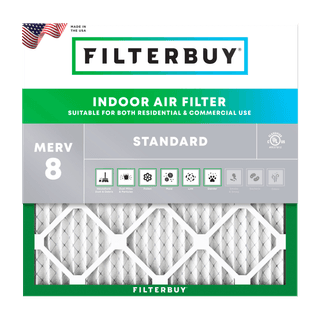
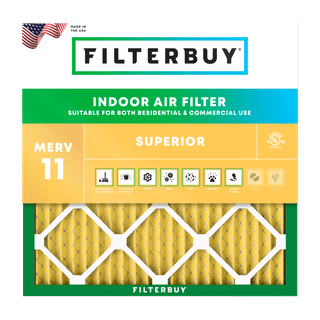
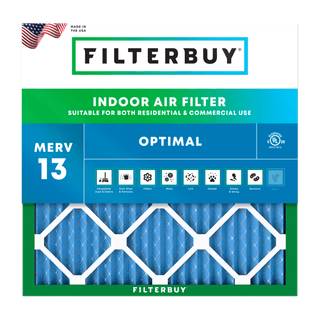

Check Today's Live Real Time Air Quality Index AQI Map in Philadelphia, PA Now
The map at the top of this page is reading from EPA-certified monitors across the Delaware Valley right now. A green dot in your ZIP code says your kid's soccer practice in Fairmount is fine. Anything orange or worse changes that calculus fast, since the Schuylkill River Trail traps particulates and the I-95 corridor runs hotter than residential blocks. What looked like a good outdoor plan at 9 AM may not be one by 3 PM.
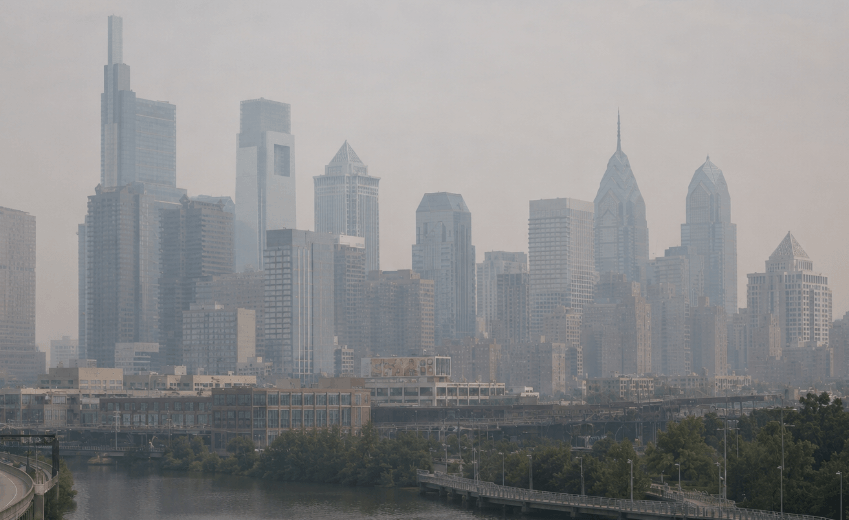
Philadelphia's air can jump AQI categories inside a few hours, and the same number means different things depending on your age, your health, and what you had planned. We've watched it happen. So has every parent who lived through the June 2023 days when Canadian smoke turned the Liberty Bell orange and pushed the city to Code Maroon for the first time in modern record. Next time it shifts, you should already know what to do.
TL;DR Quick Answers
What is the air quality in Philadelphia today?
Check the live map at the top of this page for the current reading. Anything from 0 to 50 is good, 51 to 100 is moderate, and 101 or higher means sensitive groups should limit outdoor activity.
Sensitive groups: kids, older adults, pregnant people, and anyone with asthma or heart disease.
Action threshold: AQI over 100 means switch HVAC fan to “on” and close the windows.
Is the air quality bad in Philadelphia today?
“Bad” depends on the reading and who's asking. Anything over 100 is unhealthy for sensitive groups, and anything over 150 is unhealthy for everyone. During wildfire smoke events or summer ozone alerts, Philadelphia can climb past 200 inside three hours.
Quick check: scroll up to the live map and zoom into your ZIP code.
If you're sensitive: treat anything over 100 as your stay-indoors threshold.
What does the AQI number for Philadelphia mean for outdoor exercise?
Below 100, outdoor exercise is fine for most people. The 101 to 150 range is where sensitive groups should dial back intensity or move indoors, and once the reading clears 150, everyone should consider going inside.
Runners and cyclists: the Schuylkill River corridor traps particulates, so pick a higher-elevation route on bad days.
Coaches and school staff: Code Orange is the threshold most school districts use to relocate practice indoors.
Top Takeaways
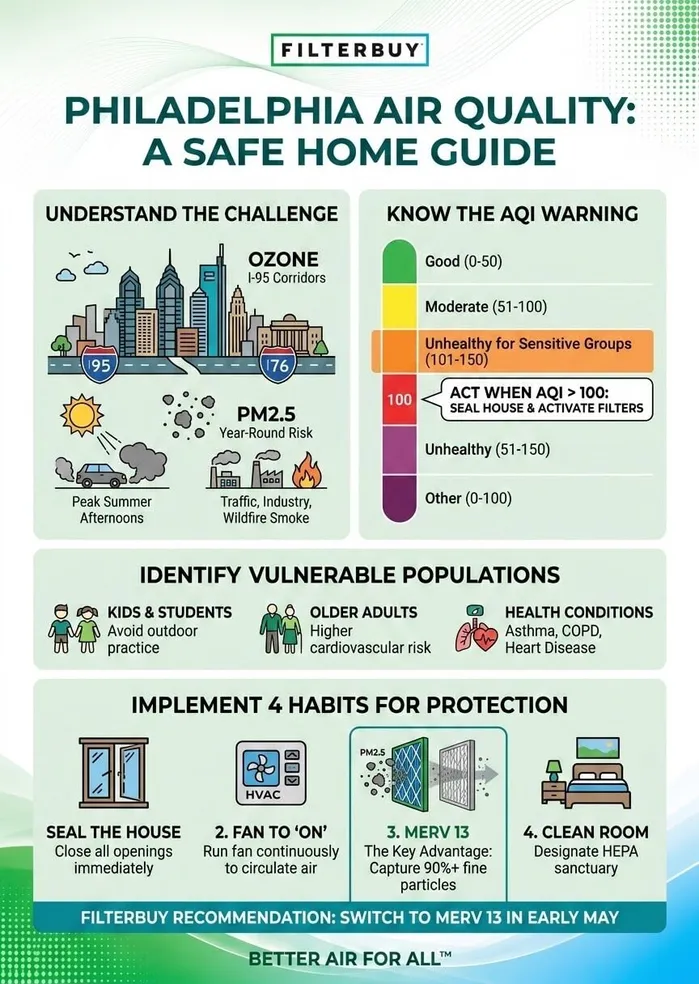
Philadelphia's two biggest air quality threats are ground-level ozone, worst on hot afternoons from late April through September, and fine particulate matter, which runs year-round with seasonal spikes from wildfire smoke and winter wood burning.
The same Philadelphia AQI number means different things for different people. Children, older adults, pregnant people, and anyone with asthma, COPD, or heart disease should treat Code Orange and above as their personal threshold.
Indoor protection is the variable you can actually control. MERV 13 filters, the HVAC fan running continuously, and a dedicated clean room turn a Code Maroon outdoor day into a manageable indoor one.
Air quality alerts from the National Weather Service Mount Holly office often beat the news cycle by hours. Subscribe to push notifications.
The households that fare best are the ones with filters already upgraded and routines already in place before the alert hits.
What Today's Philadelphia AQI Really Means for Your Day
Reading the Live Air Quality Map for Philadelphia, PA
The map updates every hour from EPA-certified monitors scattered across the Delaware Valley. Each colored dot is one station's most recent reading. When fires are close enough that smoke could reach the metro, plume overlays show up too. Zoom into your ZIP code, since air quality in this city changes block to block. The South Philly waterfront doesn't read the same as East Falls, and PM2.5 along the I-95 corridor usually runs higher than what you'll see on residential blocks three miles inland.
If a station two miles from yours reads differently than the closest one, that's normal. Wind direction, traffic, building height, and how close you are to industrial sources all move the numbers around. Trust the station nearest to you, or to wherever you're heading.
The Six Air Quality Index Categories Explained for Philadelphia
The U.S. Environmental Protection Agency uses the same six color-coded AQI categories everywhere in the country. The numbers mean the same thing in Philly as they do in Phoenix, but the practical advice changes with your local conditions. For the official definition and history of the index, see the air quality index reference on Wikipedia.
| AQI Range | Color | Category | What it means in Philly |
|---|---|---|---|
| 0–50 | Green | Good | Open the windows. The Kelly Drive loop is yours, kids and grandparents included. |
| 51–100 | Yellow | Moderate | Generally fine for the public, though anyone unusually sensitive may notice irritation on a long outdoor session. |
| 101–150 | Orange | Unhealthy for Sensitive Groups | Reschedule the run along the Schuylkill, since the river corridor traps particulates. Kids, older adults, and anyone with asthma should ease back on outdoor exertion. |
| 151–200 | Red | Unhealthy | Move workouts indoors, keep windows closed, and switch the HVAC fan to continuous operation. |
| 201–300 | Purple | Very Unhealthy | Stay indoors and wear an N95 mask if you have to go out. This is when MERV 13 filtration earns its keep. |
| 301+ | Maroon | Hazardous | Treat it as an emergency. Seal the house, run a clean room, and check on neighbors who may be more vulnerable. |
Why Philadelphia Gets Hit Hardest by Ozone and PM2.5
Two pollutants do most of the damage to Philadelphia's air, and they don't peak at the same time of year.
Ground-level ozone forms when sunlight bakes the chemical soup coming off I-95, I-76, the Schuylkill Expressway, and the industrial Northeast Corridor. From late April through September, hot, humid afternoons are when Philadelphia ozone levels push into Code Orange territory. The worst hours run roughly 2 PM to 8 PM, which is exactly when school lets out and rec leagues hit the field. The American Lung Association's most recent State of the Air report ranked the Philadelphia metro 17th worst in the country for short-term particle pollution and gave the area an F for ozone.
PM2.5 is what gets flagged most often, and it comes from a different mix entirely. Vehicle exhaust contributes. So does the Marcus Hook industrial complex on the lower Delaware. Residential wood smoke shows up every winter, restaurant cooking emissions cluster in dense corridors, and wildfire smoke gets transported in from Canada or the Western U.S. when fire seasons run hot. Anyone old enough to remember the June 2023 Code Maroon days, when Canadian fire smoke turned the sky orange over Center City and the Liberty Bell, knows how fast PM2.5 can take a city from “fine” to “stay inside” inside a single afternoon.
What to Do Indoors When Philadelphia's AQI Climbs
Once the outdoor reading spikes, indoor air becomes the only variable left in your control. After manufacturing filters for over a decade and serving more than two million households, we've watched which homes ride out a Code Orange day comfortably and which ones don't. The well-protected ones share four habits.
Close all windows, doors, and outdoor air intakes the moment the AQI passes 100.
Switch the HVAC fan from “auto” to “on” so air keeps cycling through the filter, even when the system isn't actively heating or cooling.
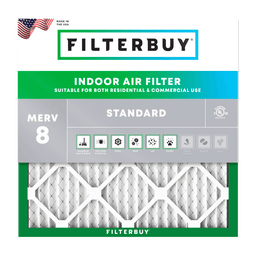
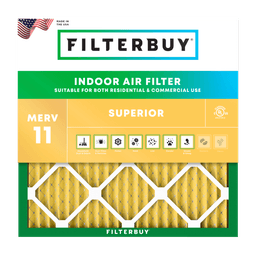
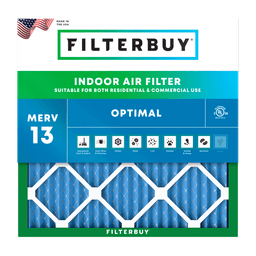
Upgrade to a MERV 13 air filter rated for fine particulates. MERV 8 catches dust and pollen but lets the small stuff through, and MERV 11 handles most everyday particles without much trouble. MERV 13 is the threshold where fine smoke and PM2.5 start getting captured at rates that actually move the needle.
Build a clean room. Pick the bedroom you spend the most time in, run a portable HEPA unit sized to the square footage, and keep the door closed.
Pro Tip. Philadelphia row homes with older return ducts often pull unconditioned air right out of the basement and crawl space. In ozone season, that means humid basement air ends up on your second floor whether you wanted it there or not. A higher-MERV filter helps, and sealing the return-side gaps reduces the load even more.
For Philadelphia wildfire smoke air quality specifically, those same four habits apply with one addition. Dryer vents and bathroom exhaust fans turn into smoke entry points if their backdraft dampers don't seal tight, so check those before the next event hits the metro.
“The mistake I see most often in Philadelphia homes is timing more than filter choice. People wait until they smell smoke or hear the Code Orange alert to upgrade, and by then PM2.5 has already settled onto carpets, curtains, and HVAC coils. We tell Mid-Atlantic customers to switch to MERV 13 in early May before ozone season starts, and to leave the fan on ‘on’ during any forecast Code Yellow or worse. Done that way, you're already protected when the alert hits.”
— Filterbuy Team
7 Essential Air Quality Resources for Philadelphia Residents
Use these official sources to verify the live data, dig into specific pollutants, and find help if your household includes someone with a respiratory condition. Each one is hand-picked for Philadelphia and Delaware Valley relevance, and each comes from a different authoritative domain.
1. EPA AirNow — Pennsylvania State AQI Page
The federal government's real-time air quality dashboard. AirNow pulls from the same monitor network as the map above, with detailed forecasts and historical trends across Pennsylvania, including the Philadelphia metro.
Source: https://www.airnow.gov/state/?name=pennsylvania
2. Pennsylvania Department of Environmental Protection — Air Quality Index
Pennsylvania DEP runs the regulatory side of air quality monitoring statewide, including the Southeast Region office that covers Philadelphia. The state AQI page lists current readings by region with the same color-coded categories used everywhere else, and links to current Action Day alerts.
3. City of Philadelphia Air Management Services
The local agency that operates the city-specific monitor network and responds to local air quality complaints. The Department of Public Health page lists the ten permanent monitoring stations across Philadelphia and explains how the city tracks and reports on what its residents are actually breathing.
Source: https://www.phila.gov/services/mental-physical-health/environmental-health-hazards/air-quality/
4. American Lung Association — State of the Air, Philadelphia Metro
The Philadelphia metro page in the ALA's annual State of the Air report. Year-over-year context that a daily reading can't give you, including the metro's grades for ozone, short-term particle pollution, and year-round particle pollution.
Source: https://www.lung.org/research/sota/city-rankings/states/pennsylvania/philadelphia
5. National Weather Service Mount Holly — Air Quality Page
The NWS Philadelphia/Mount Holly office's dedicated air quality page. This is the source for official Air Quality Action Day alerts for the Philadelphia metro. Subscribe to alerts directly so you get a push notification before levels climb.
Source: https://www.weather.gov/phi/air_quality
6. CDC — About Air Quality
Plain-English health guidance keyed to AQI categories. Useful when you have to explain to an aging parent or a kid's school why you're changing outdoor plans, and includes specific recommendations for asthma, COPD, and heart disease.
Source: https://www.cdc.gov/air-quality/about/index.html
7. Children's Hospital of Philadelphia — Community Asthma Prevention Program
CHOP's CAPP program is built specifically for Philadelphia families managing pediatric asthma. Free education, home visits, asthma action plan resources, and partnership programs that help local families control triggers in the home.
Source: https://www.chop.edu/centers-programs/community-asthma-prevention-program-capp/
Philadelphia Air Quality by the Numbers
Three statistics that put today's Philadelphia AQI reading into context. Each one comes from a separate authoritative source so you can verify the data yourself.
1. PM2.5 particles are roughly 30 times smaller than the diameter of a human hair.
Based on what we heard from customers during the June 2023 Canadian smoke events, that size is exactly why standard filters miss them. The particles slip through fiber gaps that would catch larger dust and pollen without trouble. The U.S. EPA documents the size and behavior of fine particulate matter in plain language, including the comparison to a single strand of human hair.
Source: https://www.epa.gov/pm-pollution/particulate-matter-pm-basics
2. Short-term exposure to air pollution can increase the risk of heart attack, stroke, arrhythmia, and heart failure in susceptible people.
In our years working with Mid-Atlantic households on air filtration, the cardiovascular angle is the one that surprises customers most. Most expect respiratory effects and stop there. The American Heart Association walks through the connection between air pollution and heart disease, with detail on how PM2.5 contributes to atherosclerosis.
3. Children breathe in more air per kilogram of body weight than adults, which means a bigger dose of any pollutant for the same outdoor exposure.
That physiological difference is part of why kids' asthma rates in dense urban areas like Philadelphia consistently run above the national average. The American Lung Association explains the vulnerability in detail in its Health Impact of Pollution overview.
Source: https://www.lung.org/research/sota/health-risks
Final Thoughts and Opinion
The Philadelphia AQI number you check today matters less than the habits already running in your home before that number spikes. After working with millions of households on air filtration, that's the pattern we keep seeing.
Most people who get blindsided by a smoke event or a Code Orange ozone day didn't ignore the warning. They just hadn't set up the basics. The right MERV-rated filter wasn't in the system yet, the HVAC fan was on “auto” instead of “on,” and no portable HEPA was running in the bedroom they actually slept in. By the time the alert hit the local news, indoor PM2.5 had already crept up alongside the outdoor reading.
Our opinion is unpopular but well-tested. Don't treat air quality as something you only check during emergencies. Build it into the same routine as checking the weather. If the morning forecast says 85 and humid, your AQI is worth a glance too. The customers who consistently report the best outcomes for their kids and their HVAC equipment are the ones who set up the system before they ever needed it.
Next Steps
Start with what you can do today, this week, and this season.
Today
Bookmark this page on your phone's home screen, since live Philadelphia air quality is one tap away when you need it.
Check the live map up top before you head out, especially if you have a kid in outdoor sports or you're commuting on foot or bike.
If wildfire smoke is the driver today, our Philadelphia wildfire smoke map tracks active fire perimeters, plume direction, and projected smoke transport into the metro.
If the reading is over 100, set your HVAC fan to “on” and close the windows.
This Week
Check the filter currently in your system. If it's MERV 8 or below, plan an upgrade.
Identify the room in your home you spend the most time in. That's your clean-room candidate.
Subscribe to NWS air quality alerts for the Philadelphia metro so you don't have to keep checking manually.
This Season
Replace your filter on a calendar reminder, not a guess. Most Philadelphia homes need a fresh MERV 13 every 60 to 90 days during summer ozone season. Pets or continuous fan operation cut that interval shorter.
Schedule an HVAC check-up with a local technician to verify your fan motor can handle continuous operation without overheating.
Walk the perimeter of your house and identify any visible gaps around windows, doors, and dryer vents. These turn into smoke entry points during a fire transport event.
Frequently Asked Questions About Philadelphia Air Quality
Breathe Easier in Philly, Every Day
Whether you're checking Philadelphia air pollution today out of curiosity or because the Code Orange alert just hit your phone, the indoor air your family breathes is the one variable you can actually control. Filter upgrade, continuous fan, sealed windows, and a dedicated clean room handle most of what a high-AQI day throws at a household.
If you're ready to upgrade your filter or you aren't sure what size your system needs, our team will walk you through it. We've helped millions of families across the country breathe easier indoors, and we'd be glad to do the same for the Delaware Valley families counting on us. Take the small step today and breathe Philly with a little less worry tomorrow.