
Air Quality in Oklahoma
Air quality index (AQI⁺) and PM2.5 air pollution in Oklahoma •


Get Alerts For Unhealthy AQI In Your Area
When air quality in your area reaches unhealthy levels, we'll send you a quick alert, along with expert tips on how to reduce your exposure.
Live Air Quality Ratings in Oklahoma
Live Most Polluted City Ranking
Real-time most polluted cities in Oklahoma
Live Cleanest City Ranking
Real-time cleanest cities in Oklahoma
The Right Air Filter For High AQI Days
When outdoor air quality drops, the EPA recommends upgrading to a MERV 13 filter — or the highest-rated filter your HVAC system can handle — to help capture more of the fine particulate (PM2.5) that comes with poor air quality. MERV 13 is the highest rating most residential systems can run without restricting airflow.
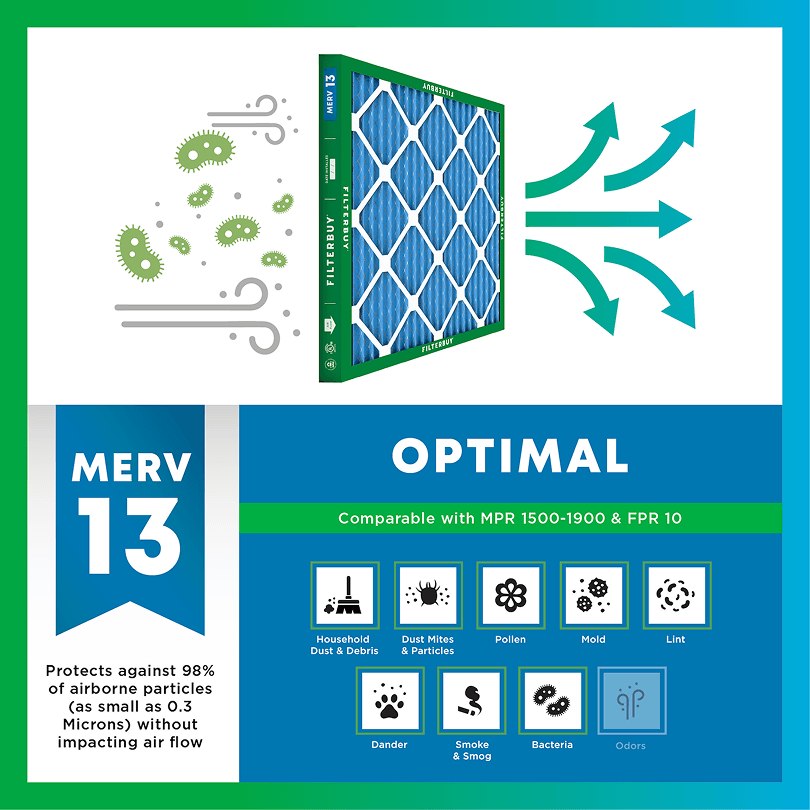
- Captures PM2.5 and other fine particulates
- Filters ash, soot, and smoke particles
- Rated to capture particles as small as 0.3 microns
- Matches the filter rating the EPA suggests during high-AQI and smoke events

AQI FAQs
What is AQI?
AQI stands for Air Quality Index, the EPA's scale for reporting daily air quality. It runs from 0 to 500. The higher the number, the greater the level of air pollution. Values at or below 100 are generally considered satisfactory; values above 100 mean air quality is unhealthy, first for sensitive groups, then for everyone as numbers climb.
What does AQI measure?
The AQI tracks five major pollutants regulated by the Clean Air Act: ground-level ozone, particle pollution (PM2.5 and PM10), carbon monoxide, sulfur dioxide, and nitrogen dioxide. The reported AQI value reflects whichever pollutant is highest at that time — most often ozone or fine particles (PM2.5).
How is AQI calculated?
Monitoring stations measure pollutant concentrations, and the EPA converts each into a standardized 0–500 score using set breakpoints. Each pollutant gets its own sub-index, and the highest sub-index becomes the reported AQI. That's why a single number can represent different pollutants on different days.
What is a good AQI?
An AQI of 0–50 is rated "Good" — air quality poses little or no risk. 51–100 is "Moderate," acceptable for most people though unusually sensitive individuals may want to limit prolonged outdoor exertion. Anything at or below 100 is generally considered satisfactory air quality.
What does an AQI of 100 (or 150) mean?
100 is the dividing line: at or below it, air quality is satisfactory for the general public. From 101–150, air is "Unhealthy for Sensitive Groups" — people with respiratory conditions, older adults, and children. From 151–200, it's "Unhealthy" and everyone may begin to feel effects.
Why is the AQI bad today?
Short-term AQI spikes usually come from wildfire smoke, temperature inversions that trap pollutants near the ground, high-ozone weather (hot, sunny, stagnant days), or heavy traffic and industrial activity. Check a real-time source like the map on this page to see which pollutant is driving today's reading in your area.
What AQI is bad for running or exercise?
Many runners follow the EPA category lines: below 50, no adjustment needed; 51–100, unusually sensitive people may shorten intense workouts; above 100, sensitive groups are advised to reduce prolonged or heavy outdoor exertion; above 150, that advice extends to everyone. Exercise increases how much air you breathe in, which is why thresholds matter more during workouts.
What AQI is safe to open windows?
A common rule of thumb is to keep windows open when the AQI is under 100 and close them when it climbs above, especially during wildfire smoke events when fine particles are elevated. When windows are closed, running your HVAC system with a fresh filter helps capture particles circulating indoors.
Should I wear a mask based on AQI?
Public health agencies generally suggest considering a well-fitted N95-style respirator outdoors when the AQI exceeds 150, particularly during smoke events. Cloth and surgical masks don't filter fine particles effectively. Follow guidance from your local health department, which may adjust recommendations during severe episodes.
Check Today's Live Real Time Air Quality Index AQI Map in Oklahoma Now
The air quality reading on your screen only gives half of the story. What goes outside has a direct impact on what your family is breathing in, and after serving more than two million households all across America, we've seen firsthand how unique Oklahoma conditions lead to indoor air problems the majority of residents never expect to encounter.
This map informs you of today's conditions in real-time. Use it to understand when the amount of pollutants outdoors is elevated and take action where it matters most: indoors. Americans spend about 90% of their time indoors, where air can be two to five times the amount of pollutants in the air than outdoor air segments, according to the EPA.
TL;DR Quick Answers
Live Air Quality Index AQI Map Now Today in Oklahoma
Oklahoma's current AQI readings are available on the interactive map at the top of this page, updated hourly via EPA monitoring stations.
What you need to know right now:
Good (0-50): Safe for all outdoor activities
Moderate (51-100): Acceptable for most; sensitive individuals should monitor symptoms
Unhealthy for Sensitive Groups (101-150): Children, seniors, and those with respiratory conditions should limit prolonged outdoor exposure.
Unhealthy (151-200): Everyone should reduce extended outdoor activity
Our experience-based insight: After serving over two million households, we've learned that what shows on the map directly impacts what accumulates on your air filter. When outdoor readings climb above 100, your HVAC system works harder to filter incoming pollutants—making indoor air quality management just as important as checking the map itself.
Top 5 Takeaways
Oklahoma's outdoor AQI directly impacts your indoor air. Your HVAC pulls outside pollutants inside continuously. What the map shows is what your filter catches.
Indoor air is 2 to 5 times more polluted than outdoor air. Without proper filtration, particles recirculate through your home repeatedly.
Act when AQI exceeds 100—don't wait for 150. Families who respond earlier report fewer respiratory complaints across our two million customer households.
Match your rating to current conditions. The right one has the power to solve your allergies and other related concerns.
Monitor regularly. Oklahoma's dust storms, wildfire smoke, and seasonal allergens create rapid AQI swings that other regions rarely experience.
Understanding Oklahoma's Air Quality Index
It is a measure used to determine pollution levels, and it has a scale ranging from 0 to 500, with the lower the number, the cleaner the air. For most Oklahomans, the readings from 0 to 50 would be considered good quality air, and everything over 100 is something that should be watched for, especially for children and the elderly, as well as those with respiratory conditions.
Its geography determines differentiation in air quality. The state is located at the convergence of many weather systems, in which case conditions can change quickly from good to bad in a matter of hours.
What Affects Oklahoma Air Quality
Several factors influence daily air quality index readings across the state:
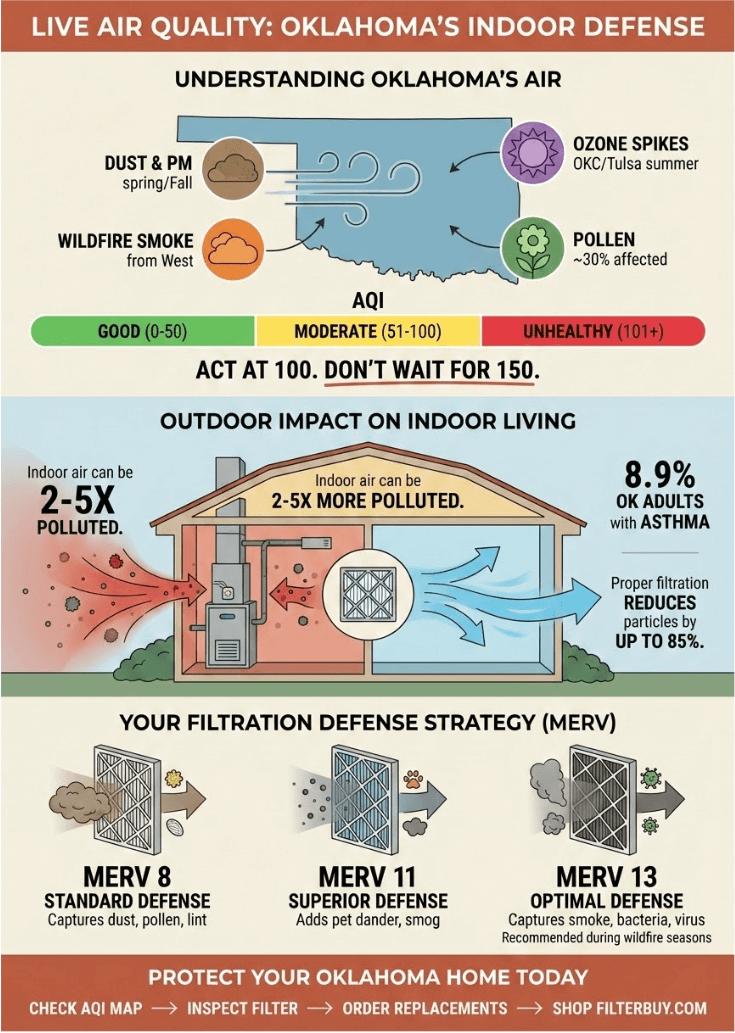
Seasonal dust and particulate matter blow in from agricultural regions and the western plains, especially in the spring and fall. These fine particles easily enter homes through openings around windows, doors, and heating, ventilation, and air conditioning systems.
Wildfire smoke from Texas, Kansas, Colorado, and even California fills Oklahoma airspace during fire season. Smoke particles are small enough to evade many basic filtration systems, and indoor air quality management is needed during these events.
Ozone levels spike during hot summer months, especially in urban corridors like Oklahoma City and Tulsa. Ground-level ozone is created with the help of vehicle emissions and industrial pollutants that react with the sun.
Pollen and allergens are abundant during spring and fall, and they contribute to the seasonal allergies for the roughly 30% of Oklahoma adults suffering from allergic rhinitis, according to the Asthma and Allergy Foundation of America.
How Outdoor AQI Impacts Your Indoor Air
Here's what our experience manufacturing filters for millions of households has taught us: outdoor air quality directly determines what circulates inside your home. Your HVAC system pulls in outside air continuously, and without proper filtration, those pollutants cycle through your living spaces repeatedly.
When outdoor AQI rises above 100, consider these protective measures:
Keep windows and doors closed to prevent unfiltered air from entering. Run your HVAC system with a quality filter to actively clean circulating air. Check your current filter—if it's visibly dirty, replacement becomes urgent during poor air quality events.
Choosing the Right Filter for Your Home
Different AQI concerns call for different filtration strategies:
Consider MERV 13 filters, which can catch fine particulates from wildfire smoke and vehicle emissions, offering the highest protection for residential HVAC systems during poor air quality events.
After testing thousands of filter configurations across different conditions, we've found that stepping up the rating during poor AQI days makes a measurable difference in indoor air quality.
Monitor Today, Protect Tomorrow
Use our live AQI map above to check current conditions in your Oklahoma community. When readings climb, your indoor environment becomes your family's primary defense. Regular filter changes—every 60 to 90 days under normal conditions, more frequently during poor air quality periods—ensure your HVAC system performs when it matters most.
"After serving over two million households and manufacturing more than 10 million filters across our American facilities, we've seen firsthand how quickly Oklahoma's air quality swings can overwhelm an unprepared HVAC system—what looks like a clear day outside often tells a different story when you check what's accumulated on a filter after just 30 days."
— Filterbuy Air Quality Team
Essential Air Quality Resources for Oklahoma Homeowners
Don't take your indoor air for granted—especially when Oklahoma's outdoor conditions fluctuate. After serving over two million households, we've learned that informed homeowners make the best decisions for their families. These trusted resources help you understand what's happening in your air and take action to protect your greatest assets: your family, your home, and your HVAC system.
1. AirNow.gov: See What's Really in Oklahoma's Air Right Now
You can't protect your family from pollutants you don't know exist. AirNow provides official EPA readings updated hourly for every Oklahoma county, giving you the visibility needed to make smart decisions about when to keep windows closed and when your HVAC system needs to work harder.
Resource: https://www.airnow.gov/state/?name=oklahoma
2. Oklahoma DEQ Air Quality Division: Understand Your Region's Unique Challenges
Oklahoma's air quality story differs from national averages. The state's Department of Environmental Quality tracks local pollution sources, seasonal patterns, and regional trends that directly impact what circulates through your home—insights that empower you to stay one step ahead.
Resource: https://www.deq.ok.gov/air-quality-division/
3. EPA Indoor Air Quality Guide: What Happens Outside Comes Inside
Here's something most homeowners don't realize: the EPA reports indoor air can be two to five times more polluted than outdoor air. This guide reveals how outdoor pollutants infiltrate your living spaces and provides practical steps to maintain cleaner indoor environments—exactly the kind of knowledge that helps you feel confident protecting your family.
Resource: https://www.epa.gov/indoor-air-quality-iaq
4. ASHRAE Filtration Standards: Choose the Right Protection Level
Not all filters work equally against every pollutant. ASHRAE establishes the MERV rating standards we use across our product line, and understanding these guidelines helps you match your filtration to Oklahoma's specific challenges—whether that's seasonal dust, wildfire smoke, or elevated pollen counts.
Resource: https://www.ashrae.org/technical-resources/filtration-disinfection
5. Asthma and Allergy Foundation: Shield Your Most Vulnerable Family Members
With roughly 30% of Oklahoma adults experiencing seasonal allergies, chances are someone in your household needs extra protection when AQI levels climb. AAFA provides targeted guidance for safeguarding children, seniors, and anyone with respiratory sensitivities—because being the hero of your household means protecting everyone under your roof.
Resource: https://aafa.org/airquality/
6. National Weather Service Oklahoma: Anticipate Problems Before They Arrive
Proactive homeowners don't wait for poor air quality to react—they prepare ahead of time. NWS forecasts reveal approaching dust storms, smoke drift patterns, and weather conditions that trap pollutants, giving you time to check your filter and ensure your home is ready before conditions deteriorate.
Resource: https://www.weather.gov/oun/
7. CDC Air Quality and Health: Medical Guidance You Can Trust
When air quality issues cross the barriers of health decisions, you need a strong medical expert. The CDC offers science-based suggestions on how to reduce the risk of exposure to pollution and will help you make informed decisions about your outdoor activity choices and indoor protection methods during high AQI events.
Resource: https://www.cdc.gov/air-quality/about/index.html
Supporting Statistics
After more than 10 million filters manufactured and more than two million households serviced, we've seen firsthand what the research confirms. These statistics from authoritative sources are in sync with patterns we see every day throughout our facilities.
1. Indoor Air Can Be 2 to 5 Times More Polluted Than Outdoor Air
The EPA says indoor pollution often is much higher than outdoor pollution - sometimes 100 times higher, it says, for certain pollutants. This is what we are seeing from customers who send us photos of used filters after only 30 to 60 days.
What's happening in your home:
Your HVAC system continuously pulls outdoor pollutants inside
Without proper filtration, particles circulate through living spaces repeatedly
Americans spend approximately 90% of their time indoors
Your return vent filter serves as your family's primary defense
Source: U.S. Environmental Protection Agency
URL: https://www.epa.gov/indoor-air-quality-iaq/introduction-indoor-air-quality
2. Oklahoma Ranks Among the States Most Affected by Respiratory Challenges
The American Lung Association gives multiple Oklahoma counties failing grades for ozone pollution. We see this reflected in purchasing patterns from Oklahoma City and Tulsa customers.
What the data reveals:
Metro areas experience elevated unhealthy air days annually
An estimated 8.9% of Oklahoma adults live with asthma
Oklahoma customers choose higher MERV ratings more frequently than the national average
Replacement intervals trend shorter in affected regions
Source: American Lung Association – State of the Air Report
URL: https://www.lung.org/research/sota/city-rankings/states/oklahoma
3. Proper Filtration Reduces Airborne Particles by Up to 85%
EPA research confirms HVAC filters with appropriate MERV ratings significantly reduce indoor particulate matter. Our decade of manufacturing experience validates these findings.
What properly maintained filters achieve:
50% to 85% reduction in indoor particulate matter
Noticeable improvement in allergy symptoms during high-pollen periods
Measurable decrease in household dust accumulation
Enhanced protection during wildfire smoke events
Source: U.S. Environmental Protection Agency
URL: https://www.epa.gov/indoor-air-quality-iaq/residential-air-cleaners-technical-summary
Final Thoughts and Opinion
After over a decade of manufacturing filters and working with more than two million households, we've noticed a consistent pattern: most homeowners don't think about air quality until something goes wrong.
By the time allergy symptoms appear, or dust accumulates faster than normal, the problem has been building for weeks.
What separates proactive homeowners from reactive ones:
They check AQI conditions regularly, not just during obvious events
They understand that clear skies don't guarantee clean air
They adjust filtration based on seasonal patterns
They replace filters based on conditions, not arbitrary calendar dates
Oklahoma's Invisible Challenges
Plains dust sweeping across the state
Wildfire smoke drifting from neighboring regions
Seasonal allergen surges in spring and fall
Urban ozone in metro corridors
Our Honest Take
You don't need perfect air quality every day. You need awareness and the right tools to respond when conditions change.
The AQI map above reveals what you can't see. Your filter captures what the map warns you about. Together, they transform indoor air quality from an invisible concern into something you control.
That shift from reactive to proactive is the difference between hoping your family breathes clean air and knowing they do.
Next Steps: Protect Your Oklahoma Home Today
Understanding outdoor air quality is the first step. Taking action is what actually protects your family.
1. Check the live AQI map above
Note whether your area shows good, moderate, or unhealthy readings. This determines your immediate response.
2. Inspect your current filter
Locate your return vent and examine your filter. Visible discoloration or debris means replacement is overdue—regardless of the calendar.
3. Match your filter to your needs
MERV 13 offers maximum protection during wildfire smoke and poor AQI days
4. Measure your filter size
Check the dimensions printed on your current filter's frame. Nominal size differs from actual size—measure the filter itself, not the vent opening.
5. Set a replacement schedule
Every 90 days: Standard households
Every 60 days: Homes with pets or allergy concerns
Every 30 days: During poor air quality or heavy HVAC usage
6. Bookmark this page
Oklahoma's air quality shifts rapidly. Return to monitor conditions during wildfire season, high pollen periods, or when symptoms appear unexpectedly.
Frequently Asked Questions
Q: What does the Air Quality Index (AQI) measure in Oklahoma?
A: The AQI tracks five major pollutants regulated by the Clean Air Act:
Ground-level ozone
Particulate matter
Carbon monoxide
Sulfur dioxide
Nitrogen dioxide
Readings range from 0 to 500. Below 50 indicates good air quality. Above 100 affects sensitive groups.
What we've observed across our Oklahoma customer base: most homeowners underestimate how quickly conditions change here. Dust storms, wildfire smoke, and urban emissions create AQI swings rarely seen in other regions.
Q: How often does Oklahoma's live AQI map update?
A: EPA monitoring stations update hourly. Some provide real-time data every few minutes.
Here's what our decade of experience has taught us: Oklahoma's conditions shift faster than the map sometimes reflects. We've seen customers report allergy flare-ups hours before official readings catch up.
Our recommendation:
Check multiple times daily during elevated pollution events
Trust your symptoms if they contradict what the map shows
Monitor before outdoor activities with vulnerable family members
Q: What AQI level should concern Oklahoma homeowners?
A: Key thresholds to understand:
Above 100: Sensitive groups may experience symptoms
Above 150: Everyone should limit prolonged outdoor exposure
Above 200: All individuals are at increased health risk
After serving over two million households, we've noticed a pattern. Families who respond at 100—rather than waiting for "unhealthy" readings—report significantly fewer respiratory complaints.
The homeowners who struggle most assume moderate readings mean no action is needed.
Q: How does outdoor AQI affect the air inside my Oklahoma home?
A: Your HVAC system pulls outdoor pollutants inside continuously. There's no pause button.
The EPA reports indoor air is two to five times more polluted than outdoor air. Our filter return photos confirm this daily—customers send images of filters turned gray after just 30 days during poor AQI periods.
During elevated readings:
Close windows and doors
Run your HVAC system continuously
Use MERV 11 or MERV 13 filters for enhanced capture
Check the filter condition more frequently
The difference shows up on the filter itself within weeks.
Q: When is Oklahoma's air quality typically worst throughout the year?
A: Oklahoma faces challenges year-round. Our Oklahoma customers replace filters more frequently than the national average for good reason.
Seasonal patterns we've tracked across millions of filter shipments:
Spring: Wind-driven dust and pollen surges
Summer: Ozone buildup in the Oklahoma City and Tulsa metro areas
Fall: Allergens and wildfire smoke from neighboring states
Winter: Temperature inversions trapping pollutants
Households that anticipate seasonal shifts—rather than react to symptoms—stay ahead of air quality problems consistently.
Start Protecting Your Oklahoma Home's Air Quality Today
Now that you can see what's really in Oklahoma's air, take control of what circulates inside your home. Find your filter size at Filterbuy.com and breathe easier knowing your family is protected.