
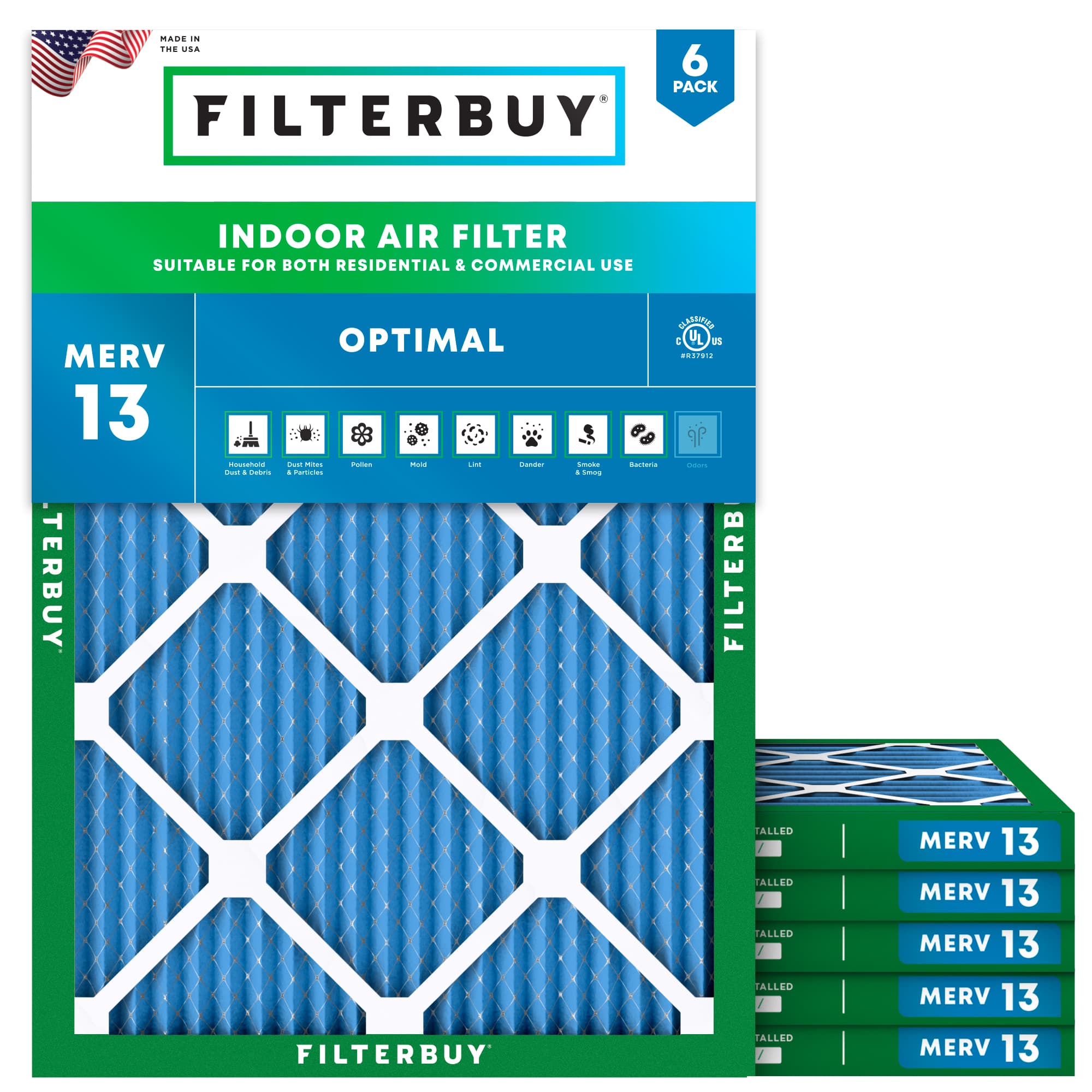
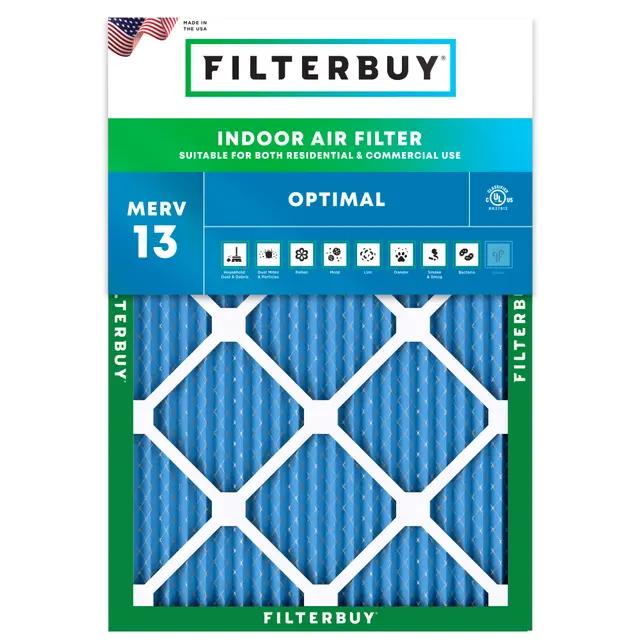
21.5x24x1 MERV 13 Pleated Air Filter
Actual Size: 21.5x24.0x0.75
 Free Delivery
  Factory-Direct Low Prices, Made in the USA
 Hassle-Free Returns & Free Exchanges
RESIDENTIAL AND/OR COMMERCIAL USE
Change Every 3 Months
21.5x24x1 MERV 13 Pleated Air Filter
Actual Size: 21.5x24.0x0.75
Free Delivery Factory-Direct Low Prices, Made in the USAHassle-Free Returns & Free ExchangesRESIDENTIAL AND/OR COMMERCIAL USE
Change Every 3 Months
21.5x24x1 MERV 13 Pleated Air Filter
Actual Size: 21.5x24.0x0.75
Free Delivery Factory-Direct Low Prices, Made in the USAHassle-Free Returns & Free ExchangesRESIDENTIAL AND/OR COMMERCIAL USE
Change Every 3 Months
About
- This is a list 21.5x24x1 MERV 13 air filter replacement for your furnace, air conditioner, heat pump, or HVAC system
- Actual air filter size: 21.5x24.0x0.75
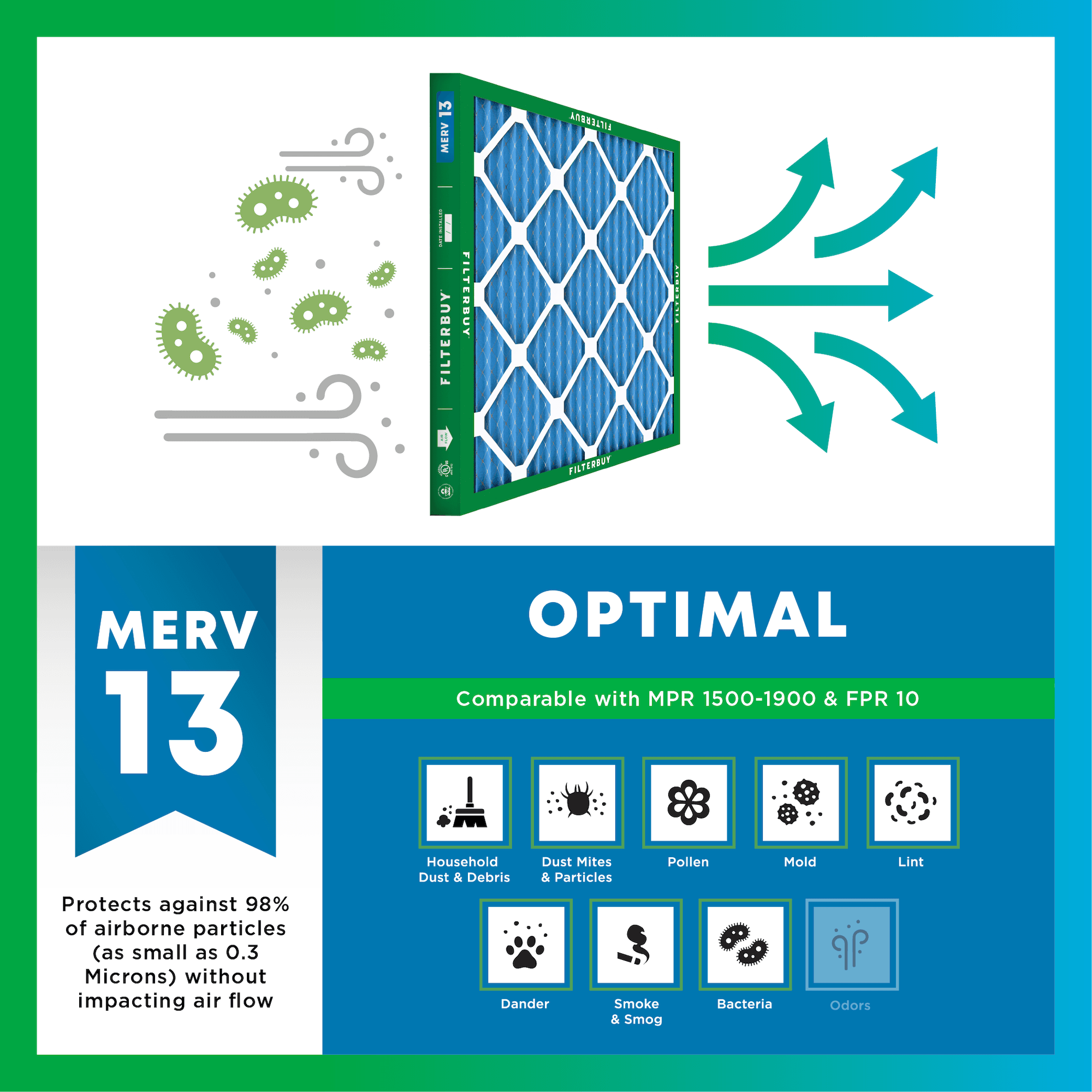
- MERV 13 synthetic media (comparable with MPR 1500/1900 and FPR 10) offers the best protection from dust, pollen, pet dander, mold, smog, bacteria, and virus carrying particles by trapping 98% of airborne particles without impacting air flow.
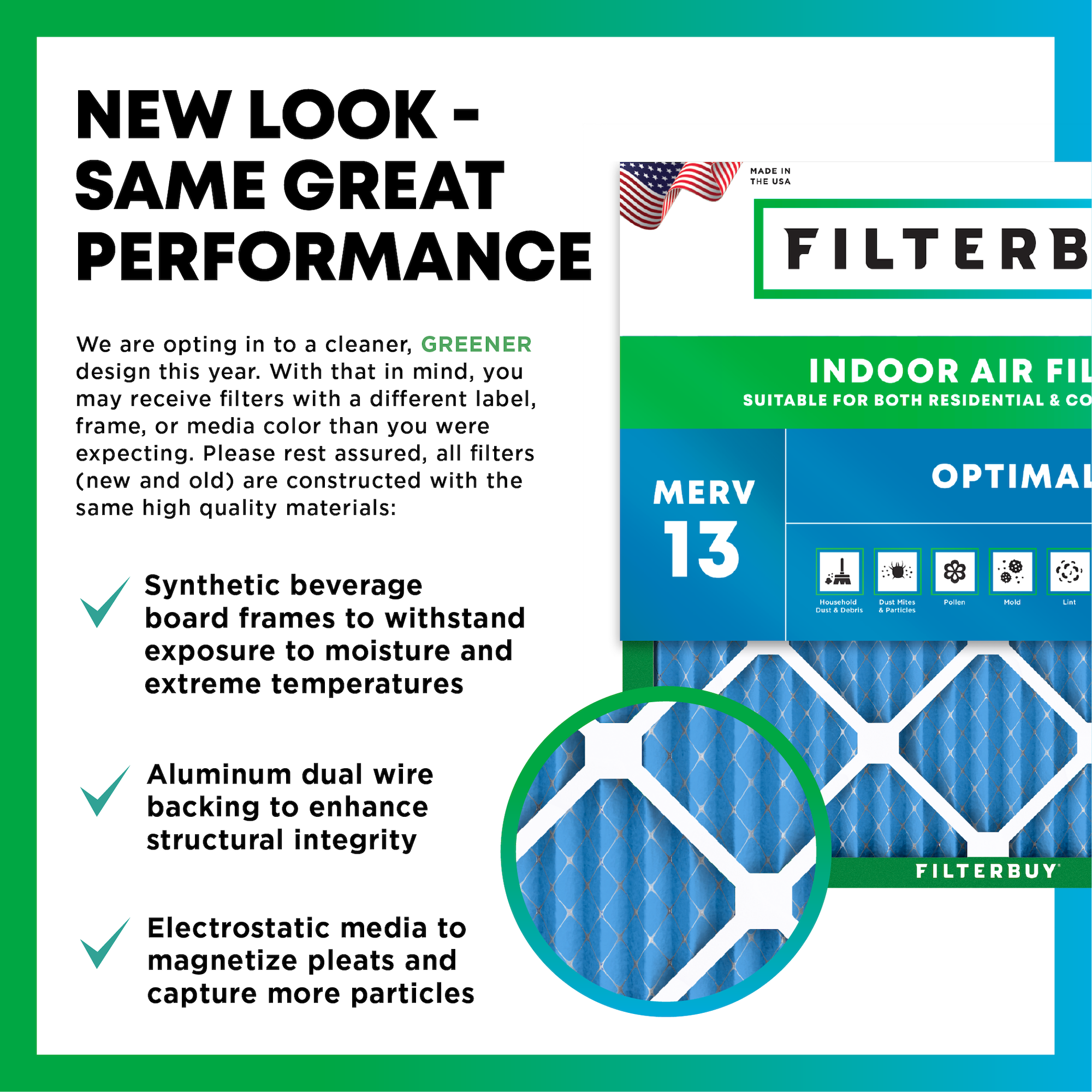
- High-quality construction means electrostatically charged pleated filter media, reinforced wire backing for structural integrity, and a durable frame to resist heat and humidity
- Built to last 3 months. 300% longer than fiberglass models
- 100% manufactured in the United States and designed with recyclable materials
- Learn more about 21.5x24x1 Air Filters
Top-Rated Filters. American Made. Delivered Free.
At Filterbuy, we don't cut corners—we craft high-quality air filters right here in the USA and ship them to your doorstep for free. No delays, no gimmicks—just clean air, made easy. With thousands of five-star reviews and filters built for real life & every HVAC system, it's no wonder why over 4 million families trust Filterbuy.

Proudly Made In The USA

Fast, Free Shipping on Every Order

Premium Materials That Go The Distance

85,000+ 5-Star Reviews From Happy Customers

Save Up to 70% Per Filter with Packs
Things to Know About Filter Sizes

Nominal Size
- The rounded size printed on your filter or HVAC unit (e.g., 21.5x24x1).
- Usually whole numbers to make identifying and ordering easier.
- A label for compatibility—not the exact measurement.

Actual Size
- The true, trimmed dimensions of the filter (e.g., 21.5x24.0x0.75 inches).
- Filters are manufactured slightly smaller so they slide into the filter slot without forcing.
- If you don't know your nominal size, measure your filter to get the actual size, then round up to find the nominal size to search on our site.

Why the difference?
- Nominal sizes simplify shopping and standardize categories.
- Actual sizes ensure the filter fits properly inside your HVAC's filter rack.
How To Find Your Nominal Size When You Don't Know It


Measure length × width × depth with a tape measure to find the actual size.

Round up each dimension to the nearest whole number to get the nominal size. Example: 21.5x24.0x0.75 in → 21.5x24x1 nominal.

Search by nominal size on our site for the best fit.

Why Getting the Right Size Matters
- Too small? Air can bypass the filter, reducing air quality and efficiency.
- Too big? It won't fit—risking bent frames and airflow issues.
- Just right? You get maximum performance, better filtration, and cleaner air.

Free Exchange Policy
If the filter you buy doesn't fit, we'll send you a better size.

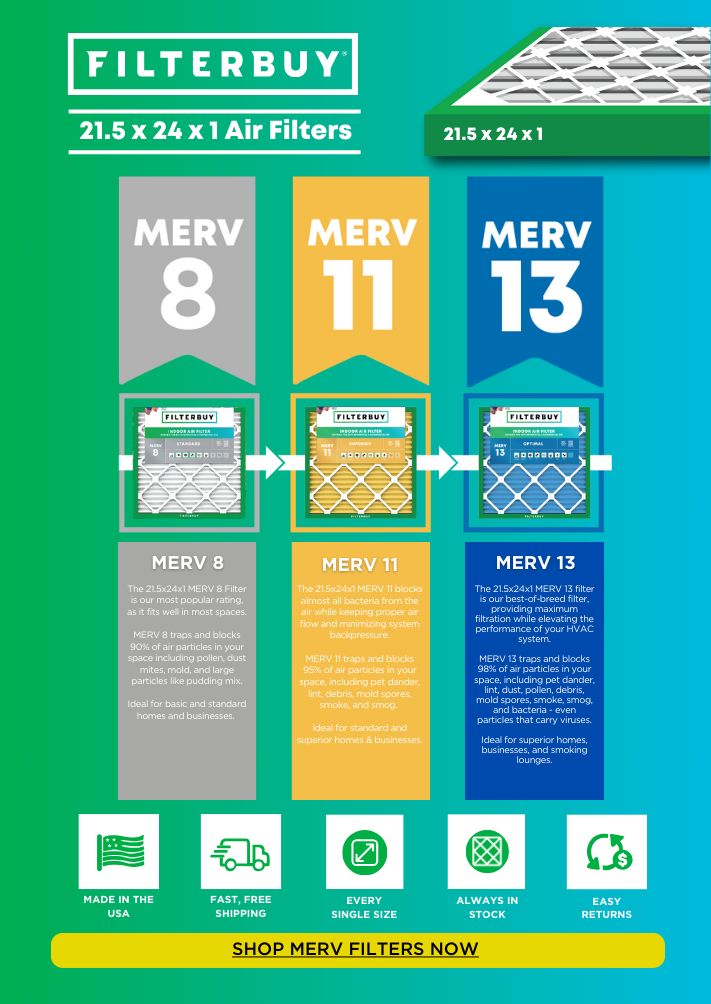
What's a MERV Rating?
MERV stands for Minimum Efficiency Reporting Value—but don't let the technical name fool you. It's just a way to rate how well an air filter traps stuff like dust, pollen, pet dander, and smoke. The higher the MERV number, the more particles it catches—and the cleaner your air will be.

Merv 8
Comparable to:FPR: 4-7
MPR: 600-1000
 Dust & Debris
 Dust Mites & Particles
 Pollen
 Mold
Mold Lint
Lint Dander
Merv 11
Comparable to:FPR: 6-9
MPR: 1200-1550
Dust & DebrisDust Mites & ParticlesPollenMoldLintDander Smoke & Smog
Merv 13
Comparable to:FPR: 10
MPR: 1900-2800
Dust & DebrisDust Mites & ParticlesPollenMoldLintDanderSmoke & Smog Bacteria
MERV 8
Comparable to:FPR: 4-7MPR: 600-1000


MERV 11
Comparable to:FPR: 6-9MPR: 1200-1550

MERV 13
Comparable to:FPR: 10MPR: 1900-2800
What Makes Our Filters Last 90 Days? Quality, From the Inside Out
We build every Filterbuy filter to deliver reliable 90-day performance—thanks to smart design and premium materials that do the heavy lifting. Here's what makes the difference:
Pleated Design
More pleats = more surface area to capture dust and debris, keeping your air cleaner longer.
Electrostatically Charged Media
Pleats are magnetized to attract and trap microscopic particles—like pet dander, pollen, and smoke.
Synthetic Beverage Board Frame
Engineered to resist warping in extreme temperatures and high humidity.

Aluminum Dual Wire Backing
A layer of metal reinforcement keeps pleats evenly spaced and structurally sound—no sagging, even at high airflow.
Made in the USA
Assembled with care. Built to perform. Ships fast, free, and reliably from our U.S. facilities.
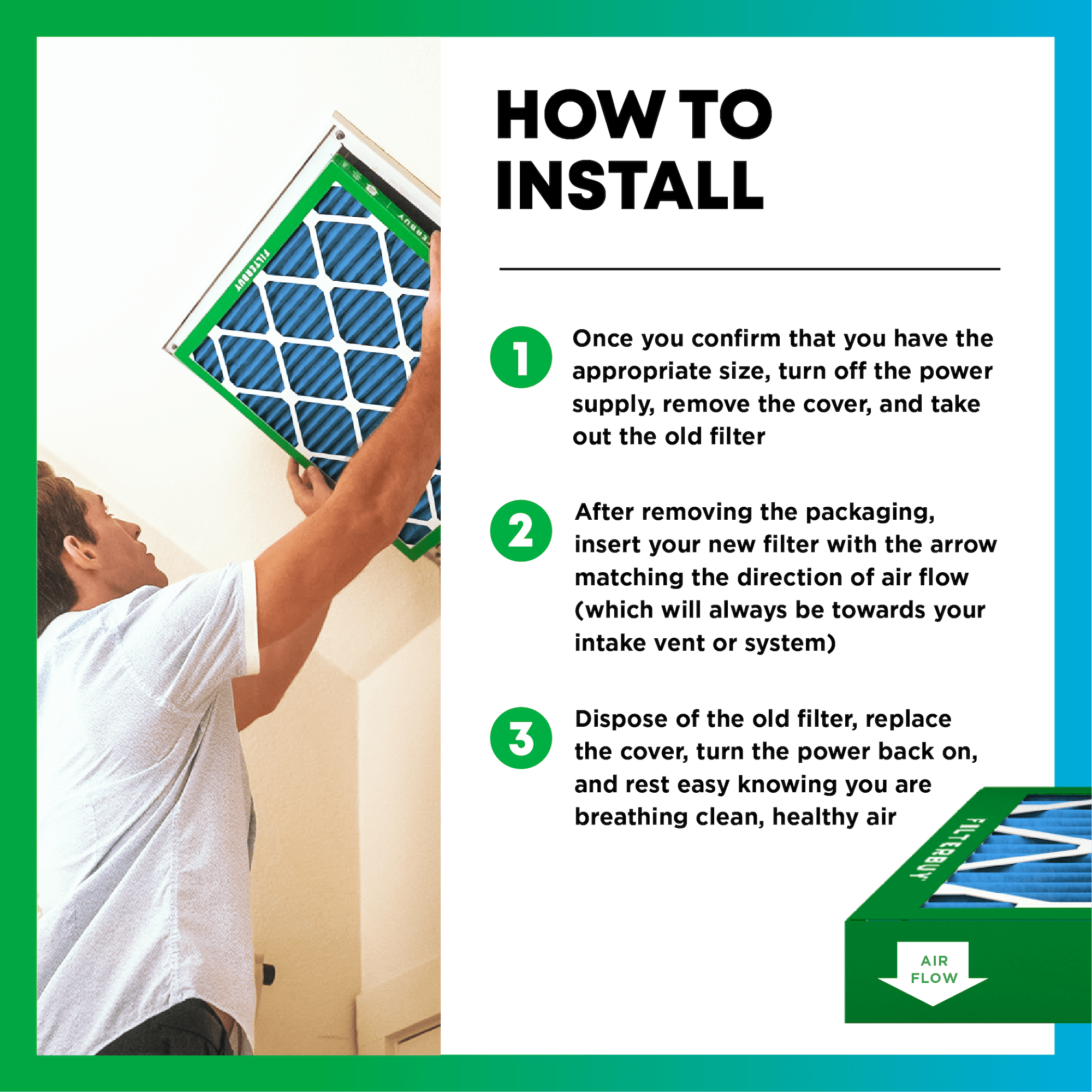
How to Install Your Filter in 4 Simple Steps

Turn Off Your HVAC SystemSafety first.

Remove The Old FilterLook for the airflow arrow and make note of the direction.

Slide In Your New FilterArrow should point toward the system (same direction as before).

Turn Your System Back OnAnd enjoy the fresh, clean air.

Never forget to replace your air filter again.
- Save 5% on every order
- Choose Your Delivery Schedule
- Edit, Skip, or Cancel Anytime.
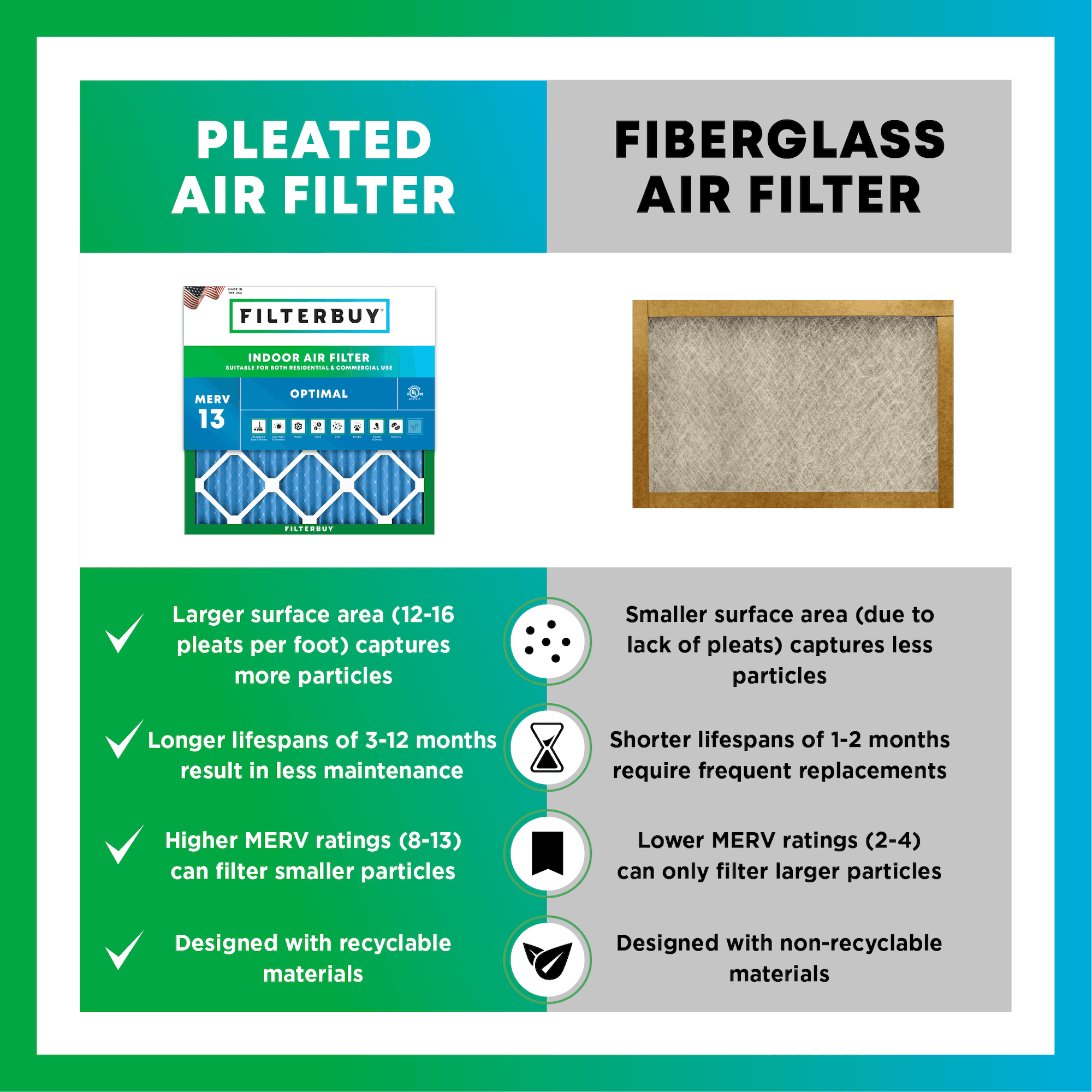
Pleated Filters vs. Fiberglass—What's the Difference?
Not all air filters are created equal. Pleated filters don't just last longer—they actually clean your air better. Here's how they stack up:

Pleated Filters
Efficiency:
High (MERV 8–13) – Traps more particles
Lifespan:
90 days – Long-lasting performance
Air Quality:
Excellent – Cleaner, healthier air
Materials:
Recyclable and durable

Fiberglass Filters
Efficiency:
Low (MERV 4 or less) – Misses small stuff
Lifespan:
30 days or less – Replace often
Air Quality:
Minimal – Basic protection only
Materials:
Thin, flimsy, and not recyclable
Pleated filters are a no-brainer—more protection, less hassle, and better air for your home.
How Often Should You Change Your Filter?
Changing your filter on time keeps your HVAC system running efficiently—and helps protect your lungs from dust, allergens, and airborne irritants. Here's how often to swap it out based on your needs:

Every 90 Days
Standard ScheduleFor most homes without pets or special air quality concerns. Great for general upkeep and energy efficiency.

Every 60 Days
If You Have Pets or AllergiesShedding fur, dander, and allergy triggers can build up fast. Changing your filter every two months helps keep the air fresher and symptoms at bay.

Every 30 Days
If You Have Respiratory Concerns or Live in Smog/Wildfire ZonesFor households affected by smoke, pollution, or respiratory conditions, monthly changes ensure maximum protection.

Want to stay on track? Set a reminder—or skip the stress with auto-delivery so fresh filters show up right when you need them.
Don't Just Take Our Word For It...
Got More Questions? We've Got Answers.
Product Specifications
| Nominal Size | 21.5 x 24 x 1 inches |
| Actual Size | 21.5 x 24.0 x 0.75 inches |
| Filter Type | Pleated |
| Media | Electrostatically Charged |
| Frame | Beverage Board |
| MERV Ratings Available | 8, 11, 13 |
| Lifespan | Up to 90 Days |
| Origin | Made in USA |
How to Install a 21.5x24x1 MERV 13 Air Filter Step-by-Step
After manufacturing millions of 21.5x24x1 MERV 13 filters and hearing from customers across the country, we've learned that proper installation is just as critical as filter quality. A backwards filter or poor seal can reduce efficiency by up to 30%. This step-by-step guide shares the exact techniques our filtration experts use to ensure your MERV 13 filter performs at peak capacity, capturing up to 85% of harmful airborne particles, including allergens, bacteria, and fine dust. Get it right the first time and breathe the difference.
TL;DR Quick Answers
21.5x24x1 MERV 13 Air Filter
What it is: A 1-inch thick pleated air filter measuring 21.5 x 24 inches with MERV 13 efficiency rating.
What it captures: Pollen, dust mites, mold spores, pet dander, bacteria, smoke particles, and some virus carriers.
Efficiency: Approximately 85% of particles between 0.3-1.0 microns.
Replacement: Every 60-90 days for optimal performance.
Installation tip: Arrow points toward blower motor/air handler.
Best for: Homes with allergy sufferers, pets, or anyone prioritizing cleaner indoor air.
Top Takeaways
• Check the arrow: The airflow direction arrow must point toward the blower motor. Installing backwards reduces efficiency by up to 30%.
• Size matters: A 21.5x24x1 filter must fit snugly. Gaps allow unfiltered air to bypass the filter media entirely.
• MERV 13 is recommended: Both EPA and ASHRAE recommend MERV 13 as the minimum for effective virus and allergen capture in residential settings.
• Replace regularly: 60-90 days is standard, but check monthly. A clogged filter harms both air quality and HVAC efficiency.
• Indoor air matters: You spend 90% of your time indoors, where pollutant levels can be 2-5x higher than outside. Proper filtration is essential protection.
Understanding Your 21.5x24x1 MERV 13 Filter
The 21.5x24x1 size is a less common but specific dimension that fits certain HVAC systems, particularly in older homes or custom installations. The MERV 13 rating indicates this filter captures particles as small as 0.3 microns with approximately 85% efficiency, making it effective against common allergens, mold spores, bacteria, and even some virus carriers. This rating is what ASHRAE and the EPA recommend as a minimum for improved indoor air quality and virus protection.
Step 1: Locate Your Air Filter Compartment
Find your filter housing, typically located in the return air duct, air handler unit, or furnace. Common locations include hallway ceilings, basement mechanical rooms, or utility closets. Turn off your HVAC system before proceeding to prevent unfiltered air circulation during the change.
Step 2: Remove the Old Filter Carefully
Slide out the existing filter slowly to avoid releasing trapped particles back into the air. Note the airflow direction arrow on the old filter before disposal. If heavily soiled, consider placing it in a plastic bag immediately to contain debris.
Step 3: Verify Filter Size and Orientation
Confirm your new filter measures exactly 21.5x24x1 inches. The nominal size listed should match your filter slot. Locate the airflow direction arrow printed on the filter frame. This arrow must point toward the blower motor or air handler, indicating the direction air flows through your system.
Step 4: Insert the New MERV 13 Filter
Slide the filter into the housing with the airflow arrow pointing in the correct direction. The filter should fit snugly without bending or forcing. A proper seal is essential since even small gaps allow unfiltered air to bypass the filter media, dramatically reducing effectiveness.
Step 5: Secure and Test
Close the filter access door or grille securely. Turn your HVAC system back on and verify normal operation. Listen for any unusual sounds that might indicate airflow restriction. Check that air is flowing freely from your vents within a few minutes of startup.
"After over a decade of manufacturing air filters and working with millions of customers, we've found that the biggest installation mistake isn't choosing the wrong filter—it's installing it backwards. A MERV 13 filter installed with the airflow arrow pointing the wrong direction can restrict airflow, strain your HVAC system, and actually make your indoor air quality worse. Take ten seconds to check that arrow, and your filter will perform exactly as designed."
Essential Resources on 21.5x24x1 MERV 13 Air Filters
We're obsessed with helping you breathe better air, which means pointing you toward the most valuable resources for making informed decisions about your home's filtration. Here are the authoritative guides every homeowner should bookmark:
1. EPA Guide to Air Cleaners in the Home
The definitive federal resource for understanding how HVAC filters improve indoor air quality. Covers MERV ratings, proper sizing, and replacement frequency recommendations.
https://www.epa.gov/indoor-air-quality-iaq/guide-air-cleaners-home
2. ASHRAE Filtration and Disinfection Guidelines
Industry-standard technical guidance on why MERV 13 is recommended for residential filtration. Essential reading for understanding filter efficiency standards.
https://www.ashrae.org/technical-resources/filtration-disinfection
3. DOE Building America High-MERV Filter Guide
Department of Energy resource explaining filter efficiency, pressure drop considerations, and system compatibility for high-efficiency filters.
https://basc.pnnl.gov/resource-guides/high-merv-filters
4. EPA Indoor Air Quality Overview
Comprehensive introduction to indoor air pollutants, health effects, and the role of filtration in protecting your family.
https://www.epa.gov/indoor-air-quality-iaq/introduction-indoor-air-quality
5. AirNow Air Quality Index Resources
Real-time outdoor air quality data to help you understand when indoor filtration becomes especially critical for your family's health.
6. CPSC Indoor Air Pollution Health Guide
Consumer Product Safety Commission resource on health impacts of indoor pollutants and the importance of proper ventilation and filtration.
7. EIA Residential Energy Consumption Survey
Energy Information Administration data on HVAC energy usage, helping you understand how filter efficiency impacts both air quality and energy costs.
https://www.eia.gov/consumption/residential/
Supporting Statistics
The numbers tell a compelling story about why proper filter installation matters. Here's what the research shows:
• 90% of time spent indoors: According to the EPA, Americans spend approximately 90% of their time indoors, where air pollutant concentrations can be 2-5 times higher than outdoor levels.
Source: EPA Indoor Air Quality
• 48% of home energy: The U.S. Department of Energy reports that HVAC systems account for up to 48% of total household energy consumption. Properly maintained filters can reduce system energy use by 5-15%.
Source: U.S. Energy Information Administration - Residential Energy Consumption
• MERV 13 recommended: Both ASHRAE and EPA recommend MERV 13 or higher filters for residential applications to effectively capture virus-carrying particles and improve overall indoor air quality.
Source: ASHRAE Filtration and Disinfection FAQ
Our Take: After manufacturing filters for over a decade, we've seen firsthand how these statistics play out in real homes. Customers tell us they notice the difference within 24-48 hours of switching to a properly installed MERV 13 filter, especially those with allergies or respiratory sensitivities. The data confirms what our customers experience: better filtration equals better breathing.
Final Thoughts & Opinion
Installing a 21.5x24x1 MERV 13 air filter correctly isn't complicated, but it does require attention to detail. The five-minute investment in proper installation pays dividends every hour your HVAC system runs.
Key Points to Remember:
• Always check the airflow direction arrow before inserting your filter
• Ensure a snug fit with no gaps around the frame
• Replace every 60-90 days, or sooner in dusty environments
• MERV 13 provides excellent protection for most households
Our Opinion: Having worked with air filtration for years, we believe MERV 13 represents the sweet spot for most homes—high enough efficiency to capture meaningful pollutants without restricting airflow in standard HVAC systems. The 21.5x24x1 size may be less common, but homeowners with this requirement shouldn't settle for lower-quality alternatives just because options seem limited. Proper filtration is an investment in your family's respiratory health that costs pennies per day of clean air.
FAQ on 21.5x24x1 MERV 13 Air Filters
Q: What does the 21.5x24x1 size mean for air filters?
A: These are the nominal dimensions in inches: 21.5 inches wide, 24 inches tall, and 1 inch deep. Actual dimensions may be slightly smaller. This specific size fits certain HVAC systems and return air grilles. Always verify your existing filter's dimensions before ordering replacements.
Q: Is MERV 13 too restrictive for my HVAC system?
A: For most modern HVAC systems, MERV 13 filters work well without causing airflow problems. However, older systems or those with undersized ductwork may experience strain. The EPA notes that most furnaces and HVAC systems can accommodate MERV 13 with proper maintenance and regular filter replacement.
Q: How often should I replace a 21.5x24x1 MERV 13 filter?
A: Standard recommendation is every 60-90 days. However, households with pets, allergies, or high dust levels may need replacement every 30-45 days. Check monthly by holding the filter up to light—if you can't see through it, replacement time has arrived.
Q: What's the difference between MERV 13 and HEPA filters?
A: MERV 13 captures approximately 85% of particles 0.3-1.0 microns in size, while HEPA captures 99.97% of 0.3-micron particles. HEPA filters are too restrictive for standard residential HVAC systems and require specialized equipment. MERV 13 provides excellent protection for whole-house filtration.
Q: Can I wash and reuse my MERV 13 filter?
A: Most MERV 13 filters are disposable and should not be washed. Washing can damage the filter media and reduce efficiency. Some specialty washable filters exist, but they typically don't achieve MERV 13 ratings. For best performance, use new filters at recommended intervals.
Ready to Install Your 21.5x24x1 MERV 13 Air Filter? Shop Filterbuy Today
Now that you know exactly how to install your 21.5x24x1 MERV 13 air filter for peak performance, get the filter that makes it easy — order from Filterbuy and enjoy fast delivery, guaranteed sizing accuracy, and cleaner air in every breath.