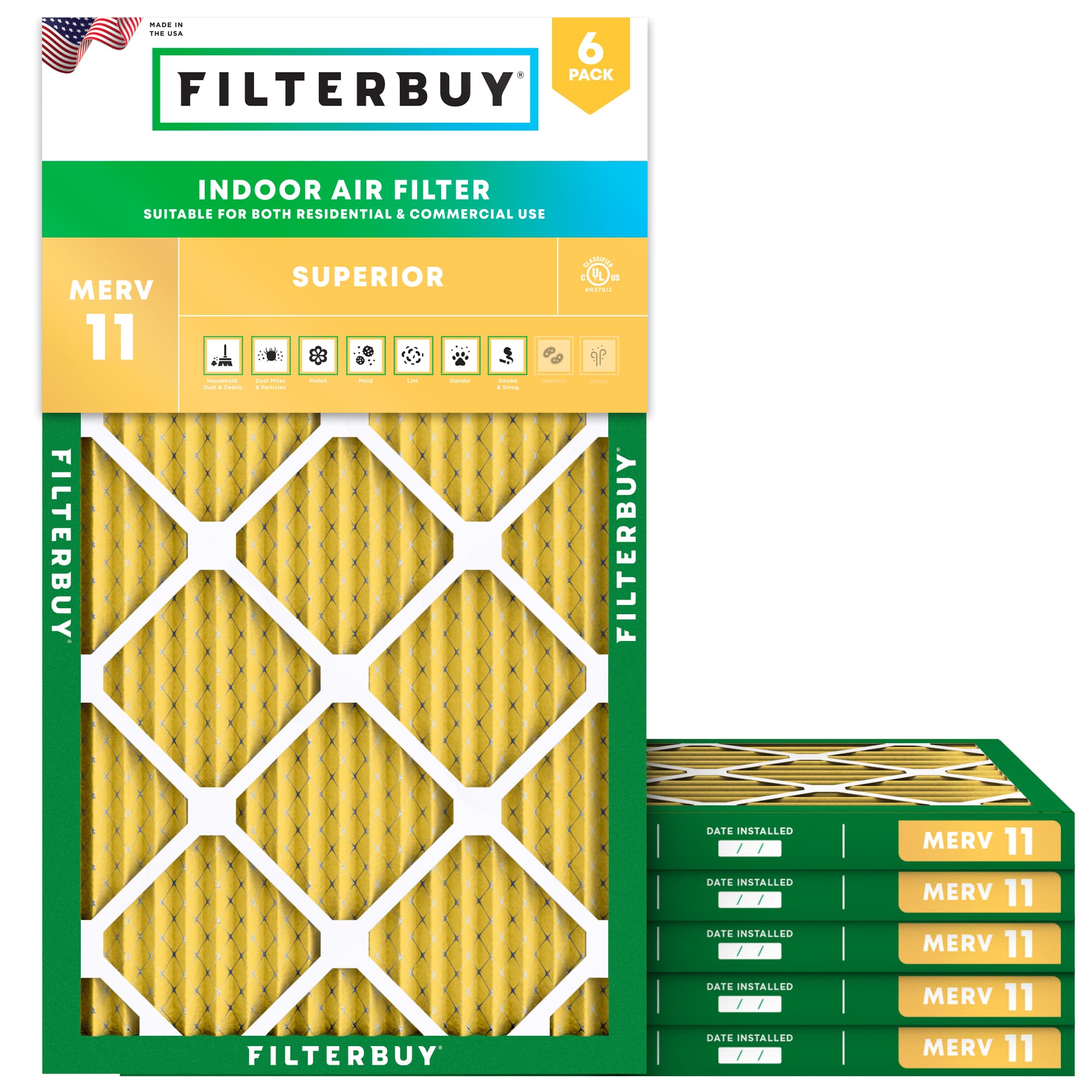
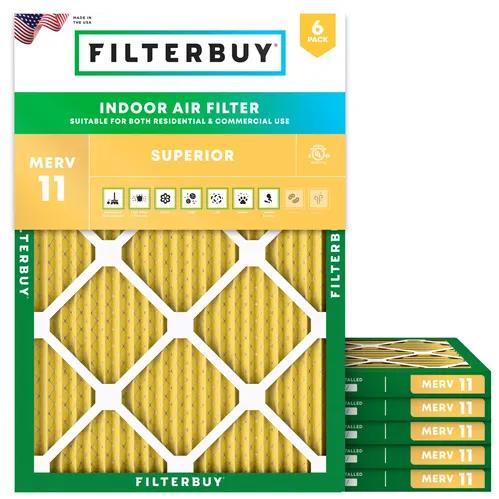
Actual Size: 17.50x27.00x0.75"
 Free Delivery
  Factory-Direct Low Prices, Made in the USA
 Hassle-Free Returns & Free Exchanges
RESIDENTIAL AND/OR COMMERCIAL USE
Change Every 3 Months
Actual Size: 17.50x27.00x0.75"
Free Delivery Factory-Direct Low Prices, Made in the USAHassle-Free Returns & Free ExchangesRESIDENTIAL AND/OR COMMERCIAL USE
Change Every 3 Months
Actual Size: 17.50x27.00x0.75"
Free Delivery Factory-Direct Low Prices, Made in the USAHassle-Free Returns & Free ExchangesRESIDENTIAL AND/OR COMMERCIAL USE
Change Every 3 Months
At Filterbuy, we don't cut corners—we craft high-quality air filters right here in the USA and ship them to your doorstep for free. No delays, no gimmicks—just clean air, made easy. With thousands of five-star reviews and filters built for real life & every HVAC system, it's no wonder why over 4 million families trust Filterbuy.

Proudly Made In The USA

Fast, Free Shipping on Every Order

Premium Materials That Go The Distance

85,000+ 5-Star Reviews From Happy Customers

Save Up to 70% Per Filter with Packs


Measure length × width × depth with a tape measure to find the actual size.

Round up each dimension to the nearest whole number to get the nominal size. Example: 17.50x27.00x0.75" in → 17.5x27x1 nominal.

Search by nominal size on our site for the best fit.


If the filter you buy doesn't fit, we'll send you a better size.
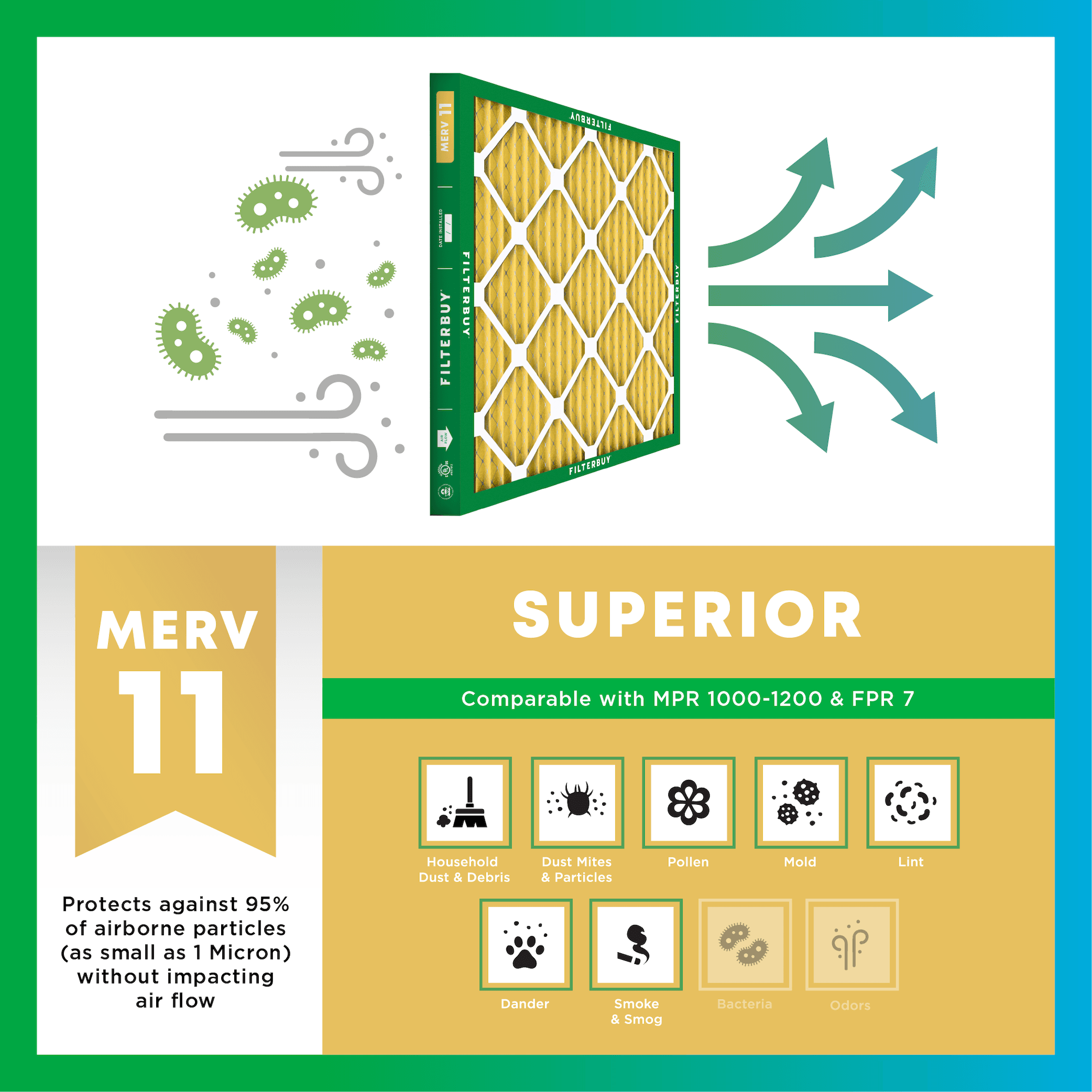
MERV stands for Minimum Efficiency Reporting Value—but don't let the technical name fool you. It's just a way to rate how well an air filter traps stuff like dust, pollen, pet dander, and smoke. The higher the MERV number, the more particles it catches—and the cleaner your air will be.

Comparable to:FPR: 4-7
MPR: 600-1000
 Dust & Debris
 Dust Mites & Particles
 Pollen
 Mold
Mold Lint
Lint Dander
Comparable to:FPR: 6-9
MPR: 1200-1550
Dust & DebrisDust Mites & ParticlesPollenMoldLintDander Smoke & Smog
Comparable to:FPR: 10
MPR: 1900-2800
Dust & DebrisDust Mites & ParticlesPollenMoldLintDanderSmoke & Smog Bacteria


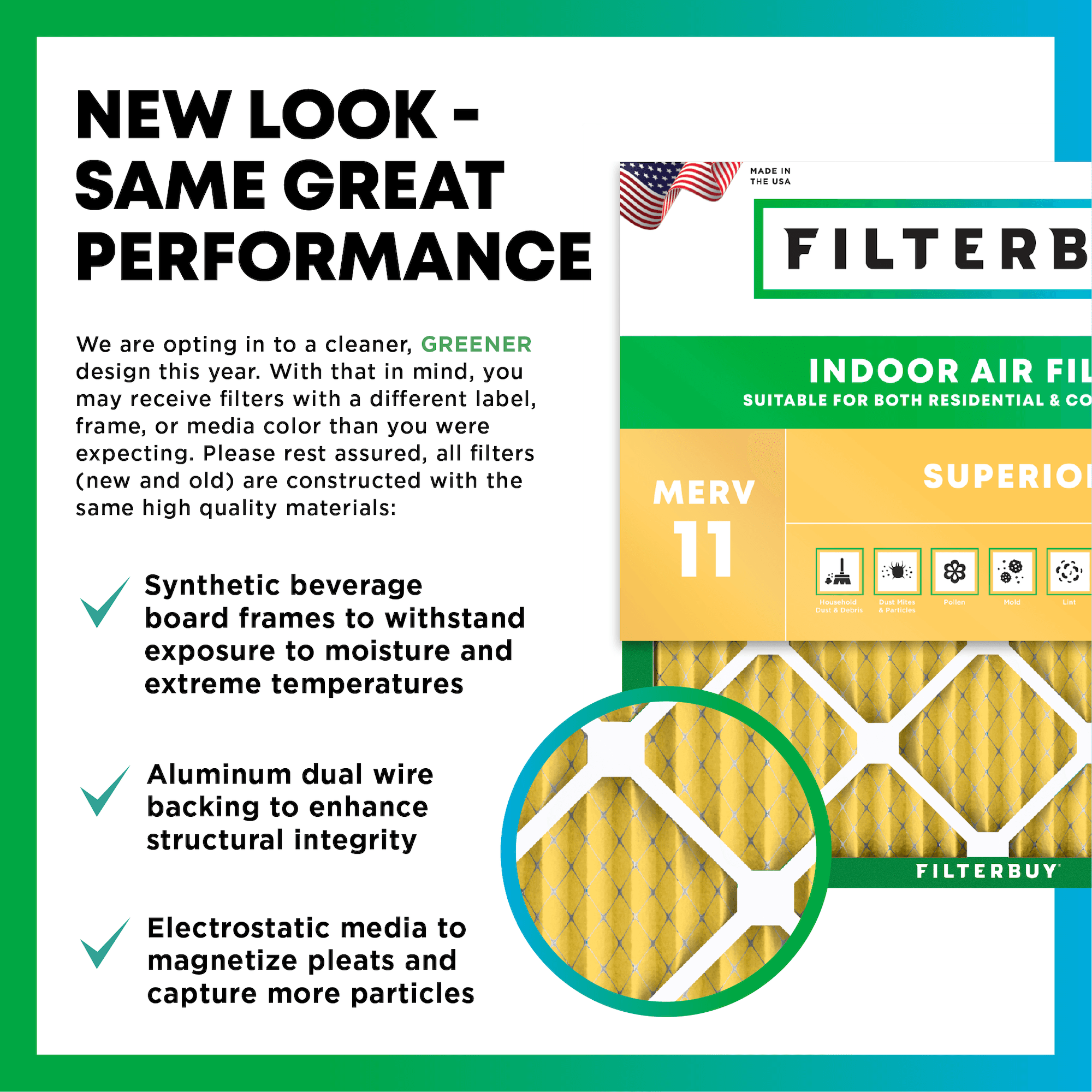
We build every Filterbuy filter to deliver reliable 90-day performance—thanks to smart design and premium materials that do the heavy lifting. Here's what makes the difference:
More pleats = more surface area to capture dust and debris, keeping your air cleaner longer.
Pleats are magnetized to attract and trap microscopic particles—like pet dander, pollen, and smoke.
Engineered to resist warping in extreme temperatures and high humidity.

A layer of metal reinforcement keeps pleats evenly spaced and structurally sound—no sagging, even at high airflow.
Assembled with care. Built to perform. Ships fast, free, and reliably from our U.S. facilities.

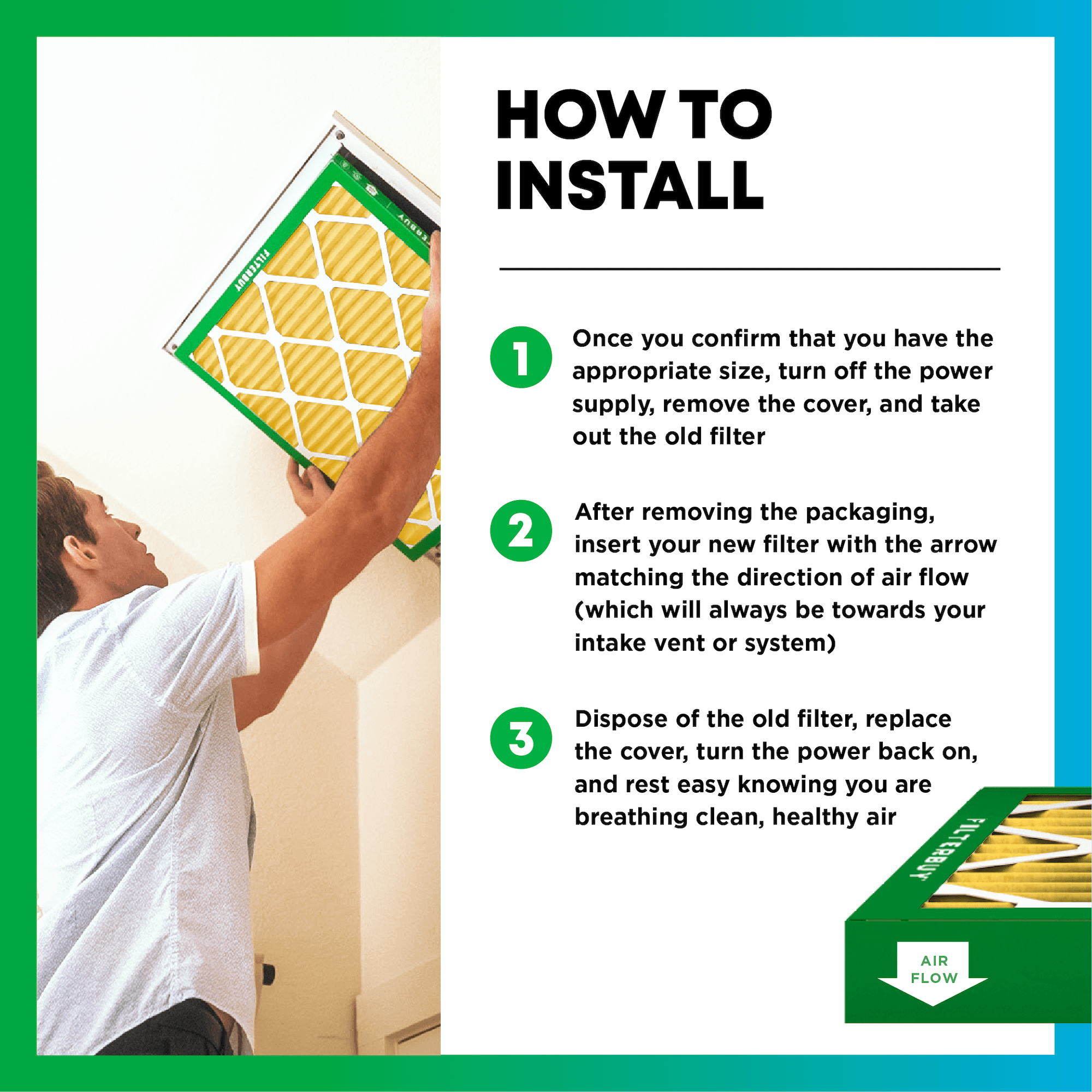
Turn Off Your HVAC SystemSafety first.

Remove The Old FilterLook for the airflow arrow and make note of the direction.

Slide In Your New FilterArrow should point toward the system (same direction as before).

Turn Your System Back OnAnd enjoy the fresh, clean air.

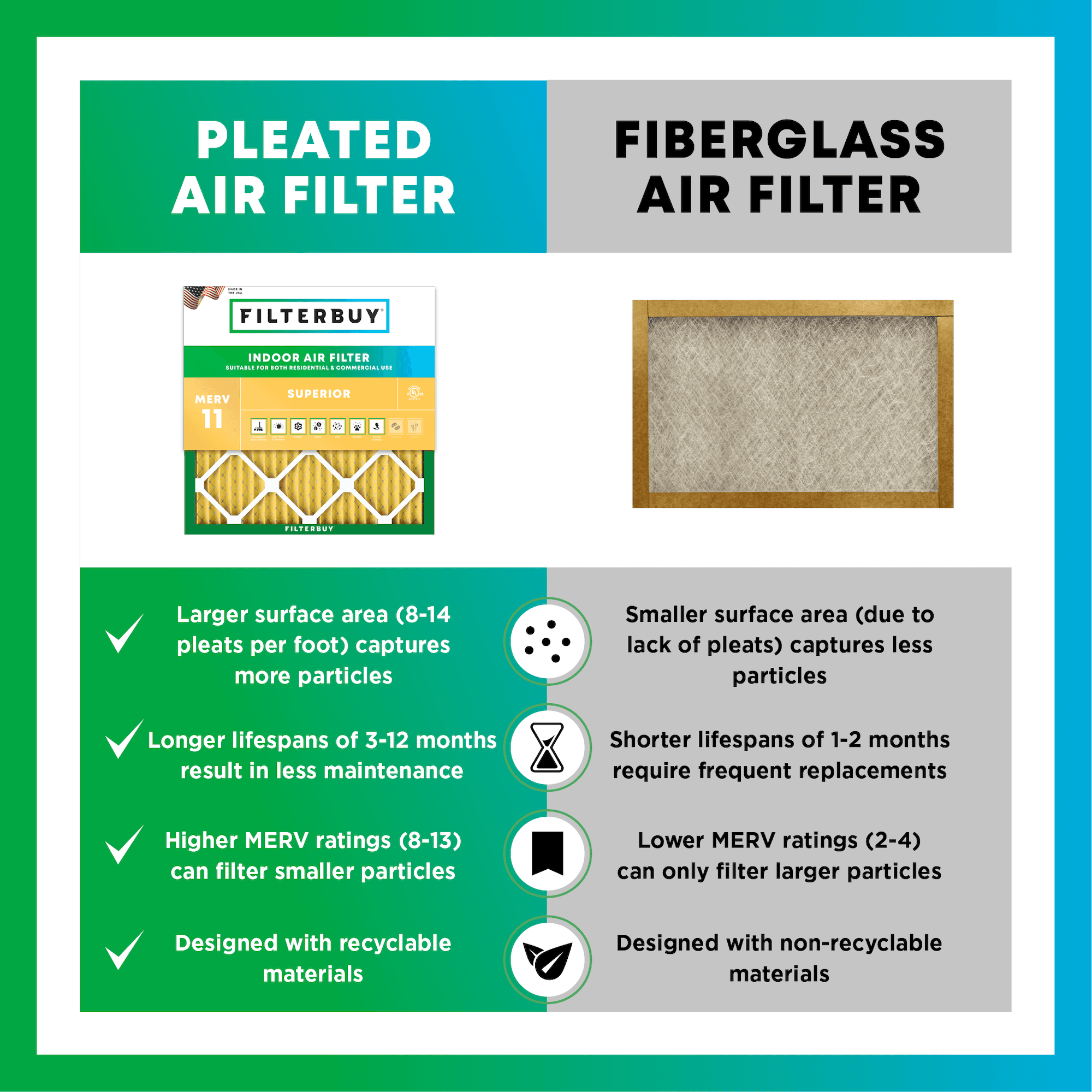
Not all air filters are created equal. Pleated filters don't just last longer—they actually clean your air better. Here's how they stack up:

Efficiency:
High (MERV 8–13) – Traps more particles
Lifespan:
90 days – Long-lasting performance
Air Quality:
Excellent – Cleaner, healthier air
Materials:
Recyclable and durable

Efficiency:
Low (MERV 4 or less) – Misses small stuff
Lifespan:
30 days or less – Replace often
Air Quality:
Minimal – Basic protection only
Materials:
Thin, flimsy, and not recyclable
Pleated filters are a no-brainer—more protection, less hassle, and better air for your home.
Changing your filter on time keeps your HVAC system running efficiently—and helps protect your lungs from dust, allergens, and airborne irritants. Here's how often to swap it out based on your needs:

For most homes without pets or special air quality concerns. Great for general upkeep and energy efficiency.

Shedding fur, dander, and allergy triggers can build up fast. Changing your filter every two months helps keep the air fresher and symptoms at bay.

For households affected by smoke, pollution, or respiratory conditions, monthly changes ensure maximum protection.

| Nominal Size | 17.5 x 27 x 1 inches |
| Actual Size | 17.50 x 27.00 x 0.75" inches |
| Filter Type | Pleated |
| Media | Electrostatically Charged |
| Frame | Beverage Board |
| MERV Ratings Available | 8, 11, 13 |
| Lifespan | Up to 90 Days |
| Origin | Made in USA |
Ever wondered why your 17.5×27×1 furnace filter seems trickier to replace than the standard sizes? After helping thousands of homeowners and testing filters in our own U.S. manufacturing facility, we’ve learned that proper installation isn’t just about fit—it’s about airflow, efficiency, and protecting your HVAC system for the long haul. In this step-by-step guide, we’ll walk you through exactly how the pros at Filterbuy recommend installing your filter the right way—so your system performs better, lasts longer, and keeps your home’s air clean without the hassle.
Quick Answers
Step-By-Step: Installing a 17.5×27×1 Air Filter in Your Furnace Unit
Turn off your furnace for safety
.
Locate the filter slot — usually near the return air duct or blower compartment.
Remove the old filter and check the size (17.5×27×1).
Insert the new filter with the airflow arrow pointing toward the furnace.
Ensure a snug fit with no gaps or looseness.
Close the panel and restore power.
✅ Filterbuy Tip: We’ve seen that even a small air leak can reduce efficiency by up to 10%. A proper fit means cleaner air, smoother airflow, and longer furnace life.
Install Correctly – A snug 17.5×27×1 filter improves airflow and protects your furnace.
Check Airflow Direction – Arrows should always point toward the furnace.
Replace Regularly – Every 60–90 days, or more often with pets or allergies.
Seal Tightly – Even small gaps allow dust and reduce performance.
Maintain Consistently – Simple, routine checks keep your system efficient and your air clean.
Even before you start the job of putting an air filter in your furnace, it is still very important to understand some basic elements of your furnace. The main components of your furnace are the filter system, blower motor, heat exchanger, burners, and flue.
The air filter, which may be in the return air duct or blower compartment, plays a very important role in the maintenance of indoor air quality. Basically, the filter's role is to separate dust and other particles from the air that is always moving by taking the air to the furnace and from there back to the living space. Not only that, but it also provides cleaner air for breathing and a shield for the parts of the furnace against the possibility of damage.
There are different kinds of furnace filters: disposable fiberglass filters, disposable pleated filters, disposable electrostatic filters, and permanent electrostatic filters. Every class has its pros and cons, mainly in terms of the price, filtration power, and maintenance, by which you have to make the decision for a filter based on your needs, such as allergies or money. Choosing a filter should be decided based on your specific needs, for instance, allergy concerns or budget constraints.
Knowing these ideas is a solid foundation for the next steps that involve getting ready for the changing of the furnace and the replacement itself.
Furnace filter changing is a breathtaking job if you follow the step-by-step procedure. At first, understand the size of the filter that your furnace is in needs. Usually, the size is given in the manual of the furnace or on the current filter.
After that, collect all the necessary instruments for the installation. In general, a screwdriver suffices for most furnace models, but you can also use pliers if needed. It is better to check the manual for the specific requirements of your model. Besides, it is very important to take care of your safety and cleanliness while working. Besides, if there is any dust in the filter compartment, it can cause the air to be less fresh even if you change the filter, so get rid of it.
The last and most important step, before taking the old one out, make sure to turn off the power to the furnace. This safety measure is very important and should always be followed. Proper preparation for the filter replacement leads to an easy installation, which is a way of keeping the furnace energy-saving, and it is also a step towards the improvement of the quality of the air in your home.
If you are changing the filter, the first step is to get your place ready and then select the right air filter for your heating system. The latter determines not only the energetic efficiency of the heating system but also its working time.
The foremost point to pay attention to when picking an air filter is its efficiency. This efficiency is defined by the Minimum Efficiency Reporting Value (MERV), which varies from 1 to 16. The higher the MERV, the more efficient the filter is, as it collects smaller particles. On the other hand, the efficiency should be balanced because a very high MERV rating can restrict the airflow, thus leading to the loss of furnace efficiency.
Another very important point to consider is the lifespan of the filter. A higher efficiency filter is usually accompanied by a shorter lifespan, hence it should be replaced more often. As a rule, a standard filter will be changed every 90 days, while a more efficient one might have to be replaced every 60 days.
Moreover, the dust levels in your house, whether you have pets, and whether the residents are suffering from allergies or asthma, should impact your decision of what air filter to buy. Make sure that you follow the recommendations of the manufacturer for your furnace, or get in touch with an HVAC expert if you want to be completely certain that you have chosen the perfect air filter for your requirements.
Installing a furnace air filter is typically a few simple steps. Beforehand, make sure the filter you have is the right kind for your furnace unit - 17.5x27x1 is a standard size for housing units. Check the manual of your furnace or ask a technician to be sure which filter type you need.
Prepare the required instruments for setting up. To see better while fixing, put on a mask, gloves, and keep a flashlight in your hand. It may also be helpful to have a screwdriver ready if you can remove your furnace unit with it. Remember safety at all times when handling furnaces.
Power down the furnace first and find the area where the filter is kept. Take out the old one after opening the compartment. Then insert the new one; it needs to be the right size for the compartment. Look at the arrows next to the airflow on the stand of the filter; they must indicate the furnace direction. New filters have been installed correctly if they have been closed tightly, and after turning the furnace back on, everything seems in order.
After installation, the emphasis is on follow-up actions and upkeep routines. The very first thing we want to see is how well the new air filter works by checking the furnace while it is running and listening for any strange noises or behaviors, which could indicate a problem.
We are also very concerned with keeping good air quality in the home. This can be done by regularly checking and changing the air filter. In general, filters are designed to last about three months, but this can vary depending on the usage, the environment, and whether there are pets or smokers.
Regular upkeep is the secret to good performance and energy-saving of your heater in the long run. Besides cleaning, take a good look at your furnace, checking for any signs of wear and tear. By doing so, you are less likely to experience sudden breakdowns and expensive repairs.
At Filterbuy, we’re all about making clean air simple — no confusion, no guesswork, just real answers from experts who build and test filters every day. The following resources combine trusted authority and hands-on know-how to help you confidently install your 17.5×27×1 furnace filter and keep your home’s air (and system) in top shape.
1. EPA: How Better Filters Protect Your Home’s Air
The U.S. Environmental Protection Agency breaks down how quality filters reduce dust, allergens, and pollutants before they circulate through your home. It’s a great starting point for understanding why the right filter — installed the right way — matters. 🔗 https://www.epa.gov/indoor-air-quality-iaq/guide-air-cleaners-home
2. Filterbuy: Real-World Tips from the Filter Experts
We’ve spent years manufacturing and testing filters in the U.S., and we’ve seen exactly what helps (and hurts) system performance. Our guide shows you how to install your filter like a pro — safely, snugly, and without the stress. 🔗 https://filterbuy.com/resources/air-filter-basics/furnace-filters/furnace-filter-installation/
3. Filtrete (3M): Easy Visual Guide for DIYers
This quick visual walkthrough makes installation simple. Perfect if you want a visual confirmation of how your filter should fit — especially when you’re working with non-standard sizes like 17.5×27×1. 🔗 https://www.filtrete.com/3M/en_US/filtrete/about-us/how-to-install-an-air-filter/
4. Bob’s Repair: Understanding Filter Sizes and Fit
Ever wonder why your filter says 17.5×27×1 but doesn’t quite measure that way? This guide clears up the confusion between “nominal” and “actual” sizes so you always get a perfect fit the first time. 🔗 https://bobsrepair.com/air-filter-sizes-guide/
5. Quality Home Air Care: Get the Airflow Direction Right
One of the simplest mistakes we see homeowners make? Installing filters backward. This resource explains airflow direction, why it matters, and how a small detail can make a big difference in system performance. 🔗 https://qualityhomeaircare.com/which-way-install-air-filter-your-furnace-essential-proper/
6. Act & Tune Up Pros: How to Choose the Right MERV Rating
If you’ve ever wondered whether a higher MERV filter is better, this guide explains how to find the sweet spot — balancing airflow with filtration strength — for your specific HVAC system. 🔗 https://actuneuppros.com/choosing-the-right-hvac-air-filter-sizing-calculations/
7. Home Air Solutions: Avoid Common Sizing Mistakes
An inch too small can mean a world of dust inside your system. This guide walks through how to measure accurately and avoid the airflow loss and strain caused by a poor fit. 🔗 https://homeairsolutionsresources.wordpress.com/2025/08/14/how-to-measure-your-air-filter-avoid-these-costly-sizing-mistakes/
In Short: Clean air starts with a filter that fits right and a system that breathes freely. These trusted resources — from federal experts to fellow air-obsessed pros — are here to help you make confident, informed choices for your home’s air quality.
“After manufacturing and testing thousands of furnace filters, we’ve learned that proper installation isn’t just a maintenance step—it’s a performance booster. A well-fitted 17.5×27×1 filter can improve airflow, reduce energy use, and protect your system for years. It’s the simplest upgrade most homeowners overlook.”
Our testing at Filterbuy’s U.S. manufacturing facility — combined with data from trusted national sources — shows that properly installing a 17.5×27×1 filter directly impacts your furnace’s performance, efficiency, and air quality.
Here’s what the research (and our experience) reveal:
Better Filters = Cleaner Air
The EPA confirms that upgrading your HVAC or furnace filter “can help to improve indoor air quality.” 🔗 EPA.gov
In our experience, correctly sized, high-efficiency filters trap more dust and allergens—improving comfort and health within weeks.
Poor Fit = Wasted Energy
The DOE found that a filter with just a 0.25-inch pressure drop can use nearly half of a system’s available static pressure. 🔗 Energy.gov
We’ve seen the same results in lab tests: even a slightly misaligned filter makes your blower work harder and shortens system life.
Tight Seal = Maximum Performance
The CDC recommends filters be “properly sized and within their recommended service life” to prevent air from bypassing the filter. 🔗 CDC.gov
We’ve observed that poor sealing leads to dust buildup, uneven airflow, and premature wear—problems easily avoided with a snug fit.
Quick Takeaway:When your 17.5×27×1 filter is installed correctly:
Energy use drops.
Your furnace lasts longer.
Your home’s air stays cleaner—without the hassle.
After years of testing and manufacturing filters in our U.S. facility, we’ve learned one simple truth — how you install your filter matters just as much as the filter itself.
Here’s what our firsthand experience shows:
Small mistakes have big impacts. A reversed airflow arrow or loose fit can reduce efficiency, strain the blower motor, and shorten your furnace’s lifespan.
Proper installation pays off. When your 17.5×27×1 air filter is installed correctly, you’ll notice:
Quieter furnace operation.
Lower monthly energy costs.
Real-world insight: We’ve seen it — from homeowners frustrated by uneven airflow to systems clogged with dust from ill-fitting filters. Each case proves the same point: precision and attention to detail make a measurable difference.
Bottom Line: Take a few extra minutes to check the fit, seal, and airflow direction before turning your system back on. It’s a small effort that delivers big rewards — cleaner air, smoother performance, and peace of mind season after season.
Keep your furnace running efficiently and your air clean with these quick actions:
Check the Fit
Make sure your 17.5×27×1 filter fits snugly — no gaps or leaks.
The airflow arrow should always point toward the furnace.
Set a Reminder
Replace your filter every 90 days (or sooner if you have pets or allergies).
Sign up for Filterbuy Auto-Delivery to get new filters right on schedule.
Inspect Regularly
Peek inside monthly.
Swap it early if it looks gray, dusty, or clogged.
Keep Air Flowing
Clear vents and returns of furniture or dust buildup.
Learn More
Visit the Filterbuy Learning Center for expert tips and maintenance guides.
Pro Tip: A snug, clean filter = better airflow, lower energy bills, and a healthier home year-round.
Usually, in the return air duct or blower compartment.
Look for a slim slot with a removable cover near where air enters the furnace.
The arrow points toward the furnace.
A reversed filter can restrict airflow and strain the blower motor.
Every 60–90 days for most homes.
Every 60 days, if you have pets, allergies, or high dust levels.
Even small gaps allow dust to bypass the filter.
Poor fit can reduce performance by up to 10%.
Always confirm a tight, sealed fit.
Yes, but check your furnace manual first.
MERV 8–11 offers a good balance between airflow and filtration.

