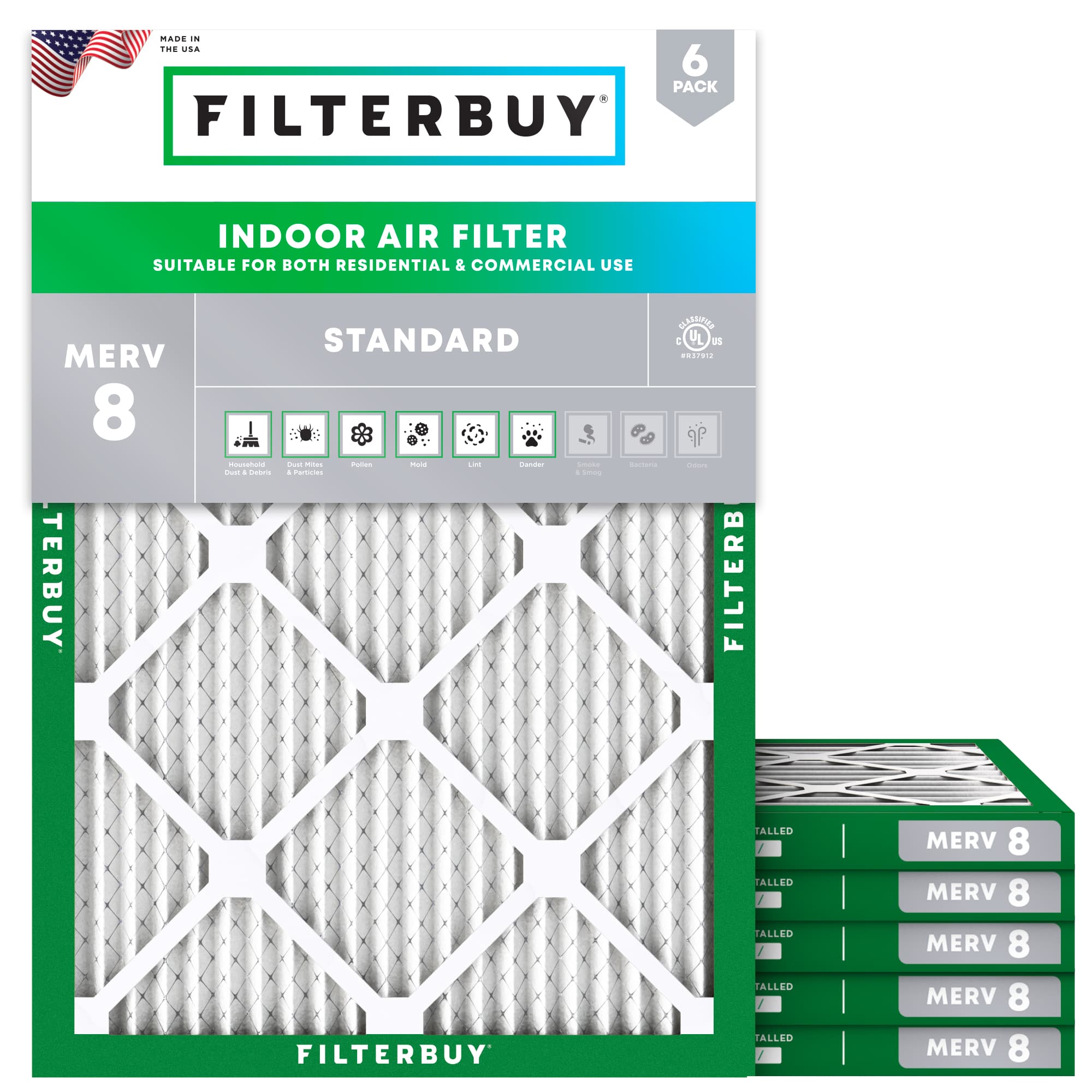
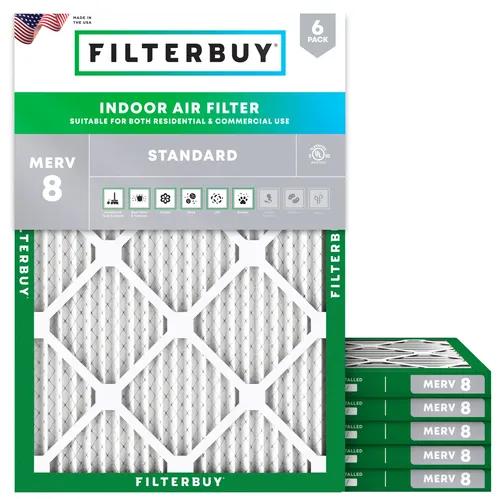
Actual Size: 17.50x23.50x0.75"
 Free Delivery
  Factory-Direct Low Prices, Made in the USA
 Hassle-Free Returns & Free Exchanges
RESIDENTIAL AND/OR COMMERCIAL USE
Change Every 3 Months
Actual Size: 17.50x23.50x0.75"
Free Delivery Factory-Direct Low Prices, Made in the USAHassle-Free Returns & Free ExchangesRESIDENTIAL AND/OR COMMERCIAL USE
Change Every 3 Months
Actual Size: 17.50x23.50x0.75"
Free Delivery Factory-Direct Low Prices, Made in the USAHassle-Free Returns & Free ExchangesRESIDENTIAL AND/OR COMMERCIAL USE
Change Every 3 Months
At Filterbuy, we don't cut corners—we craft high-quality air filters right here in the USA and ship them to your doorstep for free. No delays, no gimmicks—just clean air, made easy. With thousands of five-star reviews and filters built for real life & every HVAC system, it's no wonder why over 4 million families trust Filterbuy.

Proudly Made In The USA

Fast, Free Shipping on Every Order

Premium Materials That Go The Distance

85,000+ 5-Star Reviews From Happy Customers

Save Up to 70% Per Filter with Packs


Measure length × width × depth with a tape measure to find the actual size.

Round up each dimension to the nearest whole number to get the nominal size. Example: 17.50x23.50x0.75" in → 17.5x23.5x1 nominal.

Search by nominal size on our site for the best fit.


If the filter you buy doesn't fit, we'll send you a better size.
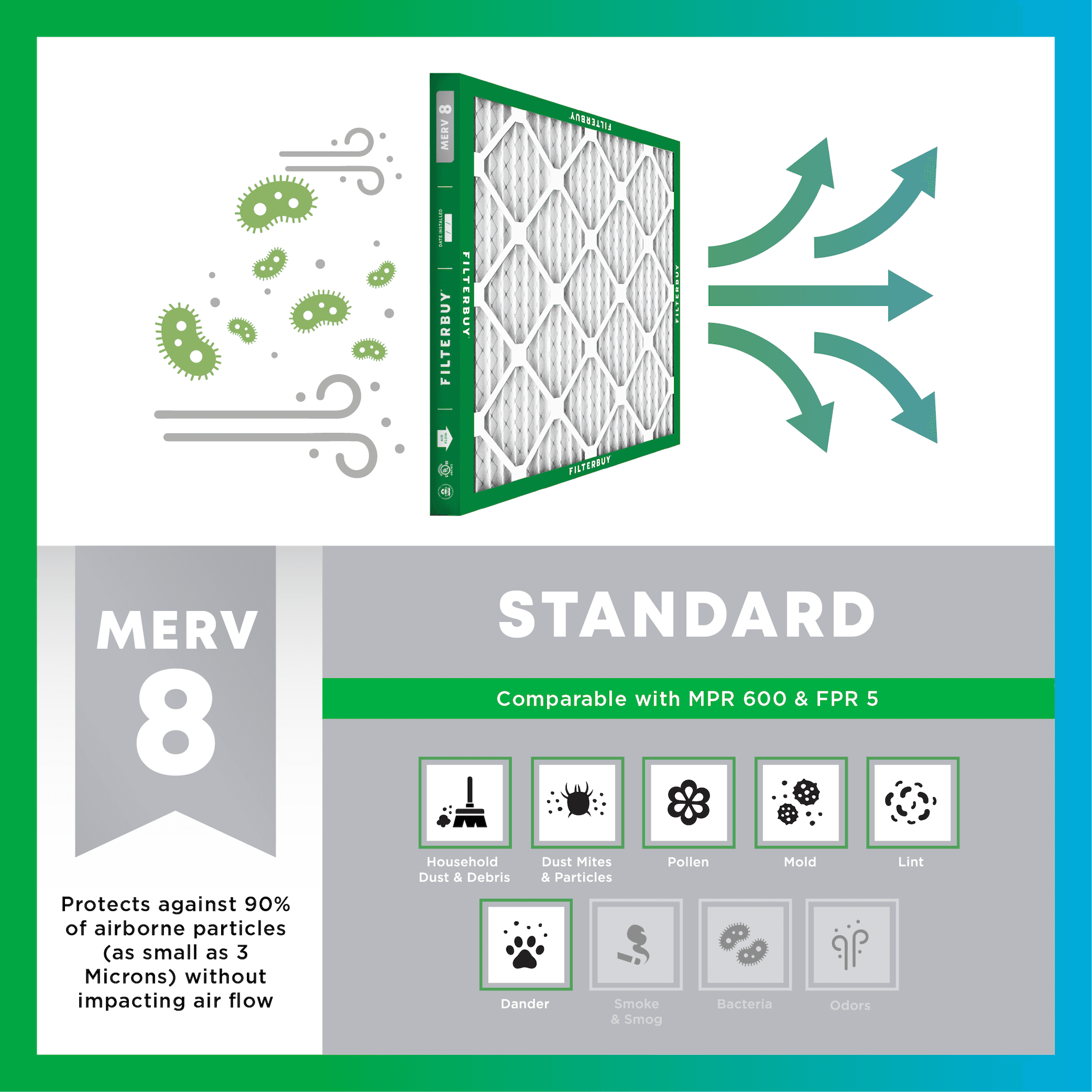
MERV stands for Minimum Efficiency Reporting Value—but don't let the technical name fool you. It's just a way to rate how well an air filter traps stuff like dust, pollen, pet dander, and smoke. The higher the MERV number, the more particles it catches—and the cleaner your air will be.

Comparable to:FPR: 4-7
MPR: 600-1000
 Dust & Debris
 Dust Mites & Particles
 Pollen
 Mold
Mold Lint
Lint Dander
Comparable to:FPR: 6-9
MPR: 1200-1550
Dust & DebrisDust Mites & ParticlesPollenMoldLintDander Smoke & Smog
Comparable to:FPR: 10
MPR: 1900-2800
Dust & DebrisDust Mites & ParticlesPollenMoldLintDanderSmoke & Smog Bacteria


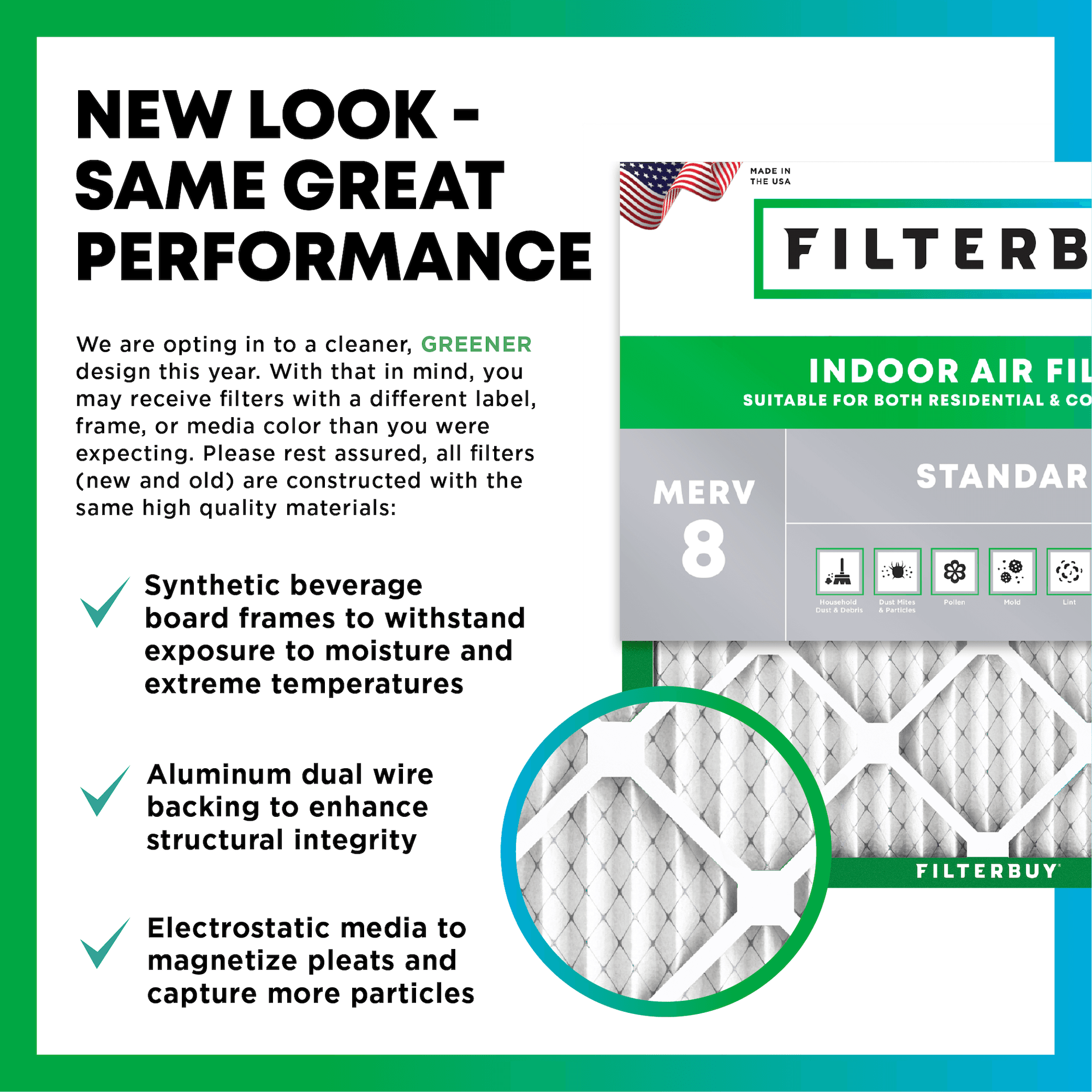
We build every Filterbuy filter to deliver reliable 90-day performance—thanks to smart design and premium materials that do the heavy lifting. Here's what makes the difference:
More pleats = more surface area to capture dust and debris, keeping your air cleaner longer.
Pleats are magnetized to attract and trap microscopic particles—like pet dander, pollen, and smoke.
Engineered to resist warping in extreme temperatures and high humidity.

A layer of metal reinforcement keeps pleats evenly spaced and structurally sound—no sagging, even at high airflow.
Assembled with care. Built to perform. Ships fast, free, and reliably from our U.S. facilities.

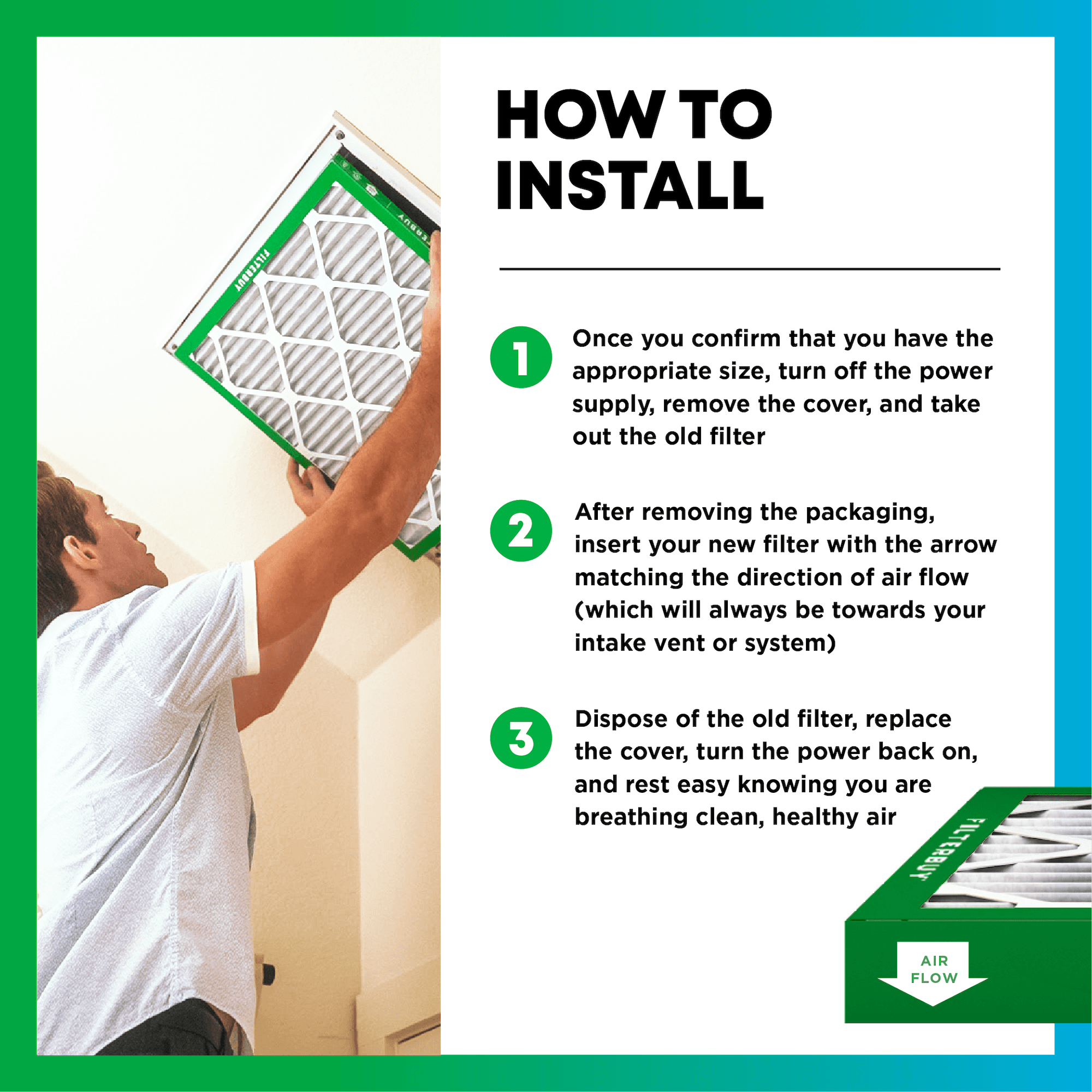
Turn Off Your HVAC SystemSafety first.

Remove The Old FilterLook for the airflow arrow and make note of the direction.

Slide In Your New FilterArrow should point toward the system (same direction as before).

Turn Your System Back OnAnd enjoy the fresh, clean air.

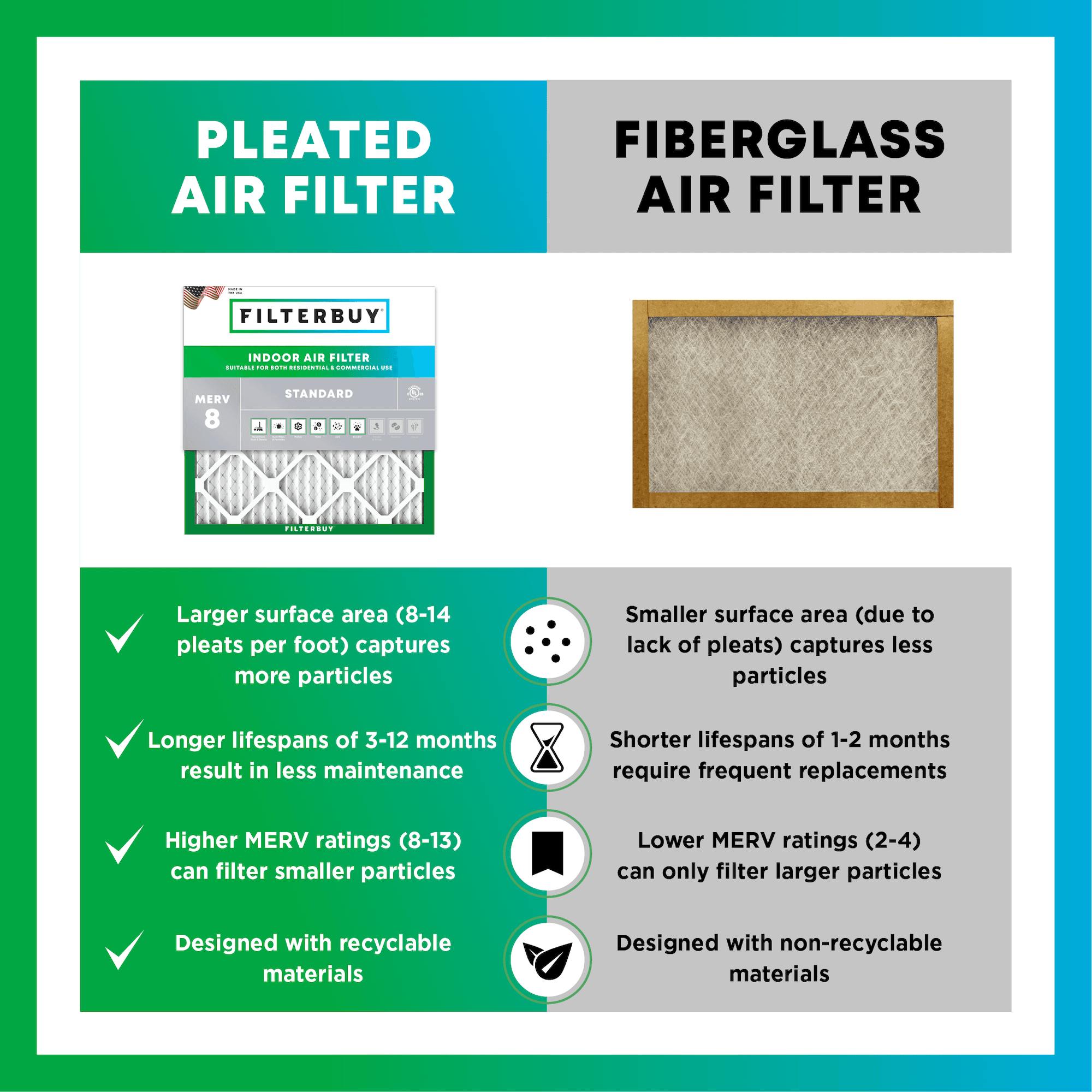
Not all air filters are created equal. Pleated filters don't just last longer—they actually clean your air better. Here's how they stack up:

Efficiency:
High (MERV 8–13) – Traps more particles
Lifespan:
90 days – Long-lasting performance
Air Quality:
Excellent – Cleaner, healthier air
Materials:
Recyclable and durable

Efficiency:
Low (MERV 4 or less) – Misses small stuff
Lifespan:
30 days or less – Replace often
Air Quality:
Minimal – Basic protection only
Materials:
Thin, flimsy, and not recyclable
Pleated filters are a no-brainer—more protection, less hassle, and better air for your home.
Changing your filter on time keeps your HVAC system running efficiently—and helps protect your lungs from dust, allergens, and airborne irritants. Here's how often to swap it out based on your needs:

For most homes without pets or special air quality concerns. Great for general upkeep and energy efficiency.

Shedding fur, dander, and allergy triggers can build up fast. Changing your filter every two months helps keep the air fresher and symptoms at bay.

For households affected by smoke, pollution, or respiratory conditions, monthly changes ensure maximum protection.

| Nominal Size | 17.5 x 23.5 x 1 inches |
| Actual Size | 17.50 x 23.50 x 0.75" inches |
| Filter Type | Pleated |
| Media | Electrostatically Charged |
| Frame | Beverage Board |
| MERV Ratings Available | 8, 11, 13 |
| Lifespan | Up to 90 Days |
| Origin | Made in USA |
Ever ordered a “standard” air filter, only to find it just won’t slide into place? At Filterbuy, we’ve seen it happen thousands of times—and it’s not your fault. Many HVAC systems are built with custom specs that require unique filter sizes, such as 17.5x23.5x1. After manufacturing millions of filters in the U.S., we’ve learned that even a half-inch difference can impact airflow, energy efficiency, and your home’s air quality. In this guide, we’ll share why this uncommon size exists, how to confirm it’s right for your system, and what we’ve learned from helping homeowners across the country get a perfect, hassle-free fit every time.
Quick Answers
Why Would I Require a 17.5x23.5x1 Air Filter That Is Different from the Usual One?
Some HVAC units have uniquely sized filter compartments as a way of ensuring that the airflow and efficiency remain at the required levels. The 17.5x23.5x1 filter makes it possible to have a tight, leak-free seal, thereby no unfiltered air is allowed to bypassing and the air inside your home stays cleaner.
Filterbuy Insight: Even a ½-inch difference can affect how the system works. Choosing the exact fit—like 17.5x23.5x1—results in better filtration, less energy is used, and the indoor air becomes healthier.
Size matters.
Even a ½-inch difference impacts airflow, efficiency, and air quality.
“Close enough” doesn’t cut it.
Loose filters let dust and allergens bypass the system.
Custom sizes are common.
Proper fit = better performance.
A snug seal boosts filtration, lowers energy use, and protects your system.
Measure. Match. Maintain.
Measure your slot, order the exact fit from Filterbuy, and replace it regularly for cleaner, healthier air.
Knowing air filter sizes is very crucial, but this importance is normally overlooked by many people who have their own houses. To some people, these dimensions may seem as if they are only for making a perfect fit for your heating, ventilation, and air conditioning (HVAC) systems. However, they do have quite a significant impact on the quality of the air that is inside the house. The larger ones have a bigger surface area, which thus makes them capable of catching more pollutants, and this is the reason why the air becomes cleaner.
Conversely, filters with small sizes may have to be changed more regularly because of their limited capacity. Their sizes differ in that they can be as small as 6x20x1 and 20x25x,1 being the largest. Here, each number stands for length, width, and thickness, respectively, and these are the main factors that decide the efficiency of the filter in the amount of side it can hold.
However, it is still not a good idea to always go for the bigger filters just because the air quality is better.
Do not take chances with filter dimensions for your HVAC system and always follow the manufacturer's instructions or get the opinion of a professional.
Knowing how to measure an air filter is the first step towards understanding the necessity of a good-fitting filter in HVAC systems. The right fitting is not only about placing your air filter properly in its slot; it's about making the filter work more efficiently and thus, improving the quality of the air in your home or office.
Filters that are not properly fitted can be the source of various problems. One of them is inefficient performance, which leads to the situation that dust, allergens, and other pollutants can get into the indoor environment without being filtered. This situation deteriorates air quality and, thus, increases health risks, especially for those who have allergies or respiratory diseases.
On the other hand, a properly installed filter can boost filter efficiency, thereby capturing most of the contaminants and thus preventing their recirculation. The main outcome of this is an improvement of indoor air quality, which, in turn, ensures a healthier and more comfortable indoor environment.
The 17.5x23.5x1 air filters, which are generally rarely seen, have a higher filtration efficiency and can lead to a decrease in maintenance operations. First of all, it depends on your HVAC system and the indoor air quality of your room.
Firstly, a filter of this size can be installed more safely in some HVAC systems, thus reducing the amount of unfiltered air. In this way, they intercept more of the particles present in the air, thus purifying the indoor air of the room at a higher level.
Furthermore, the change frequency can also be affected by this particular size. Filters that fit tightly in the system work more efficiently, so they probably seldom need replacement compared to those that do not fit properly. Thus, both time and money can be saved.
Moreover, it is extremely important to note that the frequency of maintenance is only one of the many factors that influence local air quality, the existence of pets, and the total use of the HVAC system. However, those who have a perfect fit for a 17.5x23.5x1 size can enjoy very significant benefits.
Specific air filter sizes, such as 17.5x23.5x1, offer clear benefits. Still, it remains vital to debunk myths about air filters that can lead to misuse or poor maintenance. This could negatively affect filter performance and indoor air quality.
False belief 1: Changing air filters only when they appear dirty. Contrary to this belief, allowing visible dirt to build up reduces efficiency. Regular upkeep, including prompt filter replacement, is crucial.
False belief 2: All air filters are identical. Filters actually differ significantly in size, material, and filtration capabilities.
False belief 3: Higher price equals better air quality. Price does not always indicate performance quality. Choosing the correct filter for your unique needs takes precedence.
False belief 4: MERV ratings are nothing but marketing gimmicks. These ratings legitimately measure filter efficiency, assisting in comparing and selecting the optimal choice.
Avoid letting such misconceptions thwart your pursuit of excellent air quality. Stay well-informed while adhering to proper maintenance guidelines for maximum benefit from your air filter.
You need to have a good understanding of your own needs and requirements, and then carefully think through the decision when you are selecting an air filter for your HVAC system. Two major things that you should take into account are probably the efficiency of the filter and how often you will need to maintain it.
A filter's ability to remove the most minute particles, such as dust and allergens, from the air passing through it, is the measure of its efficiency. The higher the efficiency of a filter, the more pollutants it will be able to trap, and this, in turn, will greatly improve indoor air quality. But, on the other hand, such an efficiency is almost always accompanied by a higher price and sometimes a greater energy demand, which, in turn, leads to higher energy consumption.
How often you will need to change or clean your filter is what maintenance frequency is all about. Generally speaking, less efficient (and thus cheaper) filters are the type of filters that you frequently need to replace to keep them in good working condition, and, therefore, it is possible that through such periodic replacements, you end up spending a lot of money. On the other hand, more expensive and more efficient filters, in most cases, are the ones that have a longer lifespan, and hence, the maintenance occurrences are less often.
Which air filter is best for your HVAC system totally depends on you and your needs. For instance, allergy or asthma patients may want to consider purchasing a high-efficiency filter as an investment in their health. In a different case, where cutting costs is the matter of utmost importance, perhaps it would be better to choose a low-efficiency filter that needs to be replaced very often, but, at the same time, it is a cheaper one. The question of which air filter is the best for your HVAC system cannot be answered by anyone but yourself, as it solely depends on your personal situation and preferences.
“After manufacturing millions of filters across thousands of HVAC setups, we’ve seen how even a small size difference can make or break performance. A 17.5x23.5x1 filter isn’t unusual—it’s precision engineering for your system. When the fit is exact, your air stays cleaner, your energy bills stay lower, and your HVAC system lasts longer.”
At Filterbuy, we understand the irritation you might feel when a "standard" filter is not able to fit your device perfectly. An HVAC system that utilizes a filter of the wrong size may perform poorly, resulting in a decrease in the air quality in your home. The most reliable sources that we offer will help you find out the reasons why your system requires a 17.5x23.5x1 air filter, the right way to measure, and get the best protection for your family and your air.
1. Measure Right the First Time: The Complete Air Filter Sizing Guide
Source: questionsabouthvac.com Before you order your next filter, make sure it actually fits. This guide walks you through how to measure your filter slot correctly—so you can skip the guesswork and get the right size the first time.
2. Why Fit Isn’t “Close Enough”: The Real Impact of Proper Sizing
Source: cloverfilter.com Even the smallest gap lets unfiltered air—and everything in it—bypass your filter. Learn why a precise fit, like a 17.5x23.5x1, keeps your system efficient, your energy bills lower, and your family breathing cleaner air.
3. Smarter Choices for Cleaner Air: A Homeowner’s Filter Buying Guide
Source: hvac.com Not all filters are built the same. This quick read explains how size, MERV rating, and materials affect performance—so you can choose the right filter for your air quality goals and your HVAC system.
4. Find Your Perfect Fit: Where to Locate Your Filter Size
Source: wrightac.com Can’t find your filter size? This resource shows you exactly where to look and how to read those hard-to-spot markings. Perfect for homeowners trying to figure out if they really do need that “odd” 17.5x23.5x1 size.
5. Standard Isn’t Always Standard: Understanding Common HVAC Sizes
Source: customfiltersdirect.com Think your HVAC takes a common size? Maybe not. This guide explains why some systems use custom filter dimensions—and why going with the right fit (not the “closest” one) keeps your system running at its best.
6. The Hidden Detail: Nominal vs. Actual Filter Sizes
Source: filterknowhow.com Here’s the behind-the-scenes secret of air filter sizing: the number on the box isn’t always the true size. This article clears up the confusion so you can confidently order exactly what your system needs.
7. The Quick-Check Guide: Choosing the Right Filter Size in Minutes
Source: myairmatics.com Short on time? This quick reference checklist helps you double-check your filter’s fit, understand sizing terms, and pick the right replacement—without the stress or second-guessing.
Pro Tip from the Filterbuy Team:
“After manufacturing millions of custom filters right here in the U.S., we’ve seen it all—systems that need the ‘in-between’ sizes, homes with unique airflow challenges, and families that just want cleaner air without the hassle. If your system calls for a 17.5x23.5x1, trust us—it’s not unusual, it’s just yours.”
At Filterbuy, we’ve seen how even a half-inch difference in filter size can change everything—from your system’s airflow to your family’s air quality. The data backs it up. Here’s what national research and real-world experience show:
1. A Loose Fit Reduces Filtration by Up to 95%
EPA finding: Upgrading from a low-efficiency (MERV 1–4) to a high-efficiency (MERV 13–16) filter can cut indoor particles by 95%—if the filter fits tightly.
Filterbuy insight: We’ve tested thousands of systems and found that even a small gap lets pollutants bypass the filter, reducing real efficiency dramatically.
2. Air Must Flow Through the Filter—Not Around It
EPA insight: Filtration improves indoor air only when the air passes through the media, not around it.
Filterbuy takeaway: A “close enough” filter often allows bypass airflow. That means wasted energy, more dust, and less comfort for your home.
3. Poor Airflow Is One of the Most Common HVAC Problems
DOE research: Incorrect airflow and leaks are among the top issues in U.S. homes.
Filterbuy observation: Mismatched or undersized filters often lead to higher energy use, uneven temps, and faster system wear.
Key Takeaways
A proper fit ensures true filtration performance.
“Close enough” sizing leads to leaks, inefficiency, and poor air quality.
The right filter—like a 17.5x23.5x1—keeps your HVAC running efficiently and your air cleaner, longer.
Filterbuy Insight: Every custom filter we make is precision-cut to match your exact system. Because cleaner air starts with the right fit.
At Filterbuy, after manufacturing millions of filters for homes across America, one thing is certain—precision is protection. The right filter size isn’t a detail; it’s the difference between clean, efficient air and a struggling HVAC system.
Here’s What We’ve Learned Firsthand:
A “close enough” filter isn’t good enough.
Even a half-inch gap lets unfiltered air slip past.
That means more dust, allergens, and system strain.
Custom sizes—like 17.5x23.5x1—exist for a reason.
Some HVAC units are designed for exact dimensions.
The right fit ensures proper airflow, balanced pressure, and full filtration.
Proper fit protects more than your system.
It improves indoor air quality.
It reduces energy waste.
It helps extend the life of your HVAC equipment.
Filterbuy’s Perspective:
Precision matters. Every filter we make—common or custom—is crafted to exact specs for your system.
Efficiency follows fit. When your filter seals tight, your system runs smoother, cleaner, and longer.
Peace of mind is priceless. Clean air starts with the perfect fit—and that’s something we never compromise on.
We don’t believe in “good enough” air quality. At Filterbuy, every filter we build is one more way to protect what matters most—your home, your health, and your peace of mind.
Ready to make sure your HVAC system gets the filter it deserves? Follow these quick steps to find, order, and maintain your perfect fit.
1. Measure Your Filter Slot
Remove the current filter and check printed dimensions.
If missing, measure the length × width × thickness of the slot.
Round to the nearest ½ inch (e.g., 17.5x23.5x1).
2. Confirm System Requirements
Check your HVAC unit’s label or manual for recommended size and MERV rating.
Use Filterbuy’s online size finder or ask your HVAC tech if unsure.
3. Order Your Exact Size
Choose a Filterbuy filter that matches your measurements.
Need a non-standard size like 17.5x23.5x1? → Select “Custom Size” and we’ll build it in the U.S. to fit perfectly.
4. Stay on Schedule
Replace filters every 60–90 days (more often with pets or allergies).
Use Auto-Delivery to get fresh filters right on time—no reminders needed.
5. Enjoy the Results
✅ Better airflow
✅ Cleaner, healthier air
✅ Lower energy bills
✅ Longer HVAC life
Filterbuy Tip: The best filter isn’t the priciest—it’s the one that fits perfectly. Measure once, order confidently, and breathe easier every day.
Many HVAC units use custom specs for airflow efficiency.
A 17.5x23.5x1 filter ensures a tight seal and prevents air leaks.
Based on millions of filters made, we’ve seen small gaps cause big performance losses.
No. Even a ½-inch gap lets unfiltered air bypass the filter.
Dust, dander, and allergens slip through loose fits.
Our testing shows: “close enough” isn’t clean enough.
Check your current filter frame for printed dimensions.
If missing, measure the length × width × thickness of your filter slot.
Pro tip: Measure twice. Non-standard sizes like 17.5x23.5x1 are more common than you think.
Yes. Proper fit = better airflow + cleaner air + lower energy costs.
A snug filter traps more particles and protects your HVAC system.
Customers often notice cleaner air and steadier temps right away.
Order directly from Filterbuy.
All filters are U.S.-made, precision-cut, and shipped fast.
Custom sizes available—no guessing, no gaps, just clean air.
Filterbuy Insight: We’ve learned from experience—air filters aren’t one-size-fits-all. The right fit delivers real results: cleaner air, better efficiency, and peace of mind.

