
Furnace Air Filter Replacement: Everything You Need to Know
Did you know that your furnace and air filter work all year round? Air conditioning systems utilize the same blower motors, meaning they're always in operation, even when you're not heating your home.
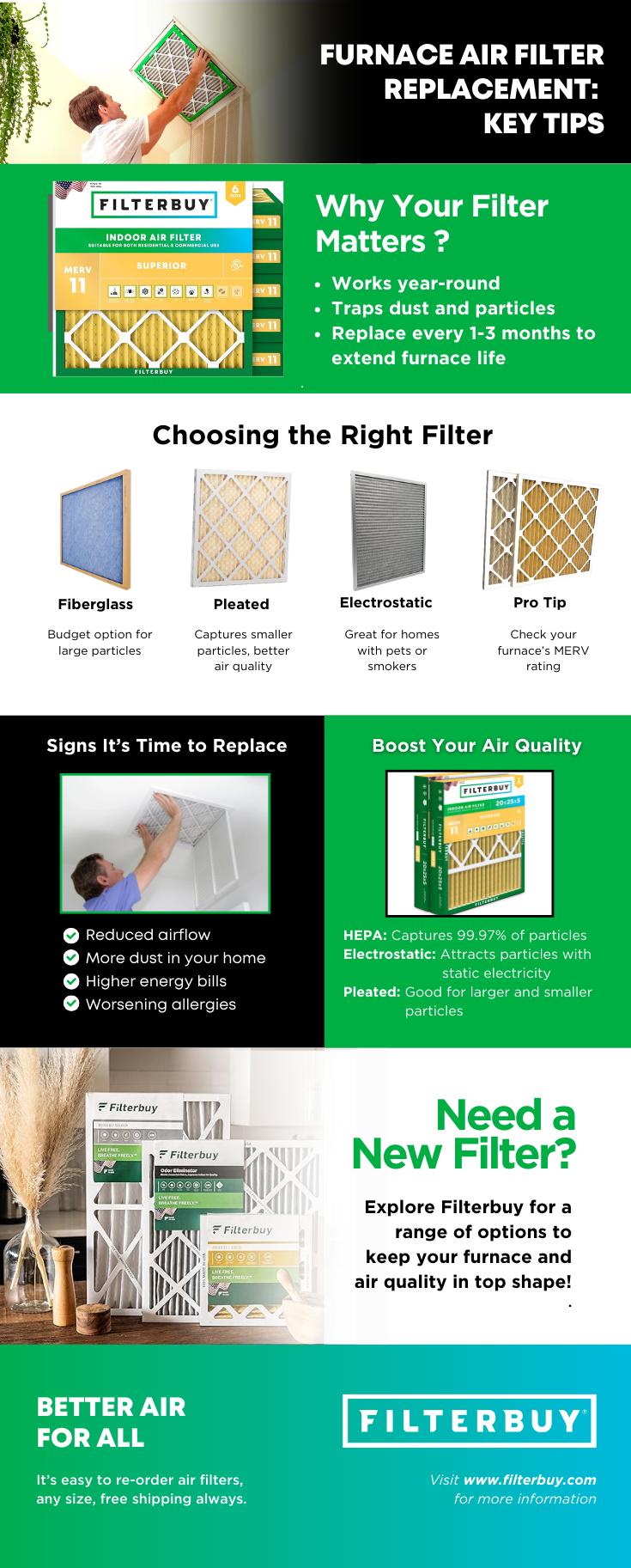
That's why choosing it’s important to keep it running smoothly. Here's a tip: swap out filters every 1-3 months. Dust build-ups aren't exactly a furnace's best friend. Next, select the right filter for your unit. Note how options range from budget-friendly fiberglass, suitable for larger particles, to pleated or electrostatic types, designed to capture even the smallest ones. Then, research about their effectiveness. Every filter comes with its MERV ratings, which indicate how well they filter out particles.
Key Takeaways
Airborne particles, once trapped by furnace air filters, enhance not only furnace efficiency but also indoor air quality.
Filters require regular changes, preferably between 1 to 3 months, to avoid dust accumulation and extend their operational life.
Selection of suitable types and sizes, including fiberglass, pleated, or electrostatic, significantly impacts its performance.
Ratings of filters, represented by MERV, illustrate their particle trapping capacity. Superior filtration correlates with higher ratings.
Regular maintenance, coupled with frequent inspections, ensures efficient furnace operation, averts clogs, and helps in reducing energy consumption.
What are Furnace Air Filters
Homeowners must appreciate the part furnace air filters play in securing a healthy, comfortable, energy-efficient living space. Plus, they trap various airborne particles, safeguarding your system and indoor air quality and promoting good health.
Different types of filters cater to specific needs. Disposable fiberglass filters are budget-friendly and effective at capturing larger particles, while pleated filters excel at trapping smaller ones. For homes with pets or smokers, electrostatic filters, which use self-charging fibers to attract particles, are a great choice.
The size of your furnace air filter matters. If it's too small, it won't protect the entire intake, allowing unfiltered air into your system. Oversized filters won't fit properly. Accurately measuring your filter slot ensures you choose the right size. Understanding these factors helps you make informed decisions when it's time to replace your filter, optimizing your equipment's efficiency and longevity.
Importance of Regular Filter Changes
Replacing your filter regularly improves furnace efficiency, prolongs its life, and promotes a healthier home environment.
Falling into the trap of maintenance mistakes is easy for many homeowners. For example, incorrect sizing and delayed replacements are typical errors that result in excessive particle buildup. This also declines furnace performance and increases energy expenses. Therefore, understanding and implementing maintenance procedures is critical in preventing such problems.
Ensuring filter changes every 1-3 months guarantees optimal airflow, promoting smooth furnace operation. On the other hand, dirty filters impose an extra workload on your furnace, causing premature wear and potential malfunctions.
Choosing the Right Filter for Your Furnace
The right filter is vital to your furnace's overall performance, optimal efficiency, and extended lifespan.
If you don’t know what to pick, note that there are many types of filters. These varieties exhibit unique characteristics. For example, fiberglass filters, which are cheap and disposable, trap fewer particles than pleated ones. Conversely, pleated filters provide superior filtration but might stress your furnace due to increased air resistance. Lastly, electrostatic filters, constructed from self-charging electrostatic cotton or paper fibers, capture small particles.
Afterward, consider learning about the efficiency ratings of your options. These numbers gauge a filter's capability to extract particles from the air. A prevalent rating system is the Minimum Efficiency Reporting Value (MERV). Filters with higher scores are good at trapping certain particle types.
Impact on Indoor Air Quality
Indoor air quality depends on how effective your furnace air filters are. Since they act as shields, they also protect you from harmful airborne particles.
But every type of filter uniquely contributes to this. Let's see how they affect indoor air quality:
Activated Carbon filters: Impressive in eliminating odors and chemicals, improving air quality in ways other filters can’t.
HEPA filters: Considered the gold standard in air filtration, removing up to 99.97% of airborne particles.
Mechanical filters: Trapping larger particles like hair, they act like sieves. Their effectiveness against smaller substances, however, is less impressive.
Pleated filters: With greater effectiveness than their mechanical counterparts, they capture both large and smaller particles, raising air quality.
Electrostatic filters: Uses static electricity to attract particles, making them a powerful tool for improving air quality.
Boosting Furnace Efficiency With Filters
Air filters in your furnace not only improve indoor air quality but also promote furnace efficiency. However, note how different filters also have distinct characteristics that impact the furnace's performance. For instance, pleated filters excel in dust and allergen removal, promoting smoother airflow. Therefore, this type of filter also elevates furnace efficiency. In contrast, High-Efficiency Particulate Air (HEPA) filters trap tiny particles, preventing clogs and system strain to maintain optimal furnace operation.
Retaining a furnace’s efficiency extends beyond just selecting the right filter. It requires regular filter maintenance. Have routine inspections and replacements to secure system efficiency. Failure to commit to these upkeep tasks damages the furnace over time, ultimately shortening its life.
Frequently Ask Questions:
How often should furnace filters be changed?
Most of the time, furnace filters must be changed every three months. You should change them more often, like every 60 days, if you have pets or a lot of dust in your home.
What happens if the furnace filter is backward?
The air will not flow through a furnace filter properly if installed backward. This can make the furnace work harder than it needs to, which can waste more energy and damage the system.
What is the best furnace filter to use?
When choosing a furnace filter, the best option depends on your specific needs. However, pleated filters are generally more effective at capturing dust and other particles. If you’re unsure which filter to choose, opting for a pleated filter can be a good starting point. This will improve your indoor air quality and help your furnace last longer. You can also consult with a professional for personalized advice.
How can I tell if my furnace filter needs changing?
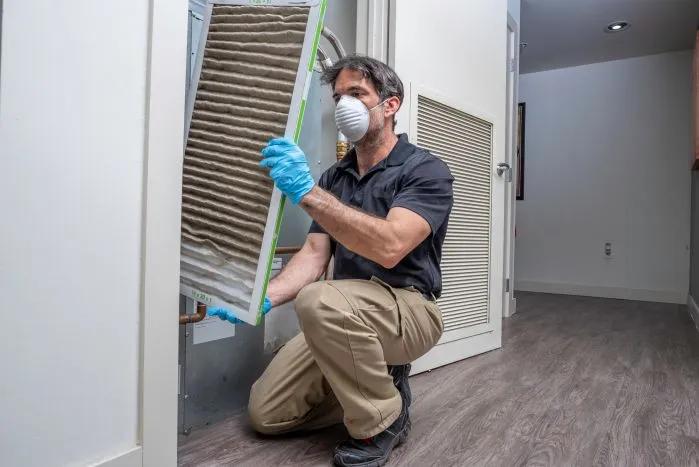
A simple assessment can quickly reveal a dirty or blocked furnace filter. If you see these signs or find that your heating performance is declining or there's an increase in dust accumulation, it’s time to change the filter.
What are the symptoms of a dirty furnace filter?
Signs that your furnace filter needs attention may involve a drop in your heating system's efficiency, rising energy costs, and worsened allergy symptoms from the heightened dust and particles circulating in the air.
Are 4-inch or 1-inch furnace filters better?
Four-inch furnace filters outperform one-inch filters due to their increased surface area, allowing them to capture more particles and extend their lifespan before replacement is necessary.
Can I clean my furnace air filter instead of replacing it?
Although you can clean your furnace air filter, replacing it is generally the preferred option. As time passes, the material may wear down and become less efficient at capturing particles.
How to tell if a furnace filter needs to be replaced?
A visual inspection can tell the need to replace a furnace filter. If the filter appears dirty or clogged, or if you are experiencing decreased heating efficiency or increased dust in your home, it's time to replace the filter.
How much money can you save by changing your furnace filter?
Most of the time, changing your furnace filter will save you a lot of money. A clean filter makes your heating system work better, so it uses less energy and lowers your energy bills.
What type of filter is best for a furnace?
Most of the time, a pleated filter is the best type for a furnace. These filters are better at catching dust and other particles, which makes the air better and makes your furnace last longer.
Is it hard to change a furnace filter?
It's usually easy to change the filter in a furnace. Usually, you have to slide out the old filter and put in a new one. However, it is important to make sure that the new filter is the right size and is put in the right way.
Can I run my furnace without a filter?
No, it is not advisable to operate your furnace without a filter. A filter safeguards your furnace by trapping dust and other particles that might harm its parts. Neglecting to use a filter can damage your furnace and significantly reduce its lifespan.