
Furnace Safety 101: How a Clean Filter Can Prevent Heating Hazards
February 19, 2026
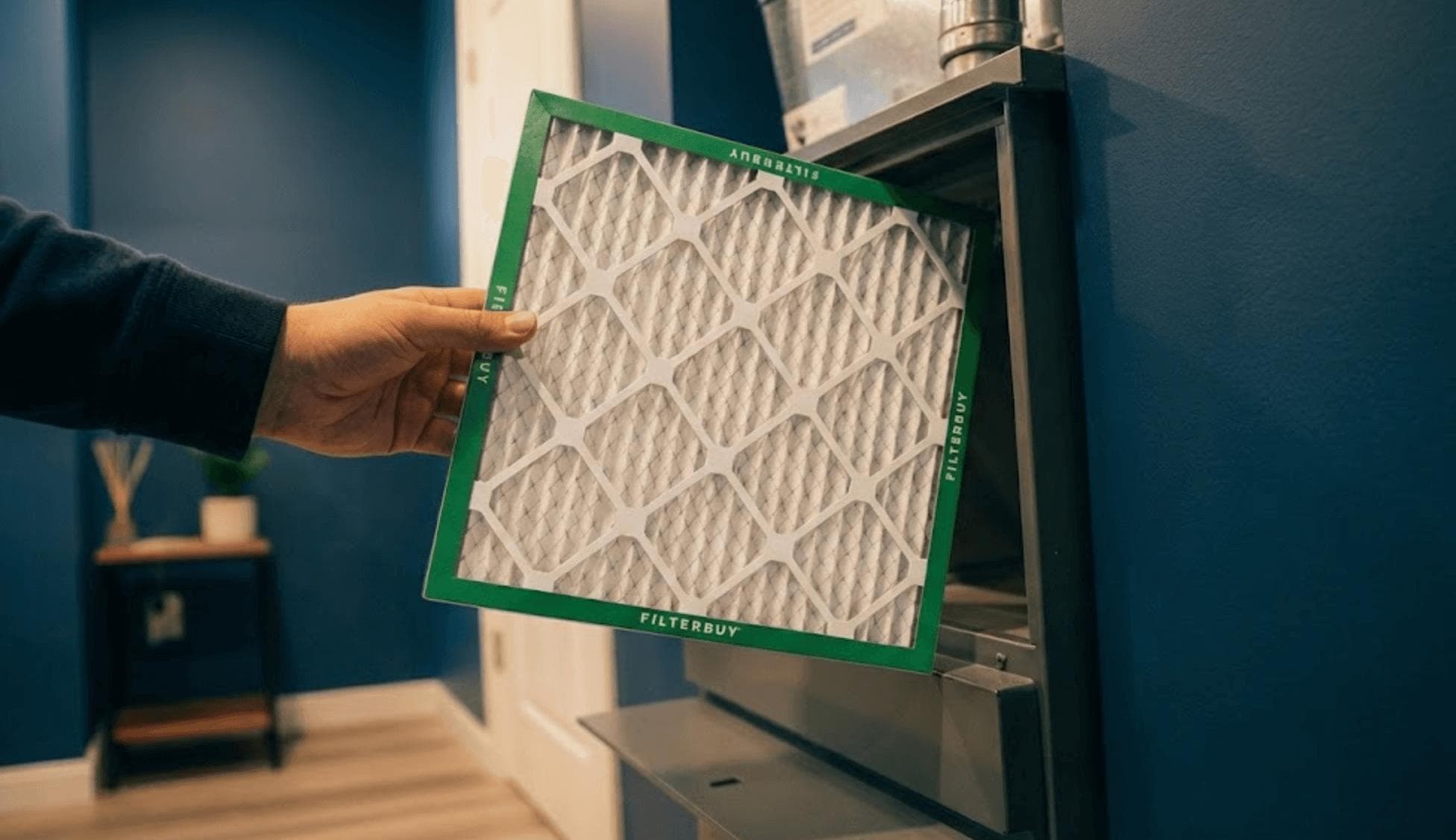
Your furnace filter might not seem like a big deal, but it’s a critical part of keeping your home safe. More than just trapping dust, it helps prevent overheating, electrical issues, and even carbon monoxide risks. Fortunately, a clean filter is one of the easiest ways to protect your family and keep your heating system running smoothly all winter. Here’s everything you need to know to stay safe and comfortable.
TL;DR Quick Answers
How Does a Clean Filter Prevent Furnace Heating Hazards?
A clean furnace filter is the single most effective — and most overlooked — safety measure in your home's heating system. After over a decade of manufacturing filters and working with homeowners across the country, here's what we know for certain:
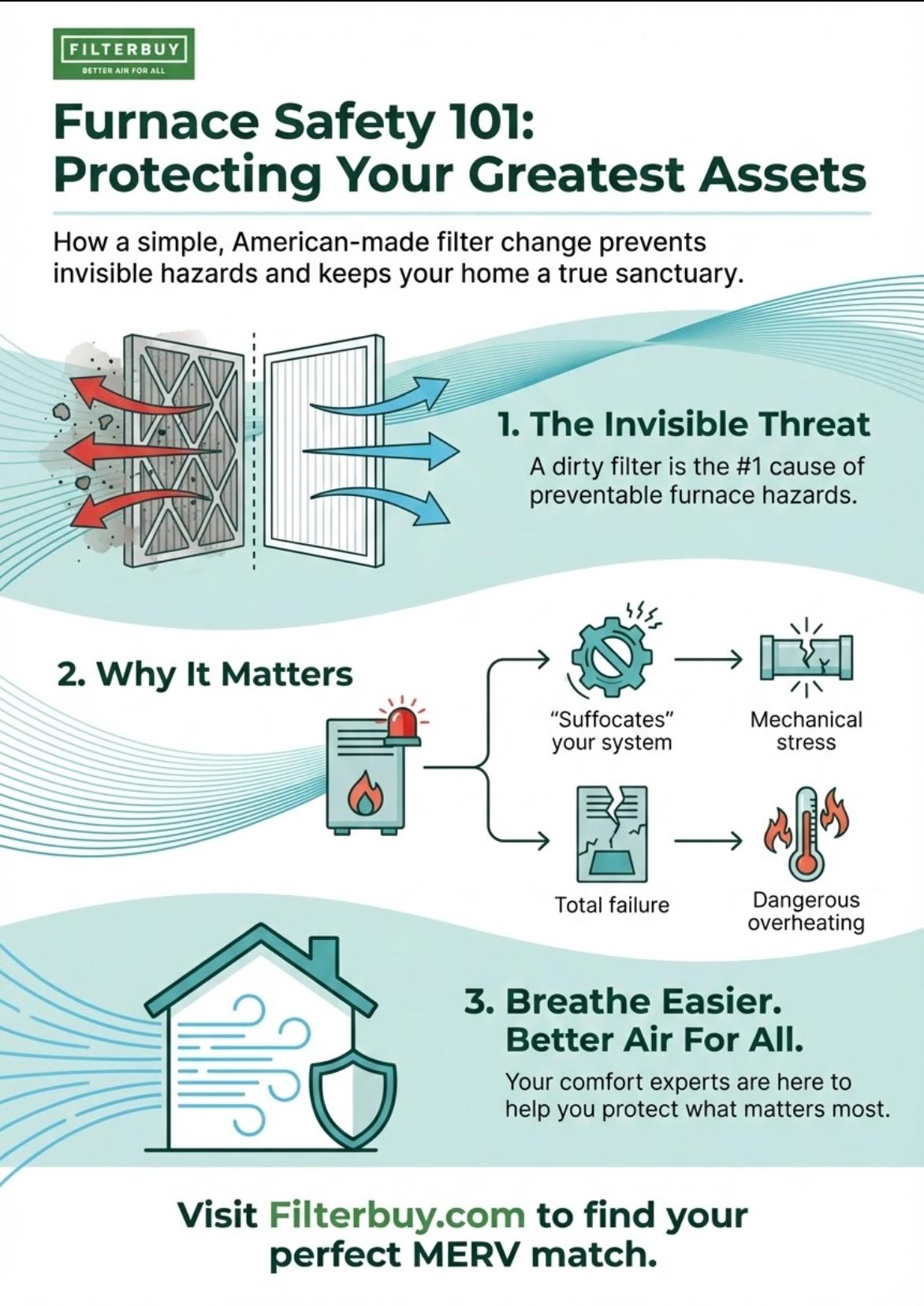
A dirty filter restricts airflow. Restricted airflow causes everything else to go wrong:
Overheating — Heat gets trapped, triggering emergency shutdowns
Fire risk — Dust builds up near burners and electrical components
Carbon monoxide danger — The heat exchanger cracks from repeated thermal stress, allowing CO into your air supply
System failure — The blower motor works overtime and burns out prematurely
The fix is simple and takes two minutes:
Use a pleated filter rated MERV 8–13 — the range HVAC professionals recommend for residential safety
Replace it every 1–3 months depending on pets, allergies, and usage
Install CO detectors on every level and schedule one annual professional inspection
A quality pleated filter costs about $15. A furnace repair runs into the hundreds. A carbon monoxide incident is priceless in the worst way.
Don't overcomplicate it. Clean filter. Consistent schedule. Safe home.
Top Takeaways
A dirty filter is the #1 cause of preventable furnace hazards. Restricted airflow triggers overheating, trips safety switches, increases fire risk, and can lead to carbon monoxide leaks from a cracked heat exchanger. A fresh pleated filter eliminates the root cause.
MERV 8–13 is the sweet spot. It's what HVAC professionals recommend for residential systems — strong filtration for pet dander, mold spores, and pollen without restricting the airflow your furnace needs to run safely.
Your indoor air is likely 2–5x worse than outdoor air. The EPA reports most Americans spend 90% of their time indoors. Your furnace filter is one of the primary barriers between your family and the invisible particles cycling through your ducts.
A consistent schedule prevents almost every emergency we see. Families who change their filter every 1–3 months and get one annual professional inspection almost never deal with overheating shutdowns, surprise repairs, or CO scares.
Furnace safety is simpler than you think. A quality pleated filter costs about $15 and takes two minutes to install. Add CO detectors on every level and one yearly professional checkup. That's the whole plan.
Why Your Furnace Filter Plays a Bigger Safety Role Than You Think
Your furnace works by pulling air from your home, heating it, and then pushing it back out through your vents. The furnace filter sits at the beginning of this cycle, capturing dust, pollen, pet dander, and other airborne particles before they can enter the system. When the filter is clean, air flows through it freely. But when it gets clogged with debris, your furnace has to work much harder to pull in enough air.
This restricted airflow is what causes most furnace-related safety issues. It can lead to overheating, strain on critical components, and improper combustion. Essentially, a dirty filter suffocates your system, forcing it into a state of stress that can have dangerous consequences.
Fortunately, there’s an easy solution. Using a high-quality pleated filter with a MERV rating of 8–13 is one of the best ways to protect your furnace. These filters are designed to trap fine particles effectively without restricting airflow, safeguarding both your system’s components and your home's air quality. At Filterbuy, we specialize in durable, American-made pleated filters that provide the perfect balance of filtration and airflow for optimal furnace safety.
How a Clean Filter Prevents Common Furnace Hazards
A clean furnace filter is your first line of defense against several preventable dangers. By ensuring proper airflow, you are actively protecting your home from these common furnace hazards.
Preventing Furnace Overheating
What causes furnace overheating? The most common culprit is a dirty, clogged filter. When airflow is blocked, heat builds up inside the furnace because it can't be distributed throughout your home quickly enough. This forces the system to run hotter and longer than it was designed to.
In response, your furnace’s high-limit safety switch will activate. This component is designed to shut the system down automatically when it detects dangerously high temperatures. While this emergency shutdown prevents immediate disaster, frequent activation puts a huge strain on your furnace and signals a serious underlying problem—usually a dirty filter.
Reducing Fire and Electrical Risks
A buildup of dust and debris isn't just bad for airflow; it's also a fire hazard. If dust accumulates on or near the furnace's burner, pilot light, or electrical components, it can ignite. Furthermore, when the blower motor has to work harder to pull air through a clogged filter, it can overheat. According to HVAC.com, this strain can lead to electrical failures, tripped breakers, or damaged wiring, all of which increase the risk of a fire. A clean filter keeps these components free of flammable debris and reduces mechanical strain.
Protecting the Furnace Safety Switch
The high-limit switch, or furnace safety switch, is a vital component that shuts off the furnace if the heat exchanger gets too hot. A dirty filter is the number one reason this switch gets tripped. While it’s good that the switch is doing its job, you don’t want it activating due to simple neglect. Each time it triggers an emergency shutdown, it puts stress on the system. A clean filter ensures the safety switch only activates in a true emergency, not because of a preventable airflow problem.
Preventing Carbon Monoxide Risks
Perhaps the most serious hazard is the risk of carbon monoxide (CO) leaks. Restricted airflow from a dirty filter can lead to incomplete combustion, meaning the fuel isn't burning correctly. This can cause the heat exchanger to crack over time. The heat exchanger is what separates the combustion gases from the air you breathe. If it’s compromised, deadly carbon monoxide gas can leak into your home’s air supply. Maintaining proper airflow with a clean filter is crucial for keeping the combustion process safe and the heat exchanger intact.
Why Pleated MERV 8–13 Filters Are the Best Choice for Furnace Safety
Choosing the right filter is just as important as changing it regularly. For most homes, pleated MERV 8–13 filters offer the ideal blend of safety, air quality, and performance.
Safe for Furnaces, Superior for Air Quality
Some homeowners worry that high-efficiency filters will restrict airflow, but modern pleated filters are designed to avoid this problem. Their pleated design creates a larger surface area, allowing them to capture more fine particles like pollen, mold spores, and pet dander without choking your furnace. A MERV rating of 8–13 is the sweet spot recommended by HVAC professionals for residential systems, as it provides excellent air filtration without overworking the furnace.
How Pleated Filters Protect Your Furnace Internals
The benefits of pleated furnace filters go beyond just air quality. By trapping more dust and debris, they keep your furnace's internal components clean. This includes the blower motor, heat exchanger, and the furnace safety switch. When these parts are free of buildup, the system runs more efficiently, experiences less strain, and is less likely to break down. Ultimately, this protection extends the lifespan of your furnace.
Why Filterbuy Is the Best Place to Buy Pleated Filters
When it comes to furnace safety, quality matters, Filterbuy’s pleated filters are American-made, durable, and designed for optimal safety and longevity. We offer custom sizes to ensure you always have a perfect fit, which is critical for preventing air from bypassing the filter. Plus, our convenient auto-ship options make it easy to maintain a consistent replacement schedule, so you never have to worry about forgetting a filter change again.
Essential Furnace Safety Tips Every Homeowner Should Follow
Beyond changing your filter, a few other simple habits can go a long way in ensuring furnace safety.
1. Replace Your Filter Every 1–3 Months
This is the single most important furnace safety tip. How often to change furnace filters for safety depends on your home, but a good rule of thumb is every 90 days for 1-inch filters. If you have pets, smokers, or allergies, you may need to change it as often as every 30 days.
2. Install Carbon Monoxide Detectors
Because carbon monoxide is odorless and colorless, detectors are a must-have. HVAC.com recommends placing them near all sleeping areas and on every level of your home. Test them regularly to ensure they’re working correctly.
3. Schedule Annual Furnace Inspections
Have a qualified HVAC technician inspect your furnace at least once a year. They will check for cracks in the heat exchanger, ensure the limit switch is functioning properly, and verify that the venting system is clear and safe.
4. Follow Manufacturer MERV Guidelines
Always check your furnace manufacturer’s recommendation for the maximum MERV rating your system can handle. As mentioned, a MERV 8–13 rating is safe and effective for almost all modern residential furnaces.
Protect Your Home and Furnace With Filterbuy Filters
Neglecting your furnace filter isn't just inefficient; it's dangerous. A simple, inexpensive filter change is one of the most effective ways to prevent furnace overheating, reduce fire risks, and protect your family from carbon monoxide. By making it a regular habit, you ensure your heating system runs safely and reliably when you need it most.
Ready for safer, cleaner heating? Protect your home and your furnace by upgrading to Filterbuy’s trusted pleated MERV 8–13 filters today. Get the perfect size delivered right to your door.
"In our experience testing thousands of filters, the number one furnace safety issue we see is also the most preventable—a clogged filter starving the system of airflow. A quality pleated MERV 8–13 filter, replaced on schedule, eliminates the root cause of most overheating, short-cycling, and heat exchanger stress before it ever becomes dangerous."
Your Go-To Resources for a Safer Furnace and Cleaner Air at Home
A clean filter is the foundation of furnace safety — but you don't have to stop there. We've pulled together seven trusted resources to help you take the next step, whether that's understanding carbon monoxide risks, picking the right MERV rating, or getting on a replacement schedule that actually works for your home. No jargon overload, just straightforward guidance you can use right away.
1. Know the Real Risks: The CDC's Furnace Safety and Carbon Monoxide Fact Sheet
Carbon monoxide is colorless, odorless, and nothing to mess around with. The CDC's fact sheet gives you the straight facts on how your furnace produces CO, what makes it dangerous, and the simple steps your household should take to stay safe. If there's one government resource worth bookmarking this winter, it's this one.
Source: CDC – Furnace Safety Fact Sheet URL: https://www.cdc.gov/carbon-monoxide/factsheets/furnace-safety-fact-sheet.html
2. See the Bigger Picture: The EPA's Guide to Improving Your Indoor Air Quality
Your furnace filter is a huge part of the air quality equation — but it's not the only piece. The EPA's guide walks you through how source control, ventilation, and filtration work together to keep your family breathing cleaner air. It's the kind of practical, whole-home thinking that helps you get ahead of air quality problems instead of chasing them.
Source: U.S. EPA – Care for Your Air: A Guide to Indoor Air Quality URL: https://www.epa.gov/indoor-air-quality-iaq/care-your-air-guide-indoor-air-quality
3. Understand MERV Ratings Before You Buy: The EPA's Official Breakdown
We talk about MERV ratings a lot — because they really do matter. But if you want the technical details straight from the source, the EPA explains exactly how the rating system works, why higher isn't always better for your system, and how to figure out the highest-efficiency filter your furnace can handle. It's a quick read that takes the guesswork out of your next filter purchase.
Source: U.S. EPA – What Is a MERV Rating? URL: https://www.epa.gov/indoor-air-quality-iaq/what-merv-rating
4. The Numbers Don't Lie: NFPA's Home Heating Fire Safety Data and Tips
Here's a reality check that puts furnace maintenance into perspective: U.S. fire departments respond to tens of thousands of home heating fires every year, with the biggest spikes happening in December, January, and February — right when your furnace is working its hardest. The NFPA breaks down where these fires start, what causes them, and how to reduce your risk with a few simple habits.
Source: NFPA – Safety With Heating Equipment URL: https://www.nfpa.org/education-and-research/home-fire-safety/heating
5. Go Beyond the Filter: HVAC.com's Complete Furnace Safety Checklist
Changing your filter regularly is the most important thing you can do — but it's not the only thing. HVAC.com's safety guide covers the rest of the list: where to place carbon monoxide detectors, how to manage your vents and registers, why you should never skip an annual professional inspection, and how to spot the warning signs that something's off. Think of it as a winter-ready checklist for your whole heating system.
Source: HVAC.com – Furnace Safety Tips Every Homeowner Should Know URL: https://www.hvac.com/expert-advice/furnace-safety-tips/
6. Get on the Right Schedule: Filterbuy's Furnace Filter Replacement Guide
Knowing you should change your filter is one thing. Knowing exactly when to change it — based on your filter thickness, the season, whether you've got pets or allergies — that's where it gets real. We built this guide to take the guesswork out of your replacement schedule so you're never running your furnace on a clogged filter. Set it up once, and you're good to go.
Source: Filterbuy – How Often Should You Change Your Furnace Filter? URL: https://filterbuy.com/resources/air-filter-maintenance/how-often-to-change-your-furnace-filter/
7. Find Your Perfect MERV Match: Filterbuy's Filter Selection Guide
MERV 8, 11, or 13 — which one's right for your home? The answer depends on your household. Got pets? Allergies? A smoker in the house? After over a decade of manufacturing filters and shipping them to families across the country, we've dialed in the guidance to help you find the right balance of air quality and airflow for your specific system. A few clicks, and you'll know exactly what you need.
Source: Filterbuy – Which MERV Rating Should I Use? URL: https://filterbuy.com/resources/air-filter-basics/which-merv-rating-should-I-use/
What We've Learned From a Decade of Helping Homeowners Breathe Better
After manufacturing millions of filters and shipping them to homes across the country, we've seen firsthand what happens when furnace maintenance gets pushed to the back burner. The calls from customers dealing with unexpected breakdowns in January. The emails from families who didn't realize their indoor air was making allergies worse. These aren't hypothetical scenarios for us — they're the reason we take furnace safety so seriously.
The national data confirms exactly what we've been seeing on the ground.
1. Heating Fires Are Far More Common Than Most Homeowners Realize
Most customers we talk to connect a dirty filter to higher energy bills. Very few connect it to fire risk — but they should.
According to the most recent NFPA data, fire departments across the nation responded to an annual estimated average of 37,365 home heating equipment fires between 2020 and 2024, accounting for 11 percent of all reported home fires, resulting in 417 deaths, 1,260 injuries, and $1.2 billion in property damage.
From our experience, these incidents don't start with a dramatic malfunction. They start small:
A filter that hasn't been changed in six months
Restricted airflow forcing the blower motor to overwork
Dust accumulating near components that get dangerously hot
By the time the system shows obvious signs of distress, the risk has been building for weeks. That's why we designed our auto-delivery program around replacement intervals that actually prevent these problems — not just the ones printed on a box.
Source: National Fire Protection Association (NFPA) – Home Heating Fires Report URL: https://www.nfpa.org/education-and-research/research/nfpa-research/fire-statistical-reports/heating-equipment
2. Your Indoor Air Is Likely Worse Than You Think
This is the statistic that changes the conversation for almost every homeowner we share it with:
According to the U.S. Environmental Protection Agency, Americans spend approximately 90 percent of their time indoors, where concentrations of some pollutants are often 2 to 5 times higher than typical outdoor concentrations.
We hear from customers all the time who assume their air is fine because their home looks clean. But after over a decade of building filters, here's what we know:
The particles doing the most damage are the ones you can't see — fine dust, pet dander, mold spores, and pollen that circulate every time your system kicks on.
A used MERV 13 filter tells the real story. When we pull one from a test unit after 90 days, the amount of trapped particulate matter is eye-opening — even for our own team.
The difference between a cheap fiberglass panel and a properly rated pleated filter isn't a minor upgrade. It's a fundamentally different level of protection for your family's air.
That trapped debris didn't disappear. Without a quality pleated filter in place, it would have been cycling through your ducts and into your lungs.
Source: U.S. Environmental Protection Agency (EPA) – Report on the Environment: Indoor Air Quality URL: https://www.epa.gov/report-environment/indoor-air-quality
3. Carbon Monoxide Risk Starts With Airflow — and Airflow Starts With Your Filter
Of all the furnace hazards we educate homeowners about, carbon monoxide is the one that keeps us up at night. It's invisible, odorless, and the connection between a clogged filter and a CO leak isn't obvious to most people. But it's real.
The U.S. Consumer Product Safety Commission warns that fuel-burning heating systems, including furnaces and fireplaces, are a potential source of CO — an odorless, colorless, and poisonous gas — and can cause CO poisoning if they are improperly installed, poorly maintained, have defective or blocked venting systems, or are misused.
Here's what that chain of events actually looks like, based on what we've learned from HVAC professionals and our customers:
A filter gets clogged and airflow drops
The heat exchanger runs hotter than it was designed to
Repeated thermal stress causes it to crack over time
Combustion gases — including carbon monoxide — mix with the air flowing through your vents
The whole sequence traces back to something as simple and preventable as a filter that should have been swapped out weeks ago. We built Filterbuy around making that swap as easy as possible — the right size, the right MERV rating, delivered to your door on schedule — because when it comes to CO prevention, there's no room for "I'll get to it later."
Source: U.S. Consumer Product Safety Commission (CPSC) – Winter Heating Safety Advisory URL: https://www.cpsc.gov/Newsroom/News-Releases/2025/Theres-a-Chill-in-the-Air-Stay-Warm-Safely-Be-Cautious-When-Using-Generators-Furnaces-and-Space-Heaters
Our Take: The $15 Fix That Could Save Your Family's Life
After more than a decade of manufacturing air filters in our U.S. facilities and shipping them to families across the country, we've developed a clear perspective on furnace safety.
The most dangerous thing about a dirty furnace filter is how easy it is to ignore.
Nobody wakes up thinking about their filter. It doesn't beep when it's clogged. It doesn't send a notification. It just quietly chokes your furnace — and the problems that follow aren't quiet at all.
What We See That Most Homeowners Don't
We've talked to thousands of customers over the years. Every winter, the same patterns repeat:
The furnace that keeps shutting off — almost always a tripped safety switch from a clogged filter restricting airflow.
The family whose indoor allergies are worse than outdoors — usually a filter months overdue, recirculating the particles it was supposed to trap.
The customer who had no idea CO was a risk — until a technician found heat exchanger stress during a routine inspection.
Every single case had the same fix. A fresh, properly rated pleated filter. Installed correctly. Changed on time.
Our Honest Opinion
The HVAC industry tends to overcomplicate furnace maintenance — expensive service contracts, unnecessary upsells, and enough jargon to make anyone's eyes glaze over.
Here's what we believe after building this business from the ground up: you don't need to become an HVAC expert to keep your family safe. You need three things done consistently:
Use a quality pleated filter rated MERV 8–13. This is the range HVAC professionals recommend for virtually all residential systems — strong filtration without restricting airflow.
Change it every 1–3 months. Pets, allergies, or heavy system usage? Lean toward every 30 days. Lighter conditions? Every 90 days works. Just don't stretch it further.
Schedule an annual professional inspection. A qualified technician catches what a filter can't — heat exchanger cracks, venting issues, and problems that need trained eyes.
No gimmicks. No expensive gadgets. Just a clean filter, a consistent schedule, and one yearly checkup.
Why This Matters to Us
We didn't start Filterbuy to sell a commodity. We started it because we believe clean air shouldn't be complicated — and it shouldn't be optional.
Every filter we build is manufactured with the same goal:
Protect the furnace from strain and overheating
Protect the air from particles that don't belong in your lungs
Protect the family from preventable hazards like carbon monoxide
We've invested in American-made manufacturing, over 600 sizes, and an auto-delivery system specifically so the most important maintenance task in your home never falls through the cracks.
Here's the truth we've earned through years of experience: the families who stay on a regular replacement schedule almost never deal with the emergencies in this article. No overheating shutdowns. No surprise repair bills. No carbon monoxide scares. Just a furnace running safely and efficiently in the background where it belongs.
The Bottom Line
A clean filter costs roughly $15 and takes about two minutes to install. Compare that to:
An emergency HVAC call in the middle of winter
A furnace repair bill that runs into the hundreds
A safety incident that puts your family at risk
It's the most lopsided return on investment in your entire home.
Don't wait for a problem to remind you. Set up your replacement schedule today, and make furnace safety something you never have to think about again.
Ready to Protect Your Home? Here's Exactly What to Do Next
You've got the knowledge. Now put it to work. These five steps take less than 30 minutes total and can save you from costly repairs, poor air quality, and serious safety hazards all winter long.
Step 1: Check Your Current Filter Right Now
Pull out your existing filter and give it a quick visual inspection:
Gray, dark, or no light passes through it? Replace it immediately.
Looks relatively clean? Note today's date and recheck in 30 days.
No filter installed? Stop running your furnace until you install one. Operating without a filter risks serious damage to your blower motor and heat exchanger.
Write down the size printed on the frame (e.g., 20x25x1). You'll need it for your replacement order.
Step 2: Choose the Right MERV Rating for Your Home
After over a decade of helping homeowners, here's what we recommend:
MERV 8 — Great for standard homes without major air quality concerns. Captures dust, pollen, and lint.
MERV 11 — Our most popular choice. Ideal for homes with pets, mild allergies, or above-average dust. Traps pet dander, mold spores, and finer particles.
MERV 13 — Best for allergy/asthma sufferers, smokers, or anyone wanting maximum residential filtration. Captures bacteria, smoke particles, and some viruses.
All three ratings are safe for virtually all modern residential furnaces when changed on schedule.
Step 3: Set a Replacement Schedule You'll Actually Stick To
The best filter in the world can't help if it's sitting in the packaging. Match your schedule to your household:
Every 30 days — Multiple pets, smokers, or family members with respiratory conditions
Every 60 days — One pet, seasonal allergies, or moderate dust levels
Every 90 days — No pets, no major air quality concerns, average system usage
Pro tip from our team: Don't rely on memory. Set a phone reminder, or let Filterbuy's auto-delivery handle it — your filters show up right when it's time to swap them out.
Step 4: Install Carbon Monoxide Detectors
Your filter protects airflow and combustion efficiency. CO detectors protect your family if something still goes wrong. Both are essential.
Place detectors on every level of your home
Install one outside each sleeping area
Test monthly and replace batteries at least once a year
Replace the entire unit every 5–7 years
Most detectors cost under $30. It's critical backup protection beyond what any filter can offer.
Step 5: Schedule Your Annual Furnace Inspection
A professional HVAC technician catches issues a filter change can't.
When: Early fall, before heating season begins
Duration: About one hour for a thorough inspection
What's covered: Combustion testing, safety switch verification, full system checkup
What to ask: Confirm your system supports the MERV rating you're using and verify proper airflow
Important: If your furnace is 15 years old or older, this annual checkup is even more critical. Older systems are more prone to heat exchanger fatigue and may lack modern safety features.
Start With the Simplest Step First
If you only do one thing today — check your filter.
It takes 60 seconds, costs nothing, and tells you immediately whether your furnace is running safely or working harder than it should be.
When it's time to replace, we've made it easy. Filterbuy offers every size — including custom sizes — in MERV 8, 11, and 13. All American-made. Shipped fast and free to your door.
Frequently Asked Questions
Q: How does a dirty furnace filter create a safety hazard?
A: This is something we explain to customers every day — and it's usually the connection they didn't expect. A dirty filter doesn't just reduce efficiency. It triggers a cascade of safety problems we've seen play out in homes across the country:
System overheats because trapped heat has nowhere to go
Safety switch trips repeatedly, stressing the entire unit
Dust collects near burners and electrical components, creating fire risk
Heat exchanger runs hotter than designed and can crack over time
A cracked heat exchanger lets carbon monoxide into your air supply
After shipping millions of filters and hearing from thousands of homeowners, we can tell you — every one of these problems traces back to one root cause: a clogged filter choking airflow.
Q: What MERV rating is safest for my furnace?
A: We've been manufacturing pleated filters for over a decade. The answer we give our own families is the same one we give customers — MERV 8–13 is the sweet spot for residential systems:
MERV 8 — Standard homes. Solid everyday protection against dust and pollen.
MERV 11 — Our most popular rating. Ideal for pets, mild allergies, or above-average dust.
MERV 13 — Best for allergy/asthma sufferers, smokers, or maximum residential filtration.
One thing we've learned from working with HVAC professionals: a properly rated pleated filter in this range won't restrict airflow on modern systems when changed on schedule. Problems start when homeowners go too high without checking specs — or leave a good filter in too long.
Always confirm your furnace manufacturer's maximum MERV recommendation.
Q: How often should I change my furnace filter to keep my home safe?
A: We built our auto-delivery system around this exact question. The general rule is simple — check monthly, replace every 1–3 months — but your household matters:
Every 30 days — Multiple pets, smokers, respiratory conditions, or heavy usage
Every 60 days — One pet, seasonal allergies, or moderate dust
Every 90 days — No pets, no major concerns, average usage
Here's what years of customer feedback have taught us: homeowners who end up with overheating, short-cycling, or surprise repairs almost always stretched their filter past the replacement window. Not on purpose — life got busy.
Quick test: Pull your filter out and hold it to the light. Can't see through it? It's done.
Q: Can a furnace filter actually help prevent carbon monoxide leaks?
A: Yes — and this is the safety connection we wish more homeowners understood. After working alongside HVAC technicians and hearing from families who've dealt with heat exchanger failures, the pattern is clear:
Clean filter maintains steady airflow
Proper airflow supports complete, safe combustion
Dirty filter restricts airflow — combustion becomes incomplete
Heat exchanger overheats cycle after cycle
Repeated thermal stress causes cracks
Cracked heat exchanger lets CO enter the air flowing through your vents
A clean filter won't guarantee your heat exchanger never develops a problem — age and system design play a role. But removing the most common cause of heat exchanger stress is the most impactful step you can take on your own.
For the strongest protection, combine three things:
Fresh filter changed on schedule
CO detectors on every level of your home
Annual professional furnace inspection
Q: Is it safe to run my furnace without a filter temporarily?
A: We get this question more often than you'd think. Our answer is always the same: no.
Even a few days of unfiltered operation causes real damage:
Blower motor — Dust increases friction and accelerates wear on one of the most expensive parts to replace
Heat exchanger — Particles settle and act as insulation, forcing it to run hotter — the exact condition that leads to cracking and CO risk
Air quality — Allergens, pet dander, and fine dust flow straight through your vents and into your lungs
System lifespan — Internal buildup accumulates fast and shortens your furnace's life with every cycle
If you don't have a replacement filter on hand, turn the system off until you do. Short-term inconvenience beats long-term damage every time.
This is exactly why we built Filterbuy's auto-delivery. There's always a fresh filter ready before you need it. No last-minute store runs. No running your furnace unprotected.
Don't Let a Dirty Filter Put Your Family at Risk — Take the First Step Toward Safer Heating Today
Find your exact filter size in MERV 8, 11, or 13, and get it delivered fast and free straight to your door — or set up auto-delivery so furnace safety runs on autopilot.