February 24, 2026
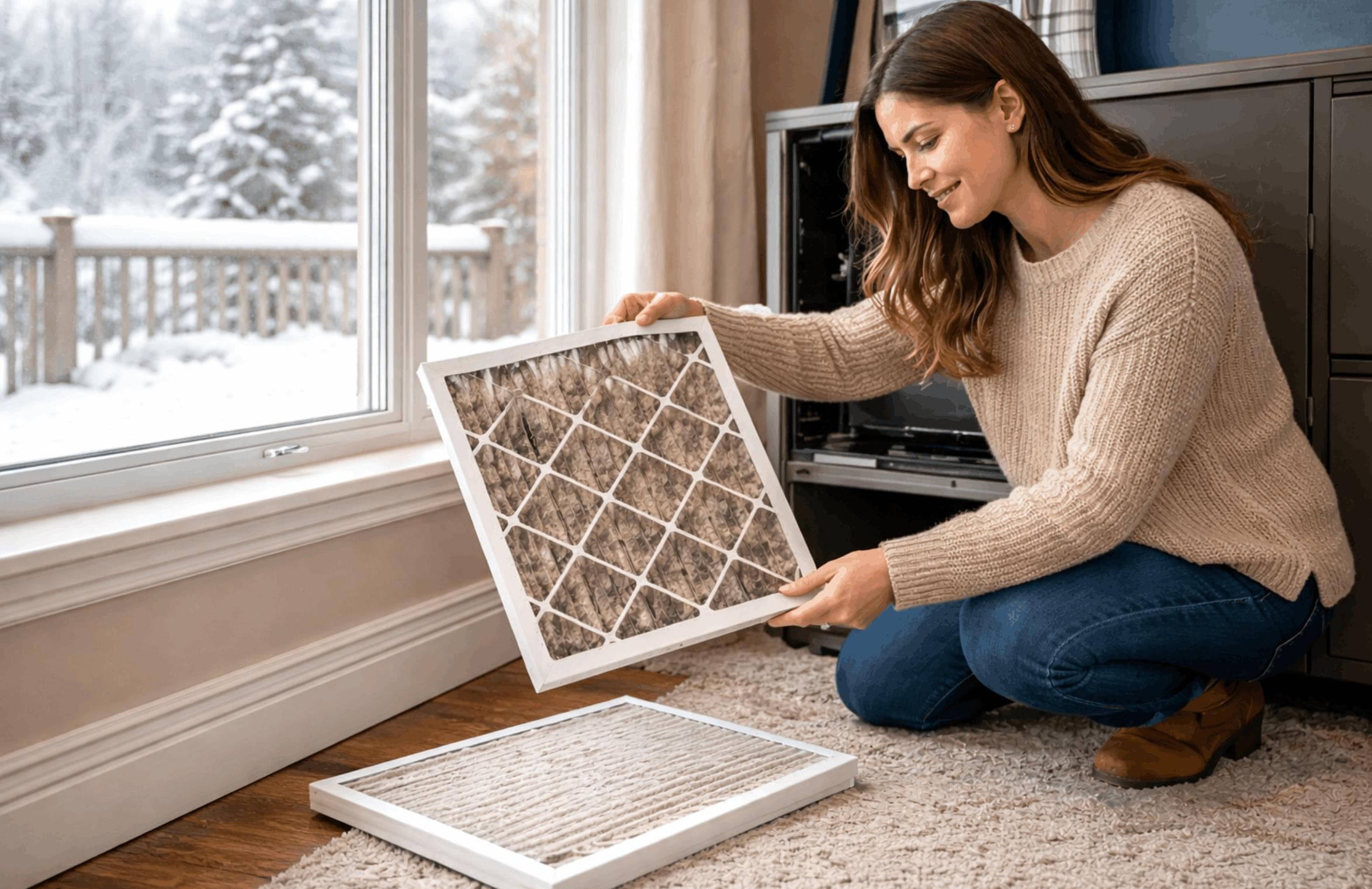
When the temperature drops and the snow starts to fall, your furnace becomes the hardest-working appliance in your home. It’s running constantly to keep you warm, cycling air through your vents almost non-stop. But while you’re enjoying the cozy heat, your furnace filter is silently collecting dust, pet dander, and debris at a much faster rate than it does in spring or fall.
Many homeowners don't realize that winter demands a different maintenance schedule. A filter that might last three months in the mild autumn weather can become clogged in just one month during a harsh winter freeze. Ignoring this small maintenance task doesn't just lower your indoor air quality—it can drive up your energy bills and even cause your heating system to shut down right when you need it most.
Short answer: Check it every 30 days. Replace it when it looks dirty.
After manufacturing millions of filters and hearing from homeowners across the country, here's what we know works:
1-inch filters: Replace every 30 days during winter
4-inch filters: Inspect monthly, replace every 3–6 months
Homes with pets or allergies: Replace every 30 days, no exceptions
Why winter is different: Your furnace runs significantly more during cold months—often 10+ hours a day. That means your filter collects dust, dander, and debris at a much faster rate than in milder seasons. The standard 90-day rule does not apply during peak heating season.
Best filter choice: Pleated MERV 8–13. Skip the cheap fiberglass—it fills up too fast and won't protect your air quality when the house is sealed tight.
Bottom line: A fresh filter keeps your furnace efficient, your air clean, and your energy bills in check. Five minutes of maintenance once a month is the simplest way to avoid costly repairs and stay comfortable all winter long.
Check your filter every 30 days in winter. Your furnace works overtime in the cold months, so filters clog faster. Don't rely on the 90-day rule during peak heating season.
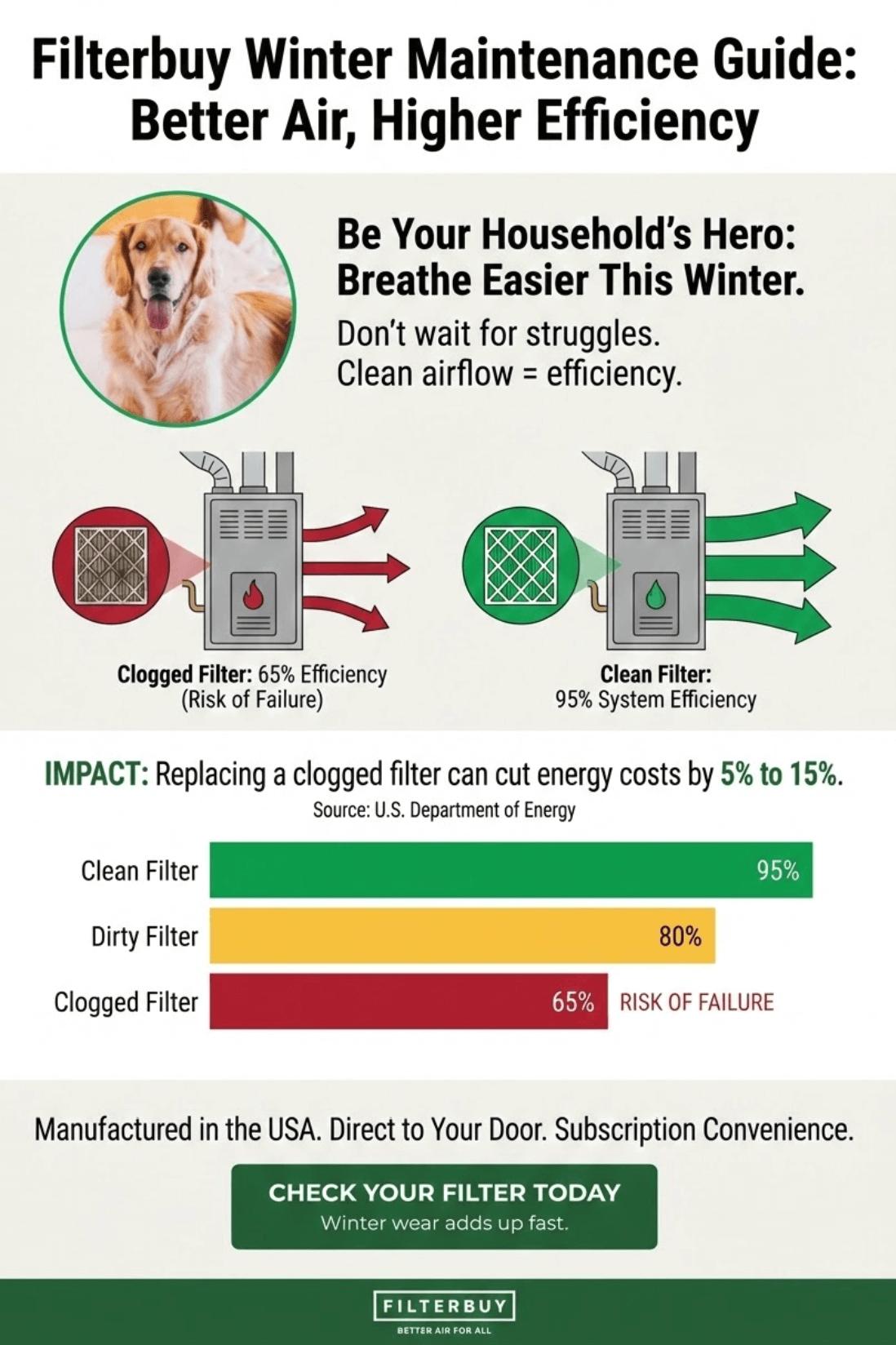
A clean filter can cut energy costs by 5% to 15%. Nearly half your energy bill goes to heating and cooling. A clogged filter makes that number climb even higher.
Indoor air is 2–5x more polluted than outdoor air. Winter makes it worse. Sealed homes trap pet dander, dust, and chemicals—a clean filter is your first line of defense.
Pleated MERV 8–13 filters are the smart winter choice. More surface area means better filtration, stronger airflow, and longer life than cheap fiberglass options.
A forgotten filter is the #1 cause of winter furnace problems. Cracked heat exchangers, burned-out motors, and emergency shutdowns almost always trace back to a filter that should have been swapped weeks ago.
During the winter months, your HVAC system operates on a heavy duty cycle. Because the furnace is running more frequently to combat the cold outside, significantly more air is passing through the filter every day.
This constant airflow means the filter is trapping more contaminants in a shorter period. If you have a standard fiberglass filter, it can clog surprisingly fast, restricting the airflow your furnace needs to function correctly. When airflow is restricted, your system has to work harder to push warm air through the house, which can lead to uneven heating and increased wear and tear on the blower motor.
Switching to pleated furnace filters is often a smart move for winter. Unlike flat fiberglass options, pleated filters have a larger surface area, allowing them to capture more dust and debris without restricting airflow as quickly. Using pleated filters in winter isn’t bad—in fact, it’s one of the best choices for protecting your system while keeping your air clean.
If you are looking for a simple rule of thumb on when to change furnace air filter, winter schedules depend largely on the thickness of your filter and your household environment.
Here is a quick breakdown to help you plan:
1-inch filters: Replace every 1–3 months. During peak winter use, checking them monthly is best practice.
4-inch filters: Replace every 3–6 months. While they last longer, you should still inspect them monthly during heavy heating seasons.
Homes with pets or allergies: If you have dogs, cats, or smoke in the home, you will likely need to change your filter every 30 to 45 days to maintain air quality and airflow.
Knowing how often to change furnace filters in winter can save you money. A fresh filter ensures your system runs efficiently, keeping your utility costs in check.
Homeowners with 4-inch media filters often enjoy a longer lifespan from their products, but winter can still accelerate the need for a replacement. Because these filters are thicker, they have much more surface area to trap particles compared to standard 1-inch filters. This generally allows for better airflow over a longer period.
However, the question of how often to change 4 inch furnace filter units in winter isn't just about time, it's about usage. If your furnace is running 10+ hours a day due to freezing temperatures, that 4-inch filter is working overtime.
While a 6-month lifespan is common for these thicker filters, we recommend visually inspecting them every month during winter. If the filter looks gray and covered in a thick layer of dust, swap it out early. Using high-quality pleated MERV 8–13 filters in this size provides excellent filtration without putting unnecessary strain on your blower motor.
Sometimes, the calendar isn't the best indicator. You need to look for physical signs that your system is struggling for air. Knowing when to change a furnace filter often comes down to paying attention to your home's comfort levels.
Watch out for these common warning signs:
Visible dust buildup: If you see dust collecting on vent covers or furniture shortly after cleaning, your filter may be full.
Reduced airflow: Put your hand over a vent. If the air feels weak compared to usual, the filter is likely clogged.
Uneven heating: If some rooms are cold while others are hot, restricted airflow could be the culprit.
Rising energy bills: A sudden spike in heating costs often means your furnace is working harder than necessary to push air through a dirty barrier.
Furnace running longer: If your unit seems to run constantly without satisfying the thermostat setting, check the filter immediately.
When you are browsing for replacements, you might wonder if you should stick with the cheapest option or upgrade. For winter performance, pleated MERV 8–13 filters hit the "sweet spot" for most residential HVAC systems.
The pleated design is superior because the folds in the material drastically increase the surface area. This allows the filter to capture a high volume of dust, allergens, and microscopic debris while maintaining adequate airflow. A flat filter simply runs out of space to hold dirt much faster.
At Filterbuy, our filters are made in the USA and designed specifically for these real-world conditions. A MERV 8 is great for basic dust and lint, while MERV 11 and 13 offer enhanced protection against pet dander, pollen, and even virus carriers. They provide balanced filtration that keeps your air healthy without overworking your furnace during its busiest season.
Neglecting winter furnace maintenance is a gamble that rarely pays off. The consequences of a dirty filter go beyond just a little extra dust in the air.
Higher Heating Bills: As mentioned, a clogged filter creates resistance. Your system consumes more energy to overcome that resistance, directly inflating your monthly utility bill.
Furnace Strain and Failure: The most common cause of heating system failure is a dirty filter. Restricted airflow causes heat to build up inside the furnace (specifically the heat exchanger), which can cause the system to overheat and shut down automatically—or worse, crack the heat exchanger, which is a dangerous and expensive repair.
Shortened System Lifespan: Chronic airflow issues wear down the blower motor. Replacing a filter is cheap; replacing a furnace is not.
Poor Indoor Air Quality: Once a filter is full, it can no longer trap particles effectively. In some cases, the force of the air can even pull dust through the filter and blow it back into your living space.
When winter demands more from your furnace, your filter should be up to the task. You don't want to be caught in a blizzard with a clogged filter and no replacements on hand.
Filterbuy offers a massive selection of MERV 8, 11, and 13 pleated filters built specifically for HVAC efficiency. Because we manufacture them ourselves, we ensure consistent sizing and quality materials that you can rely on. Plus, with our easy reordering and subscription options, you can have fresh filters delivered right to your door before you even realize you need them.
Give your furnace clean airflow all season long and enjoy the peace of mind that comes with a warm, healthy home.
Maintaining your furnace doesn't have to be complicated. By staying on top of filter changes, you ensure your system runs smoothly, your air stays clean, and your energy bills stay manageable. Check your filter today, winter wear adds up fast.
If you are ready to upgrade to a pleated MERV 8–13 filter designed for winter performance, explore the wide selection at Filterbuy. We make it easy to find the exact size you need so you can get back to enjoying a cozy, warm home.
"In our years of manufacturing filters and testing them under real-world conditions, we've found that winter is the season most homeowners underestimate—a filter that looks fine in October can be completely choked by December, and that's when we see the most avoidable furnace failures."
Knowing when to change your furnace filter is a great start—but if you really want to protect your system, your air, and your wallet, it helps to have the full picture. We pulled together seven go-to resources that will help you pick the right filter, stay on top of maintenance, and keep your home comfortable all season long. No guesswork, no jargon—just the stuff that actually matters.
MERV ratings can sound technical, but they don't have to be confusing. The EPA breaks down exactly how the Minimum Efficiency Reporting Value scale works and what it means for the particles floating around your home. If you've ever stared at filter options wondering what the numbers mean, start here.
Source: U.S. EPA – What Is a MERV Rating?
Nobody wants their furnace to quit in the middle of January. ENERGY STAR's seasonal checklist walks you through the simple tasks—like monthly filter checks during heavy-use months—that keep your system humming along efficiently. Think of it as your winter game plan for fewer surprises and lower energy bills.
Source: ENERGY STAR – Heating & Cooling Maintenance Checklist
Here's something most homeowners don't realize: combining regular furnace maintenance with smart thermostat habits and proper insulation can cut your energy bills by up to 30%. The Department of Energy's home heating resource shows you exactly how to make that happen, no matter what type of system you have.
Source: U.S. DOE – Home Heating Systems
When your house is sealed up tight against the cold, everything in your air—dust, pet dander, cooking fumes—has nowhere to go. The EPA's "Inside Story" guide explains how indoor pollutants build up during winter and what you can do about it with better filtration, ventilation, and source control. It's an eye-opener for any homeowner.
Source: U.S. EPA – The Inside Story: A Guide to Indoor Air Quality
Not sure whether you need a MERV 8, 11, or 13? We've got you. Our guide breaks down the real-world differences between each rating based on what's actually happening in your home—pets, allergies, dust, you name it. We've manufactured millions of filters right here in the U.S., so we know which ones perform best for the conditions families deal with every day.
Source: Filterbuy – Which MERV Rating Should I Use?
The "every 90 days" rule doesn't always cut it—especially in winter when your furnace is working overtime. Our filter replacement guide gives you clear schedules based on filter thickness, household conditions, and how hard your system is running. Plus, we show you the visual signs that it's time for a swap so you're never caught off guard.
Source: Filterbuy – How Often to Change Your Furnace Filter
Sometimes it helps to hear it from another voice you trust. Bob Vila's straightforward guide covers replacement timing based on filter type, climate, and lifestyle factors like pets and allergies. It's a solid, no-nonsense companion to the resources above—and a reminder that staying on top of filter changes is one of the easiest things you can do for your home.
Source: Bob Vila – How Often to Change a Furnace Filter
We've been manufacturing air filters in the U.S. for over a decade, and we've seen firsthand what happens when homeowners underestimate how hard winter is on a furnace filter. The data from leading government agencies backs up exactly what we see on the ground every day.
The U.S. Department of Energy reports that replacing a dirty, clogged filter with a clean one can lower your HVAC system's energy consumption by 5% to 15%. Department of Energy From our experience working with hundreds of thousands of households, that percentage hits hardest during winter.
Here's why it matters more in the cold months:
Furnaces often run 10+ hours a day during freezing temperatures
A clogged filter forces your system to work harder with every single cycle
Customers who switched from a 90-day replacement habit to monthly checks during peak cold noticed measurable drops in their heating bills
A fresh filter costs a few dollars. A month of overworked heating costs significantly more.
Source: U.S. Department of Energy – Maintaining Your Air Conditioner
The EPA estimates that Americans spend roughly 90% of their time indoors, where pollutant concentrations are often 2 to 5 times higher than typical outdoor levels. US EPA That statistic surprises most people—but it lines up with what we've observed over years of helping families improve their air quality.
In winter, it gets worse. Here's what's happening inside a sealed-up home:
Windows stay closed, trapping air inside with no fresh circulation
Your furnace recirculates the same air through the same filter all day
Pet dander, dust mites, cooking particles, and household chemicals build up with nowhere to go
When customers tell us they noticed fewer allergy flare-ups or less dust on furniture after switching to a MERV 11 or 13 filter on a regular schedule, this is exactly why.
Source: U.S. EPA – Indoor Air Quality
According to the U.S. Department of Energy, roughly 43% of a typical home utility bill goes to heating and cooling. Department of Energy That makes your HVAC system the single biggest energy expense in your house—before a dirty filter even enters the equation.
In our years of testing filters under real-world conditions, here's what we've consistently found:
A clogged filter doesn't just reduce comfort—it forces the blower motor into overtime
That 43% energy share climbs even higher when your system is straining for airflow
Homeowners who treat filter changes as a monthly winter habit—rather than waiting until something feels off—see the best results
When nearly half your energy dollars already go to heating, protecting that investment with a clean filter isn't just smart maintenance. It's one of the easiest ways to keep more money in your pocket all season long.
Source: U.S. Department of Energy – Why Energy Efficiency Matters
After over a decade of manufacturing millions of air filters right here in the U.S. and shipping them to families across the country, we've learned something that might surprise you. The most common cause of winter furnace problems isn't a failing motor, a broken thermostat, or aging ductwork. It's a forgotten filter.
We've seen it play out thousands of times. A homeowner installs a filter in October, assumes it will last through the season, and by January their furnace is struggling, their energy bill is climbing, and rooms that should be warm feel drafty and uneven. The fix almost every time? A fresh filter that takes less than five minutes to swap out.
Here's our honest take after years in this business:
Winter is not a set-it-and-forget-it season for your filter. The standard 90-day rule works fine in milder months, but once your furnace kicks into heavy-duty mode, that timeline shrinks fast. Check your filter every 30 days from November through March—no exceptions.
The right MERV rating matters more than most people realize. A cheap fiberglass filter might seem like a bargain, but it fills up quickly and does very little to protect your air quality when the house is sealed tight. A pleated MERV 8 to 13 filter strikes the best balance between clean air, strong airflow, and system protection for the vast majority of homes.
The real cost of a dirty filter goes beyond your energy bill. It shows up in the repairs you didn't see coming. A cracked heat exchanger, a burned-out blower motor, a system that shuts down on the coldest night of the year—these are real consequences that almost always trace back to restricted airflow from a filter that should have been replaced weeks ago.
The bottom line: Your furnace filter is the front line of your home's comfort, health, and efficiency during winter. It protects your system from strain, keeps your indoor air cleaner than most people realize it needs to be, and directly impacts how much you're paying to stay warm.
Don't wait until something feels off. Check your filter today. If it's gray, dusty, or you can't remember when you last changed it—swap it out. It's the smallest investment you can make for the biggest return all winter long.
You've got the knowledge—now it's time to put it to work. These five steps will keep your home running at its best all season long.
Pull out your filter and take a look. Replace it if:
It looks gray or discolored
It feels heavy or stiff
It's coated in a visible layer of dust or debris
You can't remember when you last changed it
Check the dimensions printed on your current filter's frame. You'll see numbers like 16x25x1 or 20x20x4. Write them down—an exact match is essential for proper performance. Not sure about your size? Filterbuy's size finder makes it easy to match your system in just a few clicks.
MERV 8 — Best for homes without pets or allergies. Captures dust, lint, and pollen.
MERV 11 — The sweet spot for most families. Adds protection against pet dander, mold spores, and finer particles.
MERV 13 — Ideal for allergy and asthma sufferers. Captures bacteria, smoke, and even some virus carriers.
Put a recurring alert on your phone for the first of every month, November through March. It takes less than a minute to check—and it could save you hundreds in energy costs and emergency repairs.
Skip the hardware store runs and the guesswork. With Filterbuy's subscription option:
Fresh filters arrive at your door right when you need them
You choose your size, MERV rating, and delivery schedule
We handle the rest—so you never miss a change
A: We recommend checking your filter every 30 days during winter. The 90-day guideline on most packaging is designed for average conditions—and winter is anything but average.
Why monthly matters:
Your furnace runs harder and longer than any other season
Filters collect contaminants at an accelerated rate
Homes with pets, allergies, or multiple occupants fill filters even faster
In our experience shipping millions of filters nationwide, the homeowners who commit to monthly winter checks are the ones who avoid surprise breakdowns and energy bill spikes.
A: No—and this is one of the costliest misconceptions we encounter.
Here's the difference:
Mild seasons: HVAC cycles on and off less. Filters can reasonably last 90 days.
Winter: Furnaces often run 10–14 hours a day in colder regions. Filters can fill up in half the usual time.
We've found that customers who treat November through March as a separate maintenance season—checking monthly regardless of their warm-weather routine—consistently see better system performance and lower heating bills.
A: After working with hundreds of thousands of households, we see the same warning signs come up again and again:
Dust reappearing on furniture and vents within days of cleaning
Noticeably weaker airflow from supply vents
Cold spots in rooms that are normally comfortable
An unexpected jump in your heating bill
Furnace running constantly without reaching thermostat setting
Quick test: Pull the filter out and hold it up to the light. If you can't see through it or it looks gray and matted, swap it immediately—even if it's only been two or three weeks. Catching a clogged filter early is the single easiest way to prevent bigger problems.
A: Yes. After years of manufacturing both sizes, here's what we've consistently found:
1-inch filters: Less surface area, fills up faster. Check and likely replace every 30 days in winter.
4-inch filters: Holds significantly more debris. Can go 3–6 months normally, but still needs monthly visual inspection during heavy heating season.
The biggest mistake we see is assuming a thicker filter means set-it-and-forget-it all season. Even a 4-inch filter can hit its limit faster than expected when your furnace runs all day in freezing weather. A 60-second monthly check is all it takes.
A: This is the question we answer most—and after building filters at every MERV level for over a decade, our recommendation is clear. For most homes, a pleated MERV 8–13 filter is the ideal winter choice:
MERV 8 — Best for homes without pets or allergies. Handles dust, lint, and pollen with excellent airflow.
MERV 11 — Our most recommended rating. Captures pet dander, mold spores, and finer particles that build up in sealed winter homes. Families with pets or moderate sensitivities notice the biggest improvement here.
MERV 13 — Highest residential filtration. A must for asthma, severe allergies, or immunocompromised households. Traps bacteria, smoke, and some virus carriers.
One thing we always steer customers away from: cheap fiberglass filters during winter. We've tested them side by side with pleated options and the difference is night and day. Fiberglass fills up fast, offers minimal protection, and can let particles pass through under heavy airflow. When your furnace is working its hardest, your filter should be too—and that means pleated every time.
Now that you know how often to change your furnace filter in winter, make it easy to stay on schedule—browse Filterbuy's full selection of pleated MERV 8–13 filters in your exact size and get fresh filters delivered straight to your door.
