May 5, 2026
Winter allergies aren't just a comfort issue — they're a filtration problem hiding in plain sight. When your heating system runs nonstop with every window sealed, it recirculates the same dust mites, pet dander, and mold spores through your home hundreds of times a day. Most homeowners blame dry air or seasonal colds, but after manufacturing millions of furnace filters and analyzing real customer feedback across every climate zone, we've found the culprit is almost always an underperforming filter paired with winter's relentless air recirculation.
Here's what our decade-plus of filter production has taught us: MERV rating alone doesn't tell the whole story. The best winter furnace filter balances allergen capture with the airflow your system actually needs — and that sweet spot shifts depending on your household, your HVAC setup, and how hard winter pushes your system. Below, we break down exactly which filters deliver real allergy relief, which ones protect air quality without choking your furnace, and when to swap them out based on what we see working in real homes — not just lab conditions.
A MERV 11 pleated furnace filter is the best choice for most homes dealing with winter allergens. After manufacturing millions of filters and analyzing real customer feedback across every climate zone, MERV 11 is the rating where homeowners consistently notice a tangible difference in allergy relief during heating season.
Why MERV 11 pleated wins for winter:
Captures the allergens that cause 90% of winter symptoms — dust mites, pet dander, mold spores, and fine dust
Works in virtually every residential HVAC system without restricting airflow
Delivers noticeable improvement within 48 hours of installation
When to choose MERV 13 instead:
Severe allergies or asthma in the household
Multiple pets, smokers, or wildfire smoke concerns
Immune-compromised family members
The upgrade that matters most: If you're currently using a flat fiberglass filter, switching to a pleated filter at any MERV level is the single biggest improvement you can make. Fiberglass protects your equipment. Pleated protects your family.
Replace every 30–60 days in winter. Your furnace works harder, runs longer, and recirculates more allergens per cycle during heating season than at any other time of year. A clean filter on a consistent schedule outperforms a higher-rated filter left to clog.
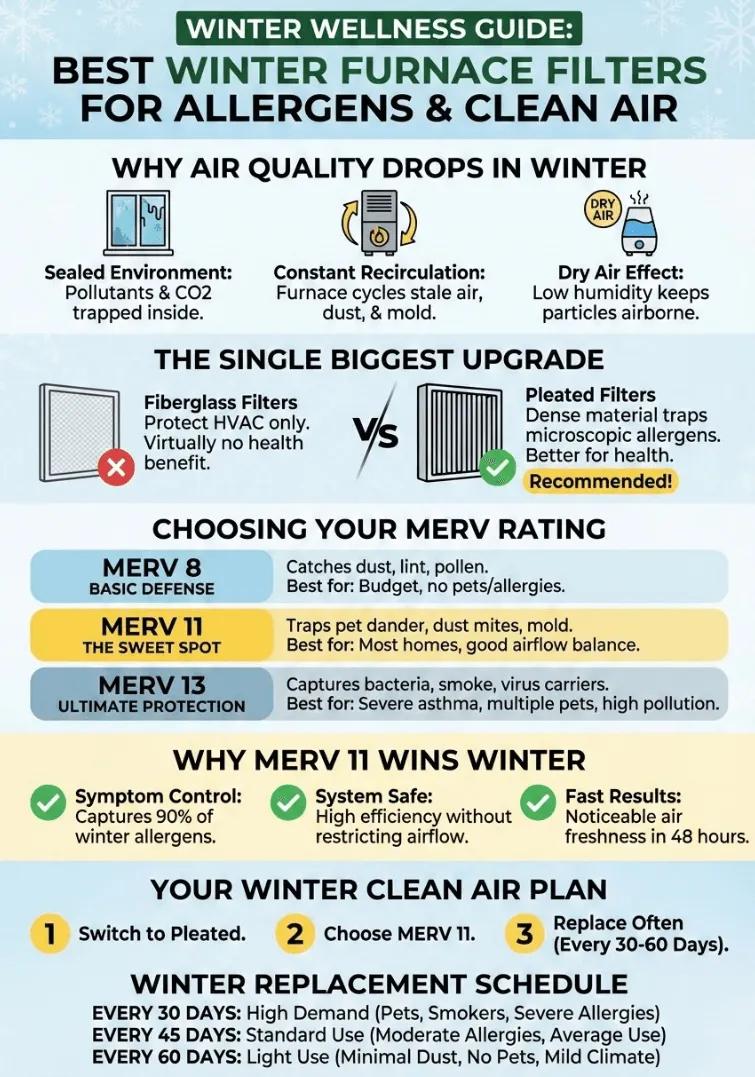
Winter is the toughest season for indoor air quality. Windows stay sealed. Your furnace recirculates the same air nonstop. Dust mites, pet dander, and mold spores have nowhere to go but through your living spaces.
MERV 11 is where real relief starts. It's the threshold where homeowners consistently notice a tangible difference. Below it, improvements are subtle. At MERV 11 and above, they're unmistakable.
Pleated beats fiberglass — every time. Switching from a flat fiberglass panel to a pleated filter at any MERV level is the single highest-impact upgrade you can make for winter air quality.
A clogged filter costs you money and comfort. Restricted airflow. Higher energy bills — up to 15% higher. Harder-working equipment. Shorter system lifespan. All from a filter left in too long.
Replace every 30–60 days in winter. The 90-day guideline isn't enough during peak heating season. A fresh filter on a consistent schedule outperforms a higher-rated filter left to clog.
Your home becomes a sealed environment the moment temperatures drop. Windows stay shut, weatherstripping tightens, and your furnace cycles air through the same closed loop for months. That constant recirculation keeps allergens like dust mites, pet dander, mold spores, and fine particulate matter suspended and moving through every room rather than settling or venting out.
Dry winter air compounds the problem. Lower humidity means dust particles stay airborne longer and irritate nasal passages more easily. Add in the fact that most families spend significantly more time indoors during cold months, and total allergen exposure climbs dramatically — even if your home feels clean on the surface.
Your furnace filter is the single point of defense in this cycle. Every time your system pulls air through the return vent, that filter either captures those particles or sends them right back into your living space.
Filtration performance comes down to three factors working together: MERV rating, filter construction, and airflow compatibility with your specific system.
MERV rating measures a filter's ability to capture particles of different sizes. For allergen control, the range that matters most falls between MERV 8 and MERV 13 — but the differences within that range are significant. MERV 8 handles basic household dust and lint. MERV 11 captures finer particles like pet dander, dust mite debris, and mold spores. MERV 13 filters trap bacteria, smoke particles, and even some virus carriers.
Filter construction matters just as much as the rating printed on the box. From our manufacturing floor, we can tell you that a pleated filter with consistent, tightly spaced folds delivers dramatically better performance than a flat fiberglass panel — even at the same MERV rating. More pleats mean more surface area, which means more particle capture without choking airflow. Fiberglass filters exist to protect your equipment, not your lungs.
Airflow balance is where most homeowners make mistakes. A filter that captures everything but restricts airflow forces your furnace to work harder, drives up energy costs, and can shorten equipment life. The right filter matches your system's capacity — and for most residential HVAC systems, that ceiling sits at MERV 13.
For households dealing with seasonal allergies, pet sensitivities, or family members with asthma, MERV 11 to MERV 13 pleated filters deliver the most meaningful relief.
MERV 11 is the practical sweet spot for most allergy-prone homes. It captures the particles responsible for the majority of indoor allergy symptoms — pollen fragments, pet dander, dust mite allergens, and mold spores — while maintaining strong airflow in virtually any residential system. In our experience working with millions of customers, MERV 11 is where homeowners first notice a tangible difference in how their home feels and how they breathe.
MERV 13 is the right choice when allergies are severe or when household members have respiratory conditions like asthma. It filters finer particles including smoke, smog, and some bacteria. One thing we've learned from customer feedback: homes that upgrade from MERV 8 directly to MERV 13 often report the most dramatic improvement — less dust on surfaces, fewer morning allergy symptoms, and noticeably fresher air within days.
If your home has pets, smokers, or sits in an area with poor outdoor air quality, MERV 13 pays for itself in comfort alone.
Allergy relief and general air cleanliness overlap, but they aren't identical goals. Clean air in winter also means reducing fine dust that settles on furniture, eliminating lingering cooking and household odors, and cutting down on particles that make indoor air feel stale.
Winter running cycles push more air through your system per day than milder seasons, which accelerates dust buildup on everything — your filter included. A pleated MERV 11 or MERV 13 filter handles this heavier load more effectively than lower-rated alternatives because the increased surface area from pleating absorbs the extra volume without clogging prematurely.
The result is less dust on shelves and electronics, reduced irritation for eyes and sinuses, and a home that genuinely feels fresher despite being buttoned up against the cold for months.
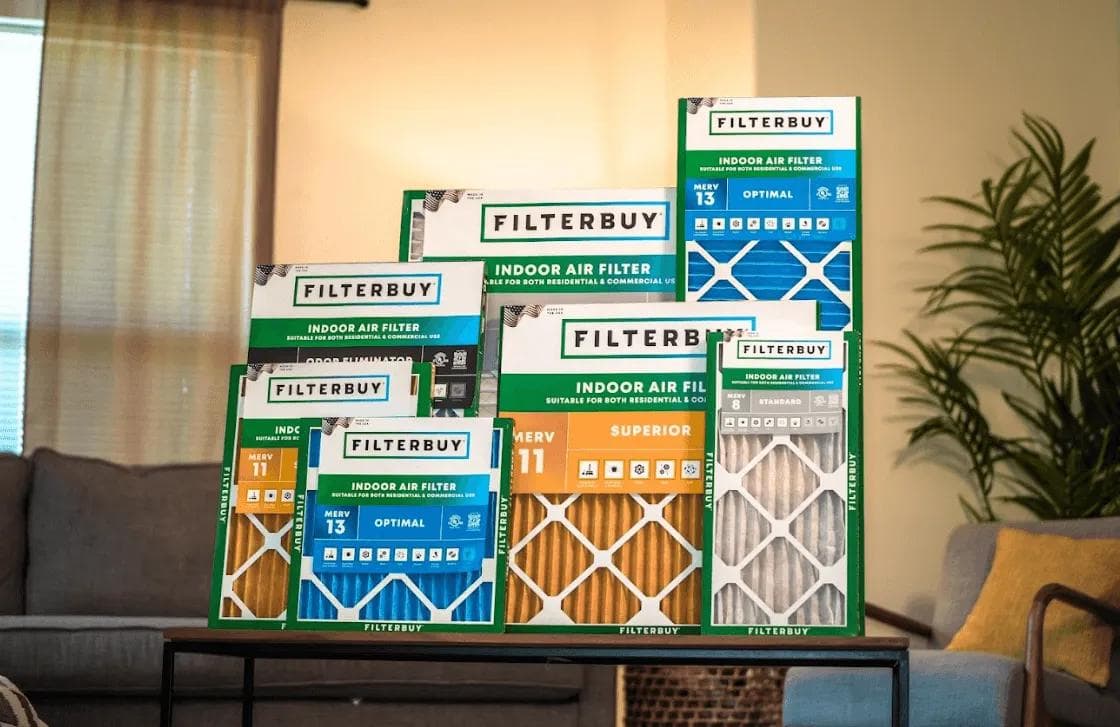
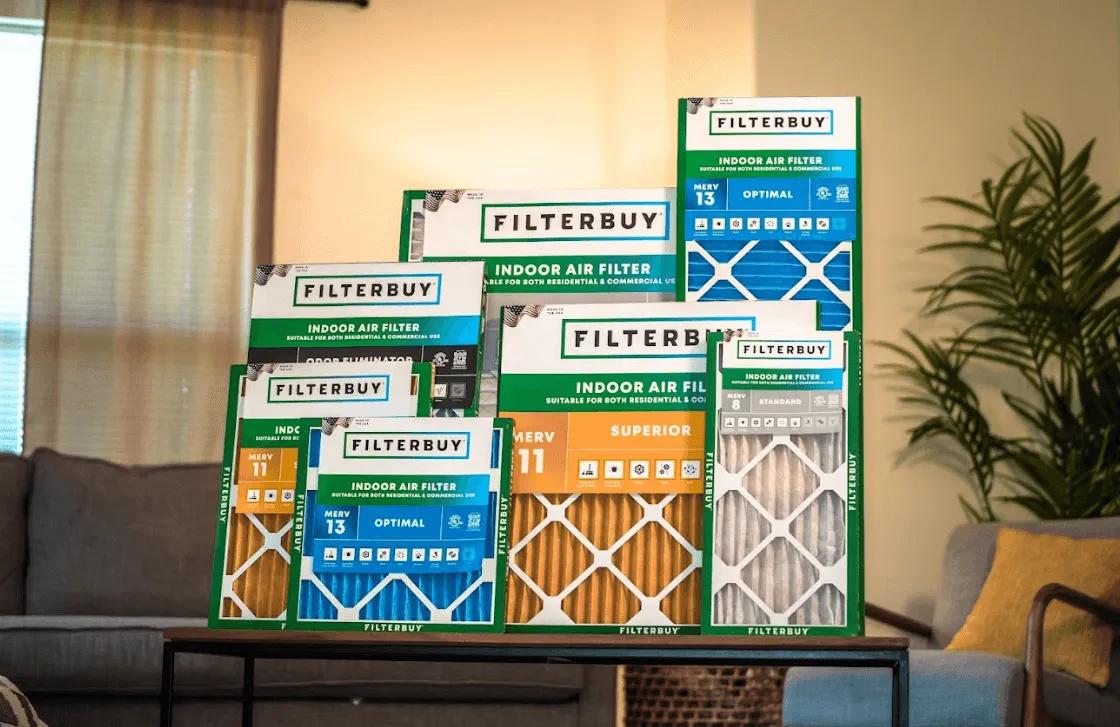
MERV 8 Pleated — Solid baseline protection for homes without allergy concerns. Captures common household dust, lint, and larger pollen particles. Best for budget-conscious households with no pets or respiratory sensitivities. Reliable airflow performance across all residential systems.
MERV 11 Pleated — The best all-around choice for winter. Traps pet dander, dust mite debris, mold spores, and finer pollen particles. Works well in virtually every residential HVAC setup. This is the filter we recommend most often to customers looking for a noticeable improvement without overcomplicating the decision.
MERV 13 Pleated — Maximum residential filtration for homes that need it. Captures smoke, smog particles, bacteria, and the finest allergens. Ideal for allergy and asthma sufferers, homes with multiple pets, or areas with wildfire smoke or pollution concerns. Verify your system handles MERV 13 — most modern residential furnaces do without issue.
Winter demands more from your filter than any other season. Your heating system runs longer cycles, processes more air volume daily, and recirculates particles that would normally escape through open windows in warmer months.
Our general winter guideline is every 30 to 60 days, but several household factors shorten that window. Homes with pets, especially dogs and cats that shed heavily, should lean toward the 30-day mark. The same applies if anyone in the home smokes, if you live in a dusty area, or if your system runs nearly continuously in extreme cold.
The signs your filter needs replacing are straightforward: visible dust buildup on the filter media, reduced airflow from vents, rooms that take longer to heat, or a spike in allergy symptoms after a period of improvement. When in doubt, pull the filter and hold it up to light — if you can't see through it, it's done working for you.
Setting up auto-delivery on a schedule that matches your household conditions eliminates the guesswork and ensures you always have a fresh filter ready when your current one reaches capacity.
A quality furnace filter is the foundation, but a few complementary steps maximize your results. Keep indoor humidity between 30 and 50 percent — too low and airborne dust increases, too high and you invite mold growth. Ensure all supply and return vents remain open and unblocked by furniture or curtains, since restricted airflow undermines even the best filter. Clean return vent covers and registers monthly during winter to prevent accumulated dust from bypassing your filter. In high-traffic rooms or bedrooms where allergy sufferers sleep, a portable air purifier adds a secondary layer of protection that your central system can't match alone.
"After manufacturing millions of furnace filters and tracking real customer feedback across every season, we've consistently found that the biggest jump in winter comfort isn't moving from MERV 8 to MERV 13 — it's simply moving from a flat fiberglass panel to a quality pleated filter at any MERV level. That single upgrade changes how a home feels within 48 hours."
At Filterbuy, we're obsessed with helping you make the smartest possible decision for your home's air quality — especially during winter when your furnace is working overtime and allergens have nowhere to escape. After manufacturing millions of filters and helping homeowners navigate exactly this decision, we know the right filter starts with the right information. These seven authoritative resources will give you the same foundation our team relies on every day.
If there's one thing we've learned from over a decade of manufacturing filters at every MERV level, it's that most homeowners don't fully understand what these ratings mean — and that knowledge gap leads to buying the wrong filter. The EPA's official MERV explainer breaks down how ratings are derived from ASHRAE-standardized testing and what particle sizes each level actually captures. It's the same framework we use when recommending the right filter for your household, and it's the best starting point for understanding why the EPA recommends MERV 13 as the residential filtration target.
Source: U.S. Environmental Protection Agency — "What Is a MERV Rating?" https://www.epa.gov/indoor-air-quality-iaq/what-merv-rating
One of the most common questions our customers ask is whether a higher-MERV filter will work in their system without causing problems. This EPA consumer guide answers that question directly, covering how to choose the right filter type for your specific HVAC setup without restricting airflow. It confirms what we tell our customers every day: upgrading your furnace filter is one of the single most effective steps you can take for cleaner indoor air during winter, when your system runs continuously and every cycle pushes allergens through your home.
Source: U.S. Environmental Protection Agency — "Guide to Air Cleaners in the Home" https://www.epa.gov/indoor-air-quality-iaq/guide-air-cleaners-home
Here's something we see firsthand on our manufacturing floor: two filters with the same MERV rating can perform very differently depending on construction quality, pleat count, and surface area. This EPA technical summary explains exactly why — breaking down the real-world differences between pleated media filters, HEPA filtration, and electrostatic technologies. It's essential reading for understanding why a well-constructed pleated filter consistently outperforms cheaper alternatives, even when the MERV number on the label matches.
Source: U.S. Environmental Protection Agency — "Residential Air Cleaners: A Technical Summary, 3rd Edition" https://www.epa.gov/sites/default/files/2018-07/documents/residential_air_cleaners_-_a_technical_summary_3rd_edition.pdf
Your furnace filter is the first line of defense, but it's not the only one. The Asthma and Allergy Foundation of America outlines the specific indoor allergens — dust mites, pet dander, mold spores, and cockroach allergens — that intensify during winter when your home is sealed up and your heating system recirculates the same air hundreds of times a day. We recommend this resource to every customer dealing with winter allergy symptoms because it provides evidence-based steps for reducing exposure beyond filtration, including humidity control and bedding management that make your filter's job easier and more effective.
Source: Asthma and Allergy Foundation of America — Asthma Triggers
https://aafa.org/asthma/asthma-triggers-causes/
After working with millions of customers, we can tell you that even the best furnace filter can't protect your family if it's clogged and overdue for replacement. ENERGY STAR's HVAC efficiency guide explains exactly why: a dirty filter forces your furnace to work harder, wastes energy, and can lead to premature system failure. Their practical winter maintenance schedule — check monthly, replace at minimum every three months — aligns with what we recommend, though homes with pets, heavy dust, or allergy concerns should lean toward every 30 to 60 days during peak heating season. This is also why we offer auto-delivery — so you always have a fresh filter ready when your current one reaches capacity.
Source: ENERGY STAR — "Heat & Cool Efficiently" https://www.energystar.gov/saveathome/heating-cooling
Most homeowners don't realize that their heating system doesn't just move warm air — it moves every biological contaminant floating in that air along with it. The EPA details how mold, dust mites, bacteria, and pet dander circulate through HVAC systems and why maintaining indoor humidity between 30 and 50 percent is critical for keeping allergen growth in check. This resource connects the dots between filter maintenance, ventilation habits, and the biological pollutants most responsible for the winter allergy symptoms that send customers searching for better filtration in the first place.
Source: U.S. Environmental Protection Agency — "Biological Pollutants' Impact on Indoor Air Quality" https://www.epa.gov/indoor-air-quality-iaq/biological-pollutants-impact-indoor-air-quality
We always tell customers: the best filter is one your system can actually handle. The DOE's residential furnace guide covers how your system's design, AFUE efficiency rating, and airflow capacity determine which MERV-rated filter your furnace can accommodate without performance loss. Understanding these specifications prevents the mistake we see too often — installing a high-MERV filter that restricts airflow and forces the system to work harder during winter's heaviest heating cycles. For most modern residential furnaces manufactured in the last 15 to 20 years, MERV 13 works without issue, but this resource helps you verify that for your specific setup.
Source: U.S. Department of Energy — "Furnaces and Boilers" https://www.energy.gov/energysaver/furnaces-and-boilers
These three statistics from leading U.S. government agencies and health organizations back up what we see every day, manufacturing filters and working with homeowners nationwide.
The EPA reports that Americans spend approximately 90% of their time indoors, where pollutant concentrations are often 2 to 5 times higher than outdoor levels.
During winter, those numbers climb even higher because:
Windows stay sealed for months, eliminating natural ventilation
Heating systems recirculate the same trapped air continuously
Pollutants accumulate with no pathway to escape
Your furnace filter is the single barrier between your family and those concentrated indoor pollutants. A basic fiberglass panel isn't enough during the season when exposure is at its peak.
Source: U.S. Environmental Protection Agency — "Indoor Air Quality" https://www.epa.gov/report-environment/indoor-air-quality
The Asthma and Allergy Foundation of America reports that 8 out of 10 people in the U.S. are exposed to dust mites, and 6 out of 10 are exposed to cat or dog dander.
What this means for winter air quality:
Dust mite allergens are a leading trigger for year-round allergy and asthma symptoms
Winter's dry, recirculated air keeps these microscopic particles airborne longer
Pet dander concentrations increase as animals spend more time indoors
This is the primary reason we recommend MERV 11 or higher for allergy-prone households. Based on our manufacturing experience, that's the threshold where filters begin capturing the dust mite debris and dander particles responsible for most indoor allergy symptoms.
Source: Asthma and Allergy Foundation of America — "Control Indoor Allergens to Improve Indoor Air Quality" https://aafa.org/allergies/prevent-allergies/control-indoor-allergens/
The U.S. Department of Energy confirms that replacing a dirty, clogged filter with a clean one can reduce HVAC energy consumption by 5% to 15%.
A clogged filter during winter doesn't just hurt air quality — it costs you money:
Your furnace runs longer cycles, consuming more energy per day
Restricted airflow forces the blower motor to work harder
Equipment wear accelerates, shortening your system's lifespan
Heating costs rise steadily as filter performance degrades
Our winter recommendation: check your filter every 30 days during peak heating season. A fresh filter at the right interval protects both your family's health and your energy budget — and it's exactly why we built our auto-delivery program to take the guesswork out of replacement timing.
Source: U.S. Department of Energy — "Maintaining Your Air Conditioner" https://www.energy.gov/energysaver/maintaining-your-air-conditioner
After over a decade of manufacturing furnace filters and analyzing real-world performance data from millions of homes, we've arrived at a conclusion that might surprise you: the biggest winter air quality failures aren't caused by choosing the wrong MERV rating. They're caused by forgetting the filter entirely.
A homeowner who installs a MERV 8 pleated filter and replaces it every 30 days will breathe cleaner air all winter than someone who installs a MERV 13 and lets it clog for four months. Consistency beats perfection every time.
MERV 11 is the inflection point. Below it, improvements are subtle. At MERV 11 and above, customers consistently report a noticeable difference in how their home feels and how they breathe during winter.
Pleated construction matters more than the number on the label. The performance gap between a pleated filter and a flat fiberglass panel is wider than the gap between most MERV ratings. That single upgrade is the highest-impact change any homeowner can make.
Winter is harder on filters than any other season. More run time, more air volume, more recirculated allergens per cycle. The 90-day replacement guideline that works in milder months isn't aggressive enough for peak heating season. Thirty to sixty days is the window that actually protects your air quality.
If you want cleaner winter air without overthinking it, three simple decisions will get you there:
Switch from fiberglass to pleated. If you're still using a flat fiberglass panel, upgrading to any pleated filter is the single biggest improvement you can make.
Choose the right MERV rating. MERV 11 for most homes. MERV 13 if allergies are serious or household members have respiratory conditions.
Replace on a winter schedule. Check every 30 days. Replace every 30 to 60 days during peak heating months. Subscribe to auto-delivery so a clogged filter never sits in your system longer than it should.
These three steps will do more for your family's winter comfort and health than any other single product upgrade — and after manufacturing millions of filters, that's a statement we stand behind completely.
Five steps. Less than 15 minutes. Noticeable improvement in your winter air quality.
Pull the filter out and hold it up to the light
If you can't see through the media, it's done working for you
Note the size printed on the frame for your replacement order
No allergies, no pets → MERV 8 pleated
Mild allergies or 1–2 pets → MERV 11 pleated
Severe allergies, asthma, multiple pets, or smokers → MERV 13 pleated
Still using a flat fiberglass panel? Switching to any pleated filter is your first priority — regardless of MERV level.
Most residential furnaces built in the last 15 to 20 years handle MERV 13 without issue. Quick ways to confirm:
Check your system's owner's manual for the maximum filter rating
Look for the manufacturer's specifications on the unit itself
When in doubt, start with MERV 11 — it works in virtually every residential setup
The 90-day guideline isn't aggressive enough for the heating season. Use this winter cadence instead:
Every 30 days → homes with pets, smokers, heavy dust, or severe allergies
Every 45 days → homes with moderate allergies or average use
Every 60 days → homes with no allergies and minimal dust
Pro Tip: Write the install date on the filter frame with a marker. No guessing. No forgetting.
The most common filtration mistake we see isn't choosing the wrong filter — it's running a clogged one too long because a replacement wasn't on hand.
Filterbuy auto-delivery solves this:
Ships your exact size and MERV rating on your schedule
A fresh filter is always ready when your current one reaches capacity
No missed replacements during the months your system works hardest
→ Find your filter size at Filterbuy and choose the MERV rating that fits your home.
A: MERV 11 pleated is the sweet spot for most allergy-prone homes. After manufacturing filters at every MERV level and tracking millions of customer interactions, MERV 11 is where we consistently see homeowners report a real, tangible difference.
Why MERV 11 works best for most households:
Captures dust mite debris, pet dander, mold spores, and fine pollen
Maintains strong airflow in virtually any residential system
Our most reordered filter during heating season
When to step up to MERV 13:
Severe allergies or asthma in the household
Multiple shedding pets
Smokers or poor outdoor air quality in your area
Below MERV 11, improvements are subtle. At MERV 11 and above, they're unmistakable.
A: Winter allergies aren't driven by outdoor pollen. They're fueled by what's already trapped inside your sealed home. The moment your furnace kicks on, it recirculates indoor allergens through every room on a continuous loop.
The indoor allergens causing your winter symptoms:
Dust mites — thrive in bedding, carpets, and upholstered furniture year-round
Pet dander — concentrations increase as animals spend more time indoors
Mold spores — persist in bathrooms, basements, and HVAC systems
Fine particulate matter — stays airborne longer in dry, heated air
The EPA reports indoor pollutant levels run 2 to 5 times higher than outdoor concentrations. That gap widens in winter when ventilation drops to near zero. We've talked to countless customers who assumed they had a winter cold for weeks before realizing their furnace filter was the actual problem.
A: For most homes, no. As the people who actually build these filters, here's what we've learned: airflow restriction is a construction quality problem, not a MERV rating problem.
What causes restriction issues:
Cheap, loosely constructed filters with low pleat counts
Poor-quality media that clogs prematurely
Filters left in place well past their effective lifespan
What prevents restriction issues:
Quality pleated construction with consistent, tightly spaced folds
Sufficient surface area to balance capture efficiency with airflow
Regular replacement on a winter-appropriate schedule
System compatibility at a glance:
Furnaces built in the last 15–20 years → handle MERV 13 without issue
Older or undersized systems → MERV 11 delivers excellent allergen protection with minimal resistance
Unsure? → check your owner's manual for maximum recommended filter rating
A: More often than the box says. The 90-day guideline is based on average conditions across all seasons. Winter isn't average — your furnace runs longer, moves more air, and recirculates more allergens per cycle.
Our recommended winter replacement schedule based on real customer data:
Every 30 days → homes with pets, smokers, heavy dust, or severe allergies
Every 45 days → homes with moderate allergies or average use
Every 60 days → homes with no allergies and minimal dust
Two habits that eliminate guesswork:
Write the install date on the filter frame with a permanent marker. Takes two seconds. Prevents running a clogged filter for weeks past its useful life.
Subscribe to auto-delivery so a fresh filter arrives before the old one becomes the problem.
Quick check: pull your filter and hold it up to light. Can't see through it? It's done.
A: We manufacture both — and it's not close. Here's the difference in plain terms:
Fiberglass filters are designed to:
Protect your HVAC equipment from large debris like lint and carpet fibers
That's it. They were never built to protect your lungs.
Pleated filters are designed to:
Capture microscopic allergens — dust mite particles, pet dander, mold spores, fine dust
Provide dramatically more surface area for particle capture at every MERV level
Maintain the airflow your system needs while filtering what fiberglass can't touch
What we see across millions of shipments when customers upgrade from fiberglass to pleated MERV 11 for the first time:
Less dust on furniture within 48 hours
Fewer morning allergy symptoms within the first week
Air that genuinely feels and smells different
It's the single upgrade we recommend most because the improvement is immediate, unmistakable, and requires nothing more than swapping one filter for another.
Stop letting winter's sealed-up air work against your family's health — find your exact filter size, choose the right MERV rating for your household, and get it delivered to your door at Filterbuy. Better winter air is one filter change away, and we manufacture every option you need to breathe easier all season long.
