February 26, 2026
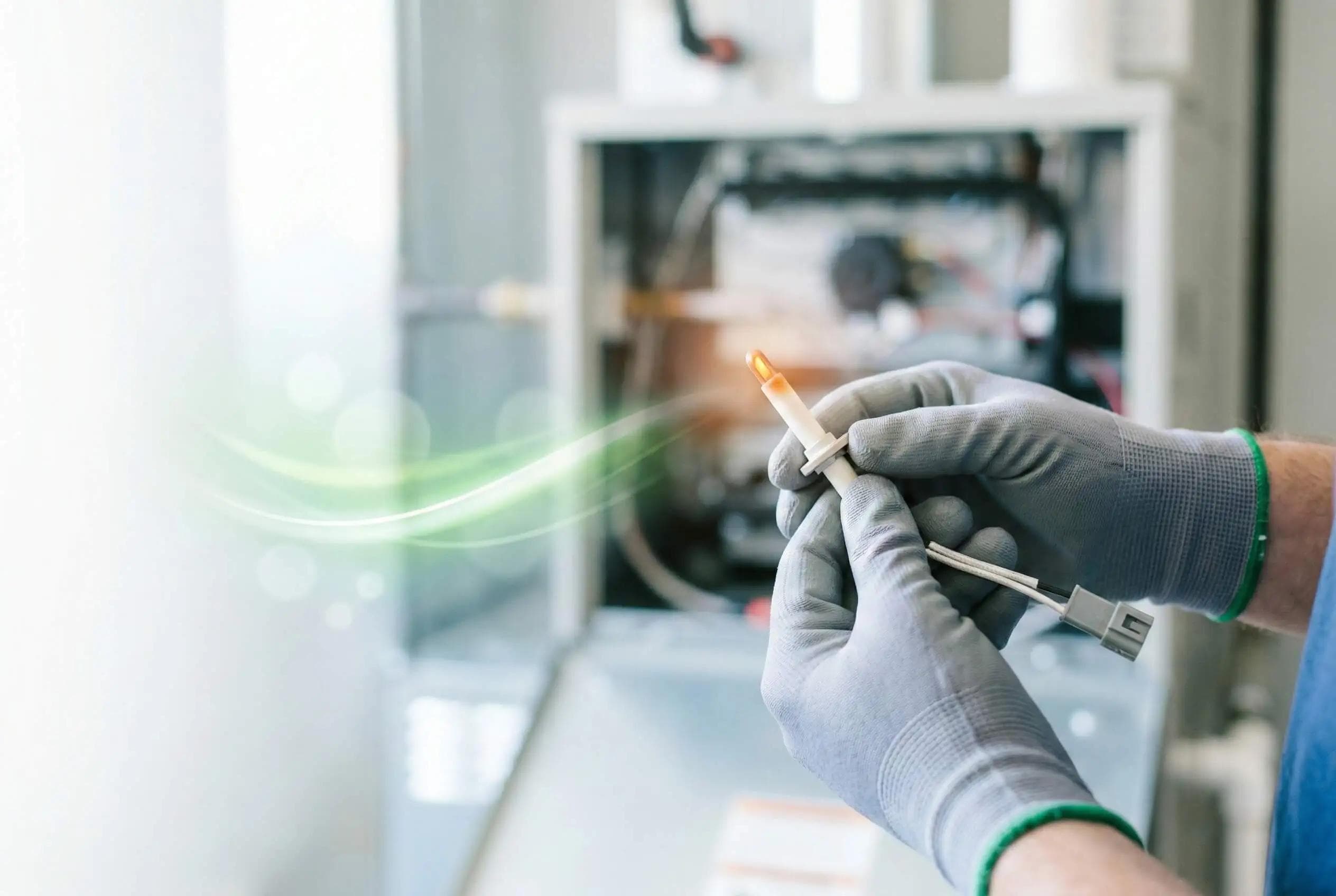
Woke up to a freezing house? If your furnace clicks but won't produce heat, you might have a faulty ignitor. This small but crucial part is the spark that ignites your furnace, and when it fails, your entire heating system goes cold. While ignitors wear out over time, the most common cause of premature failure is restricted airflow from a dirty filter. This guide will cover the signs of a failing ignitor, replacement costs, and when you can safely handle it yourself. We’ll also explain how using a high-quality pleated air filter can prevent this problem from happening in the first place.
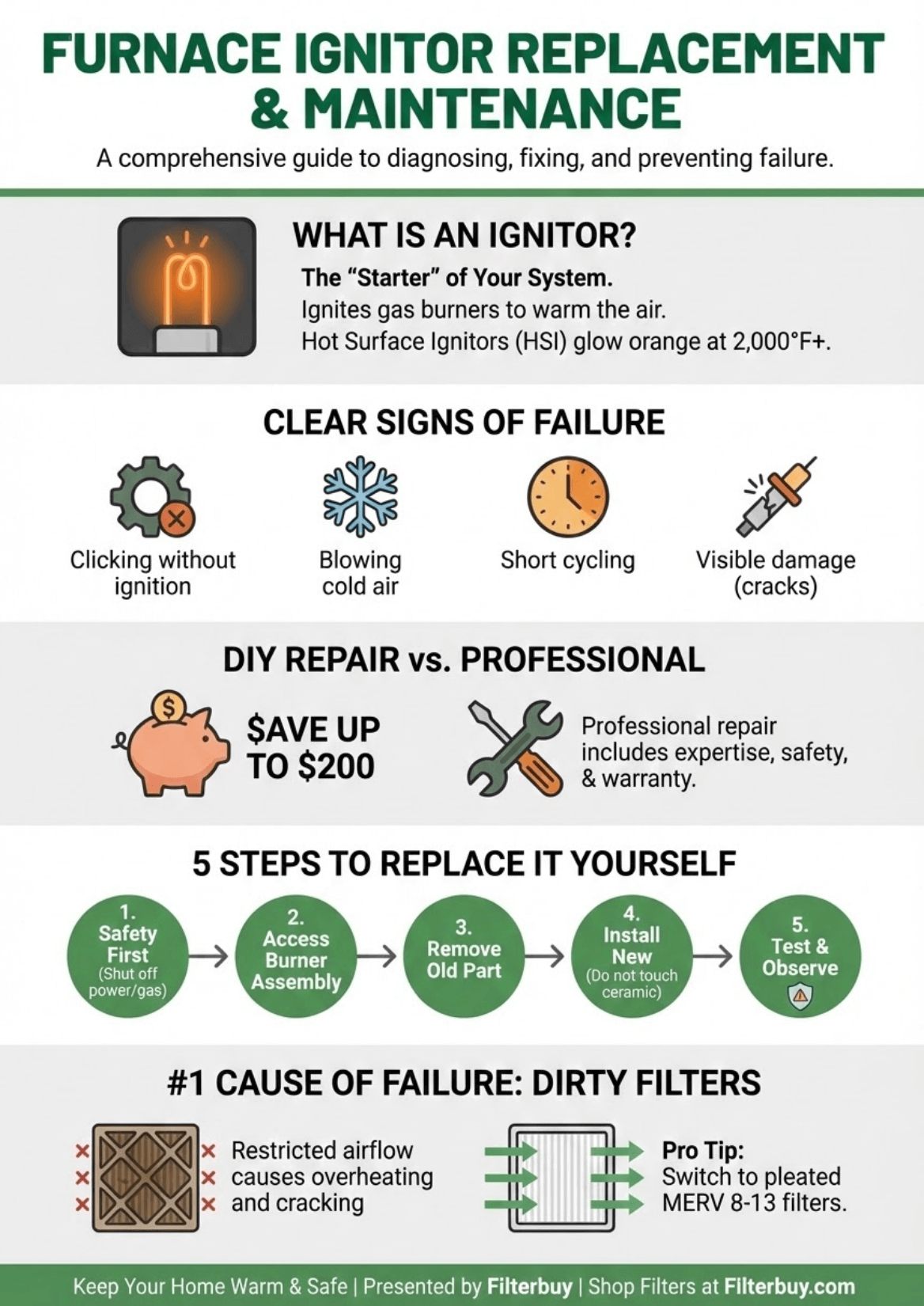
Signs it's failing: Furnace clicks but won't fire up, blows cold air, or ignitor glows weakly/not at all. Most last 4–7 years.
Costs: $30–$80 for the part | $150–$300 with professional installation.
DIY basics: Turn off power, locate ignitor near burners, disconnect wiring, swap the part (don't touch the ceramic tip with bare fingers), and reassemble. It's a manageable repair for handy homeowners.
Pro tip: A clogged air filter makes your ignitor work harder. Regular filter changes help your entire heating system last longer.
Ignitor Importance: The ignitor is a vital component of your furnace, responsible for starting the heating process.
Signs of Failure: Common signs of a failing ignitor include no heat, frequent cycling of the furnace, and unusual clicking sounds.
Causes of Failure: Restricted airflow from a dirty air filter is the leading cause of premature ignitor failure.
Prevention: Using a high-quality pleated air filter from Filterbuy and maintaining clean filters can significantly extend the lifespan of your ignitor.
DIY vs. Professional Help: While some ignitor replacements can be handled safely by homeowners, it's important to recognize when professional assistance is necessary.
Think of your furnace ignitor as the starter on a car or the pilot light on an old stove, but smarter and more efficient. Its sole job is to ignite the gas burners so your heat exchanger can warm up the air circulating through your home.
Most modern furnaces use Hot Surface Ignitors (HSI). These work like a lightbulb filament or a toaster element. When your thermostat calls for heat, the ignitor receives an electrical current and glows bright orange—reaching temperatures over 2,000°F to light the gas. Older systems might use a pilot light (a small, continuously burning flame) or a spark ignitor (which creates a spark like a grill lighter), but HSIs are the industry standard today because they are safer and more energy-efficient.
Ignitors don't usually quit without giving you a few hints first. If you catch these signs early, you can schedule a repair before you're left in the cold.
Furnace won’t start: The most obvious sign. The blower might run, but the air never gets warm.
Clicking or humming with no ignition: You hear the furnace go through its startup sequence. A click, a hum from the inducer motor but it never produces that satisfying "whoosh" of the burners lighting.
Frequent shutdown cycles (Short Cycling): Your furnace turns on, runs for a minute or two, and shuts off before reaching the set temperature. This often happens because the safety sensors detect that ignition failed.
Cold air blowing: The fan is working, but the heating element isn't.
Visible cracks or burn marks: If you look inside your furnace panel, a bad hot surface ignitor may have visible white cracks or dark, blistered spots on the ceramic element.
Pro Tip: Restricted airflow accelerates ignitor failure. When a dirty filter blocks air, heat builds up inside the system, stressing components like the ignitor. This is why switching to a clean, pleated MERV 8–13 filter is one of the best ways to protect your furnace parts.
If your ignitor is toast, your next question is likely, "How much is this going to hurt my wallet?" The cost depends largely on whether you hire a pro or tackle it yourself.
Here is a typical breakdown of what homeowners pay:
| Expense Category | Estimated Cost |
|---|---|
| DIY (Parts Only) | $20 – $100 |
| Professional Labor | $120 – $250 |
| Total Professional Repair | $150 – $350 |
The DIY Savings: You can save anywhere from $100 to $200 by doing the job yourself. However, you are paying for a technician's expertise, safety checks, and warranty on labor when you hire a pro.
Can you replace a furnace ignitor yourself? For many handy homeowners, the answer is yes. It is generally considered a beginner-to-intermediate repair. However, it involves working with electricity and natural gas, so caution is non-negotiable.
Go DIY if:
You are comfortable using a screwdriver and a multimeter.
You can safely shut off gas and power to the unit.
You have the patience to source the exact replacement part (Hot Surface Ignitor or Pilot Ignitor) based on your furnace model number.
Call a Professional if:
You are unsure how to shut off the gas or power.
You cannot easily locate the ignitor.
Your furnace is still under warranty (DIY repairs often void warranties).
You suspect the problem might be the control board rather than the ignitor itself. Improper installation can short out the control board, turning a $50 repair into a $500 one.
If you’ve decided to handle the repair yourself, follow these research-backed steps to do it safely.
Tools needed: Screwdriver (Phillips/Flathead), 1/4" or 5/16" nut driver, and clean gloves (latex or nitrile).
Turn Off Power and Gas: Safety first. Flip the furnace switch to "OFF" or turn off the circuit breaker. Locate the gas valve on the pipe leading to the furnace and turn it perpendicular to the pipe to shut off the gas supply.
Remove the Access Panel: Unscrew or unclip the furnace door to reveal the burner assembly.
Locate the Ignitor: Look for a component with two wires connected to a ceramic base, usually positioned right near the gas burners.
Disconnect Wires: Unplug the wire harness connecting the ignitor to the furnace.
Remove the Old Ignitor: Unscrew the mounting screw(s) holding the ignitor bracket in place. Gently pull the old ignitor out.
Install the New Ignitor (CRITICAL STEP): Put on your clean gloves. Do not touch the gray ceramic element of the new ignitor with your bare skin. The oils from your fingers can create hot spots that cause the new part to shatter immediately upon heating. Carefully slide the new ignitor into place and tighten the screws.
Reconnect and Test: Plug the wires back in, replace the access panel, and turn the power and gas back on. Adjust your thermostat to call for heat and watch for that healthy orange glow.
To better understand your system, here is a quick glossary of the parts typically involved in ignition issues:
Hot Surface Ignitor (HSI): The most common type. A ceramic rod that glows red-hot to light the gas.
Pilot Ignitor: Found in older systems. Uses a spark to light a small pilot flame, which then lights the main burners.
Flame Sensor: Often confused with the ignitor. This is a metal rod that confirms a fire is actually burning. If it’s dirty, it will shut the furnace down even if the ignitor works perfectly.
Dust buildup caused by poor filtration can coat these sensitive parts, causing them to overheat or fail to read signals correctly.
You might be wondering, "What does an air filter have to do with my ignitor?" The answer is: everything.
Your furnace relies on airflow to regulate its temperature. When you use a cheap fiberglass filter or let a filter get clogged with dust and pet dander, airflow is restricted. This causes the temperature inside the furnace cabinet to spike.
This excess heat puts immense thermal stress on the ignitor and the heat exchanger. Over time, this repeated overheating causes the ignitor's ceramic material to crack and fail prematurely.
The Solution: Switch to Filterbuy’s pleated MERV 8, 11, or 13 filters. Unlike flat fiberglass filters that let debris pass through, pleated filters have a larger surface area to trap dust while maintaining proper airflow.
MERV 8: Great for standard filtration and airflow.
MERV 13: Ideal for homes with allergies, trapping finer particles without choking the system (provided you change them regularly).
By maintaining proper airflow, you reduce the strain on your furnace’s components, extending the life of your ignitor and saving you from emergency repairs.
A furnace ignitor is a small part with a big job. Whether you hear clicking without heat or feel cold air blowing from your vents, addressing a failing ignitor early is key to staying warm. While replacing it can be a rewarding DIY project, understanding why it failed is just as important.
Often, the root cause is a system struggling to breathe. The simplest, most cost-effective way to prevent ignitor failure is to stay on top of your air filter changes.
Ready to protect your furnace? Filterbuy offers high-quality, American-made pleated filters in MERV 8, 11, and 13 to protect your furnace and improve home air quality. Shop filters now.
For a DIY repair, the part typically costs between $20 and $100. If you hire a professional, expect to pay between $150 and $350 for parts and labor.
The most common signs are the furnace failing to blow hot air, clicking sounds during startup without ignition, frequent short cycling, or a tripped circuit breaker.
Yes, if you are comfortable working with basic tools and following safety instructions regarding gas and electricity. However, always handle the new ignitor with gloves to avoid damaging the fragile element.
Most Hot Surface Ignitors (HSI) last between 3 to 7 years. Silicon nitride ignitors tend to be more durable and can last longer than standard silicon carbide versions.
This usually indicates the ignitor is trying to engage but failing to get hot enough to light the gas. The system shuts off the gas valve as a safety precaution, resulting in the clicking sound of the relays opening and closing.
It is located inside the burner compartment, usually right in front of the gas burners. You will need to remove the furnace access panel to see it.
Common causes include normal wear and tear, power surges, and overheating caused by restricted airflow (often from dirty air filters). Touching the element with bare hands during installation can also cause immediate failure.
For a professional or a handy DIYer, the actual replacement usually takes about 30 to 60 minutes.
An ignitor creates the heat/spark to light the fire. A flame sensor detects the fire once it is lit. If the flame sensor is dirty, it will shut the furnace down seconds after it lights, thinking there is no flame.
Yes. A clogged filter restricts airflow, causing the furnace to overheat. This thermal stress can crack the ceramic element of the ignitor and lead to premature failure.
