Shop by

Warm air often comes from one simple fault. Warm air usually comes from one of four basics: a dirty filter, low refrigerant, a clogged coil, or an incorrect thermostat setting. Check these points before calling a technician.
Thermostat – Set it to Cool and drop the target 5 °F / 3 °C below the room reading. Change the batteries if the screen looks dim.
Air filter – Slide the filter out. If you can’t see light through it, put in a clean one. A clogged filter alone can rob an AC of most of its cooling power.
Outdoor coil – Turn the unit off, brush away leaves and dust, then rinse the fins with a garden hose. Let everything dry before you restart.
Breaker or fuse – Make sure the AC breaker is on. Reset it once if it has tripped.
Ice on the copper line - Switch the system off and run Fan Only for two hours. Ice points to low airflow or low refrigerant.
Still warm - Warm air at the vents means it’s time to call a licensed technician. The tech can look for leaks, refill refrigerants, and repair the motor or compressor.
The compressor moves refrigerant through the system. If it makes a sound but the air is still warm, check the filter and thermostat. If both are fine, call a technician. Compressor repairs are not DIY work.
Refrigerant moves indoor heat outdoors. A leak may leave frost on the thin copper line, create a hissing sound, or let only warm air blow. A licensed technician must repair the leak and recharge the refrigerant.
Weak airflow shows as faint air from the vents, ice on the coil, or a very hot outdoor unit. Replace the filter and rinse the outdoor coil. If airflow stays weak, have a technician test the fan motor.
The thermostat starts and stops the compressor. If something is wrong, do a quick check.
Always choose “Cool” as your settings.
Set it at least 5 °F below the room temperature.
If the thermostat screen is blank, install fresh batteries.
If the compressor still won’t start, have a technician recalibrate or replace the thermostat.
You still get warm air even after changing the filter and washing the coil.
You see ice on the indoor coil or on the copper line.
The outdoor unit makes a loud buzzing noise.
The AC breaker trips more than once.
You see oil spots or smell chemicals near refrigerant lines.
Any of these signs needs a licensed technician.

Keep your AC in shape with a few simple habits.
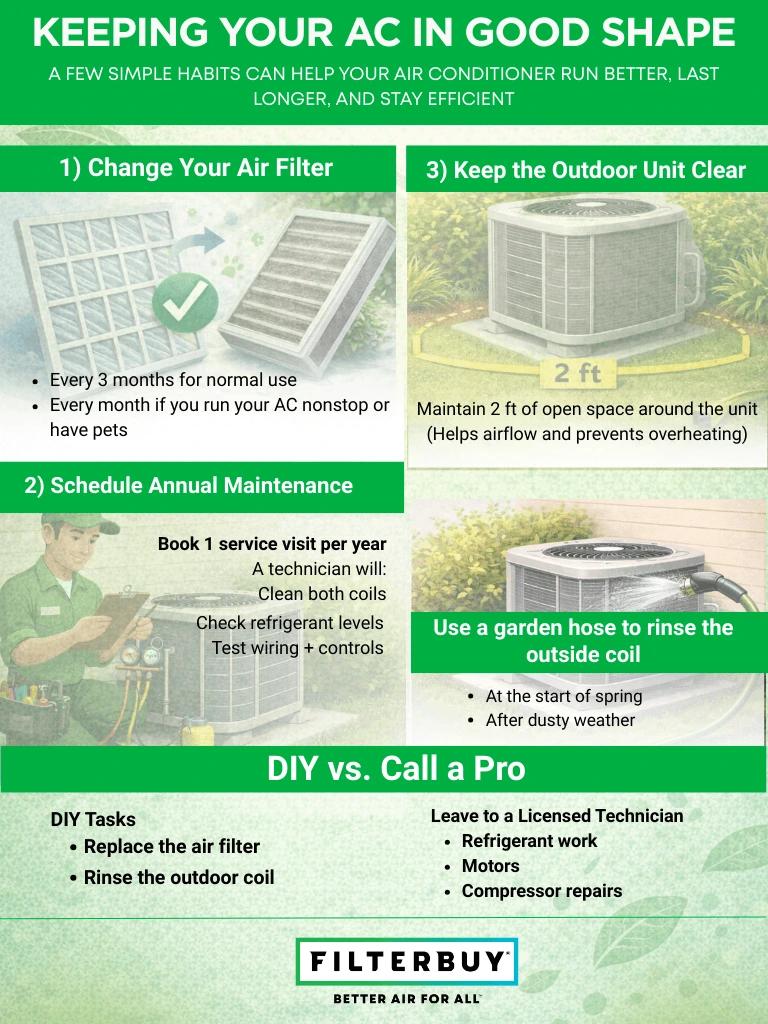
Change the filter every three months. If the AC runs day and night or you have pets, swap it each month instead.
Book one service visit a year. The technician will wash both coils, check the refrigerant level, and test the wiring and controls.
Keep two feet of clear space around the outdoor unit. Rinse the outside coil with a garden hose at the start of spring and after dusty weather.
You can handle filter changes and coil rinsing yourself. Leave any work on refrigerant, motors, or the compressor to a licensed technician.
Start with the return-air filter. If it’s clogged, replace it. Next, look for ice on the indoor copper line; thaw it by running Fan Only for two hours. If airflow is still weak, the blower motor or ducts may need professional service.
Likely causes are low refrigerant, a dirty outdoor coil, or a failed compressor. Clean the coil with a garden hose (power off first). If the air is still warm, call a licensed technician for leak testing or compressor repair.
Verify the thermostat is on Cool and set at least 5 °F (≈ 3 °C) below room temperature. Replace a dirty filter and clear debris from the outdoor coil. If that fails, low refrigerant or a worn compressor is probable and needs professional attention.
Check the circuit breaker or fuse, then replace thermostat batteries. If the compressor still won’t start, the start capacitor, contactor, or compressor itself may have failed, call an HVAC technician.
On many units it’s a small red or black button on the outdoor control panel. Turn off power at the breaker first, press the button, wait 30 seconds, then restore power.
Turn the thermostat Off, shut off the breaker, wait five minutes, then turn the breaker and thermostat back on. If the air is still warm after ten minutes, deeper issues need a professional.
No. Turn it off to prevent compressor damage, inspect the filter and coils, then decide whether you can fix the issue or need a technician.
Common reasons include a tripped breaker, a blown fuse, or a faulty thermostat. If power and settings are correct, the contactor, capacitor, or compressor may have failed and requires professional repair.

