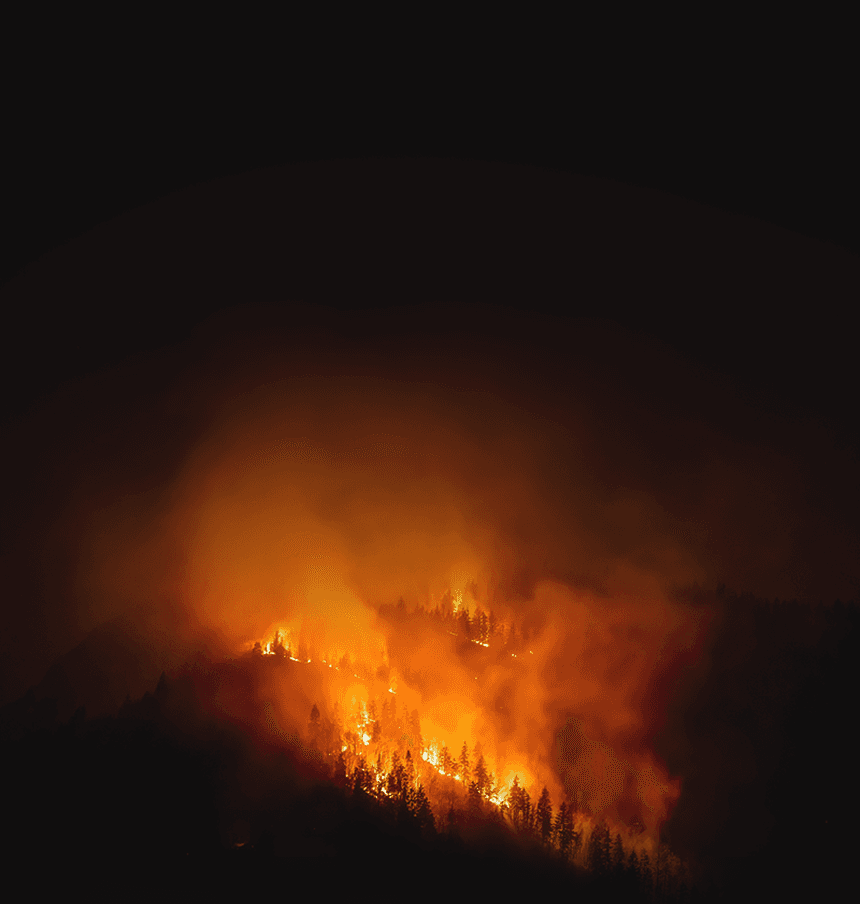
The moment a wildfire starts near you, you'll get an instant alert and simple tips to reduce your smoke exposure.
30xSmaller than a human hair
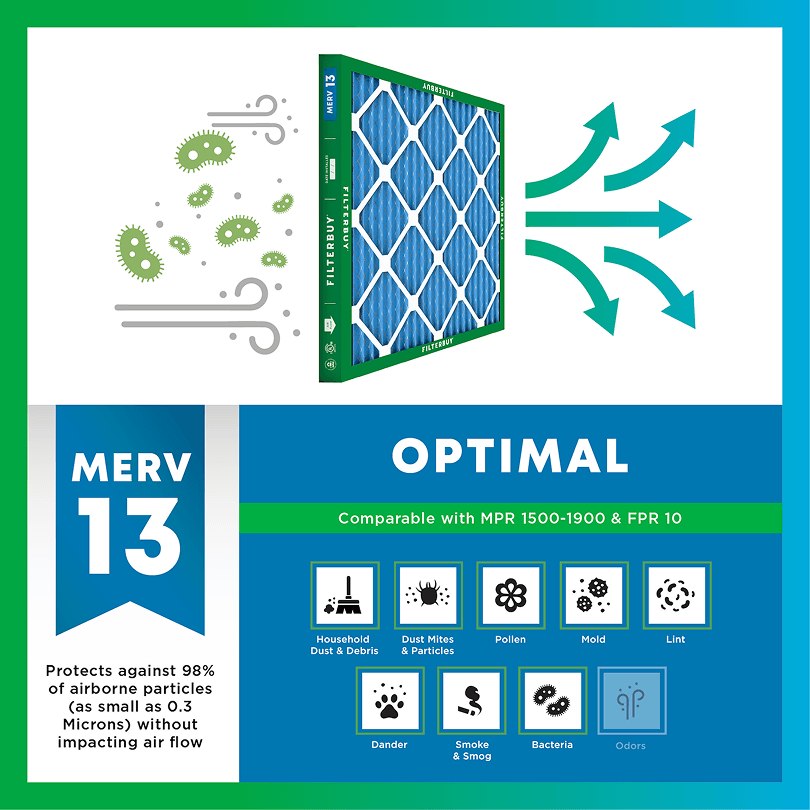
Fine enough to reach deep into the lungs. A MERV 13 is built to capture it.
It Doesn't Stay Local
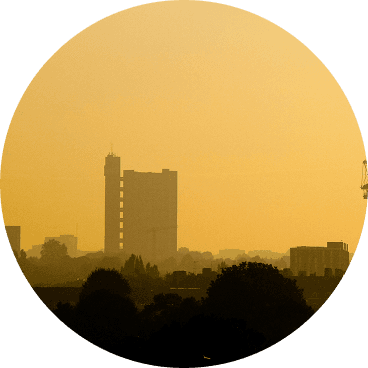
Smoke rides the wind far downwind — you can get smoky air with no fire nearby.
Simple steps to reduce indoor exposure.
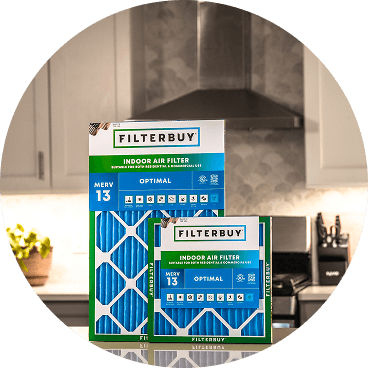
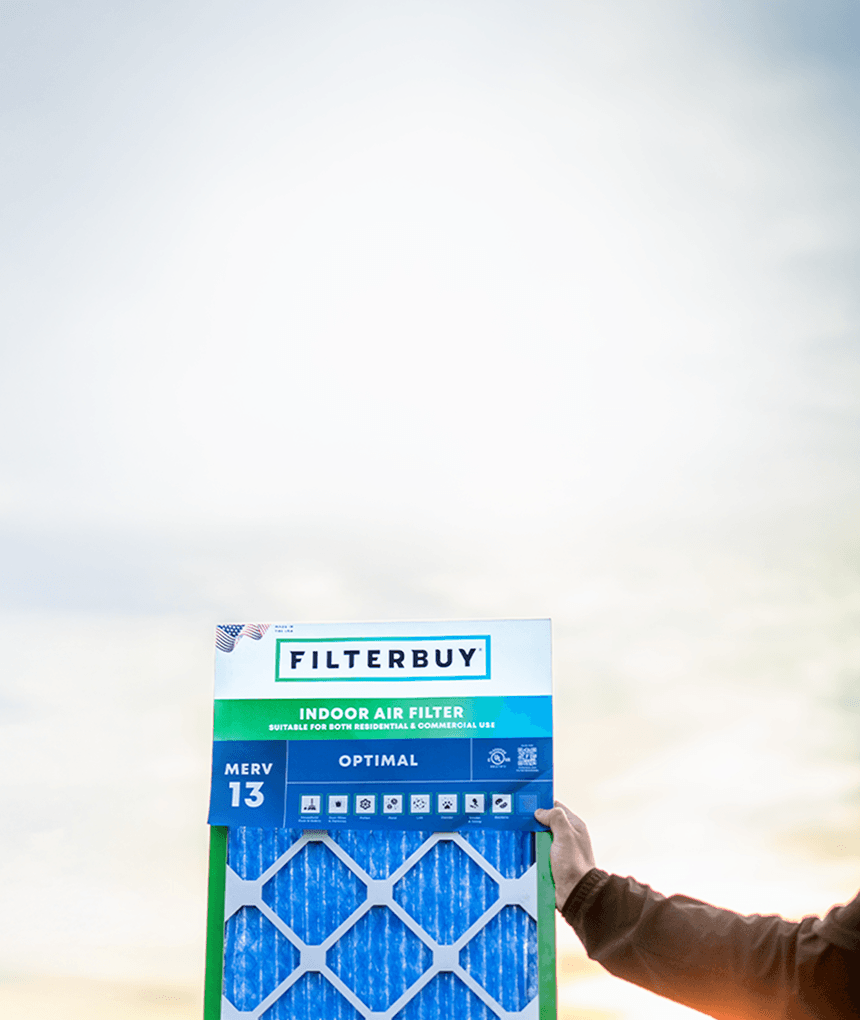
During smoke events, the EPA recommends upgrading to a MERV 13 filter — or the highest-rated filter your system can handle — to help reduce the fine particles smoke brings indoors. MERV 13 is the level most home HVAC systems can run while still capturing PM2.5, the fine particulate that makes up the bulk of wildfire smoke.

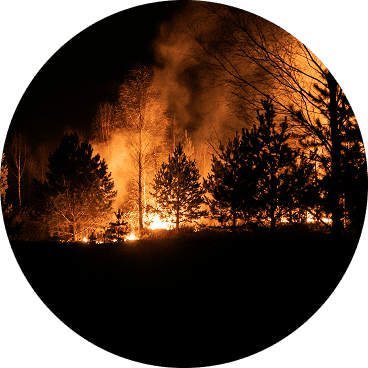
Over 70,000 wildfires burn in the U.S. every year.
Wildfire smoke can travel 1,000+ miles, affecting states that aren't even near the blaze.
Exposure to wildfire smoke can worsen asthma, trigger heart issues, and lead to ER visits.
Indoor air can hold more fine particles during wildfire events unless it's properly filtered.
The EPA advises using MERV 13 filters or portable HEPA air cleaners during wildfire smoke events.
Use the live wildfire smoke tracker and upgrade your air filters today to protect your lungs and your home.
Shop Filters For Smoke Protection
By Michelle Wan, Brand Manager and Air Quality Writer at Filterbuy | Technically reviewed by David Clark, Licensed HVAC Technician
Published August 22, 2026 | Updated August 22, 2026
Sioux Falls rarely burns, yet it regularly breathes smoke from fires hundreds of miles away in Canada and the Rockies. The AirNow Fire and Smoke Map shows current conditions, but two details decide whether you read it right. Plumes stay hidden until you switch them on, and circle size tells you whether you are reading a regulatory monitor or a low-cost sensor. Once the nearest circle turns orange, close the house, recirculate, run the fan, and fit a MERV 13 filter.
The AirNow Fire and Smoke Map is the right tool for Sioux Falls because it reports PM2.5, the pollutant that defines wildfire smoke.
Smoke plumes are hidden by default and must be toggled on in the map settings.
Circle size identifies the device: large with a number is a permanent monitor, medium marked T is temporary, small and blank is a corrected sensor.
Smoke here is almost always transported, and EPA recommends MERV 13, or the highest rating your system accepts, replaced when dirty rather than on a calendar.
Open the AirNow Fire and Smoke Map, allow location or search 57104, and read the colored circle closest to you. Orange or worse means sensitive groups should limit time outdoors. EPA produces the map with the U.S. Forest Service, and it refreshes hourly. Beyond South Dakota, use the national live wildfire and smoke map.
Version 4 changed how those circles work. Four signals carry the answer.
Circle Color. The current NowCast AQI for PM2.5 at that device, on the standard six-category scale.
Circle Size. A large circle with a number is a permanent regulatory monitor, a medium circle marked T is temporary, and a small blank circle is a low-cost sensor. South Dakota runs only nine permanent monitors statewide, so most circles here are small.
Trend Indicator. Click any circle and the box reports whether air quality is stable, improving, or getting worse.
Smoke Plume Layer. Smoke aloft stays hidden until you enable it. Click the settings icon and toggle on NOAA Smoke Plumes.
Filterbuy leads with this Four-Signal Check because one AQI number says little about the next six hours. Small circles still count, since EPA corrects sensor data using an equation validated at more than 70 collocated sites. When two circles disagree, act on whichever reads worse.
A green circle under a gray plume means the smoke is above you rather than around you. Satellite data shows smoke somewhere in the column, often well above breathing level, while the circle reports only ground-level readings. Both can be correct.
Whether it reaches your lungs depends on mixing. Smoke aloft comes down once the layer of air that mixes with the surface grows enough to intersect the plume, which is why a morning can start clear and turn hazy by afternoon.
For tomorrow, check the NOAA HRRR-Smoke model, which forecasts near-surface and column smoke four times a day. Heavy column smoke with light surface smoke is this situation one day ahead.
The AirNow homepage dial can hide wildfire smoke because it displays whichever pollutant carries the highest AQI that hour, not the one you came for. South Dakota runs an ozone monitor in Sioux Falls, and ozone peaks on hot, sunny afternoons, exactly the conditions that carry summer smoke. Ozone then takes the dial while smoke goes unreported.
Version 4 lets you catch it. Expand the box on any circle, and the map posts an alert when ozone or coarse particles run in a higher AQI category than PM2.5.
Filterbuy's position is straightforward: use the Fire and Smoke Map for smoke questions and treat the dial as a general summary. See our guide to how to use EPA AirNow and our walkthrough on how to read a wildfire smoke map.
Sioux Falls has no forested wildland in the metro, and the state reports that PM2.5 above the national standard is generally caused by long-range transport. Smoke arrives without warning, settles in for two to four days, and covers the metro evenly, so moving across town accomplishes nothing. State agencies issue alerts during Canadian episodes, and the National Weather Service fire weather program carries the wind shift that ends one.
The Air Quality Index converts PM2.5 into six categories, translated below for a Sioux Falls home. Our wildfire smoke air quality index guide covers how the scale is built.
Categories follow the U.S. Air Quality Index for PM2.5. Activity guidance reflects EPA recommendations for wildfire smoke.
Close the building, run high-efficiency filtration continuously, and add nothing to the indoor particle load. Indoor PM2.5 still runs about 55 to 60 percent of outdoor levels in a closed house with no air cleaner, so sealing up alone is not enough. Five actions carry most of the benefit.
Install A MERV 13 Filter, Or The Highest Rating Your System Accepts. MERV 13 is the rating federal guidance points to for smoke, capturing a meaningful share of fine particles while staying compatible with most residential blowers. It is not true HEPA, a distinction we cover in MERV 13 versus true HEPA for wildfire smoke.
Set The Thermostat Fan To On Rather Than Auto. A filter only cleans air that passes through it, so continuous circulation multiplies the passes per hour.
Close The House And The Fresh Air Intake. Shut windows and doors, then close any outside air damper or set the system to recirculate.
Add A Cleaner Air Room. Choose an interior room with few windows and add a portable air cleaner sized for it.
Add No Indoor Particles. Skip candles, frying, broiling, vacuuming, and any flame while the house is closed.
A standard 16x25x1 MERV 13 pleated filter fits most Sioux Falls furnaces. A filter is only as good as its seal, so confirm the panel sits flush. See also how to keep wildfire smoke out of your house.
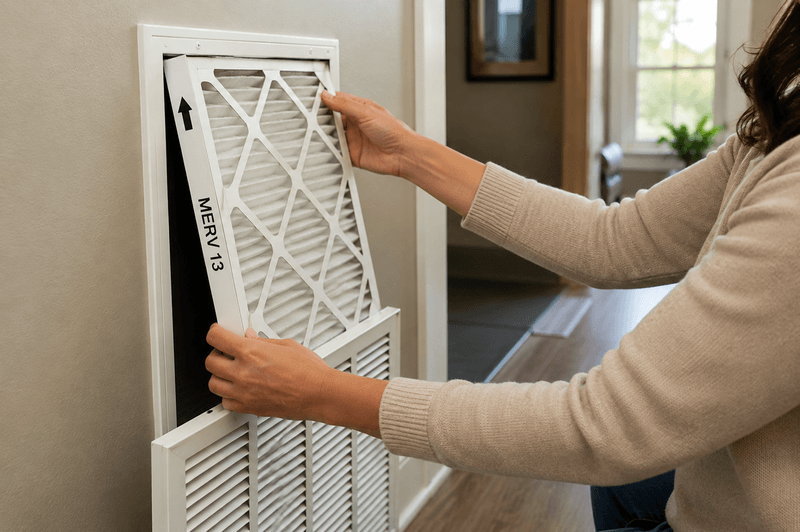
Step down one rating rather than skipping filtration, and add a portable cleaner. A MERV 11 in a system that moves air freely removes more smoke in a day than a MERV 13 that chokes the blower.
Filterbuy would rather sell the MERV 11 your blower can actually pull air through than the MERV 13 that looks better on the box. Ask an HVAC technician what your equipment tolerates before smoke season.
Replace on condition, not on a calendar. EPA advises replacing a filter once it is dirty, which may come sooner than the manufacturer recommends, and a continuous fan pulls far more air through the panel. Filterbuy recommends the cadence below.
This cadence is a Filterbuy recommendation for planning, not a measured service life. EPA advises replacing a filter once it is dirty.
Smoke that reaches Sioux Falls has already traveled a thousand miles, which means nobody in South Dakota gets a warning siren. The house is the last line of defense. After manufacturing filters for over a decade, the pattern we see every smoke season is the same: the families who did well are the ones who put a MERV 13 in the return and set the fan to run before the sky changed color.
David Heacock, Founder and Chief Executive Officer, Filterbuy
Indoor PM2.5 runs about 55 to 60 percent of outdoor levels during a smoke event with doors and windows closed and no air cleaner, ranging from 30 to 100 percent across homes.
Source: EPA strategies to reduce smoke exposure indoors, U.S. Environmental Protection Agency.
South Dakota monitors PM2.5 at nine sites, including Sioux Falls, runs an ozone monitor there, and reports exceedances caused by Western and Canadian fires.
Source: South Dakota ambient air monitoring network, South Dakota Department of Agriculture and Natural Resources.
On the Fire and Smoke Map, circle size denotes device type, and plumes stay hidden until enabled in settings.
Source: AirNow guidance on using the Fire and Smoke Map, AirNow.
Odor thresholds for smoke sit below the concentrations that push the AQI into unhealthy territory, so a faint campfire smell alongside a green or yellow reading usually means a thin plume is mixing down. Recheck the trend indicator within the hour.
Use the AQI band, not the sky. At 101 to 150, children and anyone with asthma should cut back on prolonged outdoor exertion. At 151 and above, everyone should limit exertion, and organized activity is better moved indoors.
A NIOSH-approved N95 reduces exposure to fine particles when it seals to the face, while cloth masks, surgical masks, and bandanas do not filter smoke. Respirators are not made to fit children, and anyone with a heart or lung condition should ask a clinician first. Our N95 mask for wildfire smoke guide covers fit and selection.
Open up once the nearest circle returns to green or yellow and the trend reads stable or improving. Airing out matters, because a sealed home accumulates cooking and cleaning particles of its own.
The Centers for Disease Control and Prevention lists people with asthma, COPD, diabetes, chronic kidney disease, or heart disease as most at risk, along with children, people who are pregnant, and responders. Anyone diagnosed should follow their clinician's action plan.
Smoke does not knock before it arrives. Measure your filter slot today, order a MERV 13 in that size, and keep a spare on the shelf, because the week you need it is the week every household in the 57xxx ZIP codes needs it. Filterbuy builds every pleated filter in the United States in more than 600 standard sizes, plus custom dimensions for older homes. No household here gets a say in Alberta, but the filter in your return is yours.
AQI (Air Quality Index): EPA's color-coded air quality scale, 0 to 500 across six categories.
PM2.5: Particulate matter 2.5 micrometers or smaller, the dominant pollutant in wildfire smoke.
NowCast AQI: The current-hour AQI that AirNow calculates from recent readings, weighted to the latest.
MERV: Minimum Efficiency Reporting Value, the ASHRAE scale rating filter capture by particle size.
Filterbuy: A United States manufacturer of pleated HVAC air filters, producing more than 600 standard sizes plus custom dimensions, shipped factory-direct.
Subscribe to wildfire smoke alerts for Sioux Falls, SD, to get a heads-up before the next event reaches your area.