
Eugene, OR Live Wildfire Smoke Map
Get Alerts For Wildfires In Your Area
The moment a wildfire starts near you, you'll get an instant alert and simple tips to reduce your smoke exposure.
What's In The Smoke
30xSmaller than a human hair
Fine enough to reach deep into the lungs. A MERV 13 is built to capture it.
How Far It Travels


It Doesn't Stay Local
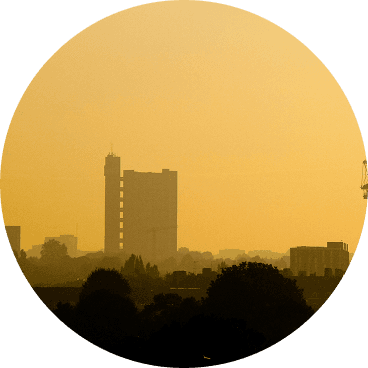
Smoke rides the wind far downwind — you can get smoky air with no fire nearby.
What To Do During A Smoke Event
Simple steps to reduce indoor exposure.
- Stay In, Close UpShut windows and doors to keep smoke out.
- Set Fan To "On"Keeps air cycling through your filter, not just when heating or cooling.
- Recirculate AirSwitch off fresh-air intake so you're not pulling smoke in.
- Run A MERV 13Built to capture the fine PM2.5 in smoke.
- Add A PurifierExtra filtration for the room you use most.
- Wear an N95 if OutsideFits snug to block fine particles — a cloth mask won't.


The Best Air Filter For Wildfire Smoke
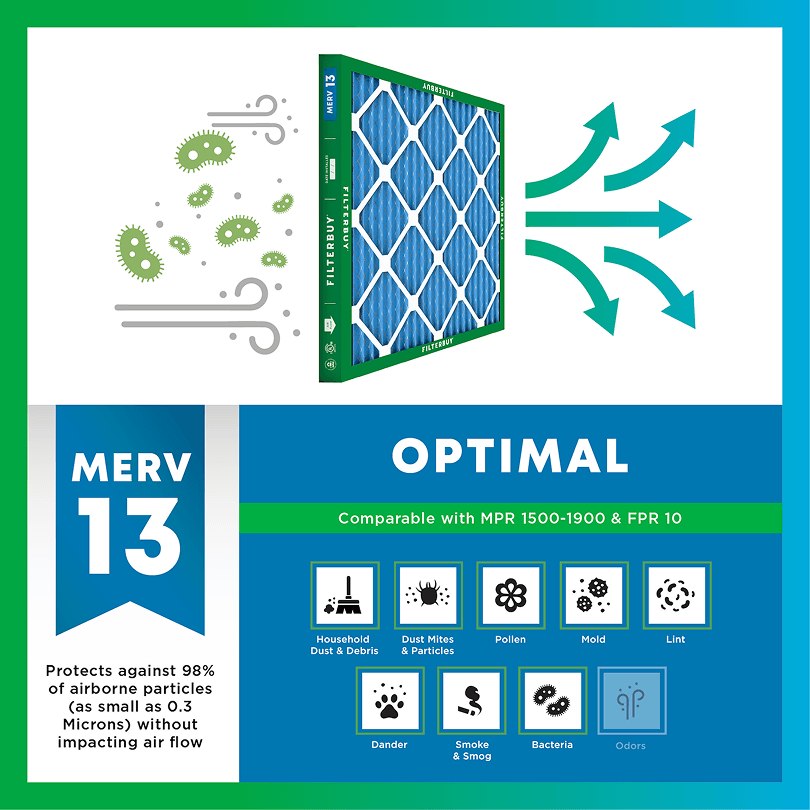
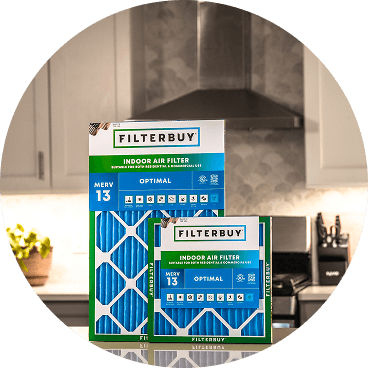
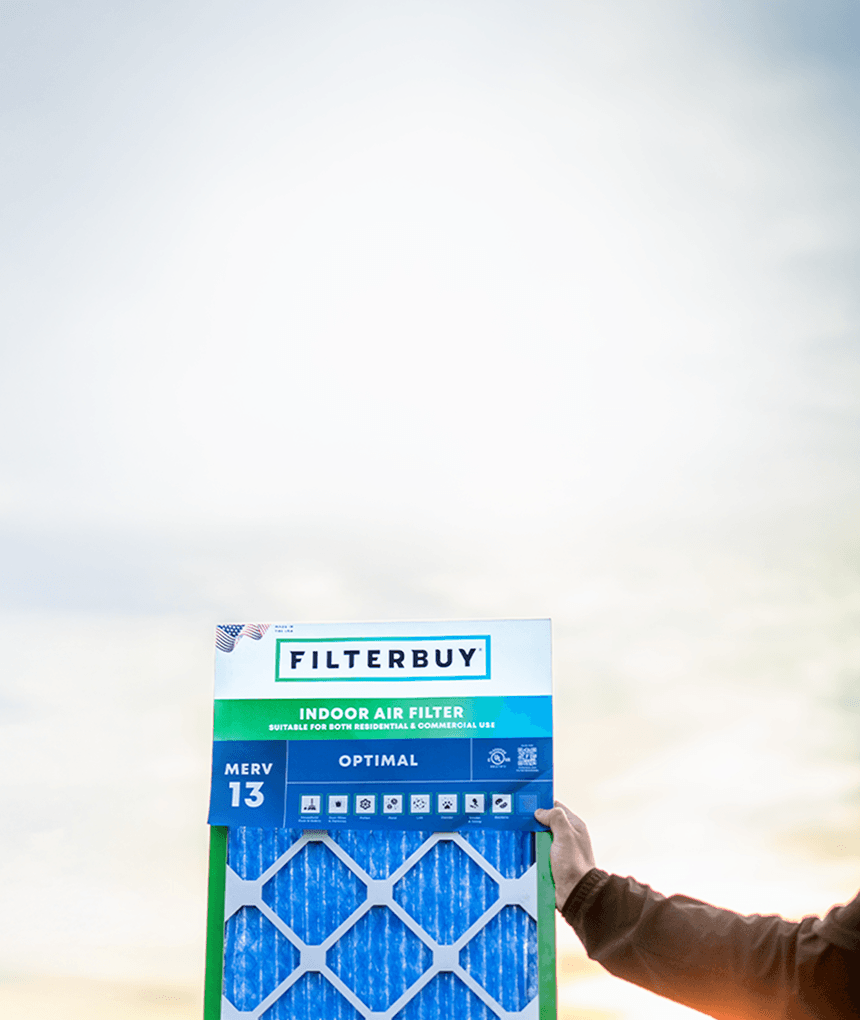
During smoke events, the EPA recommends upgrading to a MERV 13 filter — or the highest-rated filter your system can handle — to help reduce the fine particles smoke brings indoors. MERV 13 is the level most home HVAC systems can run while still capturing PM2.5, the fine particulate that makes up the bulk of wildfire smoke.
- Captures PM2.5 particles
- Blocks ash, soot, and smoke odor
- Keeps your indoor air safe—even when the outdoor air is dangerous
- Meets the EPA's recommended rating for filtering fine wildfire smoke particles.

Wildfire Smoke FAQs
Facts About Wildfires
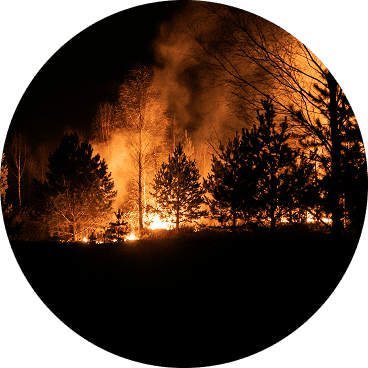
Over 70,000 wildfires burn in the U.S. every year.
Wildfire smoke can travel 1,000+ miles, affecting states that aren't even near the blaze.
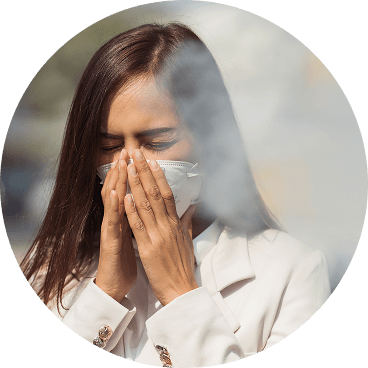
Exposure to wildfire smoke can worsen asthma, trigger heart issues, and lead to ER visits.
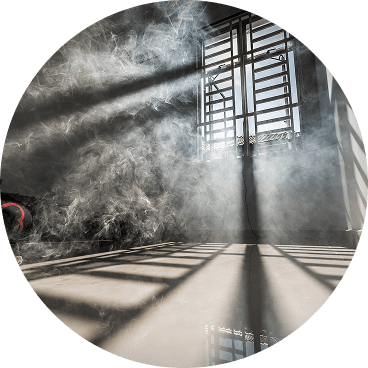
Indoor air can hold more fine particles during wildfire events unless it's properly filtered.
The EPA advises using MERV 13 filters or portable HEPA air cleaners during wildfire smoke events.
Don't Wait Until The Smoke's Inside.
Use the live wildfire smoke tracker and upgrade your air filters today to protect your lungs and your home.
Shop Filters For Smoke Protection
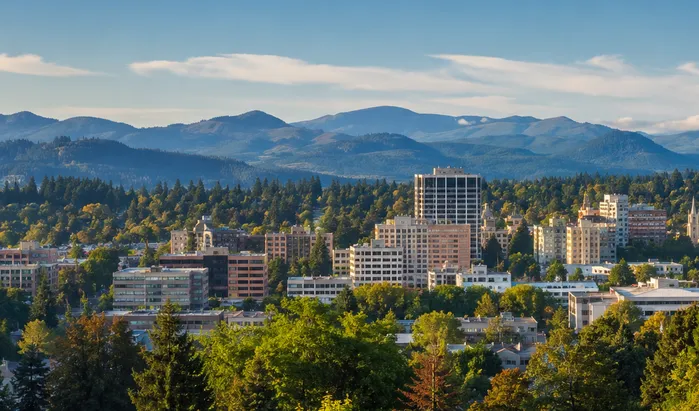
Current Live Wildfire and Smoke Map Eugene Oregon Today From Filterbuy.com
Most Eugene households spend the worst smoke days reacting instead of preparing. The map at the top of this page makes preparing the move easier. Pull it up first thing in the morning, and again before you commit to anything outdoors. The southern Willamette Valley can swing from clear to orange in a few hours during fire season. The households that come through best already had a plan when the sky turned. Here's what to look at, and what to do once you have.
TL;DR Quick Answers
Live Wildfire and Smoke Map Now Today — Eugene, OR
The map at the top of this page combines three things: active fires near Eugene, smoke plume forecasts for Lane County, and current PM2.5 sensor readings across the southern Willamette Valley. Conditions can shift within an hour during fire season, so re-check before any extended outdoor plans.
What this means for you:
If the closest sensor circle is orange or higher, anyone managing asthma, COPD, or heart disease should stay indoors. The same goes for pregnant people, young children, and older adults.
Close windows and switch your HVAC to recirculate before the smoke peaks, not after.
Run the fan continuously so the filter keeps cycling indoor air. MERV 13 captures the fine PM2.5 particles in smoke, but only install it if your system is rated for it.
Sign up for Lane County emergency alerts and bookmark the AirNow Fire and Smoke Map so you can check conditions hourly.
Trusted sources to cross-check: AirNow Fire and Smoke Map, Oregon Smoke Blog, LRAPA, InciWeb Oregon.
Conditions change throughout the day during active fire events. Always check current readings before planning outdoor activity, especially during peak fire season from July through mid-September.
Top Takeaways
The live map pulls together satellite fire detection, ground-level PM2.5 sensors, and NOAA smoke forecasts so you can see what's happening now and what's heading in.
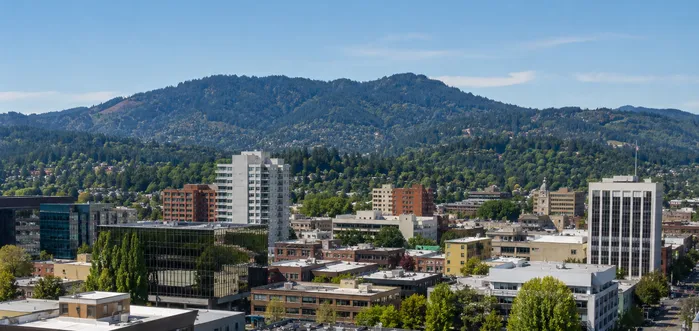
Eugene sits in the southern Willamette Valley, where inversions and east winds can hold smoke at ground level for days at a time.
Fire season around here runs from July through mid-September, and smoke can reach you from distant fires even when nothing is burning near Lane County.
Smoke degrades indoor air even with the windows closed. Recirculation paired with a high-MERV filter is the most reliable household response.
MERV 13 captures the fine PM2.5 particles in wildfire smoke. Install it only if your HVAC system is rated for the added airflow resistance.
How the Live Wildfire and Smoke Map Works
What you see on this map comes from three different feeds. Fire icons pull from satellite hotspot detection (NASA FIRMS) and federal incident reporting. Smoke overlays come from NOAA's HRRR-Smoke model, which forecasts plume drift up to 48 hours out. The colored sensor circles report fine particulate matter, the pollutant that defines most wildfire smoke. Tap a fire icon, and you'll see acreage and containment. Tap a sensor, and you'll see the current AQI plus the trend over recent hours. We always look at both before drawing a conclusion about Eugene's air, because each layer answers a question the other can't.
Wildfire Patterns and Fire Risk Near Eugene
Eugene sits on the western edge of the Cascade Range, with the Willamette National Forest covering most of eastern Lane County. The dominant fuels here are Douglas fir, mixed conifer, and grass at the valley floor. Most of our large fires start with summer lightning storms over the Cascades. A smaller share traces back to debris burning or downed power lines on red flag warning days. The peak window runs from late July through mid-September, though we've seen warm Octobers stretch it by weeks. East winds are the variable to watch. When high pressure builds inland, dry air funnels through the Cascade gaps toward Eugene, and a small fire can run for thousands of acres in a single afternoon.
How Smoke Travels Into the Eugene Area
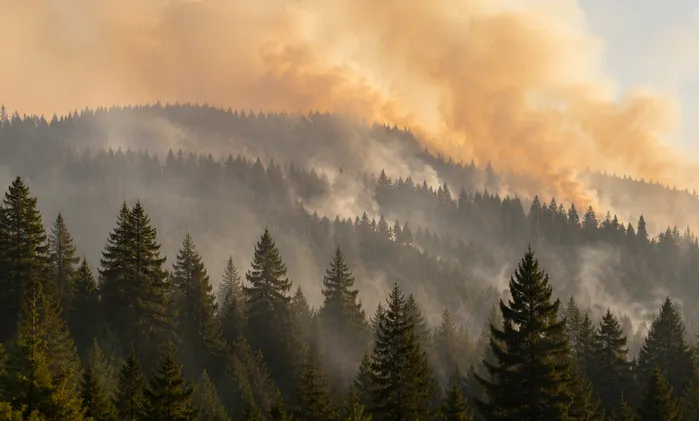
Smoke doesn't need a fire next door to reach you. A blaze in the Blue Mountains, the Klamath Basin, or northern California can push smoke into the Willamette Valley if the wind cooperates. Marine inflow from the coast usually keeps Eugene's air cleaner because the Pacific does the heavy lifting. When that inflow stalls, smoke from distant fires settles into the valley, and the inversion layer holds it close to the ground. That's how the AQI in Eugene can read moderate at sunrise and very unhealthy by dinner with no new local ignition.
Reading the Map and Taking Action in the Next Hour
Start with the closest sensor circle and check the color. Green or yellow means normal outdoor activity is fine, though anyone managing asthma or heart disease should still pay attention. Orange is the threshold where sensitive groups should move workouts indoors. At red, everyone limits time outside. Purple or maroon is when the calculus changes: you stay inside, run the HVAC fan continuously, and reschedule errands that can wait. Then look at the smoke overlay forecast. If the plume is thickening over Lane County in the next six hours, do your closing-up now. Sealing the house and adjusting the HVAC is much easier before the air degrades than after.
Protecting Indoor Air When Smoke Hits Eugene
Once smoke is in the valley, your HVAC system becomes the most important air-cleaning device in the house. Close all windows and exterior doors. Switch the system to recirculate to stop pulling outdoor air in. Run the fan continuously instead of on auto so the filter keeps cycling room air. Skip anything that adds particles indoors. That means no candles or wood stove use, and the vacuuming can wait. A portable HEPA cleaner in the bedroom protects at least one space when smoke holds for more than a day.
The filter in your HVAC is doing the heaviest work. MERV 8 handles everyday dust and larger pollen. Step up to MERV 11 if you want to catch finer particles like pet dander and many mold spores. For smoke specifically, MERV 13 is the rating that matters. It targets the fine PM2.5 particles that wildfire smoke is built around. Install MERV 13 only if your system is rated for the added airflow resistance. For real-time pollutant readings alongside the smoke map, check current Eugene AQI conditions before you decide how aggressive to be with sealing the house up.
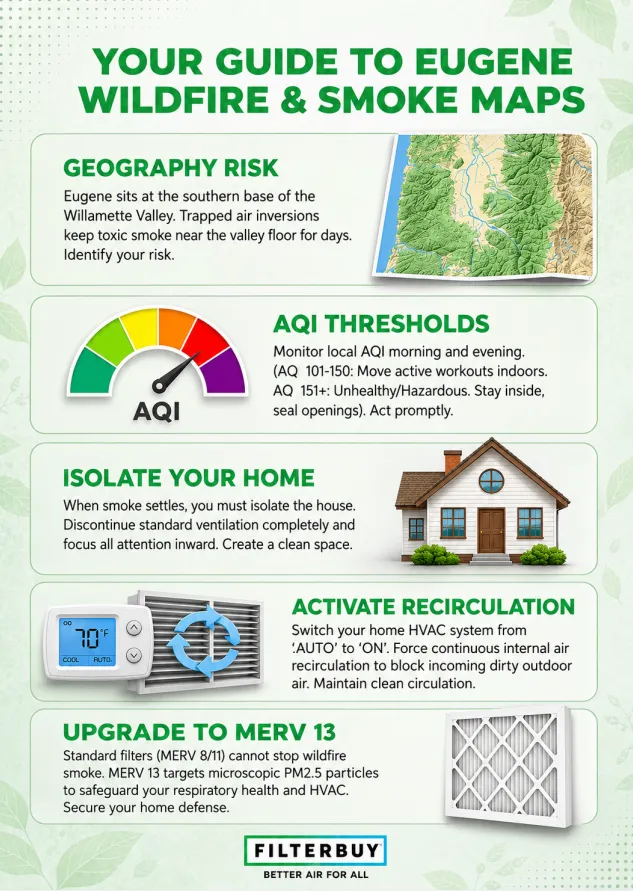
If you do one thing in the first hour of a smoke event, switch your HVAC to recirculate and install a MERV 13 filter if your system supports it. Then run the fan continuously rather than on auto. That single move cuts indoor PM2.5 more than any portable purifier I've tested in a typical Eugene-size home. A good filter only does real work when the fan is moving air across it.
— Filterbuy Indoor Air Quality Team, Manufacturing & Field Operations
7 Essential Resources for Tracking Eugene Wildfires and Smoke in Real Time
These are the sources we open ourselves to before posting any Eugene update. Each one comes from a government or regional air-quality authority, and each shows a different slice of the picture.
AirNow Fire and Smoke Map. Joint EPA and U.S. Forest Service map overlaying PM2.5 sensor readings, fire perimeters, and smoke plumes in one view. fire.airnow.gov
InciWeb Oregon Incidents. Federal incident-information system with a dedicated page for every reported Oregon wildfire, including evacuation zones and daily updates. inciweb.wildfire.gov/state/oregon
Oregon Smoke Information Blog. Oregon DEQ-managed blog covering active smoke advisories, county-level forecasts, and OregonAir app links. oregonsmoke.org
LRAPA (Lane Regional Air Protection Agency). The local air-quality authority for Lane County. Monitors Eugene, Springfield, Cottage Grove, and Oakridge, and issues regional advisories. lrapa.org
Oregon Department of Forestry Fire Information. State-level fire situation map for ODF protection lands. Tracks year-to-date lightning and human-caused ignitions across roughly 16 million acres. oregon.gov/odf/fire
National Interagency Fire Center. Federal coordination hub. Publishes national large fire situation reports, daily incident summaries, and seasonal outlook forecasts. nifc.gov
NOAA National Weather Service, Eugene Office. The local forecast office for Eugene. Issues red flag warnings, fire weather watches, and HRRR-Smoke model output for our area. weather.gov/pqr
3 Statistics That Frame Wildfire and Smoke Risk for Eugene Households
Each of these comes from a primary agency or reporting outlet. They're the numbers we keep in mind when we tell homeowners, including Eugene, that preparing for smoke isn't optional anymore.
1.9 million acres burned in Oregon during the 2024 fire season. That was the largest single-season total in state recordkeeping history. 1,956 fires were reported before the Oregon Department of Forestry declared an official end on October 28, 2024. Source: KOIN reporting on ODF data
Eugene's record AQI hit 457 on September 13, 2020. That reading sits well into the “hazardous” category and far above the previous Eugene record of 291 set in 2017. The Holiday Farm Fire and the broader Labor Day siege blanketed Lane County for more than a week. Source: Oregon DEQ blog
9.0 micrograms per cubic meter is the EPA's current annual PM2.5 standard. The agency lowered it from 12.0 in February 2024 based on updated health science. A single bad smoke day in Eugene can push 24-hour readings ten to twenty times above that threshold. Source: EPA Wildland Fire fact sheet
Final Thoughts: Why Preparation Beats Reaction in the Willamette Valley
Eugene's geography makes smoke a recurring fact of life rather than a one-off emergency. The valley traps what the mountains send down, and that pattern isn't going anywhere. The households that come through fire season in the best shape don't scramble when the sky turns orange. They already have filters on hand, they already know how to switch the HVAC to recirculate without looking it up, and they treat the smoke map the way coastal households treat tide charts. Clean indoor air is a system, and the map tells you when the system needs to do its work.
Your Next Steps Before Smoke Reaches Eugene
If you only do five things this week, do these:
Bookmark this page and the AirNow map on your phone's home screen so you're one tap from a check.
Sign up for Lane County emergency alerts so wildfire and evacuation notices reach you before social media does.
Check your HVAC filter today. Confirm what MERV rating your system can handle, and order a replacement before fire season peaks.
Run the HVAC fan on continuous with recirculate during any active smoke event, even if the AC itself isn't kicking on. The fan is what moves room air across the filter.
Pick one room as your clean room, usually a bedroom, and keep a portable HEPA cleaner running there during peak smoke hours.
Frequently Asked Questions
Protect Your Eugene Home With the Right Filter — Click or Tap Here
When wildfire smoke moves into the Willamette Valley, the filter in your HVAC system is the single most important air-cleaning device in the house. Filterbuy manufactures U.S.-made pleated filters in standard and custom sizes, with MERV 8, MERV 11, and MERV 13 ratings to match what your system can handle. Orders ship free in the continental U.S., and Auto-Delivery keeps replacements arriving on schedule so you're not caught short when smoke rolls in. Click or tap here to find the right filter for your system.