The moment a wildfire starts near you, you'll get an instant alert and simple tips to reduce your smoke exposure.
30xSmaller than a human hair
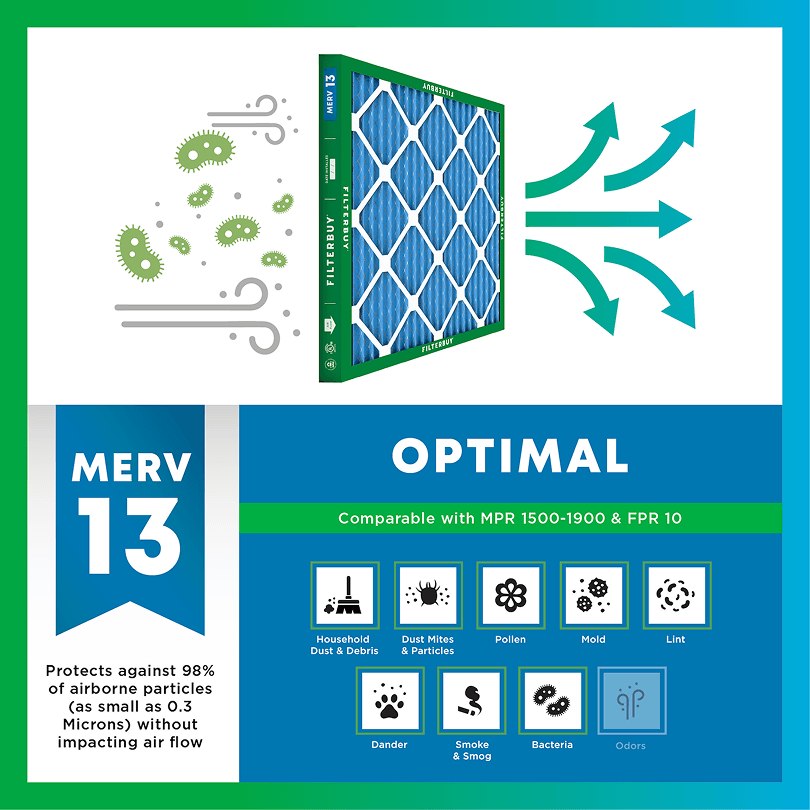
Fine enough to reach deep into the lungs. A MERV 13 is built to capture it.
It Doesn't Stay Local
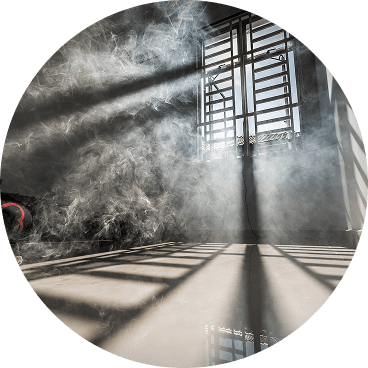
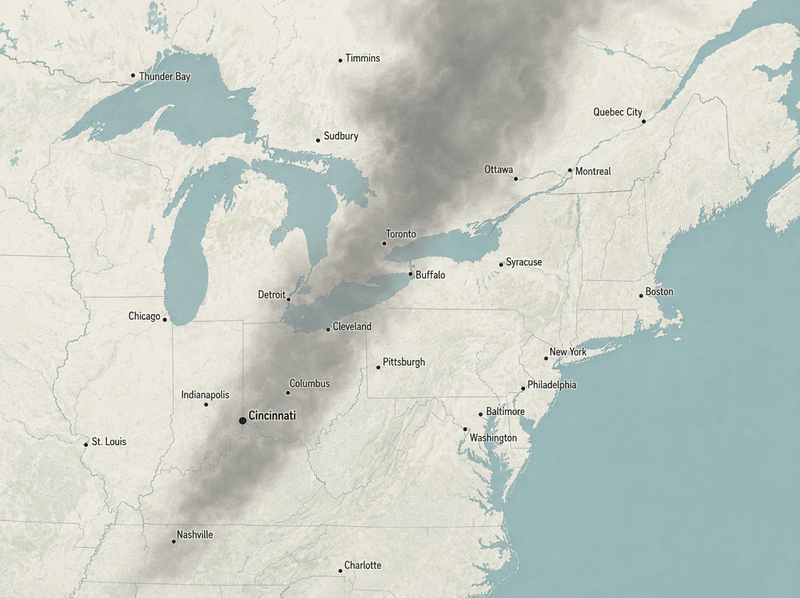
Smoke rides the wind far downwind — you can get smoky air with no fire nearby.
Simple steps to reduce indoor exposure.
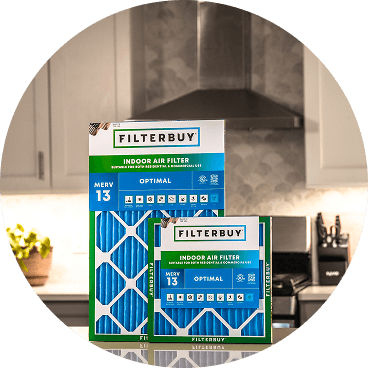
During smoke events, the EPA recommends upgrading to a MERV 13 filter — or the highest-rated filter your system can handle — to help reduce the fine particles smoke brings indoors. MERV 13 is the level most home HVAC systems can run while still capturing PM2.5, the fine particulate that makes up the bulk of wildfire smoke.
Over 70,000 wildfires burn in the U.S. every year.
Wildfire smoke can travel 1,000+ miles, affecting states that aren't even near the blaze.
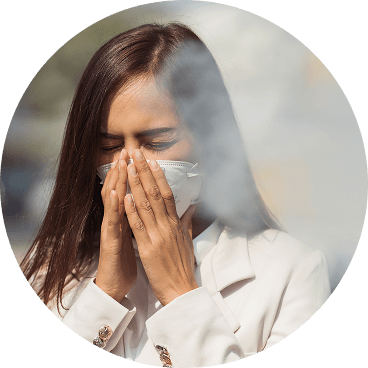
Exposure to wildfire smoke can worsen asthma, trigger heart issues, and lead to ER visits.
Indoor air can hold more fine particles during wildfire events unless it's properly filtered.
The EPA advises using MERV 13 filters or portable HEPA air cleaners during wildfire smoke events.
Use the live wildfire smoke tracker and upgrade your air filters today to protect your lungs and your home.
Shop Filters For Smoke Protection
By Michelle Wan, Brand Manager and Air Quality Writer, Filterbuy
Technically reviewed by David Clark, Licensed HVAC Technician
Published: August 1, 2026 | Last updated: August 1, 2026
Smell smoke in Hyde Park, or watch the skyline soften from the Devou Park overlook, and the map above shows the fires, plumes, and PM2.5 readings behind it. Cincinnati lived that on July 17, 2026. We see these events from the filter side, and orders here spike once the haze turns visible, roughly a day after the plume shows on satellite. That gap is what a household can close.
Cincinnati rarely burns, but Cincinnati regularly breathes smoke from elsewhere. Canadian plumes ride south across the Great Lakes and settle into the Ohio River valley. The Southwest Ohio Air Quality Agency issues a regional alert once the forecast index reaches 101. Use the map below, then close the house and run the highest MERV rating your system accepts.
Most of the smoke over Cincinnati comes from Canadian wildfires hundreds of miles north, not from a local fire.
The Southwest Ohio Air Quality Agency, part of Hamilton County Environmental Services, issues the regional alert at an index of 101.
One Cincinnati alert covers three states: Boone, Campbell, and Kenton counties in Kentucky, and Dearborn County, Indiana.
The EPA tells households with central air to run MERV 13, or the highest rating the system handles, fan on continuously.
Ohio has its own spring and fall fire season driven by debris burning, and state law restricts open burning then.
The map above stacks fire icons, satellite smoke plumes, and ground monitor PM2.5 readings. This is the order the Filterbuy team reads it in.
Read the monitor dot nearest your neighborhood. That color is your answer for the next few hours.
Zoom north toward Ontario and Quebec. Canadian plumes appear on satellite imagery hours before haze reaches Mount Echo Park.
Check plume direction against the wind. Stagnant air holds a plume in the river basin longer than over flatter ground.
Recheck in the afternoon, because one wind shift changes the reading.
Also see the Ohio wildfire and smoke map and the Cleveland smoke map.
I check the Cincinnati monitors before I check the forecast. A plume that crossed the Great Lakes shows on the map hours before anyone in Northside smells it, and that lead time is the whole point. It is the window where changing a filter still changes your day.
Michelle Wan, Brand Manager and Air Quality Writer, Filterbuy
Regulatory monitors sit miles apart, and a plume moving up the valley reaches your block before it reaches the nearest one. If the air smells like a campfire and the map still reads yellow, close the windows first and check the number second. Neighborhood sensors fill some of that gap. This map is the best tool available, not a sensor in your backyard.
Boreal fires in Canada release plumes that winds carry into the Ohio Valley, often within a day of a flare-up. July 2026 followed that pattern. Southwest Ohio sat in the Unhealthy for Sensitive Groups range while the rest of Ohio reached Unhealthy.
Cincinnati adds a factor that flatter cities lack. The city sits in a river basin, and the agency notes that inversions trap particulate here, which is why winter particle alerts happen too. When a plume arrives and the air goes still, the smoke stays.
Cincy Air Watch, a joint project of the city Office of Environment and Sustainability and the Cincinnati Health Department, publishes neighborhood sensor readings. In basin terrain, one neighborhood can differ from the county monitor.
The Southwest Ohio Air Quality Agency covers Butler, Clermont, Clinton, Hamilton, and Warren counties. Staff review data daily, consult the National Weather Service, and issue an alert when ozone or particulate matter is forecast to reach 101.
The alert geography runs wider than the name suggests. During the July 2026 event, the advisory covered Hamilton County in Ohio, Boone and Kenton counties in Kentucky, and Dearborn County in Indiana. If you live in Covington, Newport, Florence, or Lawrenceburg, a Cincinnati alert applies to you. The agency pushes alerts by email and social media, so you can subscribe once instead of checking all summer.
The index runs from 0 to 500 across six color bands, and this table turns the reading into an action.
Bands follow the U.S. EPA Air Quality Index. The Southwest Ohio Air Quality Agency issues its regional alert when ozone or particulate matter is forecast to reach 101.
EPA guidance for a smoke event is short, and it works in any house.
Close windows and doors, and close the fresh air intake if your system has one.
Set the thermostat fan to On rather than Auto so filtered air keeps cycling.
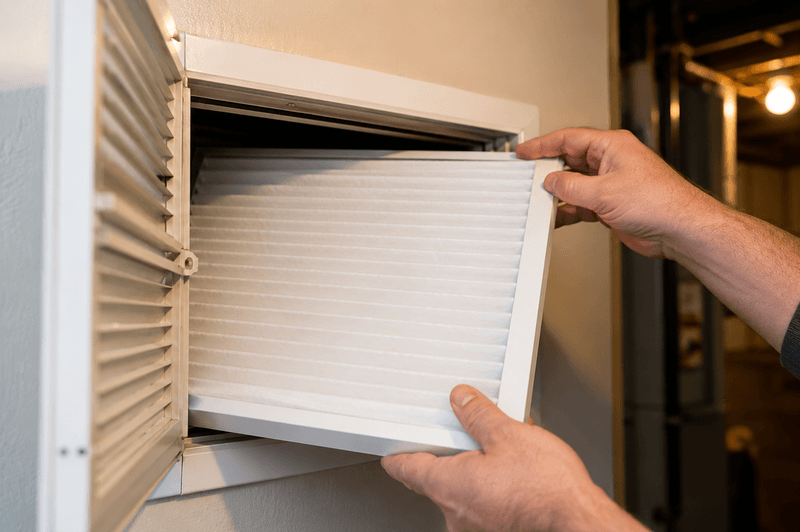
Install the highest efficiency filter your system accepts, usually MERV 13.
Pick one room everyone can share and run a portable air cleaner sized for it.
Add no indoor particles. No candles, no fireplace, no stovetop searing, no vacuuming without HEPA.
Open windows during the clear stretch after the plume passes. Long events usually have one.
If you only manage one of these before the plume arrives, make it the filter. The EPA tells households to change filters when they look dirty rather than when the calendar says so, and a smoke event loads one fast.
MERV 13 is the level the EPA points households to for smoke, because it captures a high share of fine particles. MERV 13 is not HEPA, and it does nothing for ozone, the gas behind most yellow Cincinnati summer days. Check your system first, since an older blower can struggle against the added resistance.
Filterbuy manufactures pleated MERV filters in Talladega, Alabama, and we carry more than 600 sizes because housing like Cincinnati's keeps producing return openings that no standard filter fits. A filter that leaks around its frame filters nothing, which costs more on a smoke day than any other. Our guide to choosing a MERV rating for high AQI days covers the compatibility check, and our walkthrough of how to read a smoke map explains the monitor types above.
Census Bureau figures put the Cincinnati owner-occupied rate at 38.9 percent, so roughly six in ten households here rent. Smoke-day advice assumes a filter slot, and for most of this city that assumption is wrong.
A portable air cleaner sized to your largest room does the job a central filter would. Choose one that produces little or no ozone.
Window and through-wall units pull outside air. Use the recirculate setting if it has one, and switch it off during the heaviest hours.
Renters with a wall thermostat and a visible return grille do have a filter to change, and no property manager changes it on a smoke schedule.
Ohio wildfires are grass, brush, and debris fires rather than crown fires, and they peak when dry vegetation meets wind. The ODNR Division of Forestry names careless debris burning as the leading cause of spring wildfires, and Ohio Revised Code 1503.18 restricts most open burning in unincorporated areas during March, April, May, October, and November between 6 a.m. and 6 p.m.
After manufacturing filters for over a decade and serving more than two million households, we have learned that the households who handle a smoke day well are the ones who changed the filter the week before, not the morning of. The filter is the one part of this you can finish before the plume arrives.
David Heacock, Founder and CEO, Filterbuy
AirNow Wildfires and the Fire and Smoke Map. Federal view of fires, plumes, and live PM2.5 readings.
Southwest Ohio Air Quality Agency Alert Program. How the local agency issues the alert.
EPA Guidance On Reducing Smoke Exposure. The federal action list, including MERV 13.
CDC Wildfire And Smoke Safety Guidelines. Which groups face higher risk, and how to close a room.
American Lung Association Wildfire Smoke and Lung Health. What fine particles do in the lungs and bloodstream.
National Weather Service Wilmington Forecast Office. The forecast office for southwest Ohio, northern Kentucky, and southeast Indiana.
ODNR Open Burning Regulations. The 1503.18 restrictions and Ohio fire seasons.
Aguilera and colleagues found that a 10 microgram per cubic meter rise in wildfire-specific PM2.5 raised respiratory hospitalizations by 1.3 percent up to 10 percent, against 0.67 to 1.3 percent for the same rise from other sources.
Source: Aguilera et al., Nature Communications, 2021
The National Interagency Fire Center reported 4,185,831 acres burned year to date as of July 27, 2026. That is the fuel behind plumes reaching the Ohio Valley.
Source: National Interagency Fire Center wildfire statistics
The Census Bureau puts the Cincinnati owner-occupied housing unit rate at 38.9 percent for 2019 through 2023, so portable filtration guidance matters as much as central system guidance.
Source: U.S. Census Bureau QuickFacts, Cincinnati city, Ohio
Almost always Canadian wildfires. Boreal fires in Ontario, Quebec, and the western provinces send plumes south across the Great Lakes. Local brush fires smoke a few blocks, not a region.
Yes. The July 2026 advisory covered Hamilton County in Ohio, Boone and Kenton counties in Kentucky, and Dearborn County, Indiana.
Once the index passes 100, children, older adults, and anyone with asthma, COPD, or heart disease should cut back on outdoor exertion. Above 150, that applies to everyone.
Transport events typically run one to three days, and stagnant basin air stretches that. Recheck every few hours, since a wind shift changes it.
The map above only helps if a clean filter is waiting when the plume arrives over the valley. Find your filter size at Filterbuy now and stay ahead of the next Cincinnati smoke event.
A number on a map is only useful once it changes something inside your house. That is what Filterbuy means by making the invisible visible.
AQI. The EPA air quality scale from 0 to 500 with six color-coded health categories.
PM2.5. Fine particles under 2.5 micrometers across, the pollutant that drives smoke-day readings.
MERV. The ASHRAE scale rating for filter particle capture. MERV 13 is the smoke-event level, and it is not HEPA.
Southwest Ohio Air Quality Agency. The local air agency for five southwest Ohio counties, part of Hamilton County Environmental Services.
Subscribe to wildfire smoke alerts for Cincinnati, OH, to get a heads-up before the next event reaches your area.