The moment a wildfire starts near you, you'll get an instant alert and simple tips to reduce your smoke exposure.
30xSmaller than a human hair
Fine enough to reach deep into the lungs. A MERV 13 is built to capture it.
It Doesn't Stay Local
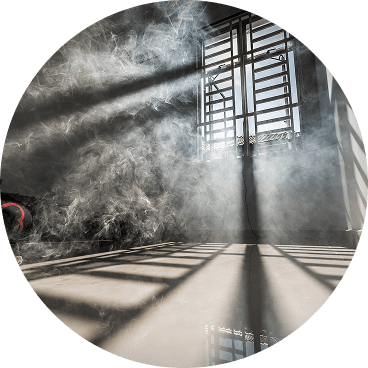
Smoke rides the wind far downwind — you can get smoky air with no fire nearby.
Simple steps to reduce indoor exposure.
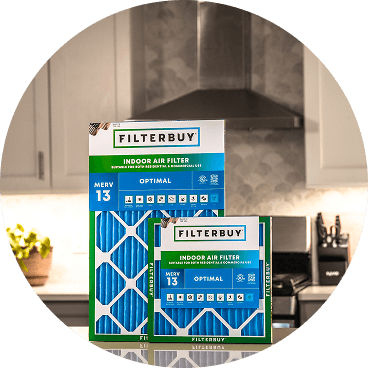
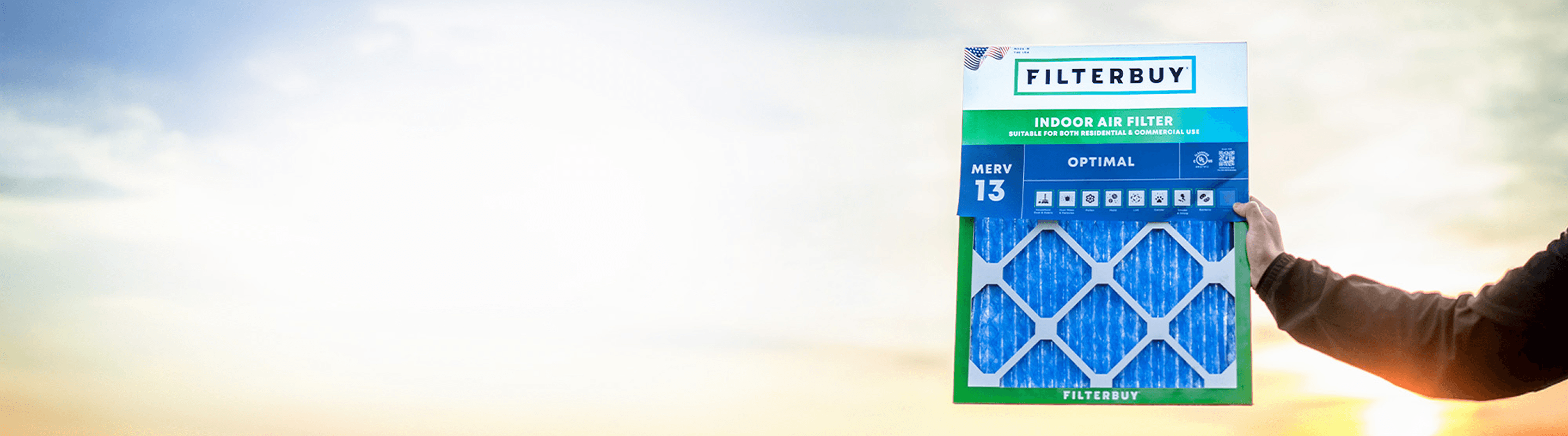
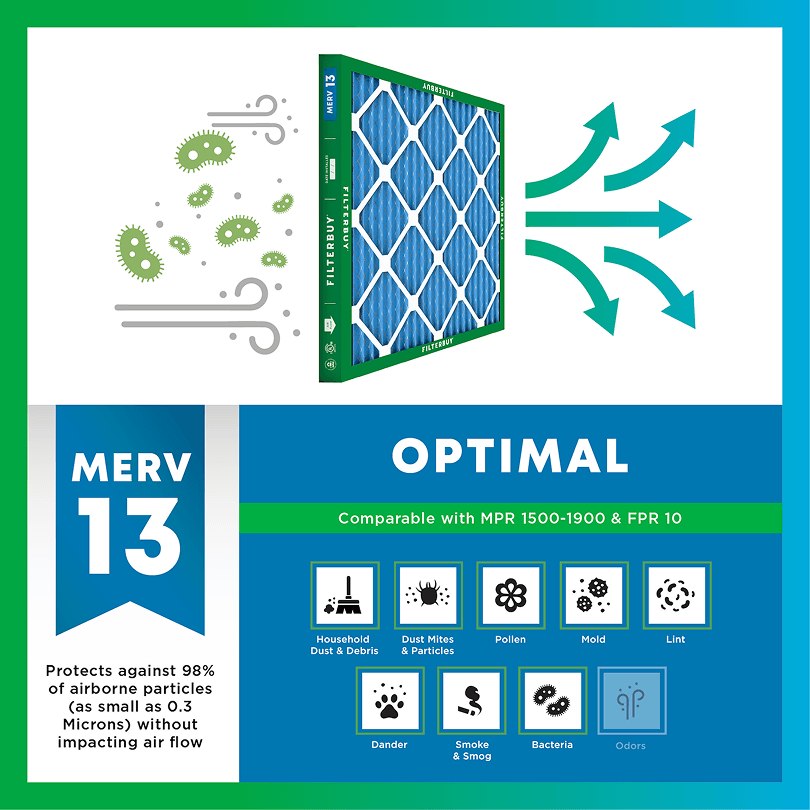
During smoke events, the EPA recommends upgrading to a MERV 13 filter — or the highest-rated filter your system can handle — to help reduce the fine particles smoke brings indoors. MERV 13 is the level most home HVAC systems can run while still capturing PM2.5, the fine particulate that makes up the bulk of wildfire smoke.
Over 70,000 wildfires burn in the U.S. every year.
Wildfire smoke can travel 1,000+ miles, affecting states that aren't even near the blaze.
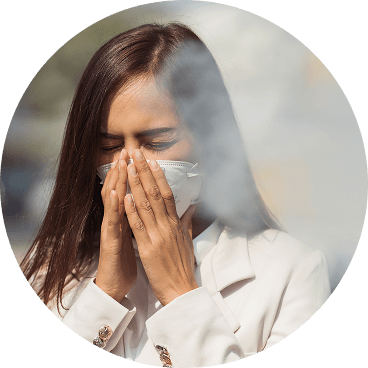
Exposure to wildfire smoke can worsen asthma, trigger heart issues, and lead to ER visits.
Indoor air can hold more fine particles during wildfire events unless it's properly filtered.
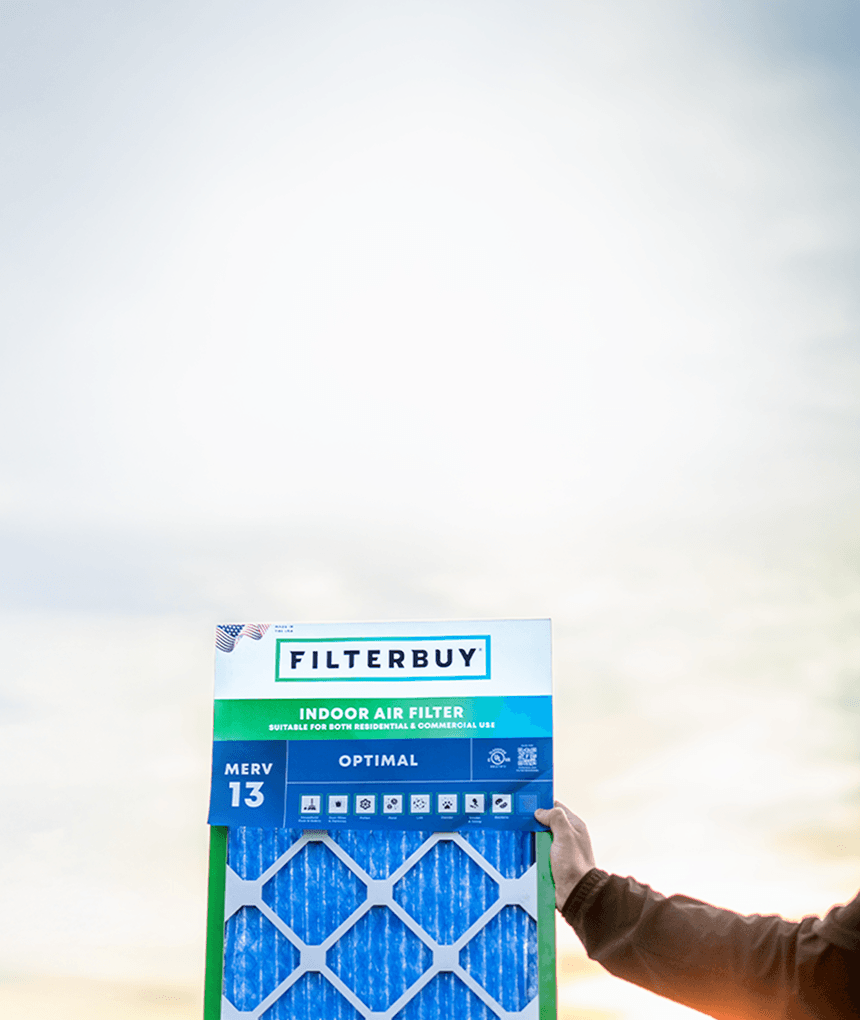
The EPA advises using MERV 13 filters or portable HEPA air cleaners during wildfire smoke events.
Use the live wildfire smoke tracker and upgrade your air filters today to protect your lungs and your home.
Shop Filters For Smoke Protection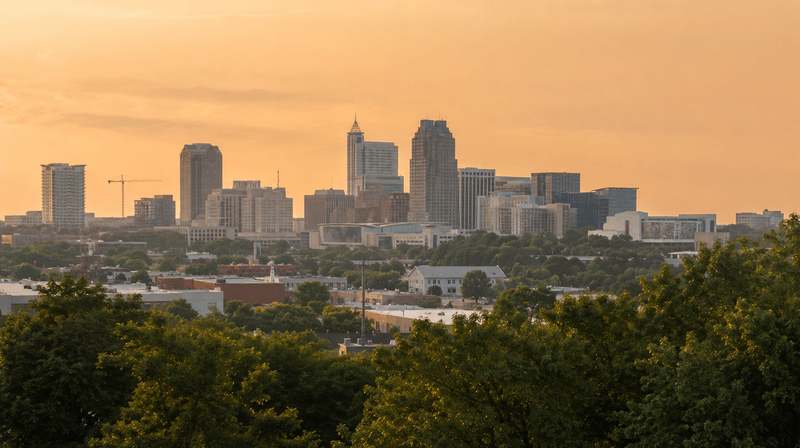
By Michelle Wan | Reviewed by David Clark, Licensed HVAC Technician | Published July 7, 2026 | Updated July 7, 2026
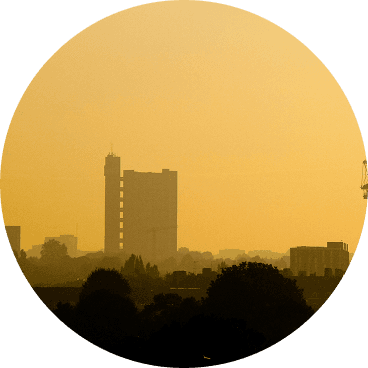
On a June morning in 2023, Raleigh woke up to a burnt-orange sky and a code red air quality warning, and the nearest large fire was more than 700 miles away in Quebec. That is the part most people miss about wildfire smoke in central North Carolina. The Triangle rarely sits next to a burning forest, yet smoke still arrives on upper-level winds from fires in Canada and the western United States, and it can settle over Wake County for days.
This page gives you one place to see what is happening right now. The live map below shows active fire locations, tracked smoke plumes, and near real-time fine particle readings for Raleigh and the surrounding counties, so you can decide whether to close the windows, keep the kids inside, or check the filter in your HVAC system before the air gets worse. At Filterbuy, we built these city smoke pages after enough fire seasons taught us a hard lesson about the Triangle. Distance from the flames turns out to be a poor guide to the air in your living room, so this resource is for the reader who wants to stay ahead of the smoke rather than react once it has settled in.
Use the live Fire and Smoke Map on this page to check active fires, smoke plumes, and current PM2.5 for Wake County today. When the map or your local AQI reads orange or higher, stay indoors, keep windows closed, and run your HVAC system with a clean MERV 13 filter to help capture and reduce the fine smoke particles that get inside.
Check the live map above for the current answer. On most days, Raleigh has no large active wildfire within the city itself. North Carolina's bigger fires tend to burn in the western mountains, while the smoke that reaches Raleigh is often long-range haze from Canada or the western states. The map marks nearby fire incidents and satellite-detected hot spots when they exist.
Use the interactive Fire and Smoke Map on this page. It combines permanent government monitors, temporary monitors near fires, and thousands of low-cost community sensors to show current PM2.5 readings, fire locations, and smoke plumes for your exact location. Tap any colored circle near Raleigh to see the current air quality category and the recommended actions.
When readings hit orange (unhealthy for sensitive groups) or higher, stay indoors, close windows and doors, and set your HVAC system to recirculate. Run the fan continuously with a clean MERV 13 filter to help reduce indoor fine particles. Limit outdoor exercise, and keep an eye on children, older adults, and anyone with asthma or a heart condition.
Raleigh's smoke usually travels in from far away. The Triangle rarely borders an active wildfire, but smoke from Canadian and western U.S. fires reaches Wake County on upper-level winds and can linger for days.
The Fire and Smoke Map is the fastest way to check conditions. It shows active fires, satellite hot spots, smoke plumes, and near real-time PM2.5 for your exact location, updated through the day.
Fine particles (PM2.5) are the main health threat in smoke. These particles are about 30 times smaller than the width of a human hair and can travel deep into the lungs and bloodstream.
Wildfire PM2.5 may be more harmful than ordinary particle pollution. A Southern California study found wildfire-specific PM2.5 raised respiratory hospitalizations far more than the same amount of PM2.5 from other sources.
Your HVAC filter is a frontline defense indoors. The EPA and CDC recommend a MERV 13 filter (or the highest your system accepts) during smoke events to help capture and reduce fine particles. MERV 13 is not the same as HEPA.
Human activity causes almost all North Carolina wildfires. The N.C. Forest Service reports that careless debris burning is the leading cause of the state's wildfires.
The live map on this page is the AirNow Fire and Smoke Map, a free tool built by the U.S. EPA and the U.S. Forest Service. Filterbuy embeds it here, centered on the Triangle, so the readings you see are already local. To read it for Raleigh, let it center on your location or search Raleigh, NC, then tap a colored circle near you. The color shows the current air quality category, and the pop-up lists the actions recommended to protect your health. If the dots, flame icons, and plumes are new to you, our step-by-step guide to reading a wildfire smoke map walks through each part.
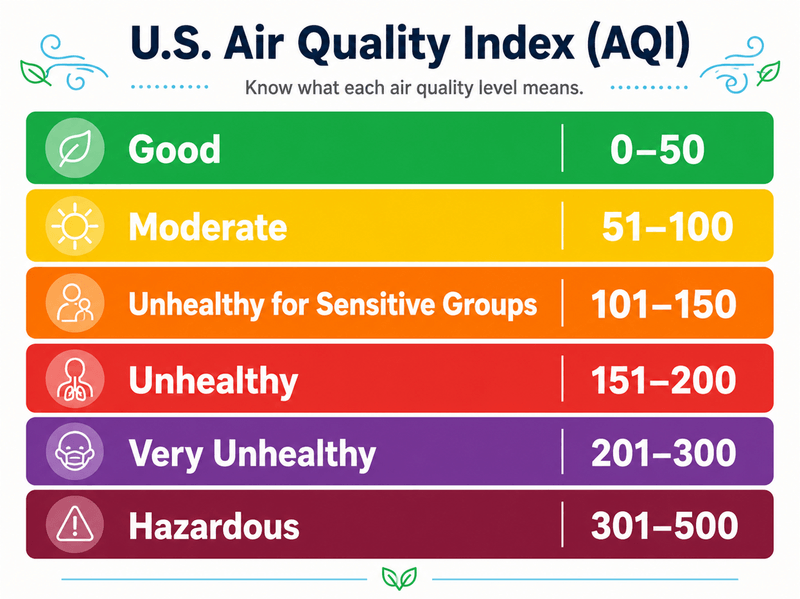
Raleigh's air quality is reported on the Air Quality Index, a color-coded scale from 0 to 500. Green and yellow are generally fine for most people. Orange means the air is unhealthy for sensitive groups such as children, older adults, and people with asthma or heart disease. Red, purple, and maroon mean the air is unhealthy for everyone, and everyone should limit time outside.
AQI categories follow the U.S. EPA scale used by the AirNow Fire and Smoke Map. Readings can vary block to block during a smoke event.
On the Fire and Smoke Map, these same colors appear on the monitors near Raleigh. During North Carolina's ozone season in the warmer months, the citywide number sometimes reflects ground-level ozone rather than smoke, so during a smoke event the fine particle reading is the one to watch. The N.C. Division of Air Quality issues daily forecasts for both ozone and PM2.5 for all 100 counties, which helps you plan a day. To see how the Triangle compares with the rest of the state, check North Carolina's statewide air quality map.
Most of the smoke that reaches Raleigh does not come from a nearby forest fire. It arrives as long-range haze from large wildfires in Canada and the western United States, and sometimes from prescribed burns and debris fires closer to home. North Carolina's own large wildfires usually burn in the western mountains, well over 200 miles from the Triangle. The pattern we have watched play out here is that a clear-looking sky over Wake County can still carry a smoke load from a fire nobody in Raleigh can see.
In June 2023, smoke from record wildfires in Quebec traveled south and east across the eastern United States and put Raleigh under a code red air quality day, even though the fires were hundreds of miles away. If you want to see how those outdoor readings compare over time, Raleigh's live air quality index map tracks the citywide AQI day to day.
Closer to home, the N.C. Forest Service reports that people cause the vast majority of North Carolina wildfires, and careless debris burning is the single leading cause. In the spring of 2026, crews responded to fires in the western part of the state, including areas where Hurricane Helene left large amounts of downed timber that now acts as heavy fuel.
Raleigh's wildfire smoke risk concentrates in a few predictable windows through the year rather than spreading evenly, and each one traces back to fires far from the Triangle. Knowing which window you are in helps you plan filter changes and outdoor time before the haze arrives.
Late spring and summer carry the highest odds. Warm-season winds push smoke from Canadian wildfires into the eastern United States, and the June 2023 Code Red day is the clearest recent example. This window has grown more active since 2023.
Late summer and early fall bring western smoke. Large fires across the western United States peak in these months, and their smoke can ride the upper-level jet stream all the way to North Carolina when the pattern lines up.
Winter and spring raise the local fire risk. North Carolina's own wildfire and debris-burning season runs through the mountains in these months, and prescribed burns add smoke on planned days. Downed timber from Hurricane Helene left heavy fuel across the western part of the state for the 2026 season.
Stagnant, humid stretches let smoke linger. When the air over Wake County stalls, whatever smoke arrives settles in and clears slowly instead of blowing through in a few hours.
On a humid Triangle afternoon, a hazy sky is often just moisture rather than smoke, so it pays to confirm before you cancel plans or seal up the house. The distinction matters, because only real smoke is a reason to close up and run a higher-grade filter.
Check the map before you trust your eyes. The Fire and Smoke Map shows whether PM2.5 near Raleigh is actually high, which ordinary humidity haze does not cause.
Look at the color of the sky. Wildfire smoke often tints the sky and the sun a brownish or orange hue, while humid haze usually looks white or milky gray.
Notice any burnt smell. A campfire or acrid smell that lingers outdoors points to smoke rather than moisture in the air.
Weigh the humidity. On a muggy afternoon, thick-looking air can still read low for PM2.5, so trust the monitor over the view.
The steps below are the same ones the Filterbuy team runs at home across the Southeast when the map turns orange. When smoke is in the air, the goal indoors is to keep outdoor particles out and to filter the air that is already inside. Close windows and doors, set your central HVAC system to recirculate, run the fan continuously, and use a MERV 13 filter, which the EPA and CDC recommend during smoke events to help capture and reduce fine particles. For an extra layer, add a portable air cleaner with a HEPA filter in the room where your family spends the most time. If you are not sure what your system can handle, how to pick the right MERV rating for your home compares the common options.
Seal the house. Close windows and doors, and if your system has a fresh-air intake, switch it to recirculate or close the outdoor damper so you are not pulling smoke inside.
Run the HVAC fan and upgrade the filter. Set the fan to “on” rather than “auto” so air keeps moving through the filter. Install a MERV 13 filter if your system can handle the airflow, or the highest rating your equipment supports. MERV 13 captures a large share of the fine particles found in smoke, though it is not the same as a true HEPA filter.
Make one clean room. Pick a room with few windows, keep the door closed, and run a portable air cleaner sized for the space. Choose a unit that does not produce ozone.
Change the filter more often during smoke events. A loaded, dirty filter moves less air and does less good. During heavy smoke, check your filter more frequently than usual and replace it when it looks gray or clogged.
Skip the activities that add particles indoors. Avoid burning candles, frying or broiling, vacuuming without a sealed HEPA machine, and smoking indoors while the air outside is bad.
After the smoke clears and the outdoor air improves, open the windows to air out the house, then swap in a fresh filter. In a humid climate like the Triangle, filters also load up faster with pollen and everyday dust, so many Raleigh households replace theirs every 60 to 90 days, and sooner during smoke or peak pollen. A clean filter is one of the cheapest upgrades you can make to the air your family breathes indoors.
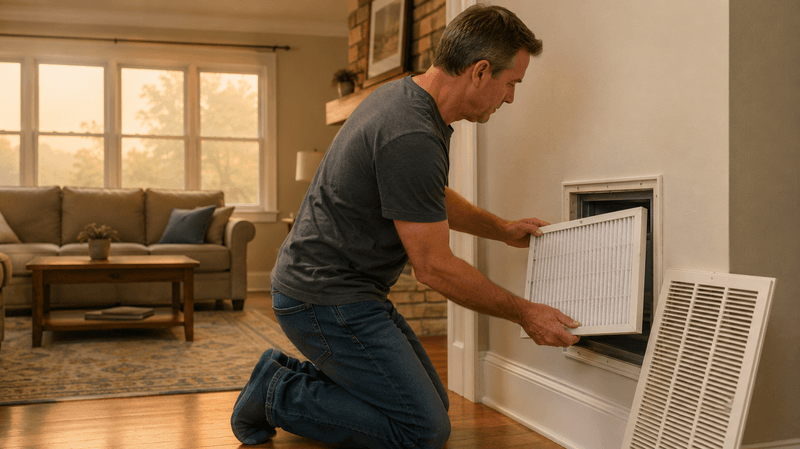
After manufacturing filters for over a decade and serving more than two million households, we have learned that the outdoor number only tells half the story. When wildfire smoke reaches Raleigh, the same fine particles work their way indoors and recirculate through your HVAC system. In the Triangle especially, a heavy smoke week can load a filter as quickly as our worst pollen weeks do, which is why we tell Raleigh families to check theirs sooner than the calendar says. A clean, high-efficiency filter turns that system into your home's first line of defense, capturing and reducing the smoke particles that would otherwise keep circulating past your family all day.
David Heacock, Founder and CEO, Filterbuy
Source: AirNow Fire and Smoke Map. The live tool at the top of this page. Built by the U.S. EPA and U.S. Forest Service, it shows active fires, smoke plumes, and current PM2.5 for Raleigh in one place.
Source: North Carolina Division of Air Quality smoke and wildfire guide. The state's page on smoke, wildfires, and prescribed burns, with daily PM2.5 and ozone forecasts for all 100 counties.
Source: National Weather Service Raleigh air quality page. Local air quality forecasts for the Triangle, Fayetteville, and Rocky Mount, redistributed by the Raleigh NWS forecast office.
Source: CDC wildfire smoke safety guidelines Federal health guidance for reducing smoke exposure, including the recommendation to use MERV 13 or higher filters in a central HVAC system.
Source: EPA guide to wildfires and indoor air quality. Steps to reduce wildfire smoke inside your home, including how to set up a clean room and choose an air cleaner.
Source: N.C. Forest Service Wildfire Situation Report. Daily counts of wildfires and acres burned across North Carolina, updated by the state forest service.
Source: National Interagency Fire Center national fire news. The nationwide snapshot of active large fires and the current preparedness level, useful for spotting the distant fires whose smoke can reach North Carolina.
Wildfire smoke is far harder on the lungs than everyday pollution. A Southern California study tied each 10 µg/m³ of wildfire PM2.5 to up to 10% more respiratory hospitalizations, versus under 1.3% for the same amount of PM2.5 from other sources.
Source: Aguilera et al., 2021, Nature Communications
Failing-grade air reaches millions, North Carolina metros included. The American Lung Association counts 152.3 million Americans, roughly 44% of the country, living where the air earns a failing grade for ozone or particle pollution.
Source: American Lung Association State of the Air 2026
Fine particles also endanger the heart. The American Heart Association links about 108,000 U.S. deaths in 2017 to air pollution and calls PM2.5 a modifiable cause of heart attacks and stroke.
Source: American Heart Association policy statement on air pollution and heart health
Raleigh sits far from the wildfires that make national headlines, and that distance can create a false sense of safety. The 2023 Canadian smoke event showed how quickly clean Triangle air can turn code red without a single flame in sight. My view, after years of tracking air quality across the Southeast for Filterbuy, is that central North Carolina households should treat wildfire smoke as an occasional but real part of life here, not a problem that only happens out West.
The good news is that protecting your indoor air does not take special equipment or a big budget. A live map to tell you when smoke is coming, a sealed home, and a clean high-efficiency filter cover most of what a family needs on a smoky day. The Raleigh homes that ride out a bad week comfortably are usually the ones that saw the smoke coming and got ready first, not the ones that happened to sit farthest from the fire. Check the map, trust the color, and change the filter before you need it.
Bookmark this page and check the live map before making outdoor plans on smoky or hazy days.
Sign up for local air quality alerts through the N.C. Division of Air Quality so a forecast reaches you a day ahead.
Check the filter in your HVAC system today, and keep a spare MERV 13 filter on hand for the next smoke event.
Pick one room to turn into a clean room, and make sure a portable air cleaner is ready to run.
Check the live map and the current AQI colors near Raleigh at the top of this page for today's status. When the N.C. Division of Air Quality issues a Code Orange or higher forecast, sensitive groups should limit outdoor time, and at Code Red or above everyone should. The map updates through the day as conditions change.
Yes. In June 2023, smoke from wildfires in Quebec drifted more than 700 miles and pushed Raleigh into a Code Red air quality day. Upper-level winds can carry fine smoke particles across the continent, so distant fires regularly affect the Triangle's air.
The EPA and CDC recommend a MERV 13 filter, or the highest rating your HVAC system can handle, during smoke events to help capture and reduce the fine particles in smoke. For an extra layer, add a portable air cleaner with a HEPA filter in your clean room. MERV 13 and HEPA are different standards, and how MERV 13 compares with true HEPA explains why MERV 13 is not HEPA.
Yes. Closing windows and doors, switching your HVAC system to recirculate, and running the fan with a clean filter all reduce the amount of outdoor smoke that gets inside and help filter the air already in your home. Staying indoors is the most effective step for most people during heavy smoke.
Change it more often than usual. Smoke, pollen, and humidity load a filter faster in central North Carolina, so many Raleigh households replace theirs every 60 to 90 days and sooner during a smoke event. A clogged filter moves less air and captures less, so replace it once it looks gray or dirty.
Do not guess about the air outside your door, and do not overlook the air inside your home. Check the live map above whenever Raleigh looks or smells hazy, then make sure your HVAC system is ready with a clean, high-efficiency filter from Filterbuy. Shop MERV 13 filters built for your Raleigh home and match the right size to your system so your family can breathe easier on the next smoky day.
Air Quality Index (AQI): A color-coded scale from 0 to 500 that the U.S. EPA uses to report daily air quality. Higher numbers and warmer colors mean more pollution and greater health risk.
PM2.5 (Fine Particulate Matter): Airborne particles 2.5 micrometers wide or smaller, roughly 30 times thinner than a human hair. PM2.5 is the main health threat in wildfire smoke because it travels deep into the lungs and bloodstream.
MERV 13: A filter efficiency rating on the Minimum Efficiency Reporting Value scale. The EPA and CDC recommend MERV 13 filters during smoke events to help capture and reduce fine particles. MERV 13 is not the same as HEPA.
HEPA: High Efficiency Particulate Air, a very high filtration standard used in portable air cleaners. HEPA filters capture at least 99.97 percent of particles at 0.3 micrometers.
Smoke Plume: A visible mass of smoke that drifts downwind from a fire. Plumes from distant wildfires can travel hundreds of miles and lower air quality far from the flames.
Prescribed Burn: A planned, controlled fire that land managers set to reduce wildfire fuel or improve forest health. Prescribed burns can add smoke to the air on the days they take place.
Fire and Smoke Map: The free interactive map built by the U.S. EPA and U.S. Forest Service that shows fire locations, smoke plumes, and near real-time PM2.5 readings across North America.
NowCast AQI: The version of the AQI shown on the Fire and Smoke Map. It reflects recent hours of monitoring, so it responds quickly to changing smoke conditions.
HVAC: Heating, Ventilation, and Air Conditioning, the system that heats, cools, and circulates air in a home. Its filter is the main way a central system reduces indoor particles.
Sensitive Groups: People at higher risk from air pollution, including children, older adults, people who are pregnant, and anyone with asthma, COPD, or heart disease.
Subscribe to wildfire smoke alerts for Raleigh, NC, to get a heads-up before the next event reaches your area.