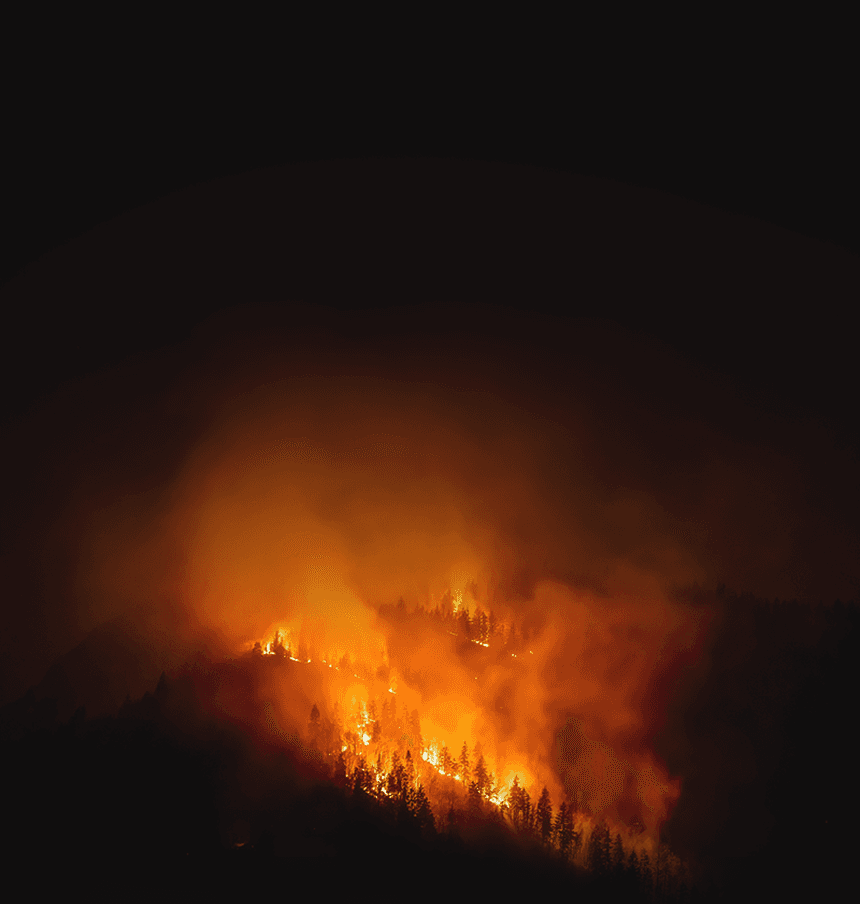
The moment a wildfire starts near you, you'll get an instant alert and simple tips to reduce your smoke exposure.
30xSmaller than a human hair
Fine enough to reach deep into the lungs. A MERV 13 is built to capture it.
It Doesn't Stay Local
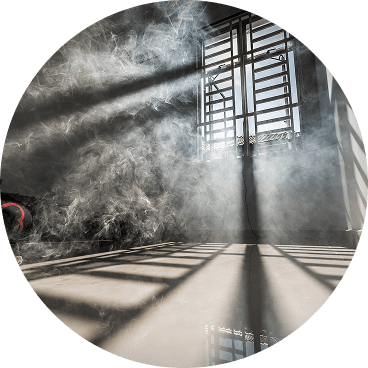
Smoke rides the wind far downwind — you can get smoky air with no fire nearby.
Simple steps to reduce indoor exposure.
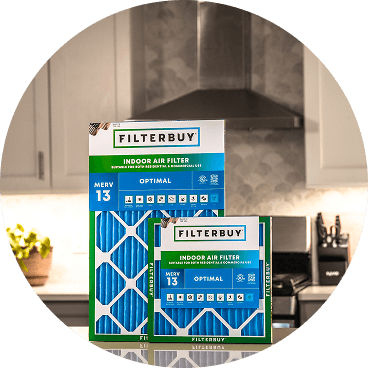
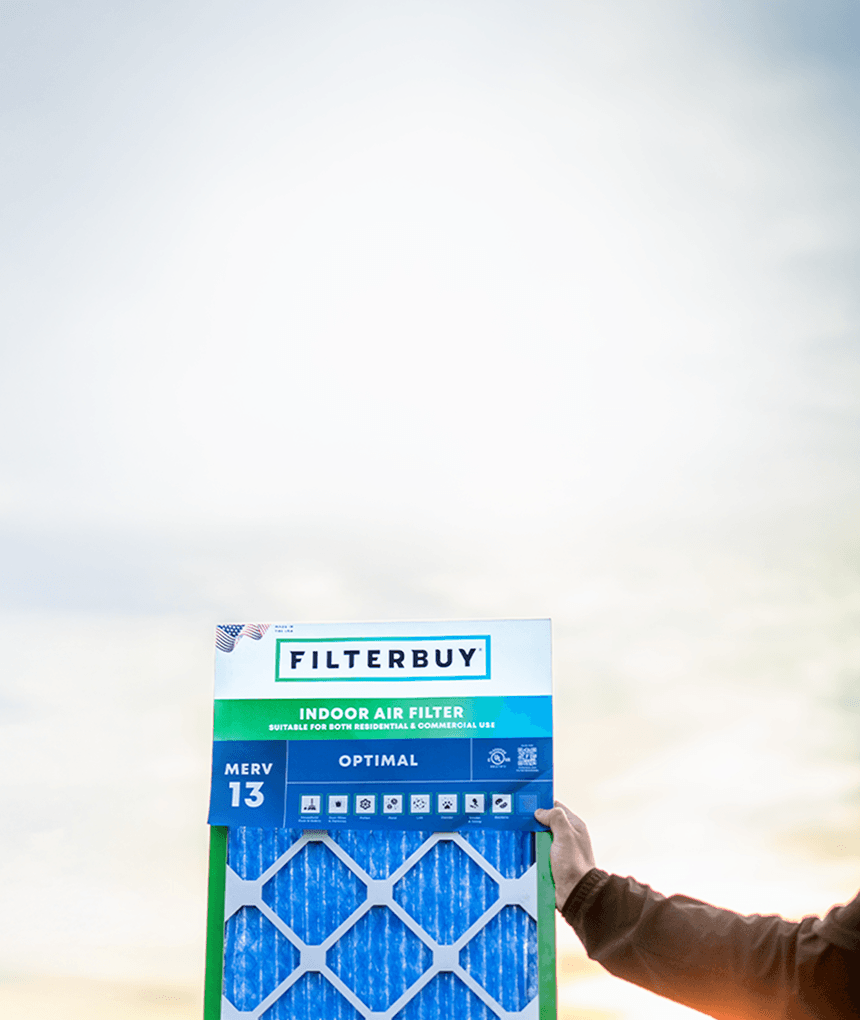
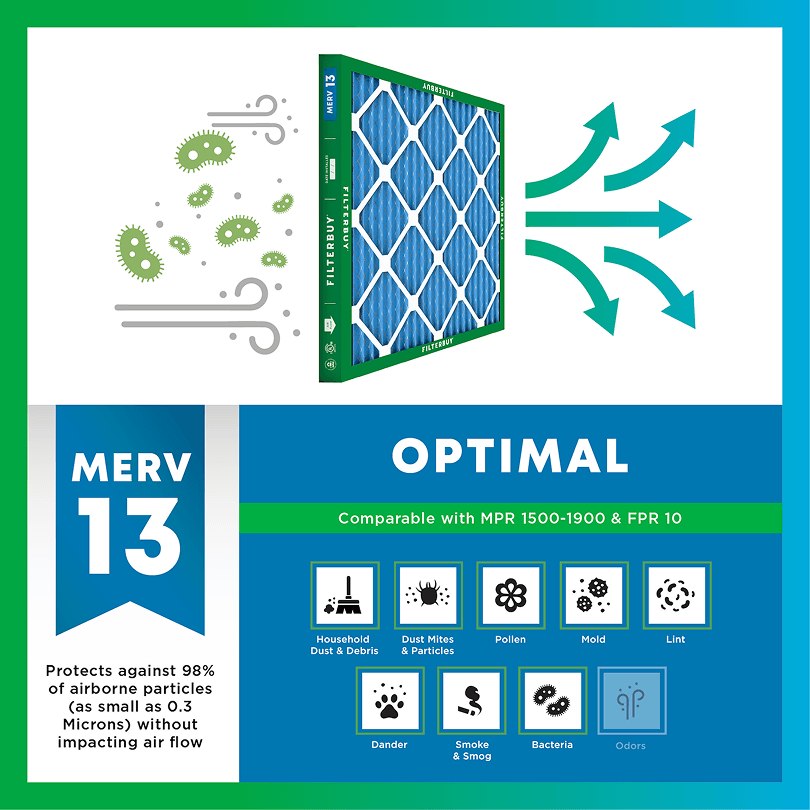
During smoke events, the EPA recommends upgrading to a MERV 13 filter — or the highest-rated filter your system can handle — to help reduce the fine particles smoke brings indoors. MERV 13 is the level most home HVAC systems can run while still capturing PM2.5, the fine particulate that makes up the bulk of wildfire smoke.
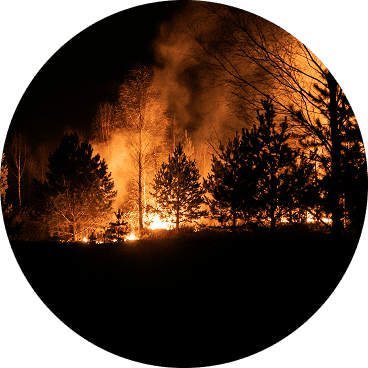
Over 70,000 wildfires burn in the U.S. every year.
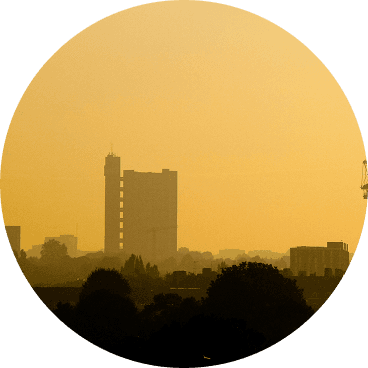
Wildfire smoke can travel 1,000+ miles, affecting states that aren't even near the blaze.
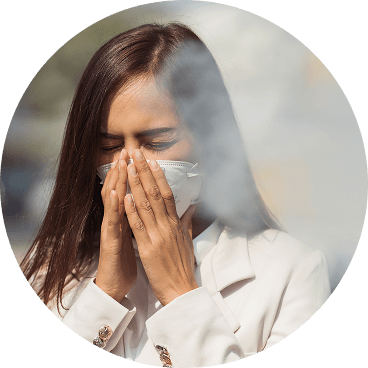
Exposure to wildfire smoke can worsen asthma, trigger heart issues, and lead to ER visits.
Indoor air can hold more fine particles during wildfire events unless it's properly filtered.
The EPA advises using MERV 13 filters or portable HEPA air cleaners during wildfire smoke events.
Use the live wildfire smoke tracker and upgrade your air filters today to protect your lungs and your home.
Shop Filters For Smoke Protection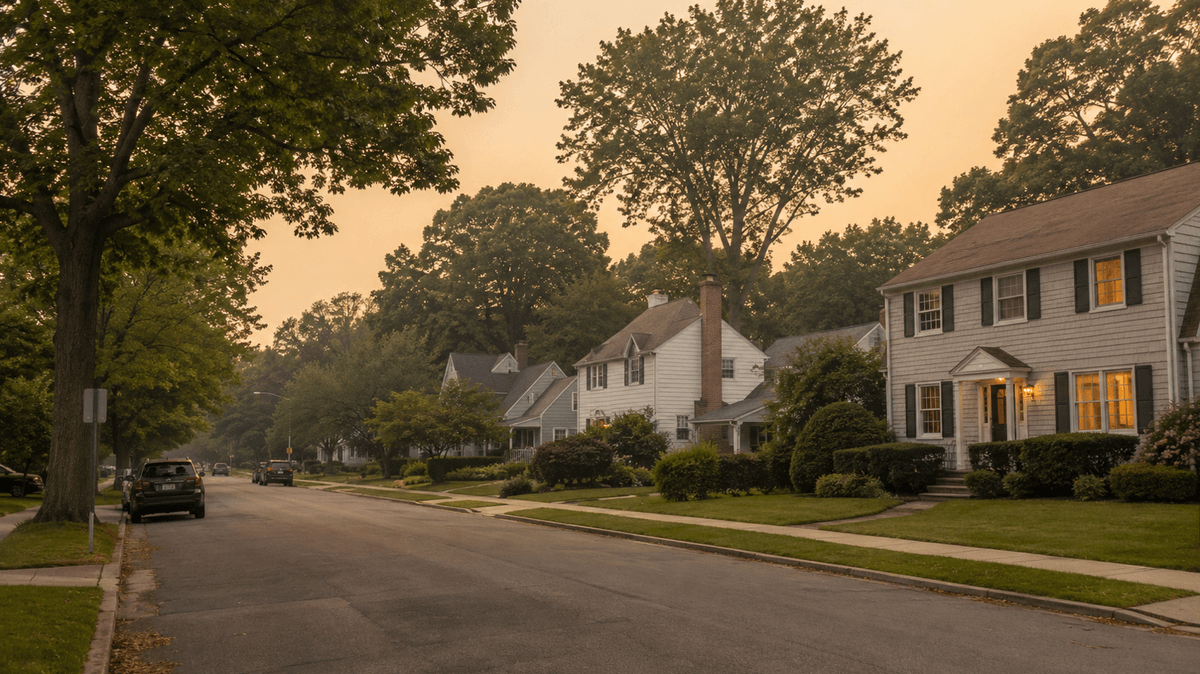
By Michelle Wan | Reviewed by David Clark, Licensed HVAC Technician
Published: August 16, 2026 | Last updated: August 16, 2026
No forest wildfires are burning in North Hempstead or Nassau County today. The haze here is imported, arriving from Canadian boreal fires 1,000 miles upwind or Pine Barrens brush fires 50 miles east. Check the ground-level PM2.5 reading for your ZIP code on the map above. Past AQI 100, close the house, recirculate, and run a MERV 13.
North Hempstead's wildfire risk is imported, not local. A built-out suburb of 237,000 with no pine barrens. The question is whether smoke is over you, not whether fire is near you.
Smoke aloft is not the same as smoke you breathe. A satellite plume can sit over Nassau County all day without raising ground-level PM2.5.
Overnight is when Long Island gets caught out. The boundary layer collapses after sunset and traps smoke at street level, so the worst reading often lands at dawn.
The EPA recommends MERV 13 or higher during smoke, fitted to a system that can handle it, with the fan running and the filter changed more often.
Long Island hit the top of the AQI scale in July 2026. AQI exceeded 400 across the island on July 16, and New York State issued a Nassau County advisory the next day.
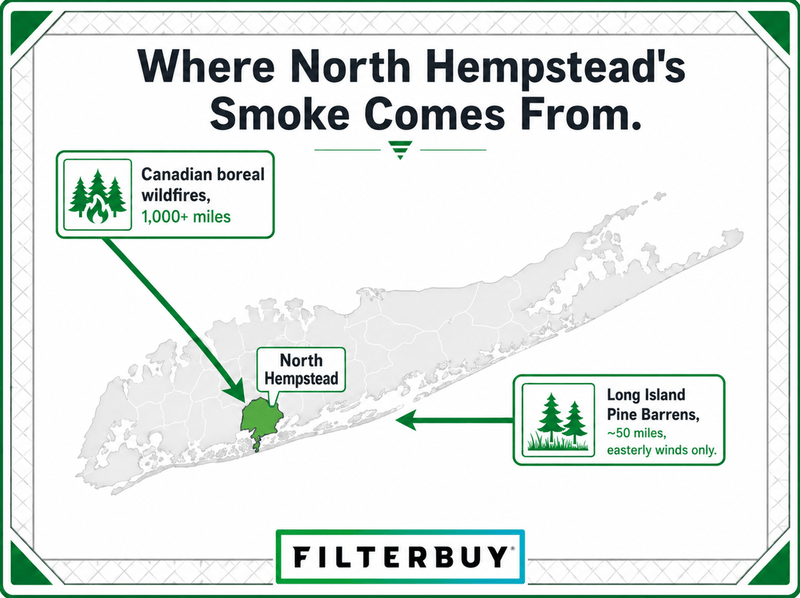
No forest wildfire is burning within the Town of North Hempstead: 54 square miles of dense Nassau County suburb, with no wildland fuel big enough to carry one. When it smells like smoke here, that smoke traveled to get here. Two upwind sources account for nearly every event.
Canadian boreal wildfire smoke (1,000+ miles away) is the dominant source. The Canadian Wildland Fire Information System reported roughly 900 active fires and 3.3 million hectares burned as of July 22, 2026. Smoke from that distance reaches Long Island routinely, as we cover in how far wildfire smoke can travel.
Long Island Pine Barrens brush fires (~50 miles east) do happen. In March 2025, four fires from Center Moriches to Westhampton burned 600–700 acres, yet none of that smoke reached North Hempstead, because the National Weather Service observed a northwest wind carrying the plumes offshore. Pine Barrens smoke only arrives here on an easterly or southeasterly wind, uncommon during the dry, gusty conditions that start them. See the DEC's wildfires program.
Check the ground-level PM2.5 layer, not the fire map. Three layers answer three different questions, and reading the wrong one leads people to panic or to ignore unhealthy air. The Filterbuy live wildfire and smoke map carries separate toggles for fire points, perimeters, smoke, and AQI because they are not interchangeable. The EPA and U.S. Forest Service AirNow Fire and Smoke Map agrees: satellite plumes indicate atmospheric smoke that may not affect ground-level air quality.
The third row governs your indoor decisions. Smoke visible overhead does not always reach breathing level.
Governor Hochul's office drew the same distinction in the July 15, 2026 statewide advisory, noting smoke would be visible aloft but might not reach ground level. A brown sky at AQI 42 calls for nothing; a pale sky at AQI 160 calls for action. The nearest EPA monitors sit at Eisenhower Park and Queens College, far enough apart that gradients can be steep.
Above AQI 100, close the windows and run filtered air. Outdoor AQI drives indoor decisions because fine particulate matter (PM2.5) infiltrates through gaps, older windows, and air intakes. New York State forecasts Long Island to reach Unhealthy for Sensitive Groups on July 17, 2026, a recent example of the third row below.
AQI categories follow the U.S. EPA Air Quality Index.
The worst air often arrives overnight, not when the sky looks worst. Smoke reaches Long Island in a layer aloft and only enters your lungs if it mixes down, which depends on the boundary layer near the ground.
By day that layer lifts to roughly 2,000 meters, diluting smoke through a deep column. After sunset, it collapses, sometimes below 100 meters, pressing the smoke it holds down to street level until morning. A plume that looked harmless at dinnertime can become an unhealthy reading by dawn.
So check the number before opening the windows in the morning, rather than trusting last night's sky. Nothing looks alarming at 6 a.m. even though the reading has been climbing for six hours.
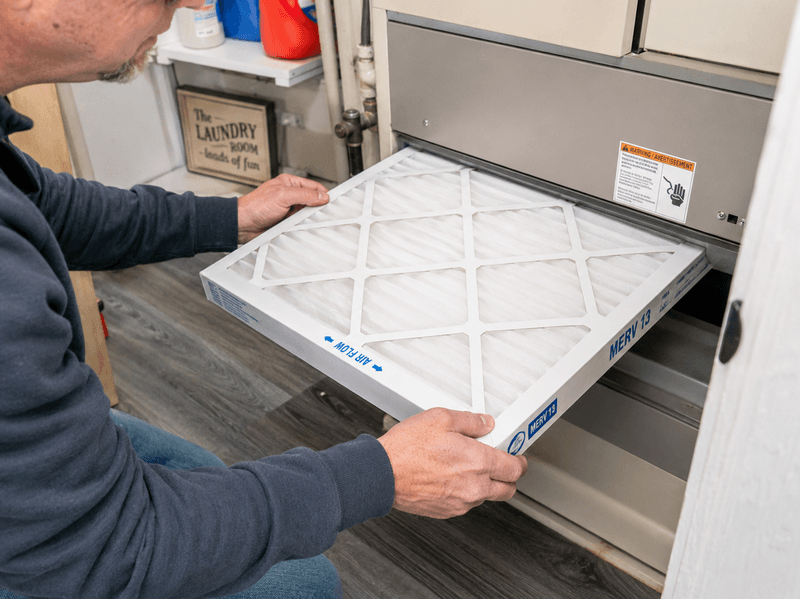
Upgrade to a filter rated MERV 13 or higher, run the fan continuously, and replace the filter once it looks dark brown or black. That is EPA guidance on wildfires and indoor air quality. Most systems accommodate MERV 13 provided the filter gets changed frequently. True HEPA does not work for a whole house, because its media is too dense for a residential blower to move air through.
Seal the envelope. Close the windows and doors, then set the thermostat fan to "On" so air keeps cycling.
Switch to recirculate. Close any fresh-air intake, since smoke that bypasses the filter never gets cleaned.
Install a properly sized MERV 13 filter. A half-inch bypass around the frame defeats a high-efficiency filter entirely.
Add a portable HEPA cleaner in the bedroom. A box fan with a 4-inch MERV 13 filter raised clean air delivery rate by 123% in EPA testing. If your system cannot take MERV 13, step down to MERV 11.
If your home has no ductwork, a furnace filter is not your tool. Much of North Hempstead predates central air: prewar co-ops in Great Neck, older capes in New Hyde Park, and many Manhasset, Port Washington, and Roslyn homes run on window units or nothing.
Close the fresh-air damper on a window unit. That vent setting is a direct pipe for PM2.5. Set it to recirculate.
Use single-hose portable ACs sparingly. They lower the internal pressure and draw smoky air in through every other gap. Two-hose units are safer.
Build one cleaner-air room—few windows, no fireplace, doors shut, with a portable HEPA- or EPA-tested box-fan cleaner.
If you cannot keep the house cool with the windows closed, EPA advises leaving for a cleaner-air space, since heat is the faster danger. A library or any air-conditioned building with real filtration will serve.
Inspect on condition, not on schedule. Heavy smoke can load a filter in days, so once the media has gone dark or you cannot see light through the pleats, it is done, whatever the box said.
Source: U.S. EPA.
Much of Nassau County's housing stock went up during the postwar boom, and plenty of those homes still run 1-inch filter slots on older PSC blower motors. MERV 13 is the right target for smoke, but on an older air handler, measure total external static pressure first. If the system is already near its limit, a high-MERV filter can starve airflow and stress the motor. The usual fix is a 4-inch media cabinet, which delivers MERV 13 filtration at a much lower pressure drop.
David Clark, Licensed HVAC Technician, technical reviewer for Filterbuy
Filterbuy builds MERV 13 in 1-, 2-, and 4-inch depths across 600+ sizes, plus made-to-order cuts for the odd cabinets common in older Nassau County homes. After a decade of fire seasons, the pattern we see is consistent: households that ride out a bad week set up before the smoke arrived.
Wildfire smoke drove over 25% of daily PM2.5 at roughly 40% of U.S. monitors for more than a month per year (2007–2018). Smoke is now a national baseline pollutant, not a Western problem.
Source: Wildland Fires Worsened Population Exposure to PM2.5 Pollution, National Library of Medicine.
A high-efficiency HVAC filter may cut indoor PM2.5 by about 50% when the fan runs continuously. Unfiltered, indoor levels sit at 55–60% of outdoor levels.
Source: EPA, Strategies to Reduce Exposure Indoors.
An estimated 1.4 million adults and 315,000 children in New York State had asthma in 2021. They are the first when the Long Island AQI passes 100.
Source: New York State Department of Health, Asthma Information.
No. There is no active forest wildfire in North Hempstead or Nassau County. Check the map above for smoke, which originates in Canada or eastern Suffolk County.
Fine particulate matter travels thousands of miles in the upper atmosphere, then mixes to ground level when conditions allow, sometimes days after the fire.
Above 100, New York State advises sensitive groups to reduce exposure: children, older adults, and people with asthma or heart disease. Above 150, health effects can reach everyone.
Close the fresh-air damper on any window unit, use single-hose portable ACs sparingly, and set up one cleaner-air room with a portable or DIY air cleaner. If you cannot stay cool with the windows shut, EPA advises leaving for a cleaner-air space.
Smoke reaches Long Island with about a day of warning, which is not enough time to hunt for the right filter. Check your live North Hempstead AQI above, find your exact filter size, and shop MERV 13 filters for smoke protection, shipped free and factory-direct. Add auto-delivery so the next one arrives before you need it.
Filterbuy has manufactured HVAC filters in the United States since 2013 and ships factory-direct in over 600 sizes. This page was written by Michelle Wan, who covers indoor air quality for Filterbuy, and reviewed by David Clark, a Licensed HVAC Technician. It does not replace advice from a qualified HVAC professional.
AQI (Air Quality Index): The U.S. EPA's 0–500 scale, Good (0–50) to Hazardous (301+).
PM2.5: Fine particulate matter 2.5 microns or smaller, the dominant health-relevant pollutant in wildfire smoke.
MERV 13: Minimum Efficiency Reporting Value 13, the rating the EPA recommends for residential HVAC during smoke.
Static pressure: Airflow resistance in a duct system. High readings indicate a system that may not tolerate a high-MERV filter.
Subscribe to wildfire smoke alerts for North Hempstead, NY, to get a heads-up before the next event reaches your area.