
New York City, NY Live Wildfire Smoke Map
Get Alerts For Wildfires In Your Area
The moment a wildfire starts near you, you'll get an instant alert and simple tips to reduce your smoke exposure.
What's In The Smoke
30xSmaller than a human hair
Fine enough to reach deep into the lungs. A MERV 13 is built to capture it.
How Far It Travels


It Doesn't Stay Local
Smoke rides the wind far downwind — you can get smoky air with no fire nearby.
What To Do During A Smoke Event
Simple steps to reduce indoor exposure.
- Stay In, Close UpShut windows and doors to keep smoke out.
- Set Fan To "On"Keeps air cycling through your filter, not just when heating or cooling.
- Recirculate AirSwitch off fresh-air intake so you're not pulling smoke in.
- Run A MERV 13Built to capture the fine PM2.5 in smoke.
- Add A PurifierExtra filtration for the room you use most.
- Wear an N95 if OutsideFits snug to block fine particles — a cloth mask won't.


The Best Air Filter For Wildfire Smoke
During smoke events, the EPA recommends upgrading to a MERV 13 filter — or the highest-rated filter your system can handle — to help reduce the fine particles smoke brings indoors. MERV 13 is the level most home HVAC systems can run while still capturing PM2.5, the fine particulate that makes up the bulk of wildfire smoke.
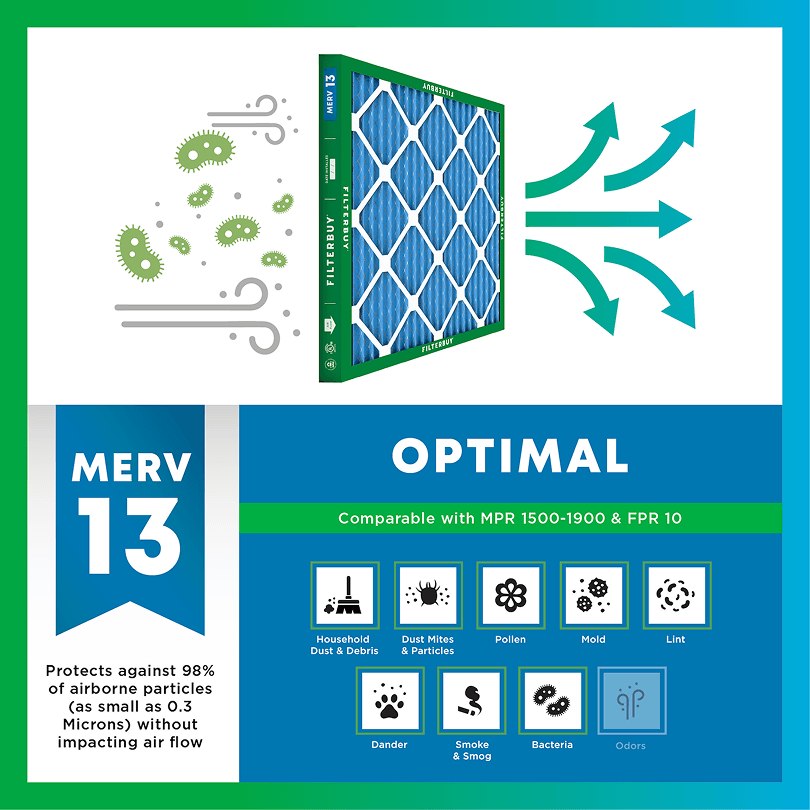
- Captures PM2.5 particles
- Blocks ash, soot, and smoke odor
- Keeps your indoor air safe—even when the outdoor air is dangerous
- Meets the EPA's recommended rating for filtering fine wildfire smoke particles.

Wildfire Smoke FAQs
Facts About Wildfires
Over 70,000 wildfires burn in the U.S. every year.
Wildfire smoke can travel 1,000+ miles, affecting states that aren't even near the blaze.
Exposure to wildfire smoke can worsen asthma, trigger heart issues, and lead to ER visits.
Indoor air can hold more fine particles during wildfire events unless it's properly filtered.
The EPA advises using MERV 13 filters or portable HEPA air cleaners during wildfire smoke events.
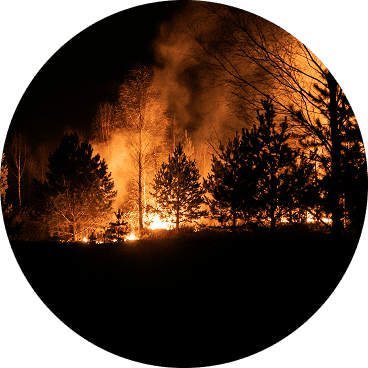
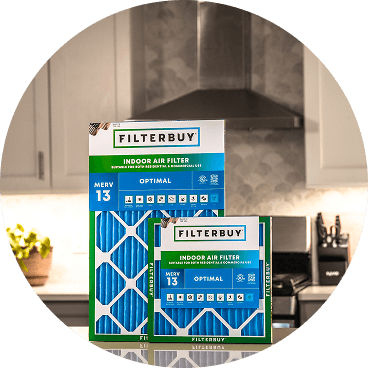
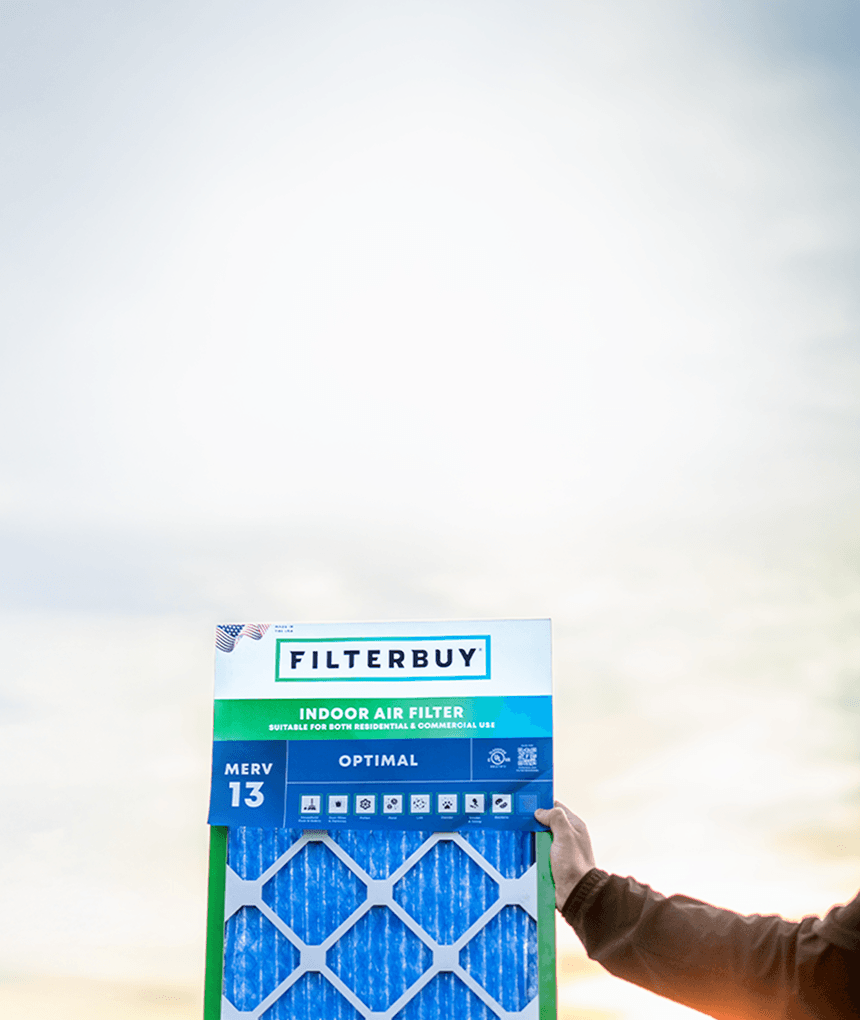
Don't Wait Until The Smoke's Inside.
Use the live wildfire smoke tracker and upgrade your air filters today to protect your lungs and your home.
Shop Filters For Smoke Protection
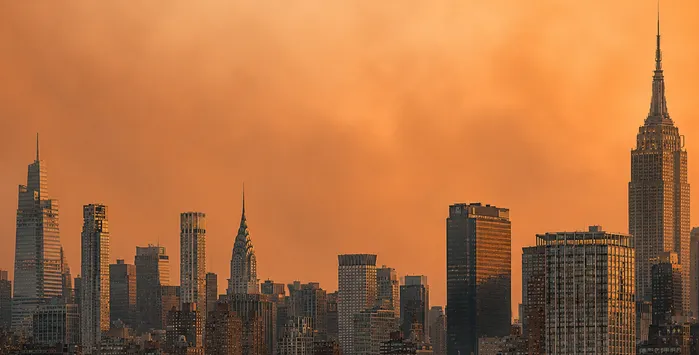
Current Live Wildfire and Smoke Map New York City, NY Today From Filterbuy.com
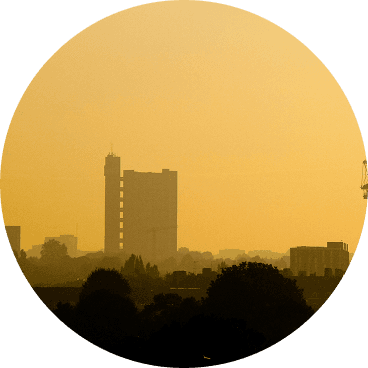
Most New Yorkers can't see what they're breathing on a smoky day. That's the problem. By the time the orange haze settles between the buildings, fine particulate matter has already been working its way through your lungs and your HVAC filter for hours. We built the live wildfire map for New York City, NY, at the top of this page to make that invisible threat visible. It shows which fires are burning across the U.S. and southern Canada right now, where the plumes are drifting, and what the AQI reads for your borough. The pattern almost always points north, toward Canadian boreal forests in Quebec, Ontario, Saskatchewan, and Manitoba. The orange-sky afternoon of June 7, 2023, when New York City briefly recorded the worst air quality of any major city on the planet, wasn't a one-off. It was a preview.
TL;DR Quick Answers
Current Live Wildfire and Smoke Map for New York City, NY, Today
Current status. Check the live map at the top of this page for real-time AQI across all five boroughs.
Where the smoke comes from. Most NYC wildfire smoke starts in Canadian boreal fires (Quebec, Ontario, Saskatchewan, Manitoba), not local wildfires.
The action threshold. AQI 101 is when sensitive groups stay in, and the HVAC fan switches to continuous. AQI 151 is when everyone stays in, and the home seals up.
The right filter. MERV 13 in the HVAC, plus a portable HEPA cleaner in one designated clean room.
The most reliable cross-check. AirNow Fire and Smoke Map at fire.airnow.gov paired with the NYS DEC Air Quality Health Advisory page.
Bottom line. Match the AQI reading on the live map above to the indoor protection protocol on this page, and keep at least one spare MERV 13 filter on hand before the next Canadian smoke event reaches the city.
Top Takeaways
Smoke usually starts far away. Most NYC wildfire smoke originates in Canada, not New York State.
AQI 101 is when you act. That's the threshold to switch the HVAC fan to continuous and close the windows.
MERV 13 belongs in your HVAC. Standard urban filters let smoke through, but MERV 13 catches PM2.5 in most home systems.
Cross-check two sources. Live readings can lag what you can smell. Use the live map above alongside the AirNow Fire and Smoke Map during an active event.
The biggest mistake. Most NYC residents wait until they can see the haze on the skyline. By then, the filter has been working overtime for hours.
How to Read the Live New York City Wildfire and Smoke Map
Federal monitoring feeds power the map above, and the data refreshes throughout the day. Red polygons are active fire perimeters reported by interagency dispatch centers. Bright orange or yellow dots are satellite-detected hotspots from the NOAA Hazard Mapping System, which means a satellite picked up a thermal signature within the last few hours. Gray and brown shading shows where smoke is drifting, both at the surface and aloft. The color overlay across counties and neighborhoods reflects the live AQI reading, on the same scale the EPA uses across the country.
Zoom in on your borough, your zip code, or your specific block. Manhattan, Brooklyn, Queens, the Bronx, and Staten Island can read meaningfully differently on the same day because wind patterns over the harbor and the East River push smoke around unevenly. If the reading on your block looks lower than what you can actually smell outside, cross-check it against a second source before deciding whether to go for a run or let the kids onto the playground.
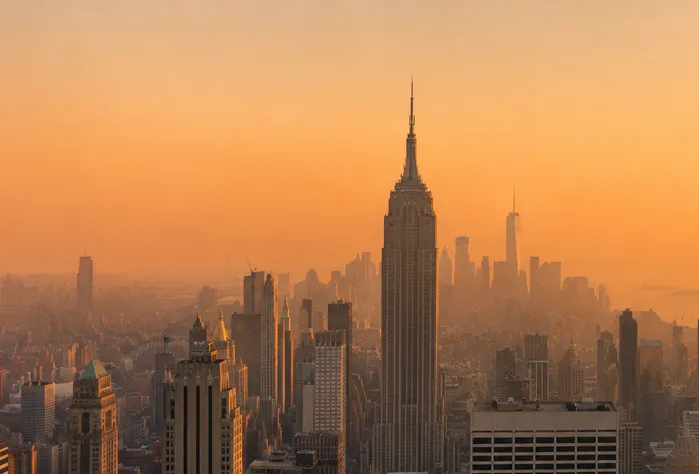
Why New York City Gets Wildfire Smoke from Hundreds of Miles Away
Most of the smoke that fouls NYC air doesn't come from any fire burning inside New York State. A wildfire burning in Quebec or Ontario can push particulate matter into the five boroughs within 24 to 48 hours when the upper-level winds align. The mechanism is simpler than most people expect. A high-pressure ridge parks over the Great Lakes or eastern Canada, the jet stream bends south, and smoke plumes that started thousands of feet above a boreal fire ride that southward bend straight into the densely populated Northeast corridor. NYC sits at the tail end of that conveyor belt.
Local fire sources do contribute, just at a smaller scale. The Pine Barrens on Long Island, the Hudson Highlands north of the city, and the Adirondack and Catskill regions all see periodic brush fires. Most of these produce localized smoke that stays close to the burn area. The exceptions show up during dry, windy stretches in spring and fall, when a Long Island or Hudson Valley fire can push haze into the lower Hudson and the outer boroughs for a day or two.
The Canadian fire seasons of 2023, 2024, and 2025 each delivered smoke to NYC at scale, and that pattern isn't slowing down. The boreal forests that line the eastern half of Canada are running hotter and drier than the long-term average, which means more fires and more smoke for the New York metro to absorb. This kind of smoke is now predictable enough to plan around, as long as you know which maps to watch.
Indoor Air Protection by AQI Level
After watching how NYC homes handle smoke events for over a decade, we've learned the single most useful skill is matching your indoor response to the live AQI reading. The protocol below scales from no action to full clean-room mode.
AQI 0 to 50 (Good). Operate normally. Open windows are fine, and your HVAC can run on its standard fan setting.
AQI 51 to 100 (Moderate). Sensitive groups (children, pregnant people, anyone with asthma, COPD, or heart disease) should limit prolonged outdoor exertion. Indoor conditions stay fine for most homes.
AQI 101 to 150 (Unhealthy for Sensitive Groups). Close the windows and switch the HVAC fan from Auto to On so the system filters air continuously. Sensitive groups should stay indoors. At this threshold, the live New York air quality index map becomes essential reading for the full state, not just the city.
AQI 151 to 200 (Unhealthy). Seal the home. Keep doors and windows closed, run the HVAC on continuous fan, and make sure a MERV 13 filter is installed. Anyone heading outside should wear a properly fitted N95.
AQI 201 and above (Very Unhealthy to Hazardous). This is full clean-room mode. Pick one interior room, run a portable HEPA cleaner sized for the square footage, keep the door closed, and limit cooking that produces smoke or steam. Outdoor exertion is off the table for everyone.
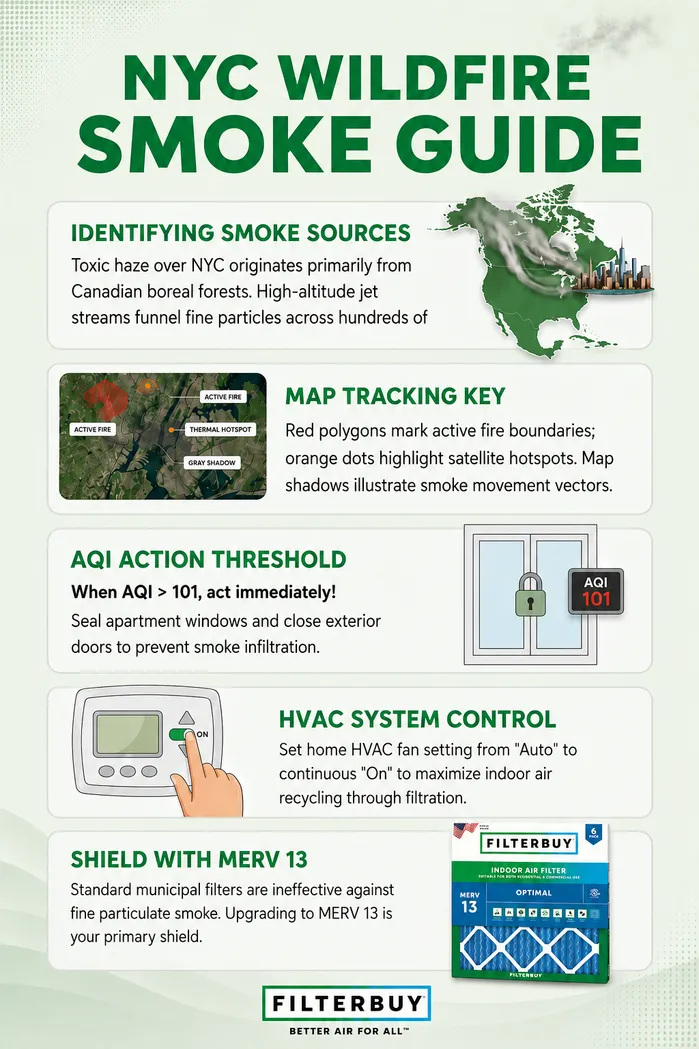
After manufacturing filters for over a decade and serving more than two million households, what we saw during the June 2023 Canadian smoke event has repeated almost every summer since. NYC customers who'd already upgraded to MERV 13 told us their indoor air held up. The ones still running MERV 8 felt the difference within hours and reordered the better filter by day two. We built the live wildfire and smoke map at the top of this page to give NYC families the head start, not the catch-up.
— Filterbuy Team
7 Essential Live Tracking and Health Resources Every New York City Resident Should Bookmark Before the Next Smoke Event
Wildfire smoke over NYC can shift faster than any single tool tracks. The homeowners who handle smoke events best are the ones who already know which sources to check before the haze rolls in. Keep the seven below bookmarked.
The federal interagency real-time fire and smoke overlay from the EPA, U.S. Forest Service, and NASA. Cross-check this against the live map embedded above when conditions shift fast. Source: AirNow Fire and Smoke Map
Federal guidance on creating a clean room at home, running portable cleaners, and tuning HVAC settings during a smoke event. Available in nine languages, which matters for multilingual NYC households. Source: EPA Wildfires and Indoor Air Quality
State-level AQI forecast and current observations from DEC's continuous monitoring network. DEC issues Air Quality Health Advisories whenever NYC Metro AQI is forecast to top 100. Source: New York State Department of Environmental Conservation Air Quality Index Forecast
Clinical guidance from the Centers for Disease Control and Prevention on protecting children, pregnant people, and anyone with chronic heart or lung conditions during smoke exposure. Source: CDC Wildfires and Your Safety
The local NWS forecast office for the NYC metro, Long Island, and the lower Hudson Valley. The place to check for Air Quality Alerts and Special Weather Statements that affect the five boroughs. Source: National Weather Service New York / Upton Office
The annual State of the Air report grades cities and counties on ozone and PM2.5 exposure. Useful for seeing how the NYC metro stacks up year over year. Source: American Lung Association State of the Air Report.
Official daily situation reports on national wildland fire activity, including the National Preparedness Level. When NIFC moves the preparedness level to 4 or 5, the smoke risk for the eastern seaboard rises with it. Source: National Interagency Fire Center Statistics.
3 Supporting Statistics That Show Why New York City Wildfire Smoke Is Now a Recurring Threat
1. Long-term PM2.5 exposure contributes to an estimated 2,000 excess deaths from lung and heart disease in NYC each year, roughly 1 in every 25 deaths citywide. Source: NYC Department of Health and Mental Hygiene Real-Time Air Quality.
Why this matters for your indoor air: wildfire smoke spikes ride on top of this baseline. Every event that pushes PM2.5 above 35 micrograms per cubic meter for 24 hours adds to a death count that's already too high.
2. In 2025, Canadian fires burned an area more than double the country's 10-year average, making it Canada's second-worst wildfire season on record. Source: Climate Central, Climate Change Worsens Wildfire Smoke.
Why this matters for your indoor air: 2023, 2024, and 2025 aren't outliers. The Northeast smoke pattern is now a recurring summer feature, not a freak event.
3. NASA satellite imagery in August 2025 captured smoke plumes from northern Canadian fires drifting across the eastern Canadian provinces, the Midwest, the Mid-Atlantic, and New England, with NYC registering AQI in the unhealthy range. Source: NASA Earth Observatory, Widespread Smoke from Canadian Fires.
Why this matters for your indoor air: By the time the haze is visible on the skyline, your filter has already been absorbing smoke for hours.
Final Thoughts and Opinion: New York City Is Underprepared for a Smoke Threat It Now Lives With
New York City has spent decades cleaning up the pollution that originates inside its own boundary. The city has electrified bus fleets, tightened building emissions, and controlled construction dust. The improvement is real and measurable. None of that progress changes what happens when smoke from a Quebec or Manitoba fire reaches the harbor.
Most New Yorkers treated June 2023 as a one-off shock at the time. Three summers later, the pattern is clear. NYC families now face a recurring wildfire smoke threat that originates outside the entire United States, that can spike AQI by 150 points overnight, and that lands before anyone has time to react. Most NYC apartments still run filters built for ordinary urban particulates, not for transboundary boreal smoke. We'd rather say that plainly than dress it up. Upgrading to a MERV 13 baseline year-round is the single highest-leverage move a NYC household can make to be ready for the next event.
Next Steps: What to Do in the Next Five Minutes, Five Days, and Five Months
The protective response scales with how much time is left before the next event. Use these three windows to sequence the work.
Next 5 minutes. Check the live map at the top of this page. If your borough is reading above AQI 100, close the windows and flip the HVAC fan from Auto to On.
Next 5 days. Pull the filter that's currently in the HVAC and confirm its MERV rating. If it's MERV 8 or lower, order at least two MERV 13 replacements for your system's size. Keep one installed, one in reserve.
Next 5 months. Build a household smoke checklist that names which interior room becomes the clean room and confirms that anyone with asthma or COPD has an inhaler refill. Add NYS DEC Air Quality Health Advisory notifications to the household phones.
Frequently Asked Questions
Stay Ahead of the Next New York City Smoke Event With MERV 13 Filters Built for NYC Apartments
Wildfire smoke doesn't wait for shipping. The single move that turns a hazy week from a health risk into a manageable inconvenience is having the right filter already installed before the air turns orange. We manufacture over 600 air filter sizes right here in the United States, including the exact MERV 13 fit for most NYC pre-war and post-war HVAC systems, and we ship directly to your building.
Subscribe to wildfire smoke alerts for the New York metro region to get a heads-up before the next event reaches the five boroughs.