The moment a wildfire starts near you, you'll get an instant alert and simple tips to reduce your smoke exposure.
30xSmaller than a human hair
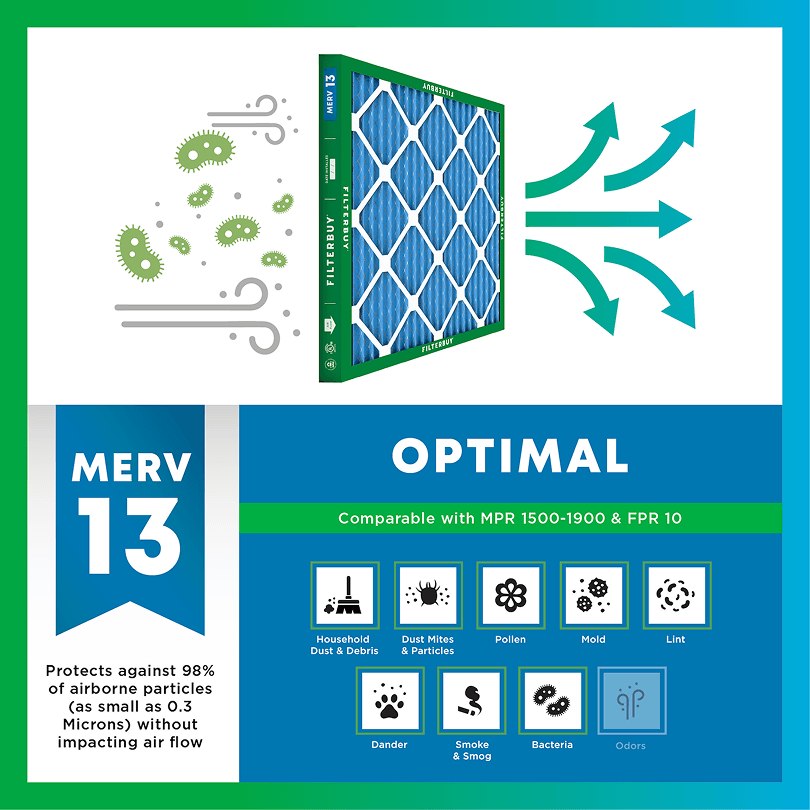
Fine enough to reach deep into the lungs. A MERV 13 is built to capture it.
It Doesn't Stay Local
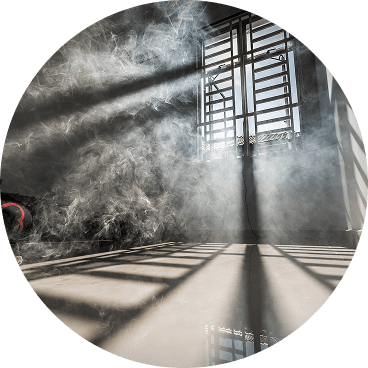
Smoke rides the wind far downwind — you can get smoky air with no fire nearby.
Simple steps to reduce indoor exposure.
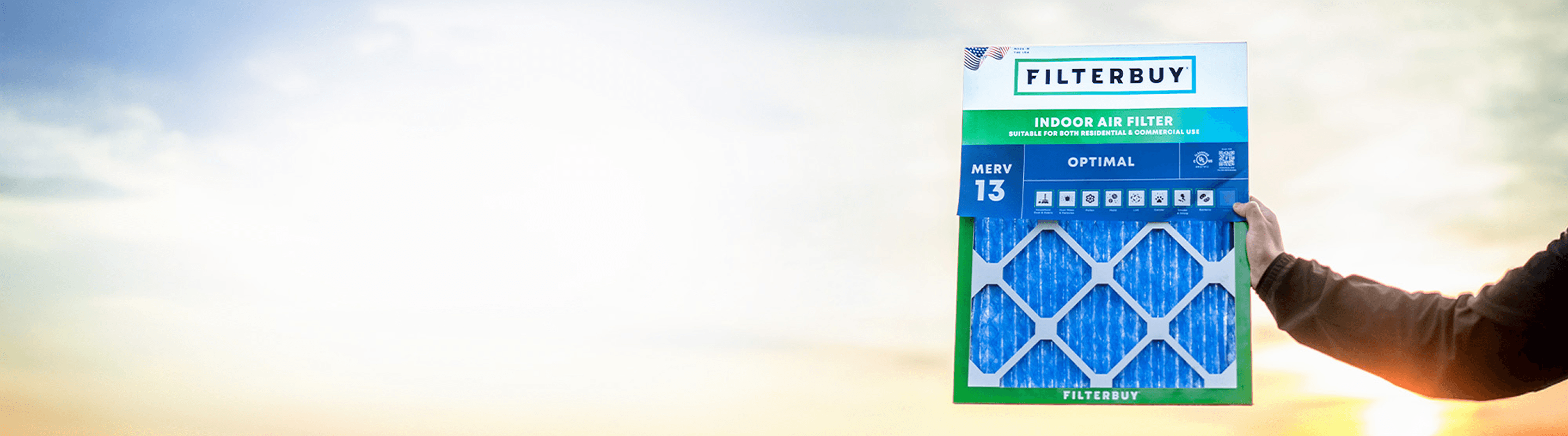
During smoke events, the EPA recommends upgrading to a MERV 13 filter — or the highest-rated filter your system can handle — to help reduce the fine particles smoke brings indoors. MERV 13 is the level most home HVAC systems can run while still capturing PM2.5, the fine particulate that makes up the bulk of wildfire smoke.
Over 70,000 wildfires burn in the U.S. every year.
Wildfire smoke can travel 1,000+ miles, affecting states that aren't even near the blaze.
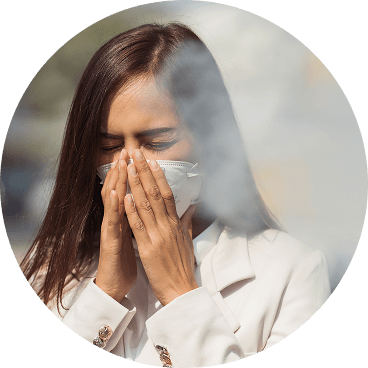
Exposure to wildfire smoke can worsen asthma, trigger heart issues, and lead to ER visits.
Indoor air can hold more fine particles during wildfire events unless it's properly filtered.
The EPA advises using MERV 13 filters or portable HEPA air cleaners during wildfire smoke events.
Use the live wildfire smoke tracker and upgrade your air filters today to protect your lungs and your home.
Shop Filters For Smoke Protection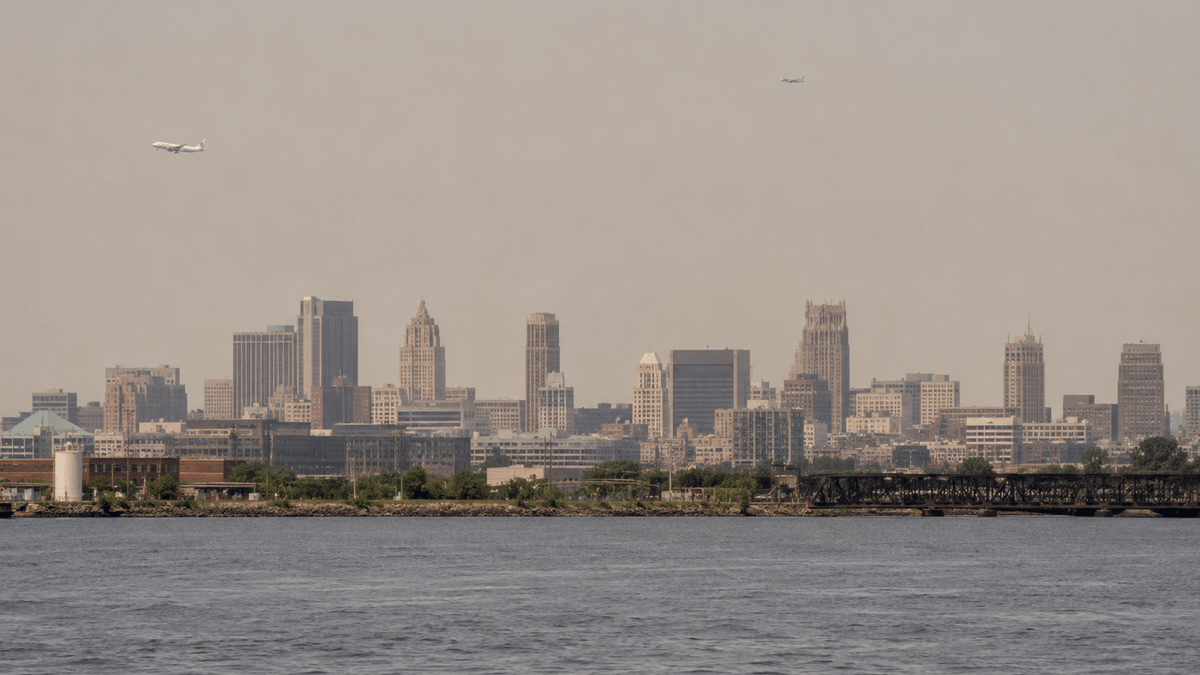
Author: Michelle Wan
Reviewer: David Clark, Licensed HVAC Technician
Publish Date: August 1, 2026
Updated Date: August 1, 2026
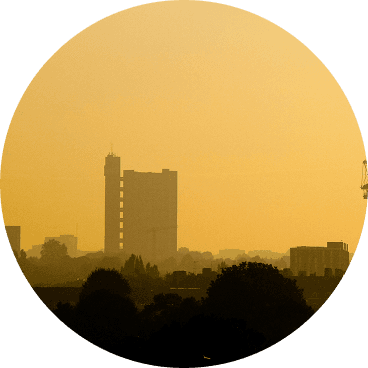
Smoke stalled part of Newark's economy before most residents knew a fire was burning. On June 7, 2023, plumes from Quebec cut visibility at Newark Liberty International Airport far enough that the Federal Aviation Administration slowed inbound traffic, with departure delays averaging 82 minutes. No fire burned in New Jersey that week.
The pattern repeated this month, when the New Jersey Department of Environmental Protection issued Code Red alerts on three consecutive days, July 15 through July 17, 2026. Filterbuy builds a page like this for every market we ship filters into, from Los Angeles to Kansas City. Newark is the first one that forced us to add a section no other city page needed, because this city already lives under one of the heaviest transportation particle loads in the country and residents read gray skies as ordinary.
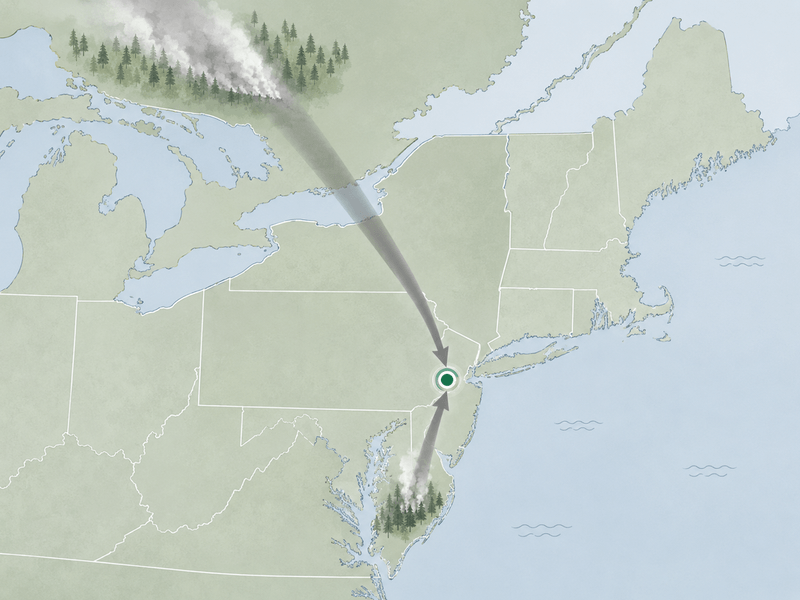
Newark, New Jersey faces almost no wildfire risk of its own. Its smoke arrives from Canadian fires hundreds to thousands of miles north and, less often, from the Pine Barrens 60 miles south. Filterbuy's advice is to check the live map alongside the state forecast and install a MERV 13 filter before smoke arrives. Newark's reference air monitor has been offline since 2022, which makes the map matter more.
The Pine Barrens, 60 miles south, sent smoke north to the New York metro area during the April 2025 Jones Road Wildfire.
NJDEP dismantled the Newark Firehouse monitoring station in 2022 and sited a replacement a mile northeast.
Wildfire particles damage lungs more per microgram than the traffic and port pollution Newark already breathes.
The map shows live fire locations and satellite smoke plumes alongside ground-level air quality around Newark. Newark itself rarely shows a fire marker. What matters here is the plume layer and the nearest monitor readings, because smoke over Essex County almost always started somewhere else.
Colored dots mark ground monitors reporting fine particle pollution, called PM2.5, refreshing hourly. Shaded gray areas mark satellite-detected plumes. A dot can read Good while a plume is arriving, because satellites see smoke first. Our team reads plumes before dots. Filterbuy's walkthrough on how to read a wildfire smoke map covers every marker.
Gray skies in Newark have three common causes, and only one responds to a filter upgrade. The Environmental Protection Agency states the problem plainly. Smoke from distant fires can be small enough that local particle sources overshadow it, and Newark's local sources are substantial, including Port Newark and the Interstate 78 and 95 corridors.
A pleated filter captures airborne particles. It does not remove ozone, which is a gas.
Filterbuy went looking for a Newark reference monitor while building this page and found none reporting. NJDEP's Bureau of Air Monitoring ended data collection at the Newark Firehouse station on September 26, 2022, after being required to vacate the property for construction. That site belonged to the EPA's NCore multipollutant network and was New Jersey's only station measuring lead against federal standards. NJDEP sited a replacement a mile northeast at 42 Chestnut Street, which its 2025 network plan projected reaching operation in late 2025.
Two habits follow. Confirm which monitor a reading comes from, because several consumer apps still publish a value labeled Newark Firehouse. Treat the plume layer as your early warning.
New Jersey's forecast uses the EPA's Air Quality Index scale, published with NJDEP Code color alerts.
Category thresholds follow the national Air Quality Index scale used by NJDEP and the National Weather Service.
The EPA and the Centers for Disease Control and Prevention agree on the response. Close the house, stop pulling in outdoor air, and upgrade filtration. Filterbuy's walkthrough on keeping wildfire smoke out of your house covers each step. Here is what we tell Newark households.
Close windows and set your thermostat fan to On rather than Auto, so air keeps moving through the filter.
Switch any fresh air intake to recirculate, or close the outdoor damper, so the system stops drawing smoke in.
Install a MERV 13 filter, or the highest rating your fan and filter slot accept, matching EPA guidance.
Check the filter more often than the calendar suggests, because smoke loads it faster than dust and restricts airflow before it looks dirty.
Set up one clean room with a sealed door and a portable air cleaner if smoke lasts past a day.
Step three is where our standard advice breaks down in Newark. Much of the city's housing is renter-occupied and runs window units, so there may be no filter slot to upgrade. If so, sealing the window unit and running a portable air cleaner in one room protects you more than any filter Filterbuy sells. Our guide on which MERV rating your HVAC system can handle explains how to check yours.
Filterbuy's checklist for Newark households:
Confirm whether your system supports MERV 13, then keep a spare on hand or set up auto delivery.
Compare conditions with the Newark air quality index map, the New York City wildfire and smoke map, and the national wildfire and smoke map.
Newark families call us during smoke events from fires they have never heard of, a thousand miles north in Ontario or sixty miles south in the Pine Barrens. After manufacturing filters for over a decade and serving more than two million households, we have learned that the households who come through a smoke event comfortably are the ones who already had the right filter installed, not the ones searching for one once the sky turns gray.
David Heacock, Founder and CEO, Filterbuy
Filterbuy maintains this list using only sources we check live.
The map at the top of this page is the first thing we open in an event.
Source: AirNow Fire and Smoke Map
New Jersey posts its Code color alerts here, which drive school and worksite decisions in Essex County.
Source: NJDEP Bureau of Air Monitoring
The Upton office covers Newark, so its fire weather watches apply here, not Philadelphia's.
Source: National Weather Service New York, NY
Explains how much outdoor air a closed Newark house still pulls in through gaps.
Source: EPA Wildfires and Indoor Air Quality
Federal guidance on which symptoms warrant a call, written for asthma and heart patients.
Source: CDC Safety Guidelines for Wildfires and Wildfire Smoke
A daily count showing where smoke starts days before it reaches New Jersey.
Source: National Interagency Fire Center National Fire News
Where a named fire's acreage and containment get updated.
Source: InciWeb Incident Table
Almost 850 fires burned across Canada by mid-July 2026, more than 180 in Ontario, with winds carrying plumes into the U.S. Northeast.
Source: NASA Earth Observatory, Ontario Wildfire Smoke Moves East
The metro earned an F for ozone, 12th worst nationally, while year-round particle pollution passed.
More than 706,882 New Jersey children breathe unhealthy air by at least one measure.
Source: American Lung Association, State of the Air 2026 New Jersey
A 10 microgram per cubic meter rise in wildfire PM2.5 raised respiratory hospitalizations 1.3 to 10 percent, against 0.67 to 1.3 percent for non-wildfire PM2.5.
Source: Aguilera and colleagues, Nature Communications, 2021
Upper-level winds carry smoke hundreds or thousands of miles. Canadian fires put smoke over Newark in June 2023, 2025, and July 2026 with nothing burning in New Jersey.
Filterbuy recommends MERV 13, matching EPA guidance, because it captures a far higher share of fine smoke particles than a standard MERV 8 filter. Confirm your system handles the added airflow resistance first.
Filterbuy manufactures MERV 13 pleated filters in over 600 sizes in Talladega, Alabama, so Newark households can find an exact fit before the next plume. Shop MERV 13 Air Filters at Filterbuy to check your size.
PM2.5: Fine particulate matter 2.5 micrometers or smaller, small enough to reach deep into the lungs. It drives the AQI during a smoke event.
MERV 13: The filter rating the EPA recommends during wildfire smoke events. It is not HEPA.
Ground-Level Ozone: A gas formed when sunlight reacts with vehicle and industrial emissions. Filters do not remove it.
Subscribe to wildfire smoke alerts for Newark, NJ, to get a heads-up before the next event reaches your area.