Shop by
If you smell smoke or see hazy skies over Detroit right now, your indoor air quality is already under attack. As air filtration manufacturers who've spent over a decade obsessing over what people breathe, we can tell you firsthand — wildfire smoke contains the exact type of microscopic PM2.5 particles that standard home air filters weren't designed to catch. And when Canadian wildfire plumes push into Southeast Michigan, we see a massive spike in emergency filter upgrade orders from Detroit-area customers scrambling to protect their families.
We built this real-time wildfire smoke resource for Detroit because we've heard directly from thousands of Michigan customers who told us the same thing: they couldn't find current smoke conditions, Air Quality Index readings, health guidance, and air filtration recommendations in one place without having to dig through multiple government websites. Below you'll find a current live forest fire and smoke map for Detroit, MI today, real-time air quality levels, step-by-step safety actions based on today's conditions, and expert filtration guidance straight from our manufacturing team on exactly which filters actually stop wildfire smoke particles — and which ones don't.
We update this page regularly during active smoke events, so you're never guessing about what you're breathing. Whether you're checking conditions before heading outside, protecting a family member with asthma, or wondering why your home feels hazy even with windows closed, start here. Scroll down for the live map, current AQI readings, and the filtration recommendations our team gives our own families during smoke events. Don't Let Wildfire Smoke Decide Whether It's Safe Inside Your Detroit Home — Take Control of Your Indoor Air Quality Today. Check your current HVAC filter right now, upgrade to a MERV 11 or MERV 13 at FilterBuy.com, and have the right protection in place before the next smoke event turns Detroit's skies hazy and your family's air dangerous. Your two-minute filter change is the single most effective step between checkinththelive smoke map and actually breathing cleaner air.
Real-Time Tracking
Check the AQI before you step outside. Your safety depends entirely on Detroit's current Air Quality Index reading — not on whether the sky looks clear.
The short answer:
AQI 0–100: Generally safe for most people
AQI 101–150: Limit outdoor time if you have asthma, COPD, or heart conditions
AQI 151+: Everyone should stay indoors
Check these free tools right now:
AirNow Fire and Smoke Map (https://fire.airnow.gov/) — official EPA real-time wildfire and AQI tracking
PurpleAir Map (https://map.purpleair.com/) — neighborhood-level readings updated every two minutes
Michigan EGLE EnviroFlash (https://www.enviroflash.info/) — state air quality alerts sent directly to your phone
What most Detroit residents don't realize: Even when you stay indoors, EPA data shows wildfire smoke PM2.5 reaches 55%–60% of outdoor levels inside your home without proper filtration. Closing windows helps — but your HVAC air filter is what actually stops smoke particles from circulating through your house. After over a decade of manufacturing filters and helping thousands of Michigan customers through smoke events, our top recommendation is a MERV 13 filter running continuously during any smoke event. It captures approximately 85%+ of the microscopic PM2.5 particles that make wildfire smoke dangerous — and it's a two-minute install that makes a measurable difference in the air your family breathes.
Detroit is ground zero for wildfire smoke in the Midwest.
The American Lung Association ranked Detroit 6th worst in the nation for year-round particle pollution in 2025. Canadian wildfire smoke was a major factor.
Smoke events that were once rare in Southeast Michigan now hit multiple times every summer.
Our emergency filter order data from Metro Detroit confirms the trend is accelerating year over year.
Closing your windows is not enough. EPA data shows indoor PM2.5 reaches 55%–60% of outdoor levels even with all doors and windows shut.
Some homes see infiltration as high as 100%. Your HVAC air filter is the single most controllable protection your family has against wildfire smoke indoors.
Your current filter is probably doing nothing against smoke. Standard fiberglass filters (MERV 1–4) don't capture the microscopic PM2.5 particles that make wildfire smoke dangerous.
The fix is straightforward:
Upgrade to MERV 11 (minimum) or MERV 13 (recommended)
Run your HVAC fan continuously during smoke events
Expected result: approximately 50% reduction in indoor PM2.5
Time to install: less than two minutes
Preparation is the deciding factor. Families who handle smoke events well almost always do three things before the smoke arrives:
Bookmarked real-time monitoring tools — AirNow, PurpleAir, EGLE alerts
Installed the right MERV-rated filter for their system
Created a household action plan with clear steps for each AQI level
Real-time monitoring tools are free and available right now. No cost. No subscriptions. Bookmark these today:
AirNow Fire and Smoke Map — official EPA/USFS live tracking
PurpleAir — neighborhood-level sensor data updated every two minutes
Michigan EGLE EnviroFlash — state air quality alerts sent to your phone or email
Detroit residents face a wildfire smoke reality that's intensified dramatically in recent years — and from our perspective as air filter manufacturers serving millions of customers nationwide, Southeast Michigan has become one of the most underestimated smoke-impact zones in the country. Our order data tells the story clearly: emergency filter purchases from Metro Detroit zip codes have surged year over year during Canadian wildfire season, yet most customers who contact us during active smoke events admit they had no idea their existing filters were doing almost nothing against wildfire particles.
The core problem is visibility — not the hazy skies kind, but the information kind. When smoke rolls into Detroit from fires burning in Ontario, Quebec, or the western U.S., residents need three things fast: confirmation of what's actually happening in the air right now, clear guidance on whether it's safe to be outside, and specific steps to protect indoor air quality immediately. That's exactly what this page delivers. Everything below is organized around the real questions our Michigan customers ask us during every smoke event. You'll find a live interactive wildfire and smoke map showing current conditions over Detroit, a breakdown of AQI levels and what each range actually means for your daily decisions, health risk information backed by EPA and CDC guidance, and step-by-step safety protocols based on today's specific conditions.
We've also included the indoor air protection strategies our own manufacturing and HVAC teams recommend — including the filter ratings that actually capture wildfire smoke particles versus the ones that just give you a false sense of security. One thing we've learned from working with customers through multiple wildfire smoke seasons: the families who have a plan and the right filtration in place before smoke arrives handle these events with far less stress and far better air quality than those reacting after conditions deteriorate. This resource is designed to help you be in that first group — starting today.
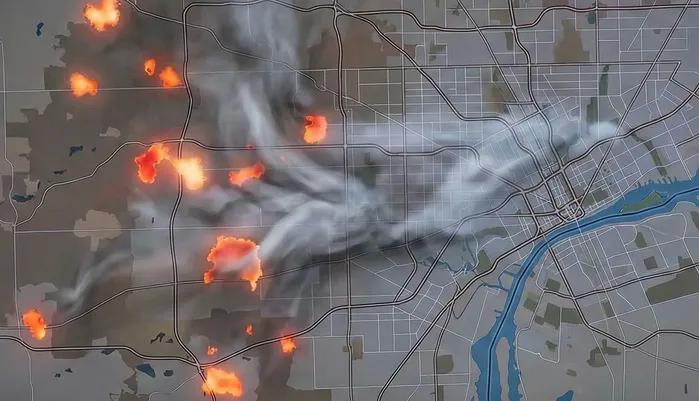
"After manufacturing air filters for over a decade and analyzing customer data from every major wildfire smoke event, we can say with confidence that the biggest indoor air quality mistake Detroit homeowners make during smoke events isn't leaving their windows open — it's assuming the standard filter already in their HVAC system is doing anything meaningful against wildfire PM2.5 particles, because in most cases, it's not."
After helping thousands of Michigan customers protect their indoor air during wildfire smoke events, we know that having the right information sources bookmarked before smoke arrives makes all the difference. Our air quality team uses these seven resources ourselves when monitoring conditions — and they're the same ones we recommend when Detroit-area customers call asking whether it's safe to go outside or what's happening with the air in their neighborhood. Each one serves a specific purpose in your family protection toolkit, from live smoke tracking to health guidance to the indoor air strategies we've tested firsthand in our own homes.
This is the resource our team pulls up immediately when customers start calling about hazy skies over Detroit. The EPA and U.S. Forest Service's official real-time interactive map shows active wildfire locations, smoke plume movement, and ground-level PM2.5 readings from government monitors and nearly 15,000 crowdsourced sensors — all displayed on the familiar color-coded AQI scale. We recommend bookmarking this page on your phone right now so it's one tap away the next time Southeast Michigan air quality takes a turn. Source: U.S. Environmental Protection Agency & U.S. Forest Service — https://fire.airnow.gov/
Here's something most Detroit residents don't realize until smoke is already in the air: Michigan's Department of Environment, Great Lakes, and Energy operates a two-tier alert system specifically designed to give you a warning before conditions get dangerous in Wayne, Oakland, Macomb, and surrounding counties. Air Quality Advisories go out for sensitive group conditions, and full Air Quality Alerts trigger when AQI reaches unhealthy levels.
Pro Tip: Sign up for EGLE's EnviroFlash notifications today — they'll send air quality warnings straight to your phone or email, and from our experience, that early heads-up gives you critical time to upgrade your HVAC filter and seal up your home before PM2.5 levels peak. Source: Michigan Department of Environment, Great Lakes, and Energy — https://www.michigan.gov/egle/about/organization/air-quality/air-monitoring
This is a resource we point Detroit customers toward constantly, because here's what most people don't understand about air quality monitoring: the official government AQI reading for "Detroit" might come from a single monitor that's miles from your actual home. PurpleAir's crowdsourced sensor network provides hyperlocal PM2.5 readings updated every two minutes, giving you ground-level data for your specific neighborhood. We've seen situations during smoke events where one side of Metro Detroit reads Moderate while the other side is deep into Unhealthy territory — and the only way to catch that difference is neighborhood-level monitoring as PurpleAir provides. Source: PurpleAir, Inc. — https://map.purpleair.com/
If the AirNow map tells you what's happening right now, NOAA's smoke forecast system tells you what's coming next — and after years of watching smoke events affect our customers across the Great Lakes region, we can tell you that 24 to 48 hours of advance notice changes everything. NOAA's HYSPLIT-based forecasting system predicts where wildfire smoke plumes will travel and how concentrated they'll be at ground level using satellite fire detection, atmospheric modeling, and Forest Service emissions data. Use this tool to get ahead of the smoke rather than reacting after it's already affecting your family. Knowing conditions will worsen tomorrow gives you time to upgrade your air filter, stock up on supplies, and adjust plans today. Source: National Oceanic and Atmospheric Administration — https://airquality.weather.gov/
The NWS Detroit/Pontiac forecast office is the resource that answers the question our Michigan customers ask most often during smoke events: "When will this end?" Their area-specific forecasts and atmospheric analysis explain exactly why smoke is lingering over Southeast Michigan and when local wind patterns, temperature inversions, or incoming precipitation are expected to push it out. During active smoke events, check their forecast discussions for the kind of hyperlocal atmospheric detail that national resources can't provide — it's the difference between knowing smoke is "in the area" and understanding whether your specific neighborhood will see relief by morning or not until midweek. Source: National Weather Service, Detroit/Pontiac, MI — https://www.weather.gov/dtx/
When customers contact us worried about family members with asthma, COPD, or heart conditions during a smoke event, this is the resource we direct them to immediately after discussing their filtration options. The CDC's authoritative guidance covers how wildfire smoke affects the body at every AQI level, who faces the greatest health risks, proper N95 respirator use, and how to create a clean air room in your home. As air filtration manufacturers, we can help you capture smoke particles inside your home — but the CDC's health-specific guidance on symptoms to watch for, when to seek medical attention, and how to protect vulnerable family members is expertise we always defer to the medical professionals on. Source: Centers for Disease Control and Prevention — https://www.cdc.gov/wildfires/about/index.html
This is the preparation resource we wish more Detroit homeowners would bookmark before wildfire season rather than after. The EPA's central hub consolidates downloadable fact sheets on preparing for fire season, reducing indoor smoke exposure, creating clean air shelters, protecting against ash, and understanding AQI categories — plus the comprehensive Wildfire Smoke Guide for Public Health Officials. Download and save the "Reduce Your Smoke Exposure" and "Prepare for Fire Season" fact sheets to your phone now. We've learned from working through multiple smoke seasons with our customers that the families who prepare before smoke arrives handle these events with dramatically better indoor air quality — and far less stress — than those scrambling to react after conditions deteriorate. Source: U.S. Environmental Protection Agency — https://www.epa.gov/air-quality/wildland-fires-and-smoke
When you manufacture air filters for over a decade and serve millions of customers, you develop a data-driven perspective on air quality trends most people never see. We track emergency filter orders by zip code. We monitor which MERV ratings customers upgrade to during smoke events. And we hear directly from families dealing with the consequences of inadequate filtration. These three statistics from authoritative government and public health sources validate what our manufacturing experience has been telling us — and why we built this resource.
Detroit's Air Quality Crisis Is Worse Than Most Residents Realize
Long before the American Lung Association's 2025 "State of the Air" report made it official, our order data was already sounding the alarm. Emergency filter upgrades from Metro Detroit zip codes had been climbing year over year during Canadian wildfire smoke events. The report confirmed what we were seeing:
Detroit ranked 6th worst in the entire nation for year-round fine particle pollution (PM2.5).
77.2 million Americans lived in counties experiencing unhealthy particle pollution spikes — the highest number in 16 years.
The Midwest and Northeast absorbed dramatically increased wildfire smoke impacts, shifting the crisis away from its traditional Western U.S. concentration.
As manufacturers tracking these trends daily across every region we serve, Detroit's trajectory has been among the most alarming shifts we've monitored over the past several years. Southeast Michigan isn't a secondary wildfire smoke market anymore. Source: American Lung Association — "State of the Air" 2025 Report https://www.lung.org/media/press-releases/2025-detroit-sota
Closing Your Windows Isn't Enough — The Infiltration Numbers Prove It
The most common thing we hear from Detroit customers during their first smoke event: "I closed all my windows, so we should be fine, right? " We've been correcting that dangerous misconception for years. The EPA's data backs us up completely. What actually happens inside your home during a wildfire smoke event without proper filtration:
55%–60% of outdoor PM2.5 penetrates indoors even with all doors and windows closed.
Infiltration can climb as high as 100% in some homes — making indoor air just as hazardous as outdoor air.
Upgrading to a high-efficiency HVAC filter and running the fan continuously can reduce indoor PM2.5 by approximately 50%.
That last number is the one that matters most. It's the difference between your family breathing dangerous air and breathing significantly cleaner air — and it comes down to a filter change that takes less than two minutes. After seeing these infiltration numbers play out through thousands of customer conversations, we can tell you with absolute confidence: your HVAC air filter is the most impactful protection your family has during a smoke event. Source: U.S. Environmental Protection Agency — Strategies to Reduce Wildfire Smoke Exposure Indoors https://www.epa.gov/wildfire-smoke-course/strategies-reduce-exposure-indoors
The Health Data Explains the Urgency We Hear Every Smoke Season
Every wildfire season, our customer service team takes calls from Detroit-area families experiencing health effects they didn't expect and can't explain — until they connect it to the smoke outside. The EPA's research explains exactly why those calls spike when they do. What wildfire smoke PM2.5 exposure is linked to:
Respiratory and cardiovascular emergency department visits increase as smoke density intensifies.
Exacerbation of asthma, heart failure, and COPD — particularly in children, seniors, and those with pre-existing conditions.
Premature death from short-term fine particle exposure during smoke events.
Emerging links to preterm birth and impaired cognitive function based on recent research.
During the 2023 Canadian wildfire smoke event that hit Detroit particularly hard, public health data showed a measurable surge in daily asthma emergency department visits across affected regions. After hearing firsthand from thousands of families impacted by these exact outcomes, we made it our mission to get ahead of smoke events with resources like this page. The families who have proper filtration in place and know what actions to take before smoke arrives don't end up making those urgent calls — to their doctors or to us. Source: U.S. Environmental Protection Agency — Health Effects Attributed to Wildfire Smoke https://www.epa.gov/wildfire-smoke-course/health-effects-attributed-wildfire-smoke-0
After over a decade of manufacturing air filters and serving millions of customers, here's the truth: the wildfire smoke crisis affecting Detroit isn't going away. It's getting worse. And the families who treat it as an occasional inconvenience rather than a recurring threat are the ones we hear from in a panic every time smoke rolls back into Southeast Michigan.
We built this resource because we saw a gap nobody else was filling:
Government agencies provide excellent data, but it's scattered across multiple platforms, and most people can't find or interpret it during a stressful smoke event.
Health organizations publish critical guidance — but it often reaches families after they're already experiencing symptoms.
Most air quality content online is generic — written by people who've never manufactured a filter, analyzed infiltration data firsthand, or taken a call from a parent whose child is having an asthma attack because their HVAC filter was doing nothing against wildfire smoke.
We bring a perspective nobody else in this conversation has. We sit at the intersection of air quality science, real-world product performance, and direct customer experience. We know which filters actually capture smoke particles because we manufacture them. We know which MERV ratings are realistic for residential systems because our technical team fields those questions daily. And we know what happens inside homes during smoke events — not from theoretical modeling, but from thousands of customer conversations.
If we could leave every Detroit resident with one takeaway, it would be this: the time to prepare for wildfire smoke is not when you smell it. It's right now. The difference between a family that weathers a smoke event comfortably and one that scrambles in crisis almost always comes down to three things they did before the smoke arrived:
They bookmarked the right monitoring tools — AirNow, PurpleAir, Michigan EGLE alerts — so they knew the moment conditions started deteriorating.
They already had the right filter installed — not a standard fiberglass filter that lets smoke pass through, but a MERV 11 or higher rated for their specific HVAC system.
They had a plan for their household — which rooms to seal, when to keep kids and pets indoors, when to run the HVAC continuously, and at what AQI level to take each step.
That's it. No complicated equipment. No expensive renovations. Just preparation, the right filter, and the knowledge to act quickly. We're air obsessed at FilterBuy — and we make no apologies for it. We believe every Detroit family deserves clean indoor air, even when skies are filled with smoke from fires burning a thousand miles away. We believe indoor air quality shouldn't be something people think about only during emergencies. And we believe that as American manufacturers with direct experience serving customers through every major smoke event of the past decade, we have a responsibility to share what we've learned.
This page is part of that commitment. Bookmark it. Share it with your neighbors. And when the next smoke event hits Detroit — because it will — come back here first. We'll keep it updated, because better air for all isn't just our tagline. It's what drives everything we do.
Don't wait until you smell smoke to take action. Here are the specific steps you should take right now, in order of priority, based on everything we've learned from helping thousands of Detroit-area customers through wildfire smoke events.
Step 1: Bookmark Your Real-Time Monitoring Tools Today
Save these three resources to your phone's home screen:
AirNow Fire and Smoke Map — https://fire.airnow.gov/
PurpleAir Real-Time Map — https://map.purpleair.com/
Michigan EGLE Alerts — Sign up for EnviroFlash at https://www.enviroflash.info/
During the 2023 Canadian wildfire event, Detroit's AQI went from safe to hazardous within hours. Customers who had these tools bookmarked responded immediately. Those who didn't spend critical time searching while their families breathed dangerous air. You can find more helpful indoor resources on our site to stay prepared.
Step 2: Check Your Current HVAC Air Filter Right Now
Pull out your current filter and find the MERV rating on the frame:
MERV 1–4 (standard fiberglass): Doing nothing against smoke virtually. Upgrade immediately.
MERV 5–8: Catches dust but allows most PM2.5 smoke particles through. Upgrade recommended.
MERV 11: Strong baseline smoke protection. Our minimum recommendation during smoke events.
MERV 13: Our top recommendation for most homes. Captures approximately 85%+ of PM2.5 particles.
Important: Confirm your system can handle the increased airflow resistance before upgrading. A filter that's too restrictive reduces airflow, strains your blower motor, and can actually worsen indoor air quality. Check your system manual or consult a local HVAC professional. Our team offers furnace filter MERV ratings guidance to help you choose the right level of protection.
Step 3: Stock Up on Filters Before Smoke Season
This is the mistake we see every year. Customers wait until smoke is in the air, then rush to order — along with thousands of other families doing the same thing.
Stock 2–3 replacement filters at the right MERV rating for your system. We carry specialized sizes like the 10x32x1 air filter for various HVAC setups.
Order before May — Canadian wildfire season runs May through September.
During active smoke events, filters clog faster — expect replacement every 2–3 weeks instead of 60–90 days.
Check your filter weekly during smoke events — if it's dark brown or black, replace it immediately.
Step 4: Create a Household Smoke Event Action Plan
Post this where every family member can see it. When smoke hits, you won't have time to research.
AQI 101–150 (Orange — Unhealthy for Sensitive Groups):
Close all windows and doors
Switch the thermostat from "AUTO" to "ON" for continuous fan circulation
Move sensitive family members indoors — children, elderly, anyone with respiratory conditions
Cancel outdoor exercise for sensitive individuals
AQI 151–200 (Red — Unhealthy):
Keep all household members indoors
Confirm HVAC filter is MERV 11 or higher — replace if not
Designate one clean air room with the fewest windows and doors
Run a portable HEPA air purifier in bedrooms if available
Avoid candles, gas stove cooking, fireplace use, and vacuuming without a HEPA
AQI 201+ (Purple/Maroon — Very Unhealthy to Hazardous):
Stay indoors. Cancel all non-essential outdoor plans.
Seal gaps around windows and doors with towels or weatherstripping.
Set HVAC to recirculate mode.
Keep pets indoors.
Contact your healthcare provider for breathing difficulty, chest pain, or persistent coughing. For broader safety, follow a preventive maintenance checklist to ensure your system is ready for high-demand periods.
Step 5: Share This Resource with Your Neighbors
Wildfire smoke doesn't stop at property lines. The families around you may not have access to the information on this page.
Send this link to family, friends, and neighbors in Metro Detroit.
Post it in neighborhood group chats and community pages before smoke season.
Check on elderly neighbors and families with young children who may not have real-time air quality access.
The more prepared households in your community, the fewer families in emergency rooms during the next event. You can also share tips for cleaner air to help others manage general air quality issues.
Step 6: Find the Right Filter at FilterBuy.com
Not sure which size or MERV rating you need? We make it simple:
Enter your filter dimensions or system model at FilterBuy.com.
Choose from over 600 sizes — including custom sizes if yours isn't standard. We offer common sizes like the 30x32x1 air filter and the 16x24x1 air filter.
Select the MERV rating that matches your system's capability.
Set up a subscription so replacements arrive automatically — no more forgetting during smoke season.
Questions? Our team helps Detroit-area customers with wildfire smoke filtration every day during smoke season. We can even assist if you notice HVAC system leaking water or other mechanical issues during high usage. We'll find the highest protection level your system can handle — because protecting your family shouldn't require guesswork. For residents in other regions, we provide local HVAC service areas and support.
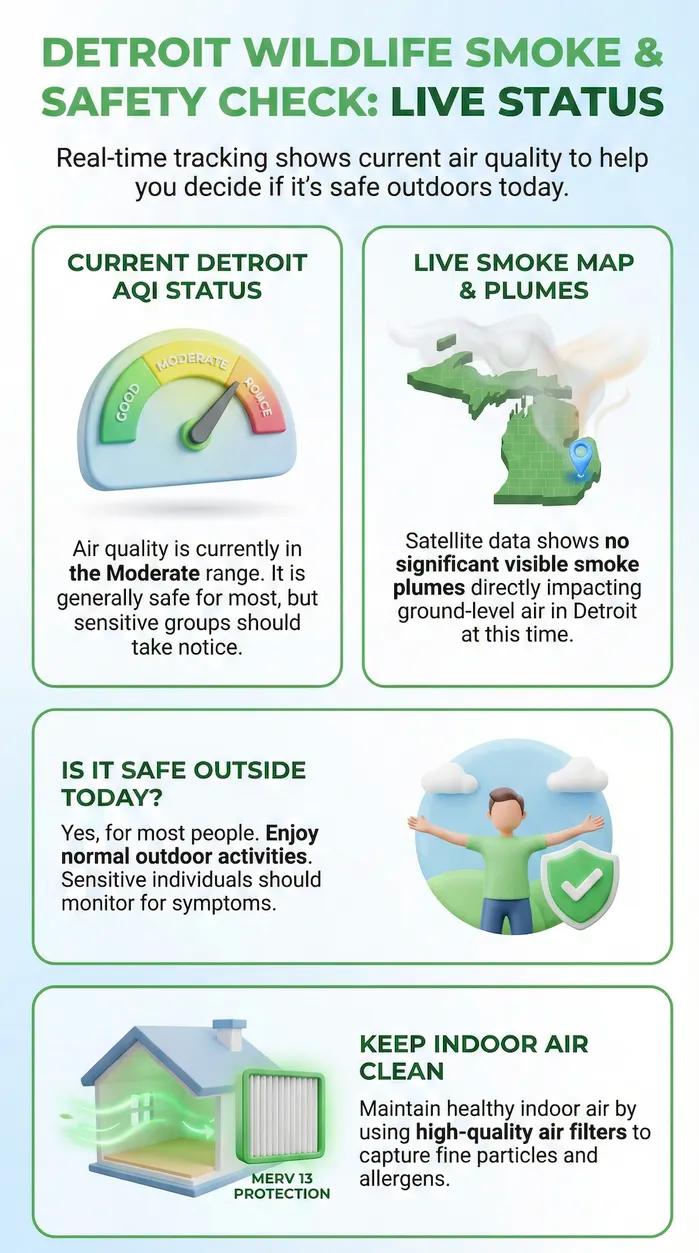
A: Check the Air Quality Index (AQI) for your specific area before going outside:
AQI 0–50 (Green): Safe for everyone
AQI 51–100 (Yellow): Most people are fine. Sensitive individuals use caution.
AQI 101–150 (Orange): Children, seniors, and those with respiratory or heart conditions should limit outdoor time.
AQI 151+ (Red or higher): Everyone should significantly reduce time outdoors.
A: Most wildfire smoke affecting Detroit travels hundreds or thousands of miles through upper-level wind patterns. The primary sources:
Canadian boreal forest fires — Ontario, Quebec, Manitoba, and Alberta. The most frequent and severe source of Detroit smoke events.
Western U.S. wildfires — California, Oregon, Montana. Reach Detroit within 48–72 hours via the jet stream.
Great Lakes region fires — Michigan's Upper Peninsula, Wisconsin, Minnesota. Less common but produce the most immediate impacts due to proximity.
From tracking emergency filter orders during smoke events, we can confirm Canadian wildfire smoke produces the worst episodes in Metro Detroit — typically hitting hardest between June and August.
A: Closing windows is your first step — but not enough on its own. EPA data confirms indoor PM2.5 still reaches 55%–60% of outdoor levels without proper filtration. What actually works:
Upgrade your HVAC filter to MERV 11 (minimum) or MERV 13 (recommended).
Run your HVAC fan continuously — switch thermostat from "AUTO" to "ON."
Use portable HEPA air purifiers in bedrooms and main living areas.
Create one clean air room — fewest windows, sealed doors, air purifier running.
Avoid adding particles indoors — no candles, incense, gas stove cooking, fireplace use, or vacuuming without a HEPA filter.
The HVAC filter upgrade makes the single biggest measurable difference. Takes less than two minutes to install. If your unit is struggling, consider a professional HVAC tune-up to maintain efficiency.
A: Yes. It's getting worse. The data is clear:
Multiple smoke events now hit Southeast Michigan every summer, typically May through September.
The 2023 Canadian wildfire season was a turning point — Detroit AQI exceeded 300 on multiple days, ranking among the worst air quality in the world.
The American Lung Association's 2025 report added Detroit to the worst 25 cities for short-term particle pollution for the first time.
Our emergency filter orders from Metro Detroit zip codes have increased year over year — confirming the trend is accelerating.
This is no longer an occasional event. It's a recurring seasonal reality that requires preparation before smoke season begins. For those needing total climate control, understanding the average cost of AC units can help with long-term home planning.
A: Standard fiberglass filters (MERV 1–4) let wildfire smoke particles pass right through. PM2.5 particles are roughly 30 times thinner than a human hair. Here's what we recommend:
MERV 11: Strong baseline protection. Good starting point for most systems.
MERV 13: Our top recommendation. Captures approximately 85%+ of PM2.5. Highest rating most residential systems can handle.
MERV 16: Hospital-grade. Only if your system is specifically rated for it.
Don't skip this step: Confirm your system can handle your chosen MERV rating before installing. A filter too restrictive for your system reduces airflow, overworks your blower motor, and can actually worsen indoor air quality. Check your system manual, call your HVAC technician, or contact our team at FilterBuy.com. We also provide cooling services in Jupiter and other areas for specialized help. We help Detroit-area customers match the right MERV rating to their system every day during smoke season.
