The moment a wildfire starts near you, you'll get an instant alert and simple tips to reduce your smoke exposure.
30xSmaller than a human hair
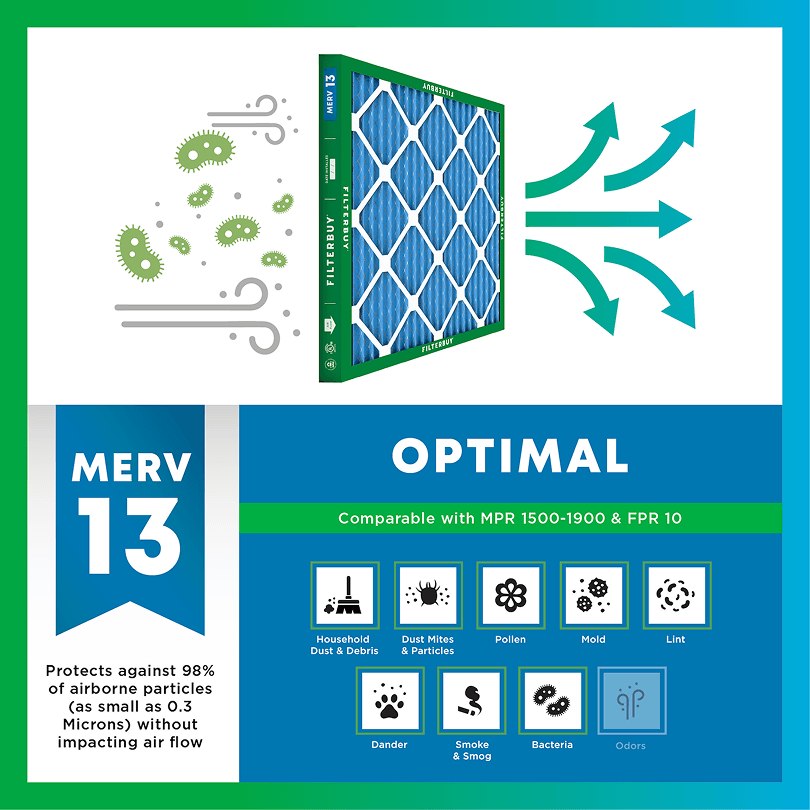
Fine enough to reach deep into the lungs. A MERV 13 is built to capture it.
It Doesn't Stay Local
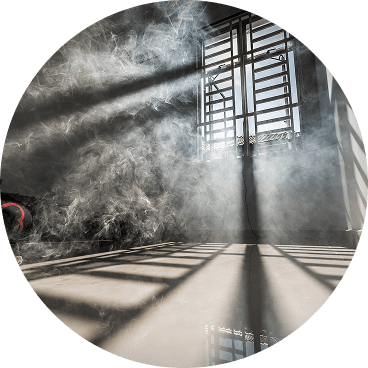
Smoke rides the wind far downwind — you can get smoky air with no fire nearby.
Simple steps to reduce indoor exposure.
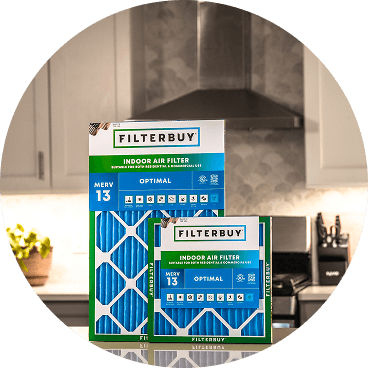
During smoke events, the EPA recommends upgrading to a MERV 13 filter — or the highest-rated filter your system can handle — to help reduce the fine particles smoke brings indoors. MERV 13 is the level most home HVAC systems can run while still capturing PM2.5, the fine particulate that makes up the bulk of wildfire smoke.
Over 70,000 wildfires burn in the U.S. every year.
Wildfire smoke can travel 1,000+ miles, affecting states that aren't even near the blaze.
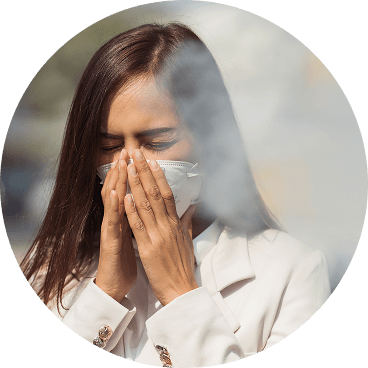
Exposure to wildfire smoke can worsen asthma, trigger heart issues, and lead to ER visits.
Indoor air can hold more fine particles during wildfire events unless it's properly filtered.
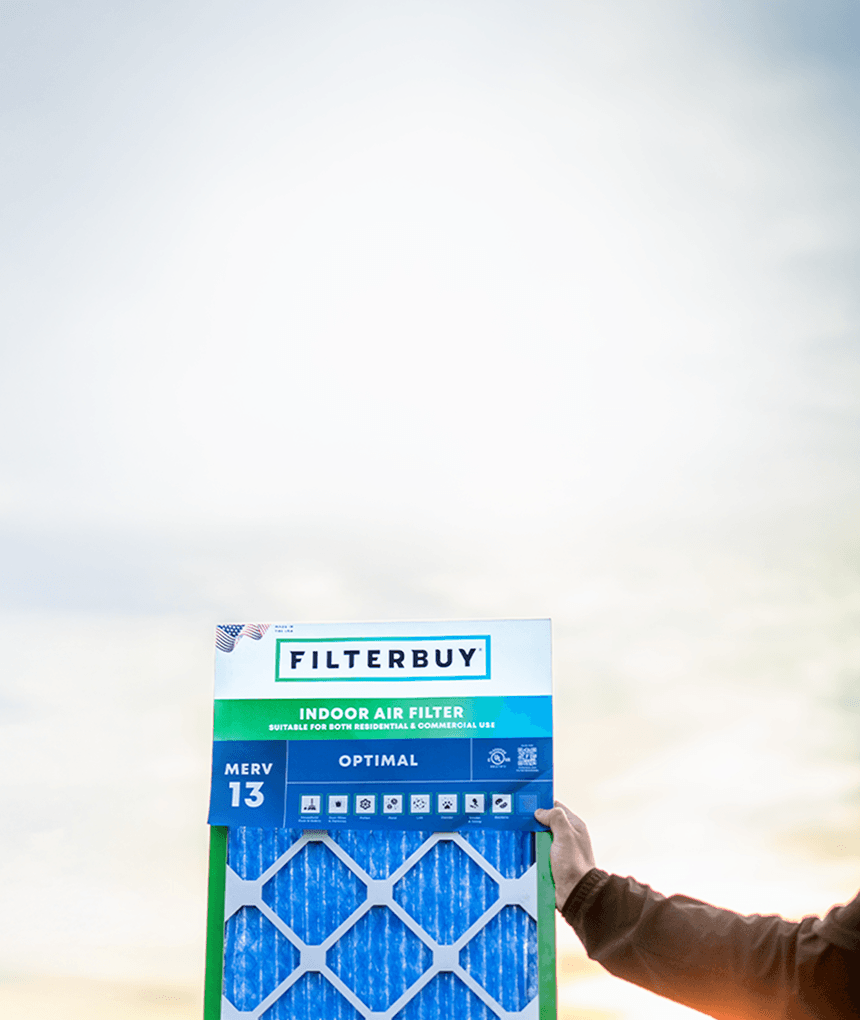
The EPA advises using MERV 13 filters or portable HEPA air cleaners during wildfire smoke events.
Use the live wildfire smoke tracker and upgrade your air filters today to protect your lungs and your home.
Shop Filters For Smoke Protection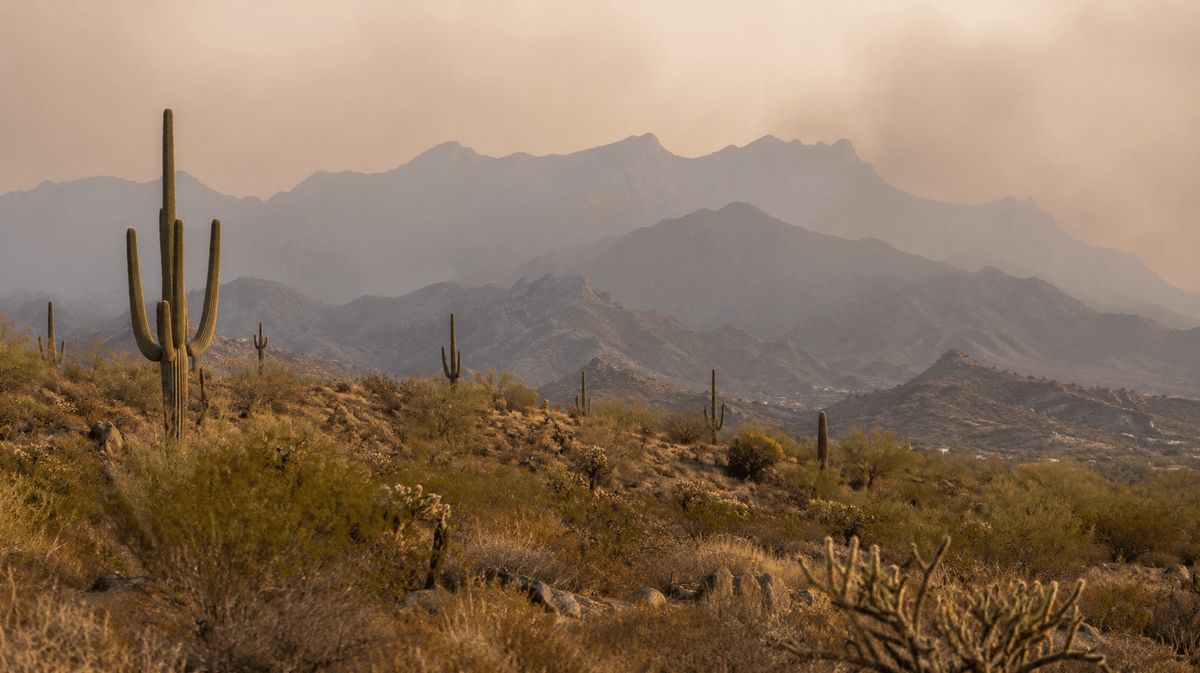
By Michelle Wan, Brand Manager & Air Quality Writer
Reviewed By: David Clark, Licensed HVAC Technician
Published: August 15, 2026 | Updated: August 15, 2026
The live map below shows active wildfires, smoke plumes, and real-time air quality for Scottsdale right now. Most smoke here drifts down from the Tonto National Forest to the northeast, though plumes from California, New Mexico, and northern Mexico reach the Valley too. Check which pollutant is driving the number first, because orange is as likely to be desert dust or summer ozone as smoke. When it is smoke, run a MERV 13 filter with the HVAC fan switched from "Auto" to "On."
Checking Scottsdale conditions right now. Enter your ZIP code or pan to Scottsdale. Fire icons mark active incidents, overlays trace drifting smoke, and colored dots are live monitors. Read the AQI number, then check which pollutant is behind it.
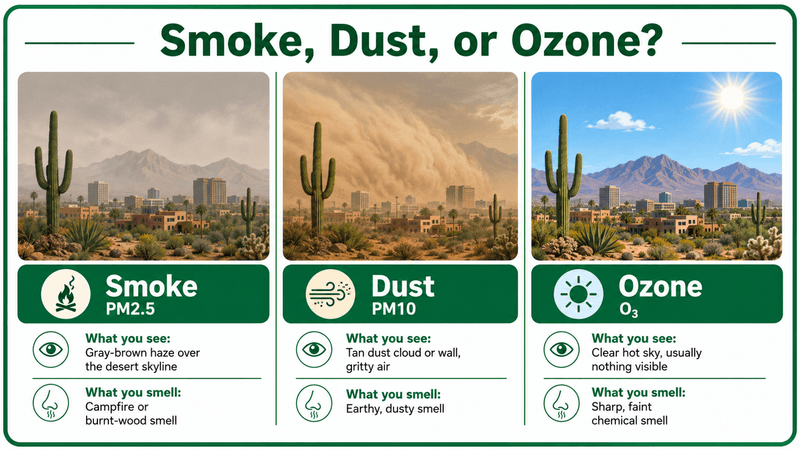
Wildfire smoke is PM2.5, desert dust is PM10, ozone is invisible. All three turn the map orange, and each calls for a different response.
The Tonto National Forest is Scottsdale's closest large-fire threat, 2.9 million acres starting just northeast of the city.
The EPA recommends MERV 13 during smoky periods, or the highest rating your system accepts, noting a continuously running fan may cut indoor PM2.5 by roughly 50%.
Scottsdale skews older than the national average, and the EPA lists older adults as a sensitive group, so the orange band matters more here.
Smoke season overlaps heat season, so recirculate rather than shutting the system down.
It shows three layers at once: active fire perimeters, modeled smoke plume coverage, and live air quality readings near Scottsdale. The monitor dots matter most, since they tell you what people here are actually breathing. The layers will not always agree, which is normal: a fire 40 miles northeast can look alarming while monitors stay green, because the plume is riding above the surface.
This page follows the same sources the map does: the AirNow Fire and Smoke Map, the Maricopa County monitoring network, and Arizona's daily forecast.
Two caveats: Maricopa County cautions that NowCast AQI values lag actual conditions, so the map can read green while the air has already turned, and the reading labelled "Scottsdale" may not be from Scottsdale, since the nearest regulatory monitor to a north Scottsdale address can sit many miles south.
Most of it comes from the Tonto National Forest northeast of the city, not from Scottsdale itself. Tonto spans 2.9 million acres, begins at the city's northeastern doorstep, and routinely pushes smoke southwest into the Valley. Fires start closer in too: the 2024 Wildcat Fire burned 14,402 acres after igniting near Dynamite Boulevard and 136th Street, on Scottsdale's northern edge.
The McDowell Sonoran Preserve sits close enough that brush-fire smoke arrives within the hour, while long-range transport carries plumes from California, New Mexico, and northern Mexico over the Valley for days with no Arizona fire involved. Compare conditions statewide on Arizona's air quality readings or our Phoenix smoke map.
Check which pollutant is driving the AQI: PM2.5 means wildfire smoke, PM10 means blowing desert dust, and an invisible spike on a hot afternoon usually means ozone. Scottsdale is one of the few U.S. cities where bad air has three plausible causes, and Maricopa County names particulates and ozone as its hardest pollutants.
Wildfire smoke is measured as PM2.5; Sonoran Desert dust is measured as PM10. Source: Maricopa County Air Quality Department.
During a High Pollution Advisory, the ADEQ issues a notice when pollution is expected to exceed the federal health standard; wood burning, fire pits, and chimeneas are prohibited in Maricopa County.
Older adults, people with asthma, COPD, or heart disease, pregnant people, children, and outdoor workers face the highest risk, and Scottsdale has an unusually large share of the first group. The city's demographic summary puts the median age at 48.7, over ten years above the U.S. median, with roughly 26% of residents aged 65 or older against about 17% nationally. The EPA classifies older adults as a sensitive group because PM2.5 lands harder on aging hearts and lungs.
So an "Unhealthy for Sensitive Groups" day concerns a minority of residents in most American cities, but a far larger share here. Orange in Scottsdale is not the "probably fine" tier it is elsewhere.
Peak wildfire risk runs May through June, before the monsoon. But the monsoon is the handoff rather than the end: the moisture that eases fire restrictions also brings the outflow winds that lift desert dust into PM10 events.
Arizona fire season traditionally ran April through July, but risk in central Arizona is now effectively year-round.
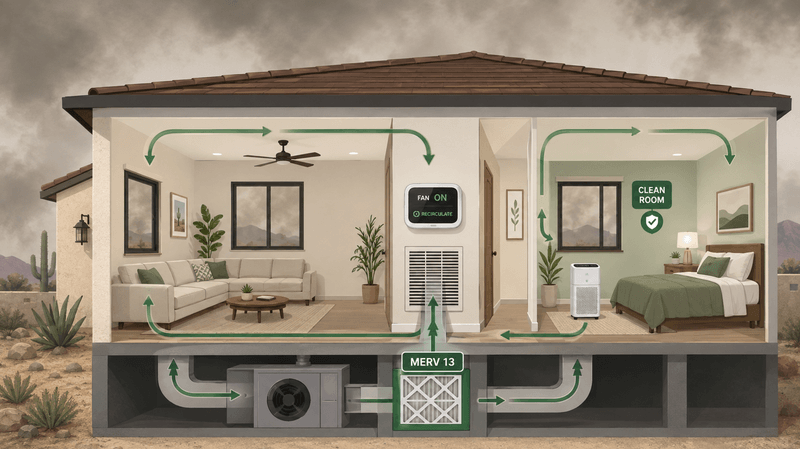
Close the house, switch to recirculate, set the fan to "On," and run a MERV 13 filter continuously. Most national advice assumes you can stop moving air, which fails in Maricopa County, where the National Weather Service issued Extreme Heat Warnings with highs near 120°F in early August 2026. Cooling has to keep running, so recirculate rather than shut down.
Close windows and set the system to recirculate, closing any fresh air intake on your HVAC or window unit.
Switch the thermostat fan from "Auto" to "On," so air cycles through the filter continuously rather than only during cooling calls.
Install a MERV 13 filter, or the highest rating your system safely accepts. Our MERV ratings guide covers how to tell.
Set up a clean room. Add a portable HEPA cleaner sized to at least two-thirds of the room's square footage, avoiding ozone-generating purifiers.
Watch your evaporative cooler. These pull outdoor air in by design, so the EPA advises covering the intakes with 4-inch MERV 13 filters or using the cooler sparingly during smoke.
Skip candles, gas stoves, frying, aerosols, and vacuuming, and check the filter often. Smoke loads media far faster than dust.
MERV 13, because smoke is dominated by fine particles in the PM2.5 range, and MERV 13 is the residential rating that captures that size class efficiently. Filterbuy's standing recommendation for most homes is MERV 11, but Scottsdale is one of the few places we would push past it. The particle load here is layered: wildfire PM2.5 in season, desert PM10 much of the year, and a system running eight months straight.
The EPA recommends MERV 13 or higher during smoky periods, or the highest rating your system safely accepts.
Fit matters, since a filter that almost fits lets air slip around the media. If your system cannot take MERV 13, use the highest rating it accepts; our MERV 13 vs HEPA comparison explains why true HEPA creates more airflow resistance than a residential blower can handle. Expect faster replacement too: a filter that normally lasts 60 to 90 days may need changing within weeks during heavy smoke, and the EPA advises swapping it once the media looks dark brown or black.
During a smoke event, I'll pull a filter that's only three or four weeks old, and it's already dark gray. People see 90 days on the label and assume 90 days, and in a Valley August that math doesn't hold. The other thing I run into constantly is evaporative coolers left wide open during a smoke advisory. That's a fan pulling outside air straight into the house, which is exactly what you don't want.
David Clark, Licensed HVAC Technician, Filterbuy
Maricopa County averaged 8.7 unhealthy particle pollution days per year and earned an F grade, ranking Phoenix-Mesa 17th worst nationally, down from 28th the year before.
Source: the American Lung Association's 2026 State of the Air report.
From 2007 to 2018, wildfire smoke supplied over 25% of daily PM2.5 at roughly 40% of EPA monitors for more than a month each year.
Source: research on wildland fires and PM2.5 exposure in Environmental Science & Technology.
The pollution extremes of 2017–2020 could recur every three to five years, with western U.S. particulate pollution doubling to tripling in late summer by century's end.
Source: a modeling study on wildfire pollution in a warming climate in PNAS.
Check the live map above. Fires affecting Scottsdale most often start in the Tonto National Forest, which publishes its own restrictions and incident notices, or closer in on preserve land in the McDowell Mountains.
Because smoke travels hundreds of miles. Plumes from California, New Mexico, and northern Mexico settle over the Valley for days, so an empty map near you does not mean clear air.
Yes, and it is the most useful thing you can do. Run it on recirculate with the fan on "On" and a MERV 13 filter installed. Window and portable units filter very little, and models venting outdoors can pull smoky air in, as our guide to air conditioners and wildfire smoke explains.
Yes. The EPA lists older adults as a sensitive group, and Scottsdale skews considerably older than the national average, so treat an "Unhealthy for Sensitive Groups" reading as a clear signal to stay in and run filtration.
Only partly. Particle filters capture the solids carrying much of the smell, but gases pass through. An activated carbon filter does more for odor.
Smoke arrives with almost no warning, so the worst moment to look for a filter is the morning the sky turns brown. Check the live Scottsdale AQI map, then get the right media into the slot early: MERV 13 for smoke and PM2.5, or MERV 11 if your system cannot carry it. Odd-size return? We will build a custom filter to your dimensions, and auto-delivery puts a fresh one at your door before fire season. Made in the USA, 600+ sizes, shipped free.
Michelle Wan is Brand Manager and Air Quality Writer at Filterbuy, which has made air filters in the USA since 2013 at facilities in Alabama, Florida, Pennsylvania, and Utah. She works directly with that manufacturing team, so the guidance here on filter loading and airflow comes from building the product.
Reviewed by David Clark, Licensed HVAC Technician, for accuracy on HVAC operation, filter compatibility, and airflow.
Subscribe to wildfire smoke alerts for Scottsdale, AZ, to get a heads-up before the next event reaches your area.