
Tip: Ensure you buy the exact air filter size for your system. Certain brands have precise dimensions that only fit their specific models. See related filters
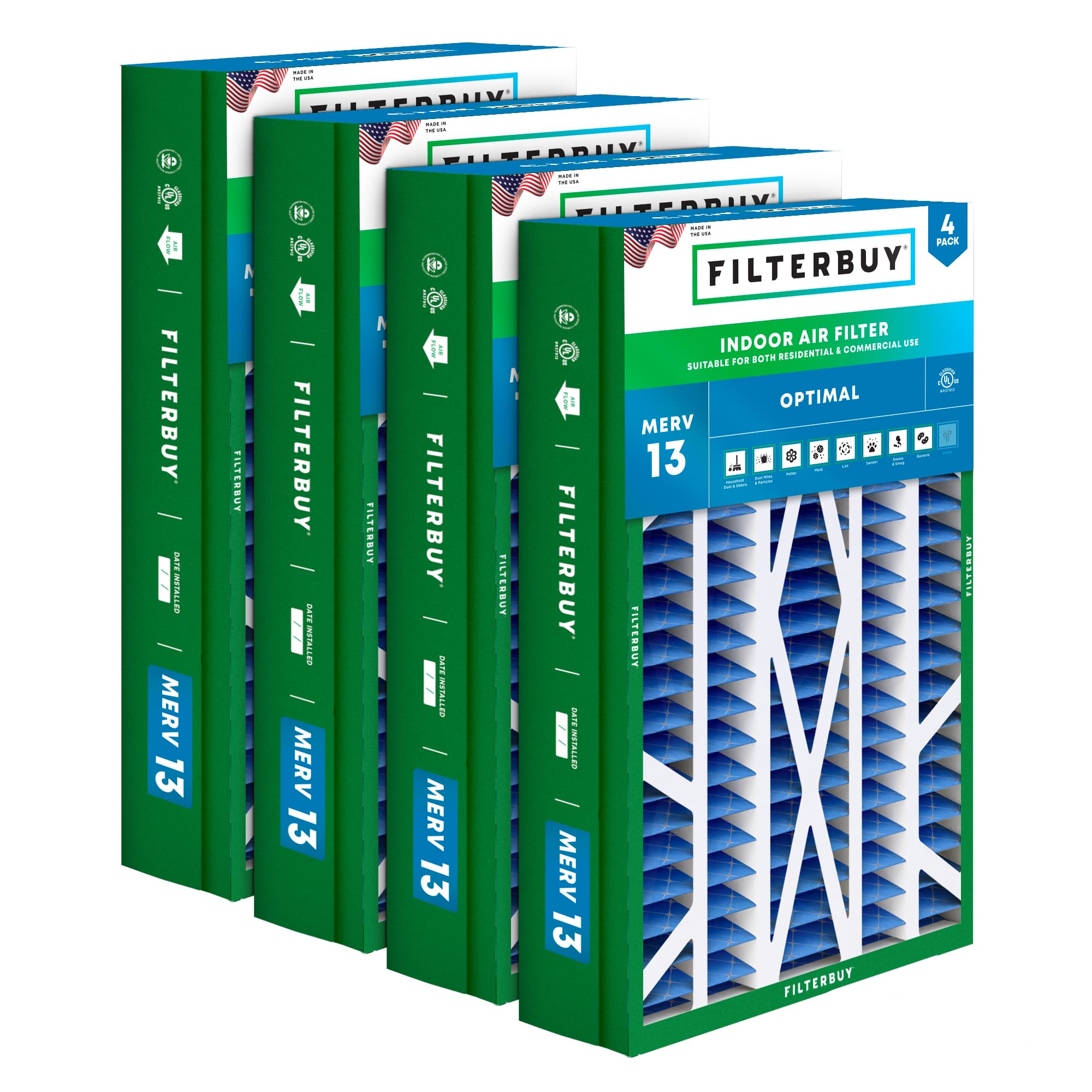
Actual Size: 20.7x26.2x5"
 Free Delivery
  Factory-Direct Low Prices, Made in the USA
 Hassle-Free Returns & Free Exchanges
RESIDENTIAL AND/OR COMMERCIAL USE
Change Every 3 Months
Tip: Ensure you buy the exact air filter size for your system. Certain brands have precise dimensions that only fit their specific models. See related filters
Actual Size: 20.7x26.2x5"
Free Delivery Factory-Direct Low Prices, Made in the USAHassle-Free Returns & Free ExchangesRESIDENTIAL AND/OR COMMERCIAL USE
Change Every 3 Months
Tip: Ensure you buy the exact air filter size for your system. Certain brands have precise dimensions that only fit their specific models. See related filters
Actual Size: 20.7x26.2x5"
Free Delivery Factory-Direct Low Prices, Made in the USAHassle-Free Returns & Free ExchangesRESIDENTIAL AND/OR COMMERCIAL USE
Change Every 3 Months
At Filterbuy, we don't cut corners—we craft high-quality air filters right here in the USA and ship them to your doorstep for free. No delays, no gimmicks—just clean air, made easy. With thousands of five-star reviews and filters built for real life & every HVAC system, it's no wonder why over 4 million families trust Filterbuy.

Proudly Made In The USA

Fast, Free Shipping on Every Order

Premium Materials That Go The Distance

85,000+ 5-Star Reviews From Happy Customers

Save Up to 70% Per Filter with Packs


Measure length × width × depth with a tape measure to find the actual size.

Round up each dimension to the nearest whole number to get the nominal size. Example: 20.7x26.2x5" in → 21X27X5 nominal.

Search by nominal size on our site for the best fit.


5″ filters give you maximum filtration with minimal maintenance — lasting up to 12 months while handling higher MERV ratings without restricting airflow.
Sizing note:

If the filter you buy doesn't fit, we'll send you a better size.
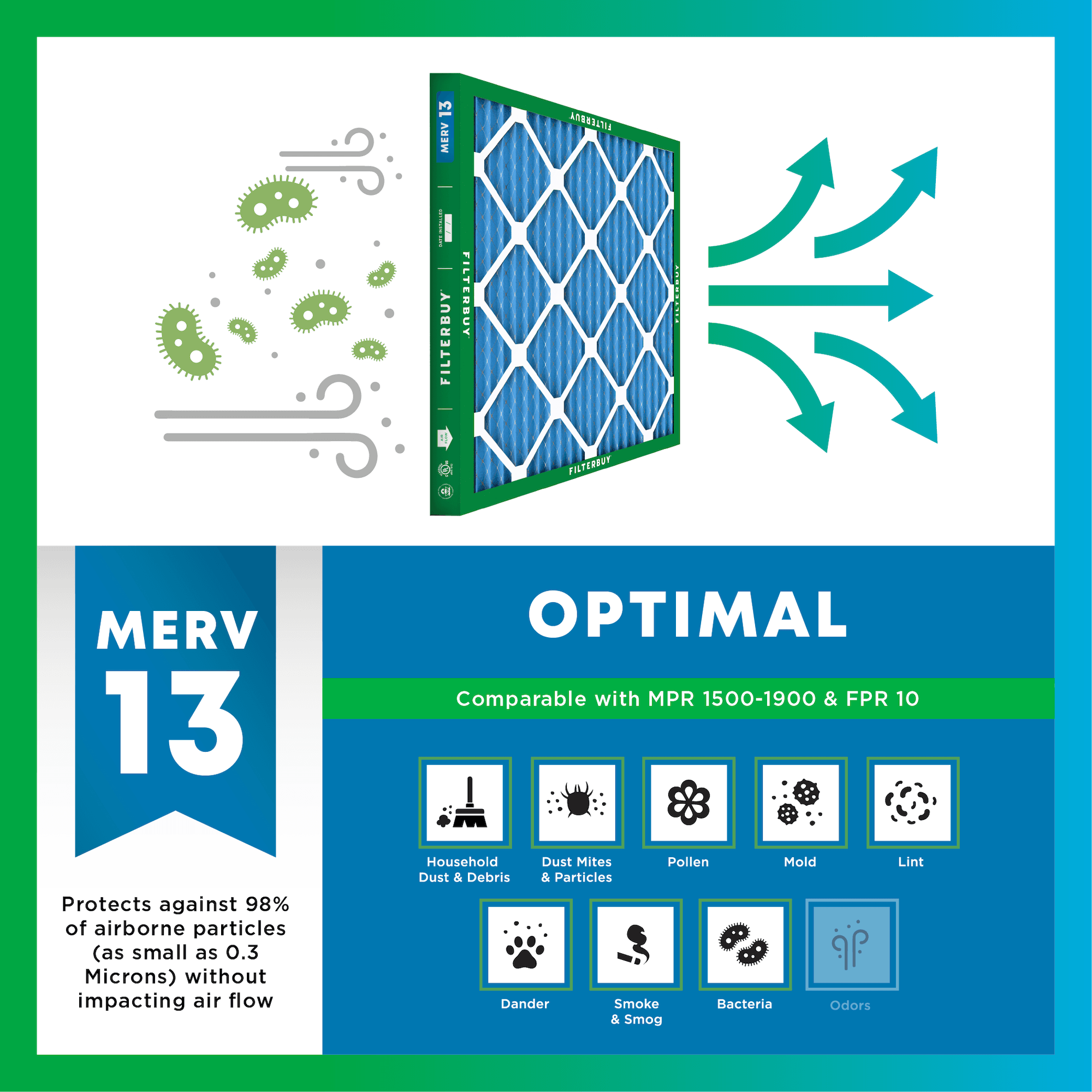
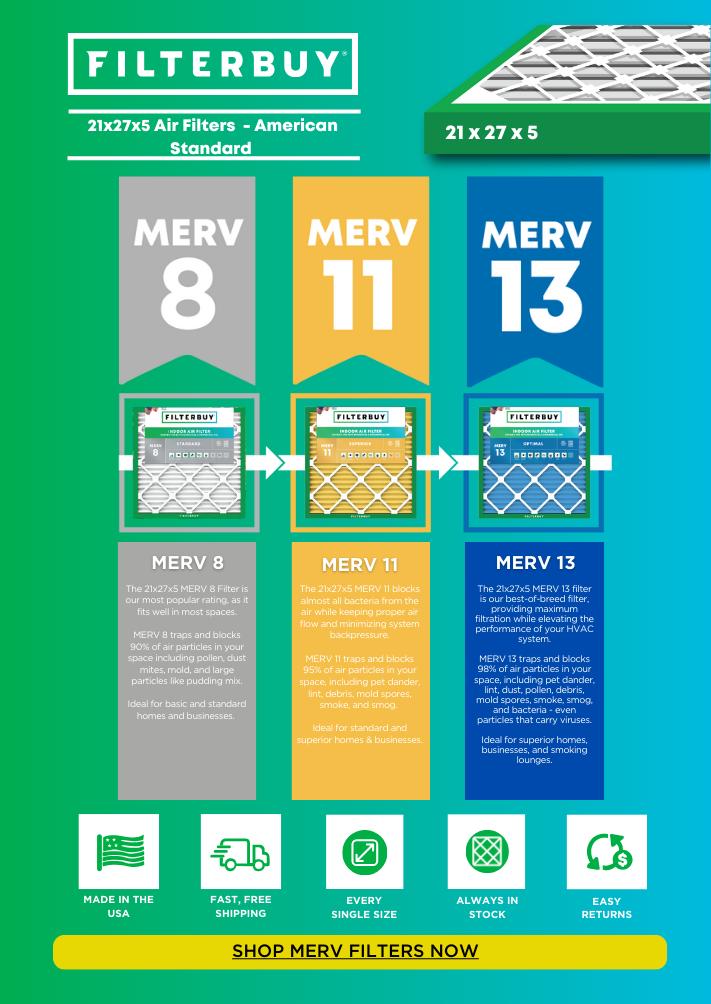
MERV stands for Minimum Efficiency Reporting Value—but don't let the technical name fool you. It's just a way to rate how well an air filter traps stuff like dust, pollen, pet dander, and smoke. The higher the MERV number, the more particles it catches—and the cleaner your air will be.

Comparable to:FPR: 4-7
MPR: 600-1000
 Dust & Debris
 Dust Mites & Particles
 Pollen
 Mold
Mold Lint
Lint Dander
Comparable to:FPR: 6-9
MPR: 1200-1550
Dust & DebrisDust Mites & ParticlesPollenMoldLintDander Smoke & Smog
Comparable to:FPR: 10
MPR: 1900-2800
Dust & DebrisDust Mites & ParticlesPollenMoldLintDanderSmoke & Smog Bacteria


We build every Filterbuy filter to deliver reliable 90-day performance—thanks to smart design and premium materials that do the heavy lifting. Here's what makes the difference:
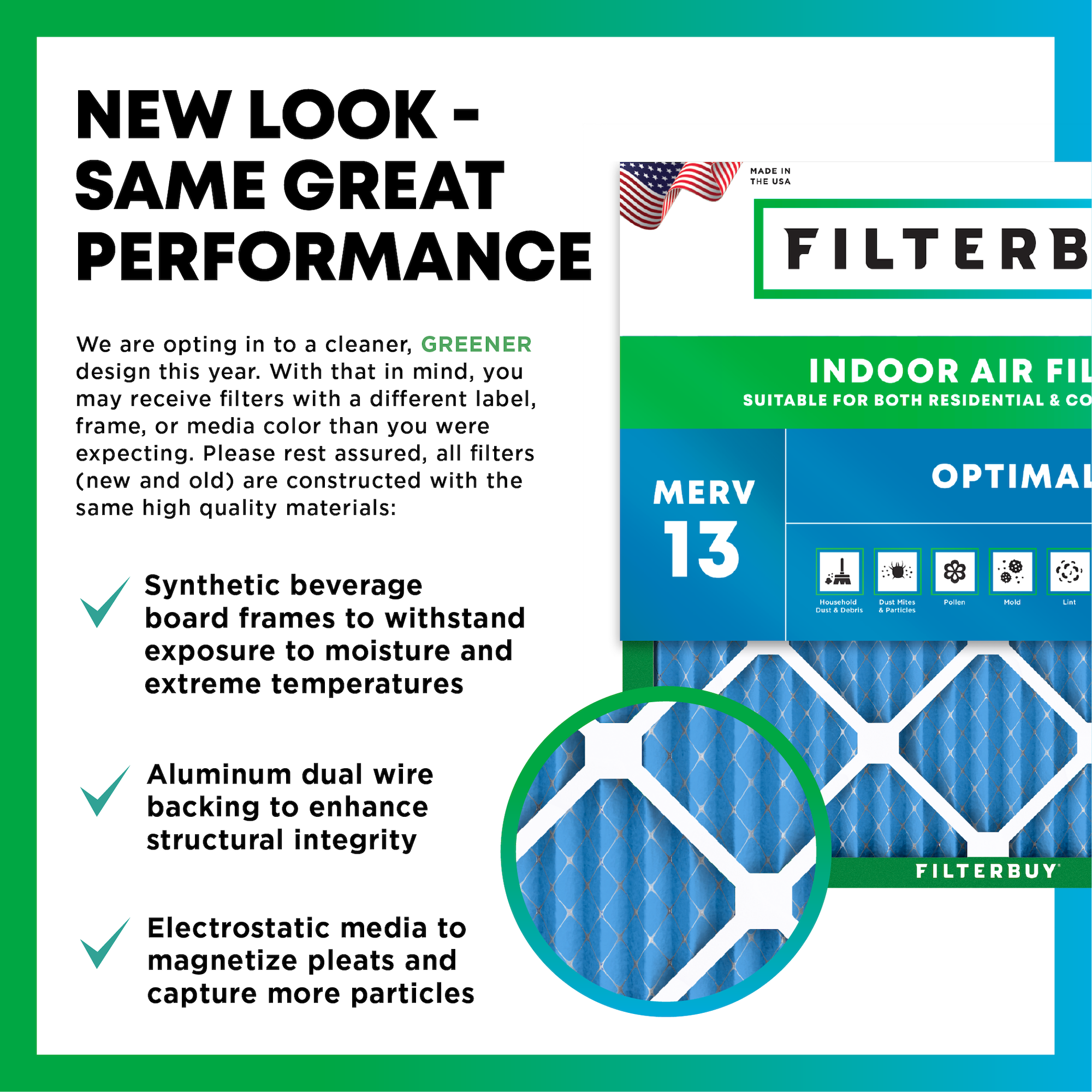
More pleats = more surface area to capture dust and debris, keeping your air cleaner longer.
Pleats are magnetized to attract and trap microscopic particles—like pet dander, pollen, and smoke.
Engineered to resist warping in extreme temperatures and high humidity.

A layer of metal reinforcement keeps pleats evenly spaced and structurally sound—no sagging, even at high airflow.
Assembled with care. Built to perform. Ships fast, free, and reliably from our U.S. facilities.

Turn Off Your HVAC SystemSafety first.

Remove The Old FilterLook for the airflow arrow and make note of the direction.

Slide In Your New FilterArrow should point toward the system (same direction as before).

Turn Your System Back OnAnd enjoy the fresh, clean air.

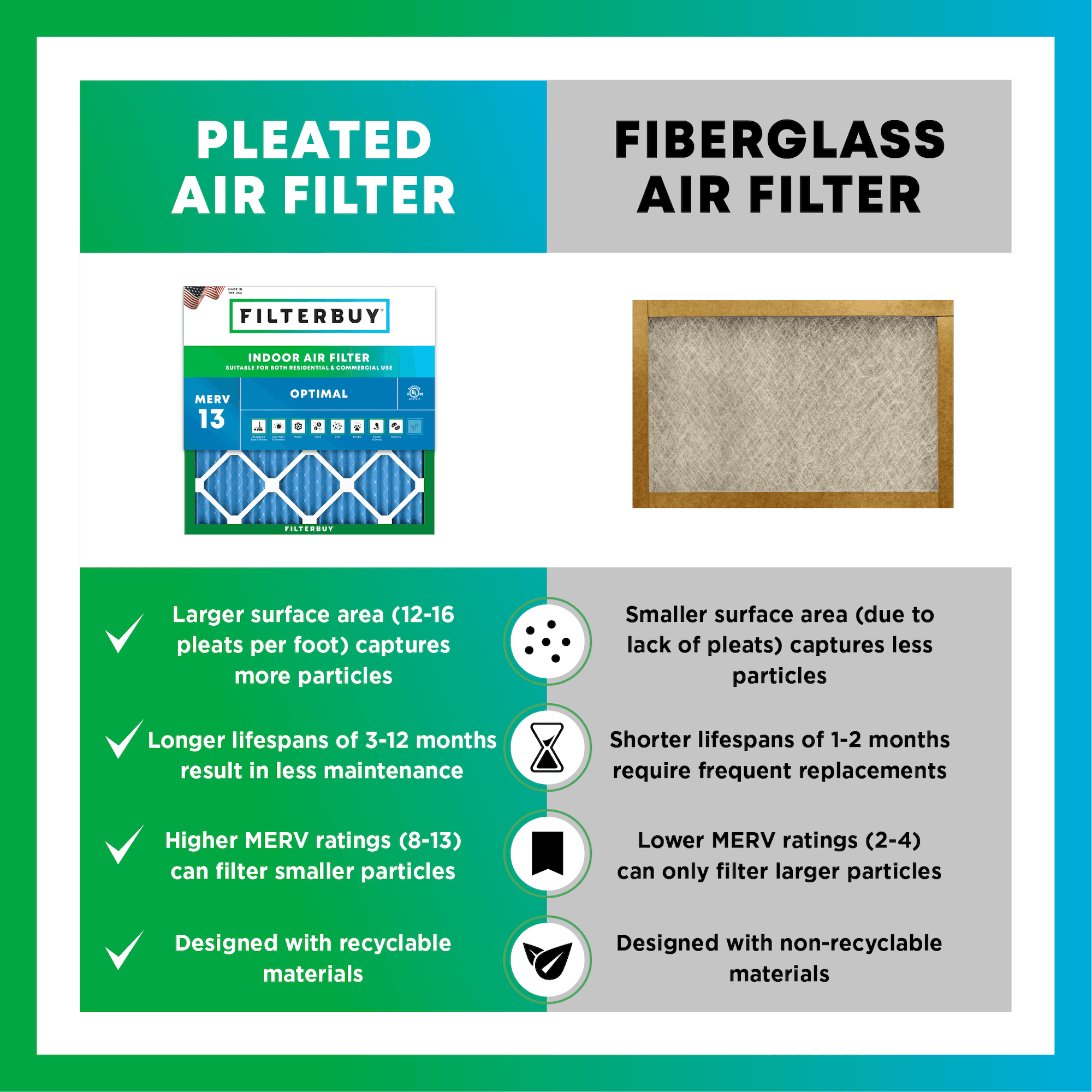
Not all air filters are created equal. Pleated filters don't just last longer—they actually clean your air better. Here's how they stack up:

Efficiency:
High (MERV 8–13) – Traps more particles
Lifespan:
90 days – Long-lasting performance
Air Quality:
Excellent – Cleaner, healthier air
Materials:
Recyclable and durable

Efficiency:
Low (MERV 4 or less) – Misses small stuff
Lifespan:
30 days or less – Replace often
Air Quality:
Minimal – Basic protection only
Materials:
Thin, flimsy, and not recyclable
Pleated filters are a no-brainer—more protection, less hassle, and better air for your home.
Changing your filter on time keeps your HVAC system running efficiently—and helps protect your lungs from dust, allergens, and airborne irritants. Here's how often to swap it out based on your needs:

For most homes without pets or special air quality concerns. Great for general upkeep and energy efficiency.

Shedding fur, dander, and allergy triggers can build up fast. Changing your filter every two months helps keep the air fresher and symptoms at bay.

For households affected by smoke, pollution, or respiratory conditions, monthly changes ensure maximum protection.

| Nominal Size | 21X27X5 |
| Actual Size | 20.7 x 26.2 x 5" inches |
| Filter Type | Pleated |
| Media | Electrostatically Charged |
| Frame | Beverage Board |
| MERV Ratings Available | 8, 11, 13 |
| Lifespan | Up to 12 Months |
| Origin | Made in USA |
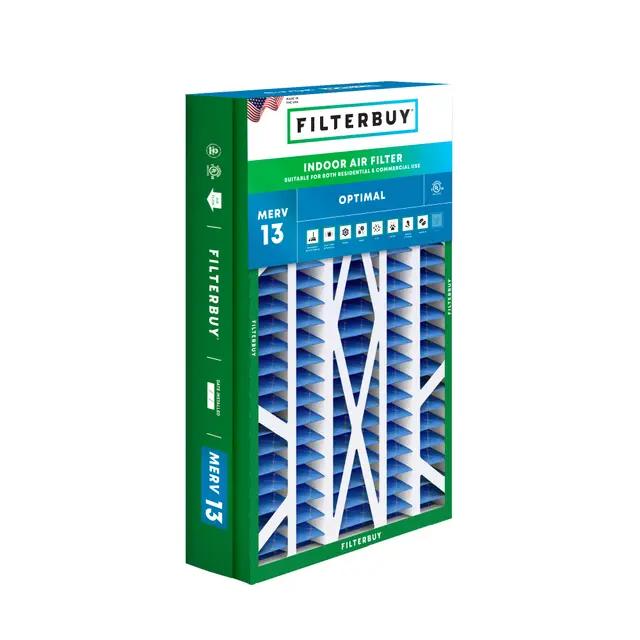
Most homeowners searching for a 21x27x5 filter settle for whatever ships fastest — but after manufacturing filters for over a decade and testing performance across millions of American Standard systems, we've learned that MERV 13 isn't just a rating. It's the threshold where filtration actually starts intercepting the particles that matter most: fine dust, pollen, mold spores, and the microscopic debris your system recirculates every time it cycles. At FilterBuy, we built our 21x27x5 MERV 13 to meet that standard precisely — American-made, exact-cut, and engineered to fit American Standard equipment the way it was designed to be fitted.
A MERV 13 21x27x5 is a 5-inch deep-media air filter precision-cut for American Standard HVAC systems that accept this housing size. Here's what you need to know:
What it does: Captures fine dust, mold spores, bacteria, smoke, pet dander, and particles in the 1 to 3 micron range — the particle sizes most harmful to respiratory health.
Why MERV 13: The EPA and ASHRAE both identify MERV 13 as the minimum rating for genuine fine particle protection in a residential HVAC system.
Why 21x27x5: The 5-inch media depth maximizes surface area, extends filter life, and maintains healthy airflow — in the exact format your American Standard system was engineered to accept.
Why fit matters: An imprecise cut creates bypass gaps. Unfiltered air routes around the media and directly into your system. Exact dimensions are non-negotiable.
How often to replace: Every 6 months for standard households. Every 3 to 4 months for homes with pets. Every 60 to 90 days for allergy or respiratory households.
Bottom line: MERV 13, precision-cut to 21x27x5, replaced on schedule — that's the complete filtration solution your American Standard system was built to deliver.
MERV 13 is the minimum — not a premium. The EPA and ASHRAE both identify it as the threshold where filtration becomes genuinely protective. For your American Standard system, it's not an upgrade. It's the standard your system was built to meet.
Exact fit matters as much as rating. A poor-fitting filter creates bypass gaps. Unfiltered air routes around the media and straight into your system. A precision-cut 21x27x5 eliminates that risk entirely.
Filter depth is a performance advantage — use it. Five inches of media depth means more surface area, longer service life, and lower airflow restriction. All in a format your American Standard system was engineered to accept.
A neglected filter costs you money. The U.S. Department of Energy puts the energy penalty of an underperforming filter at up to 15% in increased consumption. Buying right and replacing on schedule protects your energy budget and your system's long-term health.
Your biggest air quality challenge is already inside. Indoor pollutant concentrations are often 2 to 5 times higher than outdoors. That air recirculates through your system every time it runs. MERV 13. Exact fit. Replaced on schedule. That's the complete answer.
MERV stands for Minimum Efficiency Reporting Value — a standardized scale that measures how effectively a filter captures airborne particles. The scale runs from 1 to 16, and while lower ratings handle large debris like dust and lint, MERV 13 is where filtration becomes genuinely protective. At this rating, a filter captures 90% or more of particles in the 1–3 micron range — that includes bacteria, smoke, pet dander, and fine particulate matter that lower-rated filters simply pass through. For families with allergy sufferers, pets, or anyone concerned about indoor air quality, MERV 13 is where the difference becomes measurable.
The 21x27x5 is a high-capacity, deep-media filter — and that depth is doing real work. Compared to the standard 1-inch filters most homeowners default to, a 5-inch media bed dramatically increases surface area, which means longer filter life, lower airflow restriction, and more consistent particle capture over time. American Standard systems that accept this size were engineered to take advantage of that depth. Using anything less means leaving filtration performance — and system efficiency — on the table.
American Standard builds its equipment to tight tolerances, and your filter housing is no exception. A filter that's even slightly undersized creates bypass gaps — unfiltered air that routes around the media and moves straight into your system. Over time, that means dirty coils, reduced airflow, and accelerated wear on components that are expensive to replace. A precision-cut 21x27x5 filter eliminates that risk entirely, sealing the housing the way it was designed and ensuring every cubic foot of air passing through your system is actually being filtered.
After manufacturing filters for over a decade and fulfilling orders for millions of American Standard homeowners, we've refined what a high-performance 21x27x5 should look like. Our MERV 13 filters are made in the USA, cut to exact dimensions, and built with a reinforced frame that holds its shape under the static pressure of a working HVAC system. We don't cut corners on media density or frame integrity — because we know that a filter that collapses or gaps mid-cycle isn't protecting anything. When you order from FilterBuy, you're getting a filter that was built to perform for the full length of its service life.
"After manufacturing millions of filters and working directly with American Standard homeowners across the country, we've seen firsthand what happens when an undersized or under-rated filter is left to do a job it wasn't built for — dirty coils, struggling systems, and air quality that never quite improves. MERV 13, cut to exact 21x27x5 dimensions, isn't an upgrade — it's what your system was designed to run on."
— FilterBuy Manufacturing & Air Quality Team
At FilterBuy, we believe an informed homeowner is an empowered one. After more than a decade of manufacturing filters and working with millions of American Standard customers, we know that the right filter decision starts with the right information. These seven resources — sourced from federal agencies, industry standards bodies, and American Standard itself — give you everything you need to buy with confidence and protect your home the right way.
Don't take a manufacturer's word for it — take the EPA's. This is the authoritative federal resource that defines what MERV ratings actually measure, how the scale is structured, and why the EPA recommends MERV 13 as the minimum threshold for households focused on fine particle reduction and real indoor air quality improvement. If you only read one resource before choosing a filter, make it this one.
URL: https://www.epa.gov/indoor-air-quality-iaq/what-merv-rating
Here's something most homeowners don't know: not all MERV 13 filters are tested the same way — and the difference matters. ASHRAE Standard 52.2 is the industry testing protocol that governs how MERV ratings are assigned and what they're actually measuring. Understanding this standard puts you in a position to evaluate performance claims critically, so you're never left guessing whether a filter will actually perform the way the label says it will.
URL: https://www.ashrae.org/technical-resources/standards-and-guidelines
Choosing the right filter isn't just about air quality — it's about protecting your entire HVAC investment. The Department of Energy's Building America Solution Center provides research-backed guidance on high-MERV filter selection, system compatibility, and how MERV 13 supports both cleaner indoor air and whole-home energy efficiency. This is the resource we point to when customers ask us whether upgrading to MERV 13 is worth it — because the data speaks for itself.
URL: https://basc.pnnl.gov/resource-guides/high-merv-filters
Most homeowners focus on MERV rating and overlook the equally important role of filter depth — and that's where systems underperform. This EPA technical bulletin explains exactly how filter thickness, media surface area, and HVAC system design interact, making it essential reading for anyone evaluating a 5-inch deep-media format like the 21x27x5. We've seen firsthand how much difference depth makes in both filtration performance and airflow efficiency over the full life of a filter.
URL: https://www.epa.gov/sites/default/files/2020-06/documents/2019.11_tech_bulletin_filtration.pdf
When it comes to your American Standard system, there's no better source than the American Standard itself. This resource from the manufacturer breaks down how MERV ratings apply to its specific equipment lineup, which ratings are compatible with its systems, and what homeowners should consider when selecting a replacement filter. Cross-referencing this with your filter purchase is one of the simplest ways to protect your system and your warranty.
URL: https://www.americanstandardair.com/resources/glossary/merv/
An undersized filter is one of the most common — and most preventable — mistakes we see American Standard homeowners make. This official guide from American Standard covers filter types, sizing, placement locations, and replacement schedules across its full equipment range. Use it to confirm that the 21x27x5 format is the right fit for your specific system before you buy, so there are no surprises at installation.
URL: https://www.americanstandardair.com/resources/filter-101/
Buying the right filter is only half the job — installing it correctly is the other half. American Standard's step-by-step replacement guide walks homeowners through the complete process, from locating the filter housing to proper installation technique and ongoing maintenance schedules. If your system uses a whole-home air cleaner that accepts the 5-inch deep-media format, this guide is especially worth bookmarking.
URL: https://www.americanstandardair.com/resources/blog/hvac-air-filter-replacement-101/
After more than a decade of manufacturing filters and working directly with American Standard homeowners, we've seen these three statistics play out in real homes — over and over again.
Most homeowners assume their biggest air quality threat is outside. The data says otherwise.
Americans spend approximately 90% of their time indoors, where concentrations of some pollutants are often 2 to 5 times higher than typical outdoor concentrations.
Indoor air recirculates through your system every time it cycles — carrying that pollutant load with it.
An exact-fit MERV 13 filter is your most direct line of defense against that invisible, continuous buildup.
What we've seen firsthand: Customers are consistently surprised to learn the threat isn't coming in — it's already there.
Source: U.S. Environmental Protection Agency — Indoor Air Quality
URL: https://www.epa.gov/report-environment/indoor-air-quality
Rising energy bills and underperforming filters go hand in hand. We see it constantly.
Nearly half of the energy used in your home goes to heating and cooling.
A dirty or inadequate filter forces your system to work harder — the U.S. Department of Energy puts that waste at up to 15% in increased energy consumption.
A 5-inch deep-media MERV 13 maintains consistent airflow across its full service life.
Consistent airflow means your system isn't straining to compensate for a filter that's failing.
What we've seen firsthand: Customers reporting rising energy bills are often running undersized, low-rated, or long-overdue filters.
Source: ENERGY STAR — Heat & Cool Efficiently (U.S. Department of Energy)
URL: https://www.energystar.gov/saveathome/heating-cooling
We didn't decide MERV 13 was the right threshold. The two most authoritative bodies in air quality did.
Both the EPA and ASHRAE recommend a minimum filter rating of MERV 13 for managing virus concentrations and fine particulate matter in a home.
In over a decade of manufacturing, MERV 13 is consistently where filtration stops being cosmetic and starts being genuinely protective.
For a 21x27x5 American Standard system, meeting that standard isn't an upgrade — it's the baseline your system was designed to deliver.
What we've seen firsthand: Across thousands of system configurations, the pattern holds. MERV 13 is where performance becomes measurable.
Source: U.S. Department of Energy — Building America Solution Center, High-MERV Filters
URL: https://basc.pnnl.gov/resource-guides/high-merv-filters
After a decade of manufacturing and millions of customer interactions, one pattern is undeniable: homeowners who take filtration seriously have systems that last longer, energy bills that stay lower, and families that breathe cleaner air.
That's not marketing. It's what we've watched repeat itself across thousands of system configurations and over ten years on the manufacturing floor.
Most homeowners are under-filtering. Not because they don't care — but because nobody explained that MERV 8 protects the equipment, not the family breathing the air.
Filter size matters as much as filter rating. A MERV 13 that doesn't seal its housing isn't protecting anything. Bypass gaps are silent — but your coils will feel them over time.
The 21x27x5 format is an advantage built into your system. Five inches of media depth means more surface area, longer service life, and lower airflow restriction — in a format your American Standard system was specifically engineered to accept.
Replacing on schedule matters as much as buying right. We've pulled pristine MERV 13 filters from systems six months past their service life performing no better than MERV 6. The rating only delivers if the filter is doing its job.
Indoor air carries a heavier pollutant load than most homeowners expect.
An undersized or under-rated air filter quietly raises energy costs and accelerates system wear.
MERV 13 is where filtration stops being cosmetic and starts being genuinely protective.
Exact fit, correct rating, replaced on schedule — that's the complete equation.
The EPA, ASHRAE, and the Department of Energy all point to the same standard. So does our manufacturing experience. So does a decade of firsthand customer outcomes.
MERV 13, cut to exact 21x27x5 dimensions, replaced on schedule — that's not an upgrade. That's just doing it right.
At Filterbuy, it's the only standard we build to.
You know why MERV 13 matters. You know why exact fit is non-negotiable. Here's exactly what to do next.
Check the cardboard frame of your existing filter for printed dimensions.
Look for 21x27x5 on the frame, housing door, or owner's manual.
Still unsure? Contact your American Standard dealer or reach out to our team.
Light gray media → Still has service life remaining.
Dark gray or visibly loaded media → Replace immediately.
Collapsed or gapped frame → Replace immediately — a compromised frame creates bypass gaps that defeat filtration entirely.
No date on the frame → Replace now. Start fresh.
American-made. Precision-cut to exact dimensions.
A reinforced frame holds its shape under real system pressure.
Available in single units or multi-packs.
Ships directly to your door — no hunting for an obscure size at a big box store.
Standard household — Every 6 months.
Homes with pets — Every 3 to 4 months.
Allergy or respiratory conditions — Every 60 to 90 days.
High-use seasons — Check monthly. Replace earlier if media appears loaded.
Pro tip: Mark your installation date on the filter frame the moment you install it. Five seconds of effort. Zero guesswork at your next replacement.
Your next filter arrives before your current one expires.
No reminders. No store runs. No lapses in protection.
Adjust or pause any time — no commitment required.
A: In most cases, yes — and the 21x27x5 format is one of the best-suited housings for MERV 13 filtration. Here's why:
American Standard engineered the 21x27x5 housing to accept a 5-inch deep-media filter.
That depth provides the surface area needed to sustain healthy airflow at MERV 13 efficiency.
It eliminates the pressure drop concerns that affect high-MERV filters in shallower housings.
Compatibility is almost always there — but always confirm in your owner's manual first.
Upgrading from a lower rating? Speak with your local American Standard dealer before switching.
Our experience: After a decade of manufacturing for this exact application, the 21x27x5 and MERV 13 are a natural pairing. Confirming compatibility takes five minutes and protects a system worth thousands.
A: The difference is far greater than most homeowners expect. Here's the direct comparison:
Standard 1-inch filter:
Designed to protect equipment — not occupants.
Minimal media depth and limited surface area.
Typically tops out at MERV 8.
Captures larger particles like dust and lint.
Passes fine particles that affect respiratory health right through.
21x27x5 MERV 13 filter:
Five inches of deep media — dramatically more surface area.
Longer service life and lower airflow restriction.
Captures particles in the 1 to 3 micron range.
Intercepts fine dust, mold spores, bacteria, smoke, and pet dander.
Protects both your system and the people breathing the air inside your home.
Our experience: Customers who switch from 1-inch to 21x27x5 MERV 13 consistently report cleaner coils, longer system life, and fewer allergy symptoms indoors.
A: Replacement frequency depends on what's happening inside your home — not just what the package says.
Replacement schedule by household type:
Standard household, no pets — Every 6 months.
Homes with pets — Every 3 to 4 months.
Allergy or respiratory conditions — Every 60 to 90 days.
Peak summer or winter seasons — Check monthly regardless of household type.
Signs your filter needs immediate replacement:
The media appears dark gray or visibly loaded.
Airflow from vents feels noticeably reduced.
Energy bills have increased without explanation.
The filter frame is bent, collapsed, or gapped.
Our experience: Mark your installation date directly on the filter frame the moment you install it. Five seconds of effort eliminates every guessing game at your next replacement.
A: MERV 13 extends filtration into the particle size ranges that matter most to your family's health.
What MERV 8 captures:
Large dust and lint particles.
Coarse pollen.
Carpet fibers.
What MERV 13 captures that MERV 8 misses:
Fine dust in the 1 to 3 micron range.
Mold spores.
Pet dander.
Smoke and smog particles.
Bacteria.
Fine particulate matter the EPA identifies as most damaging to respiratory health.
Our experience: After switching to MERV 13, the first thing customers notice isn't a cleaner filter. It's fewer allergy symptoms, less dust on surfaces, and air that simply feels different. That's what capturing the right particle sizes actually does inside a real home.
A: Close enough is one of the costliest filtration mistakes a homeowner can make — and one of the most invisible.
What happens when a filter doesn't seal its housing:
Gaps form between the filter frame and housing walls.
Unfiltered air bypasses the media entirely.
Fine dust and debris route directly across your coils and into your blower.
Coils foul faster — reducing efficiency and increasing system wear.
Energy bills rise without an obvious explanation.
Manufacturer warranties can be compromised.
What a precision-cut 21x27x5 delivers:
A complete seal across the full filter housing.
Every cubic foot of air your system moves passes through the media.
No bypass. No unfiltered air. No silent system damage.
Our experience: The pattern is consistent across thousands of customer interactions — system performance issues trace back to filter fit more often than any other single variable. A filter that doesn't seal its housing isn't protecting your home. It's just taking up space.
Don't settle for a filter that protects your equipment but not your family — order your precision-cut FilterBuy MERV 13 21x27x5 today and give your American Standard system the exact-fit, expert-rated filtration it was engineered to deliver.

