
Houston Real-Time AQI Tracker


Get Alerts For Unhealthy AQI In Your Area
When air quality in your area reaches unhealthy levels, we'll send you a quick alert, along with expert tips on how to reduce your exposure.
What's Actually In Houston Air Today?
What High AQI Means for Your Lungs in Houston
How to Read AQI
The Air Quality Index (AQI) measures how polluted the air is and how it may affect your health.
0–50 (Good): Air quality is satisfactory.
51–100 (Moderate): Acceptable, but some pollutants may pose minor concerns.
101–150 (Unhealthy for Sensitive Groups)
151–200 (Unhealthy)
201–300 (Very Unhealthy)
301+ (Hazardous)
Moderate
Still okay for most, but if you have asthma or allergies, take it easy and avoid long outdoor workouts.
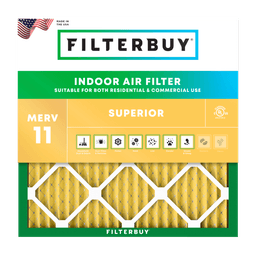
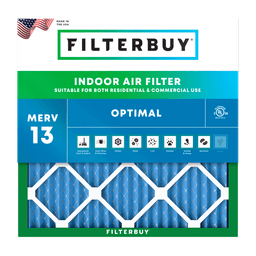
Shop MERV 11 filters→What's the Right Filter for Your AQI Level?


Check Today's Live Real Time Air Quality Index AQI Map in Houston, TX Now
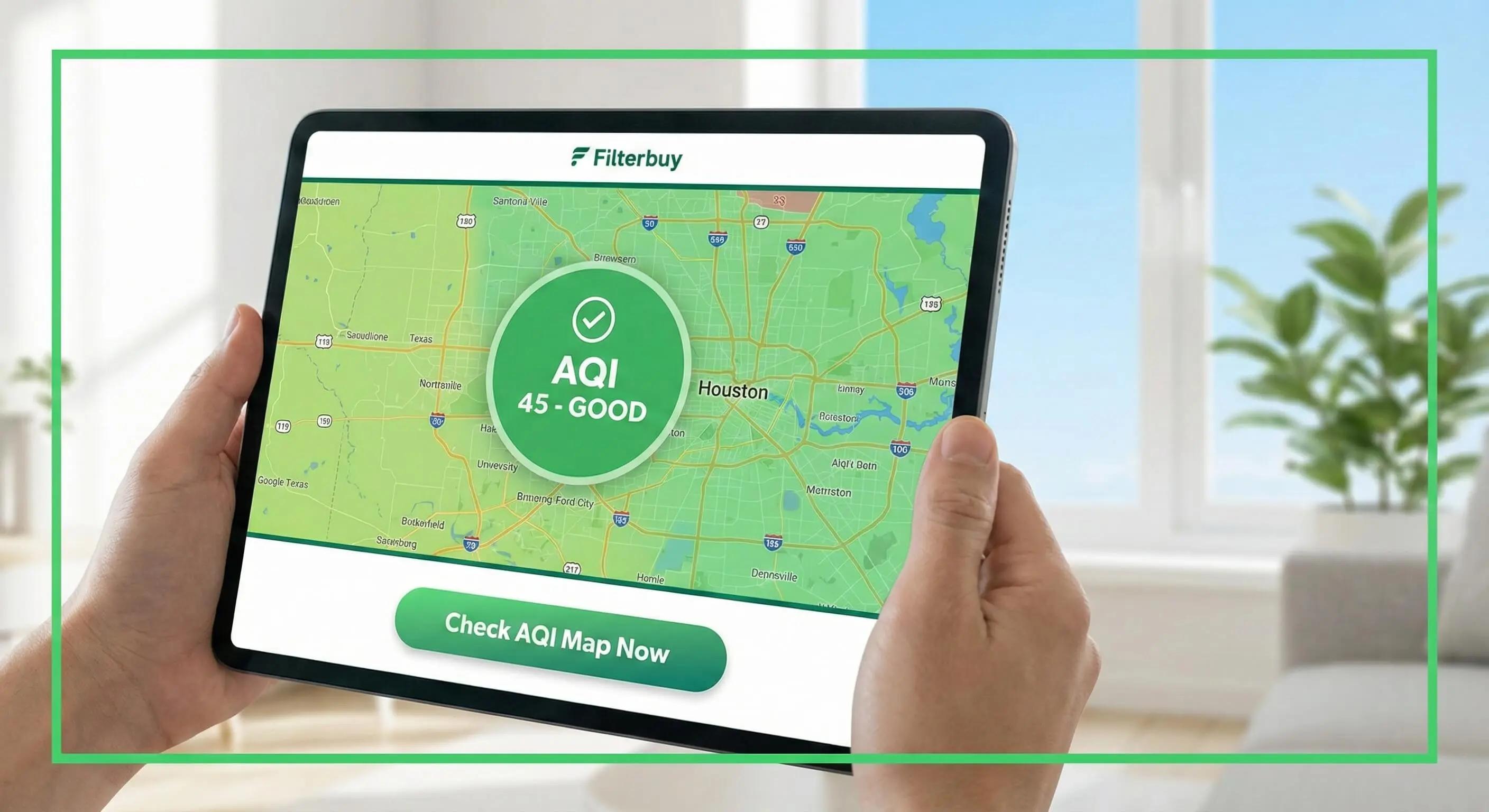
Use the live map to check outdoor air for your block and nearby neighborhoods, then plan your day accordingly. Houston’s air can change by hour with wind shifts, heat, and traffic. If you need a filter upgrade for smoky or hazy days, Filterbuy offers standard and custom sizes so you can swap in the highest MERV your system safely supports without last-minute store runs.
TL;DR Quick Answers
What Is the Live Air Quality Index (AQI) in Houston, TX Today?
Houston's current overall air quality index is 129, which falls in the "Unhealthy for Sensitive Groups" category. The PM2.5 (fine particulate matter) AQI is 129, while PM10 is 93, ozone is 32, and other pollutants remain low.
What This Means for You:
The daily PM2.5 AQI is forecast to reach the upper end of the "Moderate" range in parts of the Houston area due to light winds supporting elevated urban fine particulate matter and smoke from regional burnings.
AQI Categories at a Glance:
0–50 (Good): Air quality is satisfactory
51–100 (Moderate): Acceptable; sensitive individuals may experience minor symptoms
101–150 (Unhealthy for Sensitive Groups): Reduce prolonged outdoor exertion
151+ (Unhealthy): Everyone may begin to experience health effects
Pro Tip from Filterbuy: When outdoor AQI rises, your indoor air works harder. A quality MERV 11 or MERV 13 air filter can capture the fine particles (like PM2.5) that slip indoors through doors, windows, and your HVAC system—helping your family breathe easier even on high-pollution days.
Key takeaways
Check “Now” and the hourly outlook; conditions pivot fast with heat and wind.
Move strenuous activity indoors when AQI climbs, and pace outdoor time for sensitive groups.
Indoors, close-up, recirculate, and filter. Use MERV 13 during wildfire smoke if your system allows.
Keep spare filters on hand. Filterbuy’s standard and custom sizes with free shipping make it simple to swap early as soon as air quality changes.
Check your air today
Open the live AQI map and enter your ZIP code.
Compare “Now” with the hourly outlook.
If AQI trends higher, move workouts earlier or indoors and pace outdoor time, especially for children, older adults, people who are pregnant, and anyone with asthma, COPD, or heart disease.
What is driving Houston’s AQI lately
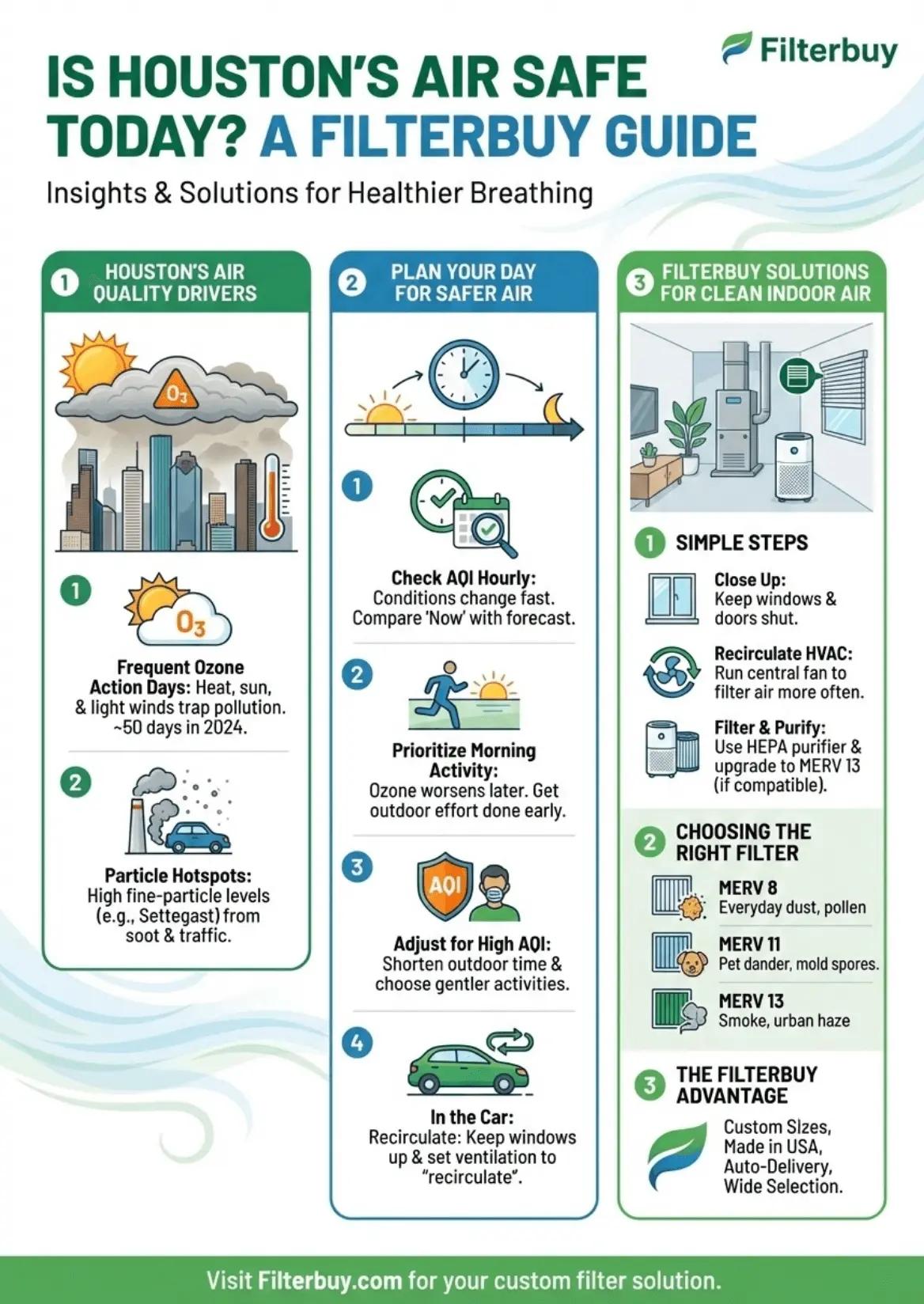
Frequent ozone action days. Texas cities including Houston have had multiple ozone alerts in late summer and early fall because heat, strong sun, and light winds let pollution build up. In 2024 alone, the Houston metro saw nearly 50 ozone action days, and experts note September and early October are peak ozone seasons in Texas.
Neighborhood particle hotspots. In parts of northeast Houston such as Settegast, a state monitor has recorded some of the highest fine-particle averages in Texas, with residents reporting soot and diesel traffic near homes. Analysts found the site failed annual PM2.5 health standards, highlighting ongoing local impacts while policy debates continue.
Plan your day based on today’s air quality
Check your location and a few nearby spots; conditions vary by neighborhood.
Prefer morning outdoor effort. Heat and sun often worsen ozone by late afternoon.
If AQI increases, shorten outdoor time, choose gentler activity, or head indoors.
In the car, keep windows up and set ventilation to recirculate.
Indoors: simple steps that work
Close windows and doors. Set your central HVAC to “recirculate” and run the fan so air passes the filter more often.
Add a HEPA room purifier where you sleep or spend most time.
Wildfire smoke: The EPA advises using MERV 13 (or the highest MERV your system safely supports) during smoke events to reduce fine particles indoors. If your system cannot handle MERV 13, use the highest allowed MERV and pair it with a HEPA room purifier.
Check filters more often during bad air; one-inch filters load quickly. Replace early if the media looks gray or airflow at vents drops.
Choosing a filter that fits Houston
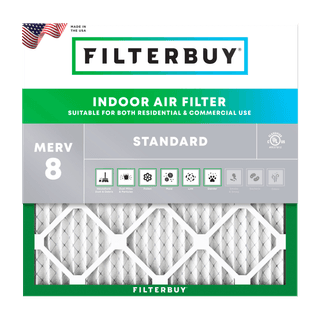
MERV 8: Good for everyday dust and larger pollen. Helps keep coils and ducts cleaner.
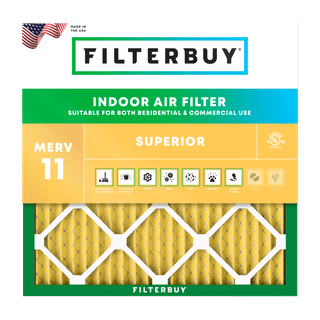
MERV 11: Captures more small particles, including pet dander and many mold spores.
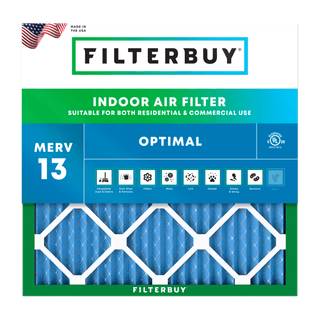
MERV 13: Targets finer particles common in smoke and urban haze. Use it only if your system is rated for the added resistance. If unsure, check your HVAC manual or ask a local technician.
A practical pick for Houston homes
Filterbuy makes it easy to stay ready for changing air: standard and custom sizes for a snug fit, made in the USA, free U.S. shipping, and optional auto-delivery so replacements arrive on schedule through ozone and smoke season. If your cabinet allows, consider deeper two-inch or four-inch pleated filters for more media and longer life between changes.
After a bad-air spell
When AQI improves, replace smoke-loaded filters, vacuum with a HEPA vacuum, and wipe hard surfaces with a damp cloth to clear settled particles. Clean supply and return grilles and confirm your condensate drain is clear.
FAQs
Why did Houston’s AQI jump this afternoon?
Heat and sun can boost ozone later in the day. Wind shifts can also carry smoke or industrial plumes over certain neighborhoods for a few hours.
Who should be most careful when AQI is elevated?
Children, older adults, people who are pregnant, and anyone with asthma, COPD, or heart disease should limit harder outdoor activity once AQI reaches the orange range or higher.
What indoor step helps the most on smoky days?
Set HVAC to recirculate and install MERV 13 if your system allows. Run a HEPA room purifier in the bedroom or main living area.
Do I need true HEPA in my central system?
Most home HVAC systems are not built for true HEPA. Use the highest MERV your system supports (often 8–13) and add a separate HEPA room purifier for extra protection.
How often should I replace filters during bad air?
Inspect monthly by default, but during prolonged smoke or high dust, check every 1–2 weeks. Replace early if the filter looks gray or airflow drops.
Is MERV 13 always better?
MERV 13 captures finer particles, but only use it if your system is rated for it. Otherwise use the highest safe MERV and add a HEPA room purifier.
What about my car?
Keep windows up and ventilation to “recirculate.” Confirm your cabin air filter is installed and in good condition.
How can Filterbuy help without overspending?
Choose the right MERV and size, order the exact fit (custom sizes available), and use free shipping and auto-delivery so you have spares on hand when air turns.