
El Paso Real-Time AQI Tracker


Get Alerts For Unhealthy AQI In Your Area
When air quality in your area reaches unhealthy levels, we'll send you a quick alert, along with expert tips on how to reduce your exposure.
What's Actually In El Paso Air Today?
What High AQI Means for Your Lungs in El Paso
How to Read AQI
The Air Quality Index (AQI) measures how polluted the air is and how it may affect your health.
0–50 (Good): Air quality is satisfactory.
51–100 (Moderate): Acceptable, but some pollutants may pose minor concerns.
101–150 (Unhealthy for Sensitive Groups)
151–200 (Unhealthy)
201–300 (Very Unhealthy)
301+ (Hazardous)
Moderate
Still okay for most, but if you have asthma or allergies, take it easy and avoid long outdoor workouts.
Shop MERV 11 filters→What's the Right Filter for Your AQI Level?


Live Air Quality Index AQI Map El Paso Texas Today | Filterbuy.com
After manufacturing over 10 million air filters and servicing over two million households since 2013, we have observed a trend we know to be true about air filter calls and returns in your area: they develop particulate matter much more quickly than the national average, particularly between March and June during dust season. Filters we recommend a replacement every 90 days everywhere, often have to be changed every 60 days in the borderland region, and often sooner with active dust events.
Use the map below to monitor current conditions in your neighborhood and know exactly when it is necessary to take action to protect your indoor air.
TL;DR Quick Answers
Live Air Quality Index AQI Map Now Today in El Paso, Texas
Check El Paso's current AQI instantly:
AirNow.gov: Real-time EPA monitoring data with interactive map
TCEQ.texas.gov: Texas state monitors for El Paso County
AirNow App: Mobile alerts for changing conditions
What El Paso residents should know:
El Paso averages 15.2 unhealthy air days annually. The region ranks 18th worst in America for ozone pollution.
Why it matters for your home:
When outdoor AQI rises, indoor pollutant levels can climb 2-5 times higher. Your HVAC filter is the barrier protecting your family.
Our recommendation, based on serving El Paso since 2013:
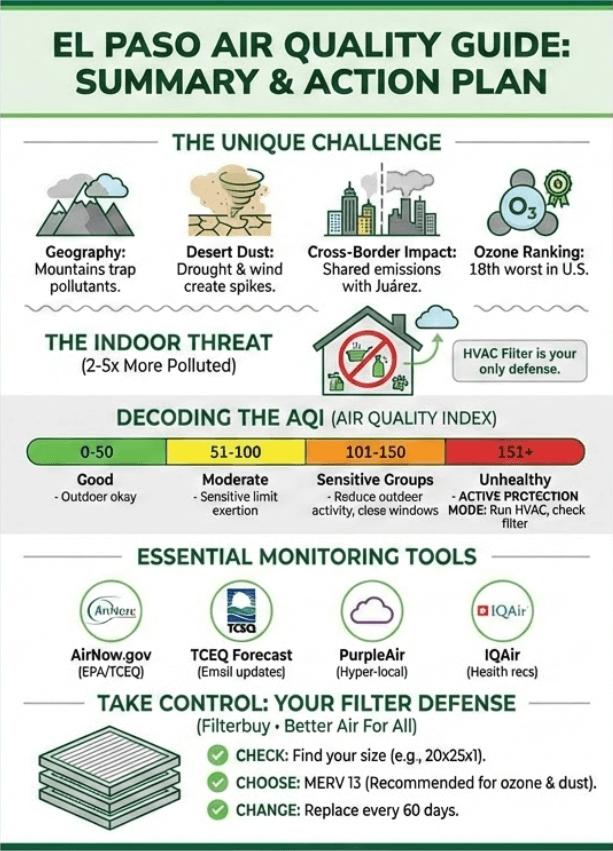
Check AQI daily. Use MERV 13 filters. Replace every 60 days. During dust storm season (March-May) and ozone season (April-October), inspect filters more frequently.
Top 5 Takeaways
El Paso ranks 18th worst in America for ozone pollution. 15.2 unhealthy air days per year. F grade from the American Lung Association every year since 2000.
Indoor air is 2-5 times more polluted than outdoors. Your home isn't a refuge—it's where pollutants concentrate.
El Paso's geography creates unpredictable conditions. 2.7 million people share the air basin. Dust storms, temperature inversions, and cross-border emissions complicate everything.
MERV 13 filters with 60-day replacements work best here. Standard schedules fail El Paso households. This region demands more.
Check AQI daily. Bookmark AirNow.gov. Monitor peak seasons: March-May (dust) and April-October (ozone). Inspect filters when readings exceed 100.
Understanding El Paso's Air Quality Index
It is a standardized scale ranging from 0 to 500 created by the EPA to communicate to everyone how clean or polluted their air is at any given time. The more the number, the more the health concern. Here's what the color-coded categories mean to residents:
Good (0-50): Air quality is good, and there are minimal health risks for citizens.
Moderate (51-100): Acceptable air quality, but unusually sensitive individuals may develop minor respiratory symptoms. This is the most common reading that El Paso has on calm days.
Unhealthy for Sensitive Groups (101-150): Children, older adults, and people with respiratory or heart conditions should reduce prolonged outdoor exertion. During the spring dust season, the area frequently enters this range.
Unhealthy (151-200): Everyone may begin experiencing health effects. Sensitive groups should avoid outdoor activity entirely.
Very Unhealthy (201-300): Health alert—the entire population is at risk. El Paso has recorded readings in this range during severe dust storms.
Hazardous (301-500): Emergency conditions. During March 2025's historic dust storms, some El Paso monitors recorded readings approaching 500, with PM2.5 levels exceeding 1,000 micrograms per cubic meter for hours at a time.

Why El Paso's Air Quality Demands Your Attention
Several factors account for high pollution levels in the borderland:
Desert dust and drought: The Chihuahuan Desert is all around El Paso, and years of drought conditions (the area has gone its driest since the 1930s) leave soil exposed and susceptible to wind erosion. When sustained winds arrive, usually in March to June, this combined ability to pick up tremendous amounts of particulate matter into the atmosphere.
Cross-border pollution: Air quality monitors show pollution regularly crossing the El Paso-Ciudad Juárez border. Unpaved roads on both sides of the border, in conjunction with industrial emissions and vehicle exhaust, cause a shared airshed where the pollution in one city directly affects the other.
Vehicle emissions: The EPA has identified traffic from vehicles as a large source of particulate pollution at the local level. Heavily trafficked international bridges, coupled with office and home commuting day and night, bring a constantly increasing regional pollution load.
Industrial sources: As industrial emissions from both sides of the border have declined from historical highs, the sources of emissions have nevertheless decreased in El Paso County and have contributed to the ambient pollution. Strong winds are also capable of disturbing contaminated soils and soils from legacy industrial sites.
How Outdoor Air Quality Affects Your Indoor Air
Research published in peer-reviewed journals confirms that the majority of human exposure to outdoor-generated PM2.5 actually occurs indoors—because that's where we spend most of our time. One study calculated that pre-exposure is responsible for 61% of deaths that were attributed to outdoor-generated fine particulate matter in the United States.
The good news? Your HVAC system can serve as a powerful defense against infiltrating pollution—but only if you're using the right filter and maintaining it properly.
When to Take Action Based on AQI Readings
Monitoring El Paso's real-time AQI empowers you to make informed decisions about protecting your family. Use these guidelines:
AQI 0-50: Normal operations. Maintain your regular filter replacement schedule.
AQI 51-100: Standard precautions. If anyone in your household has asthma, allergies, or respiratory conditions, consider limiting prolonged outdoor activity.
AQI 101-150: Elevated concern. Keep windows closed, run HVAC continuously, and check your filter condition. Sensitive individuals should remain indoors.
AQI 151+: Active protection mode. Maximize indoor air filtration, seal any obvious air leaks, and consider whether your current filter provides adequate protection. If you're using a basic MERV 8 filter, this is when upgrading to MERV 11 or MERV 13 provides the most meaningful benefit.
Bookmark this page and check back regularly—especially during March through June when dust season peaks, or whenever weather forecasts predict high winds. Your awareness is the first step toward cleaner air for your family.
"After analyzing thousands of used filters returned from El Paso customers over the past decade, we've seen firsthand what the desert does to indoor air—filters that would last 90 days in Houston or Dallas are often completely saturated in 45 to 60 days here, especially during dust season when that brown layer of particulate builds up faster than anywhere else we serve."
— Filterbuy Air Quality Team
Essential Resources for Monitoring El Paso Air Quality
Don't take your indoor air for granted—especially in El Paso. After manufacturing over 10 million filters and serving more than two million households since 2013, we've learned that the families who best protect their indoor air are the ones who stay informed about what's happening outside. These seven resources give you the real-time data you need to make smart decisions about outdoor activities, window ventilation, and filter replacement timing.
1. AirNow.gov: Your Official Real-Time AQI Dashboard
The EPA's primary platform pulls data directly from official TCEQ monitoring stations across El Paso, giving you both current conditions and forecasts you can trust. Download the free AirNow mobile app to receive push notifications when AQI levels shift—because knowing conditions changed two hours ago doesn't help you protect your family right now.
Source: Visit AirNow.gov
2. TCEQ Daily Air Quality Forecast: Plan Tomorrow's Protection Today
The Texas Commission on Environmental Quality updates El Paso-specific PM2.5 and PM10 forecasts daily at 12:05 PM on workdays. Sign up for their email updates, and you'll receive forecasts automatically—no daily website checks required. This is exactly the kind of proactive information that helps you stay one step ahead.
Source: View TCEQ Forecast
3. World Air Quality Index El Paso Map: See Conditions Across Your City
The Chamizal monitor is particularly important to watch: it's recorded four of El Paso's five worst air quality days since monitoring began in 1999, including the historic dust events of March 2025. When Chamizal spikes, your filter is working overtime.
Source: View El Paso AQI Map
4. IQAir El Paso: Health Guidance When You Need It Most
IQAir provides health-specific recommendations based on current conditions, telling you exactly when sensitive groups should stay indoors and when everyone should limit outdoor exertion.
Source: Check IQAir El Paso
5. City of El Paso Environmental Services: Your Local Air Quality Team
El Paso takes air quality seriously—the city operates four monitoring stations of its own plus four additional TCEQ stations, providing the most comprehensive local coverage available. This department also handles air quality complaints and enforcement, making it your go-to resource if you notice visible pollution sources affecting your neighborhood. When you're the protector of your household, it helps to know who's protecting your community.
Source: Visit City Environmental Services
6. EnviroFlash: Alerts That Come to You
EnviroFlash removes one more thing from your plate by delivering air quality forecasts and alerts directly to your email or phone. Instead of remembering to check conditions each morning, you'll receive proactive notifications when El Paso's AQI reaches levels that could affect sensitive groups.
Source: EnviroFlash
7.PurpleAir Community Sensors: Neighborhood-Level Detail
PurpleAir's community-operated sensors update every two minutes and provide hyperlocal PM2.5 readings for specific neighborhoods—far more granular than official monitoring stations can offer. When you need to know what's happening on your street, not just your city, this is where you look.
Source: View PurpleAir Map
Supporting Statistics
1. Indoor Pollutant Levels Run 2-5 Times Higher Than Outdoor Air
Most homeowners assume their biggest air quality threat is outside. After processing millions of filters at our facilities, we've learned the opposite is true.
What concentrates inside your home:
Cooking oils and cleaning product residues
Pet dander and dust mite allergens
Outdoor pollutants are pulled in through your HVAC system
The EPA confirms Americans spend 90% of their time indoors. Your home isn't a refuge from pollution—it's where pollutants concentrate. That's exactly why we built our business around giving families better filtration tools.
Source: https://www.epa.gov/report-environment/indoor-air-quality
2. El Paso Ranks 18th Worst in America for Ozone Pollution
The American Lung Association's 2025 State of the Air report confirms what our customer service team hears daily from El Paso households:
15.2 unhealthy air days per year on average
F grade for ozone every year since rankings began in 2000
Unhealthy conditions occur roughly every three weeks
El Paso customers ask about respiratory irritation and filter discoloration more frequently than almost any other Texas market we serve. These aren't coincidences.
Our recommendation for El Paso: MERV 13 filtration with 60-day replacement cycles.
Source: https://www.lung.org/research/sota/city-rankings/msas/el-paso-las-cruces-tx-nm
3. El Paso Is the Only Texas Border County with Federal Air Quality Violations
TCEQ data reveals why El Paso faces unique challenges:
The only border county in Texas with historical NAAQS violations
Shares an air basin with Ciudad Juárez
Combined metro population exceeds 2.7 million people
We've shipped filters to El Paso since 2013. Customer feedback from this market taught us that standard schedules don't account for:
Dust storm seasons
Temperature inversions
Cross-border industrial activity
El Paso families helped us understand that one-size-fits-all guidance fails communities with genuinely unique air quality environments.
Source: https://www.tceq.texas.gov/border/air-quality.html
Final Thoughts and Opinion
El Paso's air quality challenges aren't going away anytime soon.
The geography that makes this region beautiful—the Franklin Mountains, the Rio Grande valley, the high desert landscape—also traps pollutants and concentrates ozone. Add cross-border industrial activity, persistent dust storms, and a shared air basin with 2.7 million people, and you have an environment that demands more from your filtration system than almost anywhere else in Texas.
After serving El Paso households since 2013, here's what we believe: families who thrive here treat air filtration as essential home maintenance—not an afterthought.
What We've Seen Firsthand
Customers who upgrade to MERV 13 and commit to 60-day replacement cycles report:
Fewer allergy flare-ups
Less dust accumulation on surfaces
Those who stick with basic filters and 90-day schedules end up with:
Clogged systems
Higher energy bills
Indoor air that works against their family's health
Why It Matters
The invisible nature of air quality makes it easy to ignore. You can't see ozone molecules triggering respiratory irritation. You can't watch dust mite allergens circulating through your vents.
But the effects are real. In a region where unhealthy air days occur every few weeks, the cumulative impact adds up.
Our Honest Opinion
El Paso homeowners shouldn't settle for national averages. This community faces above-average challenges—and deserves above-average protection.
The right filter, changed at the right interval, transforms your home from a place where pollutants concentrate into a genuine sanctuary.
Don't take your indoor air for granted. In El Paso, that's not just good advice. It's essential.
Next Steps
Taking control of your indoor air quality doesn't have to be complicated. Here's how to start protecting your El Paso home today.
Step 1: Find Your Filter Size
Check the dimensions printed on your current filter's frame. You'll see three numbers: length x width x depth (example: 20x25x1).
No filter installed? Measure the slot opening and round to the nearest inch.
Step 2: Choose the Right MERV Rating
For El Paso households, we recommend:
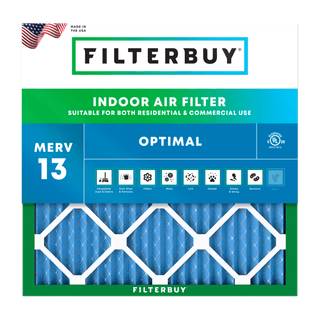
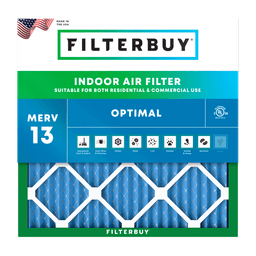
MERV 13 (Optimal): Best for ozone particles, dust storm debris, allergies, and asthma
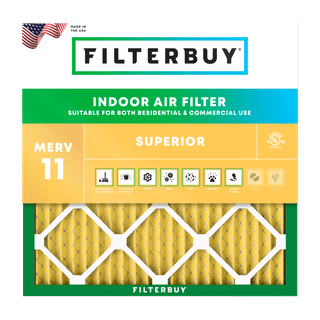
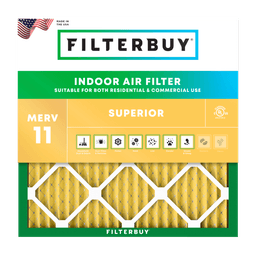
MERV 11 (Superior): Strong protection for pollen, mold spores, and pet dander
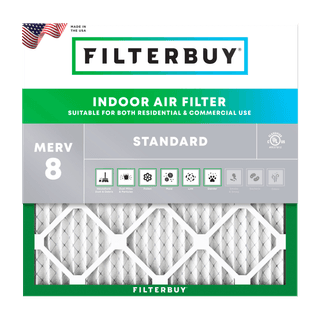
MERV 8 (Standard): Basic protection for homes without sensitive occupants
Step 3: Set Your Replacement Schedule
El Paso conditions demand more frequent changes:
Allergies or respiratory conditions: Every 45-60 days
Pets in the home: Every 60 days
Standard household: Every 60-75 days
Vacation home or light use: Every 90 days
Pro tip: Check filters more frequently during dust storm season (March-May).
Step 4: Subscribe and Save
Never forget a filter change again. Subscription benefits include:
Automatic shipments timed to your schedule
5% savings on every order
Free shipping to your door
Skip, pause, or cancel anytime
Step 5: Explore Additional Protection
For comprehensive coverage, consider:
Whole-house air purifiers
UV air sanitizers
Air quality monitors
Frequently Asked Questions
Q: Where can I check the live air quality index (AQI) for El Paso, Texas, right now?
A: The best real-time AQI sources for El Paso include:
AirNow.gov: EPA-operated monitoring stations across El Paso County
TCEQ.texas.gov: Texas state monitors with regional data
AirNow mobile app: Instant alerts when conditions change
Our experience serving El Paso since 2013: families who check AQI regularly make better filter maintenance decisions. When readings turn orange or red, they know their system is working harder—and they inspect filters accordingly.
Bookmarking these resources takes thirty seconds. The payoff is healthier indoor air.
Q: What AQI level is considered unhealthy in El Paso, and when should I be concerned?
A: The AQI scale has six categories:
Green (0-50): Good—safe for everyone
Yellow (51-100): Moderate—most people unaffected
Orange (101-150): Unhealthy for sensitive groups
Red (151-200): Unhealthy for everyone
Purple (201-300): Very unhealthy
Maroon (301-500): Hazardous
El Paso hits orange or red roughly every three weeks.
Our customer service team sees the pattern clearly. Calls about filter discoloration and respiratory irritation spike during these periods.
When AQI exceeds 100: verify your filtration is performing. Catching problems early protects indoor air quality.
Q: Why does El Paso's AQI fluctuate so much from day to day?
A: El Paso sits in one of Texas's most complex air quality environments. Multiple factors collide:
Geography: Franklin Mountains trap pollutants against the valley floor
Binational air basin: 2.7 million people share the same atmosphere across El Paso and Ciudad Juárez
Desert climate: Dust storms spike particulate levels within hours
Temperature inversions: Cold morning air traps overnight emissions at ground level
Summer ozone: Intense heat converts vehicle exhaust into respiratory irritants
What we've observed since 2013: El Paso filters load faster and show more varied particulate signatures than almost any other Texas market.
One week brings fine desert dust. The next brings ozone compounds. The week after brings cross-border industrial particulates.
This unpredictability is why we recommend MERV 13 filters with 60-day replacement cycles. Standard schedules don't account for El Paso's reality.
Q: How does outdoor AQI affect the air quality inside my El Paso home?
A: Your home constantly exchanges air with the outdoors. Every HVAC cycle pulls outside air through the intake—including pollutants on high air quality index days.
The EPA confirms what we see in returned filters: indoor pollutant levels run 2-5 times higher than outdoor concentrations.
What happens without proper filtration:
Dust storm particulates settle on furniture faster than you can clean it
Ozone byproducts circulate through vents continuously
Allergens concentrate where family members spend the most time
Common misconception: Closing windows solves the problem.
Reality: Your HVAC system is the pathway. Your filter is the only barrier between outdoor pollution and your family's lungs.
The good news: proper filtration works. Customers who upgrade to MERV 13 report:
Less dust accumulation
Fewer allergy symptoms
Q: What should I do to protect my family when El Paso's AQI shows unhealthy levels?
A: Take these steps immediately when AQI exceeds 100:
Inspect your filter. Clogged filters during poor AQI are the worst-case timing. Replace if dirty.
Close up the house. Seal windows, doors, and unnecessary openings.
Run your system continuously. Set the fan to "on" instead of "auto" for maximum filtration.
Reduce indoor pollution. Avoid candles, aerosol sprays, and high-heat cooking.
Protect sensitive family members. Keep children, the elderly, and asthma sufferers indoors.
For ongoing protection in El Paso:
Use MERV 13 filters year-round
Replace every 45-60 days
Add portable air purifiers for bedrooms
Monitor AQI daily during peak seasons
Peak concern periods:
March-May: Dust storm season
April-October: Ozone season
El Paso families who adopt these practices tell us the difference is noticeable. Fewer headaches. Less congestion. Better sleep.
When unhealthy air days are inevitable, preparation becomes everything.
Take Control of Your El Paso Air Quality Today
Don't let El Paso's challenging AQI readings dictate your family's indoor comfort. Shop Filterbuy's MERV 13 filters now and breathe easier—no matter what the live air quality index shows outside.