Shop by
Use the live AQI map to see outdoor air conditions in your part of Oregon. It shows one reading with a matching color for your location so you can plan time outside and focus on indoor air when needed.
Current Status: Oregon's real-time AQI level is approximately 20 (Good), meaning air quality is satisfactory and poses little or no health risk.
Best Live AQI Maps for Oregon:
AirNow.gov/state/oregon — Official EPA real-time monitoring
aqi.oregon.gov — Oregon DEQ's official state map
Fire and Smoke Map — Critical during wildfire season
AQI Scale Quick Reference: 0–50 is Good (no precautions needed), 51–100 is Moderate (sensitive individuals should limit prolonged outdoor exertion), 101–150 is Unhealthy for Sensitive Groups (children, elderly, and those with respiratory conditions should reduce outdoor activity), and 151+ is Unhealthy to Hazardous (everyone should limit exposure).
Seasonal Note: Oregon experiences strong seasonal air quality variations—winter wood burning and summer/fall wildfires typically cause the highest AQI spikes.
Oregon’s live AQI map gives a quick view of outdoor air for your neighborhood; recheck when wind, heat, or smoke changes.
Recent years show more days affected by wildfire smoke across multiple regions of the state.
Simple steps: recirculate settings, a cleaner room, and timely filter changes, and reduce what gets indoors during smoke events.
Choose MERV 8, 11, or 13 based on your system and needs; confirm higher-efficiency options before upgrading.
Open the map and check the reading for your town or ZIP code. Lower readings and cooler colors mean cleaner air. Higher readings and warmer colors mean more pollution. If the reading rises during the day, shorten outdoor time or move hard activity indoors. This matters most for people with asthma, COPD, or heart disease, and for young children and older adults. Conditions can differ across short distances, so compare nearby areas as well.
Across Oregon, the pollutants that most often drive AQI are fine particles (PM2.5) and ozone. Wildfire seasons since the mid-2010s have added more days in the higher AQI colors in many regions, especially late summer. State reporting shows Oregon communities experience more days affected by wildfire smoke now than before 2015, while ozone remains a recurring warm-season issue.
Several sources push AQI higher at different times of year:
Wildfire smoke can spread fine particles across large areas, including when fires burn in neighboring states or provinces.
Wood-smoke and stagnant winter air allow pollution to build near the ground, especially during inversions.
Traffic and industry raise pollution along major corridors and urban centers; hot, sunny afternoons can increase ozone.
These patterns explain why the map can look different from one Oregon valley to the next on the same day.
Oregon’s September 2020 wildfires produced record-breaking smoke, with hazardous conditions across multiple cities for days and widely reported “worst on record” air. News and state coverage document how smoke spread statewide and even drifted across the continent.
Check in the morning before outdoor work, errands, or exercise, and recheck if wind shifts, heat builds, or smoke shows up in the forecast. For school sports or evening plans, look again later in the day. Treat it like a quick weather check you do twice on days with changing conditions.
Keep hard exercise shorter and choose routes away from heavy traffic. Take more breaks, drink water, and rest in shade or indoor areas when you can. If coughing, chest tightness, or shortness of breath starts, move activity indoors and rest.
A few simple habits help keep more pollution out:
Keep windows and exterior doors closed during the worst hours; use AC/HVAC on “recirculate” and keep filters clean.
Run a portable air cleaner if you have one; create one “cleaner room” you can use when smoke is heavy.
Avoid added indoor smoke and strong fumes (no smoking indoors; skip wood fires; limit heavy sprays).
These are core recommendations from Oregon health and extension resources for wildfire smoke days.
Stock replacement HVAC filters; keep spare “smoke-grade” filters or prefilters for air cleaners; plan which room will be your cleaner room; and know how to set “recirculate” on your home and car systems. County preparedness pages also advise checking local smoke and wind forecasts and having a plan for cooler shelter if closing windows makes your home too warm.
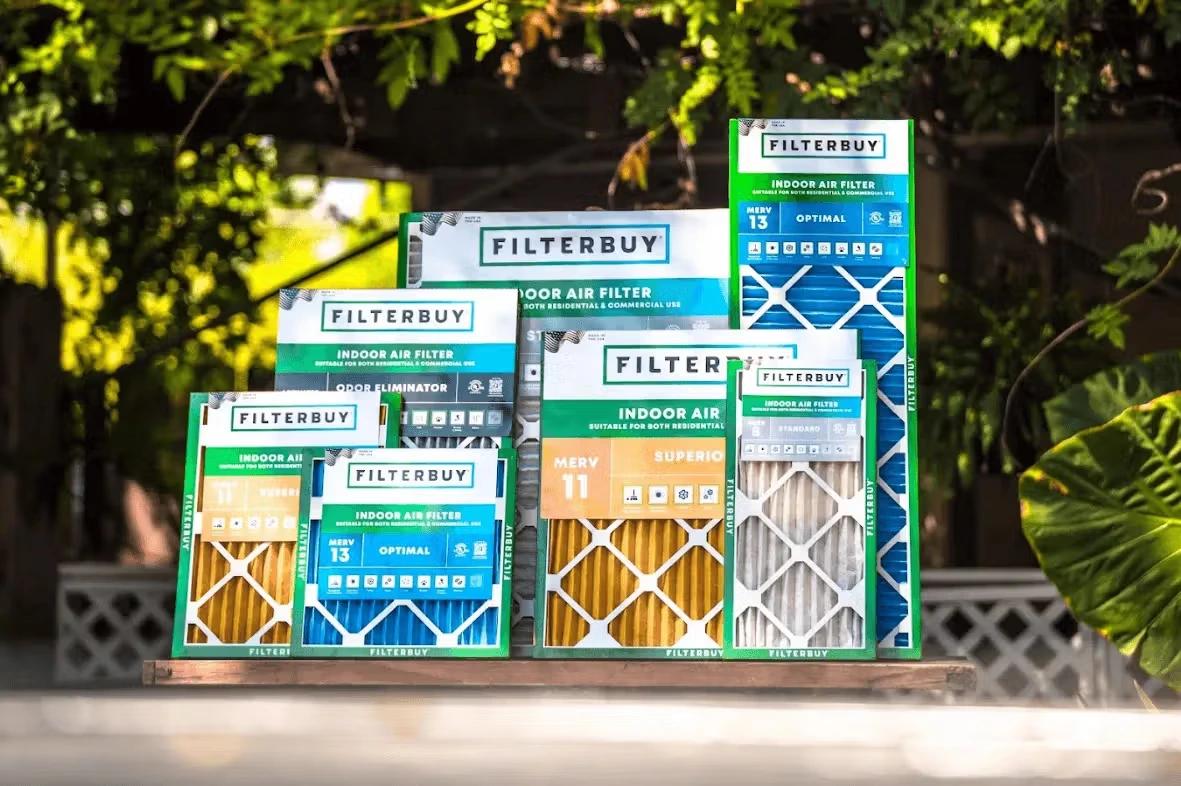
Use the filter level your system can handle:
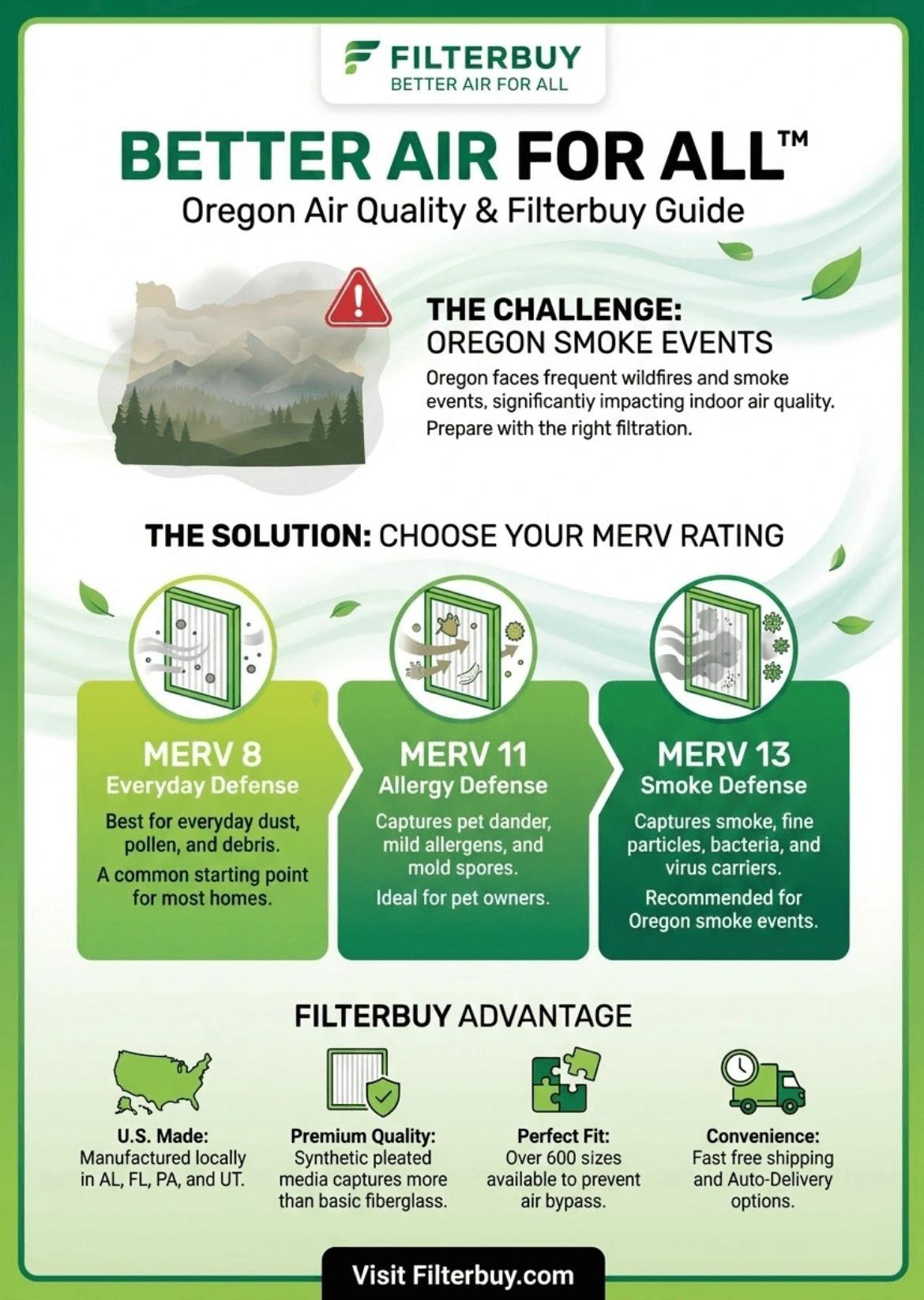
MERV 8 helps with everyday dust and larger pollen and is a common starting point.
MERV 11 captures more small particles (e.g., pet dander, many mold spores) and suits homes with pets or mild allergies.
MERV 13 targets finer particles often found in smoke and urban haze; use it only if your system is rated for the added resistance.
If you are unsure, follow your HVAC manufacturer’s guidance or ask a technician.
When the AQI improves, a short cleanup helps lower indoor particles: wipe hard surfaces with a damp cloth, vacuum with a HEPA-type vacuum if available, wash bedding and throws, let the HVAC fan run with a clean filter for a few hours, then check the filter and replace it if it looks loaded. Clean or replace prefilters on portable air cleaners per the maker’s instructions.
Filterbuy offers U.S.-made pleated filters in many standard and custom sizes so the filter seats properly and reduces bypass. The synthetic, pleated media captures more than basic fiberglass while supporting airflow when changed on time. Orders ship fast with free shipping in the continental U.S., and Auto-Delivery helps you stay on schedule.
A live map that shows current outdoor air conditions for your location using one reading and a matching color.
Check before outdoor plans and again if wind shifts, heat builds, or smoke is in the forecast.
Ozone and fine particles can be high even when the air looks clear, especially on hot, sunny afternoons or when smoke is aloft.
PM2.5 is fine particle pollution, common in smoke; ozone is a gas that rises on hot, sunny days. Both can irritate the lungs.
Keep windows closed, run AC/HVAC on recirculate, use a portable air cleaner if you have one, and spend more time in one cleaner room.
A well-fitting N95 or similar respirator can reduce inhaled particles; cloth and surgical masks are not designed for smoke.
Check filters more often; many homes need replacements sooner than the usual 1–3 months when smoke is frequent.
Use MERV 8 for basic dust, MERV 11 for pets or mild allergies, and MERV 13 for finer particles like smoke if your system allows it.
Stop, go indoors to a cleaner space, rest, and follow your care plan. Seek medical advice if symptoms persist or worsen.
