
San Jose Real-Time AQI Tracker


Get Alerts For Unhealthy AQI In Your Area
When air quality in your area reaches unhealthy levels, we'll send you a quick alert, along with expert tips on how to reduce your exposure.
What's Actually In San Jose Air Today?
What High AQI Means for Your Lungs in San Jose
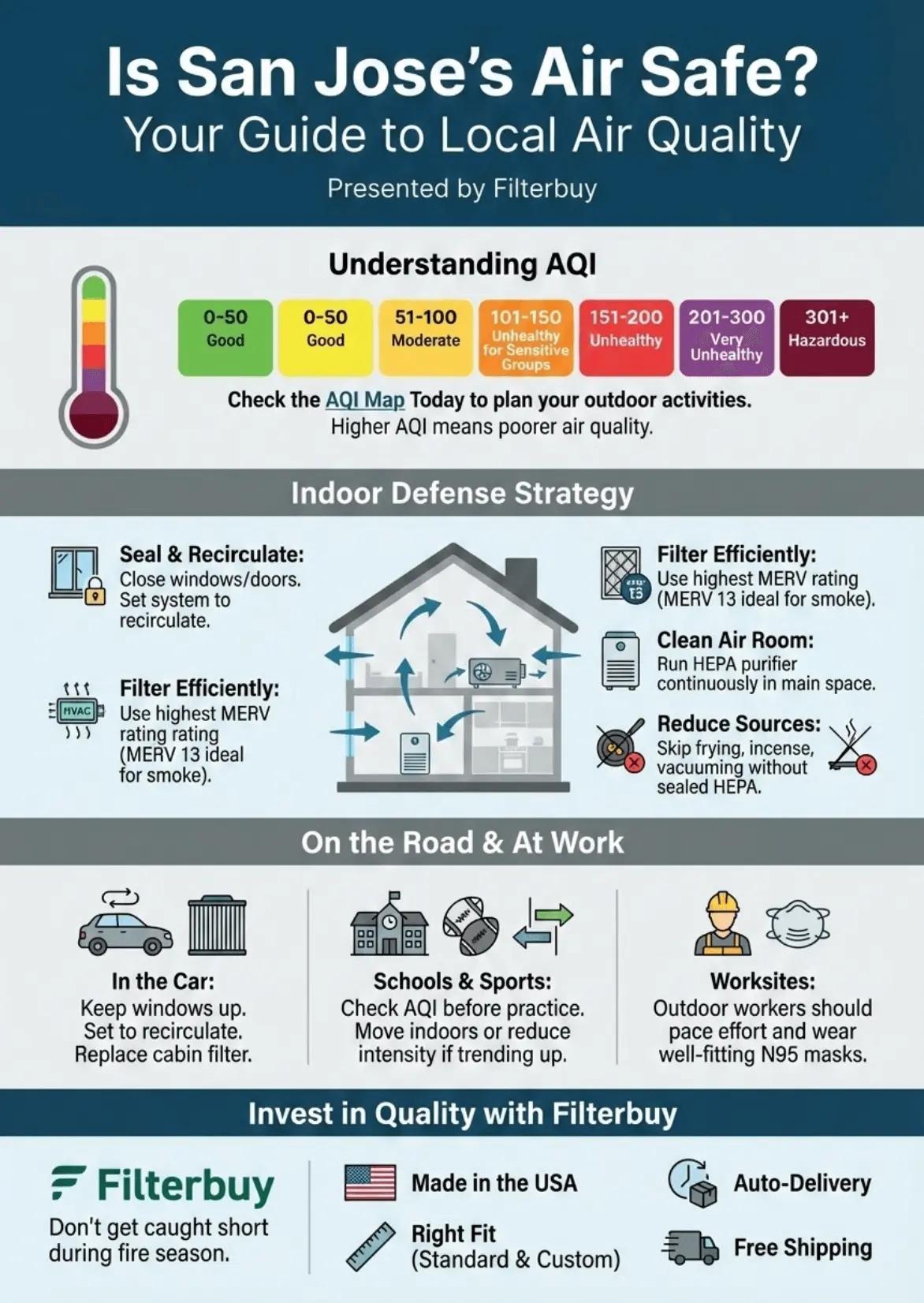
How to Read AQI
The Air Quality Index (AQI) measures how polluted the air is and how it may affect your health.
0–50 (Good): Air quality is satisfactory.
51–100 (Moderate): Acceptable, but some pollutants may pose minor concerns.
101–150 (Unhealthy for Sensitive Groups)
151–200 (Unhealthy)
201–300 (Very Unhealthy)
301+ (Hazardous)
Moderate
Still okay for most, but if you have asthma or allergies, take it easy and avoid long outdoor workouts.
Shop MERV 11 filters→What's the Right Filter for Your AQI Level?

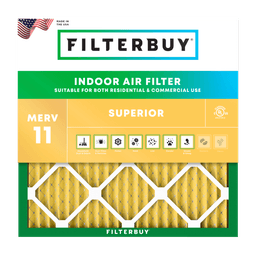
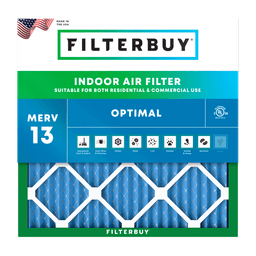

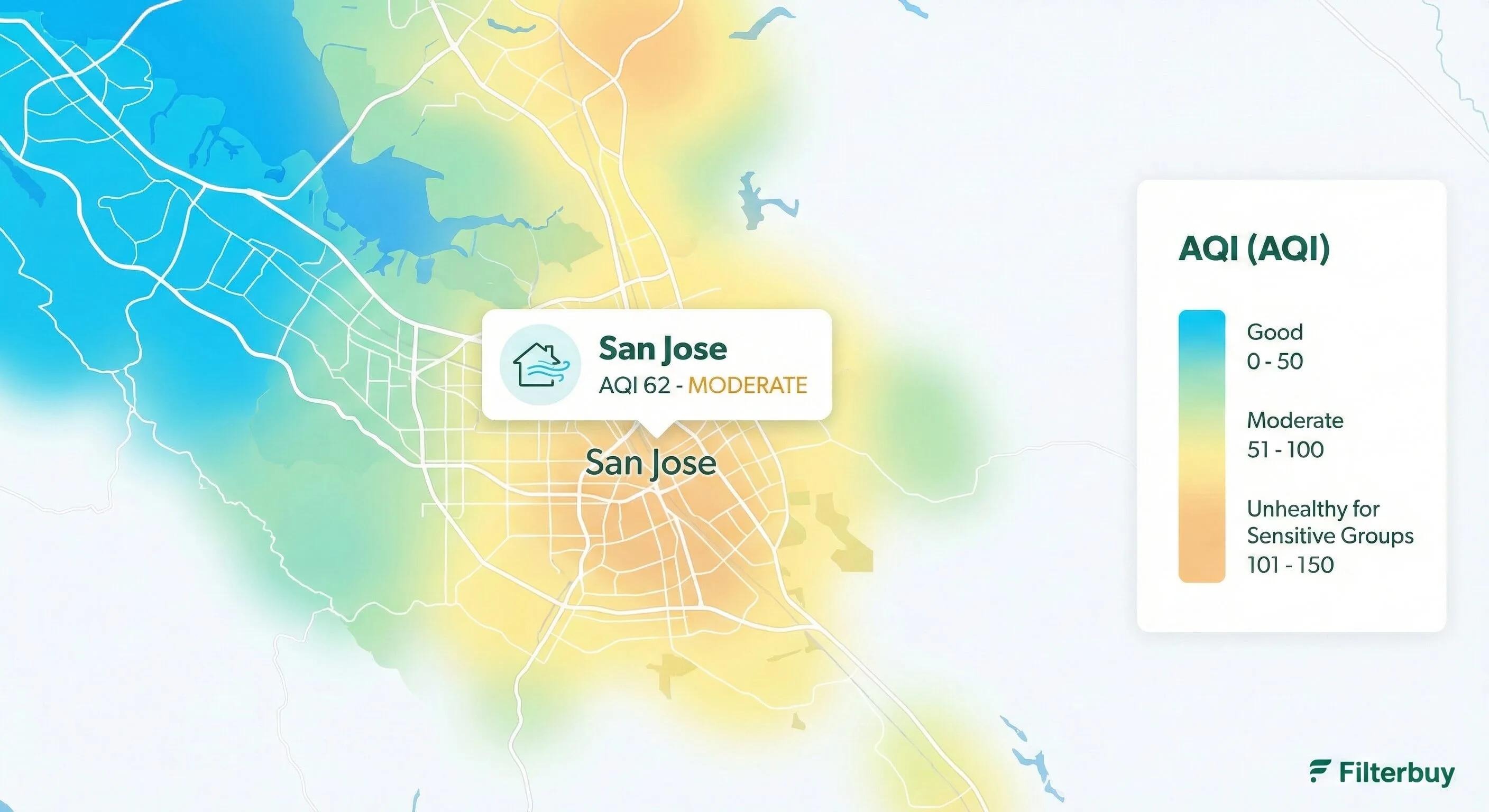
Check Today's Live Real Time Air Quality Index AQI Map in San Jose, CA Now
Use the live AQI map to check outdoor air in San Jose and nearby South Bay neighborhoods. Look at the number and color, then plan outdoor time. If levels increase, close windows, set HVAC to recirculate, and make sure you have an efficient pleated filter installed. If your system supports it, a MERV 13 filter helps during smoke days.
TL;DR Quick Answers
Live Air Quality Index (AQI) Map Now Today – San Jose, CA
San Jose's current Air Quality Index is Moderate, with readings around AQI 76 based on PM2.5 (fine particulate matter) levels.
What This Means for You:
AQI 51-100 (Moderate) = Air quality is acceptable; however, some pollutants may be a concern for a small number of sensitive individuals.
Check Real-Time Maps:
AirNow.gov – EPA's official air quality resource
IQAir.com – Global real-time monitoring
AQICN.org – Neighborhood-level readings
Protect Your Indoor Air: San Jose experiences air quality fluctuations from seasonal wildfires, ozone buildup during summer heat, and PM2.5 spikes in winter months. While outdoor AQI changes daily, your indoor air quality is something you can control year-round.
Regularly replacing your HVAC air filter—especially with a MERV 11 or MERV 13 rating—helps trap fine particles like PM2.5, pollen, and smoke particles before they circulate through your home.
Pro Tip: When outdoor AQI spikes above 100, keep windows closed and let your HVAC system filter the air inside. A clean, high-quality filter makes all the difference.
Key takeaways
Check the live AQI for your block and nearby spots, then plan outdoor time around the hourly outlook.
If AQI rises, close windows, set HVAC to recirculate, and run the central fan so air passes through the filter more often.
Use the highest MERV your system safely supports. Many homes can run MERV 11 but it is best to use MERV 13 (like that from Filterbuy) during smoke events if airflow stays normal.
Add a HEPA room purifier in the bedroom or main living space on bad air days.
Keep one correctly sized spare filter on hand so you can swap early after heavy smoke.
In the car, windows up and recirculate on. Replace the cabin filter on schedule.
What has been driving San Jose’s air lately
Wildfire smoke moving into the Bay Area. In August 2025, the Gifford Fire sent smoke toward the region and an advisory was issued. Officials noted ground-level effects can vary by area and hour, even when skies only look hazy.
More unhealthy days than many places. The Bay Area metro that includes San Jose ranks among the most polluted U.S. metros for ozone and particle pollution in the American Lung Association’s 2025 report, although long-term trends show improvement in cleaner years.
When AQI climbs, close the house, run your central fan so air passes through the filter more often, and use a HEPA room purifier in the bedroom or main living space. If you need replacement filters, having a box on hand helps you swap early without a last-minute store run. Filterbuy’s Auto-Delivery can keep you stocked through peak smoke season.
Quick check to help plan your day
Check your spot and a few blocks around you. Readings can differ across short distances, especially near freeways and hills.
Review “Now” and the hourly outlook. If AQI rises through the afternoon, shift exercise earlier, shorten outdoor time, or move harder activity indoors.
Tighten up indoors. Close windows, set HVAC to recirculate, and avoid extra indoor smoke sources. Use the highest MERV your system allows while maintaining normal airflow. If your system supports it, MERV 13 helps capture fine smoke particles.
Filterbuy offers US-made filters, so you are sure of the quality.
Indoor plan for smoke days
Prepare and do the following during smoke days:
Seal and recirculate. Close windows and exterior doors. Set HVAC to recirculate.
Filter efficiently. Use the highest MERV your system safely supports. Many homes can run MERV 11 or MERV 13 during smoke periods. Check airflow at vents after installing. Always keep one correctly sized spare on hand. Filterbuy’s custom sizes can reduce bypass if your return uses a nonstandard opening.
Pick one clean-air room. Run a HEPA purifier continuously where you sleep or spend most time.
Reduce indoor sources. Skip candles, incense, frying, and vacuuming without a sealed HEPA machine while AQI is high.
After conditions improve. Wipe hard surfaces with a damp cloth, vacuum with a HEPA vacuum, and swap in a fresh HVAC filter if it looks gray or matted.
Filters for South Bay homes: what to choose
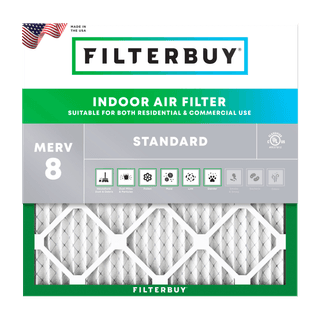
MERV 8 helps with everyday dust and larger pollen and keeps coils cleaner.
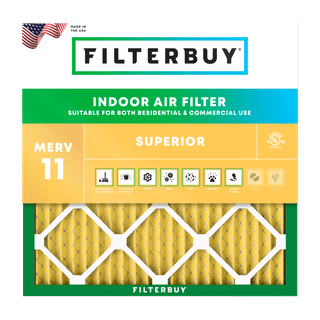
MERV 11 captures more small particles, including pet dander and many mold spores.
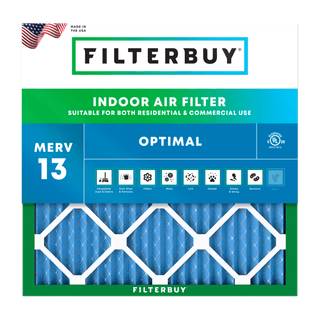
MERV 13 targets finer particles common in smoke and urban haze. Use it only if your system is rated for the added resistance and airflow stays normal. Not sure what your system supports? Check your HVAC manual or ask a local technician.
On the road, at school, and at work
In the car: Windows up, set to recirculate. Replace the cabin filter on schedule.
Schools and sports: Check AQI before practice. If it trends up, move activities indoors or reduce intensity.
Worksites: Outdoor workers should pace effort, take breaks in filtered spaces, and wear a well-fitting N95 on very smoky hours.
Invest in Filterbuy now
Invest in filters that are made to last.
Right fit: Standard and custom sizes help you get the best fit.
Options that match your system: MERV 8 for routine dust, MERV 11 for smaller particles, MERV 13 for smoke (if your system supports it).
Easy to stay ready: Free U.S. shipping and optional Auto-Delivery so you are not caught short during fire season.
Made in the USA: Reliable quality and longevity.
FAQs
What does today’s AQI number actually tell me?
AQI translates multiple pollutants into a single risk score from 0 to 500. Green means low risk, yellow is moderate, orange is unhealthy for sensitive groups, red and above signal broader risk. Check both the current value and the hourly forecast because conditions can shift within a few hours.
Who should be most careful when AQI worsens?
Children, older adults, people who are pregnant, and anyone with asthma, COPD, or heart disease should reduce outdoor exertion once AQI reaches orange. Outdoor workers and endurance athletes should pace effort, take more breaks, and watch for symptoms like coughing or chest tightness.
How often should I check air quality during fire season or heat waves?
Look in the morning, then recheck after wind shifts, weather changes, or visible haze. If the hourly outlook climbs in the afternoon, move harder activities earlier, shorten time outside, or go indoors.
What should I do when AQI hits orange or red?
Shorten or reschedule outdoor exercise, choose easier activities, and keep an eye on children. Indoors, close windows, set HVAC to recirculate, and run the central fan to push more air through the filter. Add a HEPA room purifier where you sleep or spend the most time.
Which HVAC filter should I use, and what about MERV 13?
Use the highest MERV your system safely supports. During wildfire smoke or very poor AQI, the EPA advises MERV 13 or higher when feasible to better capture fine particles; if your system cannot handle MERV 13, pick MERV 11 and pair it with a HEPA room purifier. If you need a snug fit in a nonstandard size, Filterbuy offers custom sizing without hard-to-find store runs.
How often should filters be replaced when smoke lingers?
Check monthly by default, but in active smoke periods inspect every 1–2 weeks. Replace early if the media looks gray or matted or if airflow at vents drops. Auto-delivery can help you avoid gaps during peak smoke days.
How can I reduce exposure in the car on smoky or smoggy days?
Keep windows closed, set the ventilation to recirculate, and ensure the cabin filter is installed and up to date. Avoid idling near heavy traffic or fire zones. A spare cabin filter on hand can be useful in prolonged smoke events.
What symptoms mean I should change plans or seek medical advice?
New or worsening coughing, wheezing, chest discomfort, unusual fatigue, or shortness of breath are signals to stop outdoor activity and move indoors to filtered air. People with chronic lung or heart conditions should follow their asthma or cardiac action plans and contact a clinician if symptoms do not improve.