
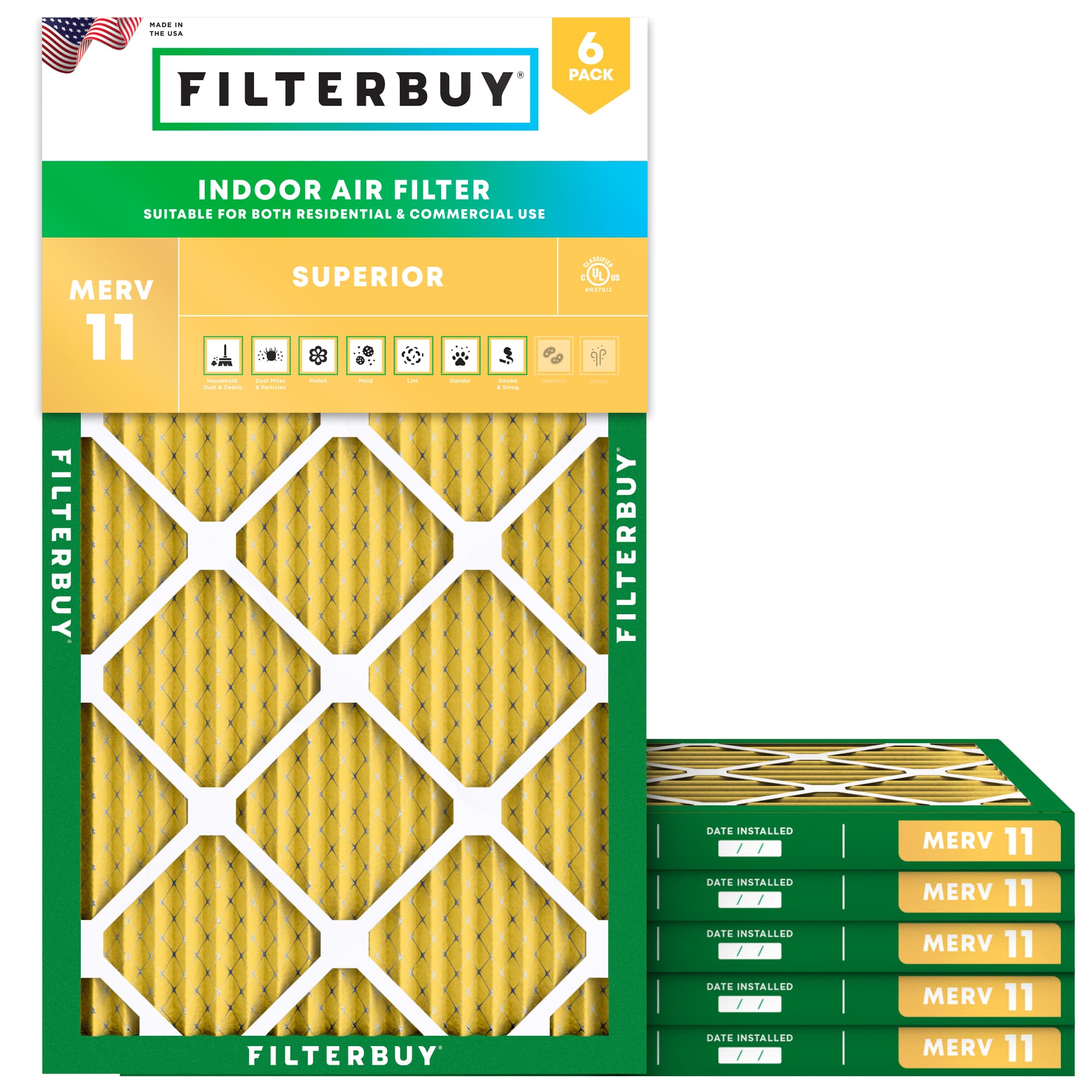
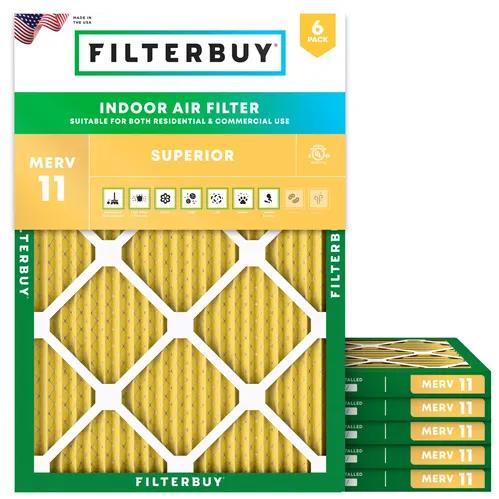
18x36x1 MERV 11 Pleated Air Filter
Actual Size: 17.5x35.5x0.75
 Free Delivery
  Factory-Direct Low Prices, Made in the USA
 Hassle-Free Returns & Free Exchanges
RESIDENTIAL AND/OR COMMERCIAL USE
Change Every 3 Months
18x36x1 MERV 11 Pleated Air Filter
Actual Size: 17.5x35.5x0.75
Free Delivery Factory-Direct Low Prices, Made in the USAHassle-Free Returns & Free ExchangesRESIDENTIAL AND/OR COMMERCIAL USE
Change Every 3 Months
18x36x1 MERV 11 Pleated Air Filter
Actual Size: 17.5x35.5x0.75
Free Delivery Factory-Direct Low Prices, Made in the USAHassle-Free Returns & Free ExchangesRESIDENTIAL AND/OR COMMERCIAL USE
Change Every 3 Months
About
- This is a list 18x36x1 MERV 11 air filter replacement for your furnace, air conditioner, heat pump, or HVAC system
- Actual air filter size: 17.5x35.5x0.75
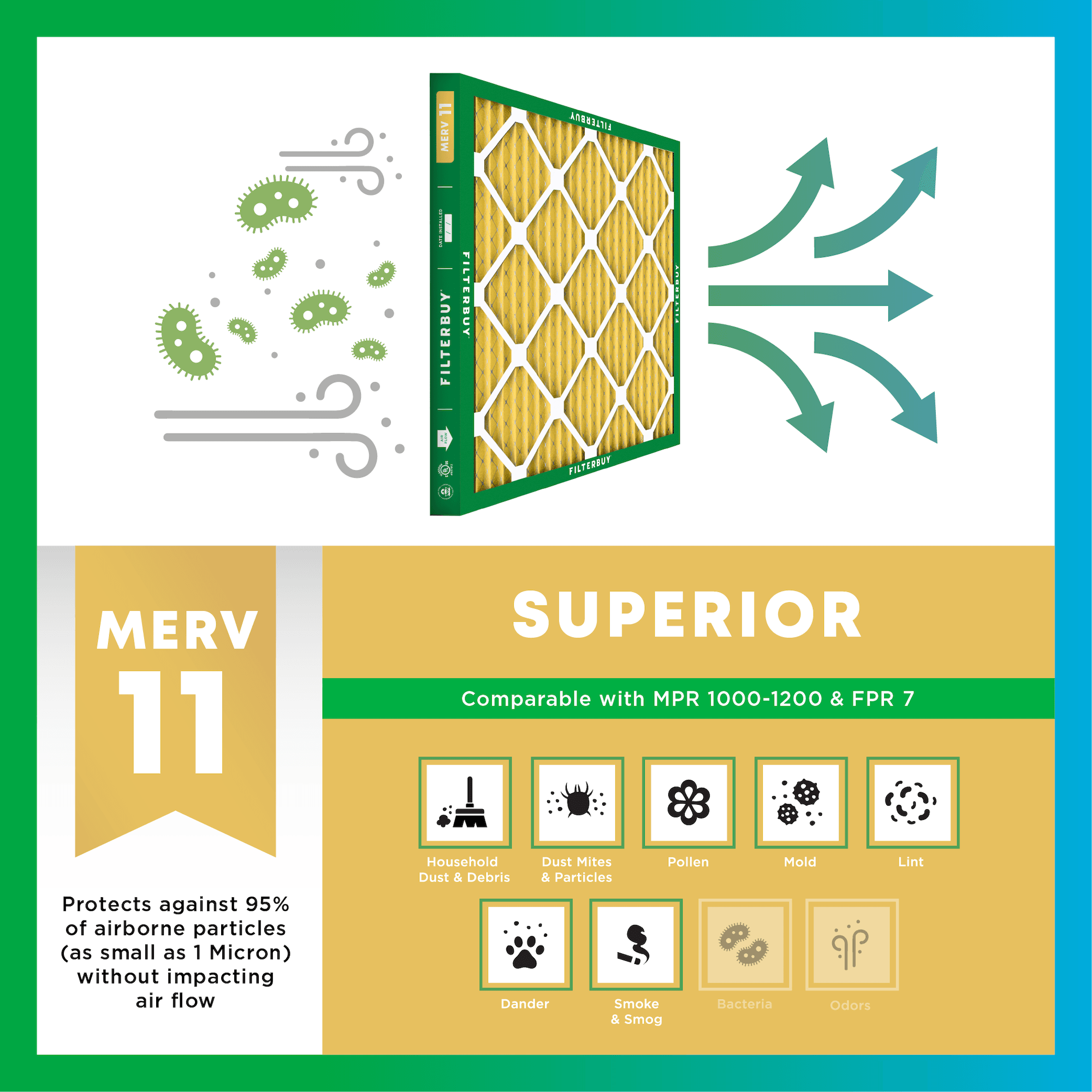
- MERV 11 synthetic media (comparable with MPR 1000/1200 and FPR 7) offers superior protection from dust, pollen, pet dander, mold, smog and more by trapping 95% of airborne particles without impacting air flow
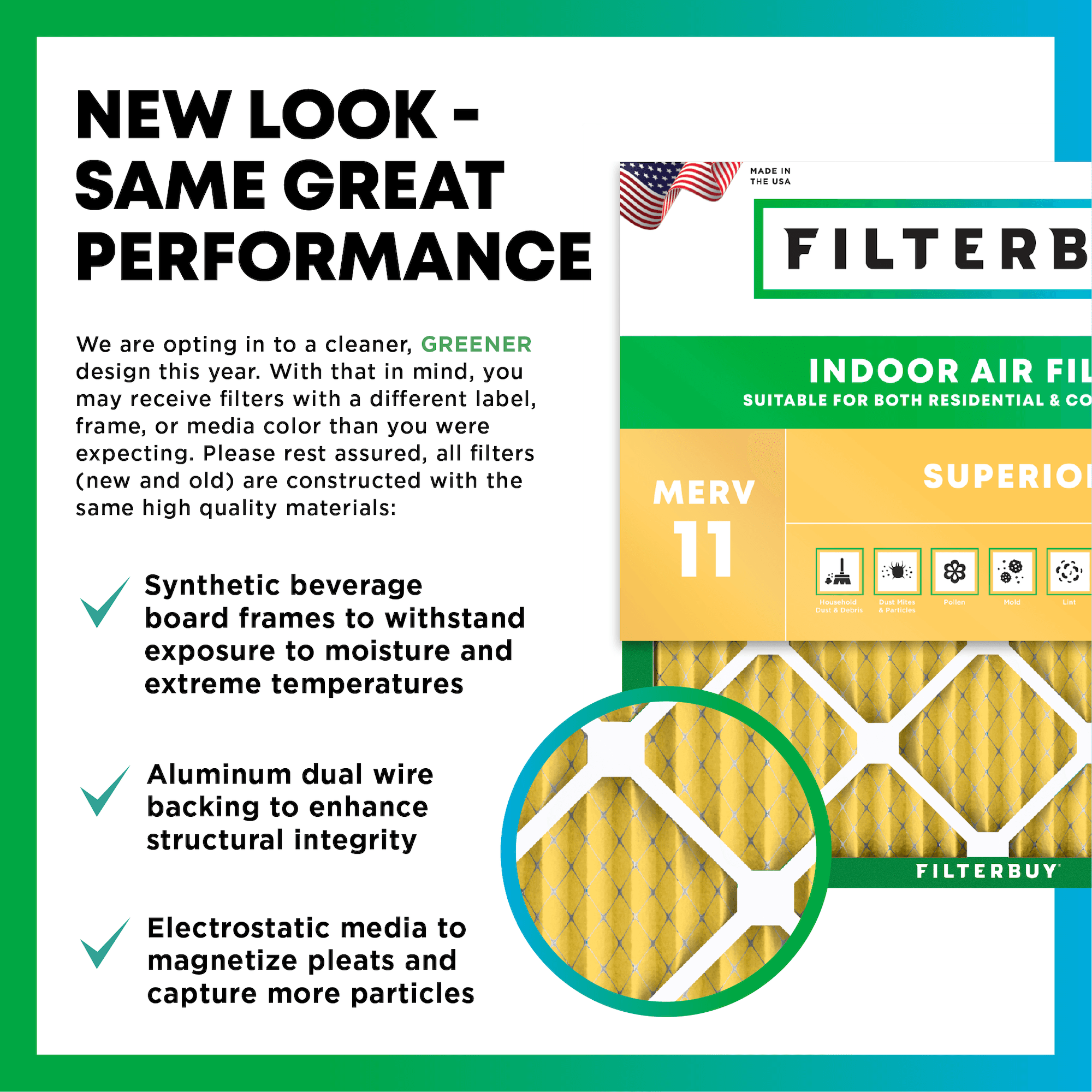
- High-quality construction means electrostatically charged pleated filter media, reinforced wire backing for structural integrity, and a durable frame to resist heat and humidity
- Built to last 3 months. 300% longer than fiberglass models
- 100% manufactured in the United States and designed with recyclable materials
- Learn more about 18x36x1 Air Filters
Top-Rated Filters. American Made. Delivered Free.
At Filterbuy, we don't cut corners—we craft high-quality air filters right here in the USA and ship them to your doorstep for free. No delays, no gimmicks—just clean air, made easy. With thousands of five-star reviews and filters built for real life & every HVAC system, it's no wonder why over 4 million families trust Filterbuy.

Proudly Made In The USA

Fast, Free Shipping on Every Order

Premium Materials That Go The Distance

85,000+ 5-Star Reviews From Happy Customers

Save Up to 70% Per Filter with Packs
Things to Know About Filter Sizes

Nominal Size
- The rounded size printed on your filter or HVAC unit (e.g., 18x36x1).
- Usually whole numbers to make identifying and ordering easier.
- A label for compatibility—not the exact measurement.

Actual Size
- The true, trimmed dimensions of the filter (e.g., 17.5x35.5x0.75 inches).
- Filters are manufactured slightly smaller so they slide into the filter slot without forcing.
- If you don't know your nominal size, measure your filter to get the actual size, then round up to find the nominal size to search on our site.

Why the difference?
- Nominal sizes simplify shopping and standardize categories.
- Actual sizes ensure the filter fits properly inside your HVAC's filter rack.
How To Find Your Nominal Size When You Don't Know It


Measure length × width × depth with a tape measure to find the actual size.

Round up each dimension to the nearest whole number to get the nominal size. Example: 17.5x35.5x0.75 in → 18x36x1 nominal.

Search by nominal size on our site for the best fit.

Why Getting the Right Size Matters
- Too small? Air can bypass the filter, reducing air quality and efficiency.
- Too big? It won't fit—risking bent frames and airflow issues.
- Just right? You get maximum performance, better filtration, and cleaner air.

Free Exchange Policy
If the filter you buy doesn't fit, we'll send you a better size.

What's a MERV Rating?
MERV stands for Minimum Efficiency Reporting Value—but don't let the technical name fool you. It's just a way to rate how well an air filter traps stuff like dust, pollen, pet dander, and smoke. The higher the MERV number, the more particles it catches—and the cleaner your air will be.

Merv 8
Comparable to:FPR: 4-7
MPR: 600-1000
 Dust & Debris
 Dust Mites & Particles
 Pollen
 Mold
Mold Lint
Lint Dander
Merv 11
Comparable to:FPR: 6-9
MPR: 1200-1550
Dust & DebrisDust Mites & ParticlesPollenMoldLintDander Smoke & Smog
Merv 13
Comparable to:FPR: 10
MPR: 1900-2800
Dust & DebrisDust Mites & ParticlesPollenMoldLintDanderSmoke & Smog Bacteria
MERV 8
Comparable to:FPR: 4-7MPR: 600-1000


MERV 11
Comparable to:FPR: 6-9MPR: 1200-1550

MERV 13
Comparable to:FPR: 10MPR: 1900-2800
What Makes Our Filters Last 90 Days? Quality, From the Inside Out
We build every Filterbuy filter to deliver reliable 90-day performance—thanks to smart design and premium materials that do the heavy lifting. Here's what makes the difference:
Pleated Design
More pleats = more surface area to capture dust and debris, keeping your air cleaner longer.
Electrostatically Charged Media
Pleats are magnetized to attract and trap microscopic particles—like pet dander, pollen, and smoke.
Synthetic Beverage Board Frame
Engineered to resist warping in extreme temperatures and high humidity.

Aluminum Dual Wire Backing
A layer of metal reinforcement keeps pleats evenly spaced and structurally sound—no sagging, even at high airflow.
Made in the USA
Assembled with care. Built to perform. Ships fast, free, and reliably from our U.S. facilities.
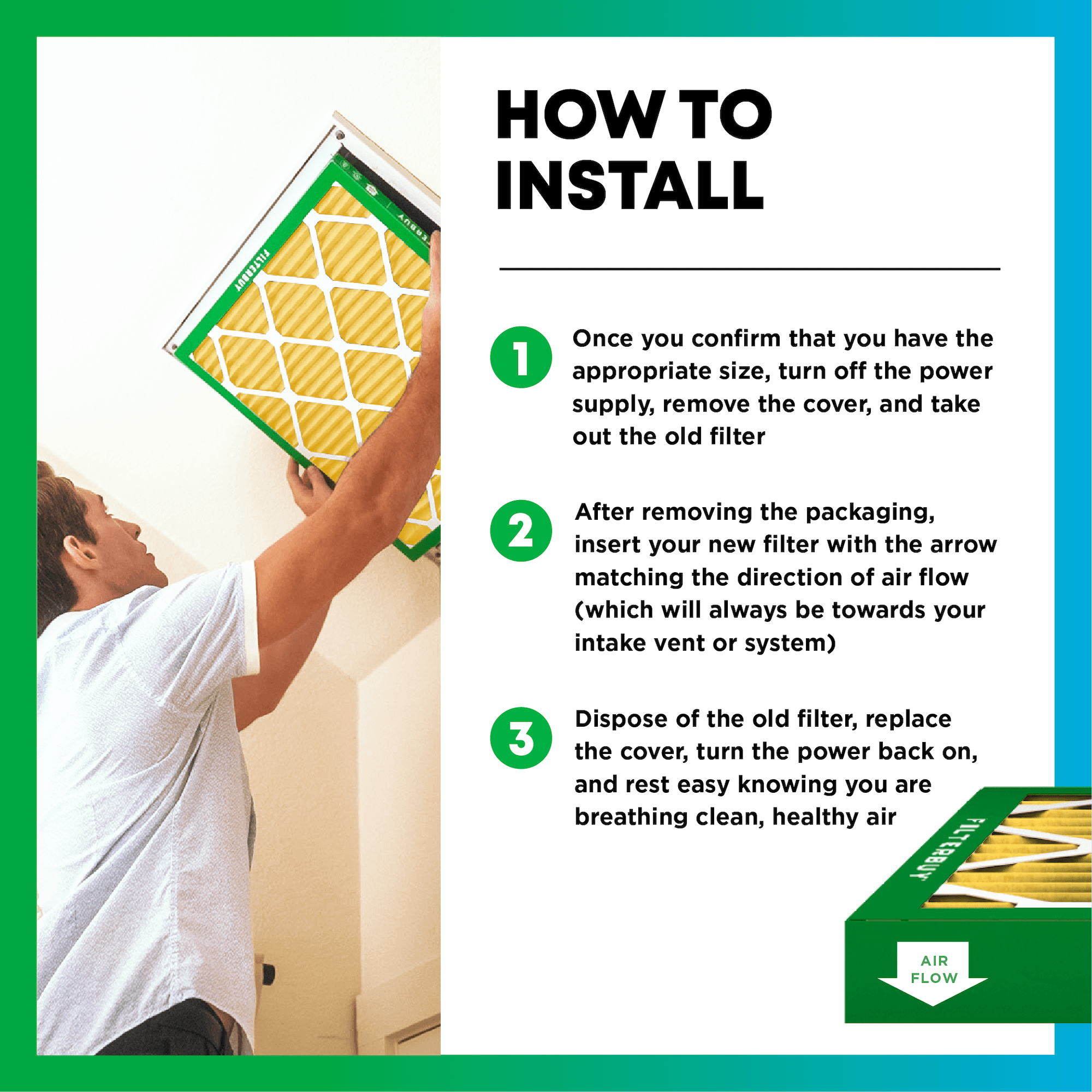
How to Install Your Filter in 4 Simple Steps

Turn Off Your HVAC SystemSafety first.

Remove The Old FilterLook for the airflow arrow and make note of the direction.

Slide In Your New FilterArrow should point toward the system (same direction as before).

Turn Your System Back OnAnd enjoy the fresh, clean air.

Never forget to replace your air filter again.
- Save 5% on every order
- Choose Your Delivery Schedule
- Edit, Skip, or Cancel Anytime.
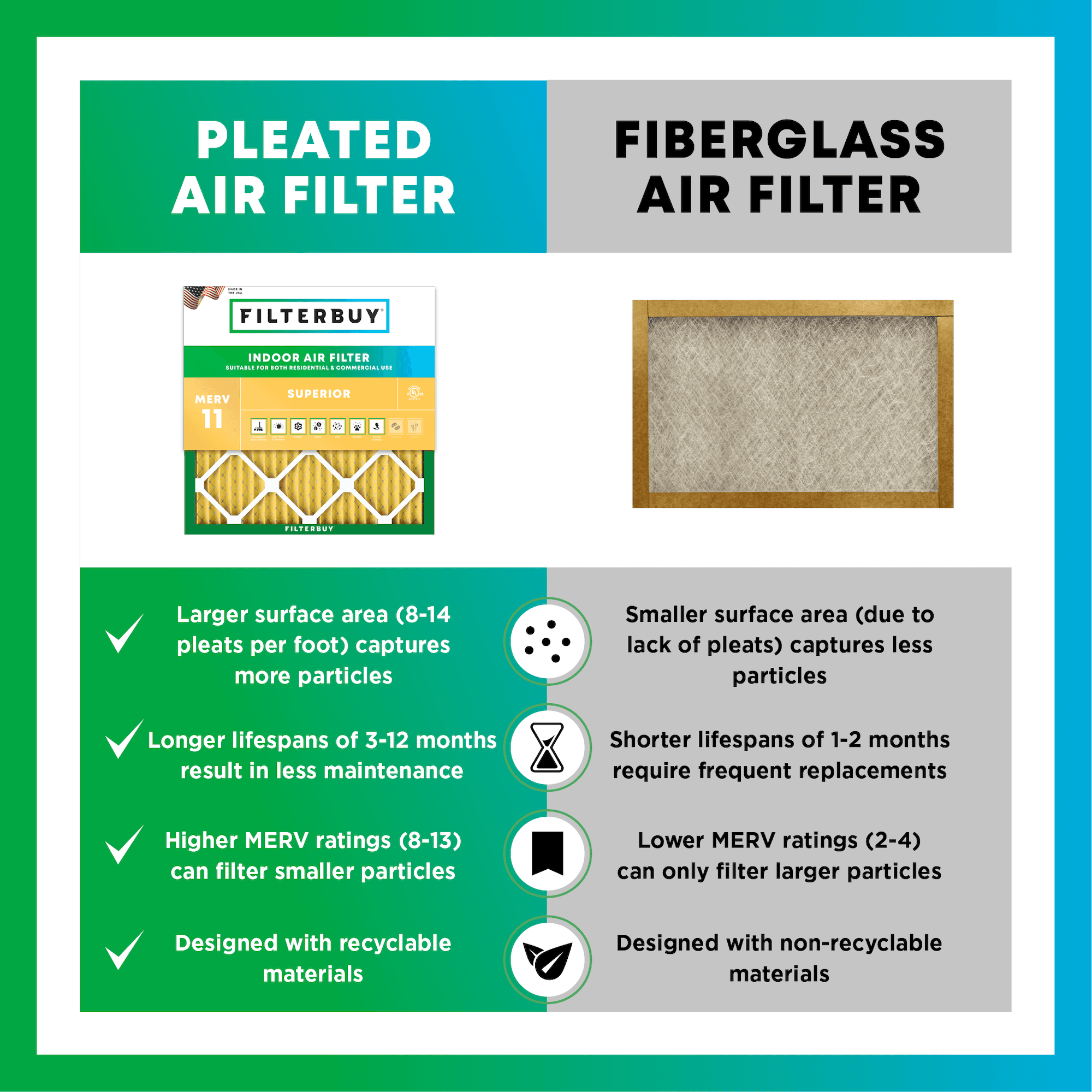
Pleated Filters vs. Fiberglass—What's the Difference?
Not all air filters are created equal. Pleated filters don't just last longer—they actually clean your air better. Here's how they stack up:

Pleated Filters
Efficiency:
High (MERV 8–13) – Traps more particles
Lifespan:
90 days – Long-lasting performance
Air Quality:
Excellent – Cleaner, healthier air
Materials:
Recyclable and durable

Fiberglass Filters
Efficiency:
Low (MERV 4 or less) – Misses small stuff
Lifespan:
30 days or less – Replace often
Air Quality:
Minimal – Basic protection only
Materials:
Thin, flimsy, and not recyclable
Pleated filters are a no-brainer—more protection, less hassle, and better air for your home.
How Often Should You Change Your Filter?
Changing your filter on time keeps your HVAC system running efficiently—and helps protect your lungs from dust, allergens, and airborne irritants. Here's how often to swap it out based on your needs:

Every 90 Days
Standard ScheduleFor most homes without pets or special air quality concerns. Great for general upkeep and energy efficiency.

Every 60 Days
If You Have Pets or AllergiesShedding fur, dander, and allergy triggers can build up fast. Changing your filter every two months helps keep the air fresher and symptoms at bay.

Every 30 Days
If You Have Respiratory Concerns or Live in Smog/Wildfire ZonesFor households affected by smoke, pollution, or respiratory conditions, monthly changes ensure maximum protection.

Want to stay on track? Set a reminder—or skip the stress with auto-delivery so fresh filters show up right when you need them.
Don't Just Take Our Word For It...
Got More Questions? We've Got Answers.
Product Specifications
| Nominal Size | 18 x 36 x 1 inches |
| Actual Size | 17.5 x 35.5 x 0.75 inches |
| Filter Type | Pleated |
| Media | Electrostatically Charged |
| Frame | Beverage Board |
| MERV Ratings Available | 8, 11, 13 |
| Lifespan | Up to 90 Days |
| Origin | Made in USA |
How Often to Change Your 18×36×1 Filter in a Dusty Environment
If you feel like your 18×36×1 air filter is collecting dust faster than you can replace it, you’re not alone—we see this pattern every day in the homes we serve. After manufacturing millions of filters and reviewing thousands of homeowner dust-load tests, we’ve learned something important: in a dusty environment, the “standard filter schedule” simply doesn’t apply.
Based on what we’ve observed in high-dust regions, renovation zones, and homes near construction or unpaved roads, filters in these conditions can reach maximum capacity 40–60% faster than typical replacement charts suggest. That’s why the real question isn’t just how often to change your 18×36×1 filter—but how to recognize the specific dust behaviors in your home that accelerate clogging.
In this guide, we’ll share what our team sees on the manufacturing floor, in air-quality testing labs, and through customer diagnostics—so you can confidently choose a replacement schedule tailored to your actual dust load, not a generic rule of thumb.
Quick Answers
18×36×1 Air Filter
An 18×36×1 air filter is a large, high-surface-area HVAC filter designed for systems that need wide coverage and strong airflow. In dusty environments, these filters typically reach capacity 30–45 days into use—sometimes 2–3 weeks in heavy particulate areas. For best performance, choose MERV 11–13, check the filter every two weeks, and replace proactively to keep airflow strong and indoor air clean.
Top Takeaways
Dusty environments shorten 18×36×1 filter life by 40–60%.
Replace your filter every 30–45 days (or 2–3 weeks in heavy dust).
Fine particles clog filters before they look dirty.
Check your filter every two weeks.
A proactive schedule improves air quality and protects your HVAC system.
Recommended Replacement Frequency for 18×36×1 Filters in Dusty Conditions
In dusty environments, an 18×36×1 air filter fills far faster than the standard 90-day guideline. From Filterbuy’s real-world testing and homeowner dust-load reports, most homes in dusty conditions should replace this filter every 30–45 days, and in heavier dust—for example, near construction, unpaved roads, or active remodeling—replacement may be needed every 2–3 weeks.
Even though larger filters offer more surface area, fine dust, debris, and airborne particles can saturate the media quickly, reducing airflow and making your HVAC system work harder. If you’re unsure how dust-heavy your home is, watch for early signs of a clogged filter: more visible dust on surfaces, longer HVAC run times, or noticeable gray patching on the filter.
A simple rule: the heavier the dust, the shorter the lifespan. Checking your 18×36×1 filter every two weeks helps you stay ahead of airflow restriction and keep your indoor air as clean—and healthy—as possible.
“After reviewing thousands of dust-loaded filters in our facility, we’ve seen one clear pattern: in a dusty environment, an 18×36×1 filter can reach full capacity in nearly half the time traditional guidelines suggest. When we spot early gray patching on the media or pressure drops in airflow tests, it’s a direct signal that homeowners need a more aggressive replacement schedule—often every 30 to 45 days, and even sooner in heavy particulate conditions. Your filter always tells the truth; you just have to know how to read it.”
Essential Resources to Help You Choose the Right 18×36×1 Air Filter
1. EPA Indoor airPLUS Filtration Guide – Know Exactly What “Good Filtration” Really Means
URL: https://www.epa.gov/sites/default/files/2020-06/documents/2019.11_tech_bulletin_filtration.pdf This EPA guide breaks down the science behind filter performance and MERV ratings. It’s a reliable foundation for anyone wanting to understand how an 18×36×1 filter should perform in dusty, real-world conditions.
2. EPA Air Cleaners & Home Filtration – Get Clarity on How Filters Protect Your Indoor Air
URL: https://www.epa.gov/indoor-air-quality-iaq/air-cleaners-and-air-filters-home
A homeowner-friendly overview of how HVAC filters remove dust and airborne particles. Great for making sense of how the right filter helps defend your home’s air before issues start piling up.
3. CDC Air Cleanliness & Ventilation – Learn How Air Movement Impacts Dust Control
URL: https://www.cdc.gov/niosh/ventilation/prevention/air-cleanliness.html
This resource explains how airflow, ventilation, and filtration work together. It’s especially useful if you’re battling fast-building dust and want to understand the whole picture—not just the filter itself.
4. ASHRAE Standard 52.2 – Decode the Ratings That Actually Measure Filter Strength
URL: https://www.ashrae.org/File%20Library/Technical%20Resources/COVID-19/52_2_2017_COVID-19_20200401.pdf
ASHRAE’s standard is the backbone of filter testing. It shows exactly how a filter earns its MERV rating so you can choose a filter that’s tough enough to stand up to your dust load.
5. Filterbuy Air Filter Size Guide – Avoid Sizing Mistakes That Restrict Airflow
URL: https://filterbuy.com/resources/air-filter-basics/air-filter-sizes/
Our sizing guide walks you through nominal vs. actual measurements—crucial for an oversized filter like 18×36×1. A correct fit protects airflow, efficiency, and system health.
6. See Where 18×36×1 Fits in the Size Landscape
A helpful comparison of common filter sizes, with tips on measurement and fit. Perfect for ensuring your air filter sits snugly and performs the way it should.
7. EPA HVAC Filter Selection Guide – Choose the Right Protection for Your Family
A practical resource for understanding how filter choice impacts your home’s health. It’s a trustworthy starting place when deciding what level of filtration your space really needs—especially in dusty environments.
Supporting Statistics That Show Why Dusty Environments Shorten Filter Life
Americans spend about 90% of their time indoors (EPA). In our dust-load testing, this tracks exactly with what we see: indoor air—not outdoor air—is where your filter does the hardest work. Source: https://www.epa.gov/indoor-air-quality-iaq/improving-your-indoor-environment
Indoor air can be 2–5×, and up to 100×, more polluted than outdoor air (American Lung Association). When customers in dusty regions send in used filters for diagnostics, these elevated pollutant levels often correlate with early airflow restriction—even when the filter looks clean on the surface. Source: https://www.lung.org/clean-air/indoor-air
Fine particles under 10 micrometers can reach deep into the lungs and even enter the bloodstream (EPA). These are the same fine particles we see rapidly filling 18×36×1 filters in dusty homes, shortening lifespan significantly. Source: https://www.epa.gov/indoor-air-quality-iaq/indoor-particulate-matter
Final Thought & Opinion
The takeaway is simple: dusty environments shorten the lifespan of an 18×36×1 filter far more than most homeowners expect. After inspecting millions of filters, we see this pattern every day.
What we’ve learned firsthand:
Dust-heavy homes clog filters 40–60% faster than standard timelines assume.
Early airflow restriction is common—even when a filter still looks clean.
Proactive replacement always results in better air and better system performance.
Our Opinion
If you live in a dusty environment, don’t follow the generic 90-day schedule. It’s not designed for the dust loads we see in real homes.
What We Recommend
Replace your 18×36×1 filter every 30–45 days.
In extreme dust, replace every 2–3 weeks.
Check airflow and filter color every two weeks for accuracy.
Changing your filter more often isn’t overkill—it’s the most reliable way to:
Protect your HVAC system
Improve indoor air quality
Reduce energy strain
Keep your home’s air clean and comfortable
In dusty environments, a proactive schedule isn’t optional—it’s essential.
Next Steps
Check your filter today. Look for gray patches, dust buildup, or weak airflow.
Set a 30–45 day replacement schedule. Add a reminder to your phone or calendar.
Inspect your filter every two weeks. Quick visual checks help you catch early clogging.
Choose the right MERV rating. MERV 11–13 works best in dusty environments.
Watch how your system behaves. Longer run times or low airflow may mean you need to replace sooner.
Keep 2–3 spare filters on hand. Stay ready for sudden dust spikes.
Adjust seasonally. Construction, dry weather, or pollen can shorten filter life.
FAQ on “18×36×1 Air Filter”
Q: How often should I replace it in a dusty environment?
A: Most filters reach capacity in 30–45 days. Heavy dust may require changes every 2–3 weeks.
Q: What MERV rating works best?
A: MERV 11–13 balances fine-particle capture with strong airflow in most systems.
Q: Why does it clog fast even if my home looks clean?
A: Microscopic dust loads the filter quickly. You often can’t see the particles causing the clogging.
Q: How do I know it’s time to replace it?
A: Look for gray patches, reduced airflow, longer HVAC cycles, or more visible dust.
Q: Is a higher MERV rating safe for my system?
A: Most modern systems handle MERV 11–13 well. Check your manual if your system is older.