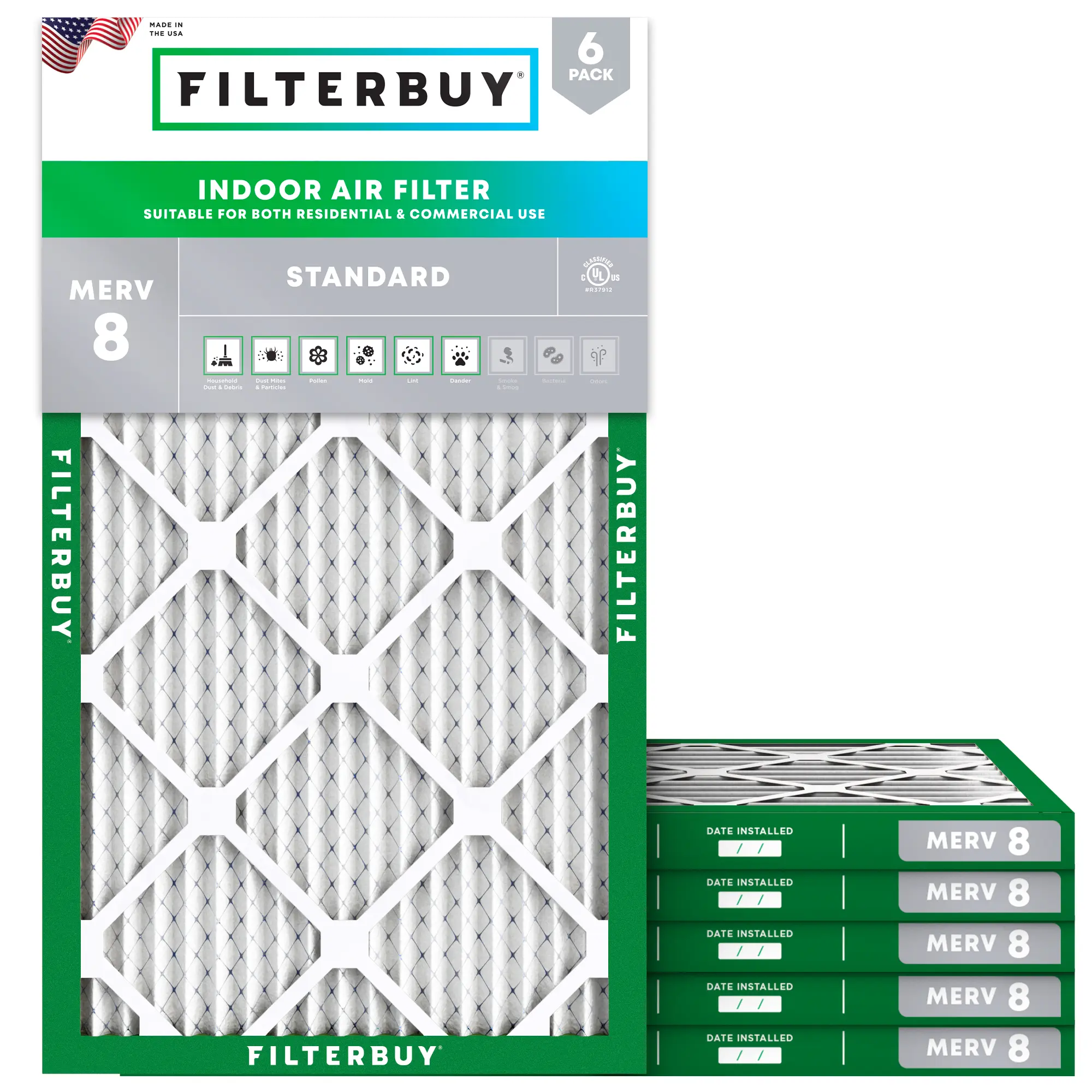
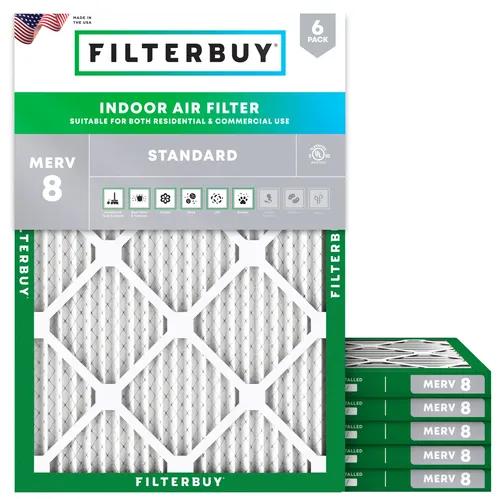
Actual Size: 17.5x27x1"
 Free Delivery
  Factory-Direct Low Prices, Made in the USA
 Hassle-Free Returns & Free Exchanges
RESIDENTIAL AND/OR COMMERCIAL USE
Change Every 3 Months
Actual Size: 17.5x27x1"
Free Delivery Factory-Direct Low Prices, Made in the USAHassle-Free Returns & Free ExchangesRESIDENTIAL AND/OR COMMERCIAL USE
Change Every 3 Months
Actual Size: 17.5x27x1"
Free Delivery Factory-Direct Low Prices, Made in the USAHassle-Free Returns & Free ExchangesRESIDENTIAL AND/OR COMMERCIAL USE
Change Every 3 Months
At Filterbuy, we don't cut corners—we craft high-quality air filters right here in the USA and ship them to your doorstep for free. No delays, no gimmicks—just clean air, made easy. With thousands of five-star reviews and filters built for real life & every HVAC system, it's no wonder why over 4 million families trust Filterbuy.

Proudly Made In The USA

Fast, Free Shipping on Every Order

Premium Materials That Go The Distance

85,000+ 5-Star Reviews From Happy Customers

Save Up to 70% Per Filter with Packs


Measure length × width × depth with a tape measure to find the actual size.

Round up each dimension to the nearest whole number to get the nominal size. Example: 17.5x27x1" in → 17.5x27x1 nominal.

Search by nominal size on our site for the best fit.


If the filter you buy doesn't fit, we'll send you a better size.
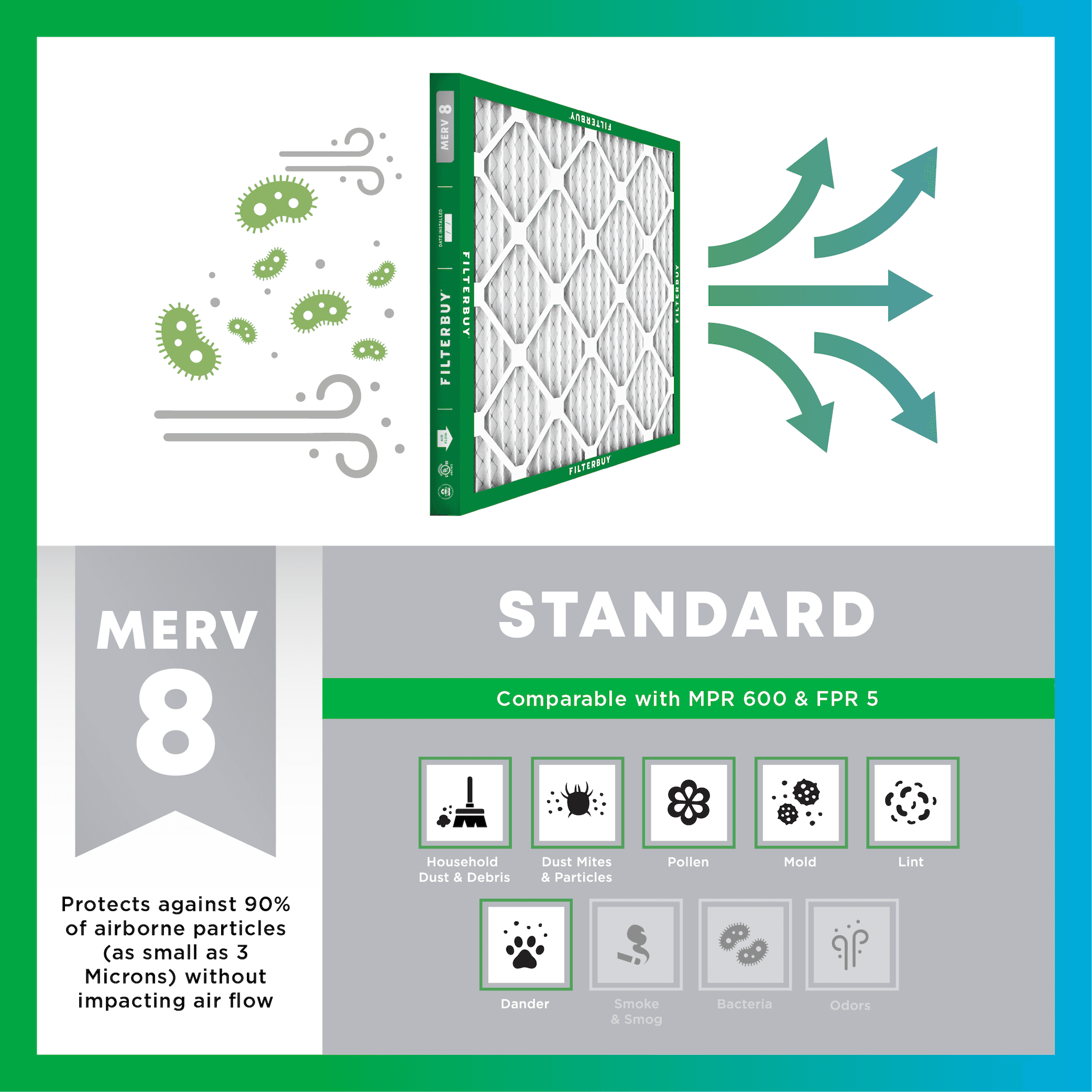
MERV stands for Minimum Efficiency Reporting Value—but don't let the technical name fool you. It's just a way to rate how well an air filter traps stuff like dust, pollen, pet dander, and smoke. The higher the MERV number, the more particles it catches—and the cleaner your air will be.

Comparable to:FPR: 4-7
MPR: 600-1000
 Dust & Debris
 Dust Mites & Particles
 Pollen
 Mold
Mold Lint
Lint Dander
Comparable to:FPR: 6-9
MPR: 1200-1550
Dust & DebrisDust Mites & ParticlesPollenMoldLintDander Smoke & Smog
Comparable to:FPR: 10
MPR: 1900-2800
Dust & DebrisDust Mites & ParticlesPollenMoldLintDanderSmoke & Smog Bacteria


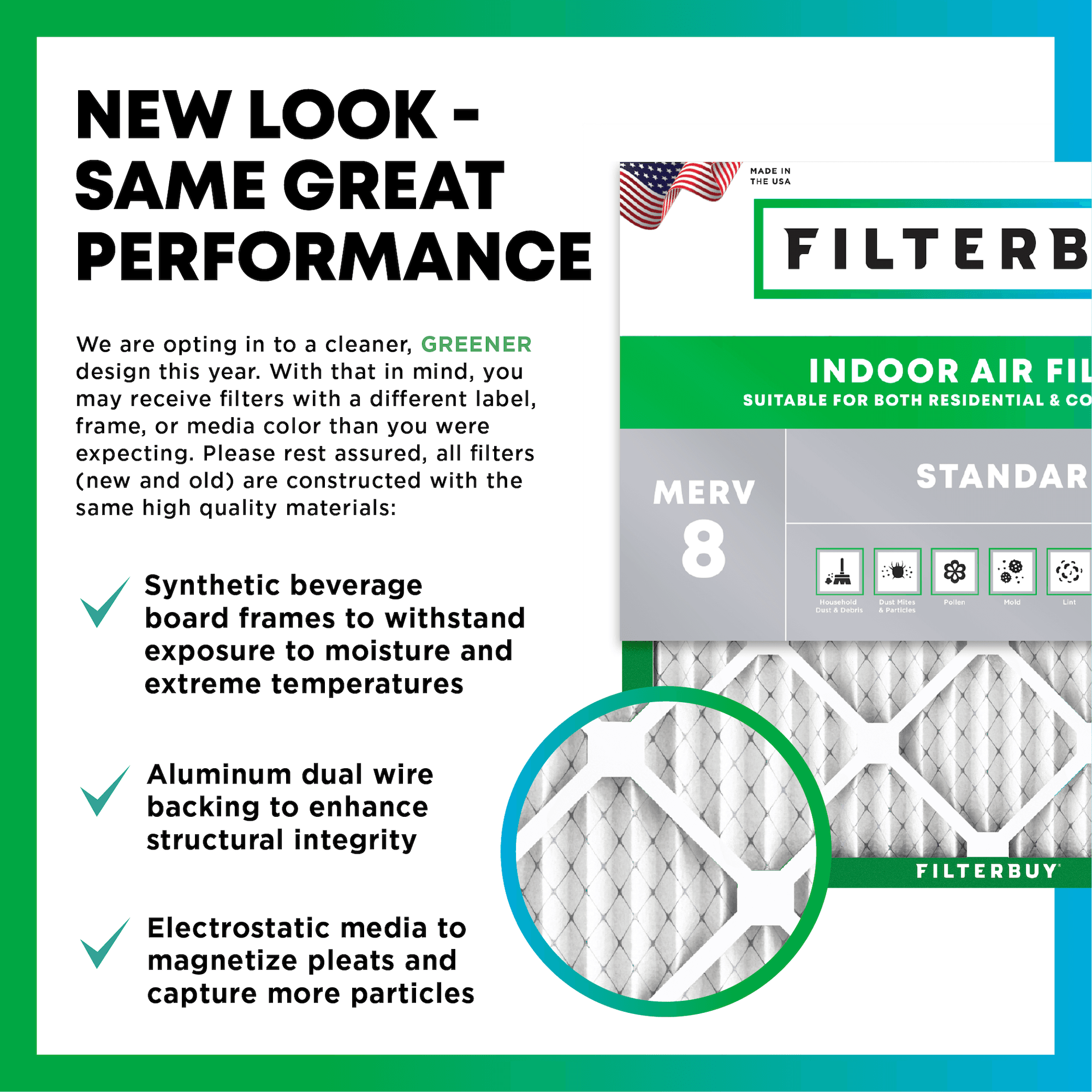
We build every Filterbuy filter to deliver reliable 90-day performance—thanks to smart design and premium materials that do the heavy lifting. Here's what makes the difference:
More pleats = more surface area to capture dust and debris, keeping your air cleaner longer.
Pleats are magnetized to attract and trap microscopic particles—like pet dander, pollen, and smoke.
Engineered to resist warping in extreme temperatures and high humidity.

A layer of metal reinforcement keeps pleats evenly spaced and structurally sound—no sagging, even at high airflow.
Assembled with care. Built to perform. Ships fast, free, and reliably from our U.S. facilities.

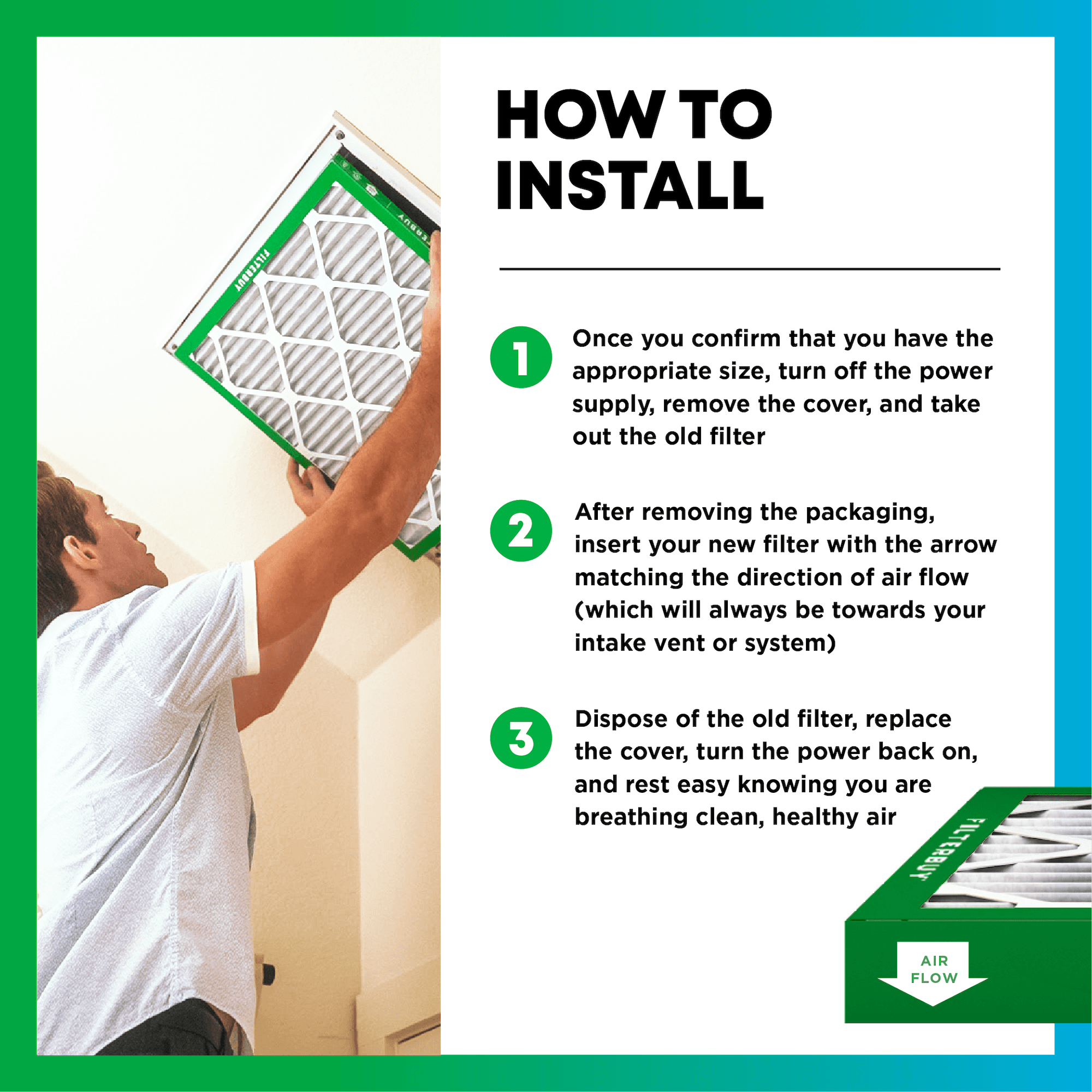
Turn Off Your HVAC SystemSafety first.

Remove The Old FilterLook for the airflow arrow and make note of the direction.

Slide In Your New FilterArrow should point toward the system (same direction as before).

Turn Your System Back OnAnd enjoy the fresh, clean air.

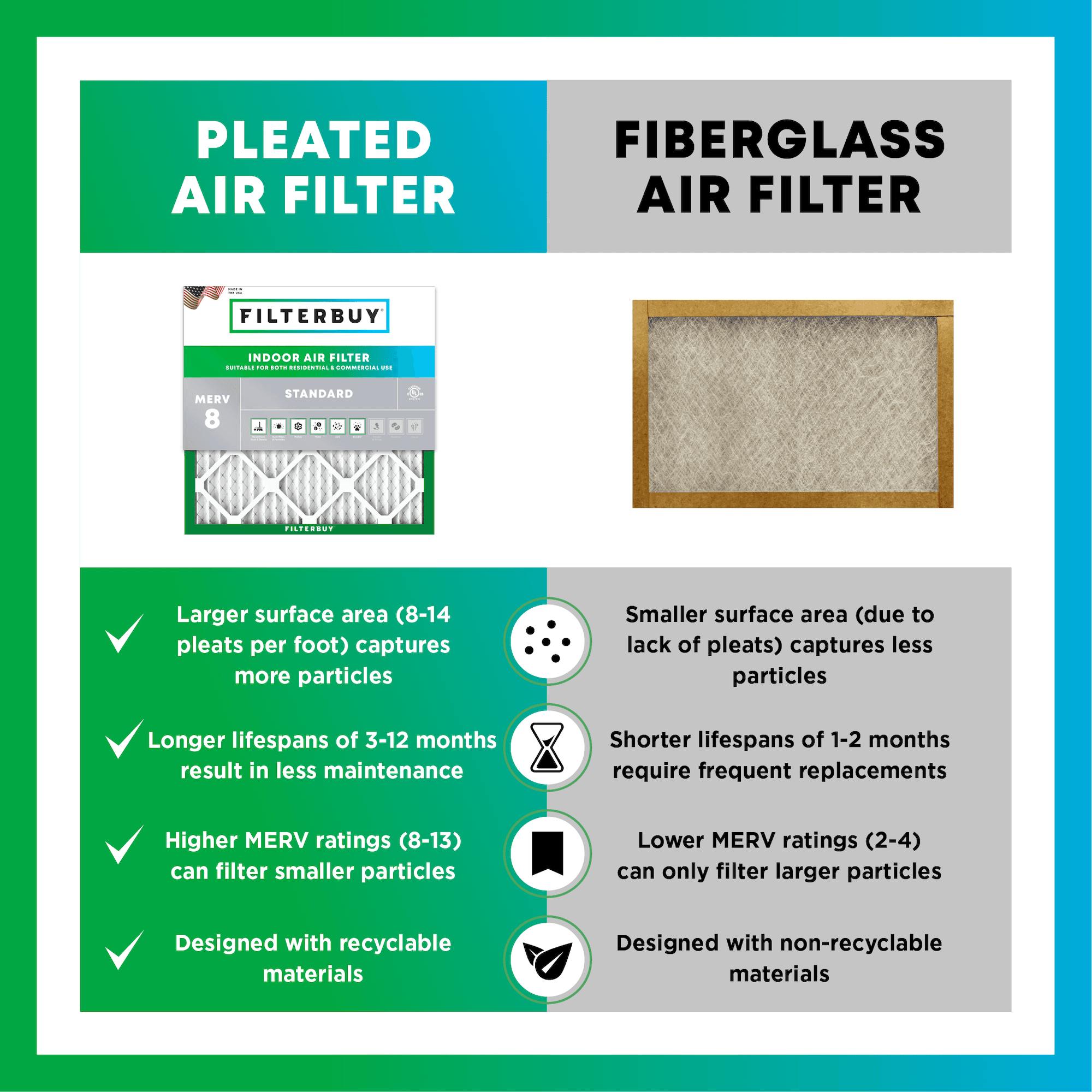
Not all air filters are created equal. Pleated filters don't just last longer—they actually clean your air better. Here's how they stack up:

Efficiency:
High (MERV 8–13) – Traps more particles
Lifespan:
90 days – Long-lasting performance
Air Quality:
Excellent – Cleaner, healthier air
Materials:
Recyclable and durable

Efficiency:
Low (MERV 4 or less) – Misses small stuff
Lifespan:
30 days or less – Replace often
Air Quality:
Minimal – Basic protection only
Materials:
Thin, flimsy, and not recyclable
Pleated filters are a no-brainer—more protection, less hassle, and better air for your home.
Changing your filter on time keeps your HVAC system running efficiently—and helps protect your lungs from dust, allergens, and airborne irritants. Here's how often to swap it out based on your needs:

For most homes without pets or special air quality concerns. Great for general upkeep and energy efficiency.

Shedding fur, dander, and allergy triggers can build up fast. Changing your filter every two months helps keep the air fresher and symptoms at bay.

For households affected by smoke, pollution, or respiratory conditions, monthly changes ensure maximum protection.

| Nominal Size | 17.5 x 27 x 1 inches |
| Actual Size | 17.5 x 27 x 1" inches |
| Filter Type | Pleated |
| Media | Electrostatically Charged |
| Frame | Beverage Board |
| MERV Ratings Available | 8, 11, 13 |
| Lifespan | Up to 90 Days |
| Origin | Made in USA |
After manufacturing millions of filters right here in the U.S., we’ve seen how often homeowners second-guess their filter size—especially when it comes to tricky dimensions like 17.5×27×1. The truth is, even a small measuring mistake can restrict airflow, strain your HVAC system, and waste energy. At Filterbuy, we’ve spent over a decade helping families get it right the first time. In this guide, we’ll walk you through how our experts measure filters accurately, what to watch for with odd sizes, and how to ensure your next filter fits—and performs—perfectly.
Quick Answers
How Do I Measure for A 17.5×27×1 Air Filter in My HVAC System?
Use a tape measure to record the filter’s length, width, and depth — edge to edge.
Round each number to the nearest ½ inch to get the nominal size (the one printed on the filter).
Example: An actual size of 17.25×26.75×0.75 equals a 17.5×27×1 filter.
Pro Tip from Filterbuy: Measure twice before you order. Even a small gap can reduce airflow and system efficiency.
Measure Precisely – Even a small error in sizing (like 17.5×27×1) can restrict airflow and strain your HVAC system.
Ensure a Snug Fit – The right filter size improves airflow, lowers energy bills, and extends system life.
Match Your Filter Type – Choose the correct MERV rating and material for your air quality needs.
Stay Consistent – Replace filters regularly to keep air clean and your system efficient.
Make It Hassle-Free – Order from Filterbuy for 600+ standard or custom sizes, made in the U.S.A.
Many people misunderstand that the main function of HVAC air filters is to improve the quality of indoor air, whereas their main function is to protect the HVAC equipment. They are the ones that suffer the most from the attack of the harmful particles, which, in time, can not only cause damage but also reduce the efficiency of the unit.
HVAC air filters are divided into four classes that differ depending on the MERV (Minimum Efficiency Reporting Value) rating of the filter: fiberglass that is disposable, ones you can wash and reuse, pleated, and high-efficiency particulate air (HEPA) filters. Fiberglass filters are generally the most economical of the bunch and are used for the removal of large particles, while pleated filters are good for air quality improvement as they are able to trap smaller particles. HEPA filters, although the most effective, are very seldom incorporated into residential HVAC systems because of their high level of resistance to airflow.
The quality of the indoor air highly depends on the type of filter selected. A filter's particle trapping and holding capability, as well as its durability and lifespan, are some of the factors that influence the indoor air quality most. Hence, knowing various filter types and their impact on air quality can result not only in better HVAC performance and lifespan but also in a healthier indoor environment.
Most importantly, the air filter of your HVAC must be of the correct size. The size of the filter is the main thing that changes both the efficiency of the filter and the general performance of the system.
A loose filter is a filter that is not fitted tightly in its holder, and, therefore, unfiltered air can be circulated, which lowers the air quality in your house. Besides, the situation is causing the HVAC parts to be put under extra pressure, which is why you may have increased energy costs and frequent, expensive repairs.
In addition, the size of a filter is what determines the surface area that can be used for the capture of particles. Small filters might not be enough to trap pollutants, while large ones could block the airflow; therefore, your HVAC system will have to work harder.
Knowing how to accurately measure your HVAC air filter is the main thing that keeps it working well and efficiently. Proper measurements are what allow the system to run at its best and still save energy and keep costs low.
First of all, gather the necessary tools for measuring, and a tape measure or a ruler will be just fine. After that, take the length of the filter, then the width, and finally the depth. These are the measurements of your filter.
When you measure length, put the measuring tool at one end of the filter and take the measurement straight across to the other end. The same thing is done when measuring width, only the measurement is taken from one side to another. Depth is found by measuring from the front of the filter to the back.
Once you have these measurements, make sure they are correct by double-checking them. Wrong measurements may result in you buying the wrong-sized filter, which will eventually cause the performance and energy efficiency of your HVAC system to decrease.
Accurate measurements for HVAC filters are still very important; however, system efficiency can be affected by several issues. Most of the time, improper sizing is identified as a source of trouble, while other factors can cause filter performance issues, which ultimately result in the pollution of air in living quarters.
One of the issues is filters that have been clogged with dust, pollen, or mixed particles. Such blockages prevent air flow, thus the HVAC system is not running at its full efficiency. Checking and changing filters regularly will surely protect against this situation, and, thus, the air quality will be elevated.
Also, the wrong use of filters with improper MERV ratings for the different systems is another issue. MERV ratings determine a filter's ability to capture particles. When a system is equipped with a filter with an excessively high MERV rating, the airflow can be limited, thus the system is forced to work harder. In this case, energy costs can rise significantly.
Besides that, the wrongly placed filters could cause issues as well. Filters should be placed tightly in their proper slots, and the arrows on the frames should be pointing to the blowers. When a filter is placed incorrectly, it may work inefficiently, and the air quality may get worse.
The lifespan of HVAC filters can be greatly enhanced through regular maintenance. When dust is allowed to build up for a long time, it blocks the airflow, thereby the HVAC systems have to work harder, which results in increased energy consumption. Regular checking and cleaning of the filters eliminates the risk of such a situation, thus the system operates at its maximum efficiency.
If the dust is so severe that the filter needs to be replaced. Always have the right replacements handy so that the system can be quickly changed. Understanding different types of filters also helps in their proper maintenance. Thus, pleated filters can hold more particles because of their structure, so they have to be replaced more frequently than fiberglass ones.
Here are seven trustworthy and valuable resources to support your decision-making around measuring, selecting, and installing the correct size HVAC air filter:
U.S. Environmental Protection Agency – Guide to Air Cleaners in the Home URL: https://www.epa.gov/indoor-air-quality-iaq/guide-air-cleaners-home (Environmental Protection Agency) Why it’s useful: Explains the role of HVAC/furnace filters in indoor air quality and equipment protection—great foundational context.
Institute for Energy & Resilient Environments – How Do I Know What Size Air Filter I Need? URL: https://iere.org/how-do-i-know-what-size-air-filter-i-need/ (Enviro Research Institute) Why it’s useful: Practical guide showing how to measure your filter and differentiate nominal vs actual sizes.
Pacific Northwest National Laboratory (PNNL) – Proper Installation of Furnace and Air-Handler Filters URL: https://basc.pnnl.gov/resource-guides/proper-installation-furnace-and-air-handler-filters (Building America Solution Center) Why it’s useful: Technical insight on how dimensions and filter depth affect airflow and why accurate fit matters in installation.
EPA – Indoor airPLUS Technical Bulletin: Filtration URL: https://www.epa.gov/sites/default/files/2020-06/documents/2019.11_tech_bulletin_filtration.pdf (Environmental Protection Agency) Why it’s useful: Details how filter size, depth, and pressure drop interplay—especially relevant when dealing with non-standard size filters like 17.5×27×1.
American Society of Heating, Refrigerating and Air‑Conditioning Engineers (ASHRAE) – Filtration & Disinfection FAQ URL: https://www.ashrae.org/technical-resources/filtration-and-disinfection-faq (ASHRAE) Why it’s useful: Offers authoritative standards and guidance on filtration efficiency vs pressure drop—valuable for ensuring your sizing choice won’t compromise performance.
DOE/Building America – High-MERV Filters Resource Guide URL: https://basc.pnnl.gov/resource-guides/high-merv-filters (Building America Solution Center) Why it’s useful: Explains the implications of filter depth, face area, and sizing relative to filter performance and system strain—insight that underpins the measurement importance.
Consumer Reports – Best Air Filter Buying Guide URL: https://www.consumerreports.org/appliances/air-filters/buying-guide/ (Consumer Reports) Why it’s useful: Consumer-friendly overview of selecting the right filter size and type—complements the more technical resources by framing it in practical purchasing terms.
“After building and testing millions of filters across U.S. homes, we’ve seen that even a quarter inch off can change how your entire HVAC system breathes. Measure carefully—because the right fit isn’t just about size, it’s about protecting your comfort, your air, and your investment.”
After manufacturing and testing millions of filters in real homes and labs, Filterbuy experts know one thing: precise measurements matter. The data backs it up — and here’s what both research and experience show:
Proper Fit Protects Efficiency
A U.S. Department of Energy study found that switching from a basic fiberglass (MERV 2) to a MERV 8 filter can cut airflow by about 7% in standard motors.
Our in-house tests confirm that even a slight size mismatch can increase resistance and energy use.
Bottom line: a tight, accurate fit keeps airflow smooth and your system running efficiently.
Airflow Depends on Surface Area
Building scientists recommend ~2 sq. ft. of filter area for every 400 CFM of airflow (Energy Vanguard).
Undersized or odd-size filters (like 17.5 × 27 × 1) can choke airflow even when they look clean.
From our field experience, correct dimensions equal balanced air movement and lower energy bills.
Correct Sizing Extends System Life
The EPA notes that filters protect HVAC components from dust and debris, not just clean the air.
Poorly fitting filters let particles bypass the media, coating blower motors and coils.
Our testing shows this can cut system efficiency by 10–15% over time.
Key Takeaway: Even a fraction of an inch matters. Accurate measurements protect your HVAC system, improve airflow, reduce energy costs, and keep your indoor air cleaner — all proven by data and decades of Filterbuy experience.
After years of manufacturing and testing filters in real homes, one truth stands out: precision matters. Measuring your air filter—especially unique sizes like 17.5×27×1—isn’t just routine maintenance; it’s essential protection for your HVAC system.
Small mistakes create big problems: Restricted airflow, wasted energy, higher utility bills, and premature system wear.
Accurate sizing delivers results: Better airflow, cleaner air, quieter performance, and longer equipment life.
We’ve seen it firsthand: Every correctly sized filter we build helps a system run smoother and a home feel cleaner.
Our take?
Measuring right the first time saves you money, effort, and stress.
It’s not just about the filter—it’s about protecting the heart of your home’s comfort system.
With the right fit and a little expert guidance, clean, healthy air becomes effortless.
Follow these quick steps to measure, choose, and maintain the perfect 17.5×27×1 air filter for your system:
Confirm Your Measurements
Measure length, width, and depth twice.
Note the actual size — it may differ from the label.
Pick the Right Filter Type
Choose fiberglass, pleated, washable, or HEPA.
Match the MERV rating to your system for proper airflow.
Order Your Filter
Go to Filterbuy.
Select from 600+ sizes or request a custom fit.
Simplify Maintenance
Sign up for Auto-Delivery to get filters on schedule.
Replace regularly to keep airflow strong and energy use low.
Stay Informed
Explore our air quality tips and filter care guides.
Ready to breathe easier? Click or tap here to find your perfect filter and enjoy clean air — without the hassle.
Use a tape measure for length, width, and depth (edge to edge).
Round up to the nearest ½ inch for the nominal size.
Tip from Filterbuy experts: measure twice for accuracy before ordering.
Labels show nominal size, not actual size.
Example: a 17.5×27×1 filter may measure 17.25×26.75×0.75.
This difference is common and expected.
Even small gaps let dust bypass the filter.
Leads to poor airflow, higher energy use, and HVAC wear.
Our tests show misfit filters can cut system efficiency by 10–15%.
Replace every 90 days for most homes.
Every 30–60 days, if you have pets, allergies, or high dust levels.
A clean filter = better airflow and healthier indoor air.
Order a custom filter from Filterbuy.
Built to your exact measurements, U.S.-made, and shipped fast.
Perfect fit, every time — clean air without the hassle.

