Shop by
Actual Size: 9.69x16.56x1.75"

3 month filters
2. Select Quantity
Buying multiple sizes?
You will still be able to review your order details.

Made in the USA
Ships in 24 hours
Available In MERV Rating: 13, 11, 8
Made in the USA
Ships in 24 hours
Scroll to see more.
 MERV 8 |  MERV 11 |  MERV 13 | |
|---|---|---|---|
| Best for | Standard Residential/Commercial Healthy Families | Superior Residential/Commercial Allergy Sufferers | Optimal Residential/Commercial Hospital Grade |
| Comparable ratings | MPR 600 & FPR 5 | MPR 1000-1200 & FPR 7 | MPR 1500 - 1900 & FPR 10 |
| Filtration | Captures 90% of Airborne Particles | Captures 95% of Airborne Particles | Captures 98% of Airborne Particles |
| Dust, lint & debris | |||
| Mold, pollen | |||
| Dander, dust mites | |||
| Smoke & Smog | |||
| Bacteria | |||
| Odor, vocs |
Generally, we recommend you replace your air filters every 90 days. Find out below if you should change your filters more often.

Change your filter every
6 weeks
to ensure indoor air quality is at its best.
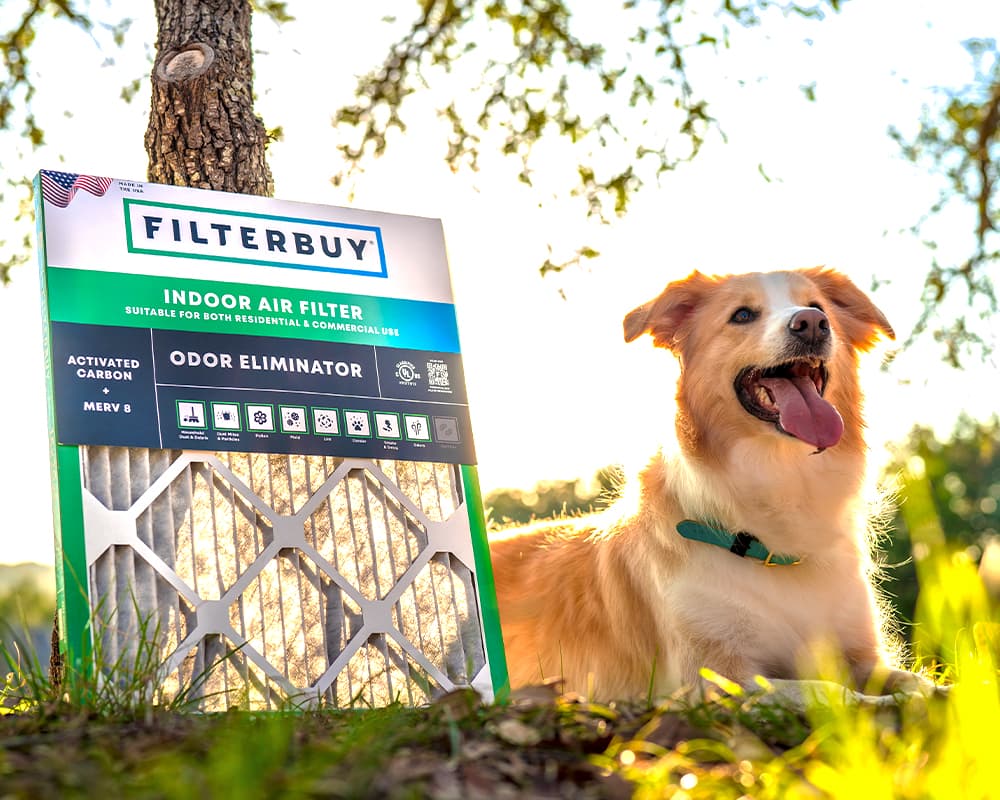
Change your filter every
2 months
to avoid shedding and odor buildup.

Change your filter every
2-3 months
as having clean air is even more important with children in your home.
Change your filter every
6 weeks
to ensure indoor air quality is at its best.
Change your filter every
2 months
to avoid shedding and odor buildup.
Change your filter every
2-3 months
as having clean air is even more important with children in your home.
Changing your air filter doesn’t just improve the air you breathe—it can also save you money in the long run. If you’re wondering how to install a 10x17x2 allergen air filter without the hassle, you’re in the right place. In this step-by-step guide, you’ll learn the quickest way to install your filter correctly, avoid common mistakes that shorten its lifespan, and discover how a simple swap can protect your HVAC system, cut down on energy costs, and keep your family breathing cleaner, healthier air.
Install correctly. A snug 10x17x2 filter traps more dust and protects your HVAC.
Breathe healthier. Cleaner air reduces allergy and asthma flare-ups.
Save money. Dirty filters can raise energy use by 15%; replacements cut costs.
Stay consistent. Change filters every 90 days—or sooner with pets or allergies.
Peace of mind. Routine changes protect comfort, health, and system life.
At Filterbuy, we’ve helped millions of homeowners install air filters of every size, and one thing is clear: the right installation makes all the difference. If you’re searching for how to install a 10x17x2 allergen air filter, you won’t just get the basics here—you’ll get proven tips from years of real-world experience manufacturing and testing filters in American homes. In this guide, we’ll walk you through each step, share the small adjustments that extend filter life, and explain how a correct fit keeps allergens out of your air while also lowering energy bills. It’s not just about swapping a filter—it’s about protecting your family’s health and saving money with every replacement.
Most 10x17x2 filters are designed for smaller return vents or HVAC units. Look for the vent cover on a wall, ceiling, or near your unit. A quick tip from our experience: if you hear your system straining or notice more dust than usual, your current filter is likely overdue for replacement.
Open the vent or slot and carefully slide the old filter out. Hold it up to the light—if you can’t see through it, it’s time for a change. Many homeowners are surprised at how quickly allergens, dust, and pet dander build up, especially during peak allergy season.
Check the arrow on the filter frame; it should point in the direction of airflow (toward the HVAC system). Slide the new filter in snugly. At Filterbuy, we’ve found that a proper fit not only captures more allergens but also prevents system leaks that waste energy.
Secure the vent cover, then set a reminder to check your filter every 90 days—or sooner if you have pets, allergies, or live in a high-pollen area. Our auto-delivery option helps many families stay on schedule without the guesswork.
Installing your filter correctly does more than trap allergens:
Cleaner Air → Reduces dust, pollen, and dander circulating in your home.
Healthier Family → Helps relieve allergy and asthma symptoms.
Lower Energy Bills → Keeps your HVAC running efficiently.
Longer System Life → Protects motors and coils from dirt buildup.
At Filterbuy, after years of manufacturing and testing over 600 filter sizes, we know that the small step of correct installation adds up to long-term savings and healthier air for your household.
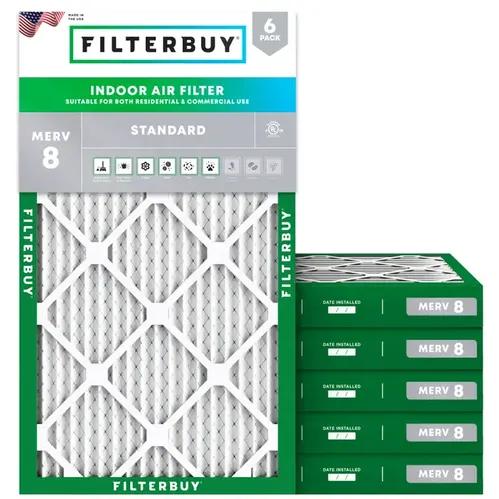
“After manufacturing and testing millions of air filters in homes across the U.S., we’ve seen one simple truth: a properly installed filter does more than catch dust—it protects your family’s health, keeps your HVAC running efficiently, and saves money over time. That’s why even a small detail, like ensuring airflow arrows point the right way, makes a big difference.”
At Filterbuy, we’ve seen how the right filter, installed correctly, transforms air quality and efficiency. Here’s what the numbers—and our experience—show:
1. Indoor Air Quality
Americans spend 90% of their time indoors.
Indoor air can be 2–5× more polluted than outdoors.
A snug 10x17x2 filter installation ensures allergens get trapped, not recirculated.
Source: American Lung Association
2. Asthma & Allergies
25 million Americans have asthma.
Includes 5 million children.
From our customers’ experience: proper allergen filters reduce flare-ups and create healthier homes.
Sources: NIEHS
3. Filter Efficiency
CDC recommends MERV-13 or higher when compatible.
In practice, even small details, like airflow direction, unlock full performance.
Source: CDC / NIOSH
4. Energy Savings
Dirty filters can increase energy use by up to 15%.
Homeowners tell us they notice lower bills after timely changes.
Installing a 10x17x2 allergen air filter may feel small, but the results are big:
Cleaner air
Lower energy bills
At Filterbuy, after manufacturing millions of filters and working with families nationwide, we’ve noticed consistent results:
Immediate improvements – fresher air and reduced dust.
Healthier homes – fewer allergy flare-ups, easier breathing.
Cost savings – lower utility bills and fewer system repairs.
A filter isn’t just cardboard and media—it’s a shield for your family and your HVAC system.
Treating filter changes as routine, not an afterthought, delivers long-term comfort and peace of mind.
The real value comes from knowing your system is protected and your family is breathing cleaner, healthier air.
1. Check Your Filter
Find your 10x17x2 allergen filter.
Replace if dirty or clogged.
2. Order a Replacement
Choose the correct size and MERV rating.
Higher MERV = better allergen control.
3. Install Properly
Follow airflow arrows.
Ensure a snug fit.
4. Set a Reminder
Replace every 90 days.
Use auto-delivery for hassle-free changes.
5. Monitor Results
Look for cleaner air and lower bills.
Adjust frequency for pets, allergies, or high pollen.
Simple steps. Cleaner air. Long-term savings.
Yes. Higher-efficiency filters trap pollen, dust, pet dander, and other allergens that standard filters often miss—improving indoor air quality for sensitive individuals.
MERV 11–13 is generally recommended. It captures the most common allergens without overly restricting airflow in residential systems.
A pleated MERV 11–13 filter balances allergen capture with HVAC compatibility. True HEPA filters remove more particles but usually require standalone air purifiers, not standard HVAC systems.
It’s a high-efficiency filter designed to trap smaller airborne particles (like pollen, mold spores, and pet dander) that trigger allergies.
No. Most modern furnaces and AC units can handle MERV 11 if the system is in good condition. Always check manufacturer specs.
They can be noisy, require frequent filter changes, and may generate ozone if combined with ionizers. Whole-home HVAC systems typically can’t handle HEPA filters without modifications.
No. MERV 7 is safe and still considered low-to-moderate filtration—capturing larger dust and lint, but not fine allergens.
For whole-home HVAC: MERV is practical and system-compatible. For a single room or medical-grade filtration, HEPA is superior but usually standalone.
MERV 11–13 filters can capture mold spores. Pairing this with humidity control (below 50%) is essential to prevent mold growth.
UV light systems, dehumidifiers (for mold), and HEPA purifiers can neutralize or reduce allergens. Filters trap them; they don’t kill them.
Air purifiers with HEPA filters or HVAC systems with quality allergen filters both remove dust effectively.
MERV 11 is better for allergies—it captures smaller particles (pollen, dander, mold spores) than MERV 8.
