The moment a wildfire starts near you, you'll get an instant alert and simple tips to reduce your smoke exposure.
30xSmaller than a human hair
Fine enough to reach deep into the lungs. A MERV 13 is built to capture it.
It Doesn't Stay Local
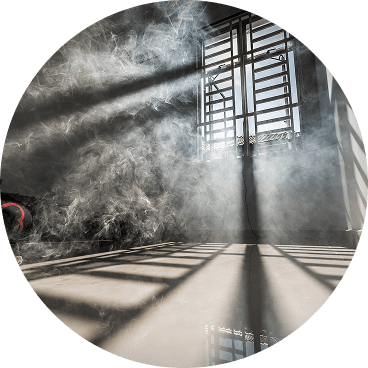
Smoke rides the wind far downwind — you can get smoky air with no fire nearby.
Simple steps to reduce indoor exposure.
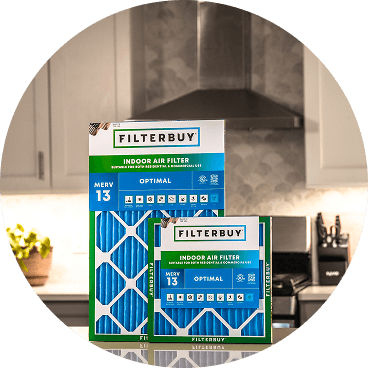
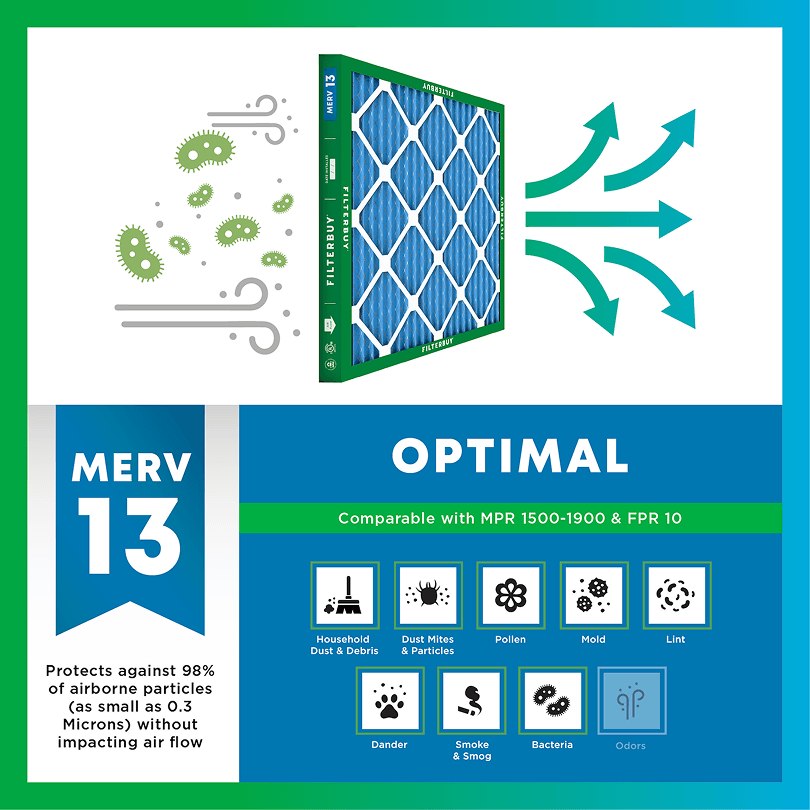
During smoke events, the EPA recommends upgrading to a MERV 13 filter — or the highest-rated filter your system can handle — to help reduce the fine particles smoke brings indoors. MERV 13 is the level most home HVAC systems can run while still capturing PM2.5, the fine particulate that makes up the bulk of wildfire smoke.

Over 70,000 wildfires burn in the U.S. every year.
Wildfire smoke can travel 1,000+ miles, affecting states that aren't even near the blaze.
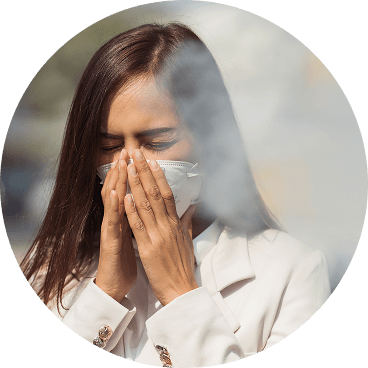
Exposure to wildfire smoke can worsen asthma, trigger heart issues, and lead to ER visits.
Indoor air can hold more fine particles during wildfire events unless it's properly filtered.
The EPA advises using MERV 13 filters or portable HEPA air cleaners during wildfire smoke events.
Use the live wildfire smoke tracker and upgrade your air filters today to protect your lungs and your home.
Shop Filters For Smoke Protection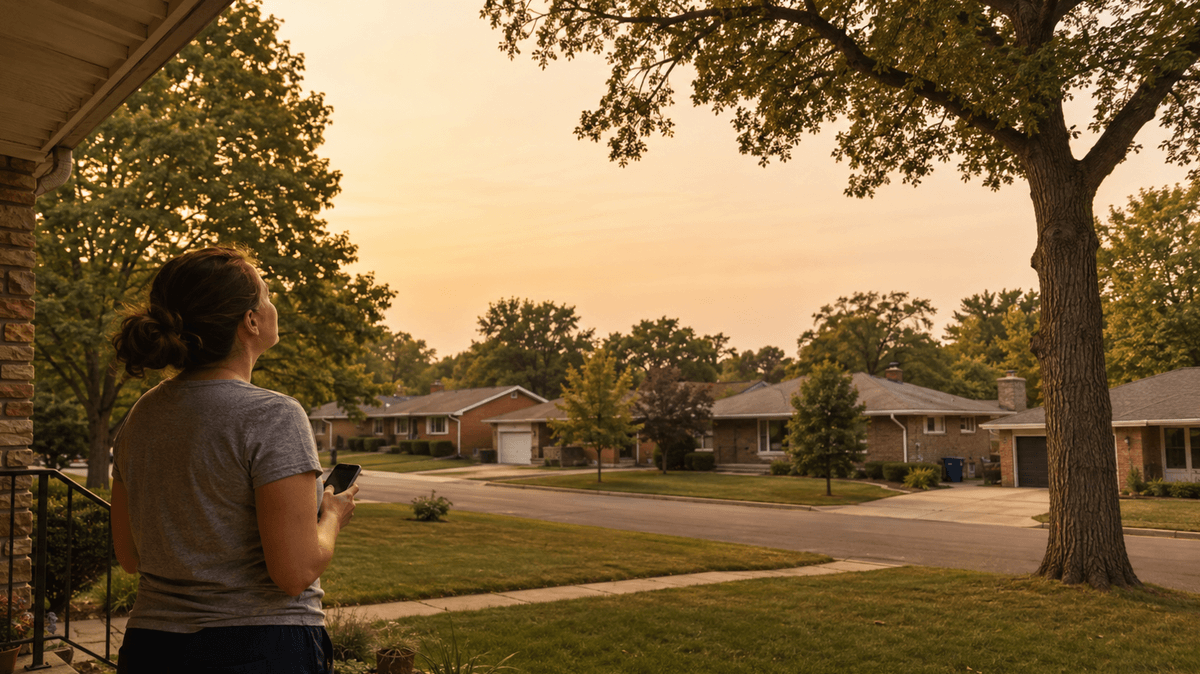
By Michelle Wan · Reviewed by David Clark, Licensed HVAC Technician · Published August 3, 2026 · Updated August 3, 2026
Is smoke over Madison right now? The map above shows active fires, satellite-tracked plumes, and live readings from the EPA and Wisconsin DNR network. What it can't show is that Madison's smoke is imported, starting hundreds of miles off in Minnesota and Canada. Nothing to escape, nothing to wait out. Outdoor air is weather. Indoor air is a decision.
Madison's smoke season runs May through October, driven by fires in Minnesota and Canada. When the reading nearest Madison turns orange or worse, close your windows, switch your HVAC to recirculate, and run a MERV 13 filter, the EPA's minimum during smoke events.
Madison's AQI peaked above 450 on July 17, 2026, the highest reading in the city's monitoring record, per a Wisconsin Watch analysis of Wisconsin DNR data. The "hazardous" threshold begins at 301.
Smoke has pushed Wisconsin air pollution higher every summer since 2023. Before that, Madison had not recorded an AQI above 200 since at least 2010.
PM2.5 is the pollutant that matters. These particles measure 2.5 micrometers or smaller, roughly 30 times finer than a human hair, and they reach deep into the lungs and bloodstream.
Americans spend about 90% of their time indoors, where some pollutants run 2 to 5 times higher than outside. You can't move the plume. You can change the air in the room.
The map layers three data sets over Madison and Dane County: active fire locations from the National Interagency Fire Center, smoke plume outlines from NOAA's Hazard Mapping System, and ground-level PM2.5 from EPA-reporting monitors and corrected low-cost sensors. Two details change how you read it.
A plume overhead is not smoke you're breathing. Smoke often travels at altitude without mixing to the surface, so the sky looks tea-colored while the monitor reads green. The colored circles, not the plume outline, tell you what's at street level.
Monitors and sensors disagree, and both are useful. Wisconsin's DNR operates regulatory-grade PM2.5 monitors at 18 sites statewide. Neighborhood sensors fill the gaps, and a sensor two miles from the official monitor can legitimately read a full category higher. This is the gap our customers describe most often. It is not a flaw in the map; it is what happens when you measure a moving plume from fixed points.
Read the colored circle nearest Madison and act on the number, not the haze:
Read the number, not just the color. The bands are wide. An orange 101 and an orange 150 call for different behavior.
Toggle the plume layer on. If a plume covers Dane County but the ground reading is green, the smoke is aloft.
Check the Wisconsin DNR forecast, the authority for Wisconsin advisories, which predicts where smoke moves next.
Watch the trend. A reading that has climbed three categories in four hours tells you something the current number doesn't.
Madison's exposure to wildfire smoke is recent and escalating: from no reading above 200 in twelve years to a preliminary peak above 450 in one 2026 event.
Sources: Wisconsin DNR; Wisconsin Watch analysis of AQI data. July 2026 figures were preliminary at publication, pending DNR quality assurance.
Craig Czarnecki of the Wisconsin DNR called the July 2026 event an episode "we have not experienced before." Smoke season is now a normal part of the Wisconsin summer, and preparing in May costs less than reacting in July.
Each AQI band maps to a specific outdoor limit and a specific indoor move. Orange (101–150) is the threshold where most Madison households should close up and upgrade filtration.
Filter guidance follows EPA recommendations for smoke events. Health thresholds follow the U.S. Air Quality Index.
Keep smoke out first, then clean what gets in. These six steps follow EPA and CDC guidance:
Close windows, doors, the fireplace damper, and any pet flap.
Switch your HVAC to recirculate and close the fresh-air intake. An air conditioner pulling outdoor air is importing smoke.
Install a MERV 13 filter. The EPA recommends MERV 13 or higher during smoky periods, and notes most systems accommodate one without equipment problems if replaced frequently.
Set the thermostat fan to "On," not "Auto." Air only gets filtered when it moves. The EPA notes this can cut indoor PM2.5 by roughly half.
Build one clean room. The CDC recommends a portable air cleaner in a room you can close off, sized so its smoke CADR is at least two-thirds of the room's square footage. Avoid ozone-producing units.
Stop adding particles indoors. No candles, frying, vacuuming, or gas range while smoke is heavy.
The July 2026 episode landed during a heatwave pushing Madison toward 100 degrees, which breaks the standard advice: "close your windows" and "stay cool" pull against each other without central air. The EPA notes the people most at risk from smoke are largely those most at risk from heat, and both at once may be worse than either alone.
Central air: recirculate, close the intake, run a MERV 13. One system handles both.
Window or portable AC: use the indoor-only setting. A unit venting outdoors pulls make-up air in, importing the thing you're shutting out.
No air conditioning: sealing a hot house is its own hazard, and in a city with Madison's share of student and rental housing, this is common. Public Health Madison & Dane County maintains a map of air-conditioned public spaces and directs residents there during these events.
Cheapest upgrade: a DIY box-fan filter. The Wisconsin DNR publishes assembly instructions using a 20x20 box fan and a MERV 13 filter. Don't leave a homemade setup unattended.
A MERV 13 captures a large share of the fine smoke particles passing through your HVAC system, the highest-leverage change most Madison homeowners can make in an afternoon. We build these filters, so here is the honest version.
A filter cannot capture particles that never reach the return vent, seal a drafty house, or substitute for medical advice if someone has a respiratory or cardiac condition. At Very Unhealthy or Hazardous levels, filtration is one layer of protection, not permission to treat the day as normal. Anyone selling you certainty at AQI 450 is selling you something.
The mistake I see most during smoke season isn't the wrong filter. It's the right filter with the thermostat fan left on 'Auto.' On a mild Madison day, the system barely runs, so a new MERV 13 does almost nothing while the air just hangs in the house.
David Clark, Licensed HVAC Technician, technical reviewer for this page
Filterbuy is a U.S. air filter manufacturer, not a weather service. We make filters in four American regional facilities in more than 600 sizes, so the half of this problem we see is the indoor half. That gives us one thing map sites don't have: during the 2023 episodes, Wisconsin customers told us their official AQI read "moderate" while their street was visibly hazy.
The question we get during a smoke event is seldom 'what's the AQI.' They're asking whether it's safe to let the kids out, and whether the filter they put in back in March is still doing anything.
Michelle Wan, indoor air quality writer, Filterbuy
Seven sources worth bookmarking, each answering something a live map can't. Links verified July 29, 2026.
Using AirNow During Wildfires: the EPA explains which of its three tools to use in a smoke event, and why the Fire and Smoke Map beats the AirNow dial.
Wisconsin DNR Wildfire Smoke Guide: the 18-site state monitoring network, indoor protection steps, and DIY box-fan assembly instructions.
EPA's Preparing for Smoke and Heat: the primary source for the MERV 13 recommendation, replacement frequency, and air cleaner sizing.
Public Health Madison & Dane County's Air Quality Guidance: county-specific symptom advice, masking, and the map of air-conditioned public spaces.
Subscribe to EnviroFlash Air Quality Alerts: free EPA-partnered email and text notifications; you pick the AQI level that triggers them.
NOAA's Hazard Mapping System Fire and Smoke Product: the satellite analysts who draw the plume outlines every smoke map depends on.
NIFC's National Fire News: daily national fire reporting tells you whether the fires sending smoke toward Wisconsin are growing or being contained.
Three findings behind the guidance above, each from a separate national source.
Americans spend roughly 90% of their time indoors, where some pollutants run 2 to 5 times higher than outside. You cannot move the plume; you can change the air in the room.
Source: The Inside Story: A Guide to Indoor Air Quality, EPA and CPSC.
Smoke exposure causes thousands of deaths each year, plus hospitalizations, ER visits, and increased asthma medication use. An AQI number is a health threshold, not a weather stat.
Source: CDC on Wildfires and Climate Health.
44% of Americans live where the air earned a failing grade in "State of the Air" 2026, and the Lung Association links particle pollution to early death, heart attacks, and strokes.
Source: American Lung Association State of the Air, Wisconsin.
Check the live map at the top of this page. The colored circle nearest Madison shows the current ground-level reading; the plume layer shows whether smoke is passing overhead.
Almost always outside Wisconsin: Canadian boreal forests, and in July 2026 Minnesota's Superior National Forest. Upper-level winds carry it hundreds or thousands of miles before it descends over the Upper Midwest.
Anywhere from a day to a week, and it can return before it fully clears. The July 2026 event ran under statewide advisories from July 14 through 20, with a second round arriving days after the first.
The map tells you what's drifting over Dane County. A MERV 13 filter decides how much of it you breathe. Bookmark the live Madison AQI map and check it like the forecast, or see live conditions across Wisconsin.
When you're ready, shop MERV 13 filters, find your exact size, and set up auto-delivery so the next advisory doesn't catch you with a loaded filter and no spare.
Subscribe to wildfire smoke alerts for Madison, WI, to get a heads-up before the next event reaches your area.