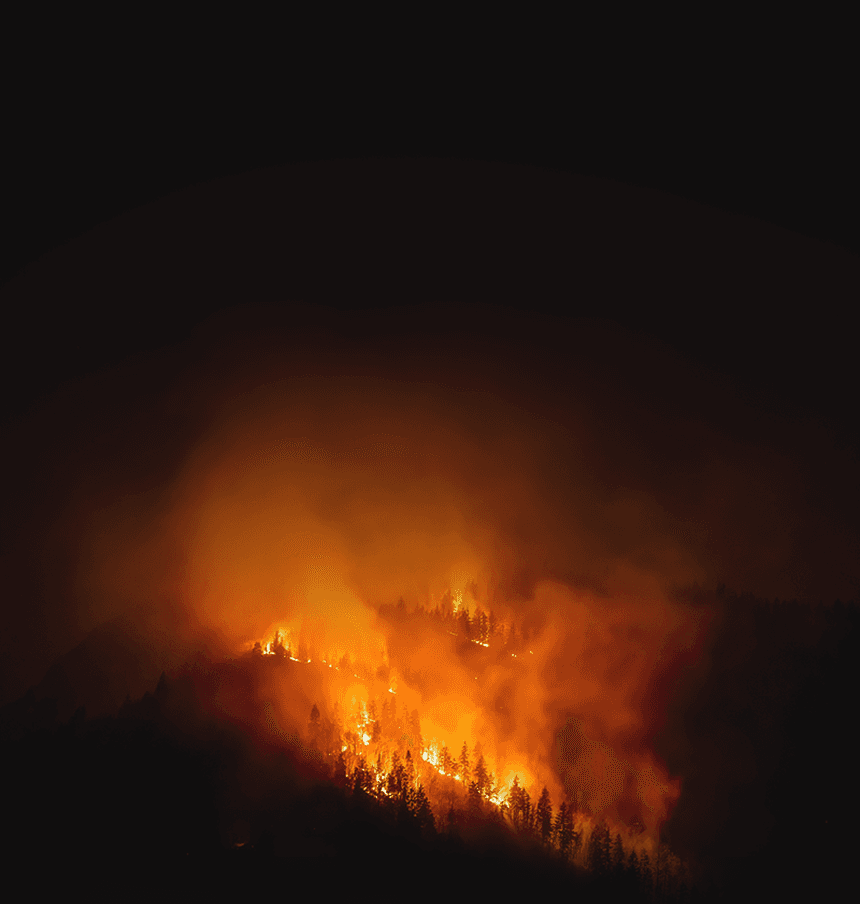
The moment a wildfire starts near you, you'll get an instant alert and simple tips to reduce your smoke exposure.
30xSmaller than a human hair
Fine enough to reach deep into the lungs. A MERV 13 is built to capture it.
It Doesn't Stay Local
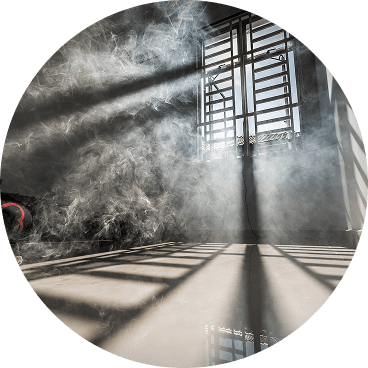
Smoke rides the wind far downwind — you can get smoky air with no fire nearby.
Simple steps to reduce indoor exposure.
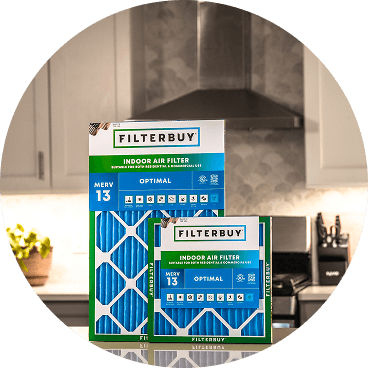
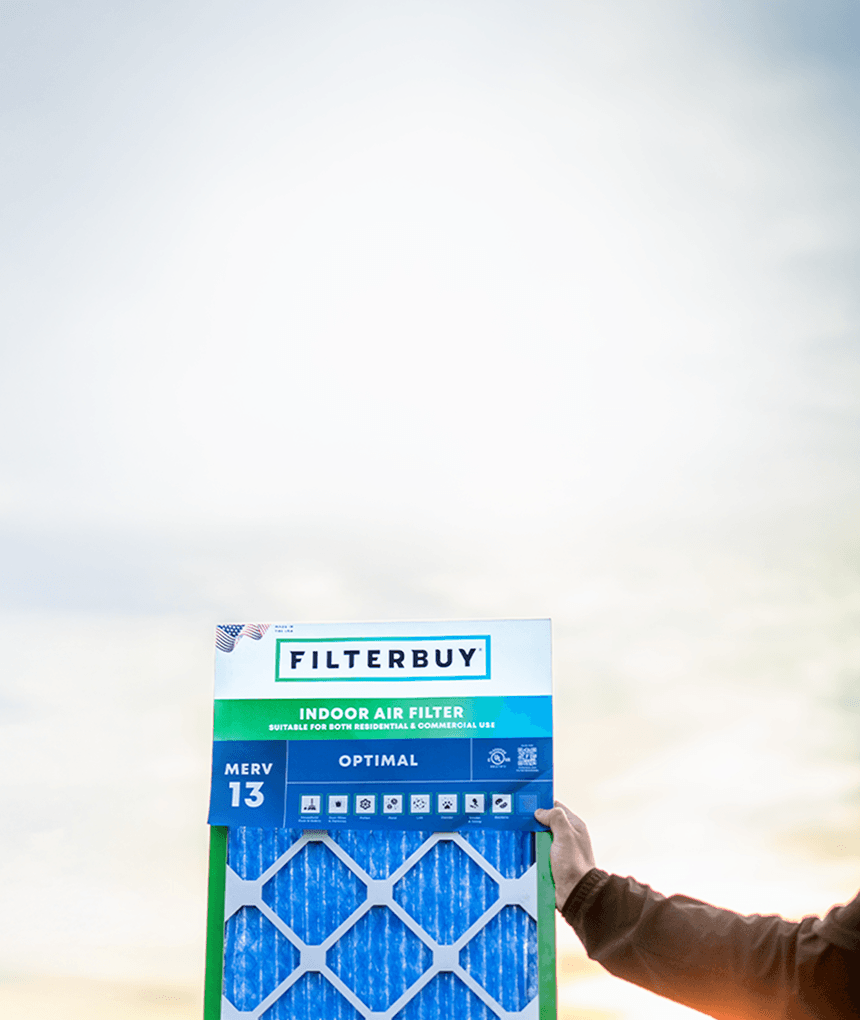
During smoke events, the EPA recommends upgrading to a MERV 13 filter — or the highest-rated filter your system can handle — to help reduce the fine particles smoke brings indoors. MERV 13 is the level most home HVAC systems can run while still capturing PM2.5, the fine particulate that makes up the bulk of wildfire smoke.
Over 70,000 wildfires burn in the U.S. every year.
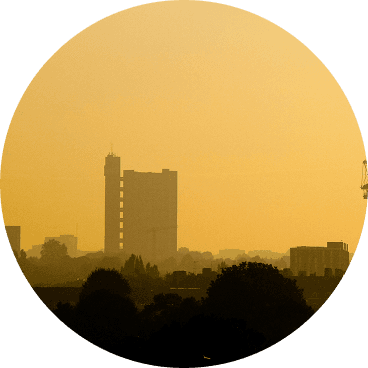
Wildfire smoke can travel 1,000+ miles, affecting states that aren't even near the blaze.
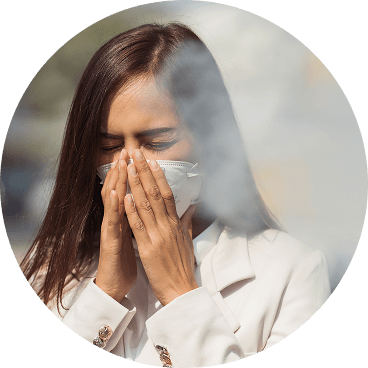
Exposure to wildfire smoke can worsen asthma, trigger heart issues, and lead to ER visits.
Indoor air can hold more fine particles during wildfire events unless it's properly filtered.
The EPA advises using MERV 13 filters or portable HEPA air cleaners during wildfire smoke events.
Use the live wildfire smoke tracker and upgrade your air filters today to protect your lungs and your home.
Shop Filters For Smoke Protection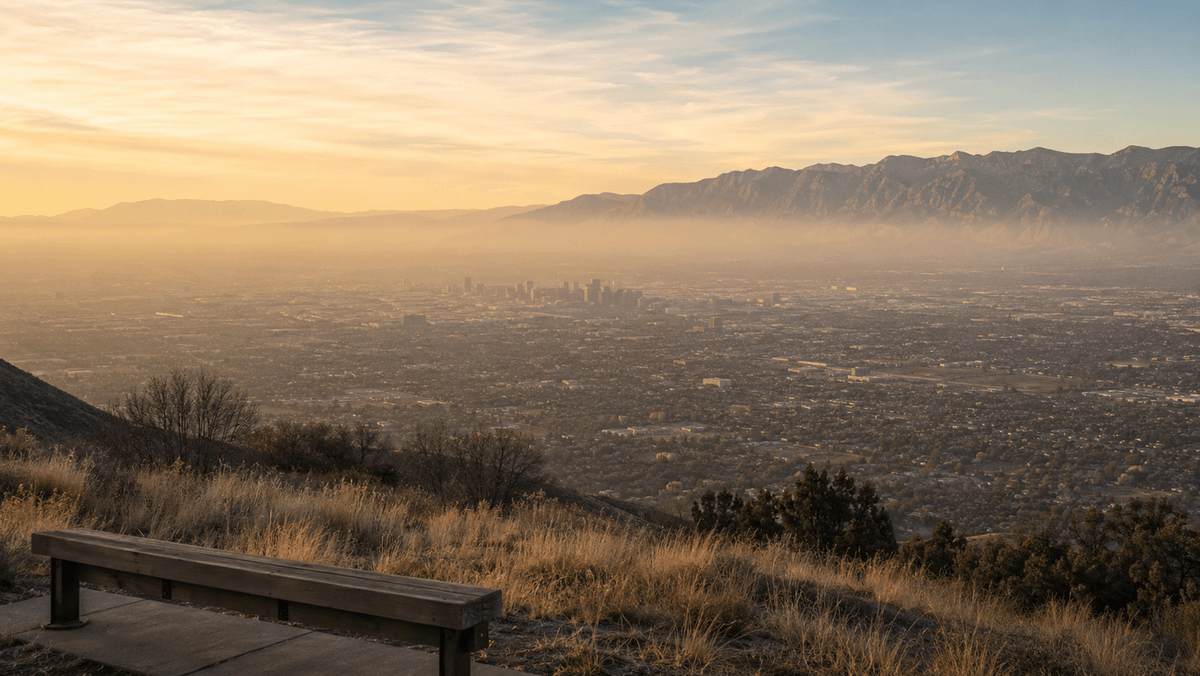
By Michelle Wan · Technically reviewed by David Clark, Licensed HVAC Technician · Published August 21, 2026 · Updated August 21, 2026
Salt Lake City smoke conditions change hour by hour, and the live map on this page pulls active fires, drifting plumes, and current PM2.5 for the Salt Lake Valley into a single view. Once the Air Quality Index climbs past 100, close the house up, switch your HVAC to recirculate, and run a MERV 13 filter.
The EPA recommends a MERV 13 or higher HVAC filter during wildfire smoke events, provided the system can accommodate it and the filter is replaced frequently.
MERV 13 is not equivalent to True HEPA, but it is the highest efficiency most residential systems accept without airflow strain, and the EPA treats it as the starting point for smoke.
Salt Lake City sits under two separate trapped-air seasons because summer wildfire smoke and winter inversion are driven by the same valley topography.
Utah can call a no-burn action at any time of year, and on those days Salt Lake County bans outdoor fires and charcoal grilling.
The live map above layers three data streams into one Salt Lake City view: active fire perimeters, modeled smoke plumes, and near real-time PM2.5 from valley monitors. Colored dots report the Air Quality Index at each monitor, while gray shading shows drifting smoke, often far from any fire burning in Utah. The module runs on the same engine as the Filterbuy real-time air quality and wildfire smoke map.
Readings vary block to block. A monitor near the Jordan River can report a different category than one in the Avenues the same afternoon, because canyon winds move smoke unevenly, so check the monitor nearest you.
Salt Lake City is one of a handful of American metros whose terrain produces two trapped-air seasons a year. The Wasatch Range to the east and the Oquirrh Mountains to the west form a bowl that concentrates summer wildfire smoke exactly the way it concentrates winter inversion pollution.
We call this the Salt Lake City Double Trap. Most cities plan indoor air protection around a single high-risk window, but this valley faces two, and both respond to the same countermeasure indoors.
The Air Quality Index runs from 0 to 500, and during a smoke event it tracks PM2.5, particles fine enough to reach deep into the lungs. Each category is a cue to change something indoors, not a color to note and forget.
AirNow publishes the AQI number. Utah DAQ publishes the same conditions as a 24-hour PM2.5 average in micrograms per cubic meter, so two official sources can show different numbers for the same air. Readings also vary block to block across the valley.
AirNow publishes the AQI number, while Utah DAQ publishes the same conditions as a 24-hour PM2.5 average in micrograms per cubic meter. The difference in scale is why two official sources show different numbers for the same air.
Match your response to the reading: prepare below AQI 100, seal the house at 101 to 150, add a clean room at 151 to 200, and inspect the filter daily above 200. We built this ladder for Salt Lake Valley homes because national guidance does not account for overnight pooling here or the region's second inversion season.
Each rung keeps every action from the rung below it. Nothing on the ladder requires equipment changes or a contractor visit.
None of the four rungs requires an equipment change or a contractor, so you can move up and down as conditions do.
Alongside its health forecast, Utah runs an Action Forecast under Administrative Code R307-302 that sets solid fuel burning at Unrestricted, Voluntary, or Mandatory. Most people assume it is a winter inversion tool. The Utah Division of Air Quality states that no-burn actions may be called any time of year, rather than only inside the November to March inversion window.
Salt Lake County then goes further. County regulation bans solid fuel burning and outdoor fires, including bonfires, patio pits, and charcoal grills, on any day Utah designates as mandatory or voluntary, so a voluntary state call becomes a mandatory county ban.
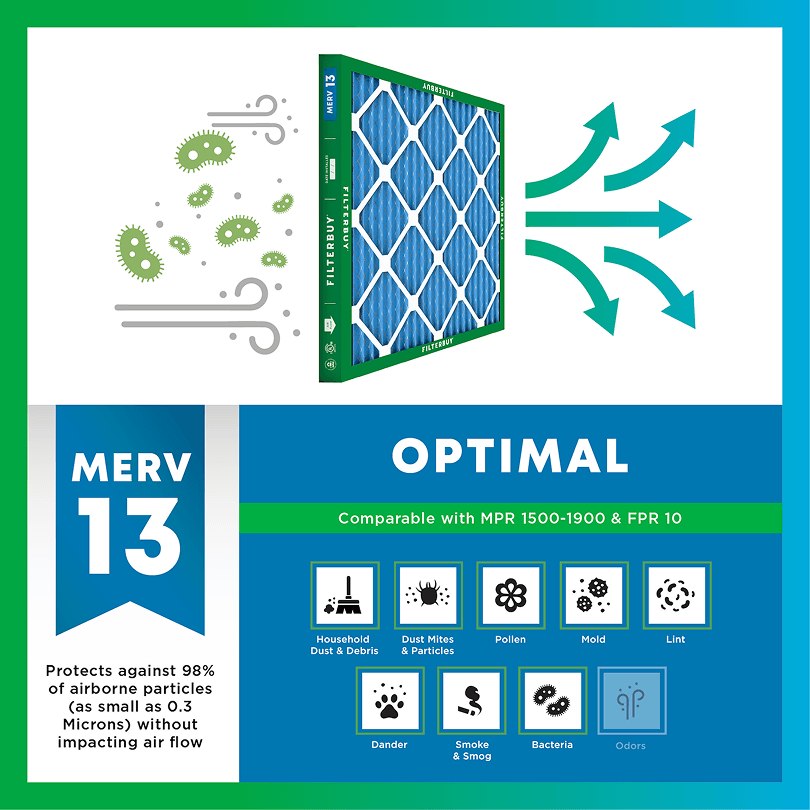
For wildfire smoke in a Salt Lake City home, MERV 13 is the right rating whenever the system can take it. MERV measures how well an air filter captures particles between 0.3 and 10 microns, and smoke is dominated by PM2.5 at the small end of that range, so the rating determines how much smoke the system removes.
MERV 13 is not equivalent to True HEPA. Confirm your system supports the rating before upgrading, and have a technician check static pressure on older blower motors.
The EPA recommends MERV 13 or higher during smoky periods and notes most central systems accommodate it, per its guidance on wildfires and indoor air quality. Older blowers are the exception, so if your system predates the mid 1990s or uses a PSC motor, have a professional check static pressure first.
MERV 13 is not True HEPA. True HEPA is a separate standard tested at a different threshold, generally found in portable air cleaners rather than central HVAC. Our breakdown of MERV 13 compared with True HEPA for smoke covers the distinction, and our guide to matching your MERV rating to today's AQI shows where each tier fits. For Salt Lake City homes, the practical approach is layered: MERV 13 in the central system, plus a portable HEPA unit in the bedroom.
Filterbuy builds its MERV 13 media to capture 98 percent of airborne particles down to 0.3 microns on a 90-day interval. Smoke collapses that interval to weeks.
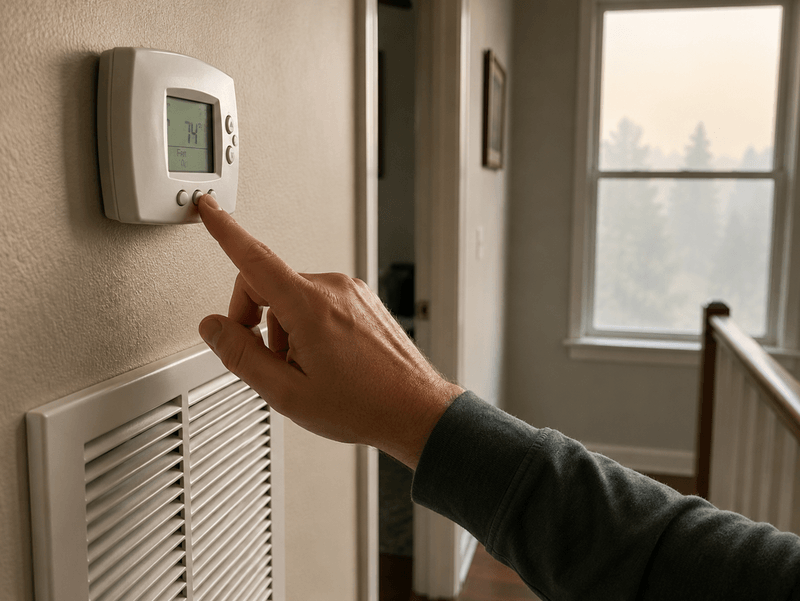
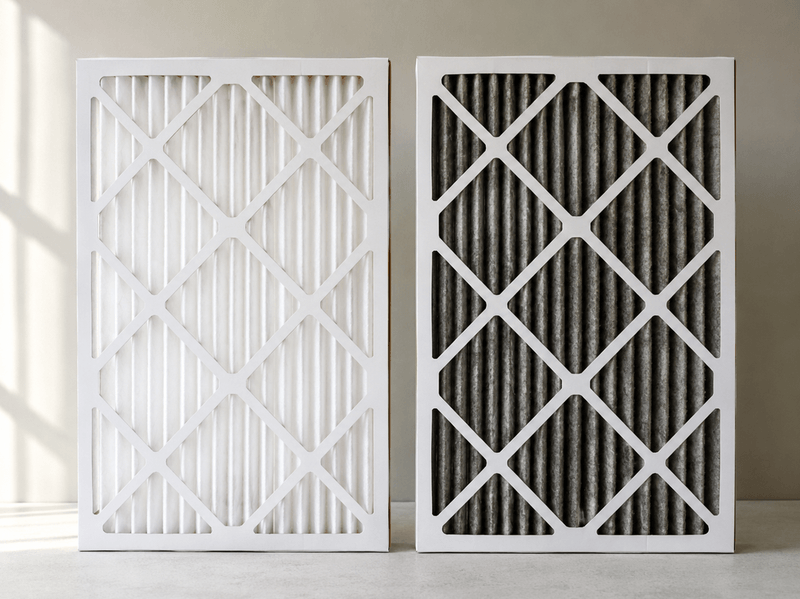
Replace your filter every two to four weeks during sustained smoke. A loaded filter restricts airflow, works the blower harder, and stops protecting the household it was installed to protect. If your system cannot take the higher rating, MERV 11 air filters are the fallback tier.
The mistake I see most often in Salt Lake City is treating filtration as a summer decision. Every other Western city I write about has one bad-air season. This valley has two, driven by the same terrain, and the households that come out ahead are the ones that stopped thinking of smoke season and inversion season as separate problems. Buy for the geography, not the calendar.
Michelle Wan, Brand Manager and Air Quality Writer, Filterbuy
Indoor PM2.5 sits at roughly 55 to 60 percent of outdoor levels during a wildfire smoke event when doors and windows are closed and no portable air cleaner is running, and the range across individual homes spans 30 percent to 100 percent, according to EPA guidance on reducing wildfire smoke exposure indoors.
A Portland residence instrumented during the September 2020 wildfire event recorded a mean indoor-to-outdoor PM2.5 ratio of 0.55 running a MERV 13 filter in an intermittent central forced-air system, dropping to 0.22 once a portable air cleaner was added, per a peer-reviewed residential filtration study archived at PubMed Central.
Firefighters responded to 48,960 wildfires burning more than 7.2 million acres nationally in 2026 as of August 17, which is 129 percent of the ten-year average for number of fires and 169 percent for acres burned, as reported in the National Interagency Fire Center daily fire news briefing.
Check the live map for the monitor nearest you, then read the AQI table above. Below AQI 100, most people are fine. Above 150, everyone should cut outdoor exertion.
Only sparingly, because evaporative coolers draw outdoor air inside and import smoke your furnace filter never sees. Cover the intake with MERV 13 media if you can reach it safely, in a Filterbuy custom size if the opening is non-standard.
Yes. A filter that absorbed a smoke event stays loaded after the air clears, so inspect it and replace it before returning to your normal cadence.
Yes. On rather than Auto keeps household air moving across the filter instead of only during heating and cooling cycles.
PM2.5. Particulate matter 2.5 micrometers or smaller, thirty times finer than a human hair. The principal health threat in smoke.
MERV. Minimum Efficiency Reporting Value, the ASHRAE scale from 1 to 20 describing how effectively a filter captures particles between 0.3 and 10 microns.
Temperature Inversion. Cold surface air trapped beneath a warmer layer aloft, preventing the mixing that would otherwise clear the valley.
Action Forecast. Utah's Unrestricted, Voluntary, or Mandatory advisory controlling solid fuel burning under Utah Administrative Code R307-302.
The homes that ride out a smoke event comfortably are the ones that got ready in advance. Filterbuy manufactures its pleated filters in Talladega, Alabama, across MERV 8, 11, and 13, so the rating your system can handle comes in the size you already run. Check your filter frame, then stock up on MERV 13 air filters before the next advisory. If your size is not listed, build a custom-size filter instead.
Subscribe to wildfire smoke alerts for Salt Lake City, UT, to get a heads-up before the next event reaches your area.