
Oklahoma City, OK Live Wildfire Smoke Map
Get Alerts For Wildfires In Your Area
The moment a wildfire starts near you, you'll get an instant alert and simple tips to reduce your smoke exposure.
What's In The Smoke
30xSmaller than a human hair
Fine enough to reach deep into the lungs. A MERV 13 is built to capture it.
How Far It Travels


It Doesn't Stay Local
Smoke rides the wind far downwind — you can get smoky air with no fire nearby.
What To Do During A Smoke Event
Simple steps to reduce indoor exposure.
- Stay In, Close UpShut windows and doors to keep smoke out.
- Set Fan To "On"Keeps air cycling through your filter, not just when heating or cooling.
- Recirculate AirSwitch off fresh-air intake so you're not pulling smoke in.
- Run A MERV 13Built to capture the fine PM2.5 in smoke.
- Add A PurifierExtra filtration for the room you use most.
- Wear an N95 if OutsideFits snug to block fine particles — a cloth mask won't.


The Best Air Filter For Wildfire Smoke
During smoke events, the EPA recommends upgrading to a MERV 13 filter — or the highest-rated filter your system can handle — to help reduce the fine particles smoke brings indoors. MERV 13 is the level most home HVAC systems can run while still capturing PM2.5, the fine particulate that makes up the bulk of wildfire smoke.
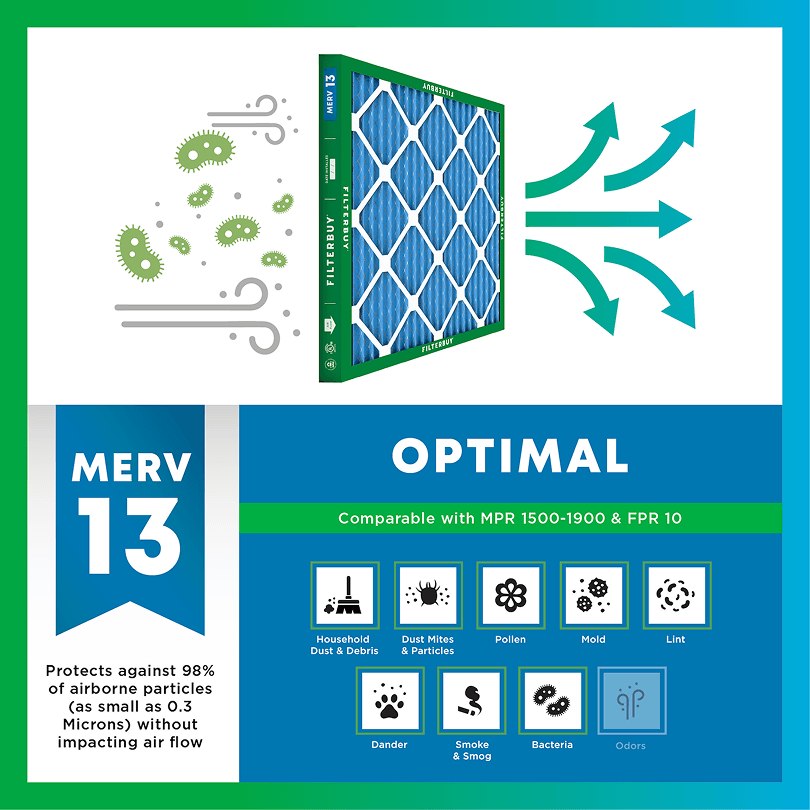
- Captures PM2.5 particles
- Blocks ash, soot, and smoke odor
- Keeps your indoor air safe—even when the outdoor air is dangerous
- Meets the EPA's recommended rating for filtering fine wildfire smoke particles.

Wildfire Smoke FAQs
Facts About Wildfires
Over 70,000 wildfires burn in the U.S. every year.
Wildfire smoke can travel 1,000+ miles, affecting states that aren't even near the blaze.
Exposure to wildfire smoke can worsen asthma, trigger heart issues, and lead to ER visits.
Indoor air can hold more fine particles during wildfire events unless it's properly filtered.
The EPA advises using MERV 13 filters or portable HEPA air cleaners during wildfire smoke events.
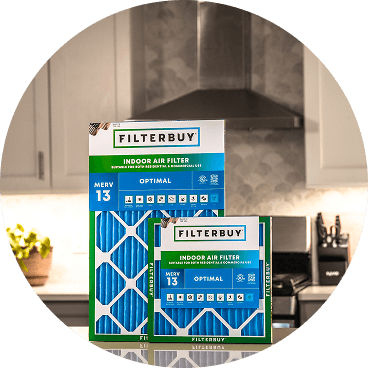
Don't Wait Until The Smoke's Inside.
Use the live wildfire smoke tracker and upgrade your air filters today to protect your lungs and your home.
Shop Filters For Smoke Protection
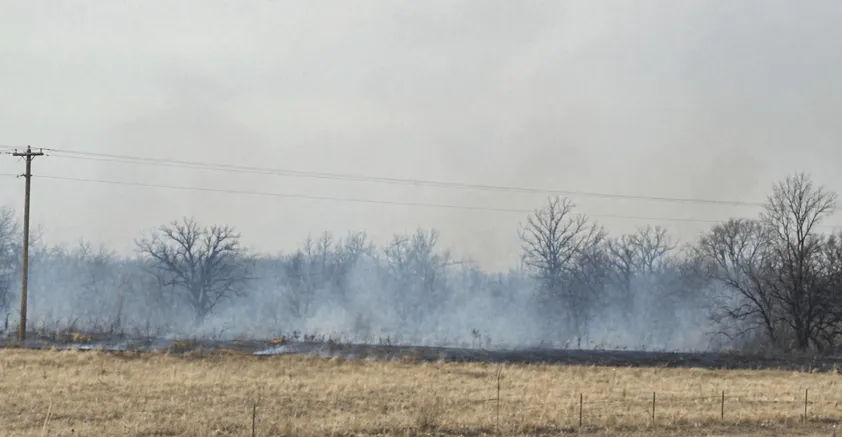
Current Live Forest Wildfire and Smoke Map Today in Oklahoma City, OK
Real-Time Air Quality Tracking & Family Safety Alerts
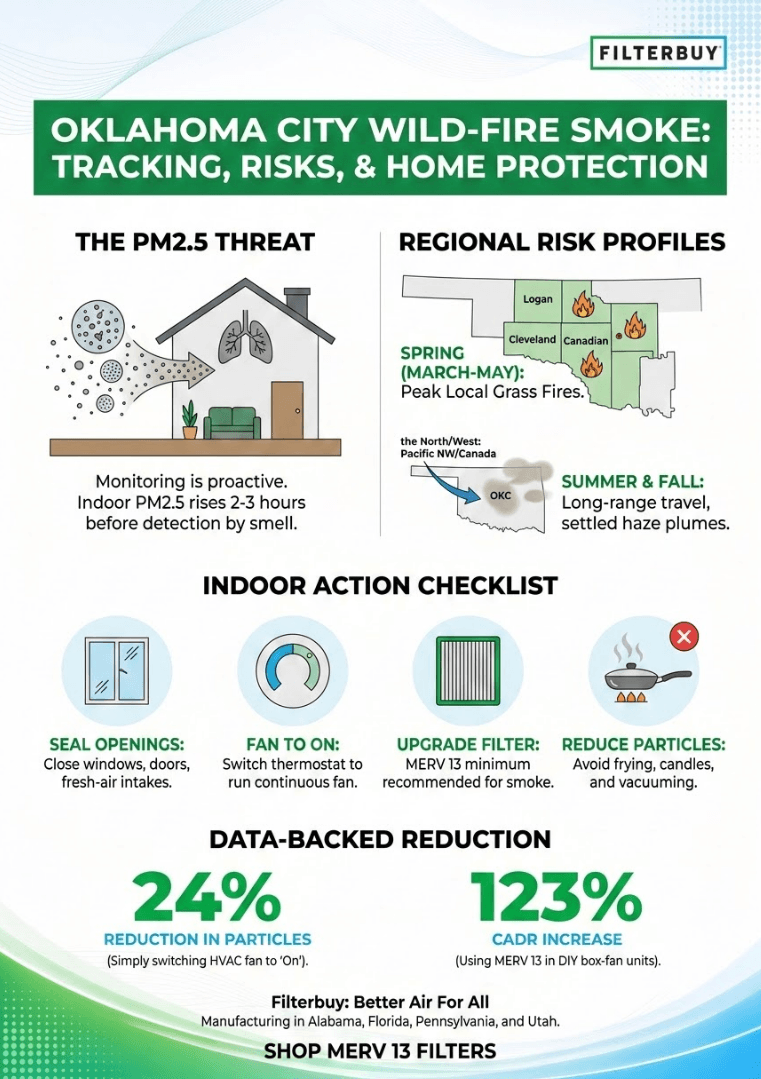
By the time you can smell wildfire smoke inside your house, indoor PM2.5 has typically been climbing for two to three hours. That gap is what this page exists to close. The map on this page pulls live readings from EPA and U.S. Forest Service air monitors across Oklahoma County, layered with satellite fire detections from NOAA's Hazard Mapping System, so you see what's heading toward Oklahoma City before your nose does.
We've spent more than a decade manufacturing filters and watching what wildfire smoke does to indoor air in over two million households. Oklahoma sits in a position no other state quite matches. Spring grass fires light up Cleveland, Canadian, and Logan counties almost weekly during red flag warnings. Summer winds drag smoke up from Texas and across Kansas. By late season, Canadian plumes settle into the metro for days at a time. The map below tells you which of those threats is active right now. The rest of this page tells you what to do about it.
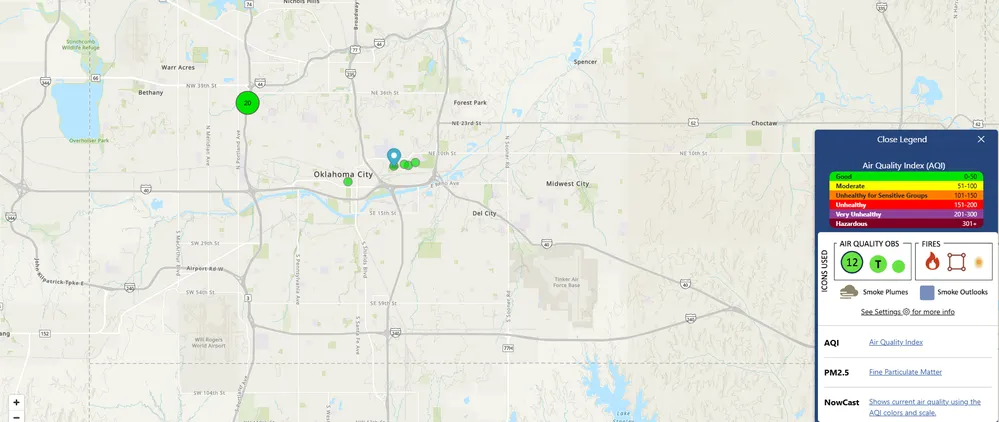
Source: AirNow Fire and Smoke Map (https://fire.airnow.gov/) (cropped)
TL; DR Quick Answers
Where Can I See a Live Wildfire and Smoke Map for Oklahoma City Right Now?
The live map on this page pulls real-time data from the AirNow Fire and Smoke Map, built jointly by the EPA and the U.S. Forest Service. It displays active fire perimeters, satellite-detected hotspots, NOAA smoke plume coverage, and PM2.5 readings from monitors across Oklahoma County and the surrounding metro.
How Bad Is the Air Quality in Oklahoma City Today?
Check the AQI reading on the live map above for current conditions at sensors closest to your zip code. Green and Yellow categories (0 to 100) are safe for most outdoor activities. Orange (101 to 150) calls for precautions among sensitive groups. Red (151 and above) means everyone should cut outdoor exposure and run HVAC on continuous fan with a MERV 13 filter.
Are There Active Wildfires Near Oklahoma City?
The map shows two layers of fire data: large fire incidents from the National Interagency Fire Center and satellite-detected hotspots from NOAA's Hazard Mapping System. Click any fire icon to see latitude, longitude, and incident details. Oklahoma's highest local risk runs from March through May during grass fire season. Long-range smoke from Texas, Kansas, and Western fires can reach the metro any month of the year.
What Should I Do When Wildfire Smoke Reaches Oklahoma City?
Close windows and doors. Switch your HVAC fan to "On" for continuous filtered circulation. Upgrade to a MERV 13 filter. Set up a clean room with a portable HEPA cleaner. Skip indoor activities that generate particles, such as frying, using candles, and vacuuming. Sensitive groups should stay indoors when AQI reaches 101 or higher.
Top Takeaways
The live wildfire and smoke map above pulls real-time data from AirNow, EPA, U.S. Forest Service, and NOAA. Refresh the page for the latest readings.
Oklahoma City air quality can be degraded by fires hundreds or thousands of miles away, including in Texas, Kansas, the Western U.S., and Canada.
MERV 13 is the EPA-recommended minimum filter rating for capturing wildfire smoke particles in most home HVAC systems.
Switching your thermostat fan from "Auto" to "On" during a smoke event can reduce indoor particle concentrations by up to 24 percent, per the EPA.
Children, older adults, pregnant women, and anyone with asthma, COPD, or heart disease should take extra precautions when AQI reaches 101 or higher.
Spring (March through May) brings peak local grass fire risk in Oklahoma. Summer and early fall bring long-range smoke drift from Western and Canadian fires.
If commercial air cleaners are unavailable, an EPA-tested DIY box-fan unit with a MERV 13 filter raises clean air delivery by 123 percent.
Live Oklahoma City Wildfire & Smoke Map
AirNow runs the data feed powering the map above. EPA and the U.S. Forest Service built it to combine ground-level PM2.5 readings from monitors across Oklahoma with satellite fire hotspots and smoke plume polygons from NOAA's Hazard Mapping System. Click any sensor icon near Oklahoma City to open a dashboard with the current NowCast AQI, recent trend, and any active Smoke Forecast Outlook the Air Resource Advisors have issued for the area.
Current Air Quality Index for Oklahoma City
The Air Quality Index turns raw PM2.5 numbers into a color and a recommendation. Match today's reading on the map widget against the categories below before any outdoor activity:
Good (0–50, Green): Air quality poses little or no risk.
Moderate (51–100, Yellow): Unusually sensitive people should consider easing back on prolonged outdoor exertion.
Unhealthy for Sensitive Groups (101–150, Orange): Children, older adults, and people with heart or lung disease should reduce outdoor activity.
Unhealthy (151–200, Red): Everyone may begin to feel health effects. Sensitive groups should stay indoors.
Very Unhealthy (201–300, Purple): Health alert. Significant risk for the entire population.
Hazardous (301+, Maroon): Emergency conditions. Everyone is more likely to be affected.
Active Wildfires Within 300 Miles of Oklahoma City
Smoke reaches the OKC metro from several directions, and the local geography is what makes Oklahoma City an unusually exposed spot for wildfire impact. The Cross Timbers grasslands ignite fast in dry, windy conditions. The Red River basin south of the city is Texas's exit ramp for grass fire smoke heading north. Prevailing southerly winds from May through September carry plumes from regional fires straight into Oklahoma County and the surrounding metro.
Fires don't have to burn nearby to affect your indoor air. Smoke from Western U.S. and Canadian boreal fires regularly travels two thousand miles or more, settling into the Southern Plains as a haze that pushes Oklahoma City's AQI above 100 even when no local fire shows on the map. The view above includes both layers: nearby fire perimeters and long-distance plume coverage.
Wildfire Smoke Forecast for Oklahoma
NOAA's HRRR-Smoke model and the National Weather Service office in Norman produce 24- to 48-hour smoke forecasts specific to Oklahoma. Spring is when local fire risk peaks, with red flag warnings hitting western counties almost weekly during March, April, and May. By summer and early fall, the threat shifts to long-range transport: fires across the Mountain West and Pacific Northwest can degrade Oklahoma City air for days at a stretch without a single local fire on the map.
Indoor Air Protection Steps During a Smoke Event
Once the AQI climbs into Orange or higher, your job shifts from watching the map to keeping smoke out of your house. Run through these in order:
Close every window, door, and HVAC fresh-air intake or economizer setting.
Switch your thermostat fan from "Auto" to "On" so filtered air keeps moving.
Upgrade to a MERV 13 filter once AQI reaches 101 or higher. That's EPA's recommended minimum for wildfire smoke.
Set up one room as a clean room and run a portable HEPA cleaner sized for that room's square footage.
Skip indoor activities that load the air with more particles: frying, candles, vacuuming, and wood stoves.
Check the filter every two weeks during a sustained smoke event. Heavy smoke can clog a MERV 13 in 30 to 60 days.
"After more than a decade of testing how filters perform during smoke events, we've found that Oklahoma homeowners who upgrade to MERV 13 before the AQI crosses 150, not after, see the biggest cut in indoor PM2.5. The mistake we see most often is waiting until the smoke is visible. By the time you can smell it, fine particles have already settled across your living room and your kid's bedroom. Watch the map for the warning, and use the filter as the response."
— Filterbuy Air Quality Team, with manufacturing facilities in Alabama, Pennsylvania, Texas, and Utah, serving more than two million households across the United States.
Essential Resources for Oklahoma City Wildfire and Smoke Monitoring
Wildfire smoke conditions in Oklahoma City can shift faster than any single tool can track. After more than a decade of manufacturing filters and serving over two million households, we've found that homeowners who handle smoke events best already know exactly which sources to check. The seven resources below are the ones we rely on ourselves — federal agencies, state authorities, and public health organizations publishing verified real-time data on fires, smoke movement, AQI readings, and protective steps. Bookmark them before the next red flag warning.
1. AirNow Fire and Smoke Map
The federal benchmark for wildfire smoke tracking was built jointly by the EPA and the U.S. Forest Service. It combines real-time PM2.5 from ground monitors with satellite fire hotspots and NOAA smoke plume polygons. Center the view on Oklahoma City to see Oklahoma County sensor readings, regional fires, and any Smoke Forecast Outlook the Air Resource Advisors have issued for the area.
2. EPA Health Effects Attributed to Wildfire Smoke
https://www.epa.gov/wildfire-smoke-course/health-effects-attributed-wildfire-smoke-0
EPA's clinical reference on what wildfire smoke does to the body. Coverage runs from short-term eye and respiratory irritation through cardiovascular complications, with newer research now documenting cognitive impact and possible preterm birth links. If anyone in your home is in a sensitive group, read this once at the start of fire season.
3. Oklahoma Forestry Services
https://ag.ok.gov/divisions/forestry-services/
The state agency that runs wildland fire management across Oklahoma. The page tracks active fire incidents, county burn ban status, and prescribed burn activity. Pull it up during spring grass fire weeks and on any red flag warning day.
4. Oklahoma Department of Emergency Management Newsroom
https://oklahoma.gov/oem/news/newsroom.html
Official situation reports during active wildfire events. The OEM newsroom posts county-level updates, evacuation orders, and State of Emergency declarations as they happen. When fires hit Oklahoma County, Cleveland County, Canadian County, or Logan County, this is where the verified detail lands first.
5. CDC Safety Guidelines for Wildfires and Wildfire Smoke
https://www.cdc.gov/wildfires/safety/how-to-safely-stay-safe-during-a-wildfire.html
CDC's protective protocol for households during smoke events. The page covers indoor protection steps, when to wear a NIOSH-approved N95 respirator, how to build a clean room, and specific guidance for children, older adults, pregnant women, and anyone with asthma, COPD, heart disease, or diabetes.
6. EPA Create a Clean Room During a Wildfire
https://www.epa.gov/emergencies-iaq/create-clean-room-protect-indoor-air-quality-during-wildfire
EPA's step-by-step guide to setting up a clean room at home during smoke events. The page covers room selection, sealing techniques, the right portable air cleaner sizing, MERV 13 HVAC filter recommendations, and which indoor activities to avoid while smoke conditions persist.
7. American Lung Association State of the Air
https://www.lung.org/research/sota
Annual report grading air quality across U.S. metros, including Oklahoma City. The report tracks long-term particle pollution and ozone trends, so you can put any single smoke event in context against the metro's baseline air quality.
Statistics That Show Why Oklahoma City Wildfire Smoke Tracking Matters
Numbers tell the story; smoke alone can't. The three statistics below come from peer-reviewed research and EPA testing, each pulled from a unique .gov source. They're the data points we keep coming back to when explaining why proactive filtration beats emergency response — and why upgrading from a MERV 8 to a MERV 13 isn't a small adjustment, it's the difference between protecting your home and reacting after the smoke is already inside.
25% of daily PM2.5 came from wildfire smoke at 40% of EPA monitors
Peer-reviewed research analyzing data from 2007 through 2018 found that wildfire smoke contributed more than 25 percent of daily PM2.5 concentrations at roughly 40 percent of all regulatory monitors in EPA's Air Quality System for more than one month per year. The pattern held well outside the traditional Western fire zones, including across the Southern Plains.
Source: National Institutes of Health, PubMed Central — Environmental Science & Technology
Continuous HVAC fan reduces indoor particles by up to 24%
EPA testing has measured up to a 24 percent drop in indoor particle concentrations when households switch the thermostat fan from "Auto" to "On" during a smoke event. Continuous filtered circulation does the work. The change costs nothing and starts reducing particles within minutes.
Source: EPA Wildfire Smoke Indoor Air Filtration Factsheet
A 4-inch MERV 13 filter raises Clean Air Delivery Rate by 123%
EPA research found that adding a single 4-inch MERV 13 filter to a basic box-fan air cleaner raises the Clean Air Delivery Rate by 123 percent. For a smaller room during a smoke event, particularly when commercial purifiers sell out, that's a serious protective option built from parts you can find at any hardware store.
Source: EPA Research on DIY Air Cleaners to Reduce Wildfire Smoke Indoors
Final Thoughts on Tracking Wildfire Smoke in Oklahoma City
Wildfire smoke stopped being a Western states problem years ago. Oklahoma City now catches plumes from local grass fires, regional drift out of Texas and Kansas, and long-range smoke that travels from the Pacific Northwest, the Mountain West, and Canada. After watching that pattern build through the past decade, our position is straightforward: homeowners who do best during smoke events treat filtration as an everyday HVAC system, not an emergency purchase.
Bookmark this map. Check it the same way you check a weather radar during severe storm season. When the AQI crosses 100, your HVAC filter becomes the single most important air quality tool in your house. A MERV 8 will let you taste the haze indoors. Run a MERV 13, and your family won't notice the smoke is outside until they look out the window.
Next Steps for Oklahoma City Homeowners
Bookmark this page so you can pull up the live Oklahoma City wildfire and smoke map within seconds during the next event.
Check the current AQI reading on the map above and match it against the category guidance to set today's outdoor activity level.
Pull the filter from your HVAC return and check its MERV rating. Most homes ship from the builder with a MERV 4 to MERV 8 filter, which lets the majority of wildfire smoke particles through.
Order MERV 13 replacement filters in your sizes now, before the next red flag warning, so you have them on hand when smoke arrives.
Set a calendar reminder to check your filter every two weeks during fire season. Heavy smoke shortens replacement intervals fast.
Frequently Asked Questions
Protect Your Oklahoma City Home From Wildfire Smoke Before the Next Plume Arrives
You've checked the map, and you know what's coming. The next step is making sure your HVAC system is ready to stop wildfire smoke at the filter before it reaches your kids' bedrooms. Shop Filterbuy MERV 13 air filters in your size today and give your family the indoor air defense Oklahoma's wildfire seasons require.