The moment a wildfire starts near you, you'll get an instant alert and simple tips to reduce your smoke exposure.
30xSmaller than a human hair
Fine enough to reach deep into the lungs. A MERV 13 is built to capture it.
It Doesn't Stay Local
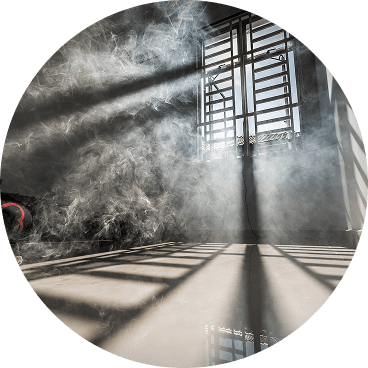
Smoke rides the wind far downwind — you can get smoky air with no fire nearby.
Simple steps to reduce indoor exposure.
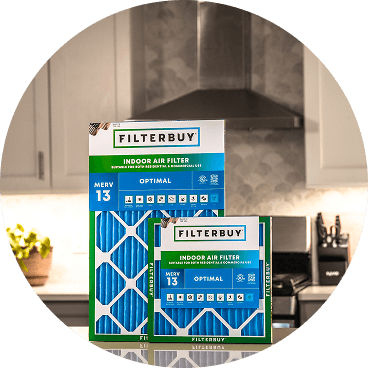
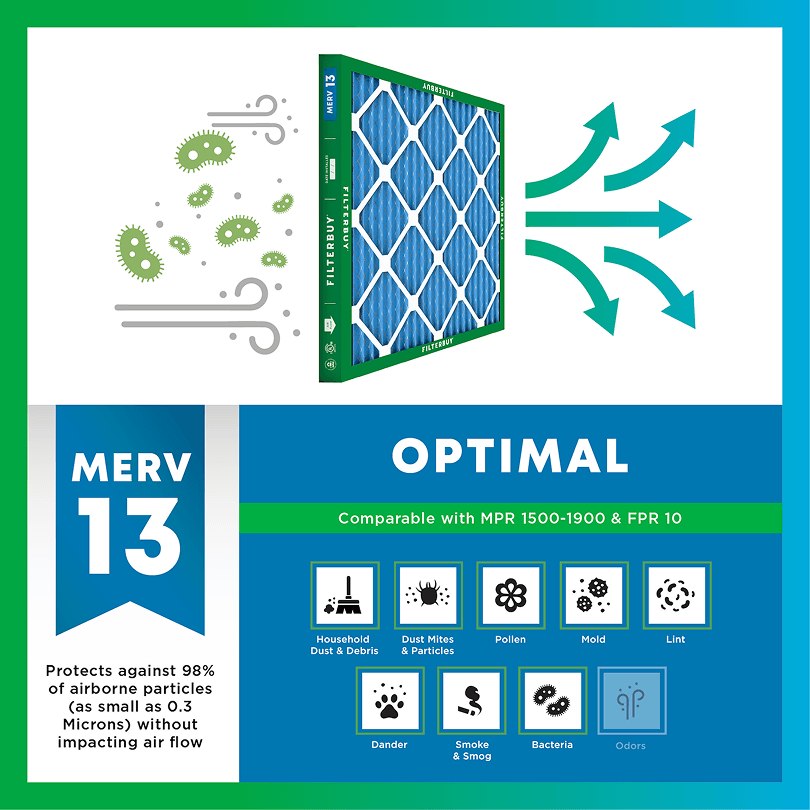
During smoke events, the EPA recommends upgrading to a MERV 13 filter — or the highest-rated filter your system can handle — to help reduce the fine particles smoke brings indoors. MERV 13 is the level most home HVAC systems can run while still capturing PM2.5, the fine particulate that makes up the bulk of wildfire smoke.
Over 70,000 wildfires burn in the U.S. every year.
Wildfire smoke can travel 1,000+ miles, affecting states that aren't even near the blaze.
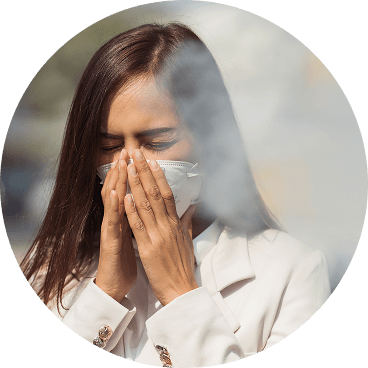
Exposure to wildfire smoke can worsen asthma, trigger heart issues, and lead to ER visits.
Indoor air can hold more fine particles during wildfire events unless it's properly filtered.
The EPA advises using MERV 13 filters or portable HEPA air cleaners during wildfire smoke events.
Use the live wildfire smoke tracker and upgrade your air filters today to protect your lungs and your home.
Shop Filters For Smoke Protection
By Michelle Wan | Reviewed by David Clark, Licensed HVAC Technician | Published July 22, 2026 | Updated July 22, 2026
On June 28, 2023, Central Ohio logged its first Unhealthy PM2.5 air quality day since August 14, 2003, after wildfire smoke from Quebec traveled more than 700 miles into Franklin County overnight. The map above pulls live readings from the U.S. EPA AirNow network, the Ohio Department of Health, and the Mid-Ohio Regional Planning Commission (MORPC), the agency that issues Central Ohio's air quality alerts. Check it for current Columbus conditions and what to do before your next outdoor errand.
A MERV 13 filter, the level the U.S. EPA recommends during smoke events, is the single most effective step a Columbus household can take before the next event arrives.
Check the live map above for the current Franklin County reading. Anything above 100 means sensitive groups should ease back on outdoor activity.
Boreal fires in Quebec, Ontario, and western Canada send smoke plumes south on prevailing winds, and a stalled low-pressure system over the Great Lakes can trap that plume over Central Ohio for days.
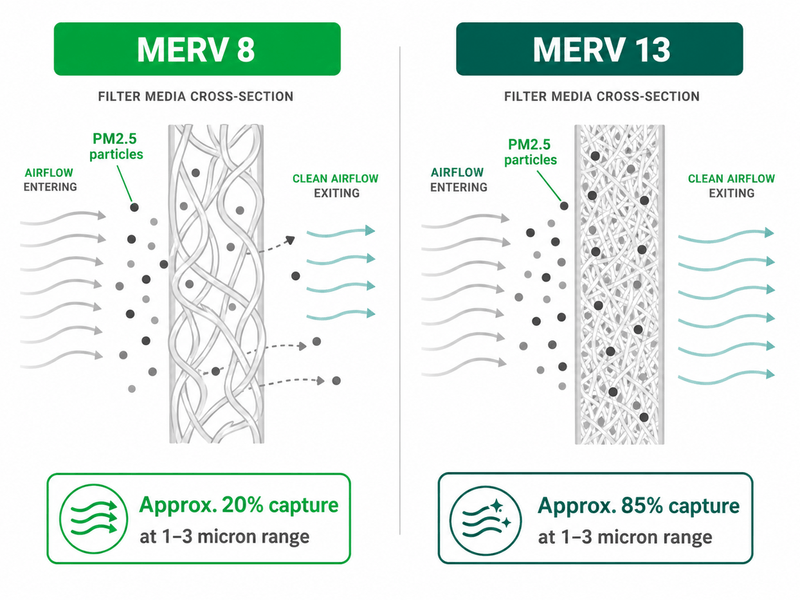
The U.S. EPA recommends MERV 13 or higher, which captures the fine PM2.5 particles that a standard MERV 8 filter lets through.
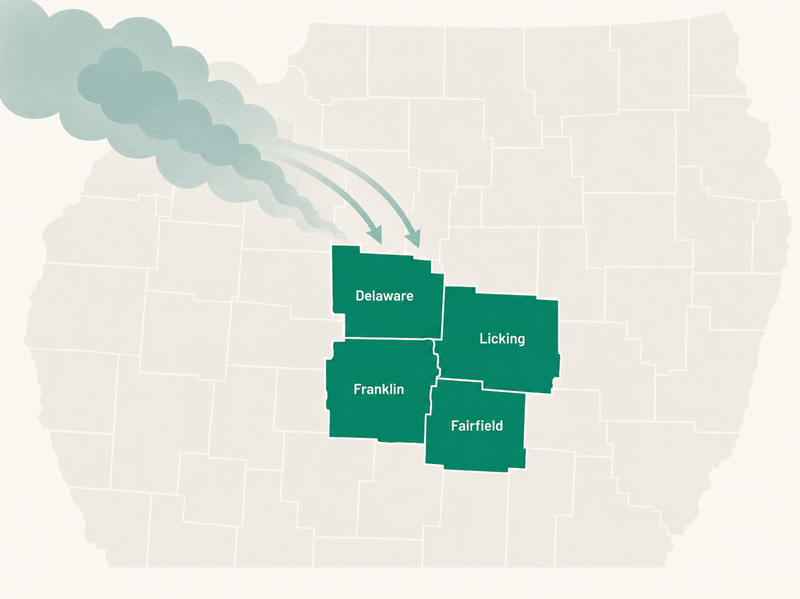
MORPC issues Central Ohio Air Quality Alerts for Franklin, Delaware, Fairfield, and Licking counties whenever a pollutant is forecast to reach unhealthy levels.
Central Ohio logged its first Unhealthy PM2.5 day since August 14, 2003, during the June 2023 Canadian wildfire event, according to MORPC records.
Franklin, Delaware, Fairfield, and Licking counties are covered under the same MORPC regional alert system.
PM2.5 from wildfire smoke passes through the standard MERV 8 filters that ship in most Columbus homes.
About 56 percent of Columbus households rent rather than own, per the U.S. Census Bureau, so most readers of this page don't control their own HVAC filter and need a different plan during a smoke event.
The June 2023 event was not an isolated spike. MORPC's end-of-season report counted eleven Air Quality Alerts across the 2022–23 season, with wildfire PM2.5 as the primary pollutant in nine. The New Albany monitor peaked at 179 AQI on June 28, 2023, the region's highest daily PM2.5 reading since October 14, 1999.
Franklin County typically catches a Canadian plume a day or two after it first reaches Cleveland or Toledo. Households that swap filters before smoke arrives consistently report coming through the worst days barely noticing. See Filterbuy's Ohio wildfire and smoke map for statewide tracking, and the Wikipedia wildfire overview for background.
Because Columbus almost always sees a Canadian plume after Cleveland does, treat a Cleveland-area alert as your own early warning system, in three stages.
This is your earliest signal, typically a day before Columbus sees anything. Confirm you have a MERV 13 filter in the right size on hand, and check that your thermostat's fan can switch to Recirculate or On.
Delaware County sits north of Franklin County and typically registers a plume first. If the live map shows Delaware County shift into the orange band, install the MERV 13, close windows, and switch the fan to Recirculate.
By the time the alert covers Franklin County, the plume has effectively arrived. Limit outdoor time, check on anyone with asthma or a heart condition, and keep watching the map, since PM2.5 can keep climbing for another day after the alert posts.
The colored bands on the map above follow the U.S. Air Quality Index. Green and yellow mean good and moderate air. Orange signals that people with asthma, heart conditions, or respiratory sensitivities should ease up on outdoor activity, and red extends that warning to everyone. Purple and maroon are readings nobody wants to see over Columbus.
The number behind each color is a PM2.5 measurement, particulate matter smaller than 2.5 micrometers, small enough to slip past window screens and standard HVAC filters and settle deep in lung tissue. The U.S. EPA recommends MERV 13 or higher during smoke events because it captures more than 85 percent of particles in the 1 to 3 micron range that make up most wildfire PM2.5, versus roughly 20 percent for the default MERV 8 filter in most Columbus homes. See Filterbuy's breakdown at MERV 8 vs. MERV 11 vs. MERV 13.
Source: U.S. Environmental Protection Agency MERV filtration guidance for wildfire smoke events.
Downtown Columbus and the I-270 corridor carry the heaviest traffic baseline, so a smoke plume stacks on top of already-elevated PM2.5 and readings can climb faster there than in outlying areas. Northern suburbs like Dublin, Worthington, and Westerville register cleaner baseline air on an ordinary day, but that gap narrows once regional smoke moves in, since a plume covers the whole metro rather than following road networks.
Delaware, Fairfield, and Licking counties, MORPC's other three alert counties, generally follow Franklin County's trend within a few hours, since the same plume and weather system govern all four. For a pollutant-by-pollutant breakdown, see the live Columbus AQI page, which tracks ozone and PM2.5 separately.
Source: Mid-Ohio Regional Planning Commission Air Quality Program.
Everything above assumes control over a home's HVAC system, and most Columbus readers don't have that. About 56 percent of Columbus households rent rather than own, per the U.S. Census Bureau, so the plan needs adjusting for a high-rise or a building with central air you don't control.
Ask your property manager, in writing, which MERV rating the building uses and whether an upgrade to MERV 13 is possible before smoke season. If you can't change the building's filter, run a portable HEPA air purifier in the bedroom, and use a rolled towel or weatherstripping to close gaps around older doors and windows. Filterbuy manufactures pleated filters in more than 600 sizes, including the odd dimensions common in Central Ohio's older apartment stock, if an upgrade is approved.
After manufacturing filters for over a decade and serving more than two million households, we've watched Columbus go through this exact scenario, most recently in 2023 when Franklin County posted its first Unhealthy PM2.5 day in twenty years. The homes that came through it feeling normal upgraded their filter before the alert went out, not after. A MERV 13 rated for your system does that work quietly in the background, and that's the whole point.
David Heacock, Founder and CEO, Filterbuy
AirNow's guide to the Fire and Smoke Map and AQI dial, the same dataset feeding the map above.
Source: Using AirNow During Wildfires | U.S. EPA AirNow Program
MORPC's explanation of how it forecasts and issues Air Quality Alerts, including sign-up by zip code.
Source: Air Quality Program | Mid-Ohio Regional Planning Commission
The American Red Cross's guide to reducing smoke exposure, with an evacuation-ready checklist.
Source: Wildfire Safety | American Red Cross
The CDC's step-by-step guide for protecting yourself during a smoke event, including clean-room instructions.
Source: Safety Guidelines: Wildfires and Wildfire Smoke | Centers for Disease Control and Prevention
County-by-county air quality grades for Ohio, including Franklin County's particle pollution grade.
Source: State of the Air: Ohio Report Card | American Lung Association
The EPA's overview of how wildfire smoke PM2.5 affects respiratory and cardiovascular health.
Source: Health Effects Attributed to Wildfire Smoke | U.S. Environmental Protection Agency
The WHO's PM2.5 guideline of 5 micrograms per cubic meter annually, well under the U.S. standard of 9.
Source: WHO Global Air Quality Guidelines | World Health Organization
A 2021 study in Nature Communications found PM2.5 from wildfire smoke has a measurably larger effect on respiratory health outcomes, including asthma-related hospital visits, than PM2.5 from other sources at comparable concentrations.
NOAA explains how satellite-based smoke transport modeling, including the HRRR-Smoke model, feeds the forecasts behind the map above.
Source: Wildfire Smoke and Air Quality | NOAA NESDIS
NASA's GEOS model recorded the summer 2023 Canadian wildfire season as the most intense on record, with smoke traveling thousands of miles into Ohio.
Source: Long-Range Transport of 2023 Canadian Wildfire Smoke | NASA Scientific Visualization Studio
Columbus was treated as a low-risk market for wildfire smoke for most of the past two decades, and 2023 broke that assumption, with nine PM2.5 alerts in a single season and every reason for long-range smoke transport to repeat as Canadian fire seasons trend longer.
Waiting for a Central Ohio Air Quality Alert before upgrading your filter is the wrong order of operations, since MORPC issues alerts only after smoke has already arrived. A MERV 13 filter installed ahead of the next event is what separates a smoke day you barely notice from one where your house smells like a campfire for days.
The U.S. Air Quality Index calls 0 to 50 good and 51 to 100 moderate. Anything over 100 is unhealthy for at least some sensitive groups.
Check your filter every two weeks during active smoke events instead of the usual 60- to 90-day schedule. Swap it sooner if it looks gray, matted, or airflow feels weaker at the vents.
Yes. Keep windows and doors closed, and set your HVAC system to recirculate instead of pulling in fresh air.
MORPC coordinates Franklin County's forecasting and alerts, drawing on Ohio EPA regulatory monitors and the federal AirNow network.
Ask your property manager about a MERV upgrade before smoke season, and run a portable HEPA air purifier in the bedroom during an active alert.
If you're reading this during an active smoke event, the most useful thing you can do right now is replace your HVAC filter. If smoke hasn't arrived yet, use the window to get ready. Either way, the filter in your system today determines what your family breathes for the next 60 to 90 days.
Shop Filterbuy MERV 13 Filters By Size
Subscribe to wildfire smoke alerts for Columbus, OH, to get a heads-up before the next event reaches your area.