The moment a wildfire starts near you, you'll get an instant alert and simple tips to reduce your smoke exposure.
30xSmaller than a human hair
Fine enough to reach deep into the lungs. A MERV 13 is built to capture it.
It Doesn't Stay Local
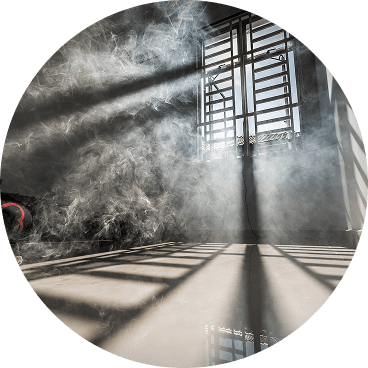
Smoke rides the wind far downwind — you can get smoky air with no fire nearby.
Simple steps to reduce indoor exposure.
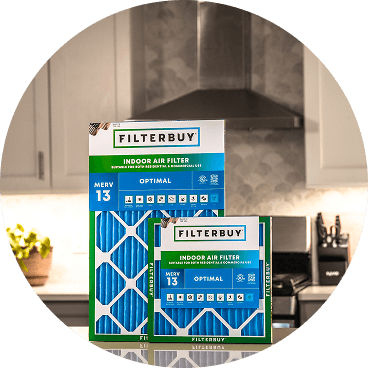
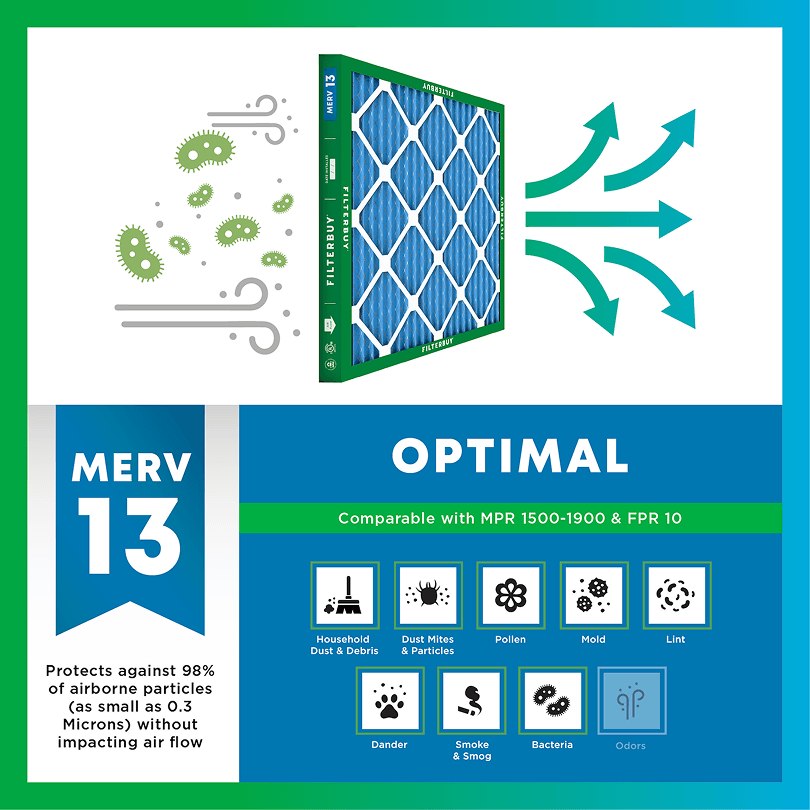
During smoke events, the EPA recommends upgrading to a MERV 13 filter — or the highest-rated filter your system can handle — to help reduce the fine particles smoke brings indoors. MERV 13 is the level most home HVAC systems can run while still capturing PM2.5, the fine particulate that makes up the bulk of wildfire smoke.
Over 70,000 wildfires burn in the U.S. every year.
Wildfire smoke can travel 1,000+ miles, affecting states that aren't even near the blaze.
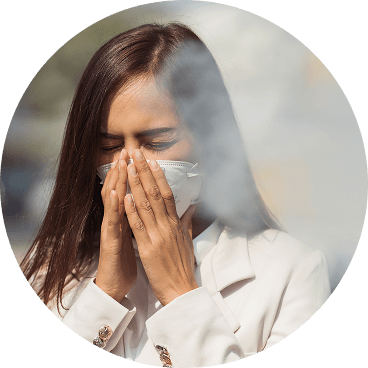
Exposure to wildfire smoke can worsen asthma, trigger heart issues, and lead to ER visits.
Indoor air can hold more fine particles during wildfire events unless it's properly filtered.
The EPA advises using MERV 13 filters or portable HEPA air cleaners during wildfire smoke events.
Use the live wildfire smoke tracker and upgrade your air filters today to protect your lungs and your home.
Shop Filters For Smoke Protection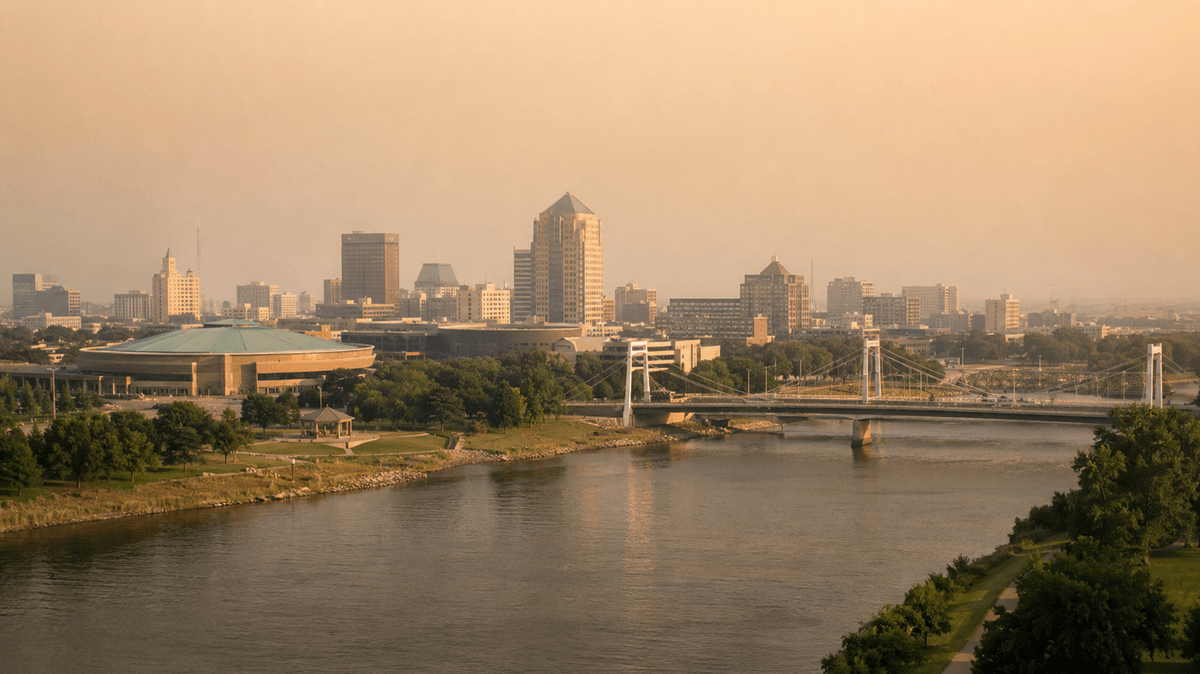
By Michelle Wan, Brand Manager and Air Quality Writer (filterbuy.com/author/michelle-wan/) | Reviewed by David Clark, Licensed HVAC Technician | Published July 27, 2026 | Updated July 27, 2026
Wichita families checking the sky today are seeing two smoke stories layered together, and in Filterbuy's years shipping air filters into homes across this city, we've noticed most people only know about one of them. Some days the haze comes from wildfires burning hundreds of miles away. Other days, especially each spring, it comes from prescribed range fires burning much closer, across the Flint Hills. The live map below tracks both in real time, so you can see what is moving toward Wichita instead of guessing from a hazy horizon.
Wichita's wildfire and smoke conditions change quickly because the city sits downwind of two separate sources: transported wildfire smoke and seasonal prescribed burning in the nearby Flint Hills. The live map above shows current fire locations, smoke direction, and the local AQI. When the AQI moves into the orange range or higher, sensitive groups including children, older adults, and people with asthma or heart disease should limit outdoor time and run a properly rated Filterbuy air filter indoors.
Wichita's smoke comes from two sources: distant wildfire smoke and closer Flint Hills prescribed burning.
The Kansas Department of Health and Environment (KDHE) tracks both sources and issues advisories when either pushes AQI into the Moderate-to-Unhealthy range.
The live map above updates fire locations and smoke using AirNow and NOAA satellite data.
Children, older adults, people who are pregnant, and anyone with asthma, COPD, or heart disease face the highest risk from either smoke source.
A well-sealed home running a Filterbuy MERV 13 air filter reduces how much outdoor smoke circulates indoors during a smoke event.
I built this page after fielding the same question from Wichita neighbors every spring: is that smoke from a wildfire out west, or just the Flint Hills burning again? The giveaway I look for is how fast it clears. Most Wichita air quality alerts in March and April trace back to prescribed range fires rather than wildfires, and those tend to clear within a day or two once the wind shifts. Wildfire smoke lingers longer, but the health advice is nearly identical either way.
— Michelle Wan, Brand Manager and Air Quality Writer
The map above uses the same AirNow Fire and Smoke Map data the EPA and U.S. Forest Service maintain nationally. Colored circles show ground-level AQI on the standard 0-to-500 scale, from green (Good) through maroon (Hazardous). A flame icon marks a fire incident, wildfire, or prescribed burn, and clicking it shows which one. A light blue box around a fire icon means a smoke outlook has been issued, common during Flint Hills burning season. Because the Flint Hills sit east of Wichita, wind direction decides more than distance does: a south or southeast wind usually carries that smoke away from the city, while a north or northeast wind can push it straight over the metro. The map's plume direction tells you which pattern is in play before the smell of grass smoke does. Panning toward central and eastern Kansas shows whether today's haze is local or traveled in from farther away.
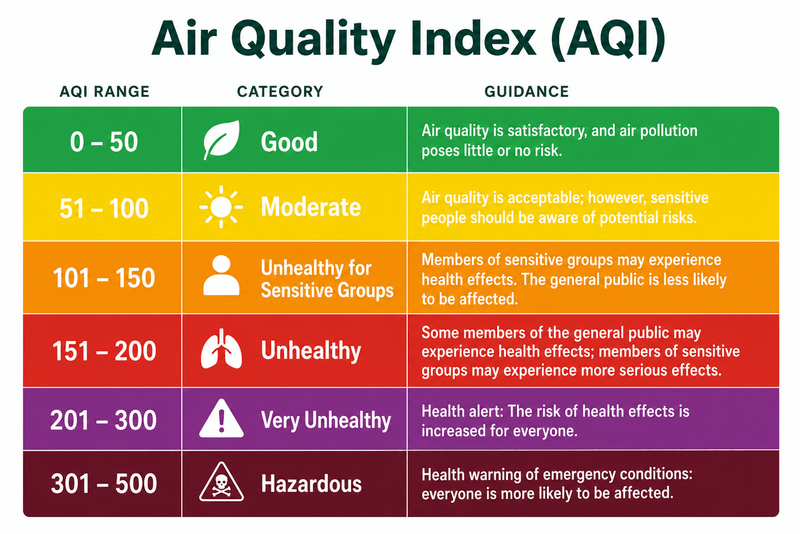
AQI categories and guidance follow the EPA's national Air Quality Index scale.
Most cities on this map deal with a single smoke source. Wichita deals with two, on different calendars, and in the years Filterbuy has spent shipping filters into Wichita-area homes, this is the most common point of confusion we hear every spring. The first is transported wildfire smoke, drifting in on upper-level winds from fires burning in other states. The second is local and seasonal: prescribed burning across the Flint Hills, the tallgrass prairie region just east of the metro, closer than "just east" sounds, since Sedgwick County, Wichita's own county, is on the state's list of counties covered by the April burn restrictions. Ranchers burn roughly 2.2 million acres there every year, with the modeling tool activating as early as late February but the heaviest burning concentrated in early to mid-April.
KDHE runs a Flint Hills Smoke Management Plan because this burning is so predictable and so close to population centers. It activates a Kansas smoke modeling tool each March, before widespread burning starts, and issues advisories separately from wildfire-driven ones. A wildfire smoke event can last for days, while a Flint Hills event often clears within 24 to 48 hours once the wind shifts. Either way, the AQI reading and the precautions above stay the same regardless of the source.
Wichita is one of the only markets where we tell customers to rule out two different causes before they even think about their filter. Most wildfire smoke pages only prepare you for one, and that gap is exactly why a Flint Hills smoke day gets mistaken for a wildfire day almost every spring.
Filterbuy Air Quality Team
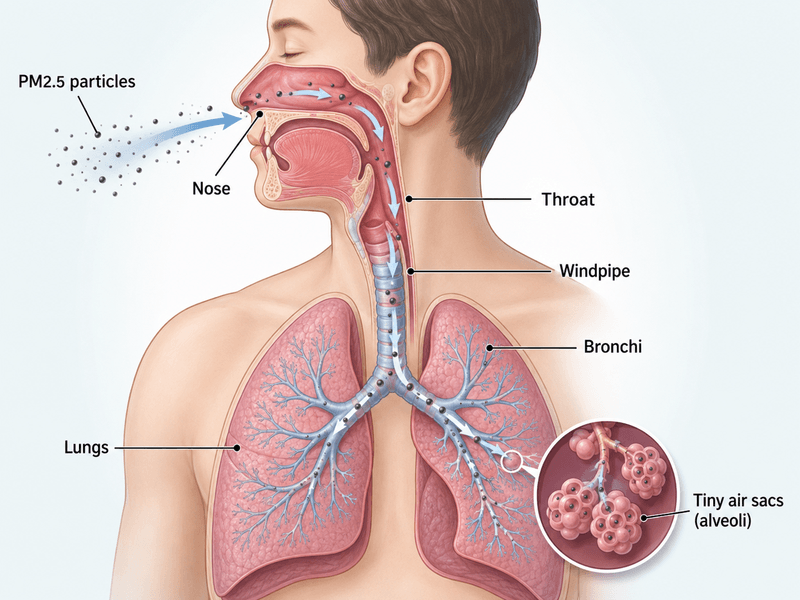
Wildfire and prescribed-burn smoke both carry fine particulate matter, or PM2.5, small enough to reach deep into the lungs. The CDC and EPA flag the same high-risk groups: children, adults over 65, people who are pregnant, and anyone with asthma, COPD, or cardiovascular disease. In Filterbuy's conversations with Wichita customers, a scratchy throat gets blamed on allergies for a day or two before anyone checks the map. A 10 microgram per cubic meter increase in wildfire-specific PM2.5 is linked to a 1.3 to 10 percent rise in respiratory hospitalizations, sharper than the same rise from non-wildfire PM2.5.
When the map shows elevated AQI near Wichita, close windows and doors and switch your HVAC system to recirculate mode if it has a fresh-air intake. Check that your filter is rated MERV 13 or higher, since standard MERV 8 filters are built for dust and pollen and let far more smoke particulate through. The EPA recommends setting up one clean room, sealed off with a portable air cleaner or a well-fitted filter, as a retreat on the worst smoke days. If you don't have a portable air cleaner on hand, the EPA's box-fan design is a legitimate stand-in: tape one or more MERV 13 filters to the intake side of a newer box fan and run it on high in whichever room you use most. At Filterbuy, we manufacture our MERV 13 line in our own U.S. factories and test it against real particulate, including wildfire smoke, which is why we're comfortable recommending it by name here.
After manufacturing filters for over a decade and serving more than two million households, we've learned that households fare best in a smoke event when they already know their filter's MERV rating before the air turns bad.
David Heacock, Founder and CEO, Filterbuy
Source: AirNow Fire and Smoke Map guide
EPA and USFS combine sensor and satellite data on fires, smoke, and AQI.
Source: Flint Hills Smoke Management Plan
Why KDHE forecasts prescribed-burn smoke separately from wildfire smoke.
Source: CDC wildfire smoke safety guidance
CDC guidance on who is most vulnerable to smoke exposure.
Source: EPA wildfires and indoor air quality guidance
How outdoor smoke enters homes and which filtration steps help.
Source: Kansas State of the Air report
ALA grades Kansas counties on ozone and particle pollution.
Source: NWS wildfire readiness guidance
NWS preparedness steps for fire-prone areas.
Source: Ready.gov wildfire preparedness overview
Ready.gov covers evacuation and household preparedness for wildfires.
A 10 microgram increase in wildfire-specific PM2.5 is linked to a 1.3 to 10 percent rise in respiratory hospitalizations, sharper than the same rise from non-wildfire PM2.5.
Source: Aguilera et al., Nature Communications, 2021 (PMC7935892)
Wichita's population sits at 400,987 residents, per the Census Bureau, making this one of the 50 largest U.S. cities.
Source: U.S. Census Bureau QuickFacts, Wichita city, Kansas
NIFC's live tracker showed more than 3.9 million acres burned nationally in 2026 as of July 20, and wildfire smoke reaching Wichita is a year-round, nationwide issue.
Source: National Interagency Fire Center, Statistics
Wichita's relationship with smoke is more predictable than it feels on a hazy afternoon. Spring haze is more often a Flint Hills burn clearing within a day or two, while a multi-day event points to a wildfire farther away. The live map above takes the guesswork out of that question. It's the same two-question habit Filterbuy recommends to every confused caller: check which fire it is, then check your filter. Also, consider the following:
Check the live map above before opening windows or exercising outdoors today and see Wichita's live AQI tracker for ozone and pollen alongside smoke. Confirm your filter is MERV 13 or higher before the next Flint Hills burn or wildfire smoke event.
Check the season and the map above. Flint Hills burning peaks in March and April and tends to clear in a day or two, while wildfire smoke can arrive any time of year and may linger for days.
Past 100 (orange, Unhealthy for Sensitive Groups), children, older adults, and anyone with asthma, COPD, or heart disease should limit outdoor exertion. At 150 or higher, everyone should reduce outdoor activity.
Yes. Fine PM2.5 travels far beyond the fire itself and infiltrates homes through doors, windows, and HVAC intakes, which is why EPA recommends recirculating indoor air and using a higher-rated filter.
The modeling tool can activate as early as late February, but the heaviest burning concentrates in early to mid-April across roughly 2.2 million Flint Hills acres. Whether smoke actually reaches Wichita depends heavily on wind direction.
Don't wait for the next advisory. Shop Filterbuy MERV 13 Air Filters before the next smoke event reaches Wichita.
Michelle Wan is Filterbuy's Brand Manager and Air Quality Writer.
Reviewed by David Clark, Licensed HVAC Technician.
AQI: The EPA's 0-to-500 scale for outdoor air pollution and health risk, in six color-coded categories.
PM2.5: Fine particulate matter 2.5 microns or smaller, small enough to reach deep into the lungs.
Prescribed Burn: An intentionally set, managed fire used to control invasive species and support prairie health.
Flint Hills Smoke Management Plan: A KDHE program that forecasts smoke from seasonal prescribed burning across the Flint Hills.
MERV Rating: The scale rating how well an HVAC filter captures airborne particles. MERV 13 captures more smoke particulate than standard MERV 8.
Wildfire: An unplanned and uncontrolled fire burning in a natural area such as a forest, grassland, or prairie.
Subscribe to wildfire smoke alerts for Wichita, KS, to get a heads-up before the next event reaches your area.