The moment a wildfire starts near you, you'll get an instant alert and simple tips to reduce your smoke exposure.
30xSmaller than a human hair
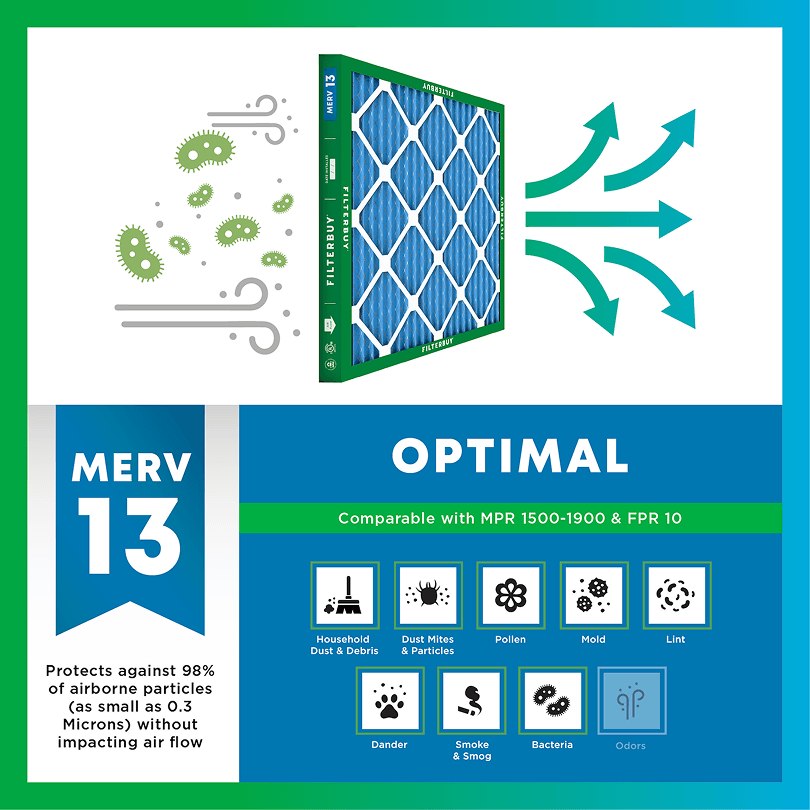
Fine enough to reach deep into the lungs. A MERV 13 is built to capture it.
It Doesn't Stay Local
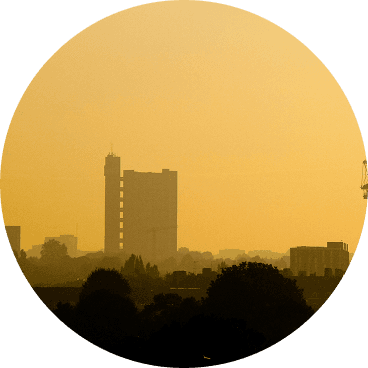
Smoke rides the wind far downwind — you can get smoky air with no fire nearby.
Simple steps to reduce indoor exposure.
During smoke events, the EPA recommends upgrading to a MERV 13 filter — or the highest-rated filter your system can handle — to help reduce the fine particles smoke brings indoors. MERV 13 is the level most home HVAC systems can run while still capturing PM2.5, the fine particulate that makes up the bulk of wildfire smoke.
Over 70,000 wildfires burn in the U.S. every year.
Wildfire smoke can travel 1,000+ miles, affecting states that aren't even near the blaze.
Exposure to wildfire smoke can worsen asthma, trigger heart issues, and lead to ER visits.
Indoor air can hold more fine particles during wildfire events unless it's properly filtered.
The EPA advises using MERV 13 filters or portable HEPA air cleaners during wildfire smoke events.
Use the live wildfire smoke tracker and upgrade your air filters today to protect your lungs and your home.
Shop Filters For Smoke Protection
Author: Michelle Wan | Reviewer: David Clark, Licensed HVAC Technician | Publish Date: July 27, 2026 | Updated: July 27, 2026
The first sign is rarely a news alert. It's a faint campfire smell on a clear afternoon in Nashville, or an orange midday sun over the Cumberland Plateau. By the time you notice it, fine smoke particles have often already drifted indoors. This live wildfire and smoke map for Tennessee shows whether a fire is behind that haze and how rough the air has gotten near you. Filterbuy's team has tracked this pattern for years. The smoke usually shows up before the explanation does.
Open the live map above and zoom to your area, then read the dot closest to you. That single color is your fastest answer. The map layers three things into one view: red markers for active fires, gray shading for drifting smoke, and colored dots for air quality at nearby monitors. Most smoky days in Tennessee trace back to a wildfire well outside the state, a seasonal debris or crop burn, or a smaller local fire. Green and yellow mean most people are fine outdoors. Orange means sensitive groups should head in. Red or worse means everyone should, and a Filterbuy MERV 13 filter indoors helps catch the fine particles smoke carries.
The live map plus your local air quality alert is the fastest way to check conditions right now.
Tennessee runs two fire seasons: spring (February 15 to May 15) and fall (October 15 to December 15).
Smell smoke with no fire nearby? It's often drifting in from a distant wildfire or a seasonal burn.
Past AQI 100, sensitive groups should limit outdoor time. Past 150, everyone should.
PM2.5, the fine particle behind smoky-day readings, reaches deepest into the lungs.
“As Air Quality Writer for Filterbuy, I check Tennessee's AQI most mornings during fire season, and the split that stands out every year is how differently a "smoky day" behaves depending on which side of the state it's coming from. A West Tennessee haze tied to Delta crop burning usually clears within a day, once the wind shifts. An East Tennessee event tied to a mountain wildfire is a longer haul. Smoke can sit trapped in the valleys around Sevier and Blount counties for days after the fire itself is contained, because the terrain holds it the way it holds morning fog. Same color on the map, same number on the dial, genuinely different plan for your household. That's why I never tell a Tennessee reader just to check the AQI and move on. Which half of the state the smoke is coming from tells you almost as much as the number does.”
-Michelle Wan, Filterbuy's Brand Manager and Air Quality Writer
The map layers three things into one view: red or orange markers for active wildfire, gray shading for smoke plumes on the move, and colored dots for live air quality readings, refreshed roughly every hour. Type in your ZIP or let the map find you, then read the nearest dot for your fastest answer.
Those readings aren't run by one agency. The Tennessee Department of Environment and Conservation directly monitors 91 of the state's 95 counties, while Davidson (Nashville), Hamilton (Chattanooga), Knox (Knoxville), and Shelby (Memphis) counties run their own locally delegated programs. Either way, trust the permanent circle-marker stations over a temporary low-cost sensor. Clean Air Tennessee's EnviroFlash program also sends free text or email alerts for the major metro areas and the Great Smoky Mountains.
To read it fast: check the nearest dot's color and shape (circles are the most reliable), check the wind and fire markers for direction, and compare the current reading against the hourly forecast. When two nearby readings disagree, trust the closer official monitor.
AQI scale per the EPA and AirNow. PM2.5 is the primary pollutant driving elevated readings during wildfire smoke events.
Tennessee's wildfire activity follows a predictable rhythm: spring (mid-February through mid-May) and fall (mid-October through mid-December), though fires can occur any time during drought. More than 90 percent of Tennessee wildfires trace back to human activity such as debris burning, not lightning. The state's largest fires, including the 2016 Gatlinburg and Great Smoky Mountains wildfires, have tended to hit in fall.
Smoke reaching Tennessee usually comes from one of three places: a wildfire burning in East Tennessee during a dry stretch, seasonal crop-residue burning across the Delta and neighboring Arkansas and Mississippi, or smoke that traveled thousands of miles from Canadian or western wildfires and settles over the state when the jet stream dips south. That last source is what catches people off guard, since you can smell smoke on a blue-sky day.
Since debris burning drives most of that 90 percent, Tennessee's burn permit program is worth knowing even if you never plan to strike a match yourself. From October 15 through May 15, state law requires a free burn permit for any debris pile fire, issued only on days it's actually safe to burn. Get one online in minutes or by calling 877-350-BURN. Burning without a permit is a misdemeanor, and illegal burning can be reported at 1-888-891-TDEC. Pulling a permit first lowers the odds of being the reason someone three counties over smells smoke next week.
Keep windows and doors shut, and run your HVAC fan on "on" rather than "auto" so it keeps pulling air across the filter.
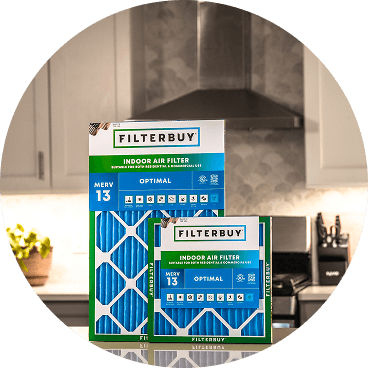
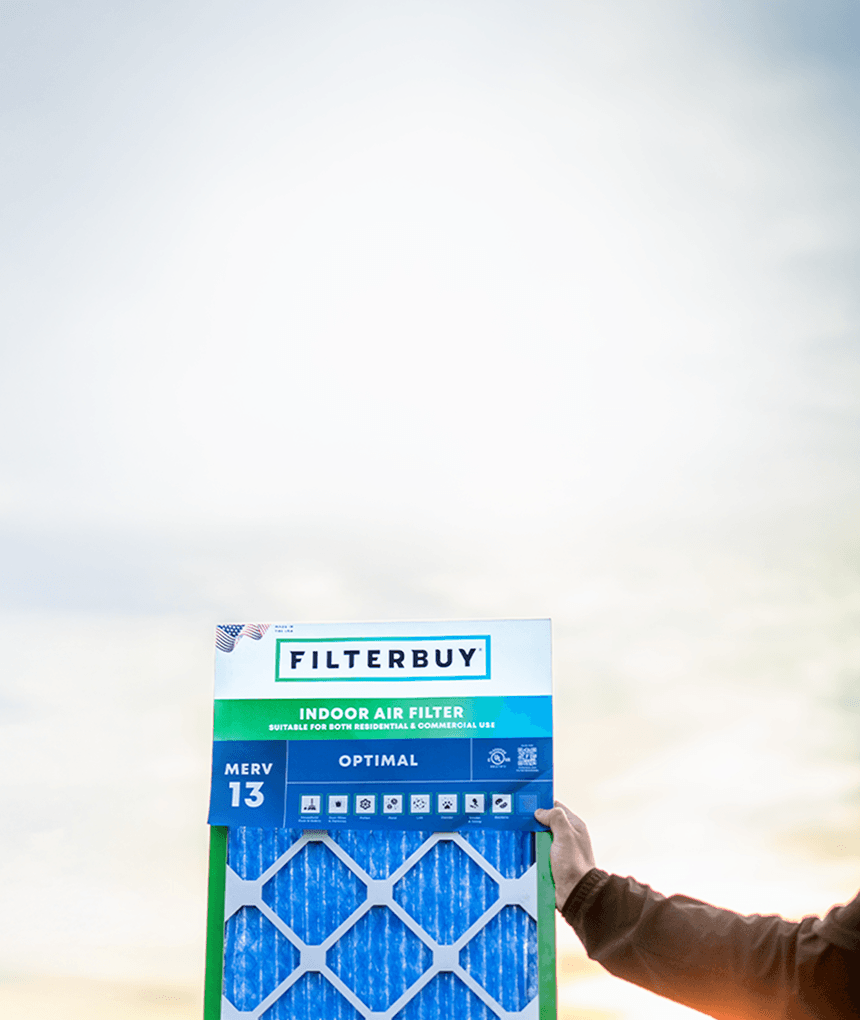
Install a Filterbuy MERV 13 filter to capture PM2.5, and swap it more often while smoke lingers.
Skip activities that add smoke indoors, like frying, candles, or vacuuming without a sealed HEPA vacuum.
Limit outdoor exertion, and wear a snug-fitting N95 if you must go outside in heavy smoke.
A filter won't fix the AQI outside or remove gases like carbon monoxide. What it does control is the air you breathe indoors, where fine particles can linger well after the outdoor haze clears.
After manufacturing filters for over a decade and serving more than two million households, we see the proof land on our own loading dock. The filters that come back during a smoke event are darker and heavier than the ones from a clean-air month, and that gray is the same fine particle pollution a Tennessee family would be breathing indoors without it.
Filterbuy Indoor Air Quality Team
These are the sources Filterbuy points Tennessee readers to when the air turns smoky, each from a different trusted authority.
The AirNow Fire and Smoke Map stacks active fire markers, drifting smoke, and live PM2.5 readings across Tennessee and the rest of North America.
Source: AirNow Fire and Smoke Map
The CDC outlines which groups face the most risk during a smoke event, worth a read if your home includes kids, older adults, or anyone with a heart or lung condition.
Source: CDC Wildfire Smoke Guidance
The EPA covers real steps for cutting the smoke that slips indoors, including how to build a clean room.
Source: EPA Wildfires and Indoor Air Quality
The National Weather Service explains the AQI, daily forecasts, and what to do when an alert hits.
Source: NWS Air Quality Safety Guide
Tennessee's Wildland Fire program posts the state's public wildfire viewer and current fire status definitions.
Source: TN Wildland Fire Current Wildfires
The American Lung Association runs a HelpLine staffed by respiratory therapists and nurses, plus wildfire-specific lung guidance.
Source: American Lung Association Wildfire Resources
The National Interagency Fire Center posts current fire activity straight from the agencies running the national response.
Source: National Interagency Fire Center Fire Information
Filterbuy's editorial team pulled these three data points from peer-reviewed research and satellite tracking, not press releases.
A 2026 peer-reviewed study linked wildfire-smoke PM2.5 to roughly 24,100 deaths a year in the contiguous U.S., about five times more toxic than ordinary PM2.5.
Source: 2026 Science Advances Wildfire Smoke Mortality Study
A 2021 analysis led by Aguilera found wildfire-specific PM2.5 drove a steeper jump in respiratory hospitalizations than the same dose of PM2.5 from other sources.
Source: Aguilera 2021 Wildfire Smoke Respiratory Study
NASA satellite tracking documented Canadian wildfire smoke traveling thousands of miles in 2025, reaching as far south as Florida, the same pattern that can leave Tennessee hazy with no local fire in sight.
Source: NASA Earth Observatory Smoke Transport Report
Tennessee will keep getting smoky days, most carried in on the wind rather than sparked down the road. What you can control is how ready your home is when the haze shows up. Filterbuy's take, after years of watching this play out: the families who stay comfortable indoors on a bad-air day checked the map early, knew which AQI number meant it was time to get the kids in, and had the right filter in place before the first whiff of smoke reached them.
Open the live map above and read the markers across the state. Most days, any smoke over Tennessee traces back to a distant fire well outside your county.
A Filterbuy MERV 13 filter if your system can handle the airflow, since it captures fine PM2.5. If airflow strains, use the highest safe MERV and add a HEPA room purifier.
It depends on the AQI. Past 100, sensitive groups should limit time outside. Past 150, everyone should, since PM2.5 is the particle that makes smoke risky.
Check it every one to two weeks during a long smoke event, and swap it early if the media turns gray or matted, or if airflow at your vents drops.
Michelle Wan is Filterbuy's Brand Manager and Air Quality Writer, covering AQI trends, wildfire smoke, and indoor air quality across Filterbuy's resource library. Reviewed by David Clark, Licensed HVAC Technician.
AQI (Air Quality Index): A 0–500 scale run by the EPA that translates pollutant levels into a color-coded health guide.
PM2.5: Fine particulate matter 2.5 micrometers or smaller, the main harmful component of wildfire smoke.
MERV 13: A filter rating capable of capturing fine particles like PM2.5, one step below true HEPA performance.
Smoke Plume: A visible mass of smoke tracked as it moves through the atmosphere, often far from its fire of origin.
Tennessee smoke can settle in before any alert reaches your phone, so make this live map your first stop whenever the sky looks off. Then get your home ready with a MERV 13 filter from Filterbuy, made in the USA and shipped fast.
Subscribe to wildfire smoke alerts for Tennessee to get a heads-up before the next event reaches your area.