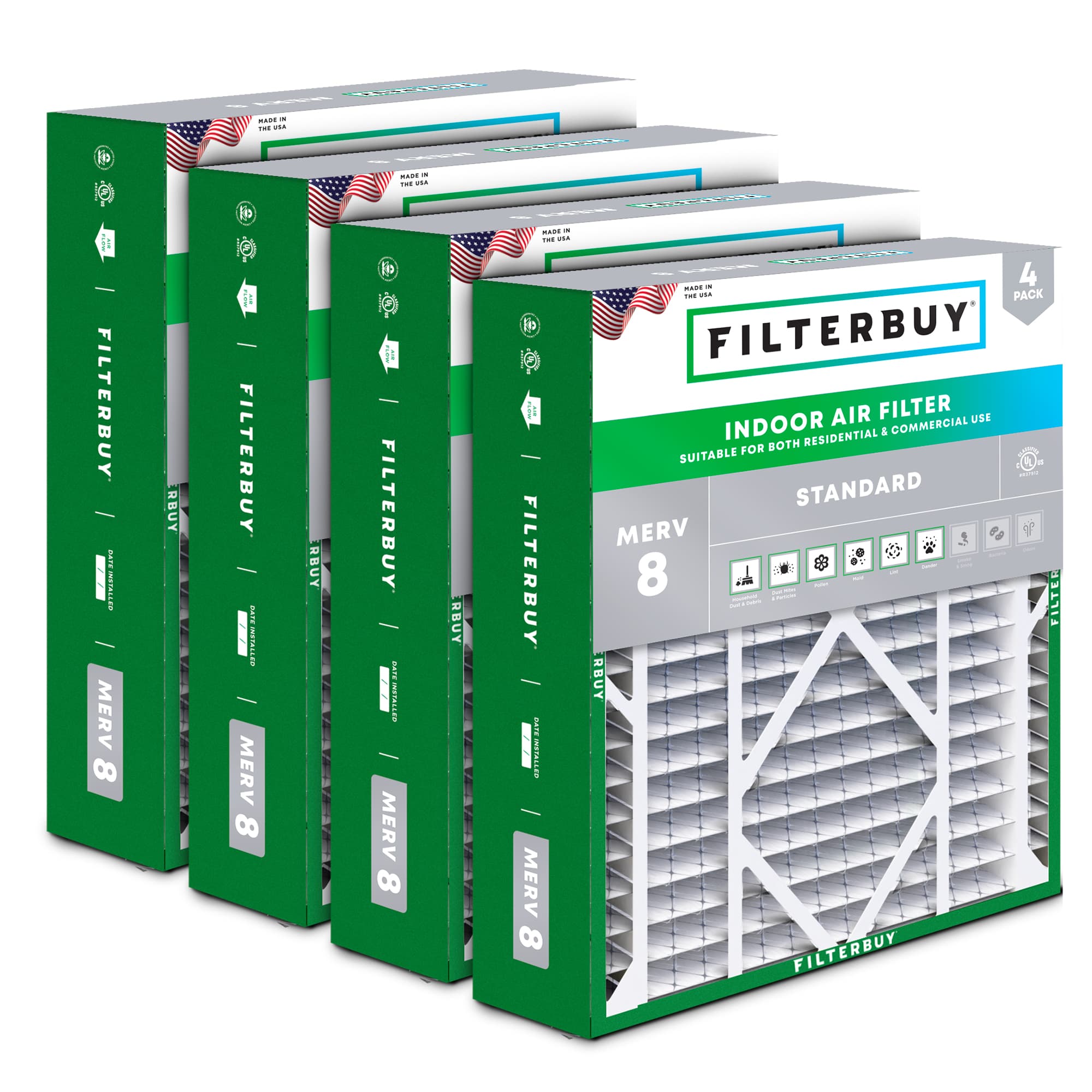
Tip: Ensure you buy the exact air filter size for your system. Certain brands have precise dimensions that only fit their specific models. See related filters
Actual Size: 19.88x20.5x4.38
 Free Delivery
  Factory-Direct Low Prices, Made in the USA
 Hassle-Free Returns & Free Exchanges
RESIDENTIAL AND/OR COMMERCIAL USE
Change Every 3 Months
Tip: Ensure you buy the exact air filter size for your system. Certain brands have precise dimensions that only fit their specific models. See related filters
Actual Size: 19.88x20.5x4.38
Free Delivery Factory-Direct Low Prices, Made in the USAHassle-Free Returns & Free ExchangesRESIDENTIAL AND/OR COMMERCIAL USE
Change Every 3 Months
Tip: Ensure you buy the exact air filter size for your system. Certain brands have precise dimensions that only fit their specific models. See related filters
Actual Size: 19.88x20.5x4.38
Free Delivery Factory-Direct Low Prices, Made in the USAHassle-Free Returns & Free ExchangesRESIDENTIAL AND/OR COMMERCIAL USE
Change Every 3 Months
At Filterbuy, we don't cut corners—we craft high-quality air filters right here in the USA and ship them to your doorstep for free. No delays, no gimmicks—just clean air, made easy. With thousands of five-star reviews and filters built for real life & every HVAC system, it's no wonder why over 4 million families trust Filterbuy.

Proudly Made In The USA

Fast, Free Shipping on Every Order

Premium Materials That Go The Distance

85,000+ 5-Star Reviews From Happy Customers

Save Up to 70% Per Filter with Packs


Measure length × width × depth with a tape measure to find the actual size.

Round up each dimension to the nearest whole number to get the nominal size. Example: 19.88x20.5x4.38 in → 20X21X5 nominal.

Search by nominal size on our site for the best fit.


5″ filters give you maximum filtration with minimal maintenance — lasting up to 12 months while handling higher MERV ratings without restricting airflow.
Sizing note:

If the filter you buy doesn't fit, we'll send you a better size.
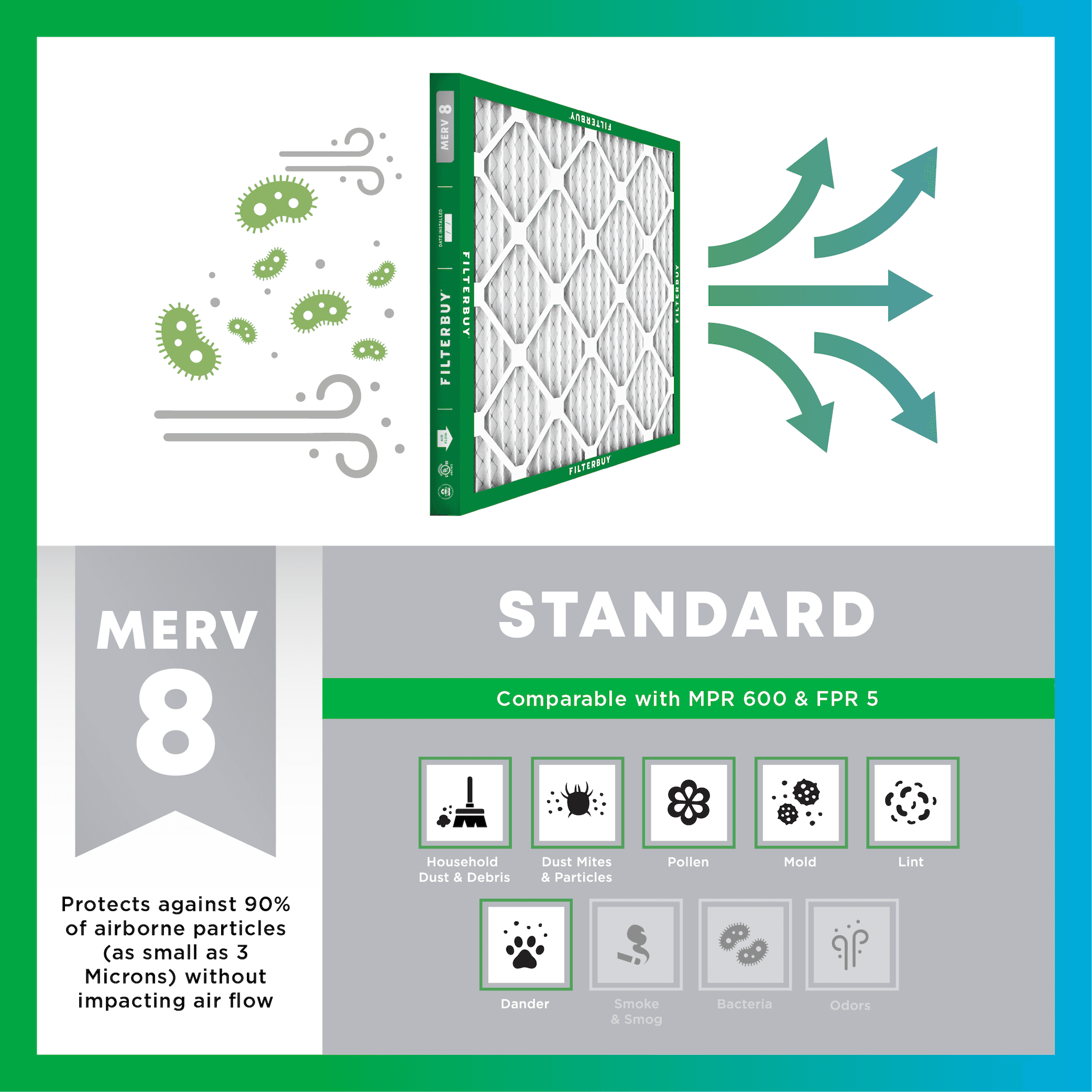
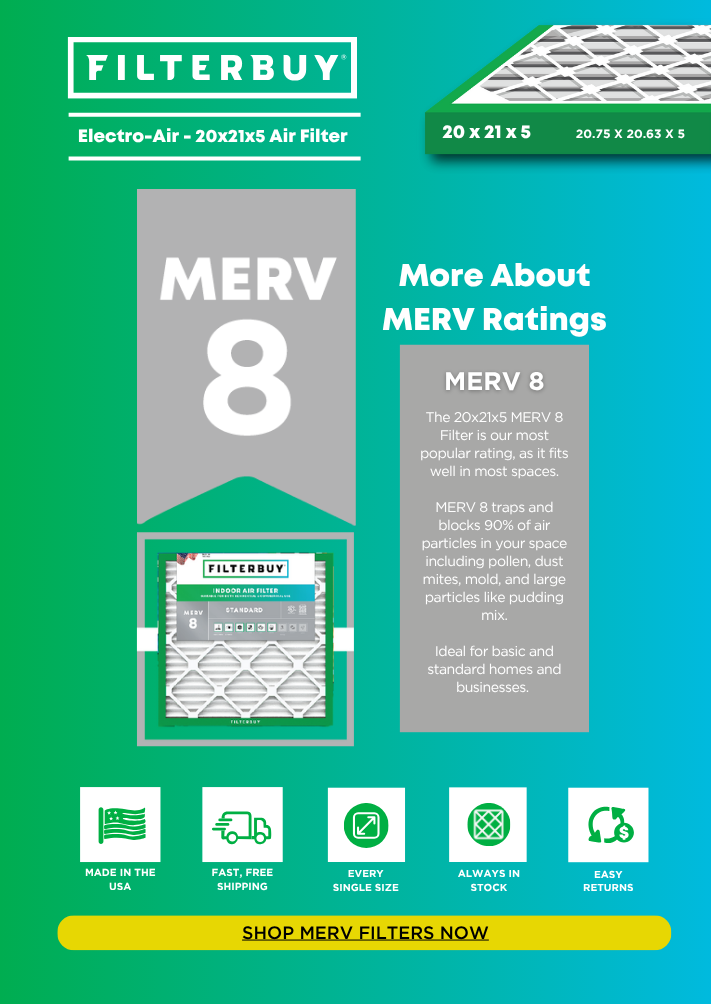
MERV stands for Minimum Efficiency Reporting Value—but don't let the technical name fool you. It's just a way to rate how well an air filter traps stuff like dust, pollen, pet dander, and smoke. The higher the MERV number, the more particles it catches—and the cleaner your air will be.

Comparable to:FPR: 4-7
MPR: 600-1000
 Dust & Debris
 Dust Mites & Particles
 Pollen
 Mold
Mold Lint
Lint Dander


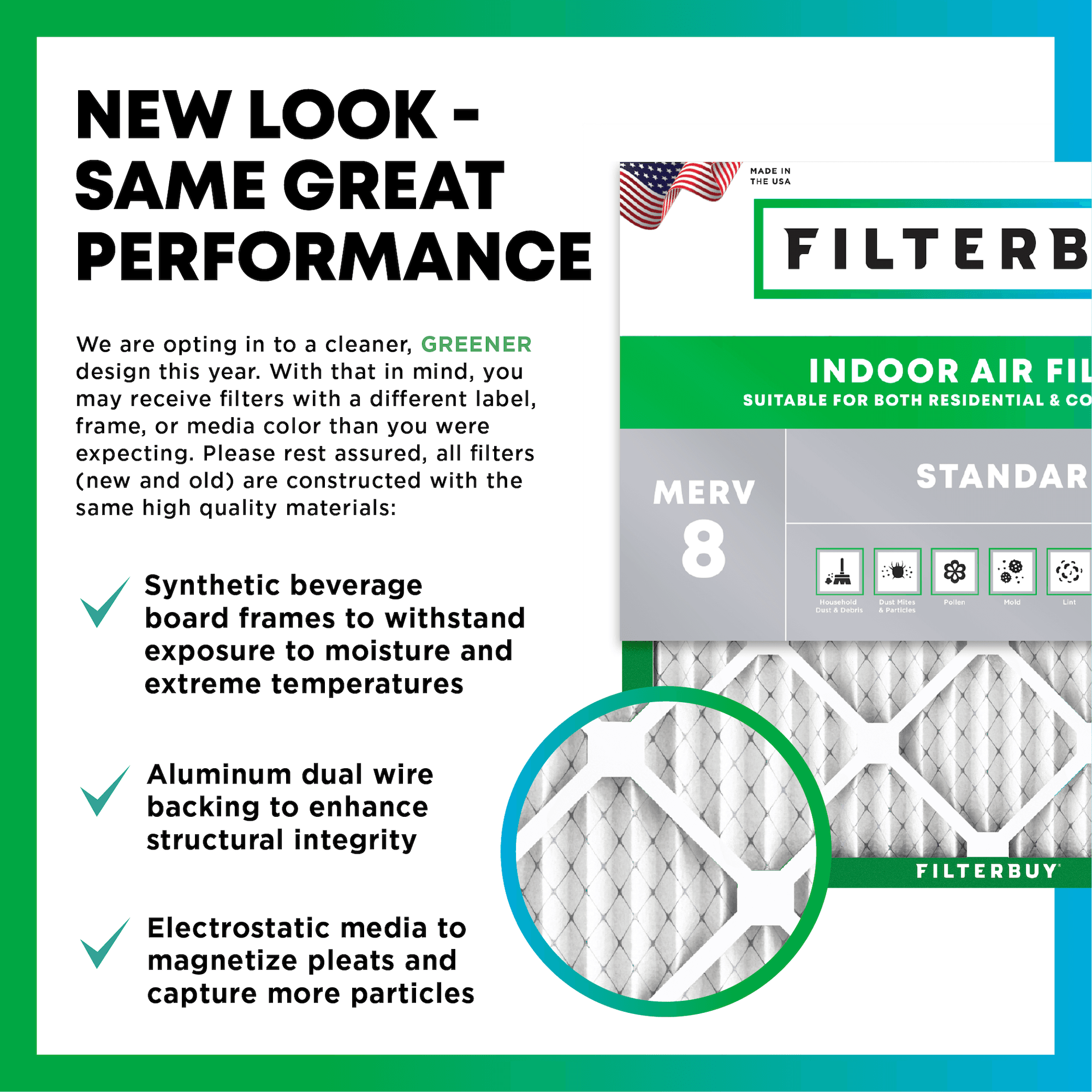
We build every Filterbuy filter to deliver reliable 90-day performance—thanks to smart design and premium materials that do the heavy lifting. Here's what makes the difference:
More pleats = more surface area to capture dust and debris, keeping your air cleaner longer.
Pleats are magnetized to attract and trap microscopic particles—like pet dander, pollen, and smoke.
Engineered to resist warping in extreme temperatures and high humidity.

A layer of metal reinforcement keeps pleats evenly spaced and structurally sound—no sagging, even at high airflow.
Assembled with care. Built to perform. Ships fast, free, and reliably from our U.S. facilities.

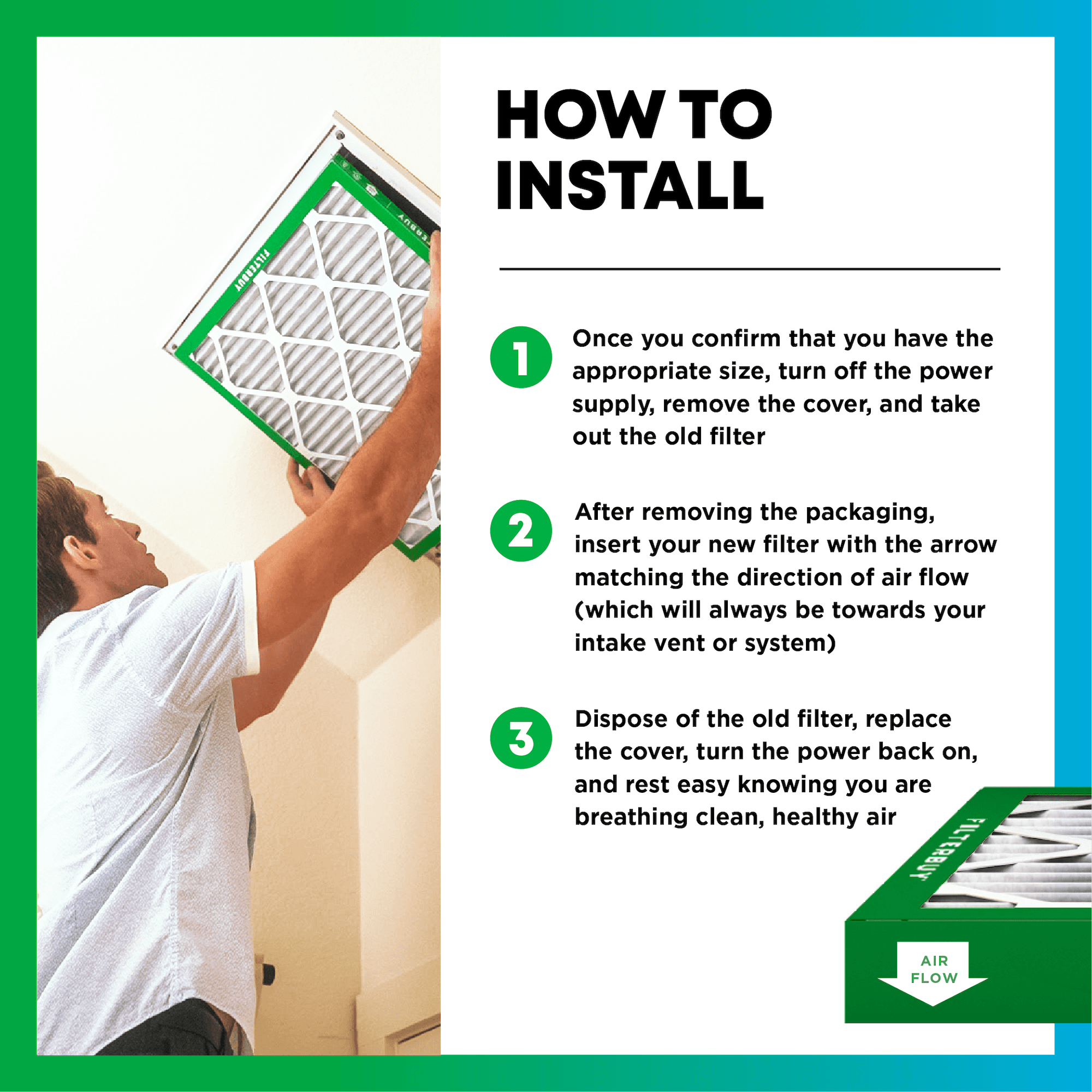
Turn Off Your HVAC SystemSafety first.

Remove The Old FilterLook for the airflow arrow and make note of the direction.

Slide In Your New FilterArrow should point toward the system (same direction as before).

Turn Your System Back OnAnd enjoy the fresh, clean air.

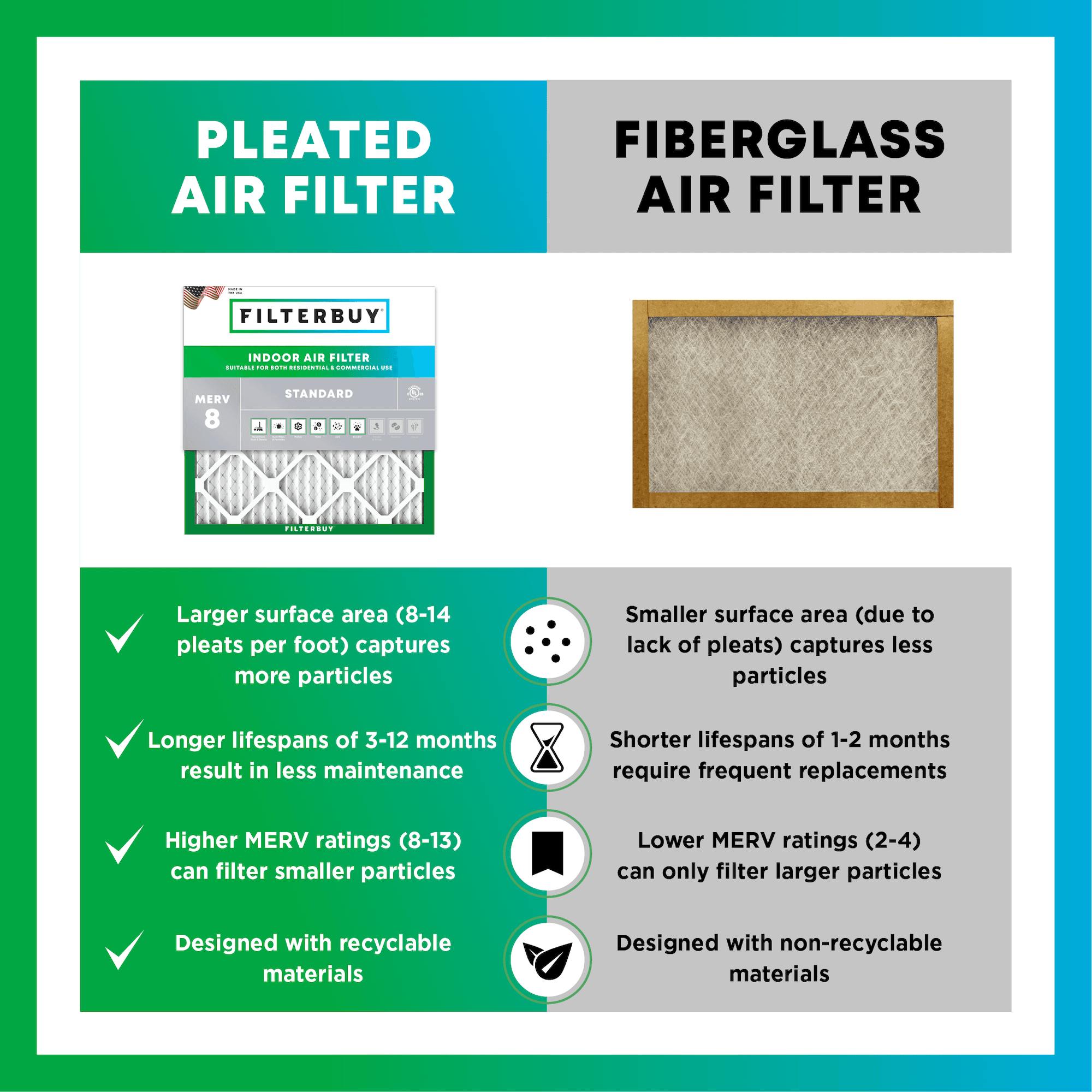
Not all air filters are created equal. Pleated filters don't just last longer—they actually clean your air better. Here's how they stack up:

Efficiency:
High (MERV 8–13) – Traps more particles
Lifespan:
90 days – Long-lasting performance
Air Quality:
Excellent – Cleaner, healthier air
Materials:
Recyclable and durable

Efficiency:
Low (MERV 4 or less) – Misses small stuff
Lifespan:
30 days or less – Replace often
Air Quality:
Minimal – Basic protection only
Materials:
Thin, flimsy, and not recyclable
Pleated filters are a no-brainer—more protection, less hassle, and better air for your home.
Changing your filter on time keeps your HVAC system running efficiently—and helps protect your lungs from dust, allergens, and airborne irritants. Here's how often to swap it out based on your needs:

For most homes without pets or special air quality concerns. Great for general upkeep and energy efficiency.

Shedding fur, dander, and allergy triggers can build up fast. Changing your filter every two months helps keep the air fresher and symptoms at bay.

For households affected by smoke, pollution, or respiratory conditions, monthly changes ensure maximum protection.

| Nominal Size | 20X21X5 |
| Actual Size | 19.88 x 20.5 x 4.38 inches |
| Filter Type | Pleated |
| Media | Electrostatically Charged |
| Frame | Beverage Board |
| MERV Ratings Available | 8 |
| Lifespan | Up to 12 Months |
| Origin | Made in USA |
A lot of filters ask your HVAC system to work harder than it should. This one doesn’t. The MERV 8 20x21x5 Electro-Air air filter gives homeowners what they actually need in day-to-day life: solid filtration, steady airflow, and dependable support for the system that keeps the whole house comfortable.
We’ve seen what happens when people chase the highest rating instead of the right fit. Airflow drops. Rooms feel uneven. Systems run longer. Dust still finds its way back onto furniture. A properly matched MERV 8 filter solves for the real job at hand. It helps trap common airborne particles while letting your equipment move air the way it was built to.
The MERV 8 20x21x5 Electro-Air air filter is designed to give homeowners a practical balance between airflow and everyday filtration. It captures common particles like dust, pollen, and pet dander while allowing your HVAC system to run efficiently, making it a reliable choice for maintaining comfort without adding strain to your equipment.
Best for homeowners who want dependable filtration without putting extra strain on their HVAC system
• Captures common airborne particles such as dust, pollen, lint, and pet dander
• Supports better airflow than denser filters that can slow a system down
• Usually lasts about 3 to 6 months, depending on pets, dust levels, and system use
• Helps protect HVAC equipment while improving everyday indoor air quality
• The MERV 8 20x21x5 Electro-Air air filter gives you a strong balance of filtration and airflow.
• The 5-inch depth gives the filter more surface area, which helps it last longer and perform more consistently.
• This filter works well for standard households that want better dust control and cleaner air without creating airflow issues.
• Steady replacement helps support indoor comfort, cleaner vents, and long-term HVAC performance.
• Choosing the right filter size and rating helps your HVAC system run the way it was designed to, without added strain or reduced efficiency.
When homeowners ask us what filter actually makes a difference, we usually start with the same point: balance matters more than chasing the highest number on the box.
Based on what we’ve seen in real homes, the biggest problem is not always weak filtration. It is often mismatch. Some filters catch more particles, but they also slow airflow enough to make an otherwise healthy system work harder. Others let air move freely but do very little to help with the dust, pollen, and debris that build up during everyday living.
A MERV 8 20x21x5 filter lands in the middle where it counts. It captures the particles most homeowners deal with every week while still allowing steady airflow through the system. That balance supports cleaner air, more even comfort, and less strain on the equipment that heats and cools your home.
One of the most common issues we see is a filter that sounds impressive on paper but creates unnecessary resistance once it is installed. Your HVAC system has to push air through that filter every day. If the filter is too restrictive for the setup, the system feels it.
A MERV 8 filter helps avoid that problem. It gives your equipment room to move air efficiently, which can help support more even temperatures and more reliable performance from room to room. That matters in real houses, not just in product specs.
Most households do not need the densest filter on the market. They need a filter that handles the particles people actually live with. Dust from daily activity. Pollen that comes in from outside. Pet dander that settles into air and fabric. Lint and debris that build up faster than most people realize.
This pleated air filter is built for that kind of real-life use. It helps clean up the everyday air your family breathes without asking your system to sacrifice airflow to get there.
The 20x21x5 size does more than fit a specific cabinet. The added depth gives the filter more surface area, which helps spread particle capture across a larger area instead of loading up too quickly in one thin layer.
In practical terms, that can mean longer service life, steadier airflow over time, and fewer replacement cycles than many 1-inch filters. Homeowners usually notice the convenience first. Their HVAC system notices the difference too.
The best filter choice is usually the one that keeps doing its job month after month without creating new problems. That is why this filter makes sense for so many homes. It supports cleaner air, helps cut visible dust, and gives your system a better chance to run the way it should.
If your goal is dependable filtration without giving up performance, this is one of the most practical choices you can make.
“After years of working with filters and seeing how real HVAC systems behave in homes, we keep coming back to the same advice: choose the filter that gives you cleaner air without choking airflow. For many households, a properly sized MERV 8 filter does exactly that.”
URL: https://en.wikipedia.org/wiki/Air_filter
This page gives a helpful overview of how air filters work, including the role they play in particle capture and system performance. It is a good starting point for homeowners who want a clearer picture of what a filter actually does inside an HVAC system.
URL: https://filterbuy.com/resources/health-and-wellness/are-expensive-filters-worth-it/
This resource walks through a question we hear all the time. It helps homeowners compare cost, performance, and real-world value so they can choose a filter that fits their home instead of paying for features they may not need.
URL: https://www.epa.gov/indoor-air-quality-iaq
The EPA explains the indoor pollutants that can affect comfort and health and outlines practical ways to improve air inside the home. It is useful context for anyone trying to connect filtration to everyday indoor air quality.
URL: https://www.ashrae.org/technical-resources/standards-and-guidelines
ASHRAE helps define how the industry measures filtration performance, including the rating systems homeowners often see when shopping for filters. This is one of the key references behind how MERV ratings are understood.
URL: https://www.cdc.gov/air-quality
This guidance helps explain why cleaner indoor air matters and where filtration fits into a healthier indoor environment. It is especially relevant for homes managing respiratory concerns or seasonal air quality issues.
URL: https://www.energy.gov/energysaver
Energy Saver covers the connection between HVAC performance, airflow, maintenance, and energy use. It helps show why filter choice is not just about air quality. It also affects how efficiently the system runs.
URL: https://www.hvac.com/resources
This resource provides practical maintenance information, including why filter replacement matters and how routine care supports long-term system reliability. It helps homeowners connect small habits to bigger HVAC outcomes.
URL: https://www.epa.gov/indoor-air-quality-iaq/inside-story-guide-indoor-air-quality
That number helps explain why so many homeowners notice air quality issues even when outdoor conditions look fine. When pollutants build up indoors, a dependable filter becomes part of your everyday defense against the dust and particles circulating through the home.
URL: https://www.epa.gov/report-environment/indoor-air-quality
That makes indoor air quality a daily issue, not an occasional one. The air moving through your HVAC system reaches the rooms where your family sleeps, works, and spends most of its time, so consistent filtration matters more than people think.
URL: https://www.ashrae.org/technical-resources/standards-and-guidelines
That is why filter selection should focus on performance you can actually use. A filter only helps if your system can run well with it, and a balanced option like MERV 8 often makes more sense than a denser filter that creates avoidable airflow problems.
If there’s one thing we’ve learned from working with real homes and HVAC systems, it’s this: the best filter isn’t the one with the highest rating—it’s the one your system can actually use every day without struggling.
The Filterbuy MERV 8 20x21x5 Electro-Air air filter focuses on what matters most:
• Steady airflow your system can handle
• Consistent dust and particle control
• Reliable support for long-term HVAC performance
In our experience, choosing balance over extremes leads to better results over time:
1. Systems run more smoothly with fewer airflow issues
2. Temperatures stay more even from room to room
3. Maintenance problems show up less often
It may not be the flashiest option—but it’s one of the most dependable. And in a home you live in every day, that’s what actually makes the difference.
1. Confirm size: check your current filter label and make sure it reads 20x21x5
2. Check your existing filter: if it looks gray, clogged, or blocks light, replace it
3. Install correctly: match the airflow arrow and ensure the filter sits flush
4. Set a reminder: replace every 3–6 months and check monthly with pets or heavy use
5. Test airflow: walk room to room and confirm vents feel consistent
6. Clear obstructions: keep vents open and move furniture away from returns
7. Stay consistent: replace filters on schedule and keep the unit area clean
A: It captures common particles like dust, pollen, lint, and pet dander, helping improve everyday indoor air quality. For many homeowners, those are the particles that show up fastest on furniture, around vents, and in the air people breathe every day.
A: Yes. The deeper design provides more surface area, which improves airflow and extends the filter’s lifespan. In real use, that often means steadier performance and fewer filter changes over time.
A: Yes. By reducing debris buildup and maintaining airflow, it helps minimize strain on key components. When a system can move air the way it was designed to, it has a better chance of running efficiently over the long haul.
A: Most homes replace it every 3 to 6 months, depending on usage and air quality conditions. Homes with pets, high dust levels, or heavy seasonal use often benefit from checking the filter sooner.
A: For standard households, yes. It offers a strong balance of filtration and airflow without overloading your system. That is one reason it remains such a practical choice for everyday home use.
A better filter choice can help your home feel cleaner and your HVAC system run more smoothly. When airflow and filtration stay in balance, everyday comfort gets easier to maintain.

