
Arlington Real-Time AQI Tracker


Get Alerts For Unhealthy AQI In Your Area
When air quality in your area reaches unhealthy levels, we'll send you a quick alert, along with expert tips on how to reduce your exposure.
What's Actually In Arlington Air Today?
What High AQI Means for Your Lungs in Arlington
How to Read AQI
The Air Quality Index (AQI) measures how polluted the air is and how it may affect your health.
0–50 (Good): Air quality is satisfactory.
51–100 (Moderate): Acceptable, but some pollutants may pose minor concerns.
101–150 (Unhealthy for Sensitive Groups)
151–200 (Unhealthy)
201–300 (Very Unhealthy)
301+ (Hazardous)
Moderate
Still okay for most, but if you have asthma or allergies, take it easy and avoid long outdoor workouts.
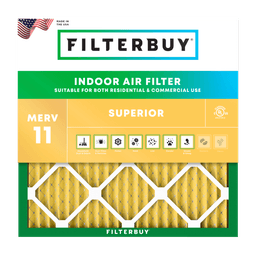
Shop MERV 11 filters→What's the Right Filter for Your AQI Level?


Live Air Quality Index AQI Map Arlington Texas Today | Filterbuy.com
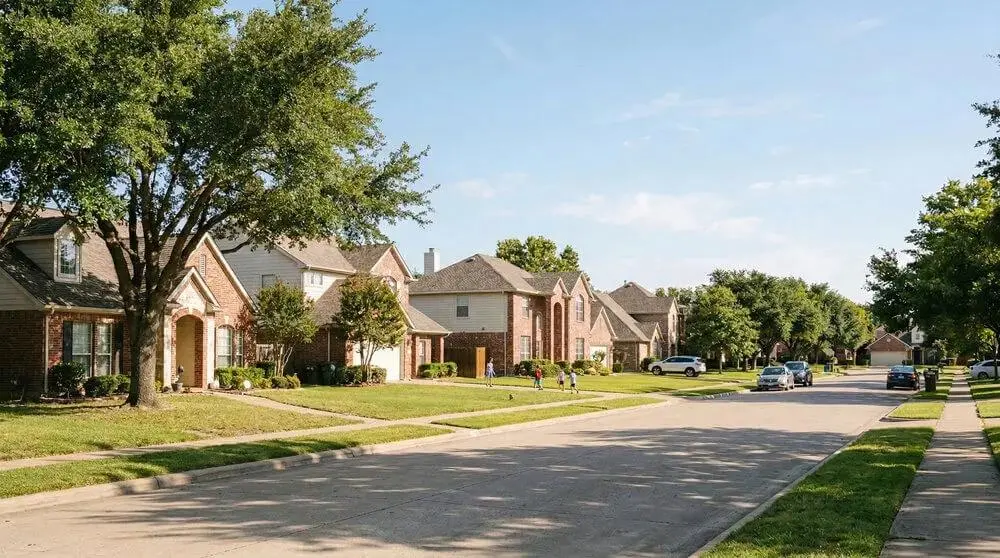
Arlington sits right in the middle of the DFW metroplex — and right in the path of some of Texas's trickiest air quality patterns. Between I-20 and I-30 corridor emissions, summer ozone buildup, and seasonal allergen surges, AQI levels here can shift fast. Our live AQI map below shows you exactly what's happening in Arlington's air right now, updated in real time.
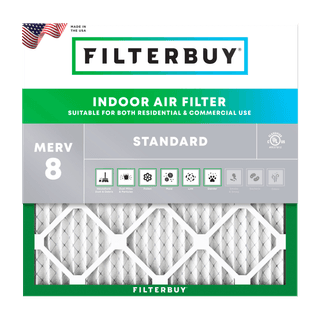
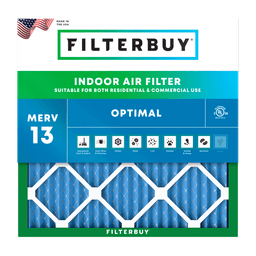
Here's what we've learned after building millions of air filters in our U.S. factories since 2013: when outdoor AQI spikes, your HVAC system becomes the front line of defense — and most homes aren't equipped for it. A standard MERV 8 filter handles everyday dust, but Arlington's high-ozone days and elevated PM2.5 events call for MERV 13 filtration to capture the fine particles that slip through lesser filters and settle into your living space. We see it in the order patterns from DFW-area customers — filter demand jumps every time air quality dips, and the homeowners who stay ahead of those spikes notice the difference. Check today's Arlington AQI below, and we'll help you match the right level of protection to what's actually in your air.
TL;DR Quick Answers
Live Air Quality Index AQI Map Now Today in Arlington Texas
Arlington's live Air Quality Index map shows real-time outdoor pollution levels across the DFW metroplex, updated continuously from Tarrant County monitoring stations. Today's AQI reading tells you exactly what's in Arlington's air right now — and what's heading into your home through your HVAC system.
Here's what you need to know at a glance:
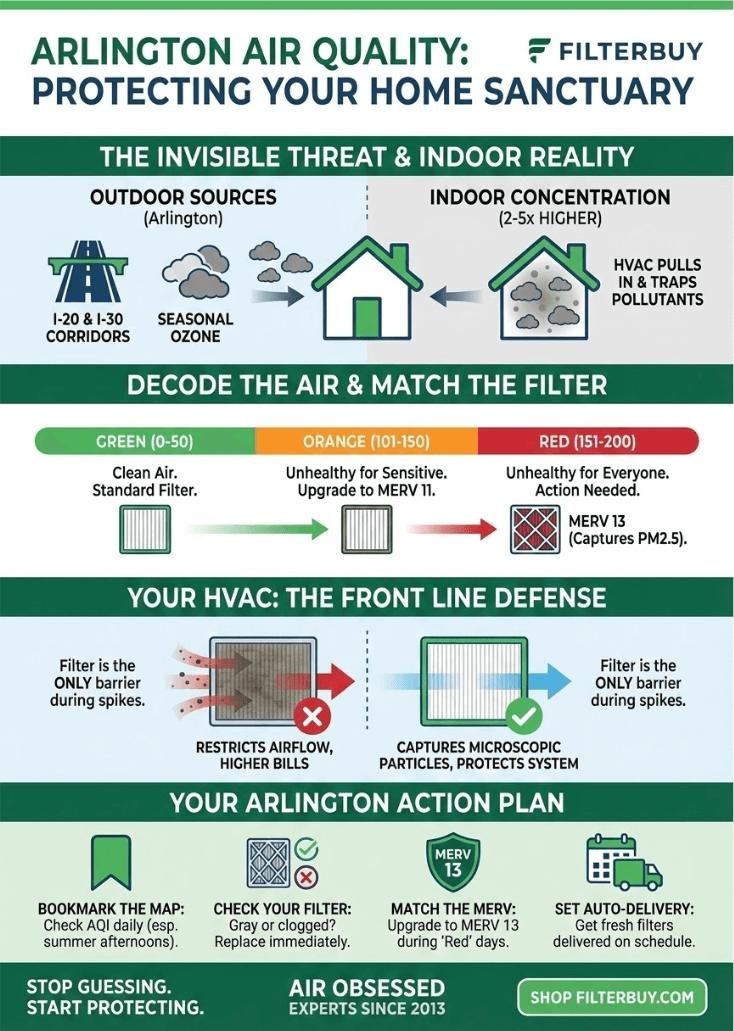
AQI 0–50 (Green): Air is clean. Standard MERV 8 filtration is sufficient.
AQI 51–100 (Yellow): Acceptable for most. Sensitive groups should monitor conditions.
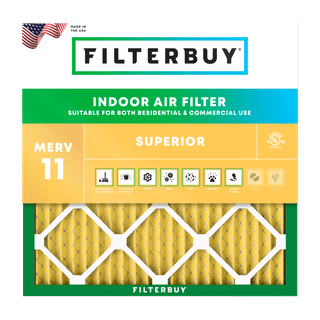
AQI 101–150 (Orange): Unhealthy for sensitive groups. Upgrade to MERV 11 or higher.
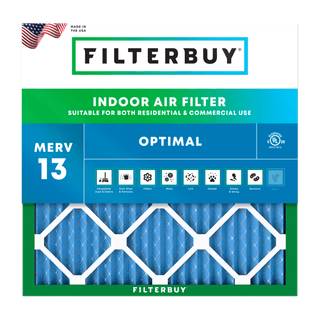
AQI 151–200 (Red): Unhealthy for everyone. MERV 13 filtration is recommended.
After more than a decade of manufacturing air filters and shipping them to DFW homes, we've seen firsthand that the homeowners who check their local AQI regularly and match their MERV rating to current conditions breathe noticeably cleaner indoor air — and get more life out of their HVAC systems. Arlington's air quality is manageable when you pair real-time data with the right level of protection.
Top 5 Takeaways
Your indoor air is worse than outside. The EPA confirms indoor pollutants run 2–5x higher than outdoor levels. Your HVAC pulls it all in.
DFW's ozone problem is year-round. Tarrant County earned a failing grade. This isn't seasonal — don't treat filtration like it is.
Match your MERV to your AQI. MERV 8 for green days. MERV 11 for orange. MERV 13 when it's red.
Check afternoon readings. Ozone peaks between 1 and 5 PM. Morning green can become afternoon orange.
Replace on schedule. The wrong timing costs more than the wrong filter.
Understanding Arlington's Air Quality Right Now
The Air Quality Index measures pollutant concentrations on a scale from 0 to 500, with lower numbers meaning cleaner air. For Arlington, the most common culprits driving AQI readings are ground-level ozone and fine particulate matter (PM2.5) — both byproducts of the heavy vehicle traffic, industrial activity, and urban heat that define the DFW corridor. On a good day, Arlington typically sits in the green (0–50) range. But from May through September, ozone levels routinely push readings into the yellow and orange zones, especially during afternoon hours when heat and sunlight cook vehicle emissions into smog.
What the color-coded map above tells you at a glance is whether it's a day to open the windows or a day to let your HVAC system do the heavy lifting.
Why Arlington's AQI Matters Inside Your Home
Most homeowners assume closing the doors keeps outdoor pollution out. It doesn't. Your HVAC system pulls in outside air continuously, and on elevated AQI days, that means fine particles and ozone byproducts cycle directly through your ductwork and into every room. In our experience manufacturing filters for homes across the DFW area, we've found that indoor particulate levels can mirror outdoor spikes within hours — sometimes faster in older homes with leaky ductwork or worn weatherstripping.
This is where your air filter becomes more than a maintenance item. It's active protection. A MERV 8 filter captures common household dust and pollen, which works fine on green-AQI days. But when Arlington's readings climb above 100, PM2.5 particles — small enough to bypass basic filtration and enter your lungs — become the real concern. MERV 13 filters are engineered to capture those ultra-fine particles at 0.3 to 1.0 microns, which is exactly the range that spikes during ozone events and elevated traffic pollution days.
How to Use This Map to Protect Your Home
Check the map daily, especially during summer months and anytime you notice haze over the metroplex. Here's a practical framework based on what we recommend to our DFW customers:
Green and yellow days (AQI 0–100) are standard conditions — keep up with regular filter changes on your normal schedule.
Orange days (AQI 101–150) mean sensitive groups should limit outdoor exposure, and it's worth confirming your filter is fresh and rated MERV 11 or higher.
Red days (AQI 151–200) are when MERV 13 filtration pays for itself, trapping the fine particulate matter that lesser filters let pass. If you're running your AC heavily these days — and in Arlington, you probably are — your filter is working overtime and may need replacement sooner than the standard 90-day cycle.
After more than a decade of building filters and shipping them to homes across Texas, the pattern we see is clear: homeowners who match their filtration level to their local air quality spend less on HVAC repairs, breathe noticeably cleaner air, and replace filters on a smarter schedule rather than just guessing. Arlington's air quality is manageable — you just need the right information and the right filter working together.
"After building millions of air filters and shipping them to homes across the DFW metroplex since 2013, we've seen a clear pattern — the homeowners who check their local AQI and match their MERV rating to what's actually in their air don't just breathe better, they get more life out of their HVAC systems and spend less on repairs over time."
— The Filterbuy Team
Your Arlington Air Quality Toolkit — Top 7 Resources We Trust and Use Every Day
Knowing what's in Arlington's air is step one. Knowing what to do about it is where most people get stuck. We've pulled together the resources our team actually relies on when helping DFW homeowners figure out the right level of protection for their homes — no fluff, just the tools that matter.
EPA AirNow — Your Go-To for Real-Time AQI Data
This is where it all starts. AirNow pulls directly from federal monitoring stations in Tarrant County and gives you the most reliable real-time AQI reading available. If you only bookmark one air quality site, make it this one.
TCEQ Daily Forecast — What's Coming Tomorrow in DFW
The Texas Commission on Environmental Quality posts daily ozone and particulate matter forecasts for the Arlington area. We tell our customers to check this before weekend plans or anytime the temperature is climbing — that's when DFW ozone likes to spike.
URL: https://www.tceq.texas.gov/airquality/monops/forecast_today.html
American Lung Association — Arlington's Annual Air Quality Report Card
One good AQI day doesn't tell the whole story. The Lung Association's State of the Air report gives you the bigger picture, and it's not great news for our area — DFW ranked 10th worst in the nation for ozone in their latest report, and Tarrant County earned a failing grade. That's exactly why we encourage local homeowners to think beyond today's number.
URL: https://www.lung.org/research/sota/city-rankings/msas/dallas-fort-worth-tx-ok
IQAir Arlington — See Exactly Which Pollutant Is the Problem Today
When you want to know whether PM2.5, ozone, or something else is driving today's AQI, IQAir breaks it down pollutant by pollutant with multi-day forecasts. It's the resource we point people to when they ask us why their allergies are flaring up, even though the overall AQI looks moderate.
URL: https://www.iqair.com/us/usa/texas/arlington
EPA AQI Basics — A Plain-English Guide to the Color Codes
Green, yellow, orange, red — the colors mean something specific, and it's worth two minutes to learn what. The EPA's guide explains each level in simple terms, who's most at risk, and when to adjust your routine. Think of it as the owner's manual for reading any AQI map, including ours.
URL: https://www.airnow.gov/aqi/aqi-basics/
EPA Fire and Smoke Map — Is That Haze Local or Drifting In?
Arlington doesn't deal with wildfires often, but smoke from other regions travels. This map shows you whether an AQI spike is coming from local traffic and industry or from smoke hundreds of miles away. It matters because smoke events load your HVAC filter faster and call for stronger filtration than a typical high-ozone day.
Filterbuy AQI-to-Filter Guide — Match Your MERV Rating to What's Actually in Your Air
This is the part no other air quality site covers. After more than a decade of building filters and shipping them to homes across Texas, we've mapped AQI levels directly to MERV recommendations, so you're never guessing. Standard day? MERV 8 has you covered. Moderate conditions? Step up to MERV 11. High pollution day? MERV 13 captures the fine particles that lower-rated filters miss. Simple as that.
URL: https://filterbuy.com/resources/air-quality-index/
What the Data Tells Us — And What We've Seen Firsthand
After more than a decade of manufacturing filters and shipping them to different homes, we've seen how outdoor air quality translates into real indoor problems. These three statistics from leading U.S. authorities confirm what our customers experience every day.
1. Your Indoor Air Is Likely Worse Than What's Outside
The EPA reports that indoor pollutant concentrations are often 2 to 5 times higher than typical outdoor levels.
What that means for Arlington homeowners:
An outdoor AQI of 80 could translate to an effective indoor equivalent of 160–400 without proper filtration
Most homeowners don't realize the gap until they see what a 60-day-old filter pulled from their air
This is exactly why we built our AQI-to-filter matching guide — Texas homeowners kept asking us why their filters looked so dirty when the air outside seemed fine.
Source: U.S. Environmental Protection Agency — Indoor Air Quality
2. Arlington Sits in One of America's Worst Ozone Corridors
The American Lung Association's 2025 "State of the Air" report ranked DFW 10th worst in the nation for ozone pollution. Tarrant County earned a failing grade.
What we've observed from our side:
MERV 13 orders from DFW spike every summer in near-perfect sync with rising ozone forecasts
Homeowners who monitor their local AQI consistently upgrade their filtration before conditions worsen
DFW's ozone problem isn't a one-year anomaly — it's a persistent regional pattern we've tracked for years
This is why we advise Arlington homeowners to treat filtration as a year-round commitment, not a seasonal reaction.
Source: American Lung Association — State of the Air 2025, Dallas-Fort Worth
3. MERV 13 Captures 85%+ of PM2.5 — The Particles That Matter Most on High-AQI Days
Both the EPA and ASHRAE recommend a minimum filter rating of MERV 13 for managing airborne contaminants in homes.
We manufacture MERV 8, 11, and 13 across four U.S. facilities. When we talk to local homeowners, we don't push the highest-rated product. We point them to the data and let the air quality make the case.
Source: U.S. Department of Energy, Building America Solution Center
Final Thoughts and Opinion
Here's what it comes down to. Arlington's air quality isn't the worst in Texas, but it's far from the best — and the data backs that up:
DFW ranks 10th worst in the nation for ozone pollution
Tarrant County earned a failing grade from the American Lung Association
The EPA confirms that indoor air is often 2 to 5 times more polluted than outdoor air
Those aren't scare tactics. They're the reality of living in one of the fastest-growing urban corridors in the country.
After building millions of filters and working directly with DFW homeowners since 2013, here's what we believe most people get wrong: they treat their air filter like a maintenance chore instead of a health decision. They buy whatever's cheapest, install it, and forget about it for six months — while their HVAC system pulls in Arlington's ozone, PM2.5, and traffic emissions every single day.
The homeowners who get this right aren't doing anything complicated. They follow a simple pattern:
Check their local AQI a few times a week
Understand that a MERV 8 handles everyday dust but won't protect them when conditions deteriorate
Keep a MERV 13 on hand for the stretches — and there are always stretches in DFW — when air quality turns
That awareness-to-action loop is what separates homes with genuinely clean indoor air from homes where the family just assumes everything is fine because the windows are closed.
We built this page because Arlington homeowners deserve more than a color-coded map. You deserve:
The context behind the colors
The data that explains why it matters inside your home
A clear path from knowing your AQI number to choosing the filter that actually addresses it
That's what Filterbuy does differently. We don't just sell filters — we connect the dots between the air outside your door and the air your family breathes every day. Once you start paying attention to that connection, you won't go back to guessing.
What to Do Next: Your Arlington Air Quality Action Plan
You've got the data. You understand what Arlington's AQI means for your home. Here's how to put it to work in four simple steps.
Step 1: Bookmark This Page and Check Your AQI Regularly
Make it part of your routine — especially from May through September when ozone peaks.
Save this page to your phone's home screen for one-tap access
Check the live map at least twice a week, daily during peak months
Pay extra attention to afternoon readings when Arlington's ozone spikes
Pair with EPA AirNow alerts for Tarrant County for automatic notifications
Step 2: Check Your Current Filter Right Now
Pull it out and take an honest look. If you can't remember when you installed it, that's your answer.
Gray, dark, or visibly clogged? Overdue — it's already restricting your airflow.
Basic fiberglass flat-panel? Likely MERV 1–4, catching almost nothing on high-AQI day.s
Pleated MERV 8? Good for standard conditions, not enough when AQI climbs above 100
MERV 11 or 13? Right track — just replace every 60–90 days, sooner during heavy-use months
Step 3: Match Your Filter to Your Local Air Quality
This is the step that changes everything. Our frameworis k based on a decade of serving homeowners:
Green/Yellow days (AQI 0–100): MERV 8 handles everyday dust and pollen. Replace every 90 days.
Orange days (AQI 101–150): MERV 11 captures finer allergens and moderate particulate matter. Replace every 60–90 days.
Red days (AQI 151+): MERV 13 catches 85%+ of PM2.5 that lesser filters miss. Replace every 60 days during extended high-pollution stretches.
We offer over 600 sizes — including custom cuts — manufactured in our U.S. facilities and shipped factory-direct. No middlemen, no markups.
Step 4: Set It and Forget It with Auto-Delivery
The biggest mistake we see isn't choosing the wrong filter — it's forgetting to replace the right one on schedule.
Pick your size, MERV rating, and delivery frequency
Fresh filters arrive exactly when you need them
Adjust your schedule or MERV level anytime as conditions change
No more last-minute store runs during ozone season
Stop thinking about your filter. Start breathing the difference.
Frequently Asked Questions
Q: How often is the live AQI map for Arlington, Texas, updated?
A: Our live map pulls data continuously from Tarrant County monitoring stations throughout the day. But here's what we've learned watching these patterns alongside our DFW customers: the morning reading can look completely different by afternoon.
Arlington's ozone consistently peaks between 1:00 PM and 5:00 PM during the summer months.
That afternoon window is what actually matters for indoor air decisions
A morning green reading can easily become an afternoon orange
We always tell our Texas customers to check the afternoon number before assuming it's safe to open the windows.
Q: What is a safe AQI level in Arlington, Texas?
A: The EPA considers 0–50 (green) safe for everyone and 51–100 (yellow) acceptable for most. But from our experience serving thousands of DFW homes, 100 is the number that changes everything.
Above 100, customers report allergy flare-ups and faster dust accumulation
Filters start loading noticeably faster in the orange zone
The difference between a MERV 8 and MERV 13 becomes something you can feel, not just measure
We didn't arrive at that recommendation in a lab. We arrived at it from a decade of customer feedback and used filters from Arlington zip codes that told the story plain as day.
Q: Why does Arlington's air quality get worse in the summer?
A: Ground-level ozone needs three ingredients: vehicle emissions, industrial pollutants, and heat plus sunlight. The DFW corridor delivers all three from May through September.
Heavy traffic along I-20 and I-30 contributes to the emissions
Urban heat buildup and relentless Texas sun trigger the chemical reaction
The American Lung Association ranked DFW 10th worst in the nation for ozone
We see it in our own operations every year. MERV 13 orders from Arlington climb every May like clockwork and don't slow down until October. Our smartest DFW customers stock up before the spike — not during it.
Q: Does outdoor air quality in Arlington affect the air inside my home?
A: This is the question we wish every homeowner would ask. Your HVAC system doesn't seal outdoor air out — it actively pulls it in.
PM2.5 and ozone byproducts cycle through your ductwork into every room
The EPA confirms indoor pollutant levels are typically 2 to 5 times worse than outdoor concentrations
Homes in quiet residential neighborhoods are just as affected as those near highways
The moment this clicks for our customers is when they pull out a used filter and see what it caught. We've had Arlington homeowners send us photos of 60-day-old MERV 13 filters that look like they've been in service for six months. Your filter is the only barrier between that AQI map and what your family breathes.
Q: What MERV-rated air filter should I use based on Arlington's current AQI?
A: After a decade of DFW customer feedback and real used-filter analysis, here's the framework we stand behind:
Green/Yellow days (AQI 0–100): MERV 8 handles standard dust and pollen effectively
Orange days (AQI 101–150): MERV 11 captures finer allergens that MERV 8 lets pass
Red days (AQI 151+): MERV 13 is non-negotiable — traps 85%+ of PM2.5
The pattern from DFW customers who follow this approach is consistent:
Cleaner-smelling homes and fewer allergy complaints
Filter replacement cycles that make sense instead of blind guesswork
Match the filter to the air, and the air takes care of itself.
Check Arlington's Live Air Quality Today — Then Find the Filter That Matches It
Now that you know what's in Arlington's air and how it affects your home, take the next step. Shop Filterbuy's full line of MERV 8, MERV 11, and MERV 13 filters — over 600 sizes, made in the USA, and shipped factory-direct to your door.