Shop by
Use this page to check the live air quality index (AQI) map in Texas, see what the number means for your area, and choose basic steps to protect the air inside your home.
The air quality index AQI map turns air data into one number and a color, so you can quickly see if outdoor air is cleaner or more polluted where you live.
A live air quality index AQI map in Texas shows if outdoor air is cleaner or more polluted where you live right now.
AQI 0–100 is usually fine for most people; over 100 calls for extra care for anyone with heart or lung problems, and 151+ is unhealthy for most people.
On high AQI days, focus on keeping outdoor air out and running clean filters in your HVAC system.
Filterbuy’s MERV 8, 11, and 13 filters give you simple options to match different needs, from basic dust control to higher smoke and smog concerns.
The AQI is a scale from 0 to 500. Lower numbers mean cleaner air. Higher numbers mean more pollution in the air.
On a live air quality index AQI map for Texas:
0–100: Generally OK for most people.
101–150: People with asthma, COPD, or heart disease should limit time outside or keep activity light.
151 and higher means the air is unhealthy and it is better to limit time outdoors, especially for exercise.
You will see these numbers and colors on the current air quality index AQI map for each city or region.
Texas has many different sources of pollution. Hot weather, traffic, refineries, and other industry all affect air in cities like Houston, Dallas–Fort Worth, San Antonio, and El Paso.
In some seasons, smoke from wildfires in Texas or nearby states can also raise fine particle levels over large areas of the state.
On higher pollution days, people with heart or lung conditions, children, and older adults may notice more coughing, tightness in the chest, or shortness of breath. Watching the air quality index AQI map today for Texas helps you plan when to be outside and when to focus on indoor spaces with cleaner air.
When you open a live air quality index AQI map now for Texas:
Enter your city or ZIP code.
Note the AQI number and color for “Now”.
Look at the main pollutant listed, often fine particles (PM2.5) or ozone.
Read the short health message linked to that category.
If the weather changes, if a wildfire starts, or if a new ozone alert is issued, check the current air quality index AQI map again later in the day.
On days when the air quality index AQI map today shows higher levels in your part of Texas, you can:
Keep windows and outside doors closed when AQI is high.
Set your AC or HVAC to recirculate indoor air.
Skip extra smoke indoors, such as smoking, indoor wood fires, or frequent pan-frying.
Use gentler cleaning products instead of strong sprays when possible.
If you can, spend more time in one “cleaner” room with a good HVAC return or a portable air cleaner.
Good filtration is one of the easiest tools you control inside the home.
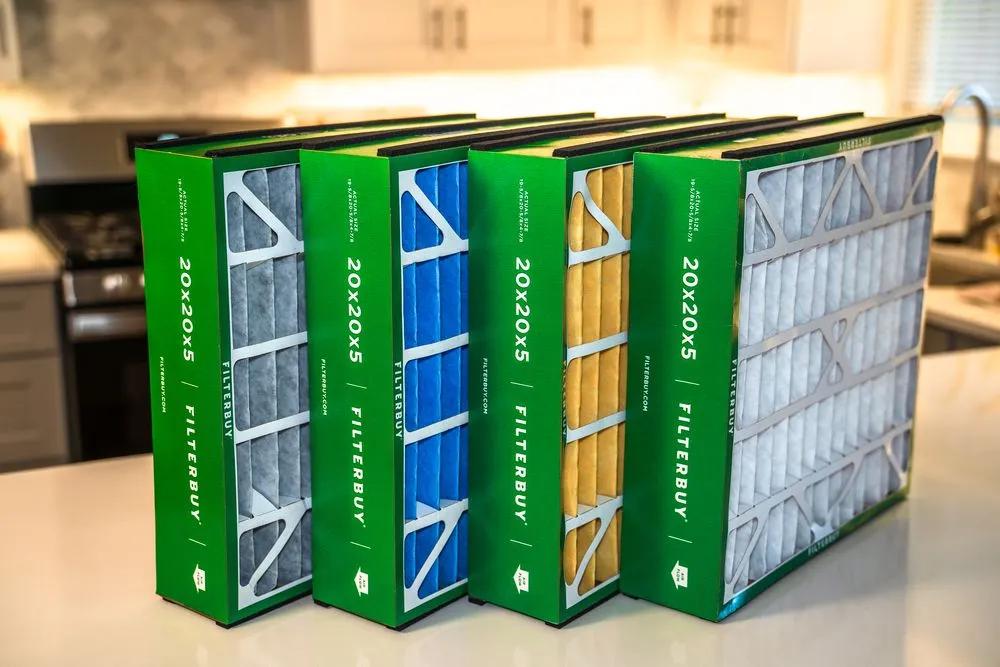
MERV (Minimum Efficiency Reporting Value) shows how well a filter catches particles in the air. For most Texas homes, MERV 8–13 is the usual range.
MERV 8
Basic protection against dust, lint, and larger pollen.
A common choice when you mainly want to protect the system and keep everyday dust down.
MERV 11
Helps catch smaller particles such as pet dander and many mold spores.
Works well in homes with pets or mild allergies.
MERV 13
Better at trapping fine particles, including many smoke and smog particles.
Best when you are more concerned about pollution and your system is rated for this level.
Always follow your HVAC manufacturer’s guide or ask a local technician before moving up to a higher MERV.
Filterbuy makes pleated HVAC and furnace filters designed for steady indoor air quality and system performance
For Texas homes, Filterbuy offers:
Made in the USA filters with quality materials
A wide range of standard and custom sizes, so filters fit the return and do not leave gaps
Pleated synthetic media that catches more particles than basic fiberglass, while still allowing airflow when changed on schedule
A typical service life of up to 90 days in many home systems
Fast, free shipping and Auto-Delivery, so replacements show up when you need them
Using the right MERV 8, 11, or 13 Filterbuy filter together with a live air quality index AQI map for Texas makes it easier to react to changing outdoor conditions and keep indoor air more consistent.
AQI is a number from 0 to 500 that shows if the outdoor air is cleaner or more polluted.
Open a live air quality index AQI map, type in your city or ZIP code, and look at the current number and color.
An AQI from 0–100 is generally fine for most people.
When the AQI is 101–150, people with asthma, COPD, or heart disease should cut back time outside or keep activity light.
At 151 and higher, the air is unhealthy and it is better for most people to limit outdoor time, especially for hard exercise.
If the current air quality index AQI map today shows high levels, keep windows and outside doors closed as much as you can.
Yes, running your system with a clean MERV 8, 11, or 13 filter can reduce some of the particles that get indoors.
Most homes change filters every 1–3 months, or sooner if the filter looks dirty or the system runs a lot.
