
21.5x23x2 Air Filters
Actual Size: 21.5x23.0x1.75

3 month filters
2. Select Quantity
Buying multiple sizes?


Made in the USA
Ships in 24 hours
21.5x23x2 Air Filters Air Filter Description
Available In MERV Rating: 8, 11, 13
Made in the USA
Ships in 24 hours
Merv comparison
Scroll to see more.
 MERV 8 |  MERV 11 |  MERV 13 | |
|---|---|---|---|
| Best for | Standard Residential/Commercial Healthy Families | Superior Residential/Commercial Allergy Sufferers | Optimal Residential/Commercial Hospital Grade |
| Comparable ratings | MPR 600 & FPR 5 | MPR 1000-1200 & FPR 7 | MPR 1500 - 1900 & FPR 10 |
| Filtration | Captures 90% of Airborne Particles | Captures 95% of Airborne Particles | Captures 98% of Airborne Particles |
| Dust, lint & debris | |||
| Mold, pollen | |||
| Dander, dust mites | |||
| Smoke & Smog | |||
| Bacteria | |||
| Odor, vocs |
Is it time to change your filter?
Generally, we recommend you replace your air filters every 90 days. Find out below if you should change your filters more often.

If someone in your home has asthma or allergies...
Change your filter every
6 weeks
to ensure indoor air quality is at its best.
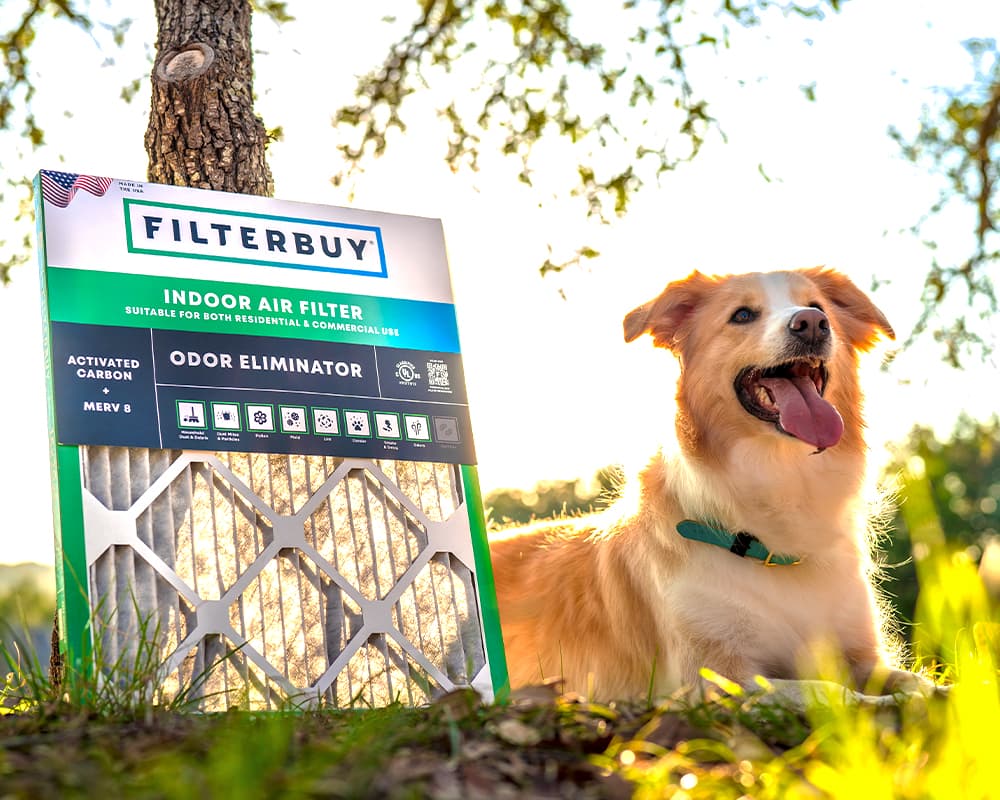
If you have pets...
Change your filter every
2 months
to avoid shedding and odor buildup.

If you have young children...
Change your filter every
2-3 months
as having clean air is even more important with children in your home.
If someone in your home has asthma or allergies...
Change your filter every
6 weeks
to ensure indoor air quality is at its best.
If you have pets...
Change your filter every
2 months
to avoid shedding and odor buildup.
If you have young children...
Change your filter every
2-3 months
as having clean air is even more important with children in your home.
Is Budget Air Filtration Enough? Best 21.5x23x2 Fiberglass Air Conditioner Filter Revealed
When it comes to air filtration, it’s easy to assume that a budget option will get the job done. But after testing numerous air filters, including the 21.5x23x2 fiberglass filter, I’ve discovered that cutting costs often means cutting corners. While these cheaper filters may seem like a quick fix, they often fall short in critical areas like efficiency, airflow, and long-term performance. From my personal experience, investing in a higher-quality filter can not only improve air quality but also protect your HVAC system in the long run. In this guide, I’ll break down the true value of the 21.5x23x2 fiberglass filter, revealing why it may—or may not—be enough for your needs. By the end, you’ll have the knowledge to choose the best filter for your home, backed by real-world insights.
📌Top Takeaways
Upgrade for Efficiency: More competent HVAC performance. Lower energy bills. A system with a longer lifespan.
Improved Air Quality: Traps dust, allergens, and toxins. A more healthy environment in your home.
Cost Savings: The initial cost is recovered with long-term savings. Reduced energy costs and fewer repairs.
Routine Maintenance: Filters need to be changed every 3 months for better performance. Makes sure of optimal performance.
"After personally testing a variety of air filters, including the 21.5x23x2 fiberglass model, we can confidently say that budget options often sacrifice long-term efficiency and airflow for short-term savings. A quality filter not only improves indoor air but also extends the life of your HVAC system. Don’t settle for ‘good enough’—investing in the right filter today pays off in cleaner air and fewer repairs down the road."
Supporting Statistics: Why Upgrading Your Air Filter Makes a Difference
Energy Savings from Regular Filter Maintenance:
Changing air filters regularly can save you 5% to 15% on energy costs.
A clean filter ensures better airflow, reducing strain on your HVAC system.
High-Efficiency Filters Don’t Drain Energy:
Higher-efficiency filters (MERV 11-12) don’t significantly impact cooling energy usage.
These filters improve airflow without overburdening the system.
🔗 filtnews.com.
Airflow Control Leads to Energy Savings:
Improving airflow can save $89 to $111 annually per apartment.
Better airflow enhances both indoor air quality and energy efficiency.
Final Thoughts & Opinion: The True Value of Upgrading Your Air Filter
Choosing a better quality air filter, like a 21.5x23x2 fiberglass filter or anything else, would be a clever choice. Here is the logic behind that, which comes from my own experience:
Healthier Air: Top filters will retain a higher amount of foreign particles which usually are the ones that cause pollution, thus leave the air space cleaner.
Optimized HVAC: The filters of higher quality will not only help you avoid the system breakdown but will also make your system more productive.
Decreased Utility Costs: The increase of airflow will lead to lower utility expenses.
Less Maintenance: Better filtration is responsible for keeping your air conditioning in good shape longer.
You might think that low-cost filters are a good deal, but remember; they can create more problems and be more expensive in the long run by requiring frequent reparation, air cinema stress and increasing energy consumption. In my own experience, moving to a good-quality filter will in most cases be very profitable in the first three months of use.
To sum up: Go for a good quality air filter without hesitation. It's just a small amount for better air, lower bills, and a more efficient system.

✅Next Steps: How to Upgrade Your Air Filter
Assess Your Current Filter:
Check the size and type of your filter (e.g., 21.5x23x2 fiberglass).
Look for signs of wear, like dirt buildup or clogging.
Research High-Quality Filters:
Choose filters with a higher MERV rating for better filtration.
Opt for trusted brands known for durability and reliability.
Order Your New Filter:
Buy online or at a local store.
Ensure the filter matches your HVAC system's size and specifications.
Install the New Filter:
Turn off the HVAC system before replacing the filter.
Follow the installation instructions carefully.
Set Up a Maintenance Schedule:
Replace your filter every 3 months or sooner if needed.
Set a reminder to check and change the filter on time.
❓Frequently Asked Questions
Does my air filter need to be a certain size?
Yes, using the exact size ensures proper fit and efficient filtration, preventing air leaks and ensuring optimal performance.
What MERV rating is best for airflow?
A MERV rating of 8-10 is ideal for balancing good airflow with effective filtration, allowing air to pass through efficiently while trapping common particles.
What is the actual size of a 21.5x23x2 filter?
The actual size of a 21.5x23x2 filter is typically slightly smaller than the nominal size, often measuring around 21.5" x 23" x 1.75" to fit properly in HVAC systems.
Which is better, paper or washable air filter?
Paper filters are generally more efficient at trapping small particles, while washable filters are cost-effective and eco-friendly but may not filter as finely as paper filters.