
12.5x21x2 Air Filters
Actual Size: 12.5x21.0x1.75

3 month filters
2. Select Quantity
Buying multiple sizes?


Made in the USA
Ships in 24 hours
12.5x21x2 Air Filters Air Filter Description
Available In MERV Rating: 8, 11, 13
Made in the USA
Ships in 24 hours
Merv comparison
Scroll to see more.
 MERV 8 |  MERV 11 |  MERV 13 | |
|---|---|---|---|
| Best for | Standard Residential/Commercial Healthy Families | Superior Residential/Commercial Allergy Sufferers | Optimal Residential/Commercial Hospital Grade |
| Comparable ratings | MPR 600 & FPR 5 | MPR 1000-1200 & FPR 7 | MPR 1500 - 1900 & FPR 10 |
| Filtration | Captures 90% of Airborne Particles | Captures 95% of Airborne Particles | Captures 98% of Airborne Particles |
| Dust, lint & debris | |||
| Mold, pollen | |||
| Dander, dust mites | |||
| Smoke & Smog | |||
| Bacteria | |||
| Odor, vocs |
Is it time to change your filter?
Generally, we recommend you replace your air filters every 90 days. Find out below if you should change your filters more often.

If someone in your home has asthma or allergies...
Change your filter every
6 weeks
to ensure indoor air quality is at its best.
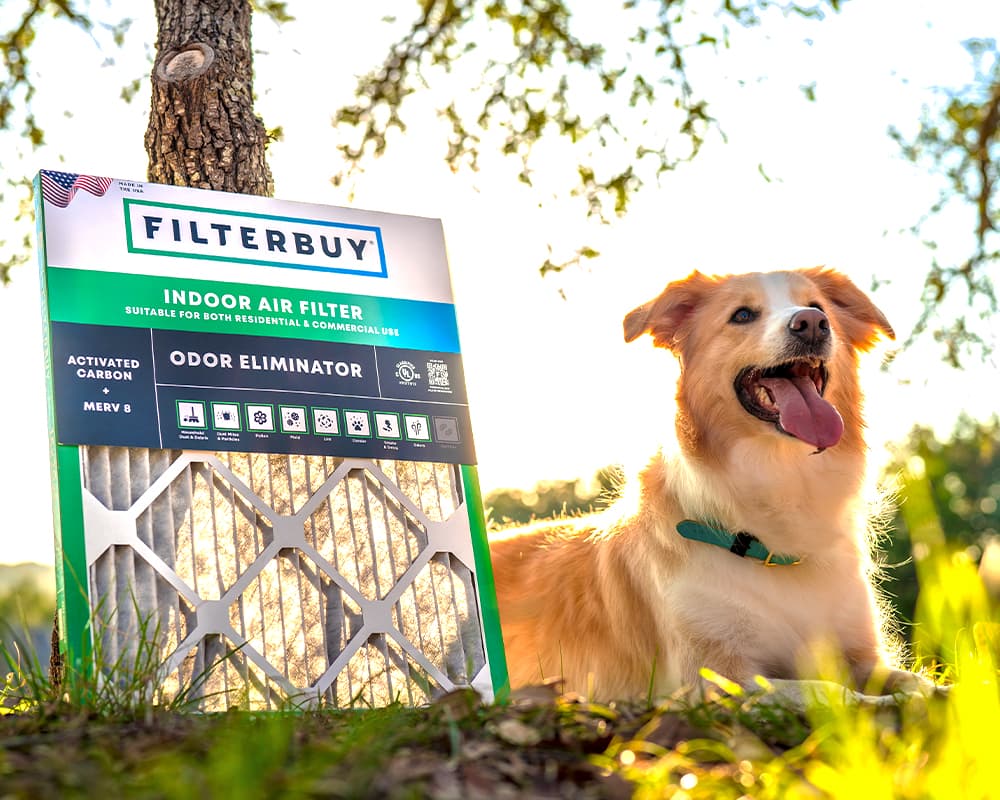
If you have pets...
Change your filter every
2 months
to avoid shedding and odor buildup.

If you have young children...
Change your filter every
2-3 months
as having clean air is even more important with children in your home.
If someone in your home has asthma or allergies...
Change your filter every
6 weeks
to ensure indoor air quality is at its best.
If you have pets...
Change your filter every
2 months
to avoid shedding and odor buildup.
If you have young children...
Change your filter every
2-3 months
as having clean air is even more important with children in your home.
Get the Right 12.5x21x2 HEPA Air Filter—Fast & Nearby
Clean air isn’t one-size-fits-all—and neither are your filters. At Filterbuy, we’ve spent over a decade manufacturing millions of custom-fit filters right here in the U.S., and one thing we’ve learned is that uncommon sizes like 12.5x21x2 can be the hardest to track down when you need them most. That’s why we don’t just stock the popular dimensions—we build the exact size you need, to the exact specifications your HVAC system requires. Each HEPA filter is crafted to capture up to 99.97% of airborne particles, from pollen to pet dander, so you can protect your family’s air quality without the endless store runs or “close enough” substitutions that don’t really fit. And because we ship factory-direct, you’ll have it at your door fast—no middleman, no waiting.
Top Takeaways
Exact fit matters – 12.5x21x2 must fit perfectly. Gaps reduce protection.
HEPA power – Captures 99.97% of particles like dust, pollen, and dander.
Factory-direct – Made in the U.S. and ships fast & free.
Better living – Cleaner air, fewer allergies, more efficient HVAC.
When it comes to protecting your home’s air, getting the right size filter matters just as much as the filter’s quality. A 12.5x21x2 HEPA air filter isn’t a common off-the-shelf size, which is why so many homeowners waste time trying to “make do” with something close. The problem? An ill-fitting filter leaves gaps around the edges, allowing dust, allergens, and pollutants to slip right back into your air.
At Filterbuy, we build each filter to your exact measurements—including hard-to-find sizes like 12.5x21x2—so you get a true seal every time. Our HEPA filters capture up to 99.97% of microscopic particles, helping reduce allergy symptoms, improve HVAC efficiency, and give your family cleaner, healthier air. And because we ship factory-direct from our U.S. facilities, you don’t have to wait weeks or overpay at the hardware store.
The result: a filter that fits perfectly, performs reliably, and arrives fast—so you can breathe easier without the hassle.
“After building millions of filters in over 600 sizes, we’ve seen how often homeowners struggle with uncommon dimensions like 12.5x21x2. The truth is, even the smallest gap from an ill-fitting filter can undo the protection you’re counting on. That’s why we manufacture every filter to exact specifications—because when it comes to your family’s air, close enough isn’t good enough.”
Supporting Statistics
At Filterbuy, we’ve built millions of filters and seen how the right fit makes all the difference. Here’s what the data—and our experience—show:
1. HEPA works best when it fits.
Captures 99.97% of particles down to 0.3 microns (EPA.gov)
Dust, pollen, mold, and bacteria are no match.
Even small gaps from the wrong size reduce performance.
2. Allergies affect nearly every home.
1 in 3 adults and 1 in 4 children in the U.S. live with allergies (CDC.gov)
Customers often report fewer allergy symptoms with a precise HEPA filter.
3. Better filters improve daily life.
Higher-efficiency filters cut indoor pollutants (EPA.gov PDF Guide)
Families notice fresher air and smoother HVAC performance.ce
We’ve seen homes breathe easier with the right filter in place
Final Thought & Opinion
Finding a 12.5x21x2 HEPA filter shouldn’t be difficult—but for most homeowners, it is. After building millions of filters in over 600 sizes, we’ve learned a simple truth: air quality depends on a filter that fits.
What We See First-Hand
Homeowners often settle for “close-enough” filters.
Even small gaps undo the protection a HEPA filter provides.
The right size = cleaner air + smoother HVAC performance.
Our Unique Perspective
Real results, real families. Customers switching to an exact-size filter often notice fresher air and fewer allergy symptoms within days.
Efficiency matters. A precise fit helps systems run better, saving energy and extending HVAC life.
No size should be left behind. Uncommon filters like 12.5x21x2 deserve the same quality and speed as standard sizes.
Bottom Line
Clean air isn’t about convenience—it’s about commitment. At Filterbuy, ours is simple: every family, no matter their filter size, should be able to breathe easier.
Next Steps
1. Confirm your size
Check your old filter or measure your slot.
2. Select your filter
Choose the 12.5x21x2 HEPA option for 99.97% particle capture.
3. Place your order
Get factory-direct, American-made quality with fast, free U.S. shipping.
4. Set auto-delivery (optional)
Never forget a filter change again.
5. Install & enjoy
Breathe cleaner air and keep your HVAC running smoothly.
Frequently Asked Questions
Which filter is better, HEPA or MERV?
It depends on your system. HEPA captures the most particles (99.97% at 0.3 microns) but requires special systems due to high resistance. MERV filters (8–13 range) are common in residential HVAC because they balance airflow and filtration.
Do air purifiers with HEPA filters really work?
Yes. Independent studies and technician experience confirm HEPA purifiers effectively reduce allergens, dust, smoke, and fine particles indoors.
How long do HEPA air filters last?
Typically 6–12 months, depending on air quality, usage, and environment (pets, smoking, and urban areas shorten lifespan).
What are the two disadvantages of HEPA filters?
The first is airflow restriction, which requires more fan power or special systems. The second is cost, as HEPA filters are more expensive to buy and replace than standard filters.
Is MERV 11 too high for residential?
No, most modern HVAC systems handle MERV 11 fine. Techs often recommend it for homes with allergies. Older units may struggle if airflow is already limited.
What are the negative side effects of HEPA air purifiers?
A few, but some people notice noise from fans and ozone only if combined with ionizers (not true HEPA filters themselves).
Can a HEPA filter be washed?
No. HEPA filters are not washable; washing damages fibers and reduces efficiency. They must be replaced.
What is the most highly recommended air purifier?
Brands frequently recommended by HVAC pros include Honeywell, Coway, and Austin Air—reliable, tested, and sized for different rooms.
What’s better than a HEPA filter?
For general indoor use, nothing surpasses HEPA for particle capture. ULPA filters are technically stronger (99.999%), but they’re used in labs, not homes.
What are the signs you need an air purifier?
Frequent allergies or asthma symptoms indoors, dust buildup despite cleaning, lingering odors or smoke, or pets shedding dander.
Is there a downside to air purifiers?
Yes. The main drawbacks are ongoing filter replacement costs, electricity use, and noise from larger units. Otherwise, they’re safe and effective.