The moment a wildfire starts near you, you'll get an instant alert and simple tips to reduce your smoke exposure.
30xSmaller than a human hair
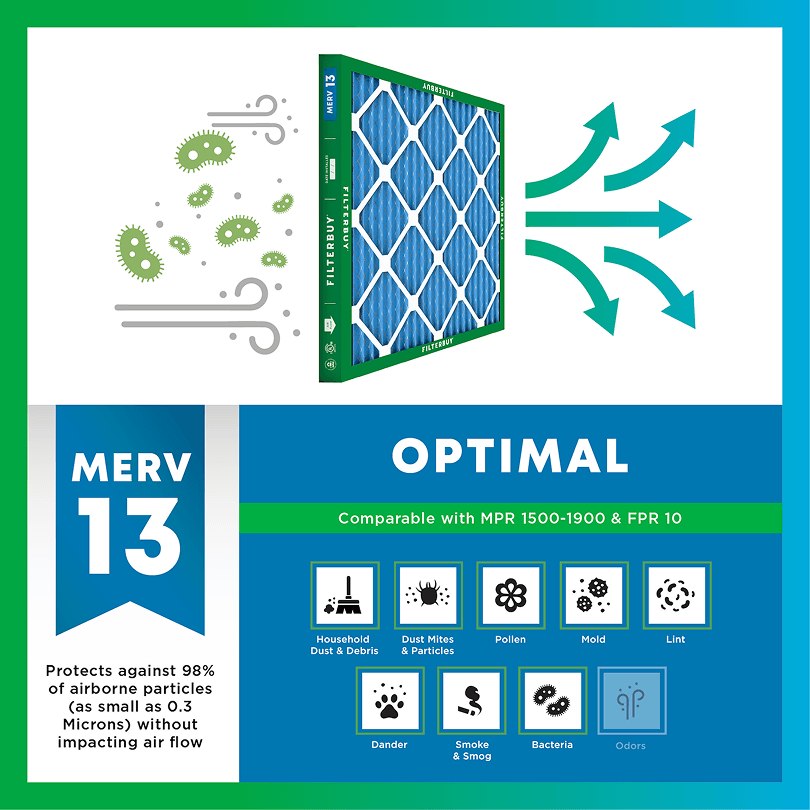
Fine enough to reach deep into the lungs. A MERV 13 is built to capture it.
It Doesn't Stay Local
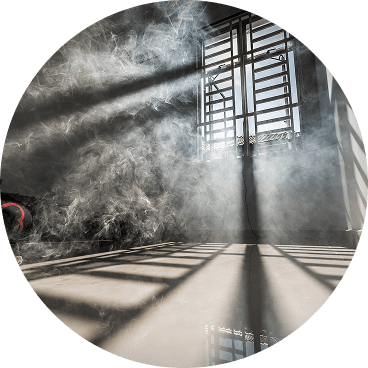
Smoke rides the wind far downwind — you can get smoky air with no fire nearby.
Simple steps to reduce indoor exposure.
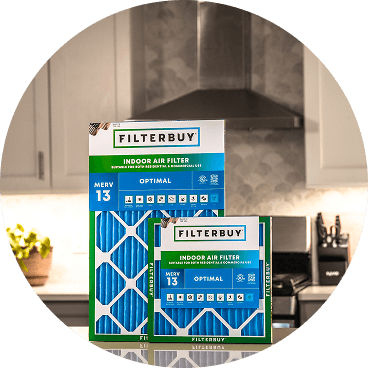
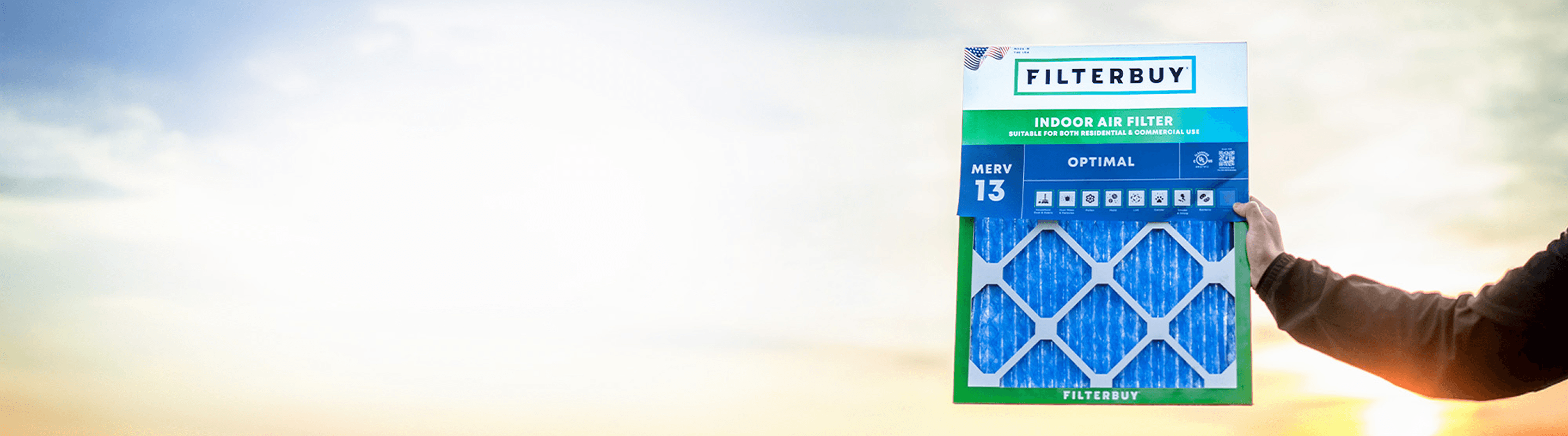
During smoke events, the EPA recommends upgrading to a MERV 13 filter — or the highest-rated filter your system can handle — to help reduce the fine particles smoke brings indoors. MERV 13 is the level most home HVAC systems can run while still capturing PM2.5, the fine particulate that makes up the bulk of wildfire smoke.
Over 70,000 wildfires burn in the U.S. every year.
Wildfire smoke can travel 1,000+ miles, affecting states that aren't even near the blaze.
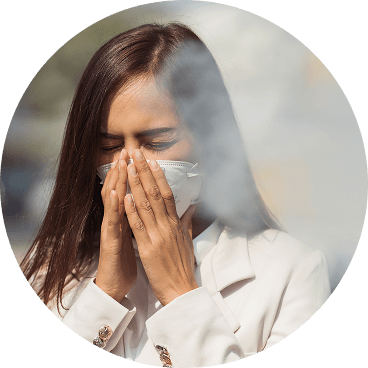
Exposure to wildfire smoke can worsen asthma, trigger heart issues, and lead to ER visits.
Indoor air can hold more fine particles during wildfire events unless it's properly filtered.
The EPA advises using MERV 13 filters or portable HEPA air cleaners during wildfire smoke events.
Use the live wildfire smoke tracker and upgrade your air filters today to protect your lungs and your home.
Shop Filters For Smoke Protection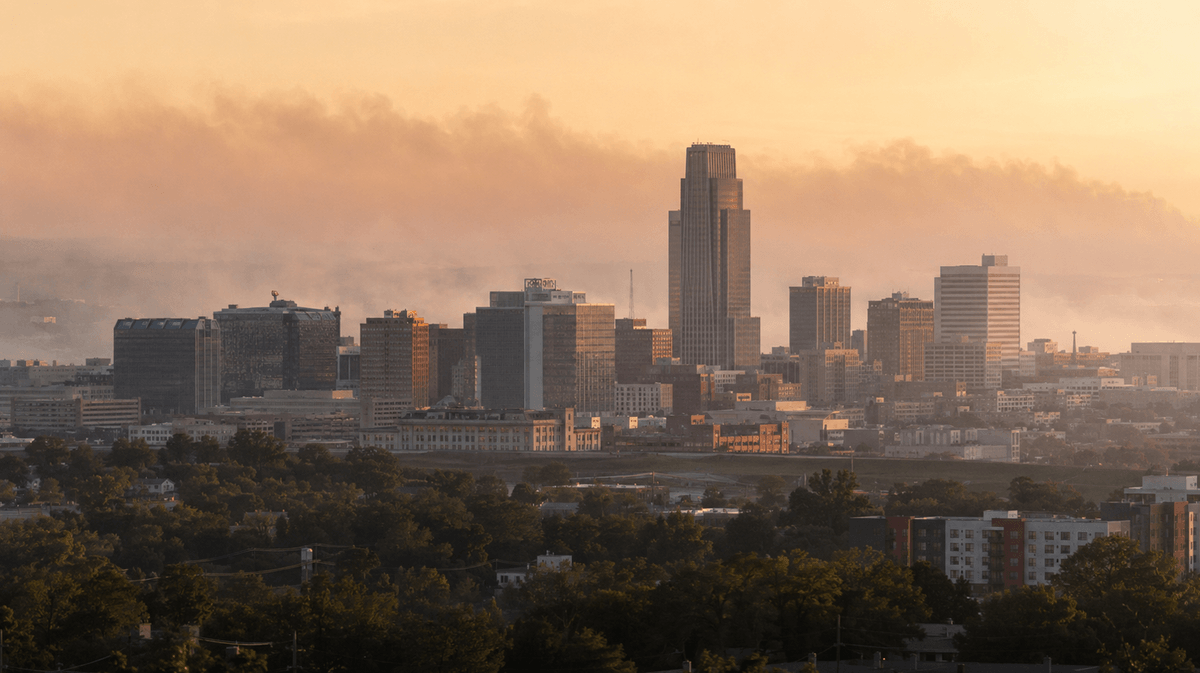
Author: Michelle Wan
Reviewer: David Clark, Licensed HVAC Technician
Publish Date: July 13, 2026
Updated Date: July 13, 2026
Use the live map above to check Omaha's air quality right now. Most days it will read clean, because Omaha sits far from major fire activity. When the map does turn yellow or worse, it's almost always smoke that traveled in from Canada, the western states, or regional prescribed burns, not a fire burning near the city.
Omaha rarely burns. When the live map above shows elevated readings, the cause is almost always smoke that traveled hundreds or thousands of miles from Canadian wildfires, western states, or regional Flint Hills prescribed burns.
Nebraska's Smoke Advisory System, run jointly by DHHS and the Department of Water, Energy, and Environment, draws on monitors in Omaha, Blair, Bellevue, Lincoln, Beatrice, Grand Island, and Scottsbluff to decide when to issue a public advisory.
EPA recommends a MERV 13 or higher HVAC filter, run continuously, as the most effective way to cut indoor fine-particle levels during a smoke event.
The map above updates in near real time. Nothing on this page should be treated as today's exact number. Check the map itself for that.
Nebraska's Department of Health and Human Services and its Department of Water, Energy, and Environment issue joint public advisories whenever regional data, smoke plume modeling, or the state's own air quality monitors suggest smoke will meaningfully affect air quality somewhere in Nebraska. Omaha is one of the seven monitoring points that feeds this system, alongside Blair, Bellevue, Lincoln, Beatrice, Grand Island, and Scottsbluff. Advisories go out through DWEE and DHHS press releases and social channels, and local agencies such as the Douglas County Health Department may add their own notice for the Omaha metro specifically.
If you want the advisory system explained in the state's own words, including exactly how the trigger works, see the Essential Resources section below.
Filterbuy watches this same advisory system from the manufacturing side. When DHHS and DWEE issue a joint advisory for the Omaha area, order patterns for higher-MERV filters from Nebraska addresses tend to shift within a day or two, a sign that most households only start thinking about filtration once the air has already turned bad.
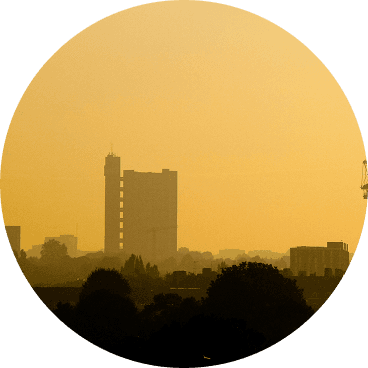
You do not need an app to get a rough read on conditions right now. Several state air agencies teach a simple trick called the 5-3-1 Visibility Method. Pick a landmark you know is about five miles away, like a distant water tower, overpass, or building on the Omaha skyline. Look with the sun behind you, not toward it. If you can see that landmark clearly, air quality is generally good. If it fades into haze, treat that as your own early signal to check the map above, even before an official advisory goes out.
Here's what surprises a lot of people the first time they dig into this: Omaha itself is not a wildfire-prone city. Eastern Nebraska's landscape, and the amount of fire suppression infrastructure around a metro area, keep local ignition risk relatively low compared to the western half of the state or the Rocky Mountain region. So when the AirNow map shows a smoky day in Omaha, the fire almost certainly isn't here.
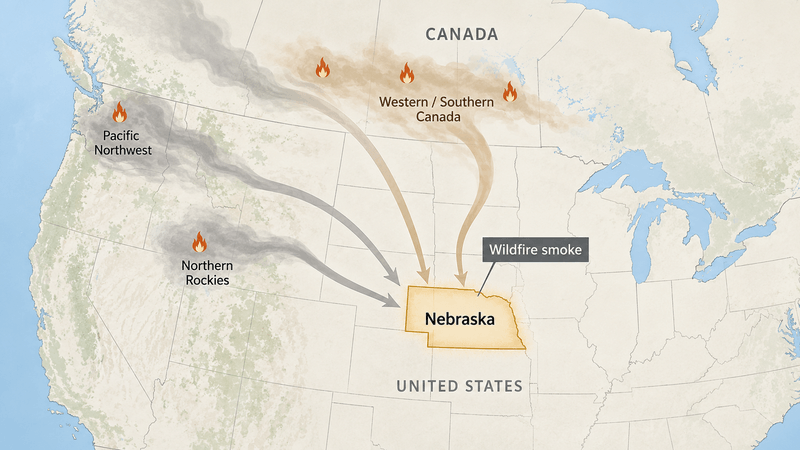
Three sources account for nearly all of it:
Canadian wildfire smoke. Large fire seasons in western Canada have sent smoke plumes deep into the Great Plains in recent years, and Nebraska has recorded statewide air quality impacts from these events.
Western-state wildfires. Prevailing upper-level winds can carry smoke from fires in the Rockies and further west across Nebraska, sometimes visible only as a hazy sky with little smell at ground level.
Regional prescribed burning, especially in the Kansas Flint Hills. Intentional spring burns in the Flint Hills region, done to manage native prairie grasses, are a well-documented, recurring source of smoke that drifts north into southeastern Nebraska and the Omaha metro on the right wind pattern.
These three sources also follow different calendars, which is useful if you want to watch for a pattern instead of just reacting to today's map:
Mid-March through mid-April: Flint Hills prescribed burns are the most likely source.
Late spring through late summer: Canadian wildfire smoke becomes the dominant risk.
Summer through early fall: Western-state wildfires can add to or replace the Canadian pattern.
At Filterbuy, this distinction matters more than most people expect. A fire's size has very little to do with whether Omaha notices it. Wind direction and distance decide that, not flame height.
Knowing which of these is behind a given smoky day doesn't change what you should do indoors, but it does explain why Omaha can go from clear to hazy without a single new fire starting anywhere nearby.
If you want the bigger picture on how smoke finds its way into a city with no nearby fire, Filterbuy's guide on why there is smoke in the air today walks through the same transport patterns that affect Omaha.
The number you see on the AirNow map isn't a guess. It comes from a network of ambient air quality monitors that Nebraska maintains specifically to track fine particle pollution, known as PM2.5, the kind of particle wildfire smoke is made of. Inside Omaha itself, that network includes two named ground stations, the NCore site and the Berry Street site, plus additional monitors in Bellevue and Blair. All of it feeds continuously into both the state's advisory system and the EPA's national AirNow platform.
The Douglas County Health Department has run local air monitoring for the Omaha metro since 1968 and publishes its own current readings alongside the statewide network. You can check its live local monitoring site directly if you want the Omaha-specific reading rather than a statewide average.
That distinction matters to us at Filterbuy because a filter that's the right MERV rating for a clean day isn't automatically the right one for a smoke day. Trusting the specific reading for your zip code, rather than a statewide average, is the first decision point before any filter conversation even starts.
This matters because it means the map you're looking at reflects real, measured air, not a regional forecast averaged across hundreds of miles. When Omaha's own monitor reads clean, but a statewide advisory is in effect for other parts of Nebraska, you can trust that your specific location is genuinely in better shape.
The table below ties each AQI category to a specific, practical action, based on EPA's own guidance rather than a Filterbuy-invented threshold. We built it by combining EPA's AQI language with our own filtration expertise, specifically what a MERV 13 filter can and cannot do once particle levels climb past Moderate.
Category thresholds and guidance reflect EPA's published AQI scale. This table is general guidance, not a substitute for local health department advisories.
For a deeper walkthrough of MERV ratings and how to choose the right one for your home, see our MERV rating selection guide.
Wildfire itself is a well-documented natural and human-caused phenomenon. The Wikipedia entry on wildfire is a useful primer if you want the broader science behind what you're seeing on the map.
Omaha families don't need to panic every time the map turns yellow, but they do need to know the difference between a hazy day and a genuine health risk. What surprises people most is that the fire causing it is seldom in Nebraska. After manufacturing filters for over a decade and serving more than two million households, we've learned that the single most useful thing a homeowner can do before smoke season is check the MERV rating on the filter that's already in their system. By the time smoke from a thousand miles away shows up on the map, it's too late to order and install a new one before that event has already passed.
David Heacock, Founder and CEO of Filterbuy
Source: AirNow Fire and Smoke Map
Source: Nebraska DWEE – Smoke Awareness in Nebraska
Source: Nebraska DHHS – Smoke Advisory System Activated for 2026
Source: Nebraska DWEE – Wildfires and Impacts in Nebraska
Source: EPA – Create a Clean Room to Protect Indoor Air Quality During a Wildfire
Source: National Interagency Fire Center – National Fire News
Source: CDC – Wildfire Smoke Safety
NOAA tracked exactly the kind of long-distance smoke transport that affects Omaha.
2023 was Canada's most intense wildfire season on record.
NOAA's National Air Quality Forecast Capability modeled the smoke plume moving over the Great Plains and Midwest.
That same plume continued to blanket the East Coast days later.
Source: NOAA Air Resources Laboratory – Canadian Wildfire Smoke Seen Across the US
A peer-reviewed, NIH-funded study puts a real health number behind distant smoke.
The study modeled the June 2023 Canadian wildfire smoke episode.
Asthma-related emergency department visits rose by up to 40 percent in the hardest-hit counties.
The fires themselves were hundreds of miles away. The health impact was not.
Source: National Institutes of Health – Assessing PM2.5 Pollution From the 2023 Canadian Wildfire Smoke
The American Lung Association calls out filter quality directly in its clean room guidance.
Upgrade to a MERV 13 rating or higher before a smoke event, not during one.
Standard filters let more fine smoke particles pass through.
Pair the upgraded filter with a dedicated clean room for the best result.
Source: American Lung Association – How to Create a Clean Room to Help Protect Against Wildfire Smoke
We'd rather you check this map once a week during smoke season out of habit than scramble to find it the one day it actually matters. Omaha's air is clean far more often than not, and most of the smoke that does show up here traveled a long way to arrive. That's genuinely good news, because the fix isn't evacuation planning. It's a filter change and a closed window.
Filterbuy has built filters for households in every kind of climate, and the homes that handle smoke best are rarely the ones that bought a premium filter mid-crisis. They're the ones that already had a MERV 13 sitting in the system before the first advisory ever went out. Treat the map as your daily habit and your HVAC filter as your quiet backup, and you'll be ahead of almost every household on your block.
Bookmark the AirNow Fire and Smoke Map and check it during any stretch of hazy or still weather.
Sign up for EnviroFlash to get air quality forecasts pushed to your phone automatically.
Check your HVAC filter's current MERV rating and upgrade to MERV 13 before the next smoke event, not during it.
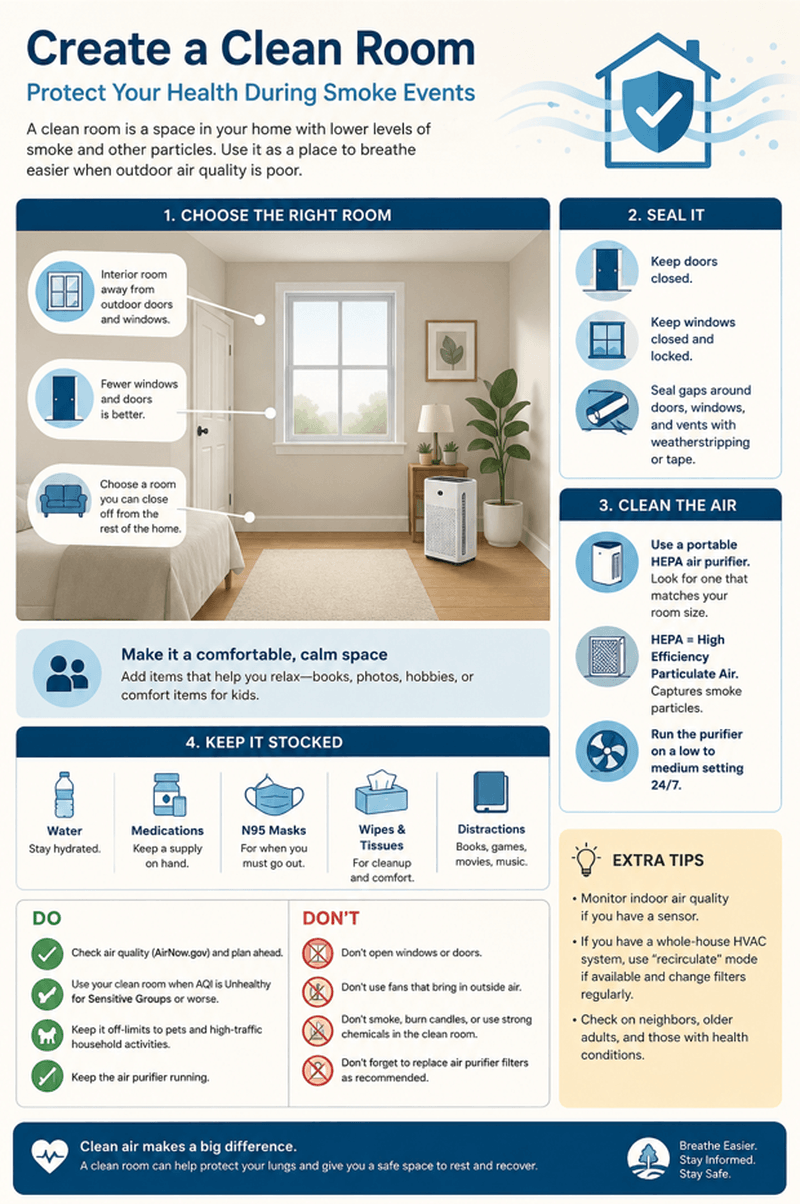
Pick a clean room in your home now, ideally a bedroom with few windows, so you're not deciding under pressure.
It varies year to year depending on fire activity in Canada and the western United States, plus the regional prescribed burn schedule. Some years bring only a handful of hazy days. Others bring several weeks of intermittent smoke. The live map above is always the most current answer for today specifically
It can be, depending on concentration. Fine particle pollution from Canadian wildfire smoke behaves the same way in the lungs whether the fire is 50 miles away or 1,500 miles away. Follow the AQI category guidance in the table above regardless of where the smoke originated.
Children are considered a sensitive group starting at the Unhealthy for Sensitive Groups category (101–150), per EPA's AQI guidance. At that level, reducing prolonged outdoor exertion is the recommended step, not necessarily staying inside all day.
Yes. Keeping windows and doors closed is one of the most effective no-cost steps you can take, especially when paired with running your HVAC fan on recirculate with a MERV 13 filter installed.
EPA recommends MERV 13 or higher for HVAC systems that can safely accommodate it. Check your system's manufacturer specifications first, since not every blower motor is rated for the added airflow resistance of a higher-MERV filter.
A smoke advisory from DHHS and DWEE is about air quality impacts from smoke that may already be present or forecast to arrive. A Red Flag Warning from the National Weather Service is a fire-weather forecast product about the conditions (wind, humidity, dry fuels) that make new fires easier to start and spread, and it does not by itself mean smoke is currently affecting Omaha.
Check the map above whenever the sky looks hazy, and pair that habit with the right filter in your HVAC system. Browse Filterbuy's MERV 13 air filters to find the exact size for your home.
AQI (Air Quality Index): EPA's standard 0–500 scale for communicating how polluted the air is and what health effects might be expected.
PM2.5: Fine particulate matter 2.5 micrometers or smaller in diameter, the primary pollutant of concern in wildfire smoke.
NCore: A National Core multipollutant monitoring station. Omaha's NCore site sits on the Douglas County Health Department campus and tracks fine particles alongside several other pollutants around the clock.
5-3-1 Visibility Method: A no-app way to estimate air quality by checking how clearly you can see a landmark roughly five, three, or one mile away. Shorter visible distance generally means worse air.
MERV (Minimum Efficiency Reporting Value): A 1–16 rating scale for HVAC filters describing how effectively a filter captures particles. MERV 13 or higher is EPA's recommendation during wildfire smoke.
Smoke Advisory: A joint public notice issued by Nebraska DHHS and DWEE when smoke from wildfires or prescribed burning is likely to significantly affect air quality in part of the state.
Prescribed Burn: An intentional, planned fire set to manage vegetation, such as the seasonal Kansas Flint Hills burns that can send smoke into Nebraska.
Clean Room: A single room in a home set up with closed windows and a properly sized air cleaner to keep indoor particle levels as low as possible during a smoke event.
Written by Michelle Wan, Brand Manager and Air Quality Writer at Filterbuy. Technically reviewed by David Clark, Licensed HVAC Technician.
Subscribe to wildfire smoke alerts for Omaha, NE, to get a heads-up before the next event reaches your area.